The Essence of Spirituality

A Human Creation

In a world teeming with diverse beliefs and practices, spirituality often emerges as a beacon, guiding individuals through the complexities of existence. Interestingly, despite its profound impact on human culture and thought, spirituality itself is a concept birthed and nurtured by humankind. This realization leads us down a fascinating path, exploring the intricate relationship between human perception and spiritual constructs.

Spirituality is an individual’s journey toward understanding and connecting with something greater than oneself. It transcends the physical realm, reaching the depths of human emotion and thought. This journey is deeply personal, yet it is undeniably shaped by the cultural and social environment in which one is immersed. The rituals, beliefs, and practices that define spirituality for one person may differ vastly from those of another, yet each is a reflection of the human desire to seek meaning beyond the tangible world.


The notion that spirituality is a man-made construct does not diminish its significance or value. Rather, it highlights the incredible capacity of the human mind to seek and create meaning. This construct serves as a mirror, reflecting our deepest fears, hopes, and questions. Through spirituality, we grapple with the mysteries of existence, and in doing so, we engage in a process of self-discovery and growth.

Furthermore, the evolution of spiritual practices and beliefs over time is a testament to the dynamic nature of human thought. As our understanding of the world changes, so too do our spiritual beliefs. This fluidity is not a weakness but a strength, showcasing our ability to adapt and find solace in an ever-changing world.


In conclusion, recognizing spirituality as a human construct invites us to explore the depths of our minds and hearts. It challenges us to question, reflect, and grow as we navigate the journey of life. By embracing this perspective, we open ourselves to a deeper understanding of not only spirituality but also the human condition.

Morgan O. Smith

Yinnergy Meditation, Spiritual Life Coaching & My Book, Bodhi in the Brain…Available Now!

https://linktr.ee/morganosmith

The Tsunami of Spiritual Awakening

Navigating the Transformative Waves

In the journey of spiritual growth, reaching a state of full spiritual awakening can be likened to the immense power and transformative force of a tsunami. Just as a tsunami reshapes the landscape, a spiritual awakening at its highest peak redefines the contours of one’s inner world, unleashing profound changes that ripple through every aspect of existence.

**The Onset of the Wave**


The beginnings of a spiritual awakening are often subtle, much like the imperceptible swell of the ocean that precedes a tsunami. It may start with a sense of restlessness, a longing for something more profound than everyday experiences. This stage is marked by questioning – questioning one’s purpose, the nature of reality, and the deeper truths of existence.

**The Rising Tide**


As the wave gathers momentum, so does the awakening process. This is often where the most intense spiritual experiences occur. Individuals may experience moments of heightened awareness, profound insights, and a deep sense of interconnectedness with the universe. It’s a phase characterized by exhilaration and confusion, as old belief systems crumble and new understandings emerge.


**The Impact**

The peak of a spiritual awakening, akin to the moment a tsunami makes landfall, is both powerful and disruptive. It can upend long-held beliefs, relationships, and life structures. This phase can be challenging, as it demands letting go of the ego and the familiar constructs that once offered security. In its wake, it leaves a transformed landscape – a new way of being and perceiving the world.

**Navigating the Aftermath**


The aftermath of a spiritual tsunami is about integration and rebuilding. It involves finding a new equilibrium, where one’s heightened spiritual awareness becomes a natural part of daily life. This stage is about living from a place of deeper wisdom and compassion, both for oneself and others.

**Embracing the Journey**

A full spiritual awakening is not a destination but a continuous journey. It invites an ongoing exploration of the depths of one’s soul and the mysteries of the universe. It’s a path marked by both challenges and profound beauty, an opportunity to live life with a deeper sense of purpose and connection.


In conclusion, the journey of spiritual awakening is transformative and intense, akin to the power of a tsunami. It reshapes not just individual lives, but can also have a profound impact on the collective consciousness. Embracing this journey requires courage, openness, and a willingness to let go of the familiar shores to explore the depths of the spiritual ocean.

Morgan O. Smith

Yinnergy Meditation, Spiritual Life Coaching & My Book, Bodhi in the Brain…Available Now!

https://linktr.ee/morganosmith

The First Glimpse

Awakening to the Marvel of Being

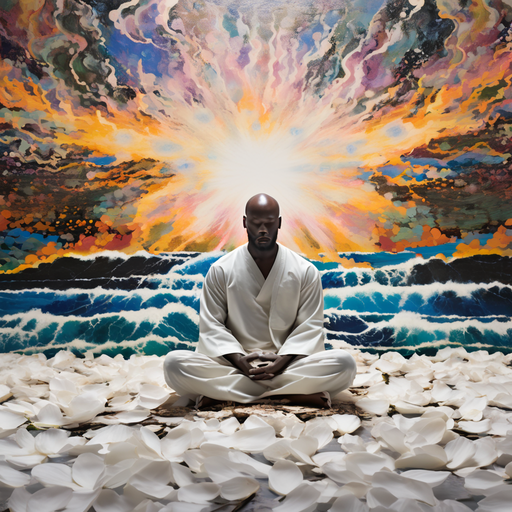
In the boundless journey of spiritual exploration, there exists a moment that stands out with luminous clarity—a moment of awakening. This awakening can be likened to the profound innocence and wonder of a baby discovering its own two feet for the first time. It is a moment of pure astonishment, where the familiar suddenly becomes an ocean of mystery, inviting us to dive deeper into the essence of our very existence.

Awakening, in its essence, is not merely an accumulation of knowledge or an expansion of our cognitive boundaries. Rather, it is an experiential revelation, a direct encounter with the raw fabric of reality itself. Just as a baby gazes upon its feet with awe, recognizing them as extensions of its being, so too does the spiritual seeker come to realize the interconnectedness of all things. This realization is not conceptual but deeply visceral, a knowing that permeates every cell of our being.


This moment of awakening brings with it a profound shift in perception. The world no longer appears as a mere backdrop to our dramas but as a vibrant, living mosaic of which we are an integral part. Everything, from the mundane to the magnificent, is imbued with a sacred significance. The dichotomy between the self and the other begins to dissolve, revealing the underlying unity that is the foundation of all existence.

However, this awakening is not the final destination but the beginning of a profound journey. Like the baby who has just discovered its feet, we are called to explore, to learn, and to grow. Each step is an act of discovery, a chance to deepen our understanding of the self and the universe. The path is not linear but a spiral, where each cycle brings us closer to the core of our being, to the heart of existence.


The challenge, then, is to remain open and receptive, to cultivate a beginner’s mind in the face of the known and the unknown. It requires us to let go of our preconceived notions and embrace the uncertainty that comes with genuine exploration. This journey is not one of seeking external validation but of internal revelation, where each insight illuminates the path a little more.

In essence, the awakening is a call to adventure, an invitation to embark on the most significant exploration of all—the exploration of the self. It beckons us to engage with life’s profound mysteries, to uncover the layers of meaning and existence that lie beneath the surface of everyday reality.


As we navigate this journey, we discover that awakening is not a singular event but a series of moments, each revealing a deeper layer of understanding. Like the baby who delights in each discovery, we too can find joy in the continual unfolding of our spiritual journey, ever deepening our connection to the marvel of being.

Morgan O. Smith

Yinnergy Meditation, Spiritual Life Coaching & My Book, Bodhi in the Brain…Available Now!
https://linktr.ee/morganosmith

Embracing Shadows to Illuminate the Soul

Black History Month and the Spiritual Journey of Iboga

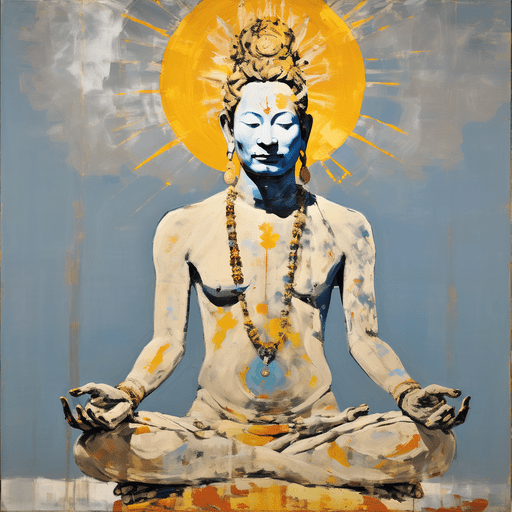
In the heart of Black History Month, we find ourselves not just celebrating the monumental contributions and enduring legacy of Black individuals but also diving deep into the profound spiritual wisdom that African cultures have nurtured across millennia. One such treasure is the sacred use of Iboga, a potent plant medicine originating from the forests of West Africa, revered for its transformative power in spiritual cleansing and self-discovery.

The Iboga root, central to the Bwiti spiritual practices in Gabon and other parts of Central Africa, serves as a gateway to the innermost depths of the psyche, facilitating what many in the spiritual community call “shadow work.” This process involves confronting and integrating the unconscious aspects of oneself—those hidden fears, past traumas, and repressed emotions that often dictate our lives from the shadows.


The significance of Iboga in spiritual exploration cannot be overstated. Its use is a sacred rite, a profound journey undertaken under the guidance of experienced healers known as Ngangas. These healers, deeply versed in the spiritual and medicinal properties of the plant, facilitate a voyage that is as much about encountering the soul’s darkness as it is about emerging into the light of awareness and renewal.

For spiritual seekers, the journey with Iboga is one of confronting the ego, dismantling illusions, and ultimately gaining insights into the nature of self and existence. This aligns with the non-dualistic understanding that light and dark are not opposites but complementary forces. We find the keys to our liberation and enlightenment in the embrace of our shadows.


The knowledge and practices surrounding Iboga are a testament to the rich spiritual heritage of West African cultures. They remind us that Black History Month is not only a time to honour the past but also to acknowledge and learn from the profound spiritual wisdom that African traditions offer to the world. The legacy of Iboga teaches us about resilience, healing, and the journey towards wholeness.

As we celebrate this month, let us also open our hearts and minds to the lessons of Iboga and the shadow work it facilitates. In doing so, we honour the depth of African spirituality and its invaluable contributions to the global quest for enlightenment and inner peace.

Morgan O. Smith

Yinnergy Meditation, Spiritual Life Coaching & My Book, Bodhi in the Brain…Available Now!
https://linktr.ee/morganosmith

The Upanishads

Beyond Textual Study to Experiential Wisdom

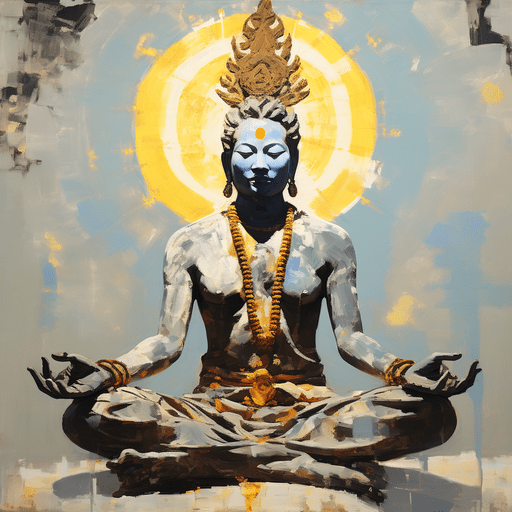
The Upanishads, ancient Indian texts forming the philosophical core of Hinduism, present a profound, spiritual journey. However, a critical aspect often overlooked is the distinction between mere scholarly study and experiential understanding. When one engages with the Upanishads purely from an academic perspective, without delving into the experiential practices that inspired these free thinkers, a significant essence is missed.

The free thinkers who composed the Upanishads didn’t just pen philosophical ideas; they recorded their direct experiences and spiritual revelations. These texts are not just to be read and analyzed but to be lived and experienced. When the Upanishads become a subject of mere intellectual study, they risk being reduced to just another ‘religion’ or belief system, potentially limiting the profound, universal wisdom they hold.

This is not to undermine the importance of scholarly study. It certainly lays the groundwork for understanding. However, it’s crucial to recognize that intellectual comprehension alone doesn’t lead to the transformative realization the Upanishads speak of. They call for a journey inward, an exploration of consciousness, which transcends intellectual grasp.

By treating the Upanishads as a religion, one confines them within the boundaries of dogma and doctrine. This contradicts their very essence, which is about liberation from all forms of limitation, including the confines of organized religion. The Upanishads encourage a journey beyond the mind, a leap into direct experience and realization.


In conclusion, while the study of the Upanishads is valuable, it should be a gateway to deeper, experiential understanding. This journey from intellectual comprehension to experiential wisdom is what truly unlocks the treasures of these ancient texts. To fully grasp the essence of the Upanishads, one must move beyond the confines of intellectual study and step into the realm of direct, personal experience.

Morgan O. Smith

Yinnergy Meditation, Spiritual Life Coaching & My Book, Bodhi in the Brain…Available Now!
https://linktr.ee/morganosmith

Burn Bodhi Tree Burn

Dispelling Illusions in the Quest for Enlightenment

In a provocative turn of thought, the recent symbolic burning of the Bodhi tree, a revered figure in Buddhist lore as the tree under which Buddha attained enlightenment, stirs a profound metaphysical debate. This act, far from being a mere iconoclastic gesture, serves as a powerful metaphor for a deeper philosophical introspection into the nature of enlightenment and reality.

The Bodhi tree, in this context, is not just a physical entity but a symbol of the very concept of enlightenment. Its burning signifies the rejection of material and conceptual attachments, even those as sacred as the Bodhi tree and the Buddha himself. This metaphorical act challenges the adherents of Buddhism and spiritual seekers to question the very foundation of their beliefs.


The argument posits that both the Bodhi tree and the Buddha are manifestations within ‘Maya’, the illusory world as described in various Eastern philosophies. According to this view, the physical and the conceptual are mere distractions from the true nature of reality. The burning of the Bodhi tree symbolizes the destruction of these illusions, urging individuals to look beyond physical symbols and established doctrines in their spiritual journey.

The concept of enlightenment, as traditionally understood, is also questioned. This perspective argues that any preconceived notion of enlightenment is not enlightenment itself. True enlightenment, as per this radical view, is beyond concepts and intellectual constructs. It is a state of being that transcends the conventional understanding of spiritual attainment.


Thus, the metaphor of burning the Bodhi tree and the figure beneath it calls for a complete relinquishment of all notions and concepts related to enlightenment. In doing so, it suggests that a state of ‘true enlightenment’ can be realized. This state is described as the only reality, achievable only when one abandons all preconceived ideas and embarks on a journey devoid of attachment to any symbol or doctrine.

The provocative nature of this idea lies in its challenge to established beliefs and practices. It invites a reevaluation of what constitutes the path to enlightenment, urging a detachment from even the most sacred of symbols and figures. This perspective is not a call to physical action but a metaphorical invitation to burn down the internal ‘Bodhi trees’ – the deeply ingrained beliefs and concepts that might hinder the realization of true enlightenment.

Morgan O. Smith

Yinnergy Meditation, Spiritual Life Coaching & My Book, Bodhi in the Brain…Available Now!

https://linktr.ee/morganosmith


The Paradox of Enlightenment

Embracing the Limitless Self

In the quest for enlightenment, a paradox often emerges. We strive to reach a state of higher understanding, yet the moment we claim to have achieved enlightenment, we inadvertently confine ourselves within the very boundaries we sought to transcend. This pursuit reveals a fundamental truth about our nature and existence: what we truly are is inherently free from all limitations.

When we label ourselves as ‘enlightened,’ we inadvertently create a new identity, another cage for our boundless spirit. This declaration is a subtle form of ego, a self-imposed limitation that contradicts the essence of enlightenment itself. True enlightenment is not about attaining a label or reaching a destination; it’s an ongoing journey of self-discovery and liberation from all forms of identification.

Consider the concepts of ‘The Self’ and ‘No Self.’ These are often seen as opposing philosophies in spiritual and philosophical discourse. ‘The Self’ suggests a profound connection with a universal, eternal essence, while ‘No Self’ leans towards the idea of emptiness, the absence of a permanent, unchanging self. However, to define oneself as either is to miss the point entirely.


The essence of our being transcends these concepts. It’s not about being one or the other but encompassing and moving beyond both. We are neither solely ‘The Self’ nor ‘No Self.’ Instead, we exist in a state that includes both yet is not limited by either. This state is not a static endpoint but a dynamic, ever-evolving understanding of our true nature.

In this space, we recognize that labels, identities, and even the concept of enlightenment itself are mere tools for understanding, not the ultimate truth. Our true essence is like the sky—vast, boundless, and untouched by the clouds that drift through it. We are the silent observers, the consciousness that witnesses thoughts, emotions, and sensations without becoming them.

To truly embrace this state of being, one must continuously practice letting go of all attachments, identities, and beliefs. It’s a journey of unbecoming, peeling away layers of conditioned thought and societal constructs to reveal the pure, unadulterated essence of our being.


In conclusion, the journey to understanding what we truly are is not about acquiring a new label or reaching a definitive state of being. It’s about the continuous process of freeing ourselves from all limitations, labels, and identities. It’s about recognizing and embracing the boundless nature of our existence, which includes and transcends all dualities.

Morgan O. Smith

Yinnergy Meditation, Spiritual Life Coaching & My Book, Bodhi in the Brain…Available Now!

https://linktr.ee/morganosmith

The Unforeseen Impact of a Brief Encounter

My Journey to Spiritual Awakening

Introduction: It was a chance meeting in 2006 that altered the course of my life. At an event where I was the emcee, I crossed paths with a young black man named Sanander Aniiuwah, who, to me, embodied the essence of an enlightened being. He stood at average height, his appearance marked by dreadlocks and a possible beard, draped in an off-white robe, reminiscent of a Jesus-like figure, wandering in sandals—or in my recollection, often barefoot, even in the chill of winter. The presence of attractive women by his side only heightened my curiosity about him.

Sanander’s Aura and Philosophy: Sanander was not just an ordinary man; he was a local vendor who used his booth at special events as a platform to engage in deep conversations about Eastern philosophical concepts, such as spiritual enlightenment. Despite having practiced meditation for three years by then, his ideas were beyond my grasp. But one late Saturday afternoon at a black cultural youth event, Sanander introduced me to the teachings of Osho, an unfamiliar name to me at that time. He read a quote that struck me profoundly: “God never created the universe, because the universe is still being created.” This statement resonated with me, sending me on a quest to explore Osho’s works and the broader concept of spiritual enlightenment.

My Path to Understanding: In 2008, everything changed. I experienced what I now understand as a spiritual awakening, finally grasping the ideas that Sanander and Osho had been trying to convey. It was a moment of profound clarity, where concepts like nonduality and the nature of awakening, once foreign and elusive, became clear and meaningful.

Conclusion: Gratitude for a Life-Changing Encounter: Reflecting on that brief interaction with Sanander, I am filled with gratitude. His words, seemingly cryptic at the time, were seeds planted in the fertile soil of my curiosity. They grew over time, leading me to a deeper understanding of spirituality and my path to enlightenment. It was a perfect alignment of time and place that allowed me to receive and eventually comprehend these life-altering teachings.

Morgan O. Smith

Yinnergy Meditation, Spiritual Life Coaching & My Book, Bodhi in the Brain…Available Now!

https://linktr.ee/morganosmith

Snow as Sand

The Sahaja Perspective on Finding Paradise in the Everyday

In our spiritual journey, the quest for enlightenment often leads us down paths of deep contemplation and profound realizations. One such metaphor that encapsulates this journey is the concept of seeing snow from a blizzard as sand from a tropical paradise, a core principle of Sahaja, an ancient philosophy rooted in the pursuit of natural simplicity and spontaneous spiritual awareness.

Sahaja teaches us that the world around us, often perceived through the lenses of our preconceived notions and cultural conditioning, holds a deeper, more intrinsic beauty that is akin to paradise. This metaphor, seeing snow as sand, is not about the physical transformation of elements but a radical shift in perception. Just as snow and sand are vastly different in their physical properties, they can represent the dualities of our life experiences – cold and warm, transient and permanent, harsh and soft. However, Sahaja invites us to look beyond these dualities and see the underlying essence, which is pure, unchanging, and blissful.


This transformative perception is not an overnight occurrence but a gradual awakening. As we embark on our spiritual quest, we learn to peel away the layers of our conditioned views, much like shedding winter clothes to feel the warmth of the sun on our skin. The snow, with its cold and aloof nature, symbolizes the challenges and hardships we face in life. In contrast, sand, warm and inviting, represents the ultimate state of contentment and joy. Through Sahaja, we learn to embrace both with equanimity, understanding that paradise is not a distant land to be reached but a state of mind to be realized.

In essence, the philosophy of Sahaja teaches us that paradise is all around us, waiting to be discovered in the mundane, the ordinary, and even in the challenges. It is in the laughter of a child, the quietude of a snowy night, the resilience of a blooming flower in the desert, and the vastness of a starlit sky. It reminds us that every moment is an opportunity to experience the divine, to see the extraordinary in the ordinary.


As we journey through life, let us remember that the snow is also sand, and in every grain of our experiences, paradise awaits. This realization is the essence of Sahaja – seeing the world not as it appears, but as it truly is, an endless expanse of beauty, joy, and peace.

Morgan O. Smith

Yinnergy Meditation, Spiritual Life Coaching & My Book, Bodhi in the Brain…Available Now!

https://linktr.ee/morganosmith

Kundalini and Beyond

Unraveling the Layers of Absolute Reality

In the realm of spiritual exploration, Kundalini is often revered as a pinnacle experience, a symbol of ultimate awakening and enlightenment. Yet, it’s crucial to understand that Kundalini, as profound as it may be, is not the zenith of absolute reality unless one chooses to define absolute reality as Kundalini itself.

Kundalini, described in many spiritual traditions as a dormant energy located at the base of the spine, is often associated with a powerful awakening, leading to heightened awareness and spiritual enlightenment. This transformative energy is said to travel up through the chakras, or energy centers, culminating in a profound expansion of consciousness. However, this is not the final destination in the journey of spiritual realization.


The concept of absolute reality, in various philosophical and spiritual systems, goes beyond any single experience or state. It is the ultimate truth that underlies all existence, transcending the limits of individual consciousness and phenomena. While Kundalini awakening can be a significant milestone in one’s spiritual journey, it is, in essence, a part of the grand tapestry of experiences that guides us toward understanding this absolute reality.

This brings us to an intriguing point: the journey toward absolute reality is not linear, nor is it the same for everyone. Kundalini might be a crucial step for some, while others may tread a different path toward the same destination. The beauty of spiritual exploration lies in its diversity and the individualized paths we embark upon.


In conclusion, while Kundalini is a powerful and transformative experience, it is a facet of a larger, more complex journey toward understanding absolute reality. This journey is rich with various experiences and insights, each contributing to our understanding of the profound truth that underlies our existence.

Morgan O. Smith

Yinnergy Meditation, Spiritual Life Coaching & My Book, Bodhi in the Brain…Available Now!

https://linktr.ee/morganosmith