The Spectrum Theory of Spiritual Enlightenment

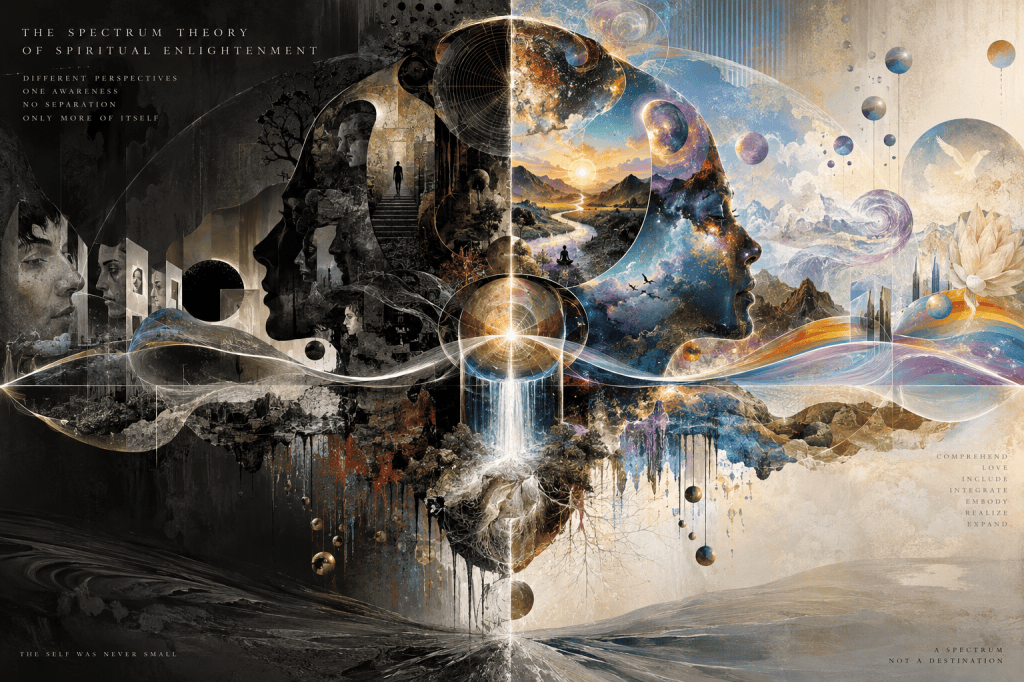
Spiritual enlightenment may be better understood as a spectrum.

This challenges one of the oldest assumptions surrounding enlightenment: that someone either has it or does not.

Enlightened. Unenlightened.

Awake. Asleep.

Self-realized. Ignorant.

Such divisions may be useful when describing a radical shift in consciousness, but they become inadequate when we begin examining the enormous differences between people who have undergone profound spiritual realization.

Two individuals may both recognize the nondual nature of reality and still differ tremendously in their capacity for love, emotional integration, intellectual complexity, perspective-taking, creativity, compassion, self-awareness and their ability to function within the complexity of human life.

This suggests something important.

Realization may happen, while enlightenment continues to unfold.

Enlightenment Is Not Simply What You Experience

Mystical experience alone cannot adequately define enlightenment.

A person may experience ego dissolution, timelessness, boundlessness, unity, emptiness or the disappearance of the subject-object boundary. These experiences can radically alter one’s understanding of reality.

Yet experience eventually encounters interpretation.

The human organism must somehow understand what occurred.

A Christian mystic may interpret unity through Christ. An Advaita practitioner may interpret it through Brahman. A Buddhist may describe emptiness. A neuroscientist may speak about changes within the brain’s construction of selfhood.

The experience may contain striking similarities while the interpretation reflects the developmental capacity of the person experiencing it.

This raises a provocative possibility:

What if enlightenment is not measured solely by how deeply you can disappear, but also by how much reality you can contain when you return?

The Capacity to Hold More

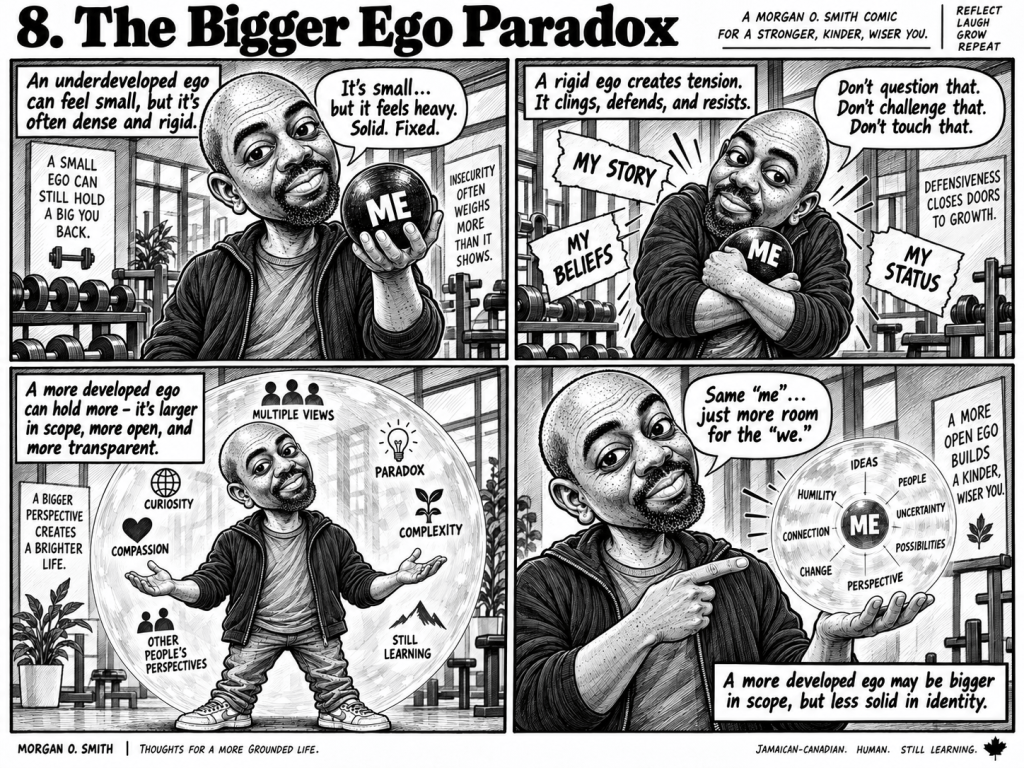
Perhaps spiritual development can partly be understood as increasing capacity.

The more you can comprehend.

The more you can love.

The more perspectives you can hold simultaneously.

The more contradiction you can tolerate without immediately forcing reality into either-or categories.

The more emotional intensity you can experience without becoming completely possessed by it.

The more uncertainty you can encounter without manufacturing certainty simply to make yourself comfortable.

The more of yourself you can observe without defending an identity.

The more of another person you can understand without requiring them to resemble you.

Something begins expanding.

Not necessarily the Self, because from the nondual perspective the Self was never small.

What expands is the human capacity to consciously express what has always been unlimited.

Depth and Breadth Are Different

Someone can go extraordinarily deep while remaining relatively narrow.

This distinction deserves attention.

A profound meditator might enter states of consciousness inaccessible to most people while still possessing rigid cultural assumptions.

A brilliant philosopher might understand dozens of perspectives intellectually while remaining emotionally defended.

A deeply compassionate person may possess extraordinary interpersonal wisdom without having experienced nondual realization.

A mystic may recognize the Absolute while still carrying unresolved psychological conditioning.

These are different dimensions of development.

Calling all of them simply “spiritual advancement” obscures what is actually happening.

A more complete model of enlightenment would therefore require several dimensions.

Depth concerns how completely consciousness penetrates the apparent separation between observer and observed.

Breadth concerns how many perspectives, systems, cultures, disciplines and modes of knowing can be included within one’s understanding.

Integration concerns how thoroughly unconscious, emotional and psychological material becomes incorporated rather than denied, projected or spiritually bypassed.

Embodiment concerns whether realization actually changes how someone lives, relates, creates, responds and participates in the world.

We could express the basic model as:

Enlightenment = Depth × Breadth × Integration × Embodiment

This is not intended as a literal mathematical equation. It is a conceptual instrument.

Its purpose is to prevent one extraordinary dimension from being mistaken for the whole.

Absolute Realization, Relative Development

Here lies an apparent paradox.

The Absolute does not develop.

If nonduality is ultimately true, then there cannot be more or less of the Absolute. There cannot be 40 percent Brahman, 72 percent emptiness or 95 percent pure awareness.

What is fundamental simply is.

Yet the organism through which realization expresses itself certainly develops.

The nervous system develops.

Language develops.

Emotional intelligence develops.

Perspective-taking develops.

Ethical sensitivity develops.

Creativity develops.

Conceptual sophistication develops.

The ability to tolerate complexity develops.

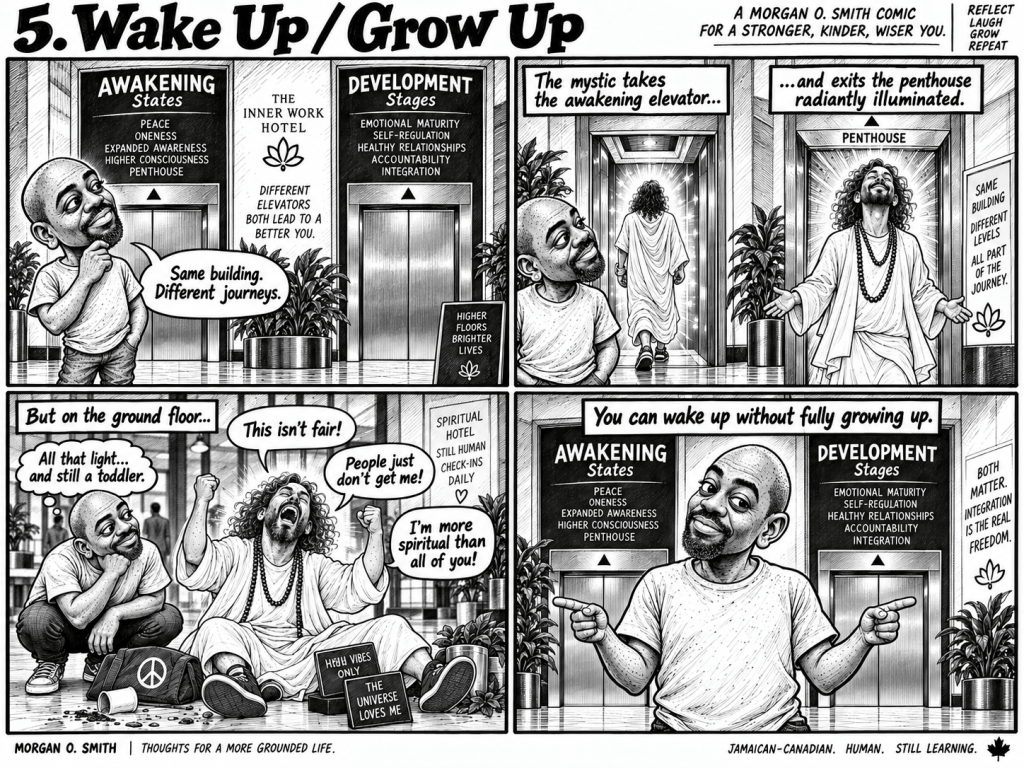
This means absolute realization and relative development should not be confused.

Someone may recognize what is timeless while still being a very particular human being shaped by history, biology, culture, trauma, education and psychological conditioning.

Enlightenment does not necessarily erase the relative human structure.

It changes the relationship to it.

The Number of Perspectives You Can Become

Perspective-taking may be one of the most overlooked dimensions of spiritual maturity.

Early consciousness tends to experience its own perspective as reality itself.

“This is what happened.”

“This is what God wants.”

“This is who I am.”

“This is who you are.”

Greater awareness begins noticing something strange.

Every perspective reveals something while simultaneously concealing something.

Move positions and reality changes.

The child sees one world.

The parent sees another.

The scientist sees another.

The artist sees another.

The mystic sees another.

The atheist sees another.

The person who hurt you sees another.

None necessarily possesses the complete picture.

Spiritual maturity may therefore involve becoming increasingly capable of moving between perspectives without being imprisoned by any of them.

Eventually something even stranger becomes apparent.

The perspectives themselves are occurring within awareness.

Then the question changes from:

Which perspective is ultimately correct?

to:

What is it that can become all of these perspectives without being limited to any of them?

That question points directly toward nonduality.

Love as Expanded Identity

Love also changes when viewed through this model.

Love is usually understood emotionally. We love certain people because they matter to us.

Nondual realization introduces another possibility.

What happens when the boundary defining “me” becomes less convincing?

Compassion may no longer arise merely because one has been instructed to care about others.

Another person’s suffering begins to matter because “other” has become philosophically and experientially unstable.

Their consciousness is no longer entirely foreign territory.

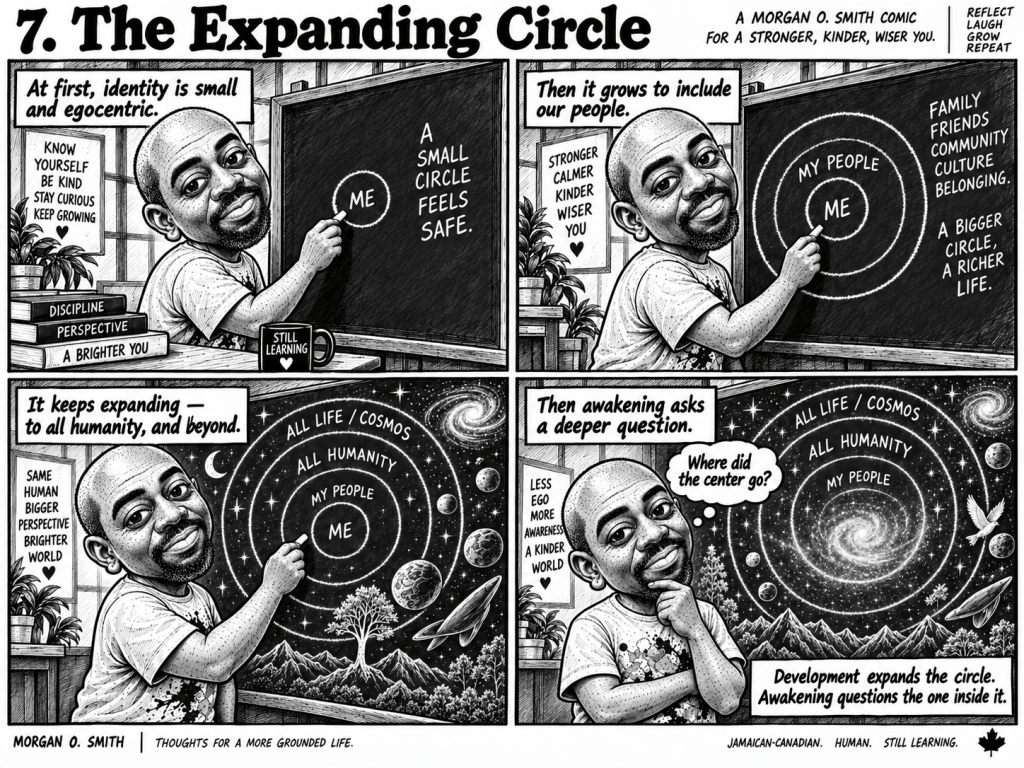
The expansion of love may therefore correspond with an expansion of identity.

First, myself.

Then my family.

My community.

My people.

Humanity.

Sentient life.

Life itself.

Existence.

Eventually the circle collapses because there is nowhere outside it.

Love becomes less about extending kindness from one separate being toward another and more about reality recognizing itself through apparent difference.

Enlightenment Does Not Make You Finished

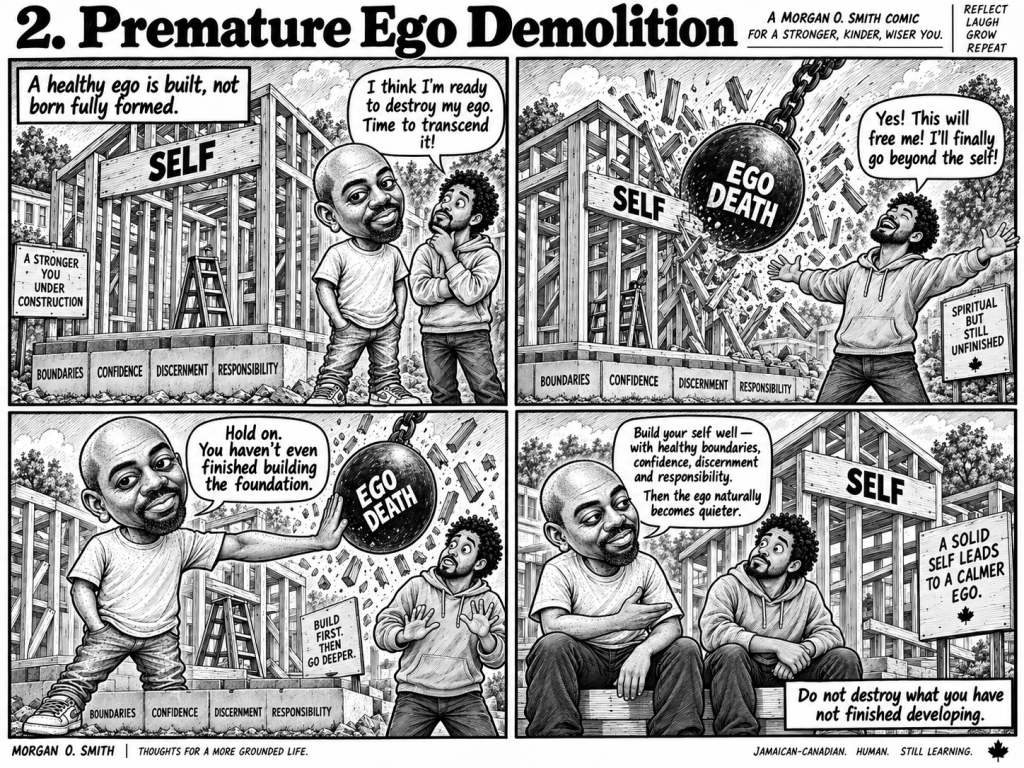
Perhaps one of the most dangerous ideas surrounding enlightenment is the belief that awakening makes further development unnecessary.

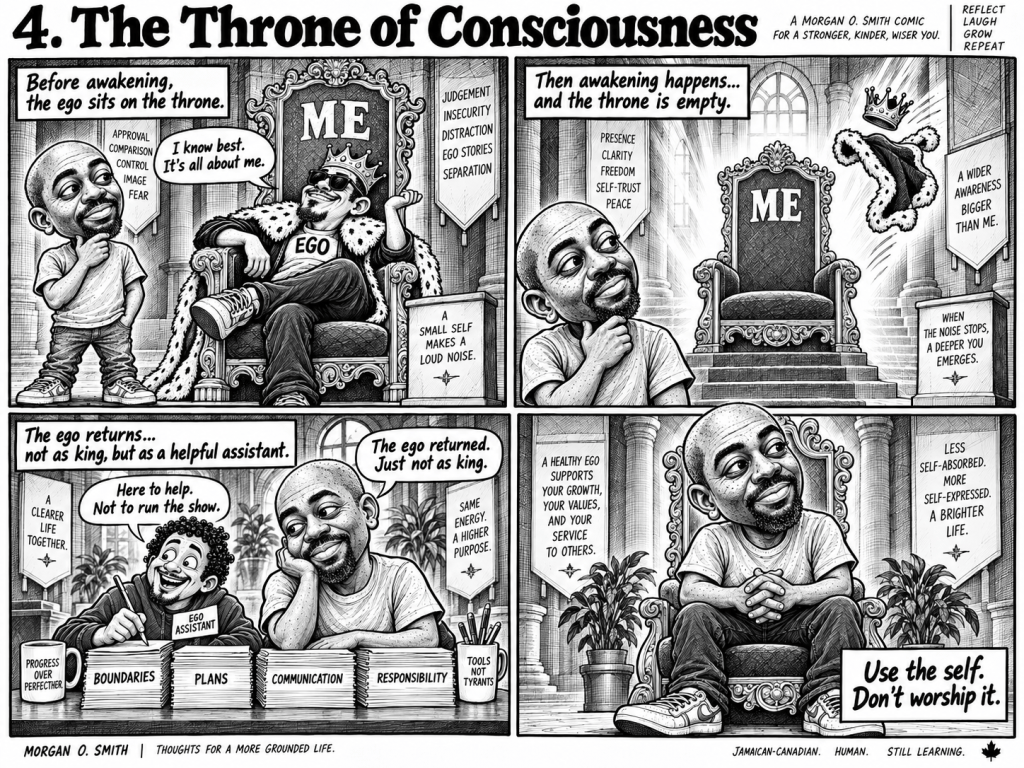
That belief can transform realization into another identity.

“I am enlightened.”

Now the ego possesses the absence of ego.

A remarkably clever maneuver.

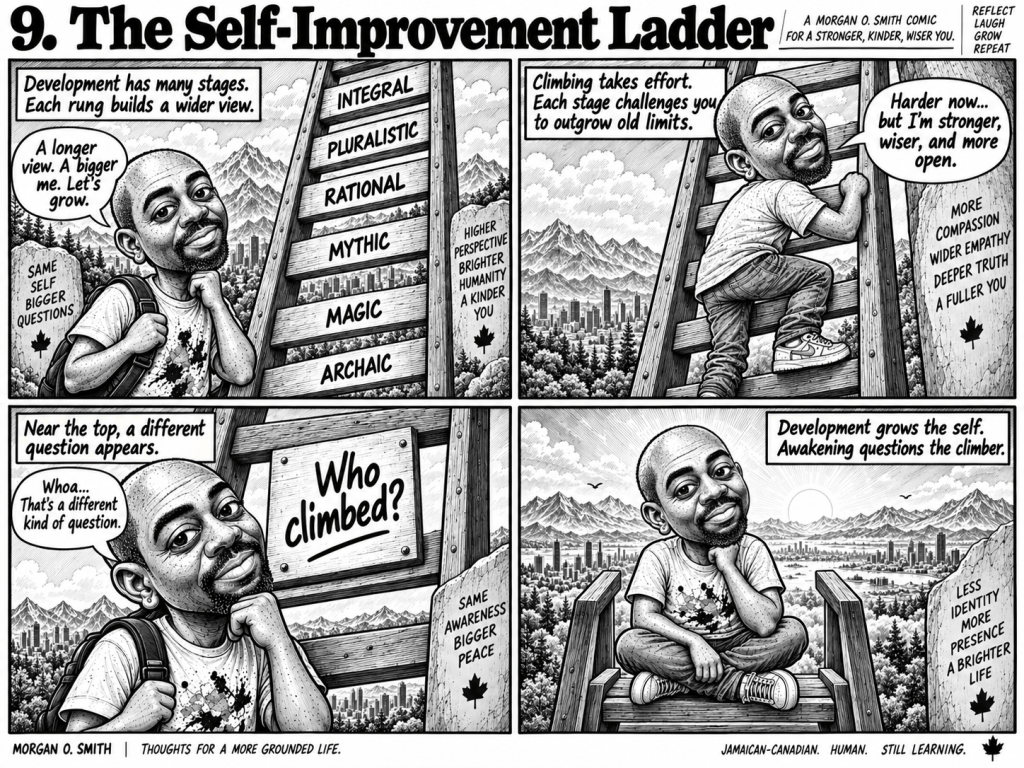
Genuine realization may actually make development more demanding because fewer psychological hiding places remain convincing.

There can still be conditioning to examine.

Relationships to repair.

Knowledge to acquire.

Blind spots to discover.

Emotional capacities to strengthen.

Perspectives to encounter.

Humanity to embody.

Awakening does not necessarily end development.

It may remove the central illusion around which development previously revolved.

A Spectrum Without a Final Number

The spectrum model should not become another spiritual ranking system.

Its purpose is not to assign enlightenment scores.

The moment we begin arguing that one person is “Level 8 enlightened” while another is “Level 5,” we risk rebuilding hierarchy around something that fundamentally undermines the separate self seeking status.

The spectrum is multidimensional.

Someone may possess extraordinary contemplative depth but limited psychological integration.

Another person may demonstrate remarkable compassion and embodiment while having little interest in metaphysics.

Another may possess tremendous intellectual breadth but little experiential realization.

Development can be uneven.

That unevenness is precisely why a spectrum model becomes useful.

It allows us to stop pretending that enlightenment must produce identical human beings.

The Strange Conclusion

The deepest realization may reveal that nothing needs to become enlightened.

What you fundamentally are was never trapped.

Awareness itself was never confused.

The Absolute never forgot itself.

The person was the apparent location through which forgetting and remembering occurred.

Yet something continues after that recognition.

The human expression can become wider.

More integrated.

More sensitive.

More capable of holding contradiction.

More capable of intimacy.

More capable of uncertainty.

More capable of seeing through its own assumptions.

More capable of allowing perspectives that once threatened its identity.

More capable of loving without possession.

Perhaps enlightenment contains two movements that appear contradictory only when confused with one another.

One movement reveals that there is nowhere to go.

The other reveals that development has no obvious endpoint.

The Absolute is complete.

Its expression through a human life is not.

This may be one of the great paradoxes of spiritual enlightenment:

You can realize that you are already everything while continuing to discover how much more of everything you are capable of consciously containing.

Morgan O. Smith
https://linktr.ee/morganosmith

The Shadow of the Absolute

Absolute reality is often imagined as pristine, untouched by fracture or contradiction. Spiritual language tends to elevate the ground of all being into something luminous, serene, and eternally harmonious. Yet such portrayals can become subtle distortions, projecting human preferences onto what cannot be reduced to preference at all.

A paradox emerges the moment one considers totality without exception. That which includes everything cannot exclude darkness. Absolute wholeness does not merely contain light; it also contains the conditions for obscurity, confusion, and dissolution. Darkness is not an error within the whole but a necessary expression of completeness.

Perception recoils from this idea because it challenges the instinct to divide existence into sacred and profane. Thought longs for a purified origin, a source untouched by contradiction. Reality, however, refuses such simplification. A ground that generates multiplicity must also generate polarity. Shadow is not a flaw in the absolute; shadow is the evidence that nothing has been left out.

Mystical insight sometimes reveals a luminous unity, a direct recognition that all forms arise from a single boundless presence. Such experiences carry a sense of purity and peace. Yet stabilization of that recognition requires a deeper maturity: the willingness to acknowledge that the same boundlessness also births terror, ignorance, and fragmentation.

Resistance to this insight often leads to spiritual bypassing. Individuals cling to transcendence while denying the darker textures of existence. Absolute realization does not erase complexity. Genuine awakening expands capacity to embrace the full spectrum of being without retreating into selective idealization.

A universe that manifests stars also manifests collapse. Consciousness that illuminates truth also generates illusion. Absolute reality stands prior to judgment, neither endorsing nor rejecting the movements arising within it. Shadow becomes a teacher rather than an adversary once this is understood.

Human life mirrors this cosmic structure. Personal development frequently involves confronting suppressed aspects of identity. Integration replaces avoidance. Clarity emerges through engagement rather than denial. Recognition of one’s own shadow deepens reverence for the vast intelligence that allows contradiction to coexist.

Absolute reality remains unbroken even while appearing fragmented. Darkness does not diminish the ground of being; it reveals its radical inclusivity. True spiritual maturity rests upon this recognition: wholeness requires nothing less than everything.

Morgan O. Smith

Trans-Rational vs. Pre-Rational

The Subtle Distinction of True Spiritual Maturity

Many spiritual paths appear radiant on the surface, filled with symbols, mantras, and promises of transcendence. Yet beneath the surface lies a crucial divide often overlooked: the difference between pre-rational and trans-rational spirituality. Both appear to reach beyond logic, yet one regresses beneath it while the other transcends it entirely. To the untrained eye, they can look identical.

The pre-rational domain is instinctive, emotional, and magical. It belongs to an earlier structure of consciousness that sees reality through myth, projection, and emotional fusion. The pre-rational individual feels connected to life, but that connection is often undifferentiated; there is no clear boundary between the self and the world. Intuition replaces discernment. Myth replaces direct knowing. This is the consciousness of the dreamer who mistakes imagination for revelation. Many who fall into this category speak the language of mysticism but remain bound by emotional dependency and unexamined belief.

The trans-rational individual, on the other hand, has journeyed through the rational mind, not around it. They have integrated logic, science, and self-reflection into their foundation. Their transcendence is not an escape from intellect but a movement beyond its limitations. The mind becomes a servant rather than a master. Awareness expands to include paradox, complexity, and the ineffable without denying the relative truth of reason. Where the pre-rational personality confuses fantasy with insight, the trans-rational sees through both fantasy and logic as partial mirrors of the Real.

Many spiritual communities confuse these two movements, what Ken Wilber calls the pre/trans fallacy. Mystical language, emotional intensity, or devotion can appear “advanced,” when in fact they may mask regression to earlier, unintegrated states. True trans-rational realization does not deny the world; it refines perception until all appearances reveal the same unbroken consciousness. It honours both matter and spirit as dimensions of the same reality, seeing no need to reject one for the other.

The pre-rational seeks comfort in transcendence; the trans-rational finds freedom in presence. The former escapes complexity; the latter embraces it as divine play. One dissolves into illusion; the other dissolves illusion itself. The difference is not about how high one climbs, but how fully one includes.

Morgan O. Smith

Join us for our free virtual Zoom/YouTube group meditation session tonight, Wednesday, November 12th, at 8:00 PM ET. Please have your headphones or earbuds ready for the full experience. Take an hour for yourself to unwind, breathe, and reconnect.

Meeting ID: 859 0097 8411

Passcode: 676036

Once Enlightened… Your Problems Have Just Begun

The illusion is that awakening is the end of the road. That the moment the self dissolves, suffering bows out, and the curtain falls. But what if that moment is not an arrival, but a beginning?

Before awakening, the ego fights battles it believes are personal. After awakening, the battlefield is not smaller—it’s vaster, quieter, and infinitely more subtle. The old problems—desire, fear, control—don’t disappear. They shape-shift. They clothe themselves in spiritual garments and reintroduce themselves as paradoxes: “Should I speak, or is silence more aligned?” “Is this surrender or passivity?” “Am I still pretending there’s a me who can do or not do?”

No one warns you that after the clouds part, the sun may burn.

Liberation is not the end of pain. It’s the end of avoidance. One no longer flinches. One no longer hides. You feel fully raw, exposed, without anesthesia. And still, you sit. Still, you breathe. Still, you bow.

You now see with clarity what others can’t. You watch the mechanisms of ego turning behind the eyes of those you love, and the weight of compassion grows heavier, not lighter. You begin to weep for the world—not out of despair, but from a reverence so deep it bends your knees.

Once you’ve seen through the illusion of self, the world becomes impossibly intimate. Every leaf becomes your body. Every scream, your own. Every cruelty, a mirror reflecting the exact frequency of your forgotten selves. There is no refuge. There is only recognition.

You don’t get to leave the world. You return to it—with your skin ripped open, your boundaries gone, and your heart unarmored. Enlightenment doesn’t make you untouchable. It makes you unable to turn away.

There are no medals for realization. No applause for dissolving. No reward for merging with the absolute. What you get, instead, is a silence that never leaves you. A love so vast it terrifies the small mind. A clarity that strips you of every comfortable lie.

And you carry it.

Not as a badge.
As a burden.
As a blessing.
As a vow.

You walk through the world invisible, but more alive than ever. And your problems—they don’t vanish. They deepen. They purify. They sanctify.

Not because you are broken.

But now, you are whole.

Morgan O. Smith

Get Your Free Copy of My Book, Bodhi in the Brain!

https://subscribepage.io/oTSZQu

The Game of Black & White

How You Play the Game of Black & White Reveals Your Level of Spiritual Maturity

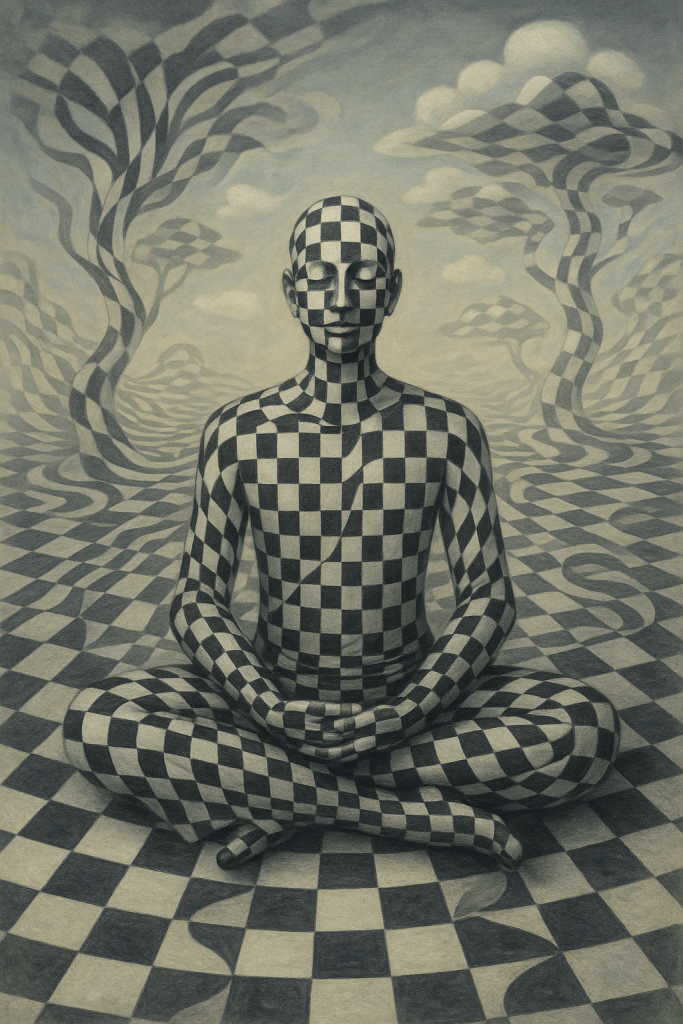
He doesn’t avoid the black squares. He just stops thinking they’re cursed.

You can tell how spiritually mature someone is by how they engage with contrast—not by how they escape it. The game of black and white is always being played. Light falls beside shadow, certainty walks with doubt, and gain is never far from loss. But while most are trying to land only on the white tiles, the one who has seen beyond duality walks freely across the whole board.

Spiritual growth doesn’t mean becoming invulnerable to darkness; it means seeing the darkness without contracting around it. A child in awareness recoils from discomfort and seeks the promise of the ‘light.’ A grown soul knows that neither is final, and neither needs to be resisted. The black square isn’t a punishment. The white square isn’t a reward. They are moves in the same dance.

The one who awakens learns to stop chasing symmetry. No longer obsessed with winning, they realize it was never about domination of light over dark, nor rising above contradiction. It was about presence through all of it. About meeting each moment with equanimity, whether wrapped in sorrow or shining in joy.

Some play to avoid pain. Others play to seek pleasure. But the wise one plays to see. And seeing, they cease to play as a someone at all.

They simply move.

Morgan O. Smith

Get Your Free Copy of My Book, Bodhi in the Brain!

https://subscribepage.io/oTSZQu

The Evolution Beyond Personal Deities

Embracing the Infinite

In the profound journey of spiritual awakening, there comes a moment when the personal god, once a comforting presence, begins to feel like an ill-fitting garment. This is not a rejection but an evolution, akin to an adolescent who outgrows their need for an imaginary friend. This metaphorical maturation reflects a deeper understanding of the divine as an infinite, formless presence, beyond any personal characteristics or limitations.

In our early spiritual development, the idea of a personal god can be immensely comforting. It offers a sense of security and companionship, much like a child’s imaginary friend. This anthropomorphic deity provides guidance, solace, and a moral compass, helping us navigate the complexities of life. However, as we delve deeper into the realms of spirituality and nonduality, our perception of divinity begins to transform.

The transition from a personal god to an impersonal, infinite reality mirrors our journey from ego-bound identities to the realization of our true, boundless nature. This shift is not about abandoning faith but about expanding it. It is about moving from a limited, dualistic perception of the divine to an all-encompassing, nondual awareness. Here, the divine is not a separate entity but the very essence of existence itself, permeating every atom of the cosmos.

Embracing this infinite reality requires a profound letting go of old paradigms. It involves releasing the need for a deity who looks like us, thinks like us, and intervenes in our lives. Instead, we begin to see the divine as an all-pervasive consciousness, a vast, unconditioned presence that transcends all forms and concepts. This realization brings a deep sense of peace and unity, as we recognize our inherent connection to the divine.

This evolution can be challenging. It demands that we confront our deepest fears and insecurities, the aspects of ourselves that clung to the comfort of a personal god. Yet, it is in this very confrontation that we find liberation. By letting go of the need for a personal deity, we open ourselves to the infinite, experiencing the divine in every moment, every breath, and every heartbeat.

In this state of expanded awareness, prayer and meditation transform. They become less about seeking guidance or intervention from a higher power and more about attuning themselves to the subtle, ever-present flow of divine energy. Our spiritual practices deepen, becoming a means of aligning with the infinite, of experiencing the divine as an intimate part of our being.

Ultimately, the evolution beyond a personal god is a return to our true nature. It is a journey from the confines of duality to the boundless expanse of nonduality. This realization is not an endpoint but a continuous unfolding, a never-ending exploration of the infinite depths of existence.


As we embrace this evolution, we step into a new dimension of spiritual maturity. We recognize the divine in all its forms and formlessness, in every aspect of life and beyond. And in this recognition, we find a profound sense of belonging, a deep, abiding peace that transcends all understanding.

Morgan O. Smith

Yinnergy Meditation, Spiritual Life Coaching & My Book, Bodhi in the Brain…Available Now!

https://linktr.ee/morganosmith