Beyond the Lens of Devotion

How Presence Reveals Consciousness

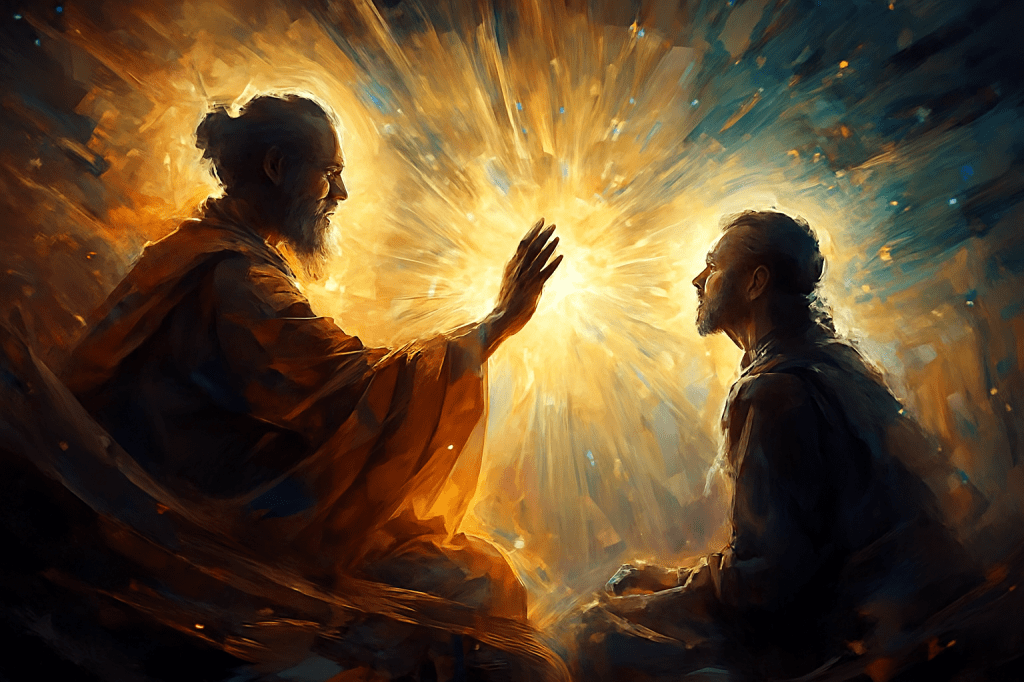
Most people think of darshan as a moment where a seeker looks upon a teacher, saint, or deity. Yet something far more nuanced unfolds beneath that outward exchange. The gaze, the silence, the presence, each thread of the encounter shapes consciousness in ways that depend on the inner maturity of the one receiving it.

A childlike stage approaches darshan with awe charged by emotion. The world feels animated by invisible forces, and a teacher appears to hold the keys to destiny itself. Nothing is questioned; everything is absorbed. Power seems to live outside the self, radiating from the figure who stands upon the altar or sits upon the asana.

A more developed stage begins to untangle symbol from projection. Presence is recognized not as magic, but as psychology refined into ritual. A teacher’s gaze becomes a mirror through which hidden material rises. Nervous systems synchronize, emotions unravel, archetypes awaken. What once felt supernatural becomes profoundly human, yet no less sacred for being understood.

A deeper stage meets darshan without seeking a blessing at all. Awareness recognizes its own reflection across an imagined divide. The teacher’s presence becomes a steady flame, revealing the same light in the one who looks. The moment turns transparent; subject and object thin into a single field. No transmission is required because nothing is actually transferred. Consciousness simply stands revealed to itself.

Darshan, then, is not a singular practice but a spectrum. It can soothe fear, unlock psychological insight, or open the doorway into the unbounded. Each layer is valid. Each layer meets the seeker where they stand. The mystery lies in how the same ritual changes meaning as consciousness evolves.

Perhaps the most profound realization is this: the power of darshan has never been contained within the one who gives it. The power rests in the depth of the one who receives.

Morgan O. Smith

Get Your Free Copy of My Book, Bodhi in the Brain!

https://subscribepage.io/oTSZQu

Courting the Unplanned

How Practice Prepares Us for Awakening

Accidents are rarely welcome. They’re events that disrupt plans, crack illusions of control, and leave us changed. Spiritual awakening carries something of that wildness. It can’t be willed into being like a project with clear steps and predictable results. Yet there’s a paradox: devoted contemplative practice seems to make one more likely to be undone by it.

Meditation does not guarantee enlightenment. It prepares no certificate, no badge of arrival. Instead, it functions more like softening the soil so a seed can break through when conditions conspire. This isn’t an engineering feat—it’s an invitation to the uncontrollable.

Spiritual traditions often warn against striving too hard. Effort burns away distractions, but effort itself becomes another barrier if clung to. Discipline is essential, but so is surrender. A meditator learns to sit still enough for their self-concept to slip, fragile as old paint on a crumbling wall. What breaks through is not what the ego planned.

Such a shift is catastrophic for self-image. One can’t choreograph being seized by silence, seen through by awareness, or stripped of all strategies. Preparation helps only because it erodes resistance. A lifetime of practice might be nothing more than a way of making oneself more susceptible to grace.

Grace here is no moral reward. It’s the inexplicable unveiling of what has always been true. Practice hones attention so that, eventually, one notices the absurdity of separation. The boundary keeping “me” apart from the rest collapses. It can feel like an accident precisely because it breaks expectation so thoroughly.

So why practice? Not to force awakening but to grow familiar with letting go. To cultivate the courage to be shattered. To understand that no amount of control can deliver the gift, but the willingness to wait can make one receptive. A practitioner may become the sort of person for whom awakening is more likely—not because they deserve it, but because they are no longer guarding against it.

True meditation is a kind of sabotage of our usual certainties. That is its danger, and its promise. The question isn’t whether practice causes awakening like cause yields effect, but whether practice makes us vulnerable enough to be struck by what is always here.

Morgan O. Smith

Get Your Free Copy of My Book, Bodhi in the Brain!

https://subscribepage.io/oTSZQu

The Rapture of Letting Go

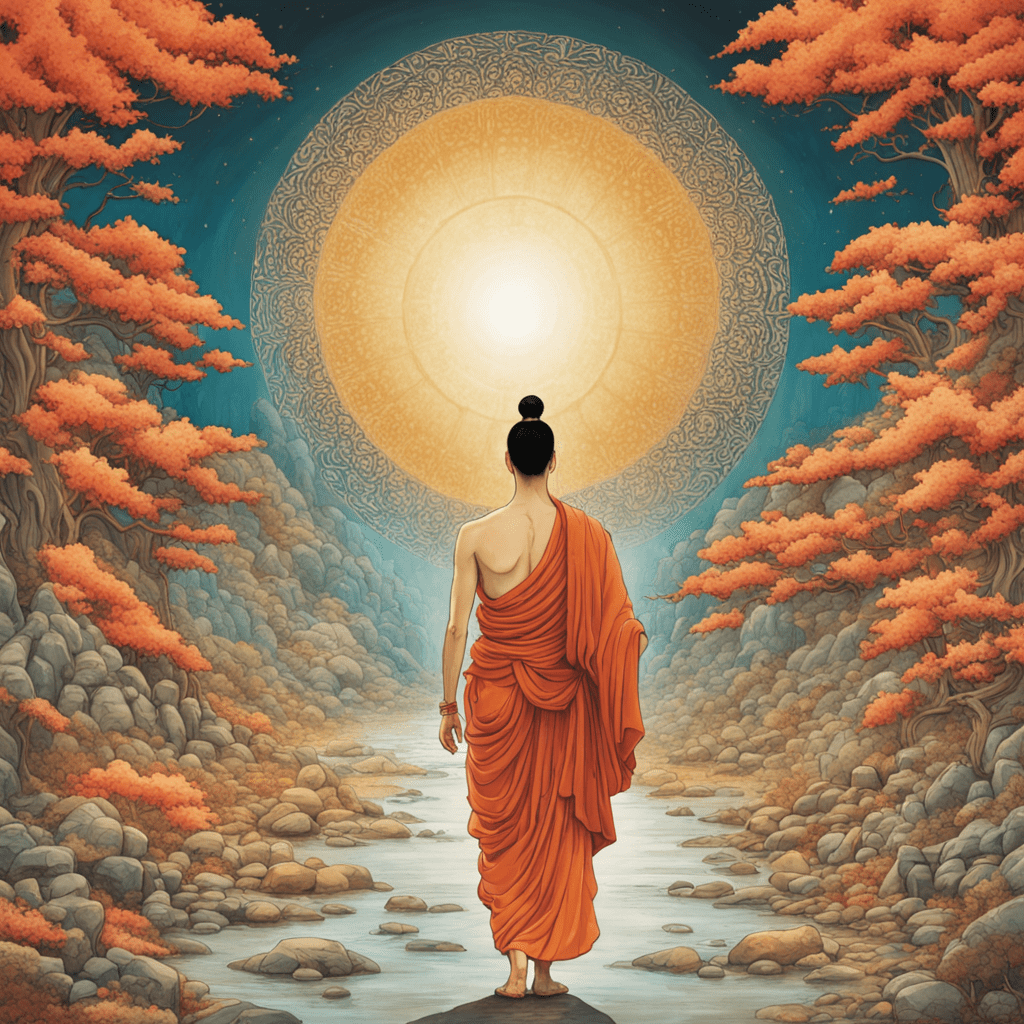
Presence is not a prize to be won or a fortress to defend. It is not some static peak upon which the awakened are meant to perch forever, unmoved and untouchable. The pursuit of a “permanent state” of anything—even presence—quietly binds us again to the illusion we sought to transcend. It becomes another mask of the seeker, cloaked in stillness, trembling behind the veil of spiritual ambition.

States rise and dissolve. Rapture comes like a summer breeze and vanishes just as gently. Then irritation, confusion, boredom. Then clarity. Then fog. The parade continues, not because you are failing, but because you are alive.

To lose attention is not to lose awareness. What perceives the loss? What observes the drift and the return? That witnessing is untouched. It is not opposed to distraction, nor does it seek permanence. It simply is, always.

Clinging to peace is no different from clinging to pain. The grasping hand is the same. When rapture becomes an achievement, it quietly rots. But when it is allowed to dance freely—hidden beneath the dishes in the sink, behind the silent gaze on the subway, or in a burst of sudden awe at the sky—then it becomes alive again.

You can continue to practice, to breathe, to cultivate. But do so like a child builds a sandcastle: for the love of it, not to resist the tide. Joy, too, is a practice. But it must remain unhooked from outcome.

There’s a kind of rapture in the background hum of your own awareness—even when the foreground is chaos. That quiet clarity never left. You’re not missing the moment. You are the moment, passing through its own reflections. And if you laugh at the absurdity of forgetting and remembering over and over again, then perhaps that’s the most awakened thing of all.

Morgan O. Smith

Get Your Free Copy of My Book, Bodhi in the Brain!
https://subscribepage.io/oTSZQu

The Unseen Path to Happiness

Happiness often appears as a destination—something to be attained by seeking pleasurable experiences, avoiding pain, and curating external conditions. Yet, this pursuit can feel elusive, as if true happiness constantly moves just beyond reach. Perhaps this is because happiness isn’t found in the suppression or control of emotions, but in embracing them all as integral aspects of our human experience.

Emotions are often categorized as “positive” or “negative,” with joy, love, and excitement praised, while sadness, anger, and fear are seen as obstacles to overcome. However, this dualistic view creates resistance. Denying so-called negative emotions only magnifies their intensity, embedding them deeper within the psyche. True contentment arises not from avoiding discomfort but by fully experiencing and accepting it without judgment.

Imagine sitting with sorrow as you might with an old friend—acknowledging its presence, listening to its message, and recognizing its role in your life. Sadness, when embraced, transforms from an adversary into a teacher. It illuminates where attachments or unmet desires linger and invites you to release the illusion of control. Similarly, anger, when approached without suppression or overindulgence, becomes a fierce energy capable of clarifying boundaries and catalyzing change.

Contentment is not denying the human condition but a deep surrender to its unfolding. This surrender doesn’t mean passivity; it is an active engagement with the present moment. By welcoming all emotions, the inner landscape transforms. Happiness is no longer confined to fleeting highs but instead becomes an abiding state of being—anchored in equanimity, rooted in authenticity.

In this light, happiness is not the absence of pain but the profound realization that all emotions—joy and sorrow, peace and unrest—are sacred facets of existence. Each one offers an opportunity for growth, insight, and connection. To find contentment within them is to see life as whole, unbroken, and imperfect.

By sitting with your emotions and embracing their entirety, you awaken to the simple truth: happiness is not found in resisting life but in meeting it fully.

Morgan O. Smith

Yinnergy Meditation, Spiritual Life Coaching & My Book, Bodhi in the Brain…Available Now!

https://linktr.ee/morganosmith

Exploring the Mystical Depths of Meditation

Insights from a Neurofeedback EEG Assessment

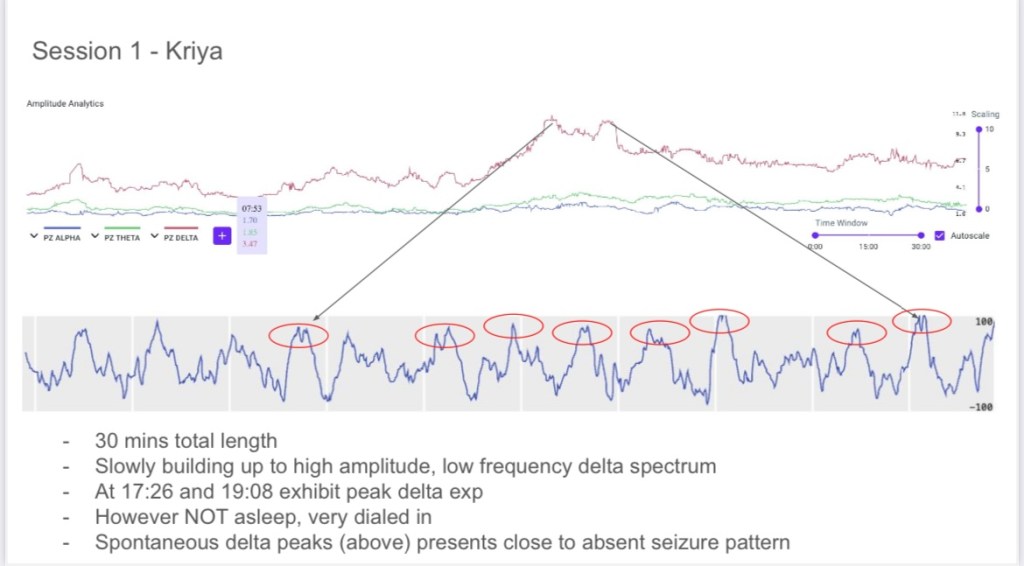
On Friday, November 22, I had the unique opportunity to undergo a neurofeedback EEG assessment to evaluate my brain’s activity during meditation. This fascinating experience was facilitated by neurofeedback expert Alex Ni, the CEO of Divergence Neuro Technologies. The results revealed something extraordinary: my brainwave patterns reflect those of an advanced meditator, marked by the ability to generate high-amplitude delta waves while fully awake and completely still.

This outcome did not arise overnight—it is the culmination of over 21 years of dedicated meditation practice. For at least an hour every day, without missing a single session, I have cultivated this state of deep awareness. Meditation has been my unwavering companion on a journey of transformation, healing, and spiritual exploration.

Key Findings

  1. High-Amplitude Delta Waves in Wakefulness
    The assessment showed that I could produce delta waves typically seen in deep sleep or unconscious states, but while fully conscious and still. These peaks, which appeared spontaneously, resemble absent seizure patterns in their electrical signature. Yet, instead of being pathological, they occurred in a meditative state, reflecting a refined and balanced neural state.
  2. Kriya and Kundalini Correlations
    The kriyas, spontaneous energetic movements often experienced during meditation, seem directly connected to these delta peaks. This activity suggests a state where the body-mind system is releasing suppressed energies or blockages, facilitated by deep equanimity and heightened awareness.
    The presence of delta spikes may also be a physiological manifestation of kundalini energy—the subtle, transformative force described in spiritual traditions as rising through the chakras.
  3. Expert Validation
    Alex Ni was so intrigued by the findings that he consulted Dr. Jeff Tarrant, a 30-year expert in brainwave research. Dr. Tarrant noted that similar patterns were observed in his three-year study with mediums—further validating the unique nature of these results.

Bridging Neuroscience and Spirituality

The findings of this assessment reveal a fascinating convergence of neuroscience and spirituality. The high-amplitude delta waves, kriyas, and kundalini energy point to a profound transformation occurring at the intersection of the nervous system and consciousness. These patterns suggest that meditative practices have the potential to fundamentally alter neural pathways, facilitating deep healing and profound states of awareness.

Implications of Advanced Meditation

  1. Energetic Purification
    The kriyas and delta spikes may signify a cleansing process, releasing deep-seated energetic blockages and re-aligning the body-mind system.
  2. Non-Dual Awareness
    The ability to remain conscious during delta brainwave peaks reflects a state of non-dual awareness—where presence and transcendence coexist seamlessly. This aligns with descriptions of advanced meditation states where the ego dissolves, creating space for higher consciousness.
  3. Kundalini and Neural Rewiring
    The resemblance of these patterns to absent seizures may indicate neural rewiring as the body adjusts to the heightened kundalini energy. This profound restructuring of the nervous system is often associated with spiritual awakening processes.

A Path Forward

Next week, I will participate in another study to explore this phenomenon further. These experiences offer a glimpse into the transformative potential of meditation—not just as a tool for relaxation but as a gateway to the depths of human consciousness and spiritual awakening.

For anyone intrigued by these groundbreaking insights into meditation and neuroscience, I encourage you to explore the work of Divergence Neuro Technologies at www.divergenceneuro.com. Their cutting-edge research continues to illuminate the profound connections between the brain and consciousness, offering a deeper understanding of what it means to transcend the ordinary and touch the extraordinary.

Through this journey, it’s clear that meditation is more than a practice—it’s a bridge between worlds, where the boundaries of science and spirituality dissolve into the infinite.

It’s humbling to reflect on how two decades of unwavering dedication to meditation have paved the way for these remarkable insights. This is an affirmation that the time and intention invested in inner stillness have the power to transform not only the mind and body but also our very relationship with existence itself.

Morgan O. Smith

Yinnergy Meditation, Spiritual Life Coaching & My Book, Bodhi in the Brain…Available Now!

https://linktr.ee/morganosmith

The Varied Facets of The Absolute

A Unified Whole

In the dance of the cosmos, the Absolute is often perceived through the lens of our individual experiences and understandings. Just as 100 pennies, 20 nickels, 10 dimes, and 4 quarters each represent the same dollar, our paths to understanding the Absolute are varied but ultimately converge upon the same truth. This analogy illuminates the inherent unity within diversity, revealing how different perspectives can harmoniously merge into a singular reality.

We often encounter myriad teachings, practices, and philosophies when we embark on our spiritual journeys. Each one offers a unique perspective on the nature of existence, the self, and the divine. Some may resonate more profoundly with a particular path of devotion, while others might find solace in meditative introspection or the study of ancient texts. Despite these differences, the essence remains unchanged: all paths lead us back to the Absolute.

This concept is beautifully reflected in the Hindu notion of ‘Ekam Sat, Vipra Bahudha Vadanti’—Truth is one; the wise speak of it in many ways. In our quest for spiritual awakening, we may find ourselves drawn to various expressions of this singular truth. Whether through the loving devotion of Bhakti Yoga, the disciplined inquiry of Jnana Yoga, or the selfless service of Karma Yoga, each approach offers a distinct yet complementary understanding of the Absolute.

In nondual philosophy, this unity is further exemplified by the idea that all distinctions are ultimately illusory. The dichotomies we perceive—self and other, subject and object, time and eternity—are merely constructs of the mind. At the deepest level of awareness, these distinctions dissolve, revealing the oneness that underlies all existence. This profound realization transcends the limitations of language and thought, offering a direct experience of the Absolute.

Reflecting on the analogy of different coins making up a dollar, we can see how each perspective, practice, or tradition contributes to a holistic understanding of the Absolute. This understanding invites us to appreciate the diversity of spiritual expressions without diminishing their underlying unity. It encourages us to approach our spiritual paths with openness, recognizing that every sincere effort to understand the divine is a step toward the same ultimate truth.

In embracing this diversity, we cultivate a sense of humility and respect for the myriad ways in which the Absolute can be experienced and understood. We acknowledge that our journeys are but threads in the vast expanse of existence, each contributing to the intricate and beautiful pattern of the whole. This perspective not only enriches our spiritual journeys but also fosters a deeper sense of connection and unity with all beings.


Ultimately, the realization that 100 pennies, 20 nickels, 10 dimes, and 4 quarters all amount to a dollar serves as a powerful metaphor for the unity within diversity that characterizes the Absolute. By recognizing and honouring the varied paths that lead to this ultimate reality, we move closer to experiencing the profound interconnectedness of all existence. This understanding not only deepens our spiritual practice but also inspires us to live with greater compassion, wisdom, and love.

Morgan O. Smith

Yinnergy Meditation, Spiritual Life Coaching & My Book, Bodhi in the Brain…Available Now!

https://linktr.ee/morganosmith

The Silent Saviours

Embracing the Sacrifice of Prayerful Saints

In the quiet corners of the world, far from the clamour of daily life, exist individuals whose lives are dedicated to a profound purpose. These are the saints who have chosen a path of prayer and meditation, not for personal gain, but for the spiritual upliftment of humanity. Their existence raises a thought-provoking question: Can the dedicated prayers and meditations of a few impact the collective consciousness of many?

These saints, often unseen and unrecognized, commit their lives to the pursuit of pure consciousness, believing in its ripple effect across the world. Theirs is a life of sacrifice, one where personal ambitions are set aside for a greater cause. They bend their knees in prayer, not for moments or days, but for a lifetime, believing that their spiritual devotion can bring about a change in the world’s consciousness.

However, this concept is not without controversy. Skeptics argue that such practices are too passive, too removed from the tangible actions required to address the world’s myriad problems. They question the efficacy of prayer and meditation as tools for real change, especially when faced with immediate and pressing challenges.


Yet, the belief in the power of prayer and meditation to transcend physical boundaries and effect change is deeply rooted in various spiritual traditions. It is said that these saints, through their unwavering dedication, touch a realm of consciousness that is beyond the ordinary, sending ripples of peace, compassion, and understanding into the world.

The idea of a few praying and meditating on behalf of many is humbling and empowering. It suggests that spiritual practices have a place alongside physical actions in the quest for a better world. It challenges us to consider the unseen forces at play in our world and to acknowledge the role of spiritual sacrifice in shaping our collective destiny.

Whether one views these saints as misguided dreamers or as silent saviours, their choice to dedicate their lives to prayer and meditation is a testament to the diverse ways humanity seeks to connect with something greater than itself. Their lives challenge us to reflect on the nature of sacrifice, the power of spiritual practice, and the interconnectedness of all beings.


In conclusion, the life of a saint, dedicated to prayer and meditation for the world’s consciousness, is a profound sacrifice that deserves our respect and contemplation. It raises essential questions about the nature of action, spirituality, and our collective responsibility in shaping the consciousness of our world.

Morgan O. Smith

Yinnergy Meditation, Spiritual Life Coaching & My Book, Bodhi in the Brain…Available Now!

https://linktr.ee/morganosmith