Navigating the Labyrinth

The Dual Pathways of Spiritual Awakening

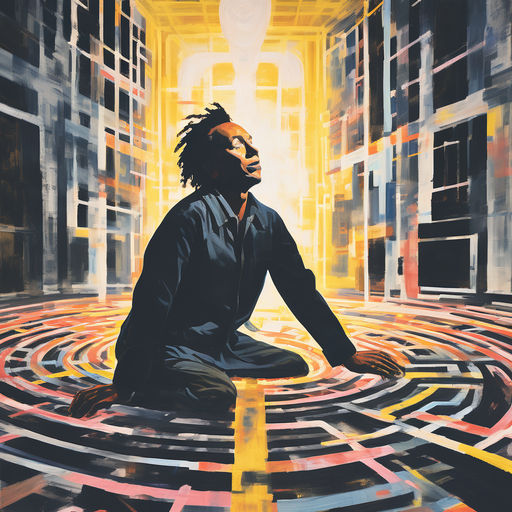
In the quest for spiritual awakening, the journey we undertake is more akin to navigating a complex labyrinth rather than traversing a straightforward path. This journey is underpinned by a profound process of behaviour modulation, where both the light of blissful experiences and the shadows of existential trials serve as our guides, pushing us toward the pinnacle of spiritual evolution.

The Dance of Light: Encouragements on the Path

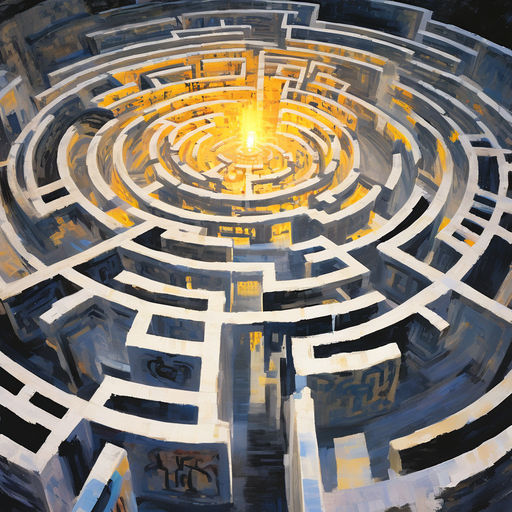
The spiritual journey is illuminated by moments of sheer transcendence—those instances of peak and mystical experiences that offer a glimpse into the ineffable oneness of existence. Such moments are not mere points of ecstasy but are profound affirmations from the universe, encouraging us on our path. The bliss, the profound insights, and the serenity encountered are the universe’s whisper, confirming that our practices and inner explorations are indeed aligning us with something much larger than ourselves. These experiences, akin to the light within the labyrinth, guide us by reinforcing our commitment to the spiritual path.

The Shadows’ Wisdom: The Catalysts for Inner Revolution

Conversely, the path is also marked by its darker phases—times when chaos seems to reign and the ground beneath us appears to crumble. The ‘dark night of the soul’, a term coined by mystic St. John of the Cross, alongside phenomena like the tumultuous awakening of Kundalini energy, represents periods where everything that was previously hidden in the shadow comes to light. Such times, though fraught with discomfort, are indispensable. They compel us to confront our deepest fears, unresolved traumas, and the myriad illusions that shroud our true essence. This confrontation, this deep dive into the unseen corridors of our psyche, is the universe’s way of urging us to shed the inessential, to dissolve the barriers that separate us from our truest selves.

The Role of Behaviour Modulation in Spiritual Evolution

It’s within this intricate interplay of light and shadow that behaviour modulation finds its significance. Our spiritual practices, meditations, our acts of kindness, and our pursuits of understanding are all behaviours influenced by the dual aspects of our journey. The euphoria of spiritual highs motivates us to deepen our practice, to chase that oneness, while the agony of spiritual lows forces introspection and a recalibration of our path.

In this context, behaviour modulation isn’t merely about adjusting our actions; it’s about a profound transformation of our very being. It’s about learning to dance with both the light and the shadow, recognizing that each step, whether in joy or pain, is a step closer to enlightenment.
The Labyrinth Unfolds: The Emergence of a Transformed Self

As we navigate this labyrinth, with its high peaks and deep valleys, we slowly uncover that the journey itself is transforming us. We begin to realize that spiritual awakening is not a destination to be reached but an ongoing process of becoming. The true awakening lies in understanding the interplay of light and shadow, order and chaos, bliss and despair, and seeing them not as opposites but as complementary forces guiding us toward our ultimate realization: that we are, and always have been, one with the infinite expanse of existence.

Morgan O. Smith

Yinnergy Meditation, Spiritual Life Coaching & My Book, Bodhi in the Brain…Available Now!
https://linktr.ee/morganosmith

Embracing Roots

A Journey Through Ancestry and Spiritual Enlightenment

In the heart of Black History Month, a period steeped in reflection and celebration, as a born Jamaican, I embarked on a deeply personal exploration into the labyrinth of my lineage. The unveiling of my genetic heritage—spanning Nigeria, Benin-Togo, Congo-Western Bantu, Ghana, Senegal, and a surprising touch of Sweden-Denmark—initiated a profound contemplation on the spiritual practices that once thrived in these regions, long before the erasure and transformation brought by the slave trade.

The spiritual landscapes of my ancestors were rich with diversity, each culture nurturing a unique relationship with the divine, the natural world, and the community. From the Orishas of Nigeria to the ancestral veneration in the Congo, and from the rhythmic ceremonies of Vodun in Benin-Togo to the profound Serer spirituality of Senegal, these practices were rooted in a deep understanding of interconnectedness. In Ghana, the harmonious balance between the physical and spiritual realms underscored the essence of existence.

The advent of the slave trade and the subsequent imposition of Christianity introduced a seismic shift in the spiritual orientation of many African descendants. This convergence of beliefs, however, did not obliterate the ancestral wisdom but rather embedded it deeper into the collective consciousness of those who were forcibly displaced. Christianity, with its narrative of suffering, redemption, and salvation, offered a new lens through which the spiritual heritage of my ancestors could be reinterpreted.

My spiritual journey, influenced by the intricate web of my genealogy, has been a testament to the resilience and adaptability of faith. It led me to the profound awakening of Nondual Suchness—an understanding that transcends the binary oppositions and dualities that often confine our perception. This realization, that everything is interconnected and every part of the universe is contained within me, has been a transformative experience. It signifies not just a return to the spiritual practices of my ancestors but an evolution of those beliefs into a holistic understanding of existence where everything is included within the gross body of my DNA.

This journey through my ancestral spiritual practices to the enlightenment of Nondual Suchness underscores the notion that we are not merely products of our immediate culture but are deeply connected to a rich historical and spiritual lineage. It highlights how the imposition of a new spiritual system can act as a catalyst for deeper spiritual exploration, leading to a more encompassing awareness that honours both the diversity and unity of our existence.

As we celebrate Black History Month, let us remember the spiritual legacies of our ancestors. Their wisdom, resilience, and spiritual insights continue to guide us, offering a beacon of light as we navigate our paths to understanding and enlightenment. In embracing our roots, we find the strength to transcend and include all that we are, forging a path toward a future where the past is not forgotten but honoured as the foundation of our spiritual growth.

Morgan O. Smith

Yinnergy Meditation, Spiritual Life Coaching & My Book, Bodhi in the Brain…Available Now!

https://linktr.ee/morganosmith


The Ouroboros of Samsara

An Endless Cycle of Self-Inflicted Suffering

The universe is filled with symbols that describe the cyclical nature of existence. One of the most captivating is the concept of ‘Samsara’ from Eastern traditions and ‘Ouroboros’ from ancient civilizations. While they emerge from different cultural contexts, they bear striking resemblances, encapsulating the endless cycle of birth, death, and rebirth and the continuous loop of life-consuming itself.

### Samsara: The Wheel of Existence

Samsara, derived from Sanskrit, signifies the cyclical process of birth, death, and rebirth. It’s a fundamental concept in Buddhism, Hinduism, and Jainism. Many Eastern spiritual practices aim to break free from this relentless cycle and attain enlightenment or Moksha. Why? Because Samsara is not just about rebirth – it’s about suffering. Every birth brings with it aging, sickness, and ultimately, death. The attachments, desires, and ignorance in life lead to actions (karma) that bind us to this wheel, causing endless suffering.

### Ouroboros: The Eternal Circle


The Ouroboros is an ancient symbol depicting a serpent or dragon eating its own tail. Found in many cultures, from ancient Egypt to the indigenous traditions of the Americas, it’s emblematic of the eternal cyclical nature of the universe. Creation out of destruction, life out of death. Just as the snake sheds its skin only to be reborn, life continually renews itself even as it ends.

### Biting One’s Tail: The Self-Caused Suffering


The fascinating aspect of the Ouroboros is the act of the snake biting its own tail. It’s a voluntary act of self-consumption, symbolizing self-reflection and the cyclical nature of things. But what if we viewed this act as a representation of self-inflicted suffering, much like the karmic traps in Samsara?

Every time we hold onto grudges, indulge in harmful habits, or remain ignorant of our true nature, we bite our own tail. We become both the cause and the recipient of our suffering. And just like the snake cannot see beyond its circular path, we often find it challenging to envision a life beyond our self-inflicted pain.

### Breaking the Cycle

While these symbols might paint a bleak picture of existence, they also offer hope. Just as the cycle of Samsara can be broken through enlightenment, the Ouroboros signifies rebirth and renewal. But this requires self-awareness.

By recognizing the patterns of our actions, understanding the roots of our desires, and embracing self-reflection, we can begin to release our grip on our own tails. This doesn’t mean the cessation of life’s challenges, but rather an enlightened approach to them, devoid of self-inflicted suffering.

In conclusion, Samsara and the Ouroboros serve as profound reminders of the cyclical nature of existence and the potential pitfalls of living unconsciously. They beckon us to awaken, to understand our role in our suffering, and to seek paths that transcend these ancient cycles. As we navigate the journey of life, may we always strive to understand the deeper meaning behind these symbols and find the courage to let go of our tail.

Morgan O. Smith

Yinnergy Meditation & My Book, Bodhi in the Brain…Available Now!
https://linktr.ee/morganosmith

The Spirituality Façade

Navigating Between Pretense and Authenticity

Introduction:
In an age where spirituality is often a trend, the differentiation between authentic spiritual pursuit and a mere display of piety becomes pivotal. If one merely adopts the garb of spirituality without authenticity, is it spirituality at all? This article seeks to explore the delicate balance between presenting oneself as spiritual and embarking on an authentic spiritual journey.

The Allure of Spiritual Image:

Social media, popular culture, and sometimes peer pressure portray spirituality as a serene and enlightened state. This depiction can be tantalizing. People are enticed to showcase themselves as spiritual beings, oftentimes to fit into a community, gain admiration or even as a refuge from self-accountability.

Defining Authenticity:

On the other side lies authenticity, which is the honesty and genuineness in one’s thoughts, actions, and intentions. Authenticity in spirituality means that one’s quest is not for show, but a sincere endeavour to seek meaning, connection, and perhaps even transcendence.

Dissecting Inauthentic Spirituality:

If spirituality is worn as a mask and not lived, it becomes hollow. For instance, one might engage in spiritual practices in public but live a life contrary to those principles in private. This lack of alignment between external display and internal values questions the very essence of one’s spirituality. Is it spirituality or is it pretense?

Authentic Spirituality – A Journey Within:

Authentic spirituality, by contrast, is unshackled by the need for external validation. It is a deeply personal journey, irrespective of the eyes that may or may not be watching. This path might be replete with doubts, stumbles, and personal challenges, but it’s real and grounded in honest pursuit.

The Purity Test:
So, how can one discern authentic spirituality? A question that individuals must ask themselves is whether their spiritual actions and pursuits would remain the same if there was no one to witness them. The answer can be very telling.

Conclusion:
To embrace spirituality is to undertake a journey of profound depth. It’s not just a robe one wears but the very fabric of one’s being. As such, authenticity should be its cornerstone. When spirituality is stripped of pretense, what remains is a raw and real quest – a journey that can be tumultuous, rewarding, and ultimately transformative. Let us aspire to ensure that our spiritual pursuits are rooted in the genuine soil of our being, not just the sands of outward display.

Morgan O. Smith

Yinnergy Meditation & My Book, Bodhi in the Brain…Available Now!

https://linktr.ee/morganosmith

The Spiritual Development Design Theory

Life as a Path to Enlightenment

From the moment of our conception until our final breath, each of our experiences – no matter how mundane or extraordinary – holds the potential for spiritual growth. This is the core tenet of the Spiritual Development Design Theory (SDDT), which proposes that our lives are intrinsically designed to guide us toward spiritual enlightenment.

Under the purview of SDDT, every aspect of life is purposefully orchestrated. Even before we are born, the cultural, familial, and societal beliefs that will shape our existence lay waiting to impart the spiritual roadmap that will guide us on our journey.

Consider the simple act of brushing your teeth, making your bed, or even sipping your morning coffee. Mundane? Perhaps. But under the lens of SDDT, these everyday routines become spiritual exercises in disguise, avenues to develop discipline, patience, humility, compassion, and gratitude.

Think of the wide array of traditions, cultures, and practices around the globe. Despite their apparent differences, SDDT sees them as different paths leading up the same spiritual mountain, offering varied yet equally valuable lenses through which to interpret the spiritual world.

In SDDT, the changing of the seasons is more than just a shift in weather. Each transition mirrors the spiritual journey itself, echoing the cycle of birth, growth, decay, and rebirth that underpins many spiritual belief systems.

And what about our careers, hobbies, and pastimes? SDDT invites us to consider how these pursuits can either distract us from or contribute to our spiritual growth, depending on our levels of conscious engagement. They can serve as opportunities for creative expression, societal contribution, and purpose fulfillment, thereby aiding spiritual development.

Our relationships, too, are significant under the SDDT. Each person we interact with is seen as a mirror, reflecting aspects of our spiritual selves back at us. These relationships can act as catalysts for our growth, pushing us toward a deeper spiritual awareness.

But what of our possessions? The SDDT acknowledges that they can either be chains that bind us or tools that free us, depending on our attachment to them. It gently nudges us towards the wisdom of detachment, reminding us that true fulfillment comes from within.

SDDT also embraces the fluidity and constant shifting of roles and perspectives throughout our lives. These fluctuations serve as spiritual lessons, pushing us to become more empathetic, compassionate, and understanding of the interconnectedness of life.

Ultimately, the Spiritual Development Design Theory proposes a radical idea: that our journey from cradle to grave is an intricate spiritual odyssey, where every experience is a stepping stone towards the ultimate goal – spiritual enlightenment. This perspective challenges us to approach each day, each encounter, and each challenge as an opportunity for spiritual growth, casting our lives in a profoundly transformative light.

Our journey to enlightenment is a personal path that we all navigate differently. But the understanding that every moment holds the potential for spiritual development is a universal insight that can enrich every life. This is the power and promise of the Spiritual Development Design Theory. So, what spiritual lesson will you uncover today?

Morgan O. Smith

Yinnergy Meditation & My Book, Bodhi in the Brain…Available Now!
https://linktr.ee/morganosmith