Darshan and the Living Water

Darshan is a mystery that cannot be easily captured in language. Some dismiss it as myth, others reduce it to a placebo, and still others romanticize it into doctrine. Yet none of these explanations touch what truly happens when presence itself meets you so deeply that the idea of a separate “you” begins to dissolve.

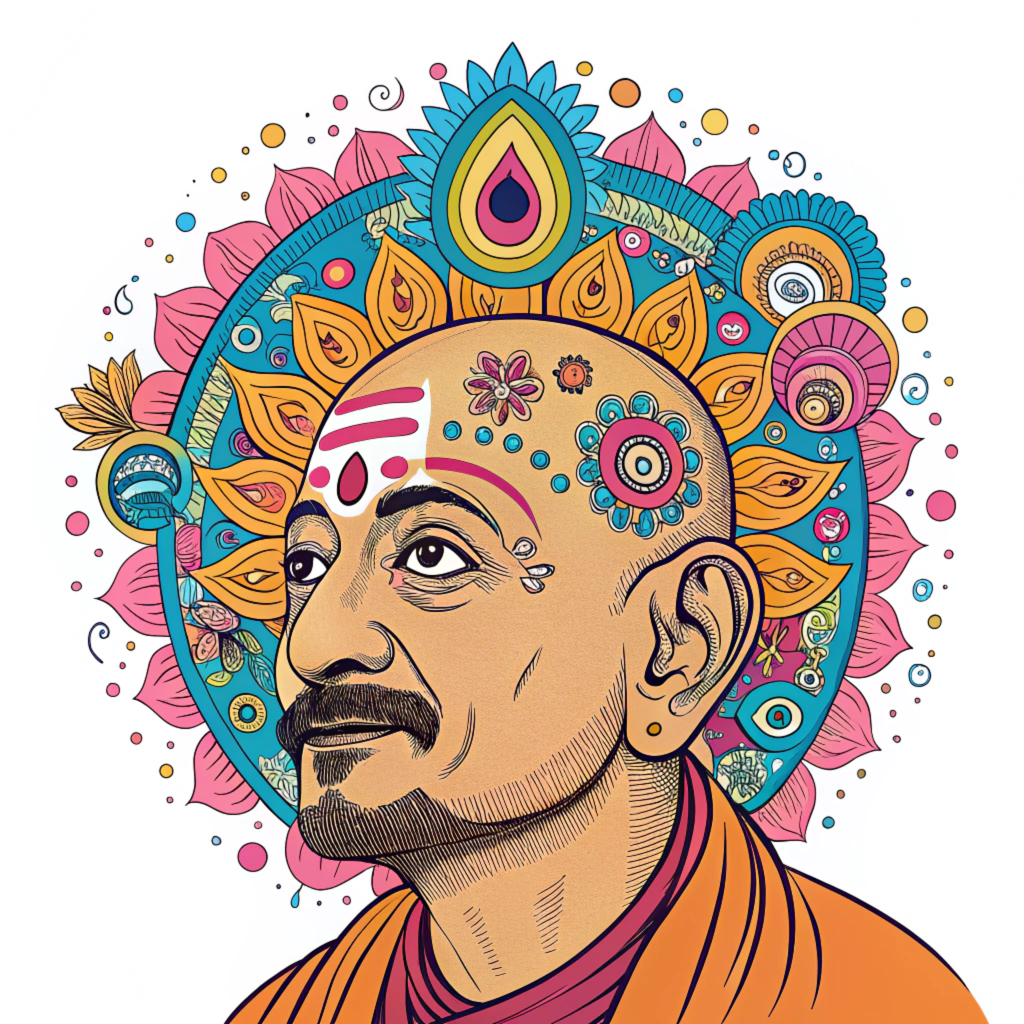
I first received darshan from Paramahamsa Vishwananda in 2019. At the time, I could not fully comprehend what had been given. The experience did not instantly transform me. It was months later, as if a seed had been quietly germinating, that a profound awakening broke open—an unshakable, full-blown realization of Parabrahman. Everything I once considered a spiritual awakening before that year became eclipsed, revealed as only stepping stones toward a wholeness beyond description.

The encounter planted something that only ripened with time. No technique, no meditation, no psychedelic journey, no years of entrainment could compare to what unfolded in those months after darshan. The practices prepared me—polished the vessel, so to speak. But Darshan was the living water that finally filled it.

On August 30, 2025, I met Paramahamsa Vishwananda in person for the fifth time. The following day, as I began to write these words, tears streamed down my face unprovoked. The intensity of the remembrance, the simple act of reflecting on what darshan has meant in my life, undid me. Not during the encounter itself, but in the quiet aftermath, when the depth of it could no longer remain unspoken.

If one insists that darshan is “only” a placebo, I embrace the word. Placebo, after all, is proof of the mind’s openness to healing, its willingness to cross thresholds it once denied. What does it matter if the mechanism is mysterious when the outcome is undeniable? The very attempt to reduce it already misses the essence: darshan is not an explanation. It is an encounter that leaves explanation behind.

My friend, comedian Marc Trinidad, has a saying: You can’t pour clean water into a dirty cup. Thousands of hours of meditation may have cleansed that vessel, yet darshan was not merely clean water—it was sparkling, living, flowing with a vitality of its own. Preparation mattered, but preparation alone never gave me the fullness that flowed after meeting his gaze.

Darshan dismantles the scaffolding of the spiritual search. Years of practice may feel like climbing a mountain, but one glance can place you at the summit. That does not make the climb unnecessary—it makes clear that the climb itself was a preparation for the recognition that you were always already there.

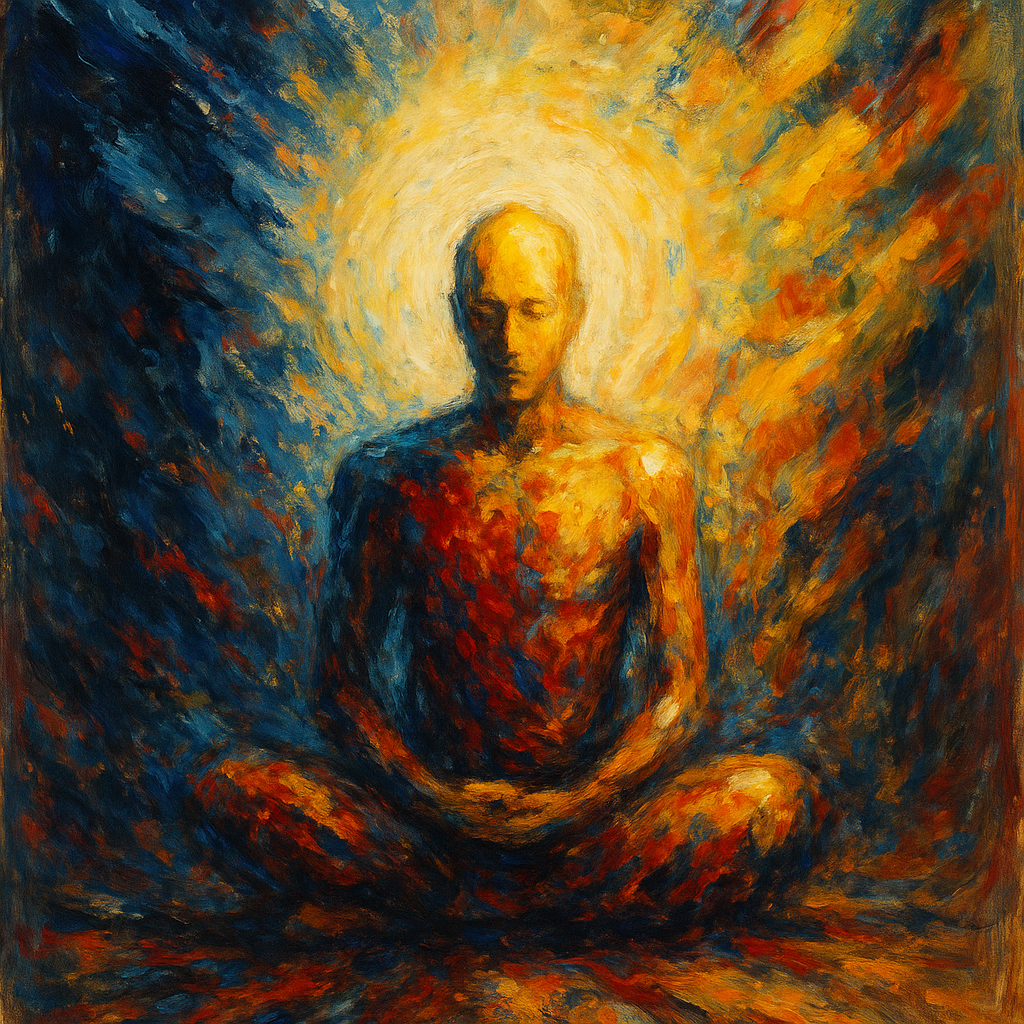
This is not about worshiping a figure or elevating a personality. Darshan reveals the infinite within by reflecting it so purely through one who has dissolved into that truth. In being seen, the boundaries of self blur, and what shines forth is nothing less than the source of all seeing.

Darshan cannot be mythologized away, nor can it be reduced to a placebo. It is living water—clear, inexhaustible, flowing freely into those ready to drink. And sometimes, its effects bloom long after the moment has passed, as seeds planted in silence burst open in their own time.

Morgan O. Smith

Get Your Free Copy of My Book, Bodhi in the Brain!

https://subscribepage.io/oTSZQu

The Final Disappearance

What happens at the moment of death?

Not from the standpoint of biochemistry or theology, but from the lived silence of awakened seeing—the vantage where death and self are no longer two.

At the summit of awakening—whether called Moksha, Nirvana, Turiyatitta, or Nirvikalpa Samadhi—the idea of death unthreads itself. What dies never truly lived, and what lives has never been touched by time. The dissolution of the body is not the end, nor is it a doorway. It is the falling away of questions that were never yours.

There is no climactic revelation at that edge. There is only this. The suchness that never began, never moved, and never faded. At peak realization, death ceases to be an event. It is not an exit. It is the unspeaking of form—a gentle vanishing into what was always here.

This is not metaphor.

Consciousness, unfragmented and clear, neither resists death nor awaits it. It has already passed through it, endlessly. Not as a journey from point A to point B, but as a revelation that neither point exists.

You don’t meet death. You realize you were never separate from it.

At this depth, what we call life no longer hangs from a timeline. What we call death no longer casts a shadow. No more witness is watching the last breath. Only the unnameable recognizes itself through the temporary flicker of form.

The body may fall away, but the body was never the one who knew. The breath may stop, but the breath was never yours. That which remains doesn’t remain—it is. Before and after mean nothing to it.

Some call this realization peace. Others call it extinction. But it’s neither stillness nor silence nor bliss. It’s before all that. It’s the absence of absence. The presence of presence. Not two.

When the last ripple of self dissolves, what’s left is not a person merging with eternity. There is no one to merge. There is only what was always whole.

This is death at the level of freedom. This is life without division.

Not a conclusion.

A cessation of seeking.

Morgan O. Smith

Get Your Free Copy of My Book, Bodhi in the Brain!

https://subscribepage.io/oTSZQu

The Divide

Between the Remembered and the Realized

Enlightenment isn’t a collection of vivid memories. It isn’t a library of altered states or a gallery of peak experiences pinned to the walls of time. Enlightenment, in its truest sense, is what remains when all those moments pass. It is not recalled—it is present.

A spiritually enlightened being doesn’t describe what happened—they speak from what is. Their language may touch on form, but it arises from formlessness. It isn’t commentary on a past event; it is the echo of what is silently alive in that moment. Words are merely the condensation of what remains wordless within them.

Contrast this with the one who has had many spiritually enlightening experiences. There is often great sincerity, beauty, and wisdom in their sharing. But listen closely: their narrative carries timestamps. “This is what I saw… what I felt… what I realized…” There’s a distance, however subtle. A witness telling you what the moon looked like—rather than being the moon, shining right now, regardless of who’s watching.

This difference isn’t about hierarchy. One isn’t better, holier, or more awakened than the other. But there’s a distinct quality when realization is not merely visited, but abided in. When the identity that would lay claim to an experience has dissolved entirely.

Here’s the paradox: a being can be spiritually enlightened without ever having what we label as a “spiritual experience.” No blissful union, no white light, no serpents of energy climbing the spine. Their clarity is not the aftermath of an event—it is the absence of confusion. No fireworks. Just light.

They may speak little. Or not at all. There is no need to convince, convert, or collect followers. They are not on a path—they are the ground from which all paths appear.

On the other hand, a person with many enlightening experiences can describe with breathtaking poetry the landscapes of the soul. But unless those experiences have dissolved the one who experienced them, the self remains—refined perhaps, but still separate.

True awakening isn’t an experience you remember. It’s the end of the one who remembers.

This is why the most profound truths often arrive without announcement. A falling away, not an acquiring. A silent recognition that this—yes, this—is what always was. And suddenly, the need for experience evaporates. Presence alone becomes sufficient.

Morgan O. Smith

Get Your Free Copy of My Book, Bodhi in the Brain!

https://subscribepage.io/oTSZQu

When I Say Full Awakening…

This Is What I Mean

Many speak of awakening, yet far fewer comprehend its fullness. I’ve encountered every kind—emotional, spiritual, philosophical, mystical. Each unveils a layer, each reveals a depth. But what I call full awakening—what I live as full awakening—is something few ever point toward, and fewer still embody.

It is not about personal clarity. Not about peace of mind, a better life, or even union with a divine presence. Those are steps, glimpses, fragments. Full awakening is not a state within experience. It is the collapse of all distinction between state and experiencer.

This isn’t about finding your place in the cosmos—it’s about the disappearance of place, cosmos, and self as separate notions. When I say full awakening, I am referring to the direct knowing that everything—absolutely everything—is a singularity.

Existence and nonexistence. Subject and object. The smallest subatomic flicker and the sweep of galactic spirals. Civilizations long past and unborn futures. Every religion, every philosophy. All thoughts. All acts. Every realm, every reality, every god.

The seen and the unseen. The formed and the formless. That which is birthed, that which dies, and that which never entered the cycle. All technologies. All intelligences. All contradictions and confirmations. All questions and every possible answer.

Not merely connected. Not even interdependent.

Indistinct. Inseparable. One.

That realization is not metaphorical. It is not poetic. It is not conceptual. It is total. It devours every duality and even the idea of devouring. It consumes the witness, the process of witnessing, and that which is witnessed—leaving no remainder.

So when another speaks of full awakening, I listen with care. Because unless it includes everything I’ve said—and also what they say—it’s not the same thing. The paradox, of course, is that what I’m pointing to also includes that divergence. It embraces even what appears to deny it.

Full awakening is not a peak. It is not an event. It is the vanishing of all altitude and time. It is not even a realization. It is what remains when all realizations dissolve.

One. Not a oneness made of parts. Not a whole made of pieces. Not harmony, not unity. Just One.

And that One is not separate from what you are.

Morgan O. Smith

Get Your Free Copy of My Book, Bodhi in the Brain!

https://subscribepage.io/oTSZQu

Beyond Mortality

A Gaze into the Infinite

A moment arrives when existence no longer appears as a scattered collection of isolated events. The world that once seemed separate dissolves, revealing a singular, undivided field of awareness. A startling recognition unfolds: nothing has ever been apart from anything else. It was only perception, veiled in habitual conditioning, that suggested otherwise.

This shift is not a mere conceptual understanding but a direct, undeniable realization. A sense of completeness emerges, untouched by the echoes of forgotten memories or the undercurrents of unconscious shadows. It is as if a long-lost secret has resurfaced, one that had always been present yet unseen.

The gravity of prior assumptions becomes laughable. The absurdity of the once-cherished illusions is exposed, leaving nothing but a profound, unshakable peace. What was once deemed distant now stands as the very essence of Being. A gaze into the heart of existence reveals an unbroken love—love not as an emotion, but as the raw, vibrating reality underlying all things.

What was once mundane now glows with an ineffable radiance. The ordinary becomes extraordinary. Every step, every breath, every fleeting sensation now brims with unspeakable beauty. The notion of duality collapses, not as an abstraction but as a living, breathing certainty. The joys and sorrows of the world are felt without resistance, dissolving into a seamless expanse that is neither joy nor sorrow, yet holds both.

The self, once believed to be confined within flesh and thought, reveals its vastness. Awareness expands beyond personal identity, interweaving with the collective hum of existence. The mind no longer clings to its narrative but dances freely in the boundless rhythm of the whole.

A clarity dawns—reality was never as it seemed. The senses had merely dressed the formless in familiar attire, mistaking projections for truth. What had been perceived as real was nothing more than a refracted glimmer of something deeper, something ungraspable yet ever-present. And once this is seen, it cannot be unseen.

Every cell vibrates in coherence, every particle flickers with intent, all moving in an exquisite harmony. There is no separation between the observer and the observed. The very air hums with a silent language, one that speaks not in words, but in direct knowing. It is a language without syntax, yet it communicates everything. To grasp it is to step into a realm beyond both sanity and madness, where paradox is no longer contradiction but completion.

To touch this space, even momentarily, is to witness the ineffable. The sky and earth merge, the seen and unseen intertwine, and the weight of distinction evaporates. It is here that the greatest truth is revealed: the story of existence cannot be told, for it is not a story at all. It is the living breath of the unknown, an unspoken song resonating in the heart of all things.

To see oneself fully is to vanish. To feel oneself fully is to disappear. In this luminous paradox, joy and mourning entwine, delight and longing become indistinguishable. A blissful lament echoes from the depths, mourning not loss, but the shedding of illusion.

Here, the mortal walks among the divine, and even beyond.

Morgan O. Smith

Yinnergy Meditation/Neurofeedback, Spiritual Life Coaching & My Book, Bodhi in the Brain…Available Now!

https://linktr.ee/morganosmith

The Illusion of Liberation

Phenomena arise, unfold, and dissolve, yet the mind grasps at them, seeking meaning through the lens of interpretation. This act of interpretation is inevitable, but the depth at which one engages with it determines whether understanding remains bound to illusion or expands into realization.

The mythical-magical stage of consciousness perceives reality through archetypes of power, divine will, and cosmic law. This stage gives birth to beliefs about cycles, reincarnation, and karmic loops—explanations that serve as scaffolding for those navigating the existential unknown. There is some truth to these interpretations, just as there is truth in every story we tell ourselves about existence. But truth is not confined to a single stage of development. It unfolds, revealing deeper nuances as perception matures.

Samsara—the wheel of birth, death, and rebirth—has been described as a prison. The path to liberation, as outlined in various traditions, involves transcending this cycle, attaining nirvana or moksha, where rebirth ceases. But even this is an interpretation, one that arises from a more advanced vantage point. The paradox is that what appears as bondage and liberation are not separate realities. Samsara and nirvana are not two. They are the same movement seen through different eyes.

No one is bound, and no one is freed. The concept of liberation implies that something was ever trapped. Yet, what is there to escape when there has never been confinement? The idea of imprisonment is a mind construct, just as freedom is. They depend on one another, forming a duality that collapses upon close inspection.

You are creation itself. Yet, nothing is truly being created. It only appears so. The dance of form and emptiness continues, yet nothing moves. This is the great paradox. The illusion is not that samsara exists—it does, just as dreams exist while sleeping. The illusion is believing that it is something to escape.

Awakening is not an arrival but the recognition that there was never a journey. The cycle persists for those who perceive cycles. Freedom exists for those who perceive bondage. But beyond perception, beyond conceptual grasping, there is only this—eternal, unchanging, and free, regardless of whether one calls it samsara or nirvana.

Morgan O. Smith

Yinnergy Meditation/Neurofeedback, Spiritual Life Coaching & My Book, Bodhi in the Brain…Available Now!

https://linktr.ee/morganosmith

The Face of God and the End of Seeing

Most claim to have glimpsed the divine return with words that struggle to hold the weight of such an encounter. Many never return at all. To see the face of God and live is to step beyond the boundary where existence dissolves, where the self is unmade, and where reality, as it was once known, folds into itself like a dream dissolving at dawn.

Yet, what does it mean to see the face of God? Is it an experience of light so blinding that perception shatters? Is it a presence so vast that identity collapses? Or is it something even more elusive – something that was always here, hidden in the folds of ordinary awareness?

Some traditions warn against such an encounter, suggesting that no mortal can bear it and remain intact. Others speak of it as the ultimate reward, the final unveiling before absolute union. Yet, the paradox remains: how can one see the source of all things when the very act of seeing implies separation?

The face of God is neither a thing to be seen nor an object to be grasped. It is not found by looking outward or inward, for it is the very looking itself. The one who searches, the act of searching, and the sought-after presence all collapse into a singularity where distinctions dissolve. The moment of recognition is not a discovery but an obliteration – the end of every illusion that once passed for truth.

To live beyond such an encounter is to live without the weight of selfhood as it was once known. The personal dissolves, yet presence remains. There is nothing left to hold onto, yet nothing is missing. Some might call this madness. Others, liberation. But labels fall apart before the silent immensity of what remains.

Those who have seen and lived do not return with doctrine. They do not bring commandments carved into stone or revelations bound in pages. They return with an absence, a quiet, an emptiness more alive than any presence. And in that emptiness, a love beyond measure, a freedom beyond desire, and a knowing beyond thought.

Not all will understand. That, too, is part of the design.

Morgan O. Smith

Yinnergy Meditation/Neurofeedback, Spiritual Life Coaching & My Book, Bodhi in the Brain…Available Now!

https://linktr.ee/morganosmith

The Unutterable Silence of Awakening

Awakening defies articulation. To attempt to describe it is to attempt to capture the wind in your hands. Words fall short, no matter how poetic, for what unfolds in the direct experience of awakening exists beyond language, beyond thought, beyond even the sense of “I.”

Many speak of awakening with eloquence, detailing radiant visions or profound realizations. Yet, these narratives, however beautiful, point not to the experience itself but to the mind’s interpretation of it. The mind, ever the storyteller, attempts to reduce the infinite into the finite—an impossible task. To truly know awakening is to step into a space where words crumble, where the sense of separation dissolves, and where only silence remains.

Awakening isn’t an event to possess or explain; it is an unravelling. It feels like the collapsing of a boundary you didn’t realize was there. What remains is indescribable, for there is no longer a “you” separate from it to describe it.

This doesn’t mean one cannot share insights or reflect on the shifts that arise after awakening. But those insights are not awakening itself—they are the ripples of an unfathomable stillness. Awakening is not what you think it is; it cannot be. The moment you attach a concept or image to it, you have moved away from its essence.

So, if you’ve managed to neatly define your spiritual awakening, pause. Ask yourself: who is telling this story? Is this the awakening, or is this the ego dressing itself in spiritual robes? Authentic awakening is not something you have—it is something you are. And when the truth of that hits, no words will suffice.

In the wake of awakening, the need to articulate dissolves. Silence becomes the truest expression of the infinite. Perhaps this is why the great sages often spoke so little, allowing their presence to say what words never could.

Morgan O. Smith

Yinnergy Meditation, Spiritual Life Coaching & My Book, Bodhi in the Brain…Available Now!

https://linktr.ee/morganosmith

The Dance of Suchness

Nonduality in Search of Itself

Nondual suchness, the ground of all being, appears as duality—not as a mistake, but as an exquisite unfolding of its nature. This dynamic play of form and formlessness is not a separation, but a movement within unity, a way for the infinite to experience itself through the finite. This paradox, where oneness expresses itself as multiplicity, invites profound contemplation.

Duality arises as the perceivable world of contrasts: light and shadow, self and other, birth and death. Yet, these distinctions are mere appearances, like waves on the ocean. Beneath them lies the seamless nondual reality, unmoving and eternal. Why, then, does suchness manifest itself in this manner?

The answer lies not in concepts but in direct experience. Suchness manifests as duality to embark on a journey of rediscovery. The world of form becomes a mirror in which the formless can witness itself. This is the essence of the human experience: a seeming separation that eventually dissolves into the realization that the observer and the observed, the seeker and the sought, are one.

This process is neither linear nor bound by time. It is an eternal play, where the unmanifest takes form and, through the constraints of duality, rediscovers its boundless nature. This unfolding is the essence of life itself—an ongoing revelation of unity within multiplicity.

The search for self is not a problem to be solved but a mystery to be embraced. Each moment offers an opportunity to dissolve the illusion of separation and recognize the timeless reality of suchness. The ordinary becomes extraordinary when seen through the lens of nonduality, where the play of duality is understood as a dance of wholeness seeking itself.

Recognizing this truth liberates the mind from its grasping and aversion. The journey of duality becomes an exploration, not a burden. Life, with all its joys and sorrows, becomes a sacred expression of the infinite exploring itself.

To awaken to this is to realize that the search itself was never necessary, for what was sought was always present, always whole. The seeker dissolves, leaving only the suchness that was always there—silent, infinite, complete.

Morgan O. Smith

Yinnergy Meditation, Spiritual Life Coaching & My Book, Bodhi in the Brain…Available Now!

https://linktr.ee/morganosmith

One Taste

Savouring the Infinite Donut of the Universe

There’s a flavour so profound, so complete, that a single bite satisfies every craving. Mystics call it “One Taste.” It’s the ultimate donut—shaped as a torus, mirroring the infinite, self-sustaining design of the universe itself. One bite of this cosmic delicacy and the hunger for more dissolve forever.

The torus represents the flow of all existence. Energy moves outward from the center, loops around, and folds back into itself—a continuous, unbroken cycle. Life itself arises and returns through this geometry, reflecting the interconnected nature of all things. When you take that metaphysical bite, it’s not just a snack; it’s communion with the whole.

The Flavour Beyond Flavour

This donut isn’t ordinary. It isn’t made of flour, sugar, or butter; it’s composed of awareness, presence, and unity. That first bite unveils the truth that all flavours—whether bitter or sweet, spicy or bland—are variations of one eternal essence.

You don’t just taste it; you become it. This realization dissolves the endless craving for more, the need to acquire, achieve, or complete. One bite and the existential hunger that drives human striving come to a halt. You’re no longer searching for fulfillment because you’ve already discovered that you are fulfillment.

The Geometry of Wholeness

The torus is a profound metaphor for life’s completeness. Everything flows from the center, and everything returns to it. This shape is mirrored in the structure of galaxies, the energy fields of the Earth, and even the patterns of human consciousness. Taking that first bite reveals that the “self” and the “universe” are not separate entities but expressions of one unified flow.

Once this truth is seen, nothing is ever the same. Life continues as it always has, but the endless striving for meaning and satisfaction falls away. The bite grants freedom, not by adding anything new, but by revealing what was always present: the infinite within the finite.

Beyond the Hunger

This realization doesn’t strip life of its richness; it enhances it. You’ll still savour the sweetness of love, the tang of sorrow, and the spice of adventure, but you’ll no longer mistake these flavours for something separate from yourself. The donut is no longer outside you; it’s everything you’ve ever been.

Craving transforms into gratitude. Striving gives way to stillness. You taste each moment fully, knowing that the universe itself is unfolding through you.

Why You’ll Never Have to Eat Again

One bite of this donut doesn’t mean rejecting life. It means living with such profound intimacy that every experience, no matter how ordinary, carries the flavour of infinity. This isn’t about ascetic denial or detachment—it’s about tasting the sacred in every breath, step, and interaction.

When you’ve tasted the ultimate donut, hunger ceases because there’s nothing left to grasp. Fulfillment isn’t in the future; it’s here. Every moment is saturated with the One Taste, echoing the truth that you and the universe are the same.

Take that bite, and savour it. Everything you’ve ever sought is already within it.

 Morgan O. Smith

Yinnergy Meditation, Spiritual Life Coaching & My Book, Bodhi in the Brain…Available Now!

https://linktr.ee/morganosmith