Author, Philosopher, Spiritual Teacher, A Lead Facilitator at Sacred Media's Integral Mastery Academy, Founder of Yinnergy Meditation/Neurofeedback, Bodhi Mental Care & Wellness, Co-founder of KeMor Centre for Innovative Development
The mind, magnificent as it is, remains bound by the architecture of limitation. It can dissect, analyze, and categorize, but cannot hold everything and nothing at once. The mind functions through exclusion; it defines reality by what it is not. To include all possibilities would dissolve the very mechanism that makes thinking possible. This is the paradox at the heart of consciousness: the tool we use to understand reality is incapable of containing its totality.
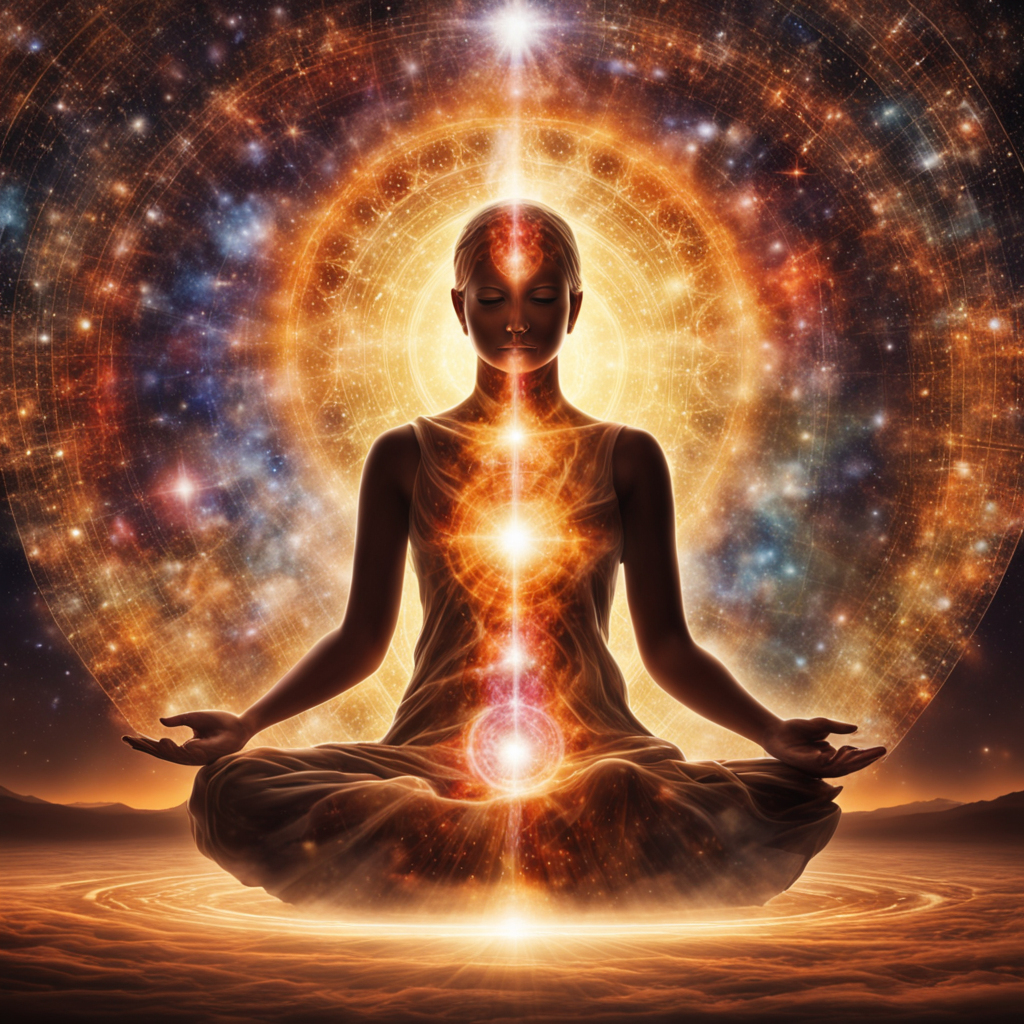
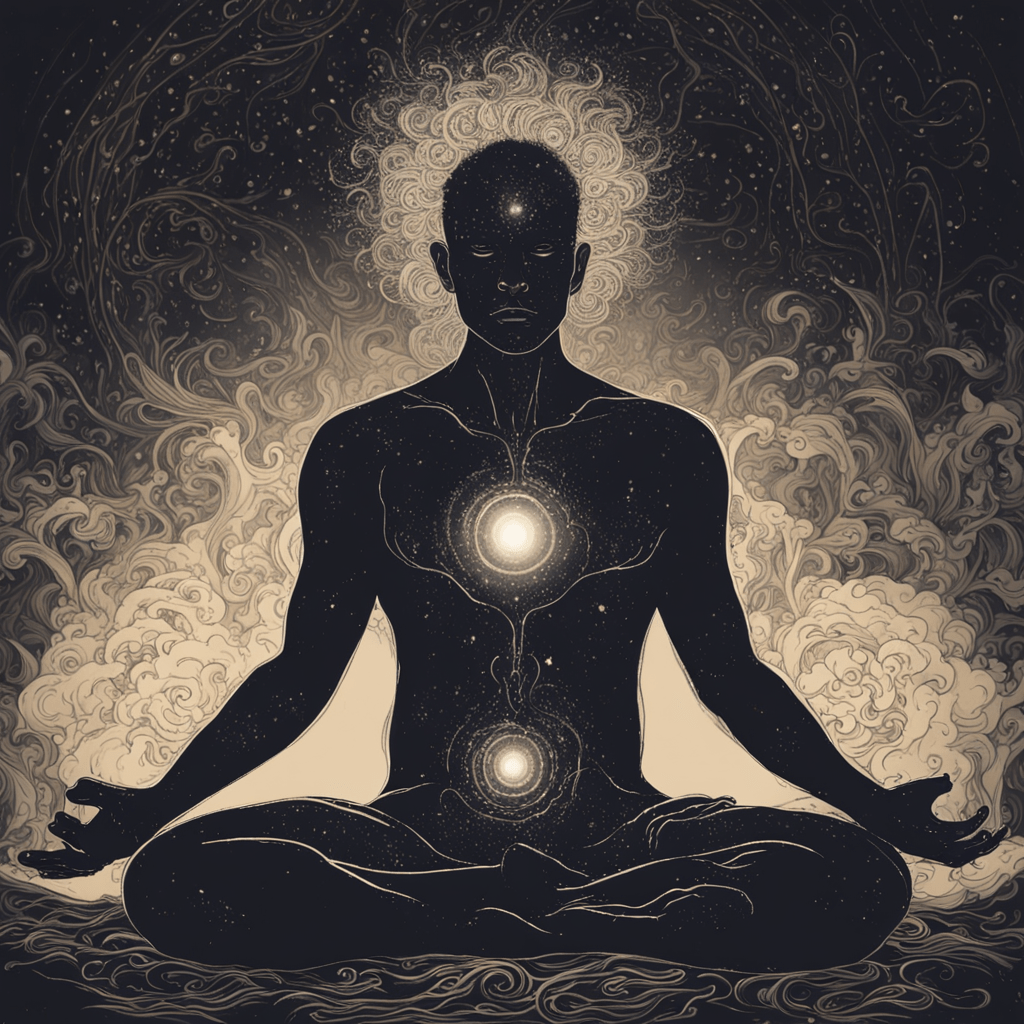
When consciousness stretches beyond the contours of thought, something begins to unravel. The self that once claimed ownership of perception collapses. What is commonly called the “ego death” is not the destruction of identity but its suspension. Awareness steps beyond its familiar edges and witnesses existence without filters, without the narrow lens of self-reference. The observer and the observed dissolve into a single field of knowing that cannot be known by thought.
This death is a gateway. It allows the unthinkable to reveal itself; not as a concept, but as direct realization. What remains after the mind’s surrender is not absence but presence; an intelligence too vast to belong to any one being. When the ego dies, even for a moment, the universe breathes through you, unfragmented and whole. You are not experiencing the infinite; you are the infinite experiencing itself.
Morgan O. Smith
Get Your Free Copy of My Book, Bodhi in the Brain!
Awakening does not unfold through accumulation but through dissolution. It’s not about adding layers of understanding, but releasing the very framework that holds identity together. Every seeker begins with an “I”—the observer, the experiencer, the one who longs for freedom. Yet that same “I” must eventually surrender its throne.
The paradox lies here: the “I” must decide to release itself. It chooses to let go, though the one who chooses disappears in the act. This gesture is not driven by resistance or desire, but by recognition —an intuitive understanding that attachment to any quadrant is still a form of identification.
The quadrants—I, WE, IT, and ITs—map the totality of human experience: the inner self, the collective, the objective, and the systemic. Each serves a purpose until awakening calls for transcendence. The I is influenced by the ITs—the systems, structures, and conditions of existence. These shape perception and possibility. Through the IT, awareness ripples into the WE, inspiring collective movement. And as the WE shifts, the I is again transformed.
This endless loop of causation refines consciousness but never liberates it. Liberation comes when the loop itself is seen through. When the “I” no longer clings to the role of observer or doer, the quadrants collapse into pure witnessing. There is no longer an experiencer and the experienced, a subject and its object. What remains is unconditioned awareness; the silent axis upon which all quadrants turn.
Awakening, then, is not achieved through effort but through profound surrender. It is the cessation of grasping at identity within any domain—personal, relational, empirical, or systemic. The quadrants remain functional but no longer define reality. They appear and dissolve within the same stillness that has always been awake.
Morgan O. Smith
Get Your Free Copy of My Book, Bodhi in the Brain!
There comes a moment on the spiritual path when pain is no longer theoretical. It moves from being news headlines or distant horrors into something you feel as if it were happening inside your own body. Starvation in one region of the world burns in your own gut. The terror of assault trembles in your own bones. The rage of a lynching mob snarls behind your teeth.
This is no metaphor. Consciousness itself breaks open to encompass every cry, every injustice, every cruelty humanity has ever inflicted on itself or on the earth. There is no distance left between observer and observed. The entire spectrum of suffering is laid bare without filter or anesthetic.
Mystics have called this the dark night of the soul, but the phrase barely hints at its magnitude. It is not your personal night alone. It is the night of the whole species, the whole cosmos. Racism, sexism, homophobia, transphobia, genocides, rapes, wars, the silent grief of mothers burying children, the loneliness of elders abandoned, the silent weeping of animals led to slaughter. Even the death of worlds, the cold ending of stars.
This unbearable totality can seem like the end of sanity. It is, in fact, the end of the false self that pretends it is separate from any of it.
What follows is not relief but a deeper unmasking. Your own buried fears, resentments, and desires surface with equal force. You see your potential to be the perpetrator as well as the victim. There is no moral high ground left. You become both the murdered and the murderer, the liberator and the oppressor.
This is not punishment. It is a purification so complete it destroys every shield you held up against reality.
Something unexpected happens when there is no more defence. Love appears—not a comforting emotion, but a force that can hold everything without turning away. This love does not choose sides. It does not say “this is holy, that is unholy.” It does not deny the reality of atrocity. It enfolds it.
Ultimate love contains the screams and the silence after. The destruction and the rebirth. The cruelty of humanity and its boundless mercy. The ugliness of our shadow and the beauty of our tenderness.
This is the same force that drives a mother to shield her child from harm and the same force that calls the contemplative to pray for the world. It is what lies behind the tears of remorse, the acts of forgiveness, the revolutions that upend injustice, the small kindnesses that go unnoticed.
Such love is not naive. It has seen everything. It knows what humans are capable of at our worst. Precisely because of that, it offers compassion without condition.
Spiritual awakening, at its deepest, is not an escape from the world’s pain but an embrace of it so complete that the illusion of separation collapses. What remains is love that refuses to exclude anything.
Love that has become vast enough to be the world itself.
Morgan O. Smith
Get Your Free Copy of My Book, Bodhi in the Brain!
Awakening is a journey of unfolding consciousness, marked by stages that delve deeper into the true essence of our existence. These stages reveal the profound layers of both our human and divine nature, ultimately guiding us toward the unification of all dimensions of being. Let’s explore the four major types of spiritual awakening, each one a unique path leading us closer to our boundless essence.
1. Awakening at the Human Level
This type of awakening is often the first step into a world beyond the ordinary. Here, we begin to realize that there’s more to life than our everyday identities and experiences. The focus is on self-awareness and understanding our thoughts, emotions, and behaviours from a higher perspective. By transcending the limitations of ego-based identity, we start seeing ourselves as more than just the body and mind. This awakening isn’t about escaping our humanity but embracing it with clarity and compassion. Through this initial awakening, we discover that by knowing ourselves more deeply, we open doors to greater insight and transformation.
2. Awakening at the Human/Divinity Level
As our journey progresses, a deeper layer of consciousness emerges—an awakening that bridges our human experience with divine presence. This stage often manifests as a heightened connection with something sacred within. There’s a sense of moving beyond personal desires and concerns, recognizing a guiding force that interweaves through all aspects of life. We begin to experience profound synchronicities, inner peace, and a subtle but persistent awareness of a universal intelligence operating through us. This awakening is not just about seeing the divine in ourselves but in others, inspiring us to connect and relate in new ways. At this level, divinity becomes tangible, not as a concept, but as a lived experience.
3. Awakening at the Divinity Level
At the divinity level, the barriers between the personal self and the universal self start to dissolve. This stage is characterized by an immersion in the essence of pure consciousness, where we experience a sense of being beyond the limitations of form. It is a state where divine awareness becomes central, and human identity fades into the background. During this awakening, we may feel at one with the cosmos, a single drop in the vast ocean of existence, yet inherently aware of the infinite that lies within. Living in this state can bring a profound sense of peace, stillness, and an unshakeable connection to all that is.
4. Unified Awakening: Embracing the Human, Divine, and Cosmic
The journey culminates in a unified awakening—a seamless merging of the human, divine, and cosmic dimensions. Here, every aspect of our existence is held together in a harmonious whole. We no longer see ourselves as shifting between realms but experience them simultaneously. In this awakened state, the human self, the divine presence, and the universal consciousness are recognized as one undivided reality. This unity brings about a deep sense of equanimity, freedom, and interconnectedness. Challenges and joys alike are embraced as natural expressions of life’s flow. Through this ultimate awakening, we transcend not just ego but the need to define or separate any part of our existence.
Reflecting on the Path of Awakening
Each stage of awakening offers unique insights and transformations. The journey does not unfold in a rigid sequence; rather, it ebbs and flows, allowing us to embody these different aspects of consciousness in our unique way. Spiritual awakening is not a goal but an ever-deepening process. As we awaken to the fullness of our being, we move beyond divisions, experiencing life as a living expression of universal love and wisdom.
Morgan O. Smith
Yinnergy Meditation, Spiritual Life Coaching & My Book, Bodhi in the Brain…Available Now!
The term dark night of the soul evokes images of struggle, confusion, and a seeming absence of light. Yet, this darkness can often serve as a powerful portal, guiding one to a level of spiritual illumination unreachable by any other path. Many consider it a crucible of transformation, an intense phase in which the familiar sense of self collapses, leaving one in a space of profound unknowing. Out of this unknowing, however, arises a new clarity that leads directly to the essence of spirit.
For those on a path of genuine self-inquiry, the dark night is not just an existential crisis. It becomes an awakening, a dissolution of our many illusions about ourselves and reality. During this phase, long-held identities, beliefs, and attachments may shatter, making way for something deeper, something undeniably true. It is a process that can feel relentless and unforgiving, yet this same intensity propels one forward into a state of spiritual clarity. Rather than being a punishment or a curse, the dark night reveals itself as a divine refinement—a sacred stripping away.
When every external structure of meaning begins to fall apart, it may seem as if there is nothing left to hold onto. In these moments, one often finds an unexpected stillness within, a quiet space where fear cannot tread. It is as though the soul, having been emptied of its attachments, touches an unbreakable foundation—a place within that has always been free and whole, even amid chaos. This discovery marks a profound turning point. Rather than striving to escape or control life, one begins to see the perfection in surrender. This shift from resistance to acceptance is what ultimately transforms the darkness into light.
The bright light of the spirit does not arrive like a flash of fireworks. It is subtle yet powerful, emerging from the depths of one’s own silence. Through surrendering all that one believed essential, there is a revelation that goes beyond any conceptual understanding. A radiant, unwavering presence reveals itself, a presence that transcends all dualities, including light and dark, self and other. This is the spirit’s essence—pure, unconditioned, and luminous in its quiet embrace.
The journey through the dark night is one of paradox: the descent into darkness becomes the ascent into light. It is a reminder that illumination does not come from seeking the light but from courageously embracing the dark. In this alchemical process, what was once feared becomes the very ground of liberation. The darkness, rather than being an enemy, becomes the beloved teacher. It guides one, not by promises of comfort, but by the unwavering demand for truth, eventually revealing the boundless radiance of spirit within.
Morgan O. Smith
Yinnergy Meditation, Spiritual Life Coaching & My Book, Bodhi in the Brain…Available Now!
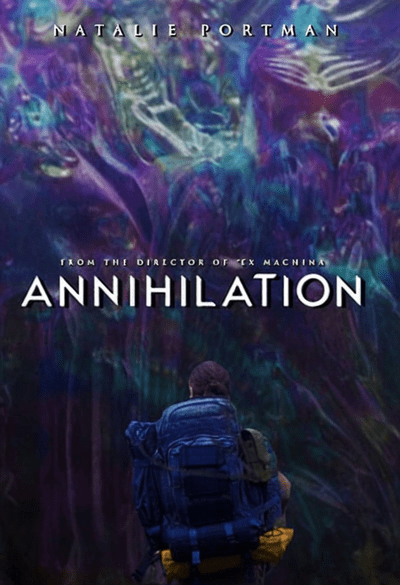
Annihilation is courtesy of Paramount Pictures and Skydance Media
A Journey Through Transformation
In 2018, Alex Garland’s Annihilation plunged viewers into a surreal and disturbing world, where the familiar dissolves into the unknown, and transformation is inevitable. Watching this movie back then, and rewatching it last night on Netflix, I found myself deeply moved by its haunting imagery and profound symbolism, which echoed my spiritual journey of Kundalini awakening. By delving into the film’s narrative and its vivid scenes, we uncover a rich parallel to the mystical process of awakening dormant energy within. Spoiler Alert: This post contains spoilers for those who haven’t seen Annihilation.
The Serpent Awakens
One of the most striking and unsettling scenes in Annihilation involves a soldier whose stomach is cut open, and we see his intestines move like a serpent inside him. This visceral image mirrors the ancient depiction of Kundalini energy as a coiled serpent at the base of the spine. In Kundalini traditions, this serpent represents latent spiritual energy, poised to rise and transform the individual. The soldier’s transformation, albeit grotesque, symbolizes the intense and sometimes chaotic nature of this awakening process.
Explosion and Rebirth
In another pivotal moment, the soldier explodes, leaving an intricate and eerie display on the wall. This explosion is reminiscent of the powerful release of Kundalini energy. Such energy can dismantle old patterns and structures, often causing upheaval before a new order can emerge. This scene captures the destructive yet transformative power of Kundalini, which breaks down the old self to pave the way for profound growth and understanding.
Kane’s Ultimate Sacrifice
Kane’s act of sitting cross-legged and detonating a grenade (played by Oscar Isaac) is another profound symbol. His posture suggests meditation or deep introspection, a practice central to awakening Kundalini. The ensuing explosion signifies a profound transformation—an act of self-destruction leading to rebirth. The image left behind symbolizes the remnants of the old self, giving rise to a new state of consciousness. This mirrors the death and rebirth cycle inherent in Kundalini awakening, where the dissolution of the ego precedes the emergence of a higher self.
The Shimmer as the Mystical Realm
The Shimmer, the film’s central enigma, serves as a metaphor for the mystical realm encountered during spiritual awakening. Within the Shimmer, reality bends and mutates, much like the inner landscape experienced during deep meditation and spiritual practices. Here, the boundaries of the self dissolve, and one is confronted with both beauty and terror—reflecting the dual nature of spiritual journeys.
Conclusion
Annihilation offers a hauntingly beautiful exploration of transformation, much like the journey of Kundalini awakening. Through its unsettling imagery and profound symbolism, the film invites viewers to contemplate the nature of change, the dissolution of the old, and the emergence of the new. By examining these parallels, we gain a deeper appreciation of both the cinematic experience and the spiritual process, enriching our understanding of transformation in all its forms.
Despite always wondering if anyone else had made this connection, I haven’t come across mentions of such interpretations. Yet, for me, the resemblance to my own experiences of Kundalini awakening is undeniable, providing a rich array of reflections on inner transformation. Only an individual who has gone through this process would truly understand these connections, as this is an event that must be experienced to be fully comprehended.
Morgan O. Smith
Yinnergy Meditation, Spiritual Life Coaching & My Book, Bodhi in the Brain…Available Now!
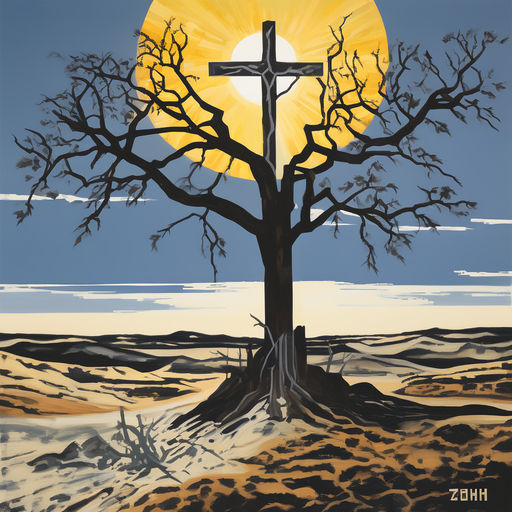
Ego Death and Enlightenment in the Story of Yeshu’a
In the narrative of Yeshu’a, commonly known as Jesus Christ, the events leading up to and including the crucifixion and subsequent resurrection offer profound allegorical insights into the journey toward spiritual awakening and enlightenment. This narrative, when viewed through the lens of spiritual and psychological metamorphosis, echoes the concept of ego death — a foundational experience on the path to profound personal transformation and enlightenment.
The Crucifixion: An Allegory for Ego Death
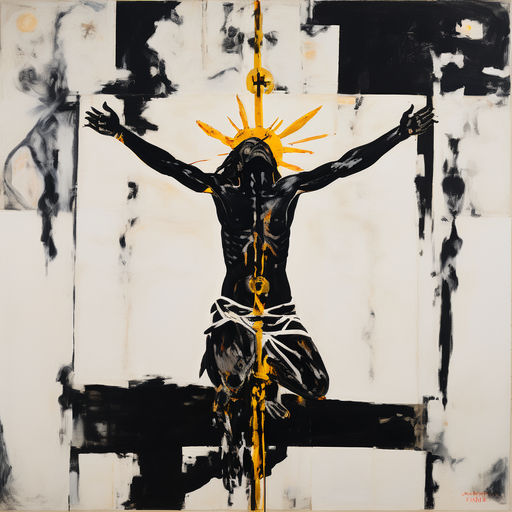
Ego death represents the dissolution of the self-constructed identity, a moment where the illusion of the ‘I’, with all its attachments and identities, is seen through and transcended. In the story of Yeshu’a, the crucifixion symbolizes this intense moment of surrender. It is a vivid depiction of the relinquishment of personal identity, desires, and the very notion of selfhood, akin to the spiritual surrender required for the dissolution of the ego.
This moment is not about physical demise but rather a metaphorical death, where all that is false must be surrendered and ‘crucified’. The agony in the garden of Gethsemane, where Yeshu’a confronts his impending crucifixion, mirrors the inner turmoil one faces when confronting the ego’s dissolution. It’s a profound surrender to a will greater than one’s own, to a state of being that transcends individual identity.
The Resurrection: Enlightenment and Spiritual Awakening
Following the allegory of ego death, the resurrection emerges as a powerful symbol of enlightenment and spiritual awakening. In the aftermath of the ego’s dissolution, a new consciousness is born — one that is not confined by the limitations and illusions of personal identity. This is the ‘resurrected’ state, where one experiences a profound sense of unity with all existence, an unshakable peace, and an intrinsic understanding of one’s true nature beyond the ego.
The resurrection signifies the ultimate triumph over the limitations of the egoic mind, a rebirth into a state of consciousness where love, compassion, and wisdom prevail. It reflects the awakening to a life lived in profound alignment with the universal truths, embodying the essence of nonduality — where the distinction between self and other, life and death, is recognized as an illusion.
Reflections for the Spiritual Seeker
The narrative of Yeshu’a’s crucifixion and resurrection serves as a rich allegorical framework for understanding the journey toward spiritual enlightenment. It challenges us to confront our egoic constructs, to courageously face the dissolution of our self-imposed identities, and to emerge transformed by the experience of our intrinsic, undivided nature.
As spiritual seekers, this story invites us to reflect on our journey towards self-realization, encouraging us to embrace the crucible of transformation and to emerge, like Yeshu’a, reborn into the light of awareness and unity. It is a reminder that true liberation and enlightenment lie not in the avoidance of suffering or the clinging to identity but in the profound surrender and transcendence of the ego.
Morgan O. Smith
Yinnergy Meditation, Spiritual Life Coaching & My Book, Bodhi in the Brain…Available Now!
In the vast, boundless expanse of existence, there lies a profound truth that whispers in the silent spaces of our being. It is a truth that transcends the confines of language and thought, yet is intimately known to each of us: the realization that we are intricately woven into the fabric of the divine.
As seekers on this spiritual odyssey, we commence our quest from the source of all creation, a point of infinite potential that we reverently name God. This origin is not a distant deity, but the very essence of our existence, the core of our being. It is from this sacred wellspring that our journey unfolds.
Our path is one of walking through God, a phrase that captures the essence of our existence as a continuous immersion in the divine presence. Every step we take, every breath we draw, is imbued with the essence of this ultimate reality. In this journey, the mundane becomes sacred, and the ordinary becomes extraordinary, as we perceive the divine in all.
As we traverse this path, a remarkable transformation occurs: we walk towards God, not as a destination, but as an ever-deepening understanding of our true nature. With each step, the illusion of separation dissolves, revealing the oneness that binds all existence. Our journey towards God is thus a journey towards the self, a pilgrimage to the heart of our spiritual essence.
In this profound realization, we come to walk as God. This is not a claim of divine identity in the egoistic sense, but a recognition of our inherent divinity. To walk as God is to embody the qualities of compassion, love, and wisdom that are the hallmarks of the divine. It is to live in a state of nonduality, where the self and the other, the creator and the creation, are seen as one.
This journey is not a linear path but a spiral, where each cycle brings us closer to the core of our spiritual being. It is a journey without distance, for the divine is not a place to reach but a reality to realize. In this realization, we find that we have never been separate from God, for in God we live, move, and have our being.
In conclusion, our spiritual odyssey is a dance with the divine, a journey that takes us from God, through God, towards God, and ultimately reveals that we walk as God. It is a journey of awakening to the truth within us, a call to explore the depths of our divine nature.
Morgan O. Smith
Yinnergy Meditation, Spiritual Life Coaching & My Book, Bodhi in the Brain…Available Now!
Ever since September 3rd, 2019, there has been one figure that repeatedly stands out in my memories, the guiding light that has transformed my life – Paramahamsa Sri Swami Vishwananda.
The journey began at Trinity St. Paul’s in Toronto. On that fateful day, I was fortunate enough to receive darshan from him. For those unfamiliar with this term, darshan is the divine sight – a soul-touching blessing one receives from a spiritually enlightened guru. It’s a deeply personal and transformative moment, where one locks eyes with the guru and dives into an ocean of spiritual energy.
Only a few months after this momentous encounter, in November, I experienced a profound nondual spiritual awakening. This spiritual crescendo further intensified in December when I submerged into a state known as Nirvikalpa Samadhi. This was not just any awakening; it was the death of the ego, a realization of my own Supreme Identity, connecting me to all of existence and beyond.
The reverberations of this awakening persisted. Shortly after, I was swept into a whirlwind of a full kundalini awakening. It was as if every chakra within me came alive, culminating with my crown chakra which unleashed a cascade of radiant lotus petals made out of pure light. To say this was monumental would be an understatement; it was an experience that etched itself deep into my soul.
However, the universe, as always, had its plans. The following year, as the world found itself grappling with a pandemic, physical interactions became a luxury. Undeterred, I, along with several fellow seekers, virtually sought the darshan of Paramahamsa Vishwananda.
Yet, the universe has its rhythm and the circle turned full once again. As the pandemic ebbed, last September, Paramahamsa Vishwananda graced Toronto with his presence. We were fortunate enough to bask in his divine presence, in person. My recent memories bring me to August 26th and then again on September 2nd when a smaller group of us made our way to Elmira, New York, to the serene premises of the Paranitya Narasimha Temple. It was here, in the sacred surroundings, that we received the darshan from Paramahamsa Vishwananda. The gleam in his eyes when he recognized me, the warmth of his smile, and our brief yet impactful conversation – these are memories I cherish. His gratitude towards us for travelling so far was heartwarming. But all I could do was thank him, for the transformation he triggered within me, for allowing me to see myself for who I truly am. It remains the most cherished gift I have ever received.
My spiritual voyage with Paramahamsa Vishwananda is one of love, awakening, and profound transformation. A journey that I hope continues, leading me to further depths and heights of spiritual realizations.
Morgan O. Smith
Yinnergy Meditation & My Book, Bodhi in the Brain…Available Now!
A Personal Experience of Full-blown Kundalini Awakening
A profound transformation occurred to me; an experience that transcended the physical plane and plunged me into a realm of existence I had hitherto deemed unreachable. I speak of the full-blown Kundalini awakening, a spiritual phenomenon that has left an indelible impression on my perception of self, reality, and existence.
Before this awakening, I, like many, thought of the lotus flowers depicted in relation to chakras as mere metaphors, abstract symbols of our energetic being. My paradigm shifted dramatically during the awakening, as I watched these blossoms emerge not just from the ether of abstraction but from the essence of my being itself. The petals of the lotus, conceived in metaphor, came to life in a splendid display of existential alchemy. They sprouted out of every pore, every cell, every molecule, every atom, and every particle that constituted my physical form.
Witnessing my crown chakra in full bloom was an event of divine beauty and overwhelming serenity. Imagine trillions upon trillions of petals composed of pure, radiant light pouring forth from the crown of my head. Each petal was a drop of divinity, embodying the wisdom and tranquillity of the cosmos. They cascaded downwards, gently brushing against the contours of my being before making contact with the ground. On meeting the earthly plane, they evaporated, leaving behind an aura of sublime light.
This awakening of my Kundalini has redefined my perception of existence, opening me up to a deeper understanding of the universe’s complex weave. It isn’t an experience that can be perfectly conveyed through the limited lexicon of human language. The essence of it transcends verbal expression, rooting itself in the experiential. However, as I try to share this transformative chapter of my life, I find the metaphor of the lotus more than apt—it is a vivid illustration of the incredible unfolding that happens within the human spirit during such profound awakenings.
It is in this exploration of the lotus of self, through the lens of Kundalini awakening, that one realizes the true potential of human consciousness. The journey towards this awakening is not just one of self-realization but also one of cosmic understanding. It has led me to see that we are all integral parts of the cosmic tapestry, woven from the same thread of consciousness, each of us a lotus, awaiting our moment of divine unfolding.
Morgan O. Smith
Yinnergy Meditation/Bodhi in the Brain, Available Now!






 Morgan O. Smith