Interpreting Creation

Evolution as a Glimpse into Divine Complexity

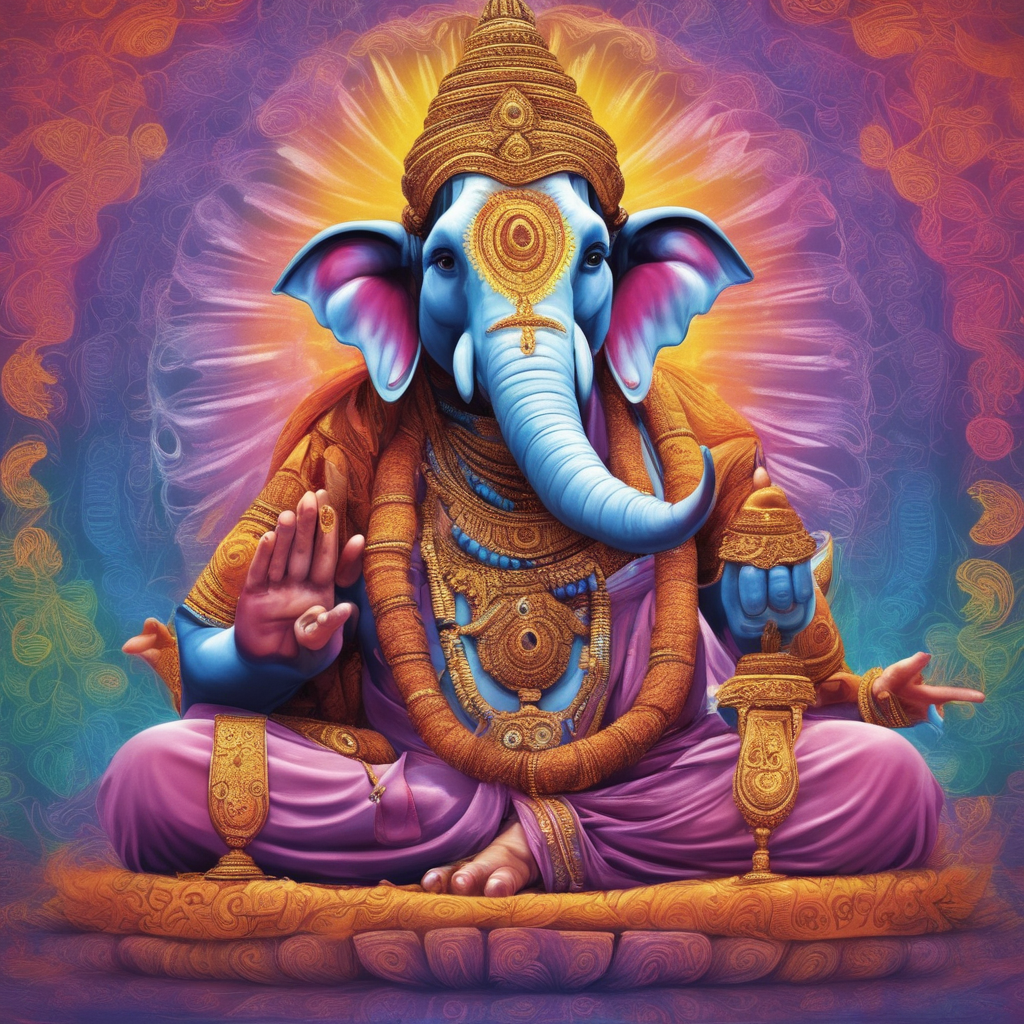
The debate between evolution and creationism has been a longstanding one, often polarizing individuals into two distinct camps. However, a thought-provoking perspective emerges when we consider evolution not as a contradiction but as a subset of the divine act of creation. This viewpoint suggests that what we perceive as evolution is, in fact, a limited human interpretation of a much grander and incomprehensible divine plan.

The idea of God creating the universe in seven days is a cornerstone of many religious beliefs. These seven days, often taken literally, could alternatively be viewed as symbolic of a more complex, unfathomable process of creation that transcends human understanding. The ‘days’ may not be 24-hour periods as we know them, but rather, phases in a divine timeline, incomprehensible in length and complexity to the human mind.


Evolution, in this context, can be seen as a mechanism within this divine plan. It’s a process that unfolds over eons, under the guidance of a higher power, the causal aspect of the absolute. It is an expression of the ground of all being, operating within the confines of time and space – constructs that, too, were set in motion by the divine.

This perspective bridges the gap between science and faith, suggesting that evolution is a component of creation, a part of the divine narrative. It invites us to view evolution not as a challenge to theistic beliefs but as an insight into the complexity and majesty of what a higher power can orchestrate.


As we explore this intersection of faith and science, it becomes clear that our understanding of both creation and evolution is limited by our human perspective. What if, instead of viewing them as opposing ideas, we see them as different facets of the same divine truth? This approach doesn’t diminish the importance of scientific inquiry, nor does it undermine the significance of religious belief. Rather, it highlights the vastness of what we are yet to understand and the potential harmony between different realms of human thought.

In conclusion, the dialogue between evolution and creationism need not be a contentious one. It can be a conversation that enriches our understanding of science and spirituality, revealing the interplay between the comprehensible and the unfathomable in the universe’s grand design.

Morgan O. Smith

Yinnergy Meditation, Spiritual Life Coaching & My Book, Bodhi in the Brain…Available Now!

https://linktr.ee/morganosmith

Horizontal and Vertical Nonduality

A Dance Between the Manifest and the Formless

Nonduality, a term often tossed around in philosophical and spiritual circles, is frequently misunderstood or oversimplified. But a deeper dive into its nuances, especially the concepts of horizontal and vertical nonduality, offers a rich tapestry of understanding that challenges our perception of reality. So, let’s embark on a journey between these two dimensions of experience.

**Horizontal Nonduality: A Symphony of Connection**

In the cacophony of life, amidst the myriad of forms, species, and people, there lies a silent song of unity. This is the realm of horizontal nonduality, where everything, regardless of its outer appearance, dances to the same rhythm, made of the same substance or essence.

This perspective is akin to viewing a vast ocean. On the surface, we see waves of various sizes and shapes crashing and retreating. They seem separate, each with its own identity. However, dive a little deeper, and one quickly realizes that all waves are part of the same vast body of water. Similarly, horizontal nonduality emphasizes the interconnectedness of all beings, revealing that the distinctions we observe are mere waves on the surface of a more profound unity.

**Vertical Nonduality: The Abyss of the Absolute**

Beyond the bustling dance of life and form, there lies an infinite silence, a void, a realm untouched by time and space. This is the territory of vertical nonduality. It speaks of an experience that transcends our worldly understanding, pointing towards an absolute reality that’s formless, timeless, and spaceless.

If horizontal nonduality is about recognizing the unity of the ocean’s waves, vertical nonduality is about plunging into the depths, where the concept of a wave doesn’t even exist. It’s about the direct realization that one’s true essence is beyond the ephemeral play of forms.

**Integrating the Two: A Holistic Dance**

While it may seem like these two dimensions stand at odds, a truly profound understanding of nonduality weaves them together in a harmonious dance. It’s neither about negating the beauty and diversity of the world (horizontal) nor about solely transcending it (vertical). Instead, it’s about holding both in a delicate balance.

Imagine living in a world where you can marvel at the beauty of individual snowflakes while being deeply rooted in the knowledge that they all share the same watery essence. This balance provides a holistic lens, allowing us to engage with the world with depth, compassion, and wisdom.

In conclusion, the dance between horizontal and vertical nonduality offers not just a philosophical perspective, but a transformative way of engaging with life. By understanding and integrating both these dimensions, we open ourselves to a richer, more profound experience of reality, where the play of forms and the formless essence coexist in a beautiful, harmonious symphony.

Morgan O. Smith

Yinnergy Meditation & My Book, Bodhi in the Brain…Available Now!

https://linktr.ee/morganosmith

Tracing the Divine Contours

Metaphorical Exploration of the Three Faces of God

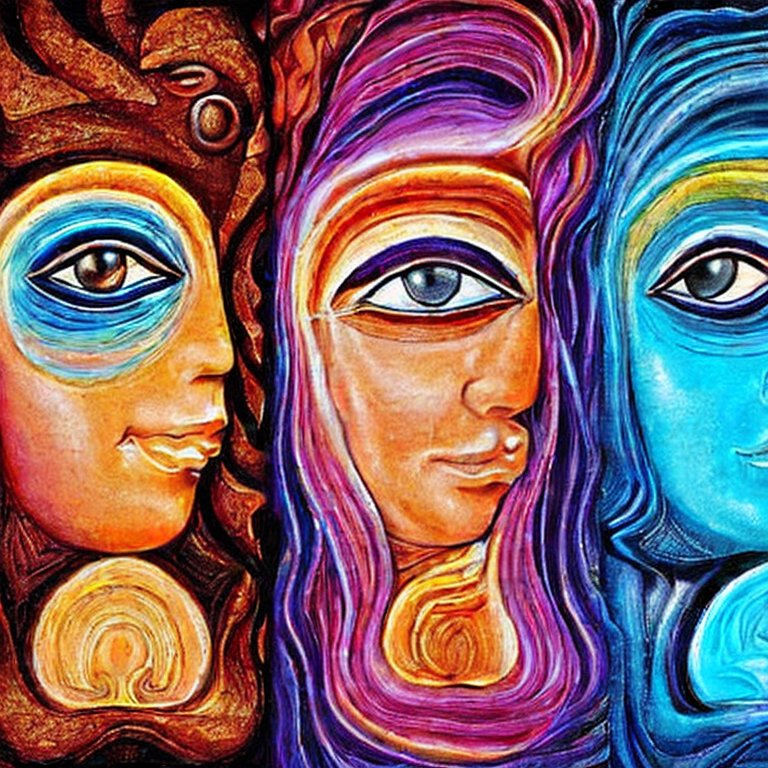
As we endeavour to understand the divine, let’s imagine sketching three different portraits of God, each revealing a unique aspect of the divine. These are the “Three Faces of God,” metaphorically spoken of as “I am That,” “Thou art,” and “It, the Ground of All Being.” Each face provides a different set of facial features, offering a new perspective and experience of the divine.

1. The First Portrait: “I am That”

Envision drawing the first portrait, where you sketch not with your hand, but with your consciousness. This portrait, entitled “I am That,” represents the divine as the reflection of our inner selves. The eyes in this portrait mirror our own, sparkling with the wisdom of unity and oneness. These eyes are windows into the soul, witnessing the divine within us and in everything around us.

The lips are sealed, symbolizing the silence that encapsulates the profound realization of this facet of divinity. It is a silence not born of absence but of completeness, tranquillity that resonates with the essence of existence. The serene countenance of this portrait is a silent affirmation of our inherent divinity.

2. The Second Portrait: “Thou Art”

Now, we turn to the second portrait, “Thou Art.” Here, the divine is perceived as the other, an entity separate from ourselves. In this image, the eyes are compassionate, gazing at us with empathy and understanding, reflecting a personal deity who knows us intimately, one who listens, guides, and protects.

The lips are gently curved into a comforting smile, a symbol of the divine’s eternal love and benevolence. This portrait embodies a divine entity that exists independently of us, yet is deeply connected in a loving and caring relationship.

3. The Third Portrait: “It, the Ground of All Being”

The third portrait, “It, the Ground of All Being,” is an abstract masterpiece. Instead of conventional facial features, it is an evolving canvas of colours, shapes, and patterns, capturing the unfathomable depths and dimensions of the divine as the fundamental essence of existence.

This image lacks eyes and lips because it symbolizes the impersonal aspect of the divine. It is the primordial backdrop from which all forms arise and into which they merge. This face does not interact or engage in the usual sense but is simply there, perpetually present, the immutable reality underlying all of existence.

Wrapping Up

This metaphorical exploration of the “Three Faces of God” is like an artful journey into divinity’s vast and varied landscapes. It encourages us to recognize the divine in our reflections, in a comforting gaze, and in the ever-changing canvas of existence.

Each of these faces, with its unique set of features, invites us to a different experience and understanding of God, enabling us to connect with the divine on multiple levels. It’s a contemplative journey that opens up possibilities for self-discovery and spiritual growth, enhancing our cosmic connection. In these divine portraits, we don’t just see different faces of God; we see reflections of our own quest for spiritual understanding and existential meaning.

Morgan O. Smith

Yinnergy Meditation & My Book, Bodhi in the Brain…Available Now!

https://linktr.ee/morganosmith