Author, Philosopher, Spiritual Teacher, A Lead Facilitator at Sacred Media's Integral Mastery Academy, Founder of Yinnergy Meditation/Neurofeedback, Bodhi Mental Care & Wellness, Co-founder of KeMor Centre for Innovative Development
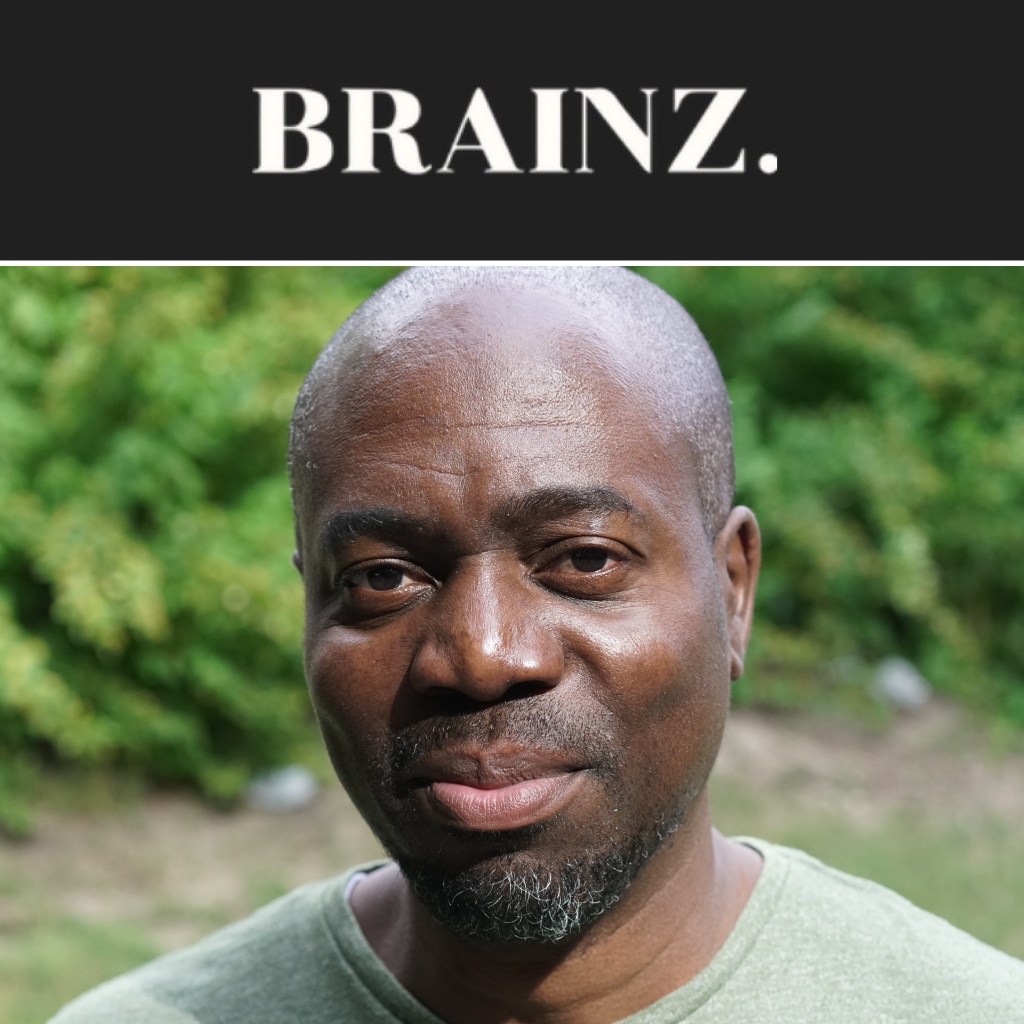
I’m thrilled to announce that I’ve partnered with Brainz Magazine, a platform dedicated to personal growth, self-discovery, and professional development. This week, I had the chance to dive into a topic close to my heart: Spiritual Enlightenment Isn’t Just For Monks – Discover The Path In Everyday Life.
Many of us associate enlightenment with images of monks in monasteries, yogis in the Himalayas, or mystics retreating in isolation. But true spiritual awakening and enlightenment are journeys that are accessible to everyone, regardless of where you are or what your lifestyle looks like.
In this piece, I explore how spiritual growth and inner peace are attainable in everyday life. You don’t have to disconnect from the world to find a deeper connection with yourself and the universe. The beauty of enlightenment is that it can unfold right here, amid your daily routines, relationships, and challenges.
If you’re curious about how to bring a deeper spiritual connection into your everyday experience, I encourage you to check out the full article. It’s an invitation to explore how mindfulness and conscious living can be woven into even the simplest moments, offering a path toward fulfillment and insight that anyone can embrace.
If all that exists is what we call the Self, where does that leave us in understanding its true nature? The common impulse is to label, define, and separate — creating distinctions to grasp what cannot be fully grasped. But in contemplating the nature of the Self as the all-encompassing reality, we’re drawn into a profound paradox: if the Self is indeed everything, without any boundary, how can it even be considered a “Self”?
The word “Self” implies some form of individuation, a presence that stands distinct from others, yet here lies the core of the paradox. In the absence of an “other,” any idea of a distinct Self dissolves, leaving only the mystery of the No-Self.
For a Self to be recognizable as such, it would require something to stand apart from. But in the context of ultimate unity, where nothing exists outside or beyond, there is only what is — an undivided totality that transcends any dualistic notion of “Self” and “other.” This is where the very term “Self” falls away, as there can be no contrast, no relational identity. What we are left with is not a Self in any ordinary sense but rather pure awareness, the ground of being that defies description and categorization.
When looked at from this perspective, the idea of the Self takes on a radically different dimension. It becomes the No-Self, not in the sense of an absence but rather as an absolute presence that simply is. The No-Self, then, is not the lack of being but the absence of individualization within being itself. It invites us to move beyond personal identity and to experience consciousness as boundless and indivisible, an endless ocean with no separate waves.
In moving toward an experiential understanding of this paradox, the concept of “I” transforms. We begin to see that this “I” — the egoic self we identify with — is a localized point in the vast field of undivided awareness. What we call “myself” is, in reality, an expression within the infinite whole, a momentary manifestation of something that transcends all individuality.
Such an insight does not negate our individual lives or diminish the importance of each unique expression. Rather, it invites a shift in perception. It calls us to recognize that beneath our individuality lies a vastness, a timeless ground that is beyond any single label or limitation.
As we touch on this insight, we find that the paradox of Self and No-Self begins to dissolve. We see that they are not separate but interwoven, expressions of the same reality, which is beyond both. In embracing the No-Self, we open ourselves to a greater depth, where the boundaries of identity soften, and the beauty of unity comes alive in ways beyond conceptual thought.
Morgan O. Smith
Yinnergy Meditation, Spiritual Life Coaching & My Book, Bodhi in the Brain…Available Now!
The essence of all existence is an unfathomable neutrality, a foundation so vast that it transcends any concept of preference or partiality. This is not neutrality as we often think of it—detached or indifferent. Instead, it is a boundless openness, a ground of all being that sustains every polarity without attachment, holding every experience with equal clarity and freedom.
This ground embraces love and hate, joy and sorrow, light and dark, as expressions of the same indivisible essence. Nothing is held above or below, no experience or thought has a special claim. Everything arises and dissolves within this vast, unbiased awareness, like reflections gliding across the surface of a mirror, leaving no trace. Here, neutrality is not passive; it’s a profoundly active openness that allows life to unfold freely, a space so complete that all opposites find balance within it.
This neutral foundation of existence does not negate meaning; it infuses it. It is a profound wholeness, a sacred void where everything originates and to which everything eventually returns. It stands as the unseen field that holds all form and formlessness, thoughts and emotions, without claiming any of it. In this state, neutrality serves as the ultimate witness, sustaining everything without grasping onto any one thing. It’s a presence beyond judgment and division, embodying a completeness so vast that every duality dissolves into simplicity.
This neutrality is not about avoiding experiences or escaping emotions. It invites us to embrace every part of our humanity from a place of non-attachment. By resting in this foundation, we move beyond the pull of opposites and experience life from a pure, undivided presence. This is a call to find peace in the silent core of our being, where all distinctions fade and what remains is simple, limitless awareness—a ground that supports everything yet belongs to no one.
This ground of all is as transparent awareness, a presence that allows each moment to appear and dissolve like a shadow passing across a reflective surface. Here, neutrality doesn’t signify passive indifference but a clear and open awareness that supports all while holding nothing. This awareness flows through life itself, revealing each experience without the constructs of “good” or “bad,” allowing us to rest in the fullness of each moment.
True neutrality becomes the fertile emptiness from which all forms arise. It stands as a foundation where every possibility finds birth, an ocean that welcomes all waves without preference. It invites us to move beyond the struggle of opposites and see existence as the unfolding of infinite potential, unbounded and free.
This neutrality is a silent equilibrium, a quiet intelligence that witnesses every movement without push or pull. Love, hate, pleasure, and pain are like ripples on a still pond, gliding across its depth without disturbing its essence. This neutrality sees each moment as whole, complete, just as it is, and allows us to embrace life with the same clarity.
This is neutrality as a sacred void, a ground where all things find origin and return. Love and hate are no longer seen as opposites but as movements within one unified field. This ground invites us to move beyond human concepts and to touch the truth that knows itself as all things and no thing, where neutrality is not an absence but a fullness that contains all, untouched and unclaimed.
This foundation of existence offers a radical inclusion without possession, like sunlight illuminating both beauty and decay with equal openness. It holds everything as expressions of the same essence, welcoming every experience without attachment. In this space, there is no need to hold onto or push away; everything is allowed its place within a boundless, unified presence.
Ultimately, this neutrality dissolves the concept of self as a separate entity, revealing that what we think of as “self” is simply a part of the vast awareness that holds all distinctions. It is not bound to any position or side; it reflects everything, belonging to nothing.
Neutrality with a capital “N” exists beyond the need for definition or division. Presence alone becomes the essence, untouched by any impulse to define or claim. This neutrality invites us to a silence beyond words, a silence so complete it holds every polarity within itself, requiring no opposition or resolution.
In embracing this ground of all being, we find a whole love, a neutrality that does not reject or cling to any side. This is neutrality as the very fabric of existence—not a love that prefers but a love that sees no separation. It is an invitation to experience life from a place of pure awareness, free from dualities, beyond distinctions and labels, resting in the simple, infinite presence of being.
Morgan O. Smith
Yinnergy Meditation, Spiritual Life Coaching & My Book, Bodhi in the Brain…Available Now!
A Featured Story in Brainz Magazine & Insights on Spiritual Awakening
I am honoured and thrilled to share that I’m on the cover of Brainz Magazine this week! In my exclusive interview, titled “Morgan O. Smith’s Awakening Journey – How Yinnergy Meditation Was Born”, I discuss the personal path that led me to create Yinnergy Meditation. This journey has been transformative, from my own awakening experiences to the development of Yinnergy, a meditation program designed to help others experience powerful shifts in awareness, resilience, and self-discovery. You can read the full interview here: Morgan O. Smith’s Awakening Journey – How Yinnergy Meditation Was Born.
I also recently joined Gareth Duignam on The Endless Possibilities Podcast for Part 2 of our conversation on spiritual awakening. In this episode, we dive into the stages of spiritual awakening and what each stage entails, from initial glimpses of higher awareness to the profound transformations that occur as one integrates these experiences. We also discuss how Yinnergy’s unique brainwave technology is designed to support these stages, helping individuals move through each phase with stability and clarity.
Exploring Nonduality: My Latest Brainz Magazine Article
In addition to my cover feature, I’m excited to share that my second article with Brainz Magazine, titled “What Is Nonduality and Why Is It So Misunderstood?”, is now live. Nonduality is a concept that resonates deeply within spiritual traditions and personal awakening journeys. However, it’s often misunderstood as simply a philosophical idea or something intangible. In this article, I explore nonduality as an experiential truth—one that reveals the fundamental unity underlying all things.
Morgan O. Smith
Yinnergy Meditation, Spiritual Life Coaching & My Book, Bodhi in the Brain…Available Now!
The concept of the shadow self—a term Carl Jung coined—reveals layers of ourselves we often choose to hide, repress, or deny. These shadow aspects are usually relegated to a dark corner of our psyche, only surfacing in fleeting glimpses. Yet, when the shadow self takes on a grandiose form, it ceases to be subtle, becoming instead a dominating force. It blinds us with illusions of superiority, entitlement, or self-importance, distorting our perception and interactions.
In personal growth and spiritual awakening, confronting the shadow self is both inevitable and essential. However, when the shadow becomes grandiose, it can convince us we are immune to error, beyond reproach, or uniquely enlightened. This delusion becomes a veil, preventing authentic growth and genuine self-reflection.
The grandiose shadow is not merely about arrogance. It’s a defence mechanism, an armour forged in the fires of insecurity and fear. By building up the self as untouchable or superior, we attempt to ward off the vulnerability of true introspection. But this shield, rather than protecting us, leads to isolation, as others feel the weight of this projection and distance themselves, sensing the ego’s hunger for validation cloaked in supposed wisdom or enlightenment.
In many spiritual or philosophical circles, grandiosity masquerading as enlightenment can become especially potent. The grandiose shadow asserts itself under the guise of spiritual authority or moral righteousness, leading us to believe we are above others on the path. But this illusion only widens the gap between our authentic self and the mask we’ve constructed.
To navigate this terrain, a key question emerges: Are we genuinely pursuing self-understanding, or are we feeding a need to feel special, above, or untouchable? True growth does not demand recognition or approval; it thrives in humility and quiet awareness.
Recognizing when our shadow has grown too grandiose is challenging but necessary. It requires questioning our motives, embracing vulnerability, and letting go of the need to stand above. Only by shedding the inflated version of ourselves can we step into true authenticity and spiritual liberation.
Morgan O. Smith
Yinnergy Meditation, Spiritual Life Coaching & My Book, Bodhi in the Brain…Available Now!
Empathy often takes shape as a shared feeling of another’s pain or joy, yet what if it transcended that? What if compassion meant embodying every experience, every breath, each joy, and sorrow that life has ever held? This ultimate level of empathy—true compassion—goes beyond feeling for others; it embodies living as others.
Imagine not just observing another’s story but experiencing the nuances of every life. When you walk this path, distinctions between you and the other fade, as each heartbeat, thought, and memory becomes your own. It’s not a surrender of individuality but a shift that reveals individuality as an aspect of universality. It’s seeing through the eyes of countless lives, their hopes, their fears, and awakening to a truth embedded in all existence.
In this boundless compassion, every interaction becomes an encounter with oneself—a self far beyond personal identity. Actions, then, stem from understanding rather than judgment, from connection rather than separation. This compassion dissolves the lines that divide, exposing an intimate reality: that there is no “other.” All is part of an unbroken continuum of being.
Through this, life itself becomes a sacred practice. Each moment, each being, becomes a teacher, revealing the boundless nature of consciousness. This journey calls for courage, for it asks us to face the suffering and beauty we might have once viewed from a distance. But in facing this, a deeper realization emerges—an understanding that compassion isn’t merely a trait; it’s the essence of who we are.
To awaken to this level of empathy is to see the world through the eyes of the eternal, where all paths are one, and all experiences are ours to share.
Morgan O. Smith
Yinnergy Meditation, Spiritual Life Coaching & My Book, Bodhi in the Brain…Available Now!
The term dark night of the soul evokes images of struggle, confusion, and a seeming absence of light. Yet, this darkness can often serve as a powerful portal, guiding one to a level of spiritual illumination unreachable by any other path. Many consider it a crucible of transformation, an intense phase in which the familiar sense of self collapses, leaving one in a space of profound unknowing. Out of this unknowing, however, arises a new clarity that leads directly to the essence of spirit.
For those on a path of genuine self-inquiry, the dark night is not just an existential crisis. It becomes an awakening, a dissolution of our many illusions about ourselves and reality. During this phase, long-held identities, beliefs, and attachments may shatter, making way for something deeper, something undeniably true. It is a process that can feel relentless and unforgiving, yet this same intensity propels one forward into a state of spiritual clarity. Rather than being a punishment or a curse, the dark night reveals itself as a divine refinement—a sacred stripping away.
When every external structure of meaning begins to fall apart, it may seem as if there is nothing left to hold onto. In these moments, one often finds an unexpected stillness within, a quiet space where fear cannot tread. It is as though the soul, having been emptied of its attachments, touches an unbreakable foundation—a place within that has always been free and whole, even amid chaos. This discovery marks a profound turning point. Rather than striving to escape or control life, one begins to see the perfection in surrender. This shift from resistance to acceptance is what ultimately transforms the darkness into light.
The bright light of the spirit does not arrive like a flash of fireworks. It is subtle yet powerful, emerging from the depths of one’s own silence. Through surrendering all that one believed essential, there is a revelation that goes beyond any conceptual understanding. A radiant, unwavering presence reveals itself, a presence that transcends all dualities, including light and dark, self and other. This is the spirit’s essence—pure, unconditioned, and luminous in its quiet embrace.
The journey through the dark night is one of paradox: the descent into darkness becomes the ascent into light. It is a reminder that illumination does not come from seeking the light but from courageously embracing the dark. In this alchemical process, what was once feared becomes the very ground of liberation. The darkness, rather than being an enemy, becomes the beloved teacher. It guides one, not by promises of comfort, but by the unwavering demand for truth, eventually revealing the boundless radiance of spirit within.
Morgan O. Smith
Yinnergy Meditation, Spiritual Life Coaching & My Book, Bodhi in the Brain…Available Now!
Becoming an Executive Contributor for Brainz Magazine!
Hello everyone,
I’m thrilled to share some exciting news! This month, I officially joined Brainz Magazine as an Executive Contributor. Over the coming year, I’ll be exploring some of my most cherished topics: spiritual awakening, nonduality, meditation, and much more. This is an incredible opportunity to expand our reach, and I’m grateful to have each of you with me on this journey.
My first article with Brainz Magazine, “7 Key Signs You’re Going Through a Spiritual Awakening”, is now live! In this piece, I dive into the profound transformations that come when consciousness begins to expand. Whether you’re at the start of your spiritual journey or well along the path, this article offers reflections that might resonate with your own experiences.
Some signs explored include:
– A deepened connection to everything around you
– Shifts in personal beliefs and values
– Heightened sensitivity to energy and emotions
– And more…
Take a look at the article to see if these signs align with your journey. Sharing these insights is a dream come true, and I’m grateful for your support in making it possible.
Also, Check Out My Guest Appearance on the Endless Possibilities Podcast!
I’m also excited to share my recent guest appearance on the Endless Possibilities Podcast with host Gareth Duignam! We dive deep into spirituality, consciousness, and much more. You can watch it now on YouTube and join us in exploring the boundless realms of possibility.
Thank You for Your Support
Thank you for your presence on this journey. Your feedback and commitment inspire me daily, and I’m excited to bring new perspectives to a broader audience through Brainz Magazine.
Stay tuned for more updates as I continue to share insights on spiritual growth, self-discovery, and the path to awakening.
With gratitude,
Morgan O. Smith
Yinnergy Meditation, Spiritual Life Coaching & My Book, Bodhi in the Brain…Available Now!
Humanity has long pursued an understanding of God, a relentless quest to define, capture, and shape the essence of the infinite. For many, the notion of God becomes a vessel for their ideals, values, and desires—a reflection of their deepest hopes and most profound fears. Yet, encountering God through the lens of belief alone is akin to gazing at the ocean through a narrow window. The grandeur of the infinite cannot be contained, constrained, or fully fathomed within the borders of our perceptions.
The paradox lies in this: everything is God, yet nothing conforms to the concepts we construct about it. Each moment, encounter, and experience pulses with the sacred, yet the mind reduces it to fit within its familiar narratives. In the end, our beliefs become the very walls that obscure the limitless nature of divinity.
God, in the truest sense, transcends every image, word, or definition. No single tradition or philosophy can exclusively claim this vastness. Imagine standing before an infinite horizon, extending endlessly in every direction. Our concepts—however profound—are mere markers on the path, helpful but limited in capturing the essence of all that is. Here lies a liberation beyond belief: recognizing that the Divine isn’t limited by human expectations or perceptions.
Embracing this understanding offers a profound sense of freedom and humility. It invites us to move beyond belief, beyond the comfort of definition, and into direct experience. Rather than confining God to what we think we know, we begin to open ourselves to a presence that defies all description, something we sense but cannot fully articulate. This is where genuine reverence arises, born not from knowledge but from an awe that silences the mind.
When we release the need to make God fit our ideas, we become conduits for something greater. Instead of seeking to define or own this presence, we surrender to it, allowing ourselves to be moved, shaped, and transformed. This surrender is not passive; it’s an active openness, a readiness to meet the Divine in the ordinary and extraordinary, in all that we perceive and beyond.
Perhaps the journey, then, is not one of reaching an ultimate understanding but of letting go—allowing ourselves to rest in the mystery and seeing how it transforms us. For God, as it turns out, may be far more than we ever imagined and is here to be discovered, not as an idea, but as the living pulse of everything we encounter.
Morgan O. Smith
Yinnergy Meditation, Spiritual Life Coaching & My Book, Bodhi in the Brain…Available Now!
The desire to see the face of God is often spoken of in spiritual traditions, symbolizing the quest to grasp the ultimate truth, touch the divine essence, and witness the Source from which all arises. Yet, many seekers find that the face of God remains elusive. This is not because God hides but because the totality of His expressions cannot be grasped by the human mind until one reaches a state of enlightenment.
What does it mean to see God’s face? Is it a literal vision, or does it represent the merging of self with the Divine? To catch a glimpse of God’s face is to touch the Infinite, even if momentarily. However, the expressions of God—the vastness of His being, the unfolding of all possibilities and manifestations—are incomprehensible to a mind still bound by duality. These expressions are ever-changing, reflecting the dynamic play of creation, destruction, and renewal. Only upon reaching enlightenment, where distinctions dissolve and all is seen as one, does the seeker begin to witness these myriad expressions in their fullness.
Until then, we stand at the threshold, experiencing occasional moments of clarity and divine presence. These glimpses pull us toward deeper understanding, but the full vision, the entire spectrum of God’s expressions, remains veiled. Enlightenment is not simply a state where we “see” more clearly; it is where the very notion of seer and seen dissolves. Only then do we realize that every expression, every nuance of the Divine face, is also our own. The act of witnessing merges into being and all of existence is recognized as the radiant outpouring of the One.
What does this mean for the seeker? The yearning to see the face of God should not be dismissed as a futile chase. It is a sacred impulse. It is the soul’s longing for its source. Yet, one must realize that enlightenment is not an end but a process of continuous unveiling. Until we become still enough, free from the limitations of ego and mind, the Divine will remain a distant and ever-moving horizon. And even upon that horizon, we will see not a singular expression but an infinite number of faces, each revealing another aspect of the cosmic dance.
In the face of God, we encounter not just creation but the unfathomable mystery behind all forms. Enlightenment is the point at which the seeking ends, not because we have seen all there is to see, but because we have become the very essence we sought.
Morgan O. Smith
Yinnergy Meditation, Spiritual Life Coaching & My Book, Bodhi in the Brain…Available Now!




 Morgan O. Smith