The Paradox of God’s Purpose

Beyond Time and Space

The idea of God having a purpose evokes a curious paradox. Purpose, as we understand it, requires time. There’s a beginning, an intention, and an outcome. Yet, God exists beyond time and space, transcending all dimensions that human minds perceive. How, then, can the ultimate transcendence have a purpose when both purpose and fulfillment rely on the passage of time?

God, in the most absolute sense, is timeless. Purpose implies movement from one state to another, a process that cannot apply to something that exists beyond time. God, as the eternal presence, neither moves nor changes. Yet, this same timeless God includes time and space as aspects of reality. Everything exists within God, and time is simply one of the infinite expressions of that existence.

From our limited perspective within time and space, purpose appears necessary and real. The flow of cause and effect shapes our understanding of meaning. Thus, we perceive God as having a purpose, as if the universe itself was an unfolding plan. But this perception only holds because we exist within the constraints of time. In truth, God’s purpose is as illusory as time itself—a projection of human understanding onto a reality that transcends all conceptual boundaries.

God, being everything, includes the illusion of purpose, yet remains untouched by it. In this sense, what we view as God’s purpose is simply an expression of the unfolding of existence within the framework of time. This divine play, known as *lila* in some traditions, is neither driven by need nor aimed at fulfillment. It is simply the unfolding of what is, without beginning or end.

The purpose we attribute to God is an attempt to understand the unfathomable. But ultimately, God’s true nature exists beyond purpose, beyond time, beyond any duality that our minds attempt to impose. To realize this is to recognize that the essence of existence is purposeless in the most profound sense—not in a nihilistic way, but as a reflection of absolute freedom, where nothing needs to be done because all is already complete.

Morgan O. Smith

Yinnergy Meditation, Spiritual Life Coaching & My Book, Bodhi in the Brain…Available Now!

https://linktr.ee/morganosmith

Turiyatitta

The Singularity of All That Is

Turiyatitta, often referred to as the state beyond the fourth, is an experience that defies conventional understanding. While Turiya encompasses the witness state within waking, dreaming, and deep dreamless sleep, Turiyatitta transcends even this. It represents the complete dissolution of the witness, where all states merge into an indivisible, absolute singularity. Here, the boundaries that once defined waking, dreaming, and deep dreamless sleep no longer exist—everything and nothing become one.

In Turiyatitta, consciousness no longer stands apart, observing. The very notion of a witness dissolves into an awareness so expansive and complete that there is nothing left to observe. There is no division between subject and object, no experience of separation because nothing exists outside of this infinite awareness. This state is considered the final stage of enlightenment—where the full nondual awareness of absolute Monism is realized.

Imagine being both everything and nothing at the same time. Not merely perceiving this intellectually, but embodying the paradox in a way that no words can fully express. The divine empty witness, once perceived as separate, fully dissolves within itself. All distinctions—between time and space, self and other—collapse into the infinite. What remains is not emptiness in the typical sense, but a fullness so complete that it transcends all concepts of existence or non-existence.

Turiyatitta feels like the ultimate convergence of all possible experiences into one absolute awareness. It is a state where nothing is hidden, nothing is separate, and there is no need for perception because everything is known in its essence. There is no longer a “seer,” for there is nothing to see. The divine once thought of as a distant force or presence, is realized as the very fabric of existence.


This stage is not about attaining something new but about shedding the final layers of illusion, revealing the inherent truth that has always been. The mind quiets, the heart stills, and what remains is the simple, silent, all-encompassing awareness that is beyond all states, yet contains them all.

Morgan O. Smith

Yinnergy Meditation, Spiritual Life Coaching & My Book, Bodhi in the Brain…Available Now!
https://linktr.ee/morganosmith

Turiya

The Unseen Ground of Consciousness

Turiya, often described as the fourth state of consciousness, stands beyond waking, dreaming, and deep dreamless sleep. What does it feel like to exist within this state? The experience itself cannot be fully captured by language, for Turiya transcends the usual boundaries of perception. It is not merely a state that one “enters” and “leaves”; rather, it is the ground upon which all other states rest.

There’s a subtle, yet profound, recognition that one is not the individual witness, but the infinite awareness in which all phenomena arise and dissolve. In Turiya, the experience is not of observing the states of waking, dreaming, and deep dreamless sleep separately, but of witnessing them as simultaneous expressions of a unified field of consciousness. Here, distinctions lose their meaning—what was once experienced as separate now collapses into a seamless continuum.

This state has often been referred to as the first stage of enlightenment. Yet, even such descriptions fall short. The essence of Turiya is not something “attained” through effort. Instead, it is revealed through the dissolution of identity, a quiet remembrance of one’s true nature.

Imagine an eternal presence where time does not move, where forms arise and fall like waves on the surface of an ocean, yet the ocean itself remains unshaken. Divinity, in this context, is not something external or far-off—it is what you are. The divine becomes aware of itself, witnessing all, yet remaining untouched by the movements within itself. It is existence contemplating its own essence, eternal and ever-present.

The beauty of Turiya is in its simplicity. It does not need complex metaphors to explain itself. It is felt as a continuous hum of being, beyond concepts, thoughts, and emotions—a recognition that everything, including the experiencer, is merely a reflection of the same undivided consciousness.

To experience Turiya is to see the eternal play of life from the perspective of the timeless. It is to understand that the very states we once believed to be separate—waking, dreaming, deep dreamless sleep—are all mere movements within the One.

Morgan O. Smith

Yinnergy Meditation, Spiritual Life Coaching & My Book, Bodhi in the Brain…Available Now!

https://linktr.ee/morganosmith

Unconditional Surrender

Embracing the Final Letting Go

Unconditional surrender is not simply about relinquishing control over circumstances, desires, or attachments. It goes beyond the surface. This form of surrender requires the release of the very concept of surrender itself. It demands a level of vulnerability so profound that even the notion of letting go must be let go.

What happens when there’s no longer anything to hold on to? Nothing to release? This is where true transformation begins. In this space, we step outside the dualistic framework of control versus surrender and touch something far deeper, a level of being where no effort or resistance exists. We are often conditioned to think that surrender means losing, giving up, or sacrificing. But unconditional surrender is not a loss—it is the full embrace of existence without the filters of ego, fear, or the need to manage outcomes.

When one stands in this openness, fully exposed and defenceless, something extraordinary happens. You come face to face with the reality of all that is. Without the mind’s endless chatter and strategies, there’s nothing left but the raw, unfiltered truth. And in that truth, you find freedom—not in the way we might imagine, but in a way that defies all prior understanding.

In the vulnerability of surrender, we experience what it means to exist without resistance, without striving, without seeking. It’s not about achieving some spiritual milestone or reaching a perfect state of being. Instead, it’s about dissolving the layers of defence we’ve built, trusting that whatever remains is exactly what was meant to be.

This path is not for the faint-hearted. It requires courage to step beyond the boundaries of the self and to let go of everything we’ve ever known. Yet, paradoxically, it is only through this act of ultimate surrender that we come to experience true liberation.

I would like to thank my colleague, Prakash, for mentioning Unconditional Surrender during our The Seekers Mind Clubhouse debate and for inspiring this piece.

Morgan O. Smith

Yinnergy Meditation, Spiritual Life Coaching & My Book, Bodhi in the Brain…Available Now!

https://linktr.ee/morganosmith

The Mirror of Divinity

The Mutual Birth of Creator and Created

A profound realization dawns when one contemplates the relationship between the Creator and the created. This dance of existence, where the boundaries blur, offers a glimpse into the nature of reality itself. The moment you emerge into being, a reflection is cast—one that you recognize as God. But what is this reflection if not the birth of God within your awareness?

This notion challenges the conventional understanding of divinity. God is not a distant figure, separate and apart, but a presence that arises simultaneously with your consciousness. In the act of creation, both God and the self are born together, entwined in a relationship that defies traditional hierarchies. The creation of God is not an external event but an internal realization, a moment where you recognize the divine within and beyond.

This mutual emergence suggests a symbiotic relationship between the divine and the self. You are not a mere byproduct of divine creation; you are a co-creator in the truest sense. The divine essence within you reflects the infinite potential that exists in all things. When you awaken to this truth, the concept of God transforms from a distant, omnipotent being to an intimate, ever-present reality that is both within and beyond your grasp.

Such an understanding compels a re-examination of faith, spirituality, and existence itself. The divine is no longer an external authority but an intimate partner in the journey of life. This partnership demands a new kind of responsibility—a recognition that your thoughts, actions, and very presence shape the divine essence you perceive.

When you recognize this truth, every moment becomes a sacred act of co-creation. You are constantly shaping and being shaped by the divine, in a dance that is as eternal as it is immediate. This perspective invites a deeper connection with the world, one where every encounter, every experience, becomes a reflection of the divine interplay between creator and created.

The mutual birth of God and self invites you to explore the depths of your own divinity. It asks you to look beyond the surface of existence and recognize the profound interconnectedness that binds all things. By doing so, you step into your role as a co-creator, embracing the divine not as a distant figure, but as an ever-present reality that is born anew with every breath you take.

Morgan O. Smith

Yinnergy Meditation, Spiritual Life Coaching & My Book, Bodhi in the Brain…Available Now!
https://linktr.ee/morganosmith

Don’t Mistake Spiritual Persona for Spiritual Attainment

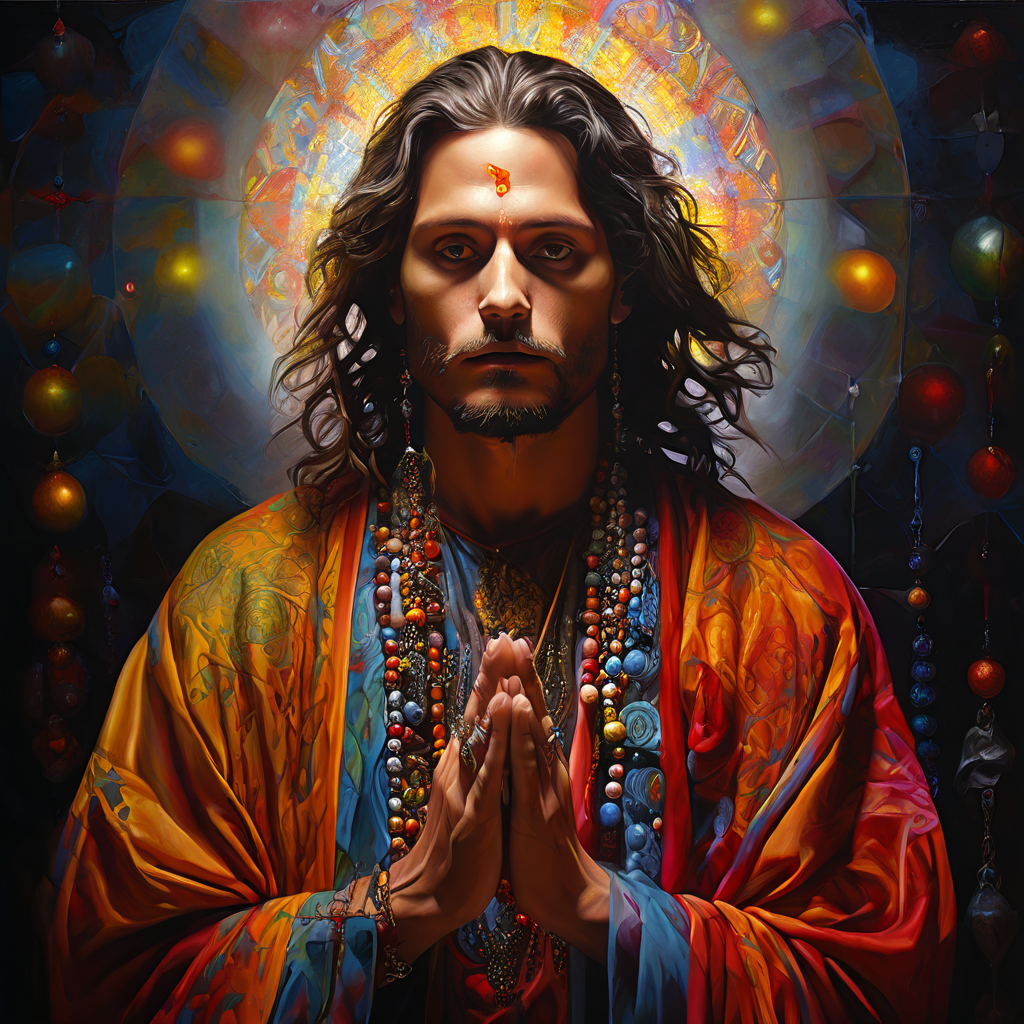
In the quest for spiritual enlightenment, it is easy to fall into the trap of equating outward appearances with inner transformation. The spiritual marketplace is brimming with individuals adorned in the symbols of enlightenment—beads, robes, and serene smiles. But beneath these carefully cultivated images, what lies? Are these symbols true reflections of deep spiritual attainment, or merely the trappings of a spiritual persona?

The essence of genuine spiritual attainment transcends outward appearances. It is an internal metamorphosis that reconfigures one’s very being. True spiritual growth dismantles the ego, dissolves the illusion of separation, and fosters a profound sense of unity with all existence. This journey is deeply personal and often invisible to the outside world. It is marked by humility, compassion, and an unwavering commitment to truth.

A spiritual persona, on the other hand, can be a carefully constructed mask. It seeks validation from the external world by adopting symbols and behaviours associated with spirituality. This persona can be seductive, as it offers the semblance of wisdom and enlightenment without necessitating the arduous inner work required for genuine transformation. It may garner admiration and respect, but it does not hold the essence of true spiritual attainment.

To discern the difference, one must look beyond appearances. True spiritual attainment manifests in actions, choices, and the quality of one’s presence. It is reflected in the ability to remain centred in the face of life’s challenges, to act with compassion even in difficult circumstances, and to embrace the inherent uncertainty of existence with equanimity.

It is a state of being that radiates from within, often silently, without needing external validation or recognition. It is characterized by a deep sense of peace, a boundless capacity for love, and an unwavering connection to the present moment.

The path to spiritual attainment requires courage—the courage to face one’s deepest fears, to dismantle long-held beliefs, and to surrender the ego’s need for control and validation. It demands an authentic engagement with the present moment, a willingness to embrace discomfort, and a commitment to the inner journey, no matter how solitary or challenging.

As you navigate your spiritual journey, remember that the true markers of spiritual attainment are not found in external symbols or personas. They are found in the quiet moments of insight, the depths of your heart, and the transformative power of authentic presence. Embrace the journey inward, for it is there that the true treasures of spiritual awakening are discovered.

Morgan O. Smith

Yinnergy Meditation, Spiritual Life Coaching & My Book, Bodhi in the Brain…Available Now!
https://linktr.ee/morganosmith

The Philosophical Essence of Satan and God

I’ve been asked on occasion if I believe in the existence of Satan. My response is layered and nuanced. Philosophically, metaphorically, and symbolically, I acknowledge the concept of Satan, but I don’t subscribe to the personified version of Satan or a devil that is meant to be taken literally. To me, such a belief is irrational. Instead, Satan symbolizes everything evil or negative within the human experience.

Now, one might ask if I believe in God. My answer, while seemingly at the opposite extreme, follows a similar logic. From a literal standpoint, I don’t believe in God as a distinct entity. Rather, I assert that everything in existence is God, including myself, you, everyone, and everything else. This understanding stems from my awakening, which I claim to be a profound truth (though my interpretation of this truth is limited). In essence, God is the absolute—everything in and out of existence.

Religions like Christianity often refer to God as the alpha and the omega, the beginning and the end. If everything is God, then does this include Satan? My answer is unequivocally yes. According to certain texts, God created Satan, formerly known as Lucifer, who was God’s perfect angel. Some might argue that God created Lucifer, but Lucifer isn’t God. To this, I pose a series of questions.

If God created Lucifer, what did God make Lucifer out of? You might say pure light. But what is light made of? Oscillating electric and magnetic fields. Are these fields the alpha and the omega? No. So, what are oscillating electric and magnetic fields made of? Electromagnetic waves. Are electromagnetic waves the alpha and the omega? Again, no. What are electromagnetic waves made from? We can trace this down to the concept of emergent space-time.

Is emergent space-time the alpha and the omega, the beginning and the end? If we consider God as the absolute, then it must be. If emergent space-time is equivalent to God, then at its essence, Lucifer is made out of God. Even if you adhere to the idea that God made Lucifer ex nihilo (out of nothing), and if God is absolute, then this must include nothing (preceding emergent space-time itself). Thus, God encompasses both everything and nothing.

In this holistic view, the existence of Satan and the nature of God merge into a singular, all-encompassing reality. This perspective encourages us to transcend literal interpretations and embrace a deeper, more integrated understanding of existence, where all dichotomies dissolve into the absolute.

Morgan O. Smith

Yinnergy Meditation, Spiritual Life Coaching & My Book, Bodhi in the Brain…Available Now!

https://linktr.ee/morganosmith

Emptiness and Form

Exploring the Essence of Ultimate Reality

In the vast expanse of spiritual philosophy, the concept of ultimate reality often emerges as a profound focal point of contemplation. At its core, ultimate reality is a paradox: an emptiness encompassing all that takes form. This paradox invites us to explore the intricate dance between the seen and the unseen, the manifest and the unmanifest, and the ever-present flow between these states of being.

Emptiness, in its essence, is not a void in the conventional sense. It is a fertile ground, a boundless potential from which all phenomena arise. This emptiness is not devoid of life; rather, it is the very source of existence, the womb of creation. It is in this emptiness that the seed of every form, every thought, and every experience is planted and nourished.

When we speak of “everything that takes form,” we refer to the myriad expressions of life—mountains and rivers, thoughts and emotions, stars and galaxies. These forms are the manifestations of the underlying emptiness, brought into being through the dance of energy and consciousness. They are transient, ever-changing, yet intimately connected to the unchanging, formless essence from which they emerge.

This understanding challenges us to look beyond the superficial appearances of the world. It encourages us to see the impermanent nature of forms, not as a cause for despair, but as an invitation to connect with the timeless reality that underlies all existence. This connection fosters a deep sense of peace and acceptance, as we recognize that everything, in its transient nature, is a part of a greater whole.

To truly grasp the nature of this ultimate reality, one must move beyond intellectual understanding and into direct experience. This requires a quieting of the mind, a stilling of the incessant chatter that often distracts us from the subtle truths of existence. In moments of deep meditation or profound insight, we may glimpse this ultimate reality—a state where the distinction between emptiness and form dissolves, and we perceive the unity that lies at the heart of all things.

In this state of awareness, we see that emptiness is not a lack, but a fullness—a fullness that contains all possibilities, all potentialities. It is a space of infinite creativity, where the play of consciousness unfolds without limit. This realization transforms our perception, allowing us to live with a sense of wonder and reverence for the mystery of existence.

As we navigate the challenges and joys of life, this understanding can be a guiding light. It reminds us that, at our core, we are not separate from the world around us, but deeply connected to it. In embracing the paradox of emptiness and form, we find a deeper meaning in our experiences and a greater compassion for all beings.

The journey to this understanding is a lifelong one, filled with moments of clarity and confusion, insight and doubt. Yet, each step on this path brings us closer to the heart of the mystery, where we may find a profound sense of peace and a recognition of the sacredness of all life.

Morgan O. Smith

Yinnergy Meditation, Spiritual Life Coaching & My Book, Bodhi in the Brain…Available Now!

https://linktr.ee/morganosmith

The Paradox of the False Self

The “I” is the false self, but this false self is also true. It just doesn’t know it yet. This realization reveals that our perceived separateness is an illusion, guiding us toward the truth of our inherent unity.

Understanding the False Self
The false self, often identified as the ego, is the aspect of our identity constructed from our experiences, beliefs, and societal conditioning. It is the mask we wear, the persona we present to the world. While it serves a functional role in navigating daily life, it is not our ultimate truth.

The Hidden Truth
Within this false self lies a hidden truth. The ego, though seemingly separate, is an expression of the same source that underlies all existence. The journey of self-realization involves peeling away the layers of this constructed identity to uncover the true self—the essence that connects us all.

The Illusion of Separateness
Our perception of being distinct individuals creates the illusion of separateness. This belief in separateness fosters division, conflict, and a sense of isolation. However, when we begin to see through the false self, we recognize that these divisions are illusory. Beneath the surface, we are all interconnected.

Toward Inherent Unity
Realizing the paradox that the false self is also true propels us toward the recognition of our inherent unity. This understanding dissolves the boundaries that the ego creates, allowing us to experience a deeper connection with ourselves and others. We move from a mindset of “me versus you” to one of “us” and “we.”

Living with Awareness
Living with this awareness transforms our approach to life. We become more compassionate, understanding, and empathetic, seeing others as reflections of ourselves. This shift in perception fosters a sense of peace and harmony, as we align with the deeper truth of our shared existence.

The journey of recognizing the false self as also true is a profound step toward spiritual awakening. It illuminates the path to our inherent unity, guiding us to live with greater authenticity and connection. By embracing this paradox, we uncover the deeper reality that binds us all.

Morgan O. Smith

Yinnergy Meditation, Spiritual Life Coaching & My Book, Bodhi in the Brain…Available Now!

https://linktr.ee/morganosmith

The Shared Heart of Existence

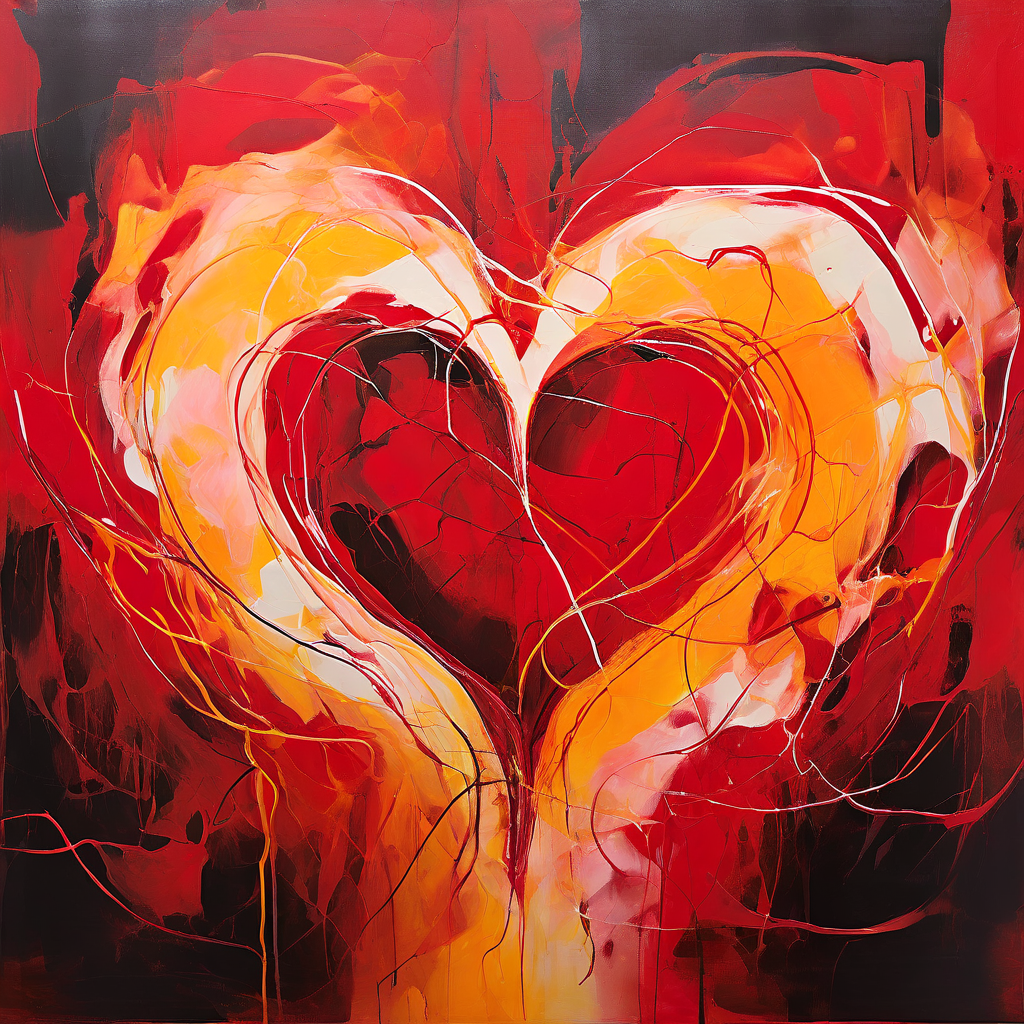
We all share the same beating heart at the core of all existence, a profound unity that transcends individuality. This shared essence connects us deeply, fostering empathy and compassion, and reminding us of our interconnectedness and inherent oneness with all life.

Recognizing Our Shared Essence

Beyond the layers of identity and personal history, the core of our being lies a shared essence that binds us together. This recognition shifts our perception from separation to unity, allowing us to see each other as reflections of the same source. When we understand that we are all connected by this common heart, we begin to treat each other with more kindness and respect.


The Power of Empathy and Compassion

This awareness of our shared essence naturally fosters empathy and compassion. When we see ourselves in others, their joys become our joys, and their sorrows become our sorrows. This deep sense of empathy breaks down barriers and opens the way for genuine connections and supportive relationships. Compassion becomes not just an ideal but a natural expression of our shared humanity.

Embracing Interconnectedness

Understanding that we all share the same beating heart helps us embrace our interconnectedness with all forms of life. This perspective extends beyond human relationships to include animals, plants, and the environment. Recognizing our place within the web of life encourages us to live more harmoniously and sustainably, honouring the interconnected fabric of existence.


Living with Oneness

Living with the awareness of our shared heart transforms our approach to life. It inspires us to move beyond self-centred pursuits and to contribute to the well-being of the whole. Acts of kindness, service, and love become expressions of our recognition of oneness. This shift enriches our personal lives and contributes to a more compassionate and united world.

By remembering that we all share the same beating heart at the core of all existence, we align ourselves with a deeper truth. This truth fosters empathy, compassion, and a profound sense of interconnectedness, guiding us toward a life of unity and harmony with all.

Morgan O. Smith

Yinnergy Meditation, Spiritual Life Coaching & My Book, Bodhi in the Brain…Available Now!
https://linktr.ee/morganosmith