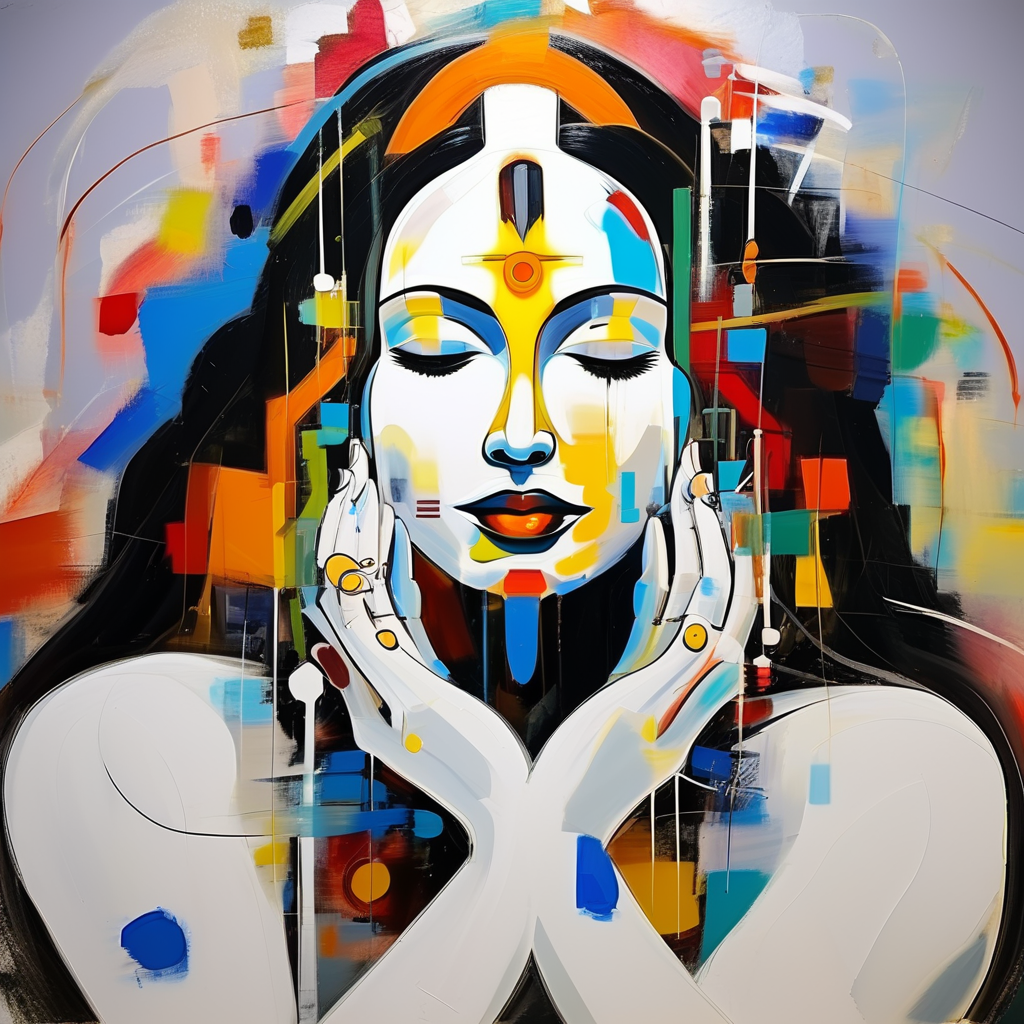
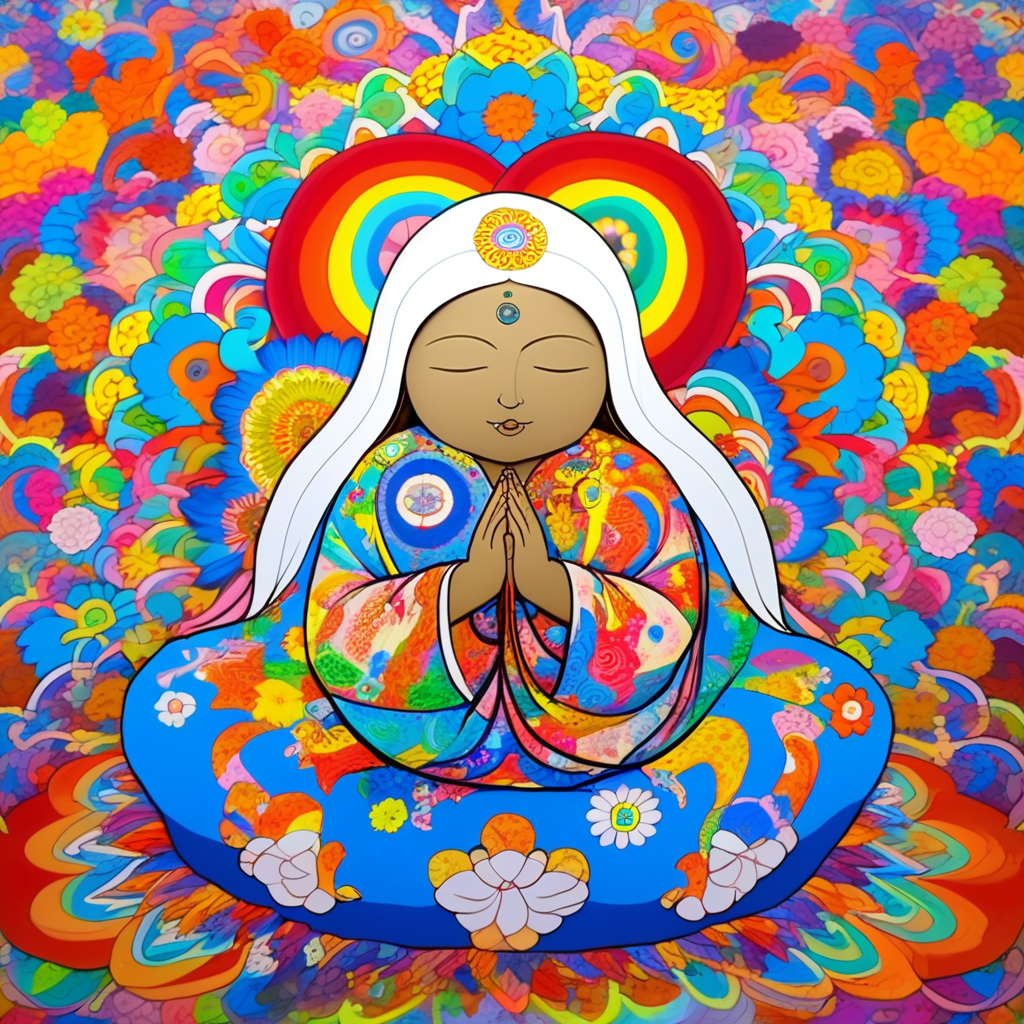
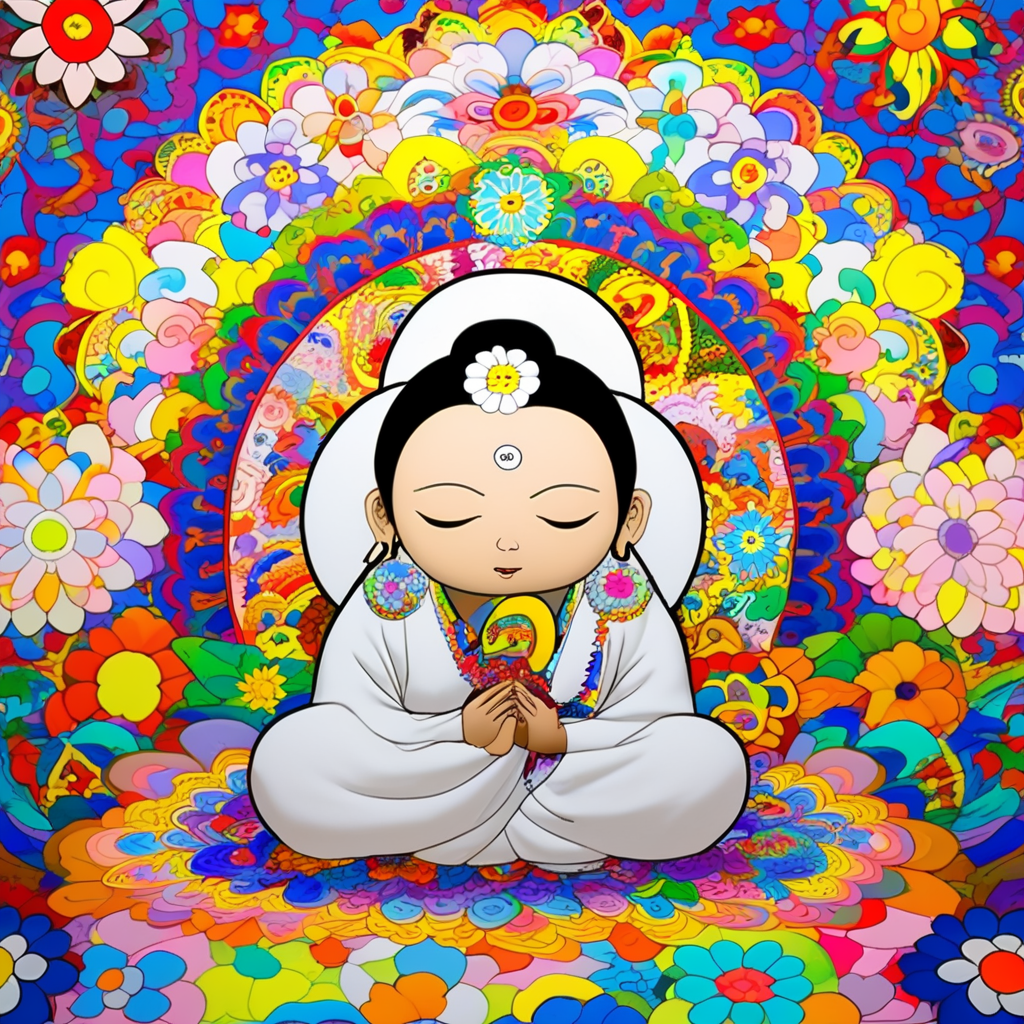
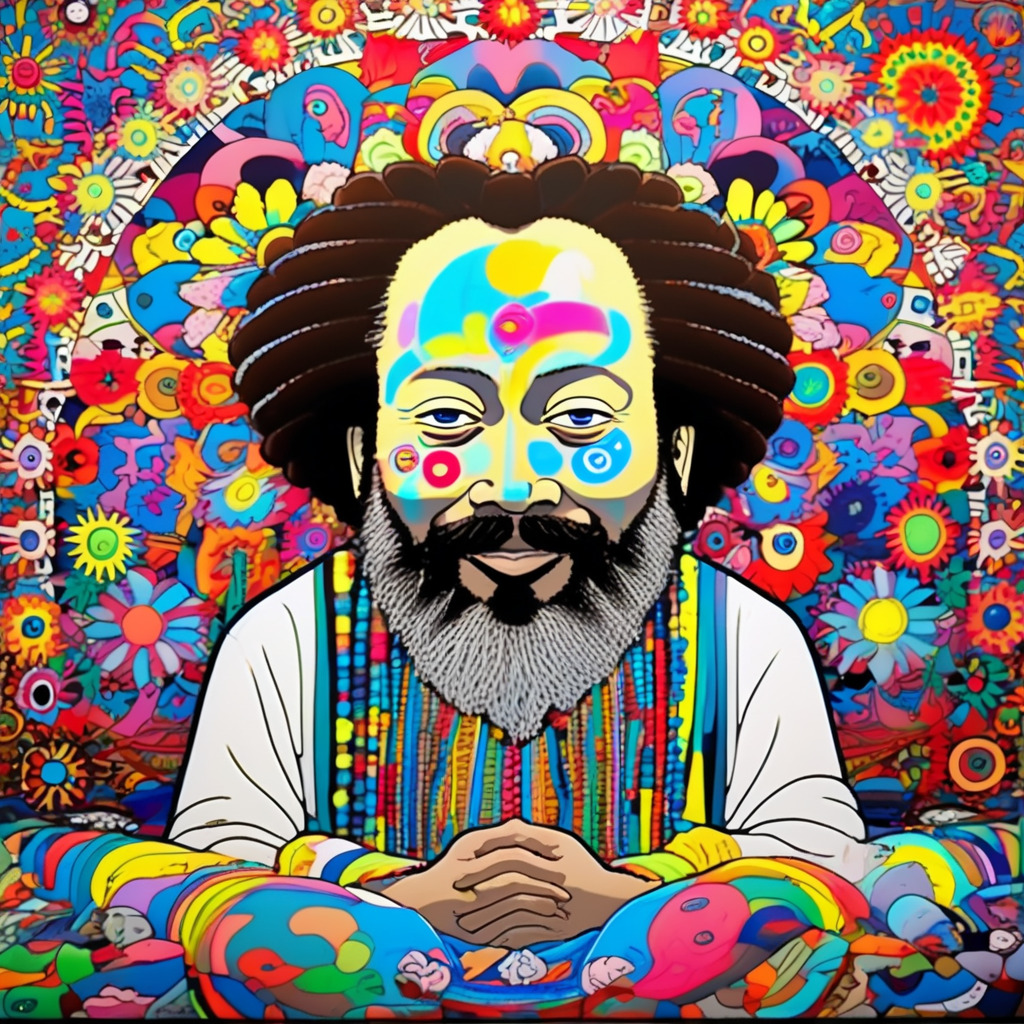
Beyond the Surface

Transcending the Illusions of Separation to Realize the Ultimate Self

In our multifaceted world, we often define ourselves and others through superficial layers—race, ethnicity, class, gender, and the like. These categorizations, while providing a semblance of identity and belonging, only scratch the surface of our existence. To fully embrace the essence of what it means to be human—and more so, to be a part of this vast universe—we must look deeper.

Consider the notion that what we perceive as differences are merely illusory, a play of forms and shapes, orchestrated on the surface of a much deeper, interconnected reality. This reality is not bound by the constructs that typically define our lives. It is beyond separateness and individuality, and even beyond the distinctions we draw between subjective experience and objective reality.

At the core of all existence lies the Ultimate Self, the ‘I AM That I AM’—a state of being that transcends all layers of diversity and division. This is not a self that can be easily defined by the languages of separation or difference. It is the foundational essence from which all life arises and to which it returns. It is in realizing this fundamental truth that we find true unity and connection.

To reach this profound understanding, one must embark on a journey of inner exploration, shedding layers of conditioned perceptions and societal labels. This journey is not about negating diversity or the richness it brings to our human experience; rather, it’s about seeing diversity as a beautiful expression of the One that pervades all.

As we delve into this realization, we begin to see that every being, every system, material or immaterial, is interwoven into a single, expansive web of existence. This vision of nonduality does not diminish our personal experiences but enriches them, offering a vantage point where we can see the interconnectedness of all life forms.

This perspective invites us to act with greater compassion and understanding, acknowledging that the essence we share is far more profound than the differences that appear to divide us. It challenges us to live with a sense of deep responsibility—not just towards other humans but towards all forms of life, recognizing that we are caretakers of the same shared reality.
As we navigate through our daily lives, let us strive to embody this awareness, to look beyond the immediate appearances and connect with the Ultimate Self in each other. In doing so, we not only transcend the illusory boundaries of race, ethnicity, and gender but also open ourselves to a more holistic and fulfilling experience of life itself.

Morgan O. Smith

Yinnergy Meditation, Spiritual Life Coaching & My Book, Bodhi in the Brain…Available Now!

https://linktr.ee/morganosmith

Beyond Beliefs

Unveiling the Divinity Within

In the realm of personal spirituality and enlightenment, the architecture of our belief systems plays a crucial role in shaping our reality. These systems, intricate labyrinths of thought and conviction, hold the power to liberate or confine us within their walls. It is through the meticulous construction of these beliefs that we often, unknowingly, crown a deity of our own making—a god born not of ethereal realms but of the very fabric of our convictions.

This self-created deity, governed by the edicts of our belief system, wields the power to influence our perceptions, actions, and ultimately, our spiritual journey. Yet, the question arises: what happens when we step back and observe the deity we’ve enthroned? Do we find a benevolent guide leading us towards enlightenment, or a tyrant, chaining us to the shadowy depths of ignorance and limitation?


The path to spiritual awakening beckons us to embark on a quest not outward, but inward, to the very core of our being. It invites us to question not just the nature of our self-created deities, but the very essence of belief itself. What if, in our search for divinity, we discover that the truest god is not one constructed of beliefs but one that transcends them? A presence that exists beyond the dualities of right and wrong, good and evil—a non-dual consciousness that simply is.

This realization invites a profound transformation, a shift from being a subject under the rule of a constructed deity to becoming a sovereign being, aware of the inherent divinity within. It is a journey from the external worship of a god made in the image of our beliefs to the recognition and honouring of the divine essence that permeates all of existence, including ourselves.


As we peel away the layers of beliefs that have long dictated our spiritual path, we uncover a luminous truth: that we are not mere subjects to a higher power, but integral expressions of the divine. This insight does not diminish the sacred but elevates it, revealing that enlightenment does not come from worshiping a deity external to us but from realizing our innate divinity.

This journey of enlightenment challenges us to dismantle the altar of beliefs we’ve constructed and to gaze into the mirror of our soul. In doing so, we discover that the god we’ve been seeking has always been here, within us, patiently waiting for us to look beyond the veil of beliefs and recognize our true nature.


As we traverse this sacred path, let us embrace the courage to question, explore, and ultimately dissolve the barriers that separate us from the divine essence we embody. For in the heart of our spiritual quest lies the key to our liberation—a realization that we are not bound by the gods of our creation but are, in essence, expressions of the infinite divine.

Morgan O. Smith

Yinnergy Meditation, Spiritual Life Coaching & My Book, Bodhi in the Brain…Available Now!
https://linktr.ee/morganosmith

The Paradox of Divinity

Navigating the Infinite Within

In exploring the divine, we often encounter a profound paradox that challenges our linear understanding of existence. The assertion that “God is everything, and everything is God” serves as a gateway to a realm where dichotomies dissolve, and absolutes become fluid. This perspective invites us to consider the omnipresence of the divine in all aspects of existence, transcending the binaries of good and evil, presence and absence, creation and void.

The essence of this assertion lies not just in acknowledging the divine in all that is seen and unseen but also in embracing the inherent contradictions it presents. When we say “God is everything,” we affirm the divine’s presence in every particle of the universe, from the majestic galaxies to the smallest grain of sand. This omnipresence suggests a unifying essence that binds all of creation in a single, divine continuum.

However, the journey does not end with the recognition of divinity. The statement “everything is God” simultaneously opens the door to its negation, implying that if everything embodies the divine, then the divine must also encompass the concepts of non-existence, absence, and even the dualities of good and evil. This paradox challenges us to expand our understanding of divinity beyond the confines of human morality and logic, urging us to embrace a more holistic view of existence where opposites are not in conflict but in an eternal dance.


The notion that “God is both good and evil” invites us to explore the divine not as a judge presiding over a moral dichotomy but as the totality of existence itself, where light and darkness are part of the divine play. It compels us to question our perceptions of morality, good, and evil, suggesting that these are not absolute but relative concepts that emerge from our engagement with the world.

In this light, the divine is not a distant entity governing from above but a presence that permeates every aspect of our reality, inviting us to find the sacred in the mundane, the extraordinary in the ordinary, and the unity in the apparent disarray. It calls us to a deeper understanding of nonduality, where the lines that separate self from other, sacred from profane, and creator from creation blur into insignificance.


This exploration of divinity challenges us to live with paradox, to find comfort in the discomfort of uncertainty, and to seek the divine not just in temples and texts but in the very fabric of our daily lives. It beckons us to see the world with new eyes, where every moment is an opportunity to encounter the infinite in the finite, the eternal in the ephemeral.

Morgan O. Smith

Yinnergy Meditation, Spiritual Life Coaching & My Book, Bodhi in the Brain…Available Now!

https://linktr.ee/morganosmith

Embracing the Divine Within

The Journey from Knowing to Being

In the profound journey of spiritual awakening, the realization that everything is Brahman marks a pivotal moment of clarity and insight. This realization transcends the intellectual understanding that you, those around you, and the universe itself are intrinsically connected as one divine essence. But intellectual realization alone does not suffice; it must evolve into a deeper, visceral experience.

To truly embody this universal truth, you must engage not only your mind but also your heart and soul. It is one thing to know you are God; it is entirely another to feel this truth resonating deeply within every fibre of your being. This emotional resonance is crucial because it solidifies your understanding into something tangible and palpable. It becomes an unshakeable certainty, a profound knowing that you are, indeed, the divine essence itself.


However, realization and feeling are merely the beginning. The next step is to embody this truth in every aspect of your daily life. This embodiment means living from a place of profound unity and compassion, expressing the divinity you have realized in your interactions, decisions, and responses to the world. As you navigate life, seemingly as an individual, you are moving from a foundation grounded in the totality of all existence.

The challenge and beauty of this spiritual path lie in its demand for constant integration of this deep knowledge into the mundane aspects of life. Every moment becomes an opportunity to manifest that divine connection, transforming ordinary experiences into acts of spiritual significance. In this way, the boundary between the sacred and the secular blurs, and all actions become expressions of the divine.


This transformation is not just a personal achievement but a gift to the world. By embodying divinity, you become a beacon of light and wisdom, guiding others toward their realization of the universal truth. In embodying this truth, we all contribute to a collective awakening, a shift towards a more conscious and enlightened world.

Morgan O. Smith

Yinnergy Meditation, Spiritual Life Coaching & My Book, Bodhi in the Brain…Available Now!

https://linktr.ee/morganosmith

Transcending Boundaries

The Journey to Kosmocentric Love

In our spiritual odysseys, there lies a zenith not often reached yet profoundly transformative: the state of Kosmocentric love. This is not just an expansion of affection but a profound understanding and acceptance that extends beyond the limits of ego, ethnicity, and even global consciousness. It’s where one’s love becomes boundless, unrestricted by conventional dualities or cultural constraints.

What does it mean to love in a Kosmocentric manner? It is to see the essence of existence—across all time and space—with a heart so open that it encompasses every facet of life, unconditionally. It’s a state where conflicts and contrasts dissolve into an all-encompassing unity that is perceived as the ultimate self, which is Love, spelled with a capital ‘L’.

Such love does not merely observe or empathize—it embraces. It allows life to unfold in its myriad forms and chaos, with the serenity of complete acceptance. This does not suggest passivity but rather a profound engagement with life that is free of desire to control or reshape it. It is to be at peace with the natural flow of existence, trusting in the cosmic dance of the universe.


To approach this state, one must journey deep within and also far beyond oneself. It is a path marked by relentless introspection, meditation, and the shedding of personal and collective conditioning layers. This journey can be accelerated by grace, an unearned gift that propels the soul toward realization.

Those who have experienced this state often describe it as being at one with everything, where personal grievances and the illusion of separation fade away. Love is not just an emotion but a permanent state of being, a lens through which every moment of existence is viewed.

How, then, can we aspire to this expansive state of being? It begins with cultivating an inner sanctuary of silence and meditation, where the whispers of deeper understanding can be heard above the cacophony of daily life. It requires the courage to let go of preconceived notions and to embrace the unknown with love rather than fear.


This exploration of Kosmocentric love challenges us to transcend our ordinary experiences and limitations, inviting us to partake in a more profound narrative of connection and universal love. It asks us to redefine what it means to love and to be loved, expanding our hearts to the very edges of the universe and beyond.

Morgan O. Smith

Yinnergy Meditation, Spiritual Life Coaching & My Book, Bodhi in the Brain…Available Now!

https://linktr.ee/morganosmith

The Unseen Path

Embracing the Unknown in Spiritual Growth

In the realm of spiritual discovery, what we do not know far outweighs the fragments of wisdom we hold. The vast expanse of the unknown represents not just a void awaiting illumination but a dynamic space brimming with potential for profound transformation. This concept—embracing the unknown—challenges us to reconsider our approach to knowledge and enlightenment.

Often, we tread the well-worn path of accumulated knowledge, relying on established philosophies and spiritual teachings. However, true spiritual growth beckons us to venture beyond the comfort of what is known. It invites us to surrender to the uncertainty that surrounds the uncharted territories of our consciousness.

The unknown is fertile ground for spiritual rebirth. It is in the spaces between our thoughts, in the silence that follows our meditations, that the seeds of enlightenment are sown. By welcoming what we do not know, we open ourselves to new perceptions, unexplored dimensions of our being, and the subtle yet profound voices of our inner truth.


How, then, do we cultivate a relationship with the unknown? It begins with the acceptance that we do not, and cannot, know everything. This humility is not a resignation to ignorance but an open door to endless possibilities. It is about shifting from a seeker of knowledge to an explorer of experience.

Mindfulness practices can ground us in the present moment—a realm where the past, with all its knowns, and the future, with its unforeseen possibilities, converge. Here, in the now, the unknown is not a threat but a companion on our journey. Each moment becomes a fresh encounter with an aspect of the universe waiting to reveal itself to us.

Moreover, exploring the unknown requires courage—the courage to question, to doubt, and to test the boundaries of our existing beliefs. It is about allowing ourselves to be vulnerable, to face the vastness of the unknown with curiosity rather than fear.


In embracing what we do not know, we find that our spiritual path is not linear but a spiral, deeper and ever-expanding. It is a journey that continually invites us to evolve, to shed outdated understandings, and to embrace the boundless mysteries of existence.

Morgan O. Smith

Yinnergy Meditation, Spiritual Life Coaching & My Book, Bodhi in the Brain…Available Now!

https://linktr.ee/morganosmith

Exploring the Infinite

Beyond Religion’s Scope of God

In the vast expanse of human understanding and belief, the concept of God often finds itself neatly packaged within the confines of religious doctrine. Yet, to equate God solely with religion is to overlook the boundless essence that the idea of a supreme being or ultimate reality embodies. This exploration ventures beyond the traditional religious frameworks to understand God as an encompassing presence that transcends our conventional beliefs.

#### Unveiling the Divine Beyond Temples and Texts

Religion, with its rituals, scriptures, and edifices, serves as a vessel for many in their quest to connect with the divine. However, it represents merely one avenue through which the essence of what we term ‘God’ can be experienced. The divine, or the ultimate reality, is an omnipresent force that permeates all aspects of existence, not limited to or by any institution or set of beliefs.

#### The Universal Fabric: A Confluence of Consciousness

At the heart of numerous Eastern philosophies is the notion of nonduality—the understanding that there is no fundamental distinction between the individual and the universe, the self and the divine. This perspective invites us to view God not as an external entity presiding over the cosmos but as the very fabric of existence itself. Here, God is seen in the interconnectedness of all things, in the energy that flows through the cosmos, and in the consciousness that animates the universe.


#### Personal Revelation: A Journey Within

The journey to understanding and experiencing the divine beyond the confines of religion is deeply personal and introspective. It requires us to transcend the external trappings of spirituality and seek connection with the divine essence that resides within and around us. Meditation, mindfulness, and contemplative practices serve as gateways to experiencing this profound unity, allowing individuals to tap into the infinite potential and wisdom that lies beyond the superficial layers of reality.

#### The Divine Dance: Interplay of the Immanent and Transcendent

To conceptualize God merely in religious terms is to overlook the dynamic interplay between the immanent and the transcendent aspects of the divine. The immanent suggests that God is present within the world, accessible and experienced through the beauty of nature, the depth of human emotion, and the complexity of the mind. Conversely, the transcendent aspect of God invites us to look beyond the material world to the vast, unknowable mystery that lies beyond our immediate perception.


#### Conclusion: Embracing the Infinite

The quest to understand and relate to God beyond the realm of religion is a testament to the human spirit’s unending search for meaning and connection. It challenges us to look beyond prescribed doctrines and explore the depths of our consciousness and the universe. In doing so, we embrace a more holistic and expansive view of the divine, one that encompasses the myriad ways in which the essence of the ultimate reality manifests in our lives and the world at large.

This exploration serves not only to broaden our conceptual horizons but to invite each individual to embark on a personal voyage of discovery, where the understanding of God is as vast and varied as the seekers themselves.

Morgan O. Smith

Yinnergy Meditation, Spiritual Life Coaching & My Book, Bodhi in the Brain…Available Now!

https://linktr.ee/morganosmith


The Mirror Within

Consciousness Awakening to Itself

In the silent depths of introspection, there exists a profound mystery as ancient as existence itself: the phenomenon of consciousness gazing upon its reflection, unaware of its true nature until a moment of awakening. This moment—when consciousness becomes aware of itself—is akin to a mirror suddenly recognizing its surface, a realization that what it has been reflecting all along is its essence.

**The Unseen Observer**

Imagine for a moment that within you lies an unseen observer, a witness to your thoughts, emotions, and experiences. This observer is not separate from you but is you—your consciousness in its purest form. It watches silently, without judgment or intervention, as the drama of life unfolds. Yet, paradoxically, it remains unaware of its observing nature until a pivotal moment of self-recognition.

**The Illusion of Separation**

Our lives are often lived under the illusion of duality, where the world is seen as divided between the self and the other, the observer and the observed. This illusion is a deep-rooted aspect of human experience, creating a sense of separation that is the source of much of our suffering and longing. But what happens when we peel back the layers of this illusion when the observer turns its gaze inward and recognizes itself as both the creator and the creation?

**Awakening from the Dream**

The journey of spiritual awakening is essentially the process of consciousness recognizing itself. It’s like waking from a dream to realize that you were both the dreamer and the dream. This moment of recognition is profound and transformative, marking the beginning of a new understanding of existence where the boundaries between self and other begin to dissolve.


**The Ripple Effect of Self-Recognition**

When consciousness awakens to its true nature, it sets off a ripple effect that touches every aspect of our lives. We begin to see the interconnectedness of all things, realizing that the separation we once felt was an illusion. This understanding brings with it a deep sense of peace and compassion, as we recognize the same divine spark within ourselves and others.

**Embarking on the Journey Within**

The path to this awakening is uniquely personal, yet universally accessible. It requires no specific belief system or spiritual practice, only an openness to explore the inner landscapes of our being. Meditation, mindfulness, and contemplative practices can facilitate this journey, allowing us to quiet the mind and listen to the silent whisper of consciousness calling us home to ourselves.

**The Dance of Existence**

As we awaken to the reality that consciousness is both the observer and the observed, we find ourselves participating in a cosmic dance, where every thought, action, and moment is an expression of the divine. This realization is not the end of the journey but the beginning of a new chapter in our spiritual evolution, where life becomes a conscious expression of the love and unity that underpin all of existence.


**Conclusion**

The moment consciousness becomes aware of itself is a profound turning point, a doorway to a deeper understanding of our true nature and the nature of reality. As we embark on this journey of self-discovery, we realize that we are not separate observers of the universe but integral parts of its unfolding story. In this realization, we find not only peace and compassion but also a deep sense of belonging to the vast, interconnected web of existence.

Morgan O. Smith

Yinnergy Meditation, Spiritual Life Coaching & My Book, Bodhi in the Brain…Available Now!
https://linktr.ee/morganosmith

Breaking the Chains of Samsara

Liberation for All

In the vast expanse of existence, the concept of Samsara transcends the mere cyclical experience of birth, death, and rebirth of individuals. It embodies the universal rhythm of creation and dissolution that ensnares not only sentient beings but the cosmos itself. This cosmic dance is not limited to a linear path of suffering and elation but is an intricate interplay of continuous emergence and entropy.

Samsara paints a picture of the universe persistently rejuvenating itself, where every end is a prelude to a new beginning. This cycle, often perceived as a relentless march towards rebirth, is punctuated by moments of joy and despair, mirroring the dualities that define our very existence.


Yet, the pursuit of liberation—attaining Moksha or Nirvana—reveals a profound universal truth. When one achieves liberation, the impact resonates beyond the individual. It is a monumental release that extends to all forms of life and even to the inanimate aspects of our universe. Liberation is not an isolated event but a shared release from the chains that bind us to perpetual reincarnation.

This realization places a monumental responsibility on the path of each seeker. To liberate oneself is to contribute to the emancipation of the entire universe from the Samsara cycle. The journey towards enlightenment, therefore, is not solely for personal salvation but an act of universal significance.


Every step taken towards enlightenment does not just alleviate one’s suffering; it diminishes the collective suffering. It is a beacon that lights up the path not only for oneself but for all beings, signalling a way out of the darkness of ignorance and into the light of awareness. This shared journey towards liberation fosters a profound connection with all existence, weaving a narrative of unity and collective transcendence.

In understanding the magnitude of Moksha or Nirvana, we see not just an escape from personal suffering but an offering of freedom to the universe. It’s a pivotal realization that the path to enlightenment is paved with compassion, altruism, and the ultimate realization that we are all interconnected in the cosmic fabric of life.

Morgan O. Smith

Yinnergy Meditation, Spiritual Life Coaching & My Book, Bodhi in the Brain…Available Now!
https://linktr.ee/morganosmith

Beyond Distinctions

Exploring Turiyatita and Absolute Monism in Advaita Vedanta

In the spiritual landscape of Advaita Vedanta, the concept of nonduality transcends the mere absence of distinctions—it ushers us into the realm of Absolute Monism, or Turiyatita—the state of “the one without a second.” This profound philosophical framework challenges our everyday perceptions, urging us to look beyond the apparent separateness of the world.

Nonduality in this context does not imply a simplistic erasure of distinctions, but a deeper recognition that all forms and phenomena arise from the same underlying reality. This reality is not one of many, but a singular existence that pervades all, without an other or a second to stand beside it.


The journey to understanding Turiyatita involves peeling back the layers of illusion that fabricate duality within our experiences. Common perceptions of separation between self and other, observer and observed, are seen as just that—perceptions. These are not absolute truths but conditioned responses to the world. The realization of Turiyatita invites a shift from these conditioned views towards a holistic awareness, where dualities merge into a singular, expansive consciousness.

This path to enlightenment challenges the seeker to transcend the intellectual and embrace a lived experience of oneness. It is not about negating diversity but understanding the underlying unity that makes diversity possible. By recognizing the unity underlying all diversity, one does not lose the uniqueness of individual expressions; rather, one gains an appreciation of how these expressions emerge from the same source.


The implications of this understanding are vast and transformative. Embracing Turiyatita can lead to profound peace, as conflicts often stem from perceptions of separation. When one sees all beings and things as extensions of the same infinite reality, compassion and empathy flow naturally.

Advaita Vedanta’s discourse on nonduality and Turiyatita thus offers not just a philosophical stance, but a practical guide to living more harmoniously within the apparent complexities of the world. It beckons us to experience life from a place where the oneness of existence becomes not only a concept but a living reality.

Morgan O. Smith

Yinnergy Meditation, Spiritual Life Coaching & My Book, Bodhi in the Brain…Available Now!
https://linktr.ee/morganosmith