Beyond the Dualistic Mind

Nonduality as Direct Experience

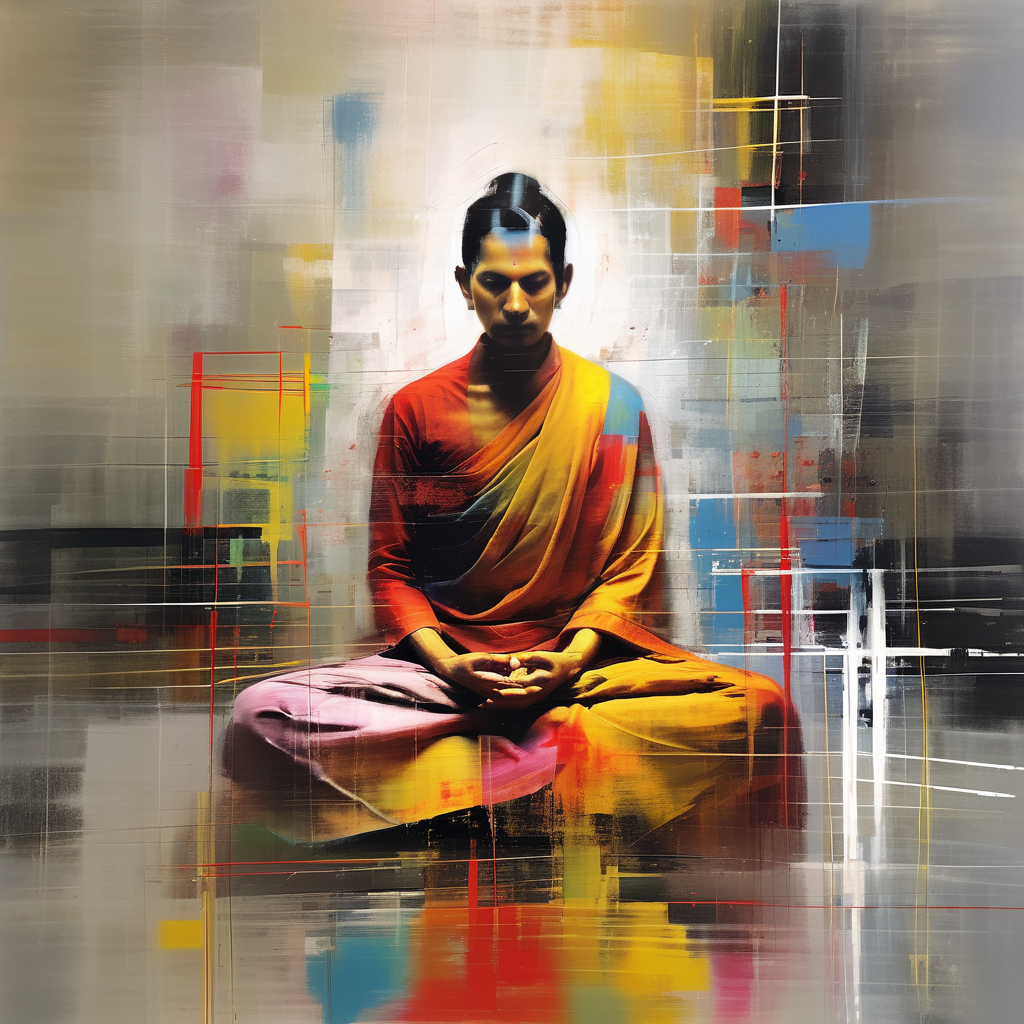
Nonduality transcends mere philosophy. At its core, it embodies the direct encounter with the ultimate reality, which paradoxically, isn’t an experience in the conventional sense. The philosophy that arises around nonduality is intriguing, as it invites one to engage with a deeper form of wisdom. Yet, it’s crucial to acknowledge that this philosophical engagement is inherently prone to misinterpretation.

Consider the nature of thought itself. The very act of thinking about nonduality alters its essence. The subtle beauty and profound truth of nonduality are such that they evade the grasp of mental conception. To speak of nonduality is to risk distorting its pure form, as words are a tool of duality, crafted to delineate and differentiate.

Acting on nonduality further complicates its expression. Every action taken in the name of understanding or demonstrating nonduality carries the imprint of individual interpretation, thus never fully encapsulating its truest form. This is why nonduality cannot be pinned down as a mere philosophy or concept. It is beyond the intellectual and the tangible; it is the space where all dualistic perceptions dissolve.


However, this does not diminish the value of discussing and exploring nonduality. Each exploration, each dialogue, though imperfect, is a step toward the vast, uncharted expanse of understanding. It is in these explorations that we create space for insights to arise, even within the confines of our conceptual frameworks.

Ultimately, the pursuit of nonduality isn’t about attaining something or reaching a conclusion. It’s about the continual process of unlearning the layers of dualistic conditioning that obscure our true nature. It’s about resting in the spaciousness where true wisdom resides, beyond the reach of conventional thought and speech.


This journey invites you to experience the world afresh, beyond the confines of the dualistic mind. It beckons you to live in the wonder of the immediate and the real, where the essence of nonduality resides—not as a concept to be grasped, but as a reality to be lived.

Morgan O. Smith

Yinnergy Meditation, Spiritual Life Coaching & My Book, Bodhi in the Brain…Available Now!
https://linktr.ee/morganosmith

Beyond the Mirage

The Ego’s Role in the Quest for Enlightenment

In the labyrinth of human experience, the ego emerges as both the architect and inhabitant of its intricate corridors. It shapes our perceptions, drives our actions, and colours our interpretations of the world around us. The journey toward enlightenment, often seen as the pinnacle of spiritual achievement, is not exempt from the ego’s pervasive influence. This exploration delves into the nuanced relationship between the ego and the spiritual quest, challenging the seeker to look beyond surface motivations to the true essence of enlightenment.

The ego, in its essence, is a construct of identity, a compilation of beliefs, experiences, and perceptions that define the “I” or “self.” It is the narrator of our life story, constantly weaving narratives that reinforce its centrality in our existence. In the context of spirituality, the ego can manifest as the driving force behind our pursuit of enlightenment. It convinces us that attainment of this exalted state will elevate our worth, grant us peace, or confirm our superiority. Yet, this pursuit, when ego-driven, is akin to chasing a mirage—the closer we believe we are to grasping it, the more elusive it becomes.


The paradox lies like enlightenment itself. True enlightenment transcends the ego, a state of being that exists beyond the dualities of superiority and inferiority, attainment and loss. It is the realization that the self, as constructed by the ego, is but a fleeting shadow on the vast canvas of existence. The irony is profound: the very entity that seeks enlightenment—the ego—is the barrier that must be dissolved to experience it.

This realization invites a deeper inquiry: If the ego is the motivation behind our actions, including the quest for enlightenment, how can one transcend it? The answer lies not in the renunciation of the ego but in the understanding and integration of its role in our spiritual journey. It is about observing the ego without identification, recognizing its patterns, and gently guiding it from a place of seeking to one of presence. In presence, the distinction between seeker and enlightenment dissolves, revealing that the essence of what we seek is inherent within us, obscured only by the veils of the ego.

Transcending the ego does not mean its obliteration but understanding its illusory nature and no longer allowing it to dictate our spiritual journey. It means moving from ego-driven motivation to a state of being where actions flow from a place of awareness, compassion, and interconnectedness. This shift is subtle yet profound, marked not by dramatic enlightenment experiences but by the quiet realization of the oneness that pervades all existence.


In conclusion, the path to enlightenment is intricately linked with the understanding of the ego. It is a journey from identification with the ego to realizing the self as part of a larger, interconnected whole. This exploration challenges us to look beyond the ego’s motivations, question our perceptions of enlightenment, and discover the profound simplicity of being that lies beyond the ego’s grasp.

Morgan O. Smith

Yinnergy Meditation, Spiritual Life Coaching & My Book, Bodhi in the Brain…Available Now!

https://linktr.ee/morganosmith

The Infinite Echo of the Supreme

A Journey Beyond Duality

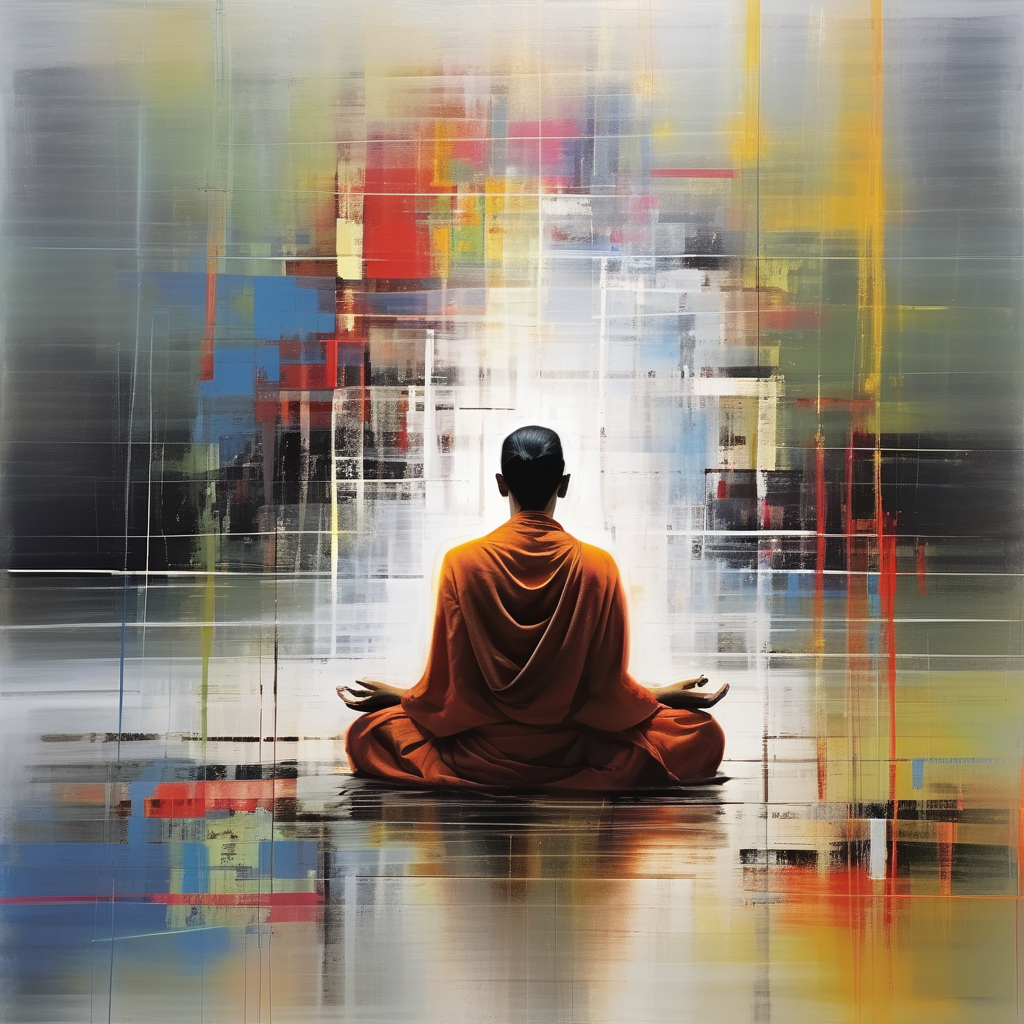
In the realm of spiritual exploration, the quest for understanding the nature of the Supreme is both ancient and infinitely complex. It beckons us toward a horizon where the distinction between the self and the infinite blurs, inviting a profound realization: the essence of the Supreme is not an external entity to be sought, nor is it a hidden treasure within—rather, it is the very fabric of existence, a boundless presence that pervades everything.

The notion that no Supreme is Being outside of us, nor within, but that all there is, and all there ever will be, is The Supreme, challenges the conventional dualities of inside and outside, sacred and profane, self and other. This perspective ushers us into a realm where these distinctions dissolve, revealing a unity that underlies the multiplicity of forms and phenomena.

In contemplating this unity, we embark on a journey that transcends the intellectual and ventures into the experiential. It is not enough to understand the concept of The Supreme as an abstract principle; one must live, breathe, and experience the omnipresence of this ultimate reality in the minutiae of everyday life. This journey demands a radical shift in perception—a willingness to see beyond the apparent separateness of the world to the underlying oneness that is the essence of The Supreme.


This realization unfolds not as a dramatic epiphany but as a gentle awakening, a gradual unfurling of awareness that illuminates the interconnectedness of all things. In this light, every moment becomes a portal to the divine, every interaction a reflection of The Supreme. The distinction between the seeker and the sought fades, as one comes to recognize oneself as an integral expression of the infinite.

How, then, do we cultivate this awareness? The path is as diverse as the seekers who walk it, yet common threads weave through the fabric of spiritual practices across cultures and traditions. Mindfulness, meditation, and contemplation serve as gateways to transcendence, tools to quiet the mind and attune the heart to the subtleties of the Supreme’s presence. Compassion and selfless service become expressions of the recognition of the divine in all beings.

In embracing this vision of nonduality, we are invited to reconsider our relationship with the world around us. The challenges and tribulations of life are no longer obstacles to be overcome in search of a distant divine, but rather manifestations of The Supreme itself, offering lessons and opportunities for growth. In this realization, the mundane becomes sacred, the ordinary, extraordinary.

As we navigate the complexities of existence, let us hold this understanding close: that we are not separate from the Supreme; we are and everything throughout the universe is the supreme. But from the standpoint of the small self, we are expressions of its infinite creativity and boundless love. In this recognition, we find not only solace but also the profound joy of being in harmony with the ultimate reality.


In the silent spaces between thoughts, in the depth of the night sky, in the eyes of a stranger, there lies an invitation to witness The Supreme in all its manifestations. It is an invitation to dissolve the illusion of separateness and awaken the truth of our inherent unity with the cosmos.

May your journey be filled with the light of this understanding, and may the realization of the omnipresence of The Supreme guide you to the depths of peace and the heights of ecstasy.

Morgan O. Smith

Yinnergy Meditation, Spiritual Life Coaching & My Book, Bodhi in the Brain…Available Now!
https://linktr.ee/morganosmith

Beyond the Illusion of Knowing

A Journey into Absolute Awareness

In the vast expanse of our existence, the quest for knowledge often becomes the cornerstone of our identity. Yet, what if the very foundation upon which we build our understanding of reality is itself an illusion? This exploration delves into the profound realization that true awareness transcends the confines of conventional knowing, inviting us into a realm where the essence of wisdom lies in embracing the unknown.

The human mind, a marvel of evolution, is innately driven by an insatiable thirst for knowledge. We categorize, analyze, and store information, believing that the accumulation of facts leads us closer to the truth. However, this pursuit, albeit noble, may inadvertently tether us to a mirage. The belief in a definitive understanding of the universe and our place within it is a construct, a byproduct of the mind’s inherent need to grasp, define, and control.

Absolute awareness unfolds when we step beyond this illusion when we release the need to know and instead embrace the vastness of not knowing. This state of consciousness is not a void or absence of knowledge but a profound acknowledgment of the limitations of our conceptual frameworks. It is an acceptance that the essence of reality, in its infinite complexity, cannot be fully contained or comprehended by the constructs of human thought.


In this space of absolute awareness, we encounter the true essence of being. It is here, in the silence beyond thoughts and the duality of known and unknown, that we experience the pure state of consciousness. This experience transcends the intellectual understanding of nonduality; it is a direct encounter with the indivisible wholeness of existence. The realization that the observer and the observed are not separate entities but manifestations of the same underlying reality dismantles the illusion of separation, leading us to a state of unity with all that is.

Embracing this perspective shifts the way we engage with the world. When we recognize that our conventional knowledge is a drop in the ocean of existence, we approach life with humility and openness. This shift does not devalue the pursuit of knowledge but places it in a broader context where the mystery of existence is acknowledged and revered. It encourages a mode of being where every moment is an opportunity for awe and wonder, free from the constraints of needing to know and understand everything.

This journey into absolute awareness invites us to live in a state of perpetual discovery, where the acceptance of not knowing becomes a source of freedom and liberation. It challenges us to find comfort in the uncertainty, to find peace in the unanswerable questions, and to find enlightenment in the realization that in the grand scheme of existence, we are both everything and nothing.


As we navigate this path, we understand that the essence of wisdom lies not in the accumulation of knowledge but in the profound acceptance of the unknown. This realization is not the end but the beginning of a truly enlightened existence, where every breath is an invitation to experience the infinite depth of the present moment.

Morgan O. Smith

Yinnergy Meditation, Spiritual Life Coaching & My Book, Bodhi in the Brain…Available Now!
https://linktr.ee/morganosmith

The Paradox of Perfection

Divine Flaws in a Flawless Existence

In the realm of spirituality and philosophy, the concept of a perfect God is often contemplated with reverence and awe. This perfect entity, in many traditions, is seen as the embodiment of absolute purity, wisdom, and power. Yet, there lies a paradox at the heart of divinity: the expression of flaws within the framework of perfection. This notion challenges our conventional understanding of perfection and invites us to explore the deeper, more nuanced aspects of the divine and its manifestation in the world.

Consider for a moment the idea that a perfect God expresses its flaws perfectly. This statement that I am making is not a contradiction, but a profound acknowledgment of the complexity and depth inherent in the divine nature. It suggests that what we perceive as flaws are not mistakes or oversights but, rather, intentional expressions of the divine essence. These ‘flaws’ offer a window into the incomprehensible wisdom of the divine, serving as reminders of the limitless ways in which perfection can manifest.

The beauty of this concept lies in its ability to humanize the divine, making it more accessible and relatable to us. In our own lives, we strive for perfection, often berating ourselves for our flaws and failures. However, if we embrace the perspective that even in divinity, there exists a form of perfection that includes flaws, we can begin to view our imperfections not as failures, but as integral parts of our unique journey. This shift in perspective encourages a more compassionate and forgiving approach to self-growth and personal development.


Furthermore, the idea of a perfect God expressing flaws perfectly invites us to reevaluate our understanding of the world around us. The imperfections we observe in nature, in human behaviour, and the unfolding of events may not be random chaos but, perhaps, expressions of a larger, divine plan. This realization opens up a space for a deeper acceptance of the world as it is, fostering a sense of peace and trust in the unfolding of life’s mysteries.

In exploring the paradox of divine flaws, we are encouraged to engage with our spiritual journey more openly and curiously. It prompts us to question our assumptions about perfection, divinity, and the nature of reality itself. By contemplating how a perfect God might express flaws perfectly, we are invited into a richer, more dynamic relationship with the spiritual aspects of existence.

This exploration is not just a philosophical exercise but a practical guide for living. It teaches us to embrace our complexities and contradictions, to find beauty in imperfection, and to see the divine not as a distant, unattainable ideal but as a present, living truth reflected in every aspect of our lives.


In closing, let us ponder the myriad ways in which perfection and imperfection coexist within and around us. May this contemplation inspire a deeper appreciation for the mysterious, imperfectly perfect nature of the divine and encourage us to embrace our flaws as perfectly expressed aspects of our being.

Morgan O. Smith

Yinnergy Meditation, Spiritual Life Coaching & My Book, Bodhi in the Brain…Available Now!

https://linktr.ee/morganosmith

Nature’s Unyielding Dance

Embracing Evolution Beyond Acceptance

In the grand expanse of existence, nature is a paradoxical entity, embodying acceptance while relentlessly pursuing change. This duality offers a profound reflection on the nature of being and becoming, serving as a mirror to our spiritual journeys. Nature, in its essence, accepts its form and function with a serene equanimity that belies the tumultuous undercurrent of evolution. It is in this serene acceptance that the seed of transformation is sown, propelling existence toward an ever-unfolding destiny.

Nature’s acceptance is not of passivity but of an understanding that the present moment is perfect in its imperfection. It acknowledges that at this very instant, it is the culmination of countless cycles of change, yet it is but a waypoint on an infinite journey of becoming. This realization is key to unlocking the mysteries of our spiritual paths, where acceptance and change coexist in a delicate balance.

The process of evolution, both in the external world and within the realms of our inner landscapes, is nature’s testament to the perpetual quest for growth and transcendence. Just as the earth’s flora and fauna adapt to the ever-changing environment, so too must we embrace the evolution of our spiritual understanding and enlightenment. Each moment is an opportunity to transcend the limitations of our previous selves, spurred by the acceptance of our current state of being.


In this dance of existence, where acceptance and evolution move in harmony, lies the essence of true enlightenment. It is a journey that acknowledges the beauty of the now while striving for the potential of tomorrow. Much like nature’s ceaseless evolution, our spiritual paths are marked by an unending quest for deeper understanding, connection, and oneness with the universe.

This reflection on nature’s duality serves as a reminder that in our search for spiritual awakening, we must hold space for both acceptance and the desire for transformation. It is in the embrace of this paradox that we find the freedom to evolve, not despite nature’s acceptance, but because of it.


Through contemplating the unyielding dance of nature, we are invited to explore the depths of our being, challenging ourselves to grow and evolve while remaining grounded in the acceptance of our present reality. Let us, therefore, take inspiration from the world around us, recognizing that our journey towards enlightenment is a dynamic interplay between being and becoming, where the acceptance of what is served as the foundation for what we are yet to become.

Morgan O. Smith

Yinnergy Meditation, Spiritual Life Coaching & My Book, Bodhi in the Brain…Available Now!
https://linktr.ee/morganosmith

The Convergence of Imagination and Divinity

Understanding the Oneness

In spiritual exploration, a question often arises, echoing through the corridors of our deepest inquiries: “How can we assert that everything is an embodiment of the divine?” This question, at its core, challenges us to delve into the paradoxical nature of reality and the divine, prompting an examination of where imagination and spiritual truth converge.

The notion that “everything is God” is not merely a statement; it’s a profound recognition of the intrinsic unity in the universe. When individuals question this assertion, often pointing to the imagination as a possible source of such a belief, they unknowingly touch upon a profound truth. Indeed, it is through our imagination that we begin to perceive the divine in everything. However, this is not a limitation but rather a gateway to a deeper understanding.

Imagination, often dismissed as mere fantasy or whimsy, is a powerful tool for spiritual realization. It is through the imaginative process that we transcend the ordinary, stepping beyond the boundaries of conventional perception. In this transcendent state, what was once considered imaginary merges with the ultimate reality. This convergence is not a denial of the imaginary, but rather an acknowledgement of its essential role in our spiritual journey.


This fusion of imagination and divine reality invites us to reconsider what we perceive as real. The mystical experiences and insights that arise from this union are not figments of imagination in the dismissive sense; they are glimpses into a reality that is all-encompassing and deeply interconnected. In this sense, the divine and the imaginary are not opposites but reflections of the same profound truth.

The journey towards this realization is as unique as each individual, yet it is bound by a common thread – the pursuit of understanding beyond the conventional. It is a journey that challenges us to see the divine not as something separate and distant, but as an intimate and integral part of our existence. In this realization, the boundary between the self and the divine dissolves, revealing a unity that encompasses all of existence.

As we embrace this perspective, we begin to see the world not just as a physical reality, but as a manifestation of the divine dance of existence. Everything, from the smallest particle to the vast expanse of the cosmos, becomes a reflection of this divine essence. In this light, the question of whether it is all ‘just imagination’ loses its relevance, for imagination becomes the very lens through which the divine is perceived and experienced.


In conclusion, the dialogue between imagination and divinity is not one of conflict but of deep harmony. It is a reminder that our spiritual journey is not about escaping reality, but about discovering the profound depths of truth that lie within it. In this exploration, we find that imagination and divinity are not just interconnected – they are, indeed, the same.

Morgan O. Smith

Yinnergy Meditation, Spiritual Life Coaching & My Book, Bodhi in the Brain…Available Now!

https://linktr.ee/morganosmith

Walking the Sacred Grounds of Being

Exploring the Akashic Field

In the realm of metaphysical exploration, the Akashic field stands as a testament to the boundless possibilities of existence. This concept, often visualized as a vast, ethereal library or a cosmic database, holds the records of all thoughts, actions, events, and emotions that have ever occurred or will occur. It’s an intangible yet profoundly significant space where the grass doesn’t grow as a physical entity, but as an idea, a potentiality.

The concept of the Akashic records originated in the theosophical movements of the 19th century and has been a subject of intrigue for spiritual seekers and mystics ever since. These records are not written on paper but are believed to exist in a non-physical plane of existence. They embody the idea that every individual’s thoughts, experiences, and emotions are imprinted onto a universal consciousness, contributing to the collective knowledge and evolution of the universe.

To plant your footsteps in this sacred ground of being means to engage deeply with the essence of life itself. It’s a journey of introspection, where one seeks to understand the interconnectedness of all things. In this field, grass represents not just a plant, but a concept, a symbol of growth, life, and interconnectedness. It’s a reminder that even the simplest elements of nature hold profound meanings in the grand mosaic of existence.


Engaging with the Akashic field can be a transformative experience. It encourages us to look beyond the material world and understand the deeper spiritual connections that bind us. Through meditation, contemplation, and other spiritual practices, one can ‘access’ this field, gaining insights into past lives, understanding the purpose of current challenges, and even glimpsing potential future events.

However, it’s crucial to approach this journey with humility and respect. The Akashic field is not just a source of information but a sacred space of collective consciousness. Engaging with it requires an open heart and a mind willing to learn and grow.


In conclusion, the Akashic field invites us to ponder the mysteries of existence and our place within it. It challenges us to view life not just as a series of random events but as a part of a grand, interconnected cosmic play. By planting our footsteps on this sacred ground, we embrace the potentiality of all that is, was, and will be, and in doing so, we find deeper meaning in the simple act of being.

Morgan O. Smith

Yinnergy Meditation, Spiritual Life Coaching & My Book, Bodhi in the Brain…Available Now!
https://linktr.ee/morganosmith

The Silent Saviours

Embracing the Sacrifice of Prayerful Saints

In the quiet corners of the world, far from the clamour of daily life, exist individuals whose lives are dedicated to a profound purpose. These are the saints who have chosen a path of prayer and meditation, not for personal gain, but for the spiritual upliftment of humanity. Their existence raises a thought-provoking question: Can the dedicated prayers and meditations of a few impact the collective consciousness of many?

These saints, often unseen and unrecognized, commit their lives to the pursuit of pure consciousness, believing in its ripple effect across the world. Theirs is a life of sacrifice, one where personal ambitions are set aside for a greater cause. They bend their knees in prayer, not for moments or days, but for a lifetime, believing that their spiritual devotion can bring about a change in the world’s consciousness.

However, this concept is not without controversy. Skeptics argue that such practices are too passive, too removed from the tangible actions required to address the world’s myriad problems. They question the efficacy of prayer and meditation as tools for real change, especially when faced with immediate and pressing challenges.


Yet, the belief in the power of prayer and meditation to transcend physical boundaries and effect change is deeply rooted in various spiritual traditions. It is said that these saints, through their unwavering dedication, touch a realm of consciousness that is beyond the ordinary, sending ripples of peace, compassion, and understanding into the world.

The idea of a few praying and meditating on behalf of many is humbling and empowering. It suggests that spiritual practices have a place alongside physical actions in the quest for a better world. It challenges us to consider the unseen forces at play in our world and to acknowledge the role of spiritual sacrifice in shaping our collective destiny.

Whether one views these saints as misguided dreamers or as silent saviours, their choice to dedicate their lives to prayer and meditation is a testament to the diverse ways humanity seeks to connect with something greater than itself. Their lives challenge us to reflect on the nature of sacrifice, the power of spiritual practice, and the interconnectedness of all beings.


In conclusion, the life of a saint, dedicated to prayer and meditation for the world’s consciousness, is a profound sacrifice that deserves our respect and contemplation. It raises essential questions about the nature of action, spirituality, and our collective responsibility in shaping the consciousness of our world.

Morgan O. Smith

Yinnergy Meditation, Spiritual Life Coaching & My Book, Bodhi in the Brain…Available Now!

https://linktr.ee/morganosmith

Embracing the Full Spectrum

A Deeper Understanding of Enlightenment

In our quest to understand enlightenment, we often envision it as perpetual positivity, a beacon of good virtues and admirable qualities. However, this view might be a simplistic interpretation of a concept far more profound and encompassing. To grasp the true essence of enlightenment, we must recognize it as the embodiment of nature in its entirety, not just its appealing aspects.

Enlightenment, in its deepest sense, is not limited to the display of positive attributes; it also encompasses the darker, less admired facets of nature. Nature, in its raw form, is an amalgamation of contrasts—beauty and destruction, calm and chaos. Similarly, an enlightened being embodies all these facets, including those we view negatively.

We often celebrate the sunlit parts of nature while disdaining its storms and upheavals. In parallel, enlightened beings, often idealized for their virtues, might also manifest traits or behaviours we consider negative. This doesn’t necessarily diminish their state of enlightenment; rather, it highlights that enlightenment transcends conventional moral dichotomies. It encompasses a full spectrum of qualities, mirroring the complexity and diversity of nature itself.

Perhaps, when an enlightened individual exhibits behaviours we perceive as negative, it’s not a regression to lower psychological states, but an expression of the entire range of human experience. This concept can be challenging to grasp, especially when viewed from the traditional perspective of enlightenment being a state of flawless virtue.

In essence, true enlightenment is beyond the dualities of good and bad, positive and negative. It is a comprehensive expression of nature in all its forms—the gentle breeze and the raging storm. Recognizing this holistic view of enlightenment invites us to expand our understanding and accept the full spectrum of experiences and traits that constitute the enlightened state.

In this light, enlightenment becomes a journey of embracing all aspects of existence, a voyage that transcends conventional wisdom and invites us to witness the universe in its full, unfiltered majesty.

Morgan O. Smith

Yinnergy Meditation, Spiritual Life Coaching & My Book, Bodhi in the Brain…Available Now!
https://linktr.ee/morganosmith