Universal Consciousness

The Unity of All Existence

In philosophy and spirituality, the concept of a universal consciousness presents a fascinating and thought-provoking perspective. This idea posits that consciousness pervades every aspect of the universe – from the smallest atom to the vastest galaxy, and even across dimensions beyond our immediate perception. This universal consciousness is not just a passive observer; it is an active, integral part of everything that exists.

When we delve into the experiences described by myself and others who have reached what we refer to as “nondual peak experiences,” we encounter descriptions of a profound realization. In these moments, the boundaries between the self and the cosmos blur, leading to an experience of unity that is both awe-inspiring and deeply humbling. Such experiences suggest that at our most fundamental level, we are not separate entities navigating an indifferent universe; rather, we are this vast, interconnected cosmic tapestry.

This realization of oneness with and as the universe has profound implications. It challenges the conventional notion of individuality and separateness. In recognizing that we are this larger whole, our perspective on life, ethics, and our relationship with the natural world undergoes a significant shift. This holistic view fosters a sense of responsibility not just towards our immediate environment or community, but towards the entire cosmos.

Moreover, the concept of universal consciousness invites us to reconsider our understanding of reality itself. If consciousness is not merely a byproduct of the brain, but a fundamental aspect of the universe, then our exploration of reality must extend beyond the physical and into the realms of the mind and spirit. This opens up new avenues for understanding the nature of existence and our place within it.


As we continue to explore this concept, we are compelled to ask profound questions: What is the nature of this universal consciousness? How does our consciousness interact with it? And what does this interconnectedness mean for the future of humanity and the cosmos?

In conclusion, the idea of a universal consciousness offers a radical yet enlightening perspective on our existence. It invites us to view ourselves not as isolated beings, but as integral components of an awe-inspiring, interconnected universe. This realization has the potential to transform not only our self-perception but also our approach to life, ethics, and our collective future.

Morgan O. Smith

Yinnergy Meditation, Spiritual Life Coaching & My Book, Bodhi in the Brain…Available Now!

https://linktr.ee/morganosmith

The Dance of the Cosmos

Understanding the Interconnectedness of Existence

In the grand tapestry of existence, every thread is intricately woven into a larger, more complex pattern. This pattern, a vibrant mosaic of life and energy, highlights the profound interconnectedness of all things in the universe. It is a concept that transcends mere physicality, inviting us to explore the deeper spiritual and metaphysical aspects of our existence.

At the heart of this interconnectedness is the idea that everything in the universe, from the smallest particle to the vastest galaxy, is an expression of divine creativity. This perspective offers a profound sense of unity and harmony, suggesting that every element of the cosmos, including ourselves, is part of a larger, purposeful whole.


The physical universe, in this view, is not a static entity but a dynamic and ever-changing phenomenon. It is characterized by a continual process of transformation, a cycle of dying and rebirthing that underlines the concept of eternal renewal. This cyclical nature of existence echoes in every aspect of our lives, reminding us that change and transformation are not only inevitable but also essential components of the cosmic dance.

In this cosmic scheme, each element plays a crucial role. Like individual notes in a grand symphony, every aspect of the universe contributes to the creation of a harmonious and balanced whole. This interconnectedness implies a deep responsibility: our actions, thoughts, and beliefs have far-reaching consequences, influencing not only our immediate environment but also the broader fabric of existence.


Understanding and embracing this interconnectedness can lead to a more conscious and intentional way of living. It encourages us to recognize the impact of our actions, to live in harmony with the natural world, and to cultivate a sense of compassion and empathy for all beings. It’s a call to see beyond the illusion of separation and to acknowledge our role in the ongoing creation and evolution of the universe.

In conclusion, the concept of interconnectedness in existence is not just a philosophical idea; it’s a call to action. It invites us to participate actively in the cosmic dance, to embrace change, and to contribute positively to the ongoing saga of the universe. By recognizing our interconnected nature, we can find a deeper sense of purpose, belonging, and unity.


Morgan O. Smith

Yinnergy Meditation, Spiritual Life Coaching & My Book, Bodhi in the Brain…Available Now!

https://linktr.ee/morganosmith

Kundalini and Beyond

Unraveling the Layers of Absolute Reality

In the realm of spiritual exploration, Kundalini is often revered as a pinnacle experience, a symbol of ultimate awakening and enlightenment. Yet, it’s crucial to understand that Kundalini, as profound as it may be, is not the zenith of absolute reality unless one chooses to define absolute reality as Kundalini itself.

Kundalini, described in many spiritual traditions as a dormant energy located at the base of the spine, is often associated with a powerful awakening, leading to heightened awareness and spiritual enlightenment. This transformative energy is said to travel up through the chakras, or energy centers, culminating in a profound expansion of consciousness. However, this is not the final destination in the journey of spiritual realization.


The concept of absolute reality, in various philosophical and spiritual systems, goes beyond any single experience or state. It is the ultimate truth that underlies all existence, transcending the limits of individual consciousness and phenomena. While Kundalini awakening can be a significant milestone in one’s spiritual journey, it is, in essence, a part of the grand tapestry of experiences that guides us toward understanding this absolute reality.

This brings us to an intriguing point: the journey toward absolute reality is not linear, nor is it the same for everyone. Kundalini might be a crucial step for some, while others may tread a different path toward the same destination. The beauty of spiritual exploration lies in its diversity and the individualized paths we embark upon.


In conclusion, while Kundalini is a powerful and transformative experience, it is a facet of a larger, more complex journey toward understanding absolute reality. This journey is rich with various experiences and insights, each contributing to our understanding of the profound truth that underlies our existence.

Morgan O. Smith

Yinnergy Meditation, Spiritual Life Coaching & My Book, Bodhi in the Brain…Available Now!
https://linktr.ee/morganosmith

Beyond the Self

Embracing the Unity of Existence in the Quest for Spiritual Enlightenment

Spiritual enlightenment is a journey that transcends beyond the tangible realms of reality, reaching into the depths of our very existence. It’s an exploration that delves into the core of what it means to be alive, to be conscious. In this journey, enlightenment is not just a destination; it is a continuous process, a state of being that encompasses everything within and beyond every form.

At its essence, spiritual enlightenment is about realizing the interconnectedness of all things. It teaches us that every form, whether tangible or intangible, is imbued with a certain essence, a spark of the divine. This realization helps us to see beyond the superficial differences that separate us, fostering a sense of unity with the universe and everything in it.


One of the key aspects of enlightenment is the dissolution of the ego. Our egos, often constrained by societal norms and personal biases, can limit our understanding and experience of the world. Enlightenment encourages us to shed these limitations, to see beyond the self and to recognize our part in the larger scheme of existence. This perspective not only brings a deeper understanding of the self but also cultivates compassion and empathy for others.

Furthermore, enlightenment is not an escape from reality but a deeper engagement with it. It involves embracing both the light and the dark aspects of life, acknowledging that both pain and joy are integral to the human experience. This acceptance leads to a profound peace, and inner tranquillity that is unshaken by external circumstances.


In conclusion, spiritual enlightenment is an ongoing journey of discovery, where the destination is not a specific point but a continuous expansion of consciousness. It is about realizing that everything is connected, that there is a deeper meaning to our existence, and that true understanding comes from transcending beyond the self.

Morgan O. Smith

Yinnergy Meditation, Spiritual Life Coaching & My Book, Bodhi in the Brain…Available Now!
https://linktr.ee/morganosmith

The Ultimate Context

Authenticity and the Tapestry of Life

In my spiritual journey and teachings, I have always emphasized the importance of authenticity. I believe that when we strip away the layers of pretense from our spiritual practices, what we are left with is a genuine quest for truth. This journey towards authenticity is not just a path to spiritual enlightenment, but also a journey of self-discovery.

I often describe life as a tapestry of personal narratives. Each one of us contributes our unique thread to this tapestry, weaving stories of joy, sorrow, triumph, and struggle. These personal narratives are significant, yet they form part of a larger, immutable context — what I refer to as the Ultimate Reality or Ultimate Context. This Ultimate Context is the backdrop against which our individual stories unfold.

This concept of the Ultimate Context is akin to a vast ocean, with our individual lives symbolized as transient waves. While each wave has its unique shape and journey, it is not separate from the ocean. Similarly, our lives, with their narratives, are part of a larger, interconnected reality. Our experiences, no matter how personal or unique, are intrinsically linked to this broader context.

The recognition of this Ultimate Context invites us to view our lives from a broader perspective. It encourages us to find meaning not just in the personal ups and downs of our daily existence but in our connection to something greater than ourselves. It is a reminder that our individual stories, while important, are part of a vast, interconnected universe, which is ultimately The Self.


In embracing this perspective, we find a deeper sense of purpose and belonging. We begin to understand that our journeys, no matter how solitary they may seem, are integral parts of a grand, cosmic narrative. This realization brings a sense of peace and grounding, as we understand that our lives are woven into the very fabric of existence itself.

Morgan O. Smith

Yinnergy Meditation & My Book, Bodhi in the Brain…Available Now!

https://linktr.ee/morganosmith

Embracing the Paradox of Nonduality

Beyond Cherry-Picking Reality

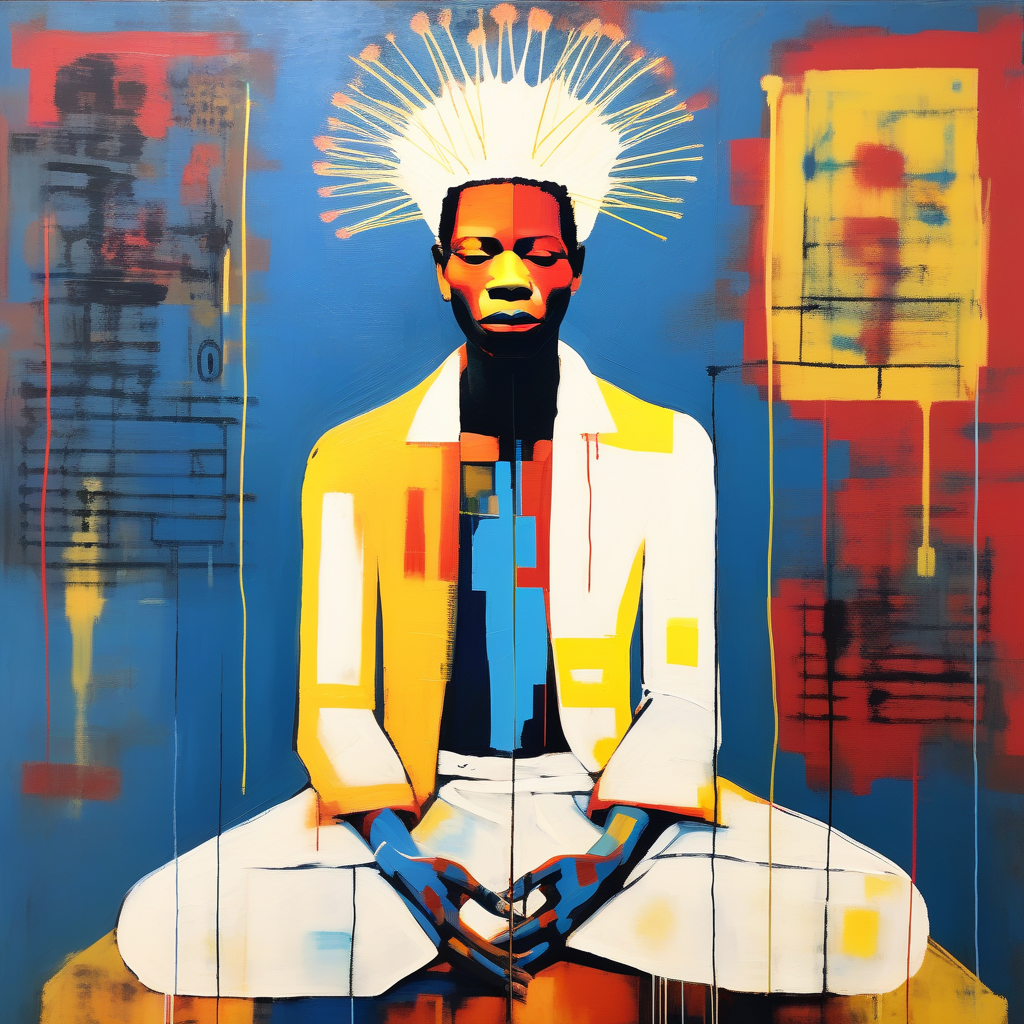
In pursuing spiritual understanding, the concept of nonduality presents a profound paradox. This philosophy, deeply rooted in various traditions, asserts that reality is an undivided whole, transcending the usual distinctions we make between self and other, here and there, or this and that. Nonduality suggests that these separations are illusions, conceptual divisions in the seamless fabric of existence.

However, a common pitfall in approaching nonduality is what could be termed “cherry-picking.” This is where one selectively embraces aspects of nonduality that appeal to them, while conveniently discarding others. It’s akin to admiring the beauty of a rose while ignoring its thorns. Yet, true nonduality, as a concept, includes and transcends all there is. It encompasses every aspect of existence, leaving nothing out, yet paradoxically, it also transcends everything we can conceive or perceive.


The crux of understanding nonduality lies in its experiential realization. Unlike concepts that can be learned from books or teachings, nonduality must be directly experienced to be truly known. This direct experience often defies language and intellectual comprehension. It’s a state of being where the boundaries that separate the self from the universe dissolve, revealing a fundamental unity.

This direct experience of nonduality often comes in fleeting moments of profound insight or deep meditation. In these moments, the constructs of the mind fall away, and what remains is a sense of oneness with all that is. This experience can be both exhilarating and disorienting, as it challenges the most fundamental beliefs about ourselves and the world.


The journey to nondual realization is, therefore, not about acquiring new knowledge but about unlearning – letting go of the deeply ingrained patterns of thought that keep us locked in the illusion of separateness. It’s a process of deconstruction, where one sheds layers of conditioned thinking to reveal the underlying unity of existence.

In embracing nonduality, one must be wary of the temptation to cherry-pick. The whole of existence, with its beauty and brutality, its joy and suffering, is included in the nondual understanding. Nothing is excluded, yet everything is transcended. This paradox is at the heart of nonduality – a reminder that the ultimate truth lies beyond the grasp of our usual ways of thinking and perceiving.

In conclusion, nonduality offers a radical perspective that challenges our conventional understanding of reality. It invites us to look beyond our selective perceptions and embrace the totality of existence. While its true essence can only be known through direct experience, the journey toward this realization can transform our understanding of ourselves and the world.

 Morgan O.  Smith

Yinnergy Meditation & My Book, Bodhi in the Brain…Available Now!
https://linktr.ee/morganosmith

Understanding God

A Tapestry of Perspectives

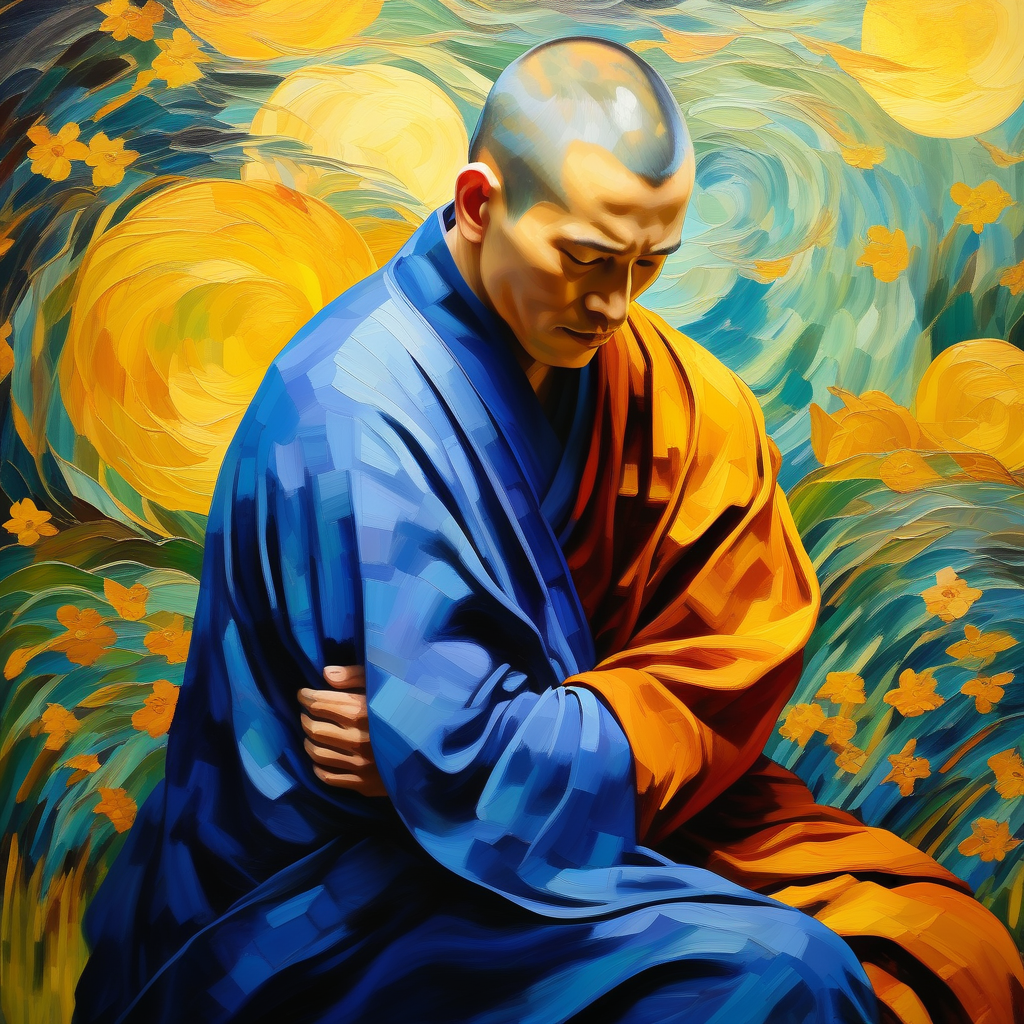
The quest to understand and comprehend the Divine has been a central theme across all human cultures and epochs, a pursuit that intertwines with our very essence. To fathom God is to reach into the depths of our consciousness and the cosmos alike, embarking on a journey that stretches the fabric of our understanding. Every culture, every religion, and every individual offers a unique lens through which we can view the Infinite, like a multifaceted gem reflecting a spectrum of light.

From the analytical philosopher dissecting arguments for God’s existence to the mystic experiencing an ineffable union with the divine, the panorama of understanding is vast. The philosopher seeks to tame the transcendent with logic, while the mystic relinquishes the grasp of reason for the embrace of the ineffable. Both, however, are moved by a shared sense of wonder and an insatiable thirst for the ultimate truth.

The theologian pores over ancient texts, seeking to understand God through the prism of religious doctrine. At the same time, the scientist looks to the natural world for signs of intelligent design and purpose. Where the theologian finds solace in faith, the scientist finds awe in the elegance of the universe’s laws. Their paths may differ, but their horizon is the same: to make sense of the Great Mystery that envelops our existence.

In the diversity of human experience, we find a common thread: the recognition of a reality greater than ourselves that calls to us, challenging us to grow in wisdom and compassion. The devout may experience God through service and love, embodying the divine through acts of kindness and mercy. Meanwhile, the skeptic keeps the conversation alive, ensuring that our understanding remains dynamic and open to new insights.

To comprehend God from all human perspectives is to accept that our individual experiences are threads in a larger tapestry. Each thread adds colour and texture to the whole, and while no single perspective can capture the entirety of the Divine, together they create a richer, more inclusive picture.

The journey to understand God is ultimately a journey into the human heart and mind. It is a quest that calls us to transcend our limited perspectives, learn from each other, and grow beyond our imagined boundaries. In the symphony of human understanding, each voice has a part to play, and it is only through the harmony of our combined voices that we may inch closer to the divine harmony that orchestrates the universe.

Morgan O.  Smith

Yinnergy Meditation & My Book, Bodhi in the Brain…Available Now!
https://linktr.ee/morganosmith

Illuminating the Mind

The Dual Paths of Enlightenment and Spiritual Awakening

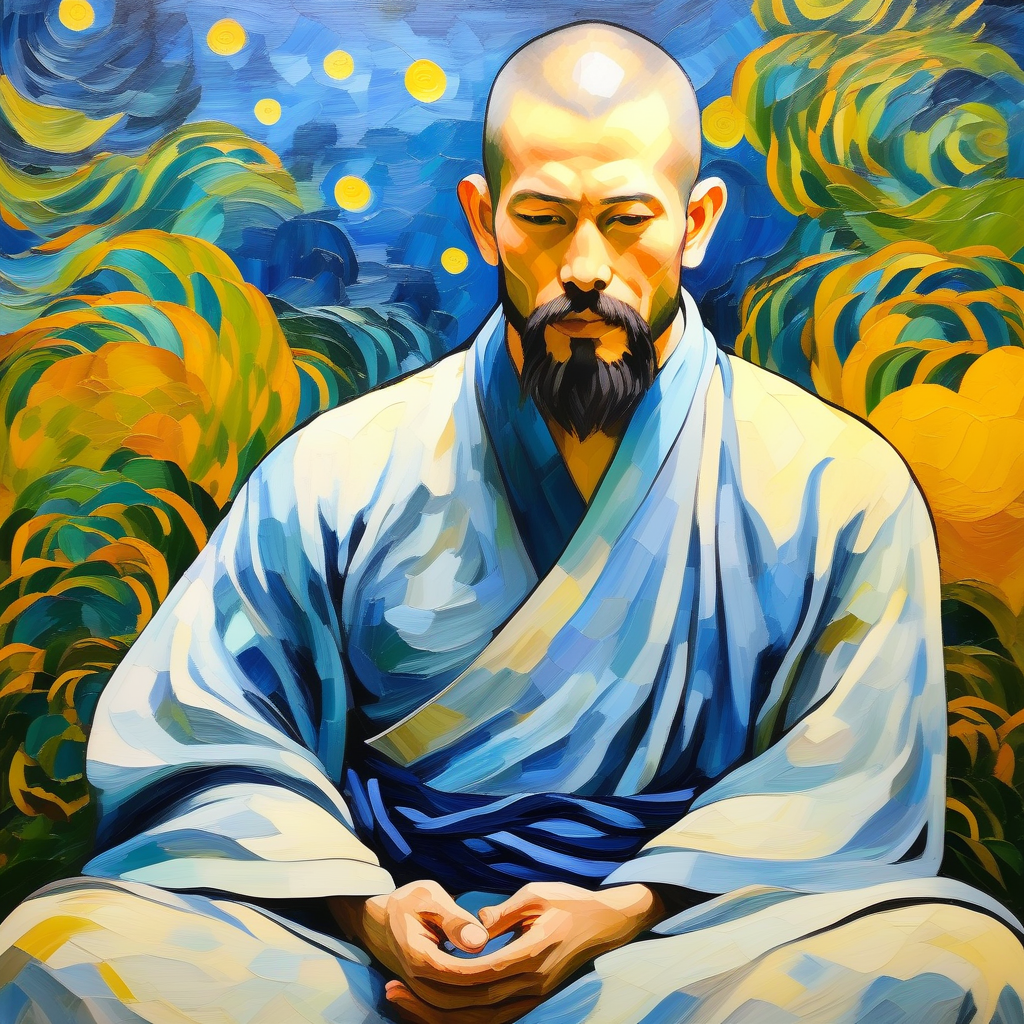
The quest for Enlightenment has been the pinnacle of human aspiration in various domains—intellectual, ethical, and spiritual. At the heart of this quest lies the promise of awakening, a transformative experience that propels an individual beyond the ordinary perception of existence. Yet, despite the shared terminology, Enlightenment and Spiritual Enlightenment diverge on fundamental grounds, embodying distinct trajectories in the pursuit of truth and self-realization.

Enlightenment, in its classic Western sense, refers to the age of reason that dawned in the 17th and 18th centuries. This period was marked by a surge in philosophical thinking, scientific discovery, and the push for political and individual freedoms. It was an era where human intellect, armed with skepticism and inquiry, sought to dispel the shadows of ignorance and dogma. The Enlightenment’s legacy is one of empowered rationality, urging humanity to harness knowledge as the light to guide society toward progress and civilization.

In contrast, Spiritual Enlightenment is an Eastern siren call that echoes through the annals of various religious and metaphysical traditions. It is not merely an expansion of knowledge but a profound transformation of consciousness. Spiritual Enlightenment implies an experiential realization of oneness with the ultimate reality. It is often depicted as the dissolution of the individual ego, a leap into the boundless ocean of divine essence, which exists beyond the material plane and the constructs of intellectual thought.

The distinction between these two is as significant as it is subtle. The Enlightenment champions the mind’s ability to question, to deduce, and to construct, seeking freedom from external tyranny. Meanwhile, Spiritual Enlightenment seeks liberation from the internal chains of desire, ego, and illusion, focusing on transcending the self rather than actualizing it.

One could argue that the paths are not mutually exclusive but are rather complementary. The enlightened mind that questions and reasons can pave the way for a deeper spiritual quest by clearing the underbrush of superstition and prejudice. Conversely, a spiritually awakened soul may view the dance of creation with a profound sense of peace and interconnectedness, bringing a compassionate perspective to the rational world.

In a broader sense, both forms of enlightenment are beacons of human aspiration. Whether it is the light of reason or the glow of spiritual wisdom, each seeks to illuminate the human experience profoundly. It is perhaps in the convergence of these paths that one may find the truest sense of enlightenment—a holistic awakening that marries the mind’s brilliance with the heart’s intuitive depths.

In conclusion, while the Enlightenment speaks to the power of human intellect and the value of empirical truth, Spiritual Enlightenment invites us to explore the mystical depths of our being and the universe. Together, they form a bidirectional odyssey of enlightenment that continues to inspire and challenge humanity to rise above its primal origins and embrace a more illuminated state of existence.

Morgan O.  Smith

Yinnergy Meditation & My Book, Bodhi in the Brain…Available Now!
https://linktr.ee/morganosmith

Satcitananda

The Voyage from Happiness to Bliss

In the pursuit of well-being, human beings have often conflated happiness with bliss, treating them as interchangeable states. However, the ancient concept of Satcitananda, a Sanskrit term embodying the essence of ultimate reality offers a profound distinction between these two.

Happiness is a fleeting emotion, a reaction to external stimuli, tethered to the temporal and the material. It is as changeable as the weather, reliant on circumstances, people, possessions, and places. Happiness is the surface-level response to life’s favourable events and acquisitions, tied to the sensory and the transient.

Bliss, or Ananda, in contrast, represents a state beyond the physical or emotional. It is not contingent on the external but is the intrinsic nature of being, untouched by the vicissitudes of life’s ever-changing landscape. Bliss is the deep, unshakable contentment that comes not from what happens to us but from what we are at our core. It is a realization of one’s true nature, a state of being where one exists in complete harmony with the universe.

Satcitananda breaks down into ‘Sat’, ‘Chit’, and ‘Ananda’. ‘Sat’ refers to truth or existence itself, ‘Chit’ to consciousness or knowledge, and ‘Ananda’ to bliss. These are not mere attributes but the very fabric of the ultimate reality, the Brahman. To realize Satcitananda is to awaken to the truth that our own deepest self is not separate from this reality.

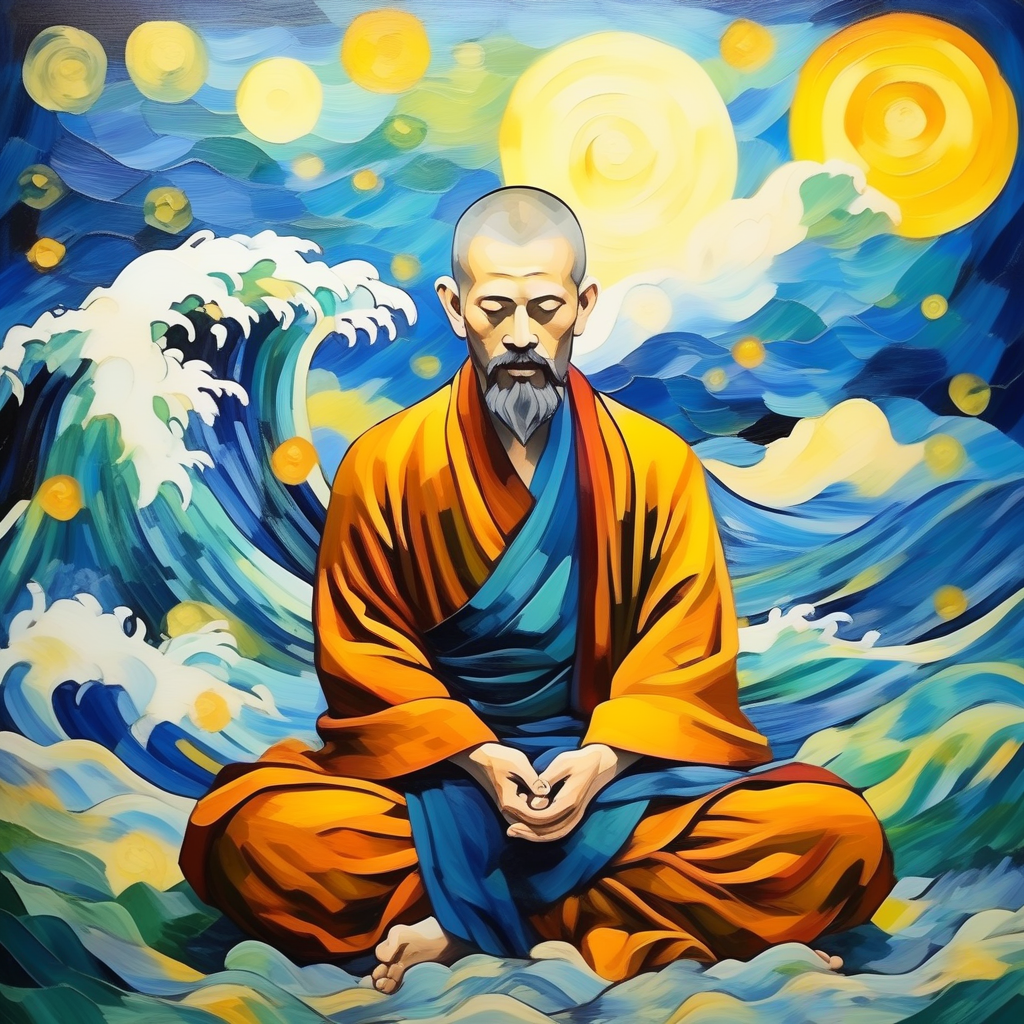
The journey from happiness to bliss is a transformational process of expanding one’s understanding from the finite to the infinite, from a state of doing to a state of being. Where happiness might be thought of as a single note in a symphony, bliss is the symphony itself. It is the silent space between notes, as integral to the music as the sound, offering a depth that is both immanent and transcendent.

To chase happiness is to chase the shadows of what we believe we lack, while to embrace bliss is to step into the light of our divine nature, which lacks nothing. It is a shift from seeking satisfaction from the external world to discovering the inexhaustible joy within.

In Satcitananda, one finds the key to unlocking a truth that spiritual traditions have whispered for millennia: that what we seek outside has always been within. As we navigate the shifting tides of life, the realization that we are not merely chasing fleeting happiness but are embodiments of eternal bliss can transform our entire way of being.

Thus, Satcitananda is not merely a philosophical concept; it is an invitation to a way of life, a reminder that beneath the ephemeral dance of happiness and sorrow lies a profound peace and joy, waiting to be realized.

Morgan O.  Smith

Yinnergy Meditation & My Book, Bodhi in the Brain…Available Now!
https://linktr.ee/morganosmith

The Uncharted Horizons Beyond Enlightenment

In the profound silence that follows the cacophony of seeking, what remains when the concept of spiritual enlightenment dissipates like mist at the rise of the sun? We often perceive enlightenment as the ultimate destination, a summit where the flag of our deepest self-inquiry plants its roots. But perhaps this pinnacle is not an end but a gateway, an opening to a landscape more expansive than the binary of enlightened or unenlightened.

Beyond enlightenment, the journey does not cease; it transforms. The seeker, who once scaled the mountain of self, now realizes that the mountain itself is but a wave in an ocean of consciousness. Here, in the boundless vista beyond enlightenment, the distinction between the seeker and the sought blurs and vanishes. The notion of spiritual progress, which implies time and measurement, becomes irrelevant in the face of a timeless being.

This post-enlightenment terrain is not about acquiring more spiritual knowledge or experiencing more profound states of meditation. It is a surrender to the simplicity of presence, where each moment is complete in itself, untethered from the ambition of reaching another. It’s an unlearning of the spiritual concepts that once seemed indispensable.

What awaits is a life lived in the fullness of emptiness, a paradoxical state where the wisdom of uncertainty is embraced. This is the wisdom that knows itself beyond forms and practices, identities and histories. In this realm, the very questions that once fueled our inner quests lose their grip: “Who am I?” becomes an echo without a source, a playful dance of consciousness without a questioner or an answer.

Here, the individual soul’s melody harmonizes with the universal symphony, and action arises from stillness, not strategy. The duality of self and other, spirit and matter, sacred and mundane, no longer confines. Everything is seen as an expression of the divine, and the divine is seen in everything.

The concept of “beyond enlightenment” invites us to explore a state where life is lived with an openness that requires no label, no status, and no fixed point of reference. It is a call to live deeply rooted in the mystery, to become the living expression of the question mark rather than the period at the end of a sentence.

In this sacred space beyond maps, we are each on an uncharted journey, a unique expression of life that never was before and never will be again. It is in this boundless realm that the enlightened mind, now free from the pursuit of enlightenment, can truly engage with the full spectrum of existence.

This is not a territory of more or better, but of true freedom—a freedom that comes not from reaching a destination, but from the realization that there was never anywhere to reach in the first place.

Morgan O.  Smith

Yinnergy Meditation & My Book, Bodhi in the Brain…Available Now!
https://linktr.ee/morganosmith