The Unfathomable Brahman

Exploring the Indivisible Reality from Multiple Perspectives

The quest to understand Brahman is a journey into the heart of existence itself, a pursuit that has intrigued philosophers, sages, and seekers for millennia. In the vast expanse of Hindu philosophy, Brahman is the ultimate reality, the fabric of all that exists and beyond. It is both immanent and transcendent, the core of our being and the cosmos. This exploration of Brahman from various perspectives—gross, subtle, causal, and nondual—invites us to expand our minds beyond the limits of ordinary perception.

**From the Gross Perspective: Brahman as the World**


When we look at Brahman from the gross perspective, we see the universe in all its material splendour. Here, Brahman is not an abstract concept but the physical universe that we interact with through our senses. It is the mountains, rivers, stars, and galaxies; the dance of creation and destruction visible to the naked eye. This manifestation is known as Saguna Brahman, the form with qualities, where the Divine is seen with attributes and forms, engaged in the act of creation.

**From the Subtle Perspective: Brahman as Consciousness**


Venture deeper, and we encounter the subtle perspective. Here, Brahman is the essence of consciousness that animates life. This is not the consciousness that fluctuates with our thoughts and feelings, but the pure awareness that observes, untouched and unchanging. This subtle Brahman also referred to as Nirguna Brahman, is without qualities, where God is not limited by any attributes. It is the silent witness to the play of the universe, the inner light that illuminates our experiences.

**From the Causal Perspective: Brahman as the Source**

Moving into the causal perspective, we touch on the very source of existence. Brahman here is the unseen cause behind everything—the seed from which the tree of the universe grows. This aspect of Brahman is deeply mysterious, for it is the origin of time, space, and causality itself. It is Avidya, ignorance, not in the sense of lack of knowledge, but as the primal forgetfulness that makes us perceive duality in the nondual.

**From the Nondual Perspective: Brahman as the One without a Second**


Finally, from the nondual perspective, Brahman is realized as the one without a second—Advaita. It is not a deity, not an entity, not even a ‘thing’ that can be comprehended by the intellect. It is the underlying oneness that pervades all dualities, where the seeker and the sought merge. In this view, the individual self (Atman) and the universal self (Brahman) are the same. All distinctions between creator and creation dissolve, revealing that there is nothing but Brahman—pure existence, consciousness, and bliss (Sat-Chit-Ananda).

This journey through the perspectives of Brahman reflects the layered depths of our existence. From the tangible reality of our day-to-day lives to the deepest spiritual realization, Brahman remains the unchanging truth. Each perspective is a step closer to the ultimate truth, leading us from the outward expressions of divinity to the profound inner revelation that we are, in essence, the infinite Brahman.

To understand Brahman is to expand our awareness across the spectrum of existence. The gross perspective roots us in our environment, the subtle unfolds the inner cosmos, the causal leads us to the primal source, and the nondual reveals our true infinite nature. In contemplating these perspectives, we may find that the journey to understand Brahman is not a journey outward but a profound voyage within, to the very core of who we are.

Morgan O.  Smith

Yinnergy Meditation & My Book, Bodhi in the Brain…Available Now!

https://linktr.ee/morganosmith

The Liberation in Letting Go

Emptiness, Ignorance, and Identity

In a world incessantly clamouring with the din of possession, certainty, and self-promotion, the mantra “Embracing emptiness, cherishing ignorance, surrendering identity” arrives like a whisper from another realm. It calls on us to consider the counterintuitive notion that there is profound freedom and wisdom to be found in the very things we are conditioned to avoid.

**Embracing Emptiness**

Emptiness often conjures a sense of lack, yet in many Eastern philosophies, it is a profound concept, pregnant with possibilities. To embrace emptiness is not to fall into the void, but rather to make space for the new, the unforeseen, the life-affirming. It is the fertile ground of being from which all things spring and to which they return. In the spaciousness of emptiness, we find the flexibility and resilience to move with life’s undulating rhythms.

**Cherishing Ignorance**

Cherishing ignorance may seem antithetical in our knowledge-driven society. However, this is not an advocacy for willful naivete, but a reverence for the acknowledgment of our limitations. Socrates’ declaration of wisdom beginning with the admission of one’s ignorance holds here. Cherishing our not-knowing is an invitation to perennial learning, to the humility that keeps the mind supple, and the heart open to the mystery that is existence.

**Surrendering Identity**

Our identities, the personas we cultivate and present to the world, are often elaborate constructs grounded in who we think we should be or who we want others to believe we are. To surrender this identity is to strip away the superfluous and encounter the authentic self, the self not defined by accolades or attributes, but existing in simple beingness. This surrender is not a loss but a homecoming, a release from the exhausting endeavour of upholding our masks.

In combining these three tenets—emptiness, ignorance, and identity—we approach a way of living that is at once liberating and grounding. It invites a life lived with open hands, where attachment is a choice rather than a compulsion, and authenticity guides our interactions.

As we contemplate this mantra, we might find ourselves stepping into a flow of existence that is less about accumulation and more about experience, less about certainty and more about exploration, less about being someone and more about being part of something greater.

The journey toward embracing this wisdom is counter-cultural. It moves against the grain of our societal norms, urging us to let go of what we cling to most tightly. Yet, the promise it holds is nothing short of transformational—freedom from the self-imposed prisons of material excess, intellectual rigidity, and egoic constraint.

In this space, we find that emptiness is fullness, ignorance is wisdom, and surrender is power. And so, we continue to explore, with hearts wide open to the vastness of the unknown.

Morgan O.  Smith

Yinnergy Meditation & My Book, Bodhi in the Brain…Available Now!

https://linktr.ee/morganosmith

The Never-Ending Marathon of Spirituality

Many compare life to a race. We’re told to run fast, be the first, and not fall behind. But what if life, particularly the spiritual journey, isn’t about finishing first or even finishing at all? What if it’s a marathon that never ends, where every finish line is simply a starting point for another, deeper quest?

Walking the spiritual path can feel like running a marathon that goes on infinitely. Just when you think you’ve attained enlightenment or reached a higher state of consciousness, another level unfolds. This isn’t to say progress isn’t made, but rather that true spiritual growth is an ever-evolving, never-ending process.

In traditional races, runners have a clear goal: to reach the end as swiftly as possible. But on the spiritual path, the destination is less defined. One might even argue there is no destination. Instead, it’s a continual journey of self-discovery, of understanding, of peeling back layers to find the core of one’s true self.

The beauty of this endless marathon is not in reaching a finish line but in the journey itself. Every step, every challenge, and every revelation is an opportunity for growth and transformation. The hurdles faced along the way aren’t obstacles but lessons, guiding us towards deeper understanding.

In embracing this never-ending journey, we come to see that it’s not about “finishing” or “winning.” It’s about embracing the unknown, learning, evolving, and most importantly, enjoying every step. After all, isn’t the joy of running not in the end but in the very act itself?

When we shift our perspective from a race with an endpoint to a journey without one, we open ourselves to infinite possibilities and depths of understanding. It’s a liberating realization that our spiritual evolution is limitless, bound only by our willingness to keep moving forward.

In conclusion, while the marathon of spirituality may not have a finish line in the traditional sense, it offers something far more valuable: the promise of endless growth, self-discovery, and a deeper connection to the universe and ourselves. So, lace up your spiritual sneakers and embrace the never-ending journey. Because in this marathon, the real prize is the journey itself.

Morgan O.  Smith

Yinnergy Meditation & My Book, Bodhi in the Brain…Available Now!

https://linktr.ee/morganosmith

The Interconnection between Charitable Acts and Kundalini Awakening

**Introduction**

In the rich tapestry of our existence, our actions, particularly those imbued with altruism and empathy, weave intricate patterns that reverberate through our spiritual and physical being. Charity, a virtue, becomes an interesting lens through which to explore a phenomenon well documented within Eastern spirituality: Kundalini awakening. This post aims to weave a narrative, interlinking the seemingly mundane with the profound, exploring how acts of charity might kindle our inner serpentine power.

1. **Charity: A Biological Perspective**

   Engaging in charitable acts activates neural pathways associated with reward and pleasure in our brain, particularly within areas such as the ventral striatum. Essentially, when we help others, our brain releases neurotransmitters like dopamine and oxytocin, infusing us with feelings of happiness and connection.

2. **Psychological Repercussions**

   Additionally, the psychological gratification of aiding others – sometimes referred to as the “helper’s high” – further deepens our sense of belonging and purpose. This potent emotional blend may very well pave the way for spiritual awakenings, creating a fertile ground for our internal energies to cultivate and ascend.

3. **Kundalini: The Serpent Power**

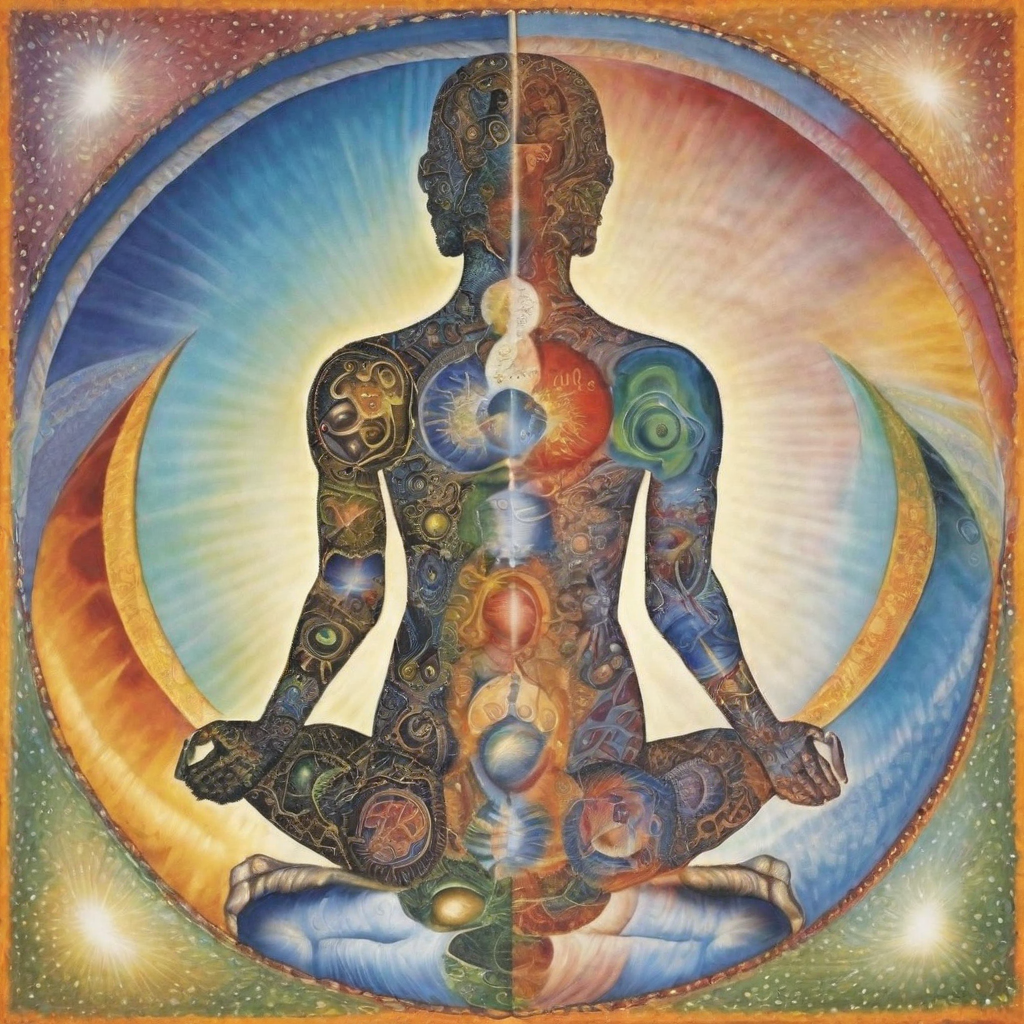
   Kundalini, often depicted as a coiled serpent at the base of the spine, represents dormant energy. Upon awakening, it travels up through the chakras, infusing the individual with profound spiritual enlightenment. The awakening is typically instigated by certain practices or experiences, and notably, is said to be tied to acts that elevate our spiritual and emotional state.

4. **Charity as a Catalyst**

   So, how does charity come into play? The act of giving, especially when devoid of self-interest, becomes a purely spiritual practice. This practice, in essence, generates positive vibrations that can reverberate within, possibly acting as a stimulus to awaken the Kundalini.

   When we extend our hands to aid others, we not only forge connections with them but also nurture our internal spiritual self. This may potentiate the Kundalini energy, urging it to uncoil and ascend, transmuting our spiritual experiences.

5. **Integration of the Physical and the Spiritual**

   Thus, the biological and psychological modifications experienced during charitable acts become catalysts for deeper spiritual explorations and possibly, a Kundalini awakening. The intertwining of this spiritual journey and our earthly actions showcases the beautiful complexity of our existence, where the material and the spiritual are not mutually exclusive but intricately interconnected.

**Conclusion**

The interplay between charitable acts and a Kundalini awakening orchestrates a symphony where biology, psychology, and spirituality create a harmonious melody. Through acts of kindness and empathy, we might unknowingly nurture our internal serpent, enabling it to rise and illuminate our spiritual path, crafting a beautiful confluence where our physical actions translate into spiritual enlightenment.

In the end, charity does not merely touch the lives of those we assist; it also imbues our journey with profound, transformative power, guiding us through a path that intertwines the tangible with the intangible, crafting a tapestry rich with complexity and depth.

Morgan O.  Smith

Yinnergy Meditation & My Book, Bodhi in the Brain…Available Now!
https://linktr.ee/morganosmith

The Unity of Being

When Heads, Shoulders, Knees, and Toes Merge into Oneness

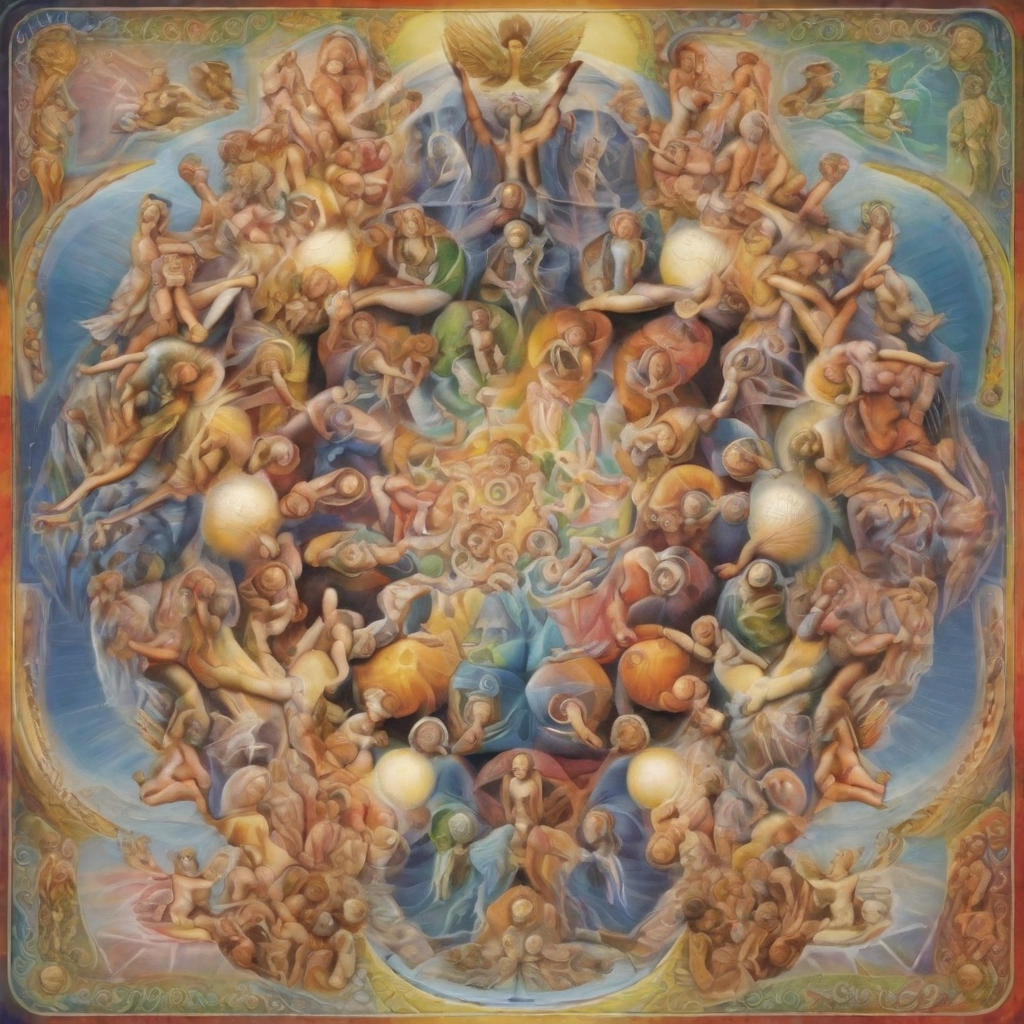
The ancient wisdom embedded in children’s songs and games can sometimes surface in the most unexpected of philosophical realms. Take, for instance, the playful melody “Heads, Shoulders, Knees, and Toes.” When investigated through the lens of Nondual philosophy, it becomes a metaphor for a journey toward universal oneness and interconnectedness.

In Nondualism, the self and the universe are not two separate entities, but rather manifestations of a single, unifying reality. The concept of separateness – the idea that heads, shoulders, knees, and toes are distinct parts – is seen as a mere illusion, a construct of our perceptive capabilities. When we immerse ourselves in the quintessential essence that underlies all beings and things, we begin to perceive that beneath the superficial distinctiveness and multiplicity, there is a fundamental oneness.

Just as the child, in the innocence of play, connects each body part in a joyful, seamless movement without pondering the philosophical depth intertwined, perhaps we too, in our adult complexity, can rediscover that inherent interconnectedness. Our heads, representing our thoughts and intellect; our shoulders, symbolizing our burdens and responsibilities; our knees, embodying our flexibility and humility; and our toes, reflecting our foundation and stability, though seemingly separate, all derive from and exist within the same unified source.

In this unity, the dissimilarities and boundaries that appear to separate us from others, from the world, and the divine, dissolve into a boundless ocean of oneness. Our heads, shoulders, knees, and toes, then, become not isolated components, but rather expressions of the singular reality, dancing together in a harmonious rhythm of existence.

The reconciliation of our physical and non-physical aspects, the visible and the invisible, and the manifold and the one, invites us to explore the possibility that we are not merely beings traversing through the world, but the world itself. As we navigate through the multifaceted reality of life, can we embrace the Nondual perspective, perceiving not separateness, but unity in the myriad forms and experiences?

So, we may joyously sing, not just with nostalgia but with profound insight into our existence: “Heads, shoulders, knees, and toes.” In the simplicity of these words, let’s find a reminder that beneath the diversity and complexity of our being, we are all interconnected, interwoven parts of the same undivided reality.

The depth of such unity nudges us to perceive ourselves and the world around us with eyes that see beyond the physical and the apparent, inviting us into a holistic existence where every head, shoulder, knee, and toe sings in unison with our oneness.

Morgan O.  Smith

Yinnergy Meditation & My Book, Bodhi in the Brain…Available Now!
https://linktr.ee/morganosmith

The Sacred Within the Flawed

A Paradox of Divine Texts

In an intricate dance between the divine and human, sacred texts from various religious and philosophical traditions find themselves at the nexus of reverence and scrutiny. These texts, while venerated as conduits of divine wisdom and moral guidance, are not immune to critique nor the acknowledgment of their inherent flaws.

When we unravel the threads of any sacred text, we find them woven with not just divine insights but also the human elements of error, contradiction, and historical context. Many perceive the imperfections found within these texts as reasons for critique and skepticism. Yet, there is a compelling perspective to be explored – the idea that the very flaws embedded within sacred texts render them genuinely sacred.

In dwelling within the flawed, we find a reflection of our imperfect nature. Sacred texts do not present an unattainable moral and existential utopia but rather provide a mirror through which we can perceive and engage with our own imperfections and moral dilemmas. The contradictions and ambiguities are not simply obstacles to faith but rather essential elements that provoke deeper questioning, reflection, and ultimately, a more profound understanding of our place within the cosmic order.

The perfection of the divine, if it were to be communicated through a medium devoid of error or contradiction, may remain eternally aloof and incomprehensible to our flawed human nature. Therefore, perhaps it is within the inconsistencies and paradoxes of sacred texts that we find an accessible pathway toward divine wisdom – a bridge crafted from the very imperfections that define our humanity.

By acknowledging and engaging with the flaws within these revered writings, believers do not denounce their faith but rather deepen it, embracing a spiritual journey that accepts the entwinement of the divine and the human, the perfect and the imperfect. It becomes a spiritual practice wherein the belief is not despite the flaws but is enriched and deepened by them.

In this juxtaposition, an opportunity for an intimate and authentic spiritual journey is birthed. The flaws compel believers to wrestle with their understanding, to question, and to seek, rather than passively accept a prescribed truth. This active engagement fosters a spirituality that is not static but dynamically interwoven with the realities of human experience, constantly evolving and adapting to the nuances of our understanding and experience.

As we traverse through the passages of sacred writings, embracing both divine wisdom and human error, we embark upon a journey that is both inward and outward, exploring the realms of the divine and our soul. In this sacred exploration, the flaws do not deter us but rather beckon us into a deeper, more authentic engagement with the divine, where faith is not a blind acceptance but a perpetual quest, rich with inquiry, reflection, and spiritual growth.

Perhaps then, the sacredness of these texts is not diminished by their flaws but is instead, beautifully and mysteriously, illuminated by them.

Morgan O.  Smith

Yinnergy Meditation & My Book, Bodhi in the Brain…Available Now!
https://linktr.ee/morganosmith

The Pursuit of Absolute Nothingness

A Journey Towards Enlightened Emptiness

Introduction: In the dynamic, incessant stream of thoughts, preferences, and subjective biases that characterize the human experience, the concept of attaining a state of Absolute Nothingness captivates imaginations. Is it possible to achieve a mental and emotional vacuum where thoughts, biases, judgments, and self cease to exist?

Understanding Absolute Nothingness:

  • Absolute Nothingness isn’t simply the absence of thought, but a profound emptiness that transcends understanding and defies our typical notions of existence and selfhood.
    • Exploring philosophical and theological contexts (Buddhism’s Sunyata or Zen’s Mu) can unveil varied interpretations and methods to approach nothingness.
  • The Paradox of Pursuing Nothingness:
  • Engaging in a quest towards absolute emptiness ironically imposes a desire and a goal, an antithesis to the state of desirelessness intrinsic to nothingness.
    • Considering the Daoist perspective, acting without intention (Wu Wei) might provide insights on pursuing without pursuing, and attaining without seeking.
  • Dismantling the Self:
  • Dissolving the self involves peeling away layers of personal identity, biases, and preconceptions, effectively blurring the lines between self and non-self.
    • This dismantlement raises questions about existence, consciousness, and whether one can truly function without the scaffold of selfhood in a society constructed upon individual identity.
  • Navigating Through Socio-Cultural Paradigms:
  • The endeavour to transcend preferences, judgments, and selfhood might be perceived as antithetical to societal norms that emphasize individuality, accomplishment, and progress.
    • Achieving absolute nothingness within the structural and cultural boundaries of our world presents a paradox between isolation and immersion in societal dynamics.
  • Ethical and Moral Dimensions:
  • The state of having no judgments, preferences, or perspectives raises questions regarding moral and ethical obligations. Does transcending biases and perspectives dissolve moral compasses?
    • Exploring the ethical implications of an unbiased existence may unravel whether absolute neutrality coexists with moral responsibility.
  • Psychological and Neuroscientific Perspectives:
  • The psychological viability of achieving a state devoid of thought and self-perception opens an intriguing discourse. Can one’s mental health be preserved, or even enhanced, in a state of nothingness?
    • Neuroscientific inquiries might delve into the processes and consequences of perpetually inhibiting cognitive and emotional functionalities to sustain a blank slate of consciousness.
  • Relinquishing Time and Anticipation:
  • With no anticipation, worries, or references to the past or future, time dissolves into an irrelevant concept, creating a perpetual ‘now’ with neither history nor destiny.
    • Contemplating a timeless existence fosters a reflection on how human experiences, relationships, and endeavours are intimately entwined with temporal perception.

Conclusion: Absolute Nothingness, both as a philosophical concept and a spiritual aspiration, navigates through paradoxes, ethical conundrums, and existential inquiries, offering a mesmerizing void that invites and perplexes. The possibility and implications of achieving a state devoid of self-thought, and time present not only a spiritual journey but also a philosophical and scientific exploration into the profound depths of consciousness and existence.

Morgan O.  Smith

Yinnergy Meditation & My Book, Bodhi in the Brain…Available Now!

https://linktr.ee/morganosmith

Everything is Spirit in Disguise

The Power of Perspective

In the vastness of our universe, we often find ourselves lost in the mundane, the mechanical, and the linear progression of everyday life. But what if, beneath this superficial layer of existence, everything is, in essence, spirit in disguise?

The spiritual world is not a separate realm, isolated from our day-to-day life, but is instead intertwined with every moment, every thought, and every object we encounter. When you hold a pebble in your hand, do you see just a stone? Or do you see millions of years of Earth’s history, the force of nature, and the energy that pulses within? Such perspectives shift our perception from seeing a mere rock to recognizing a spiritual entity that tells a grand story of our universe.

Every encounter, every experience, and every object has the potential to be a spiritual lesson. The person you pass by on the street, the food you consume, the song that touches your soul – all are manifestations of spirit, merely wearing different disguises. Our challenge is to peel back these layers, to see beyond the mask, and to recognize the spirit in everything.

This perspective does not demean the value of the material world but instead enriches it. By choosing to view the world through a spiritual lens, we cultivate gratitude, reverence, and a deeper connection with everything and everyone around us. The coffee you drink in the morning is not just a beverage, but a testament to the intricate balance of nature, human effort, and the magic of existence.

In essence, the choice is yours. You can continue to view the world as a series of random events, or you can embrace the idea that everything is spirit in disguise. By adopting the latter, you not only deepen your understanding of the world but also uncover the spiritual lessons that lie hidden in plain sight.

In the end, the spiritual world is not some distant realm. It’s right here, in every breath, in every heartbeat, and in every gaze. All it requires is a shift in perspective.

Morgan O.  Smith

Yinnergy Meditation & My Book, Bodhi in the Brain…Available Now!

https://linktr.ee/morganosmith

When Silence Echoes

The Power of Unspoken Revelations

We exist in a world where sound often dictates our experiences. From the cacophony of traffic to the incessant chimes of social media notifications, we’re constantly immersed in a sea of noise. But every so often, in the rare moments of introspection and spiritual awakening, we come to realize that the loudest voice doesn’t always need to be heard; it can be felt.

“During a mystical experience, my silence is the loudest voice in the room.” This quote encapsulates a profound truth about human existence. Amid a mystical experience, words often fall short. They are too limited, too confined by human construct, to adequately convey the depth of such moments. In these times, it is our silence that speaks volumes.

Silence, in this context, isn’t the absence of sound. It’s a resonant force, brimming with emotions, insights, and revelations. When we’re silent during a mystical encounter, we’re not devoid of expression; we’re teeming with it. The silence carries the weight of the universe, the wisdom of ages, and the profundity of personal epiphanies.

Our world tends to value verbosity. We admire those who can articulate their thoughts eloquently, who can debate, discuss, and declare with conviction. But what about those moments when words are insufficient? When does the experience transcend the boundaries of human language? That’s when silence takes center stage.

Imagine being in a room where everyone is talking, but you alone are silent. Yet, your presence is palpably felt, more so than anyone else’s words. That’s the power of silent revelation during a mystical experience. It’s not about shutting out the world, but about tuning into a frequency that words cannot reach.

As we navigate our lives, it’s crucial to recognize and respect these moments of silent resonance. Whether it’s during meditation, in nature, or the midst of a profound spiritual experience, let’s honour the voice of silence. For, in its depth, we might just find the answers we’ve been seeking.

Morgan O. Smith

Yinnergy Meditation & My Book, Bodhi in the Brain…Available Now!

https://linktr.ee/morganosmith

Nonduality

Delving into the First Ten Meanings

**Introduction:**   
The term ‘nonduality’ has ancient roots, spanning across spiritual, philosophical, and scientific landscapes. Its depth is immense, often challenging the linguistic boundaries we’ve set. In this first of a three-part series, we’ll explore the initial ten meanings of nonduality.

**1. The Interconnectedness of All Things:** 
 
Everything in existence is interwoven, suggesting a universe that functions as one organism. This hints at a cosmic web where every action ripples across the vast expanse of existence.

**2. The Unbroken Wholeness of Existence:**   
No part of the universe is truly separate. We’re all fragments of an unbroken wholeness, seamlessly flowing into one another.

**3. Beyond the Concepts of Subject and Object:** 
 
In true realization, the perceived barrier between the observer and the observed fades, inviting a unified experience.

**4. Absence of Separation Between Self and Other:**   

The ego-driven distinction between “me” and “you” is an illusion. At our core, we arise from the same source.

**5. Reality Undivided by Conceptual Distinctions:**   

Our minds love categorizing, but reality, in its pure form, remains undisturbed by these conceptual labels.

**6. The Ground of Being Where Opposites Merge:**   

Contradictions and polarities find their reconciliation in this primordial ground, pointing towards a harmonious existence.

**7. A State Where Observer and Observed are One:** 
 
Pure awareness doesn’t differentiate. In moments of profound insight, the duality of perceiver and perceived collapses.

**8. The Essence That Remains When Duality Dissolves:**   
When the mind’s dualistic tendencies dissolve, what remains is pure, undifferentiated essence.

**9. The Primordial Nature of Consciousness:** 
 
Consciousness is the foundational fabric from which all dualities emerge and into which they dissolve.

**10. A Unified Field Transcending Dualistic Notions:**   
Beyond the quantum and cosmic scales, there might exist a unified field that transcends our dualistic understanding of reality.

**Conclusion:**   
These initial ten meanings provide a gateway into the vast landscape of nonduality. They beckon us to question our perceptions, beliefs, and understandings of the universe and our place in it.

Morgan O. Smith

Yinnergy Meditation & My Book, Bodhi in the Brain…Available Now!
https://linktr.ee/morganosmith