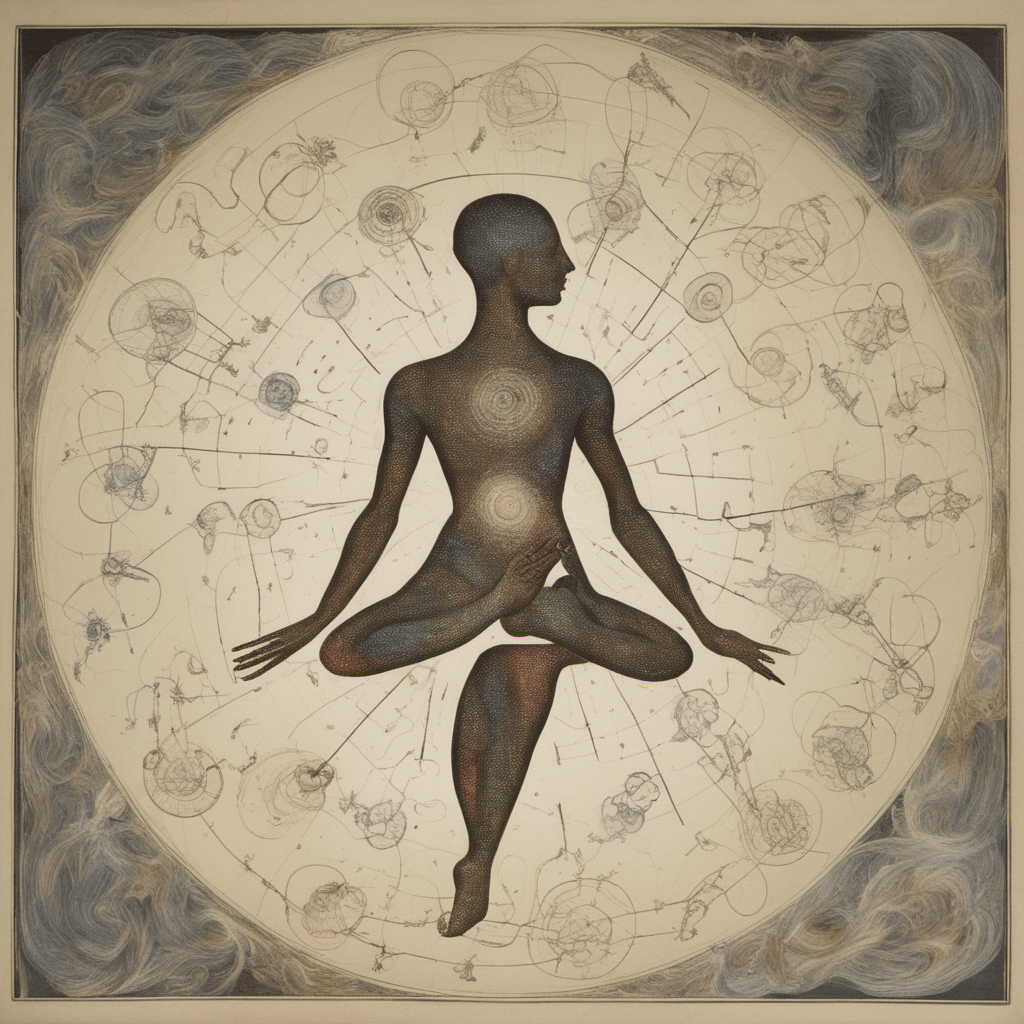
The Illusion of Spiritual Identity

Beyond Stories We Tell Ourselves

Spirituality, at its core, is a profound journey toward understanding one’s place in the vast expanse of existence. However, in our attempt to grasp this elusive understanding, we often pigeonhole ourselves into labels: spiritual, materialistic, moral, and the like. But what if I were to suggest that these labels, these stories, are mere illusions? And that by clinging to them, we might be limiting our true potential.

#### **The Stories We Tell Ourselves**

Every culture, every religion, and every individual has a narrative. These narratives shape our beliefs, our actions, and the way we perceive the world. They are the tapestries upon which our identities are woven. But what happens when we deconstruct these tapestries? Beneath the intricate designs and patterns, what remains?

The reality is that these stories are our creations, shaped by societal norms, personal experiences, and myriad other factors. To say one is ‘spiritual’ or ‘materialistic’ is to adopt a particular perspective, a specific lens through which we view the world.

#### **The Ground of All Being**

But let’s delve deeper. Beneath these self-imposed labels and narratives, there lies a fundamental essence – often referred to as the ‘ground of all being’. This essence is the raw, unfiltered state of existence. It is what you are before the stories, before the labels, and before the definitions. It is the canvas upon which all our narratives are painted.

This ground of being is paradoxical. While it exists beyond all descriptors, it simultaneously encompasses them. Think of it as an ocean. The waves, currents, and whirlpools may differ in their nature and intensity, but they all arise from and subside back into the same vast expanse of water.

#### **Embracing the Beyond**

Realizing this fundamental truth can be liberating. When we understand that our spiritual or materialistic labels are mere waves upon the ocean of existence, we can learn to see beyond them. We can experience the world without the confines of our self-imposed narratives.

This doesn’t mean that one should abandon their spiritual practices or beliefs. Rather, it’s about recognizing them for what they are – beautiful expressions of the infinite variations of existence.

#### **Conclusion**

In the end, whether you consider yourself spiritual, materialistic, or anything in between, it’s crucial to remember that these are just facets of the grander jewel that is existence. By stepping back and seeing beyond our self-crafted stories, we can come closer to experiencing the profound depth of what we truly are.

Morgan O. Smith

Yinnergy Meditation & My Book, Bodhi in the Brain…Available Now!

https://linktr.ee/morganosmith

Knowing vs. Believing:

A Personal Perspective on Divinity

Throughout my life, many Christians and many individuals from different religious backgrounds have approached me with a question that seems to be etched into our collective spiritual psyche: “Do you believe in God?”

My response is always a bit unexpected: I don’t believe in God. I *know* God. There’s a profound difference between the two, and this distinction shapes my entire spiritual paradigm.

### The Nature of Belief

Belief is an interesting concept. It stems from uncertainty and acts as a bridge between the known and the unknown. When we believe in something, it signifies that we hold it to be true without concrete evidence or direct experience. It’s a leap of faith. It’s the trust we put into things unseen or unverified.

But with knowledge, the dynamics change. Knowledge is grounded in experience, indisputable facts, or personal revelations. When we know something, it is deeply entrenched within us, forming a part of our identity. It’s not just a thought, but a lived experience.

### The Unshakable Foundation of Knowing

To say that I know God is to say that my relationship with the divine is not based on stories, scriptures, or what someone else has told me. It is based on a deep, intrinsic realization. An unwavering certainty that God, or the essence of all there is, permeates every molecule, every thought, every fleeting moment of our existence.

When we come to such profound realizations, words often fail to capture the depth of our experience. To know God is not about conforming to religious doctrines or performing rituals, although those can be paths leading toward this understanding. It is about an inner awakening, a cosmic “aha” moment where everything clicks into place.

### Why Does This Distinction Matter?

In our journey through life, both belief and knowledge have their roles. Belief can be a starting point, a motivator to seek deeper truths, to question, to explore. But belief can also be limiting if it keeps us tethered to dogmas without encouraging personal experience or exploration.

Knowledge, on the other hand, propels us forward. It gives us confidence, clarity, and a sense of purpose. When it comes to the divine, knowledge transforms our perception of the world, ourselves, and our place in the vast expanse of existence.

In conclusion, the journey from belief to knowledge is deeply personal, profound, and transformative. It is about breaking free from external validations and finding the truth within.

Morgan O. Smith

Yinnergy Meditation & My Book, Bodhi in the Brain…Available Now!

https://linktr.ee/morganosmith

The Mystical Peak Experience of Pure Sexual Love

Exploring Eros

In the diverse tapestry of human experience, few phenomena are as enigmatic and profound as the experience of love. Among its many facets, the experience of Eros stands apart as a sublime manifestation of pure sexual love that transcends the ordinary and becomes mystical.

Eros: More than Just Desire

Named after the Greek god of love, Eros is often relegated to the realm of mere physical attraction or romantic infatuation. However, to those who have encountered its mystical peak, it represents something far more profound. Eros is an expression of love that transcends mere physicality, reaching into the spiritual realm and connecting us to something greater.

The Peak Experience: A Transcendental Connection


The mystical experience of Eros is not about hedonistic pleasure or fleeting passion. It’s a profound peak experience that transcends the mundane, awakening a deeper connection not only with a partner but with existence itself.

In this state, lovers are not merely engaging in a physical act; they are participating in a sacred ritual that symbolizes unity, trust, and transcendence. It’s a moment where boundaries dissolve, and two individuals become one, not just physically, but emotionally and spiritually.

The Philosophical Dimensions of Eros

The experience of Eros brings into focus philosophical questions about the nature of love, connection, and existence. Is love merely a biochemical reaction, or does it hint at a more profound, cosmic truth? Can sexual love be a pathway to spiritual enlightenment? What does it mean to truly connect with another human being?

Many philosophers and mystics have explored these questions, recognizing the potential for sexual love to be a vehicle for self-realization and spiritual growth. Eros, in its purest form, challenges our conventional understanding of love, encouraging us to see beyond the superficial and to recognize the sacred in the everyday.

Conclusion: Eros as a Path to Understanding

The mystical peak experience of Eros is not just a fleeting moment of pleasure; it’s a profound philosophical insight into the nature of connection, existence, and the human condition. It offers a glimpse into a realm where love is not confined to physical attraction but is a unifying force that binds us all.

To understand Eros is to engage with some of the most fundamental questions about what it means to be human, what it means to love, and what it means to connect with something greater than ourselves. It’s a journey that invites us to look within, to question, to explore, and to grow.

The mystical experience of Eros reminds us that love is not merely an emotion but a transformative power that can lead us to deeper understanding and spiritual awakening. It is a beacon that guides us toward a more profound connection with ourselves, with others, and with the universe itself. In embracing Eros, we may find not just pleasure, but wisdom, joy, and a sense of unity that transcends our earthly existence.

Morgan O. Smith

Yinnergy Meditation & My Book, Bodhi in the Brain…Available Now!

https://linktr.ee/morganosmith


Agape

Embracing Universal Love for All of Creation

Introduction

In a world rife with division, turmoil, and individualism, the concept of Agape, or universal love, emerges as a beacon of hope and harmony. Rooted in various philosophical, spiritual, and religious traditions, Agape transcends borders, biases, and barriers, inviting us to embrace a love that binds all of creation. This blog post delves into the profound essence of Agape, its significance, and how it calls us toward a greater realization of our interconnectedness.

What is Agape?

Agape, often translated as “universal love” or “divine love,” represents a love that goes beyond the personal, emotional, or conditional. It’s a selfless love, free from judgment, that recognizes the inherent value and interconnectedness of all beings.

The Roots of Agape

The concept of Agape can be traced back to various traditions:

– **Christianity**: In Christian theology, Agape is the highest form of love, mirroring God’s unconditional love for humanity.
– **Buddhism**: Concepts like Metta (loving-kindness) reflect universal compassion and love for all sentient beings.
– **Hinduism**: Bhakti, the devotional love for the Divine, can be seen as a form of Agape that transcends worldly distinctions.

Agape in Everyday Life

The beauty of Agape is that it’s not confined to mystical experiences; it applies to our daily interactions. How can we embody Agape in our lives?

– **Seeing Beyond Differences**: Agape challenges us to recognize the common humanity in each other, regardless of race, religion, or nationality.
– **Cultivating Compassion**: Agape invites us to feel empathy for others’ suffering and respond with kindness and understanding.
– **Living Selflessly**: Embracing Agape means letting go of ego, self-interest, and judgment, allowing love to flow freely.

Agape and the Environment

Agape is not limited to human relationships. It extends to our relationship with nature and the environment. Recognizing the sacredness in all forms of life fosters respect and stewardship for the Earth.

Conclusion: The Transformative Power of Agape


Agape is more than a philosophical concept or mystical state; it’s a way of being. It calls us to expand our hearts, to love without conditions, to see the Divine in all, and to recognize our profound interconnectedness.

The journey toward Agape is not just a personal transformation; it’s a collective awakening. It heals, unites, and elevates our existence, turning love from a mere emotion into a universal principle that guides our lives.

In a world that often feels fragmented, the embrace of Agape offers a path toward wholeness and harmony. It’s not just a love for one another; it’s a love for all of creation.

As we contemplate Agape, we are invited to ponder: What would our world look like if we all lived with such love? How would it transform our relationships, our communities, and our very essence?

The answers to these questions may lie in the very heart of Agape, waiting for us to discover, embrace, and embody this universal love.

Morgan O. Smith

Yinnergy Meditation & My Book, Bodhi in the Brain…Available Now!

https://linktr.ee/morganosmith

Bridging Quantum Realms and Turiyatita

The Web of Interconnection

In the intricate and mystifying world of quantum mechanics, one phenomenon stands out as particularly thought-provoking: quantum entanglement. It’s a concept that defies our everyday logic, connecting particles across vast distances in such a way that the state of one instantly influences the state of the other. This interconnectedness, existing beyond space and time, might find an unlikely companion in an ancient spiritual concept: turiyatita, the attainment of spiritual enlightenment.

The Interconnected Universe

Quantum entanglement illustrates how, at the fundamental level, all things in the universe are interconnected. This idea resonates with spiritual teachings across cultures that speak of the oneness of existence and the interconnectedness of all life. In Indian philosophy, turiyatita represents a state of consciousness that transcends the conventional realms of waking, dreaming, deep sleep, and even the transcendental state known as turiya. It’s a state of realization that everything is part of a singular divine essence.

Could these two concepts, one rooted in the cutting-edge science of quantum physics and the other in ancient spiritual wisdom, have something to say to each other?

A Metaphor for Enlightenment


Quantum entanglement could be seen as a metaphor for the experience of spiritual enlightenment. The entangled particles, seemingly separate but inherently connected, might symbolize how everything in existence is part of the same cosmic dance. Likewise, the experience of turiyatita transcends the illusion of separateness, revealing an underlying unity.

In this metaphorical sense, the realization of enlightenment could be likened to experiencing the world in its entangled state, where divisions melt away and a profound interconnectedness is revealed.

A Dance of Mystery

Yet, the relationship between quantum entanglement and turiyatita is more than a simple analogy. Both concepts challenge our conventional understanding of reality. They both hint at a world far more complex and interconnected than our ordinary senses can perceive.

Is it possible that these two ideas, one from the realm of science and the other from the domain of spirituality, are glimpses of the same underlying truth? Is there a hidden dance of connection that plays out both in the microscopic world of quantum particles and the expansive world of human consciousness?

Conclusion

The connection between quantum entanglement and turiyatita may be speculative and metaphorical, but it invites us to ponder the profound mysteries of existence. It’s a reminder that the world is far more complex and beautiful than we often realize and that science and spirituality, seemingly disparate, might have something profound to say to each other.

This dance of connection between the physical and the metaphysical invites us to explore, wonder, and perhaps even transcend our conventional understanding of reality. It’s a poetic reminder that we are all interconnected, in ways that both science and spirituality continue to explore and celebrate.

Morgan O. Smith

Yinnergy Meditation & My Book, Bodhi in the Brain…Available Now!

https://linktr.ee/morganosmith

The Soul’s Paradox

A Dance of Definites and Possibilities

As one treads the expansive corridors of philosophy, few subjects engender as much fascination as the soul – that elusive, ethereal concept often seen as the essence of who we are. A common question on this voyage of introspection is: where does the soul reside?

The simplest answer might be: within the physical body. After all, we experience life, feel emotions, think thoughts, and dream dreams all within this organic structure we call a body. Yet, to confine the soul strictly within the physical body is a reduction that strips the soul of its sublime complexity.

In truth, the soul is non-local. Like a scent carried on the wind, it isn’t confined to a single spot but diffuses through the spaces and structures we inhabit. It permeates the cosmos yet is intimately tied to our bodies. The physical body may be viewed as its vessel – a corporeal nexus in the unfathomable cosmic network.

Yet, the body is not just a vessel. It is also a localized expression of the soul – a physical manifestation reflecting the soul’s ongoing journey. Our bodies transform from conception to birth, from childhood to adolescence, adulthood, and eventually to old age. This journey is a mirror, echoing the multi-cycle, or trans-cycle, of the soul – an individual expression of the all-encompassing Spirit, or Ground of All Being.

To this understanding, the soul both resides in and outside the body. Yet simultaneously, it neither exists inside nor outside nor does it exist at all in a conventional sense. This seeming paradox is at the heart of the soul’s mystery. It exists within the realm of definite and indefinite, possible and impossible, probable and improbable.

To elucidate, imagine the soul as a song. The notes (definite, possible, probable) resonate within our physical form, the singer. Yet, the melody (indefinite, impossible, improbable) drifts beyond, filling the room, seeping through walls, and touching those within its reach. Even when the song ends, the echo lingers – it remains within and beyond us, simultaneously nowhere and everywhere.

This enigmatic duality of the soul invites us to question our preconceived notions about reality and selfhood. It prompts us to view ourselves not merely as static, defined entities, but as dynamic participants in the cosmic dance of existence. We are both the dancer and the dance, the singer and the song, the vessel and the soul, embodying a myriad of possibilities, probabilities, and beautiful impossibilities.

To journey towards understanding the soul is not about seeking a destination, but engaging in an ongoing dance of discovery, where questions are as crucial as answers. It’s a dance that challenges us to embrace both the physical and metaphysical aspects of our being, and to live in the mystery that we are far more than just our physical bodies. We are the enigmatic soul – definite and indefinite, possible and impossible, probable and improbable, and beautifully, profoundly, paradoxically both everything and nothing.

Morgan O. Smith

Yinnergy Meditation & My Book, Bodhi in the Brain…Available Now!

https://linktr.ee/morganosmith
Reincarnation Unfolding

The Mystical Dance of Life at the Subatomic Scale

Reincarnation is often conceived as a cycle of birth, death, and rebirth. This process, however, is not confined merely to the level of an individual’s life journey, but also at a minute, an invisible scale that continuously unfolds within us.

The human body is composed of about 37 trillion cells, with each one possessing its lifecycle. Old cells die and new ones are born in a ceaseless symphony of life. Every second, millions of cells in your body reincarnate, dying and then being reborn anew. This minute cycle mirrors the grandeur of the reincarnation concept, challenging us to rethink what it means at the fundamental level.

To delve deeper, each cell consists of molecules, atoms, and subatomic particles, each undergoing their cycles of transformation. These minuscule particles don’t die or are born in the traditional sense, but rather transform, changing their states, swapping places, decaying, and then being reincarnated into different particles. From this viewpoint, reincarnation becomes a ubiquitous process that is playing out at every moment.

In light of this perspective, where does the soul reside? Is it just in the whole or also in the parts? If we consider the soul as the essence of life and consciousness, then every cell, every molecule, and even every atom has a part of this essence. This soulful essence, then, is constantly dying and being reborn, experiencing its cycle of reincarnation at a cellular, molecular, and atomic level.

Then arises the concept of karma, a law of moral causation. Can it apply at a subatomic level? At first glance, it might seem improbable. After all, karma is about action and consequence, and cells or atoms don’t have agency in the same way humans do.

However, if we think of karma less as moral action and more as causality, things start to take shape. Each cell’s fate—its health, its functioning, its lifespan—is determined by previous actions, or karmas, at the molecular and atomic levels. These actions could be genetic expressions, protein formations, or even quantum fluctuations.

Molecular karma plays out in the creation of proteins, cellular karma in the orchestration of life processes, and atomic karma in fundamental interactions. The sum of all these karma of parts can even influence the karma of the whole, impacting our health, our mind, and our life.

Through this lens, the concept of reincarnation and karma expands beyond a spiritual or religious doctrine and becomes a fundamental principle of life, from the grand scale of human existence to the tiny dance of atoms.

Thus, the journey of life and death is not a one-time event; it is a constant process. Every moment, we are dying and being reborn, at various levels of our existence. Our karma, too, is being created, fulfilled, and carried forward at these multiple levels. Such a realization can provide us with a profound perspective on life, death, reincarnation, and karma, reminding us of our intricate connection with the cosmos.

This understanding, although awe-inspiring, is only the tip of the iceberg. The philosophical implications are profound, leaving us to ponder the mysterious dance of life and death that is taking place within us, every moment, at every level.

Morgan O. Smith

Yinnergy Meditation & My Book, Bodhi in the Brain…Available Now!

https://linktr.ee/morganosmith

Ego Death

A Symphony of Sense and Surrender into the Nondual Existence

The ego, a fortress of our individuality, a custodian of our senses, crumbles during a profound psychological event termed ego death. This process, which is akin to crossing the Rubicon of our minds, signifies the temporary dissolution of our self-identity, the fading of our senses, and the surfacing of a cosmic oneness often linked to deep meditative states, transcendental experiences, or psychedelic journeys.

Neurologically, ego death presents an intriguing event. Our brain’s default mode network (DMN), which curates our self-narrative and sets us apart from others, shows a marked decrease in activity. We can compare it to a maestro leaving the stage, silencing the orchestra of our everyday consciousness that incessantly plays symphonies of thoughts, memories, and future projections.

In the ensuing stillness, our senses embark on an incredible transformation. The self-nonself dichotomy wavers, and feelings of oneness and interconnectedness seep in.

The conventional five senses, along with lesser-known ones such as proprioception (spatial orientation of our body parts), and thermoception (sense of temperature), recede, rendering the self imperceptible. Even the sense of agency – the consciousness of controlling one’s actions – seems to dissolve.

In place of the sensory absence comes the phenomena of nonduality – the essence of existence, unblemished by ego-driven distortions. Here, the biological reality of our senses converges with an intense metaphysical experience.

Kundalini rising – a sensation akin to a large serpent ascending the spine, activating each energy center or ‘chakra’ – might manifest in this transformative journey. Biologically, it could be perceived as a surge in nervous energy influencing neural circuits, engendering a radical alteration in perception.

The dissolution of our sense of time – chronoception – engulfs us in a timeless realm. Our sense of spatial orientation capitulates, inducing a feeling of non-locality, a state where one’s existence feels omnipresent.

This whole process might seem like an experiential validation of ‘absolute monism’ – a philosophical school of thought propounding the universe’s oneness, discrediting any duality between the individual and the world.

Yet, ego death is not an end; it’s a transformative beginning. The insights gleaned about the interconnectedness of all life forms and the illusory separateness sculpted by our ego can significantly reshape our lives.

From a wider perspective, ego death can be seen as a philosophical odyssey leading to an experiential understanding of consciousness, the essence of selfhood, and the nature of reality. The unravelling of our senses and ego sheds light on our inherent unity, nurturing a profound sense of compassion that percolates into every aspect of our existence.

Ego death’s exploration and its impact on our senses offer an avenue to challenge our conventional ways of perceiving, question our established sense of being, and dive deeper into the mysteries of our inner and outer universe. It’s not merely a psychological event but a spiritual expedition and a philosophical exploration that propels us toward a truer understanding of existence.

Morgan O. Smith

Yinnergy Meditation & My Book, Bodhi in the Brain…Available Now!

https://linktr.ee/morganosmith
The Multiverse Within

Exploring Chakras Beyond Our Perception

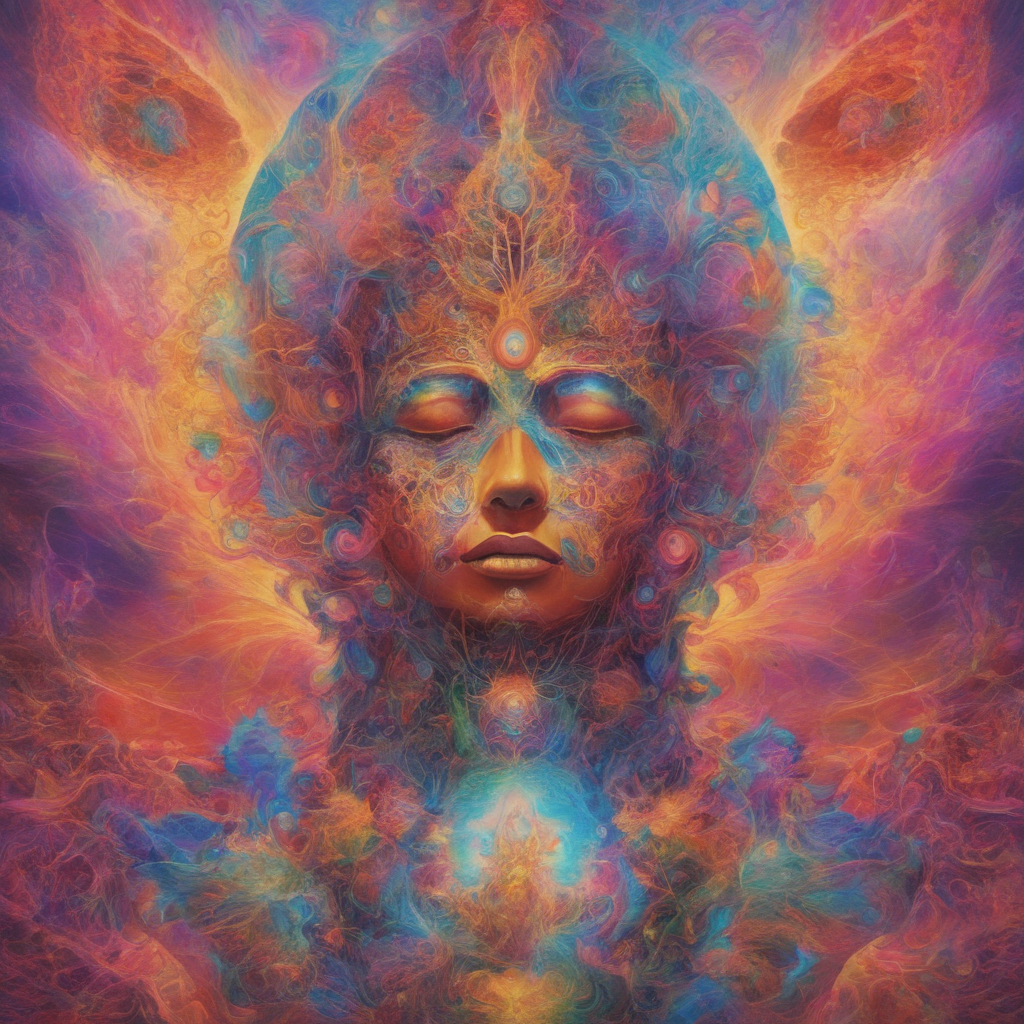
In the rich tapestry of Eastern philosophy and spirituality, the concept of chakras and kundalini awakening has long captivated the Western world. But a deeper, more expansive understanding of these ideas prompts us to transcend the traditional seven chakras in the human body and see them permeating the universe at every level – from the massive galaxies to the tiniest sub-atomic particles.

This perspective’s core is the belief that chakras are not exclusive to the gross or subtle human body. They are ubiquitous and omnipresent, extending their influence to every cell, every molecule, every atom, and even to the most infinitesimal particles. Just like each human has energy centers, these minuscule entities – bodies in their own right – are also believed to possess chakras.

This viewpoint is a confluence of spirituality and quantum physics. It suggests a microcosm-macrocosm principle where the patterns of the universe repeat themselves at different scales, connecting everything from the vastness of the cosmos to the smallest particles.

During a full-blown kundalini awakening, a transformative spiritual experience often depicted as the release of divine energy stored at the base of the spine, it is proposed that not only the individual’s chakras but also these infinitesimal chakras, in each ‘body’ within our physical body, come to life. It is a grand unison of consciousness awakening at all levels of existence, interconnecting every particle within and beyond us.

In such a profound event, each ‘body’, from cellular to atomic and sub-atomic levels, reaches a state of self-realization, comprehending that it is part of the ‘Brahman,’ the ultimate reality or absolute in Hindu philosophy. This concept equates to ‘The Ground of all Being,’ a term that mystics and spiritual teachers use to describe the deepest level of reality.

This fascinating belief presents an interconnected universe where the microcosm and macrocosm continually interact, affecting and reflecting each other. A place where every entity, regardless of size or subtlety, is a unique expression of the same energy, bound by a common cosmic rhythm and linked through an intricate network of chakras.

In conclusion, the belief in a kundalini awakening of not just the seven primary chakras, but countless others within every atom and sub-atomic particle, invites us to broaden our perception of reality. This concept urges us to look beyond the boundaries of our current understanding and explore the uncharted territories of consciousness that might hold the key to our oneness with the universe. It is a philosophy that doesn’t merely expand our knowledge of self and the universe; it transforms it.

Morgan O. Smith

Yinnergy Meditation & My Book, Bodhi in the Brain…Available Now!

https://linktr.ee/morganosmith
The Dance of Consciousness

How Traits and States Influence Each Other

Introduction:
In the realm of philosophy and neuroscience, the nature of consciousness has long been a subject of intense scrutiny. As we delve into the complex interplay between traits of consciousness and states of consciousness, we embark on a thought-provoking journey that explores how these facets of our mind shape and are shaped by each other.

Part I: The Essence of Traits of Consciousness
Traits of consciousness refer to the enduring qualities and patterns that define an individual’s cognitive, emotional, and behavioural makeup. These traits form the bedrock of one’s personality, shaping how they perceive the world, process information, and interact with others. From introversion to openness, resilience to empathy, traits of consciousness provide a unique lens through which individuals experience their existence.

Part II: Unraveling States of Consciousness
States of consciousness, on the other hand, are transient and ever-changing mental conditions. These states can range from heightened awareness during moments of meditation or creative inspiration to altered states induced by substances or intense emotional experiences. States of consciousness are like ripples on the surface of a vast ocean, reflecting our immediate perceptions and inner states.

Part III: The Bidirectional Influence

At first glance, it might appear that traits and states of consciousness operate independently. However, upon closer examination, we discover the profound bidirectional influence they exert on each other.

1. Traits Shaping States:

Our enduring traits of consciousness lay the foundation for how we perceive and react to various states. For instance, a highly empathetic individual might experience deeper connections with others during states of heightened compassion or love. Similarly, a person with a predisposition to anxiety may be more prone to states of distress during challenging situations.

2. States Shaping Traits:

The fluidity of consciousness states can leave lasting imprints on our traits. Profound transformative experiences, such as spiritual awakenings or near-death encounters, can lead to significant shifts in an individual’s personality and worldview. Moreover, states like mindfulness and meditation can foster positive traits like patience and self-awareness.

Part IV: The Dance of Consciousness
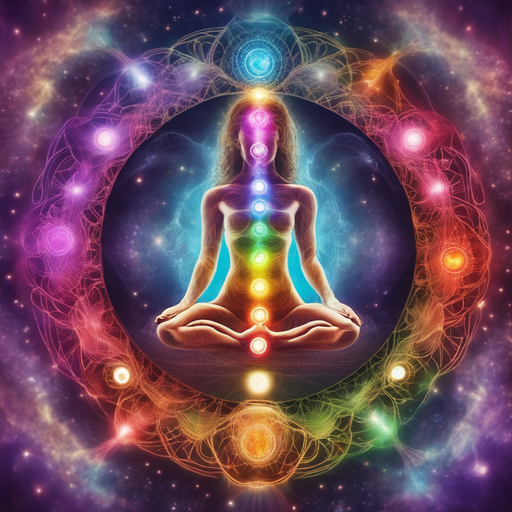
As the dance unfolds, we realize that consciousness is not static but rather a dynamic process, constantly in flux. Traits and states intertwine, shaping and reshaping one another in an intricate and evolving dance.

Conclusion:
The relationship between traits and states of consciousness is a fascinating exploration of the human mind’s complexity. Acknowledging this interconnectedness can empower us to cultivate positive traits while embracing the ebb and flow of transient states. As we embrace the intricacies of our consciousness, we embark on a journey of self-discovery, leading us to a deeper understanding of ourselves and the world around us. Remember, we are not merely passive observers of our consciousness; we are active participants in its unfolding story.

Morgan O. Smith

Yinnergy Meditation & My Book, Bodhi in the Brain…Available Now!

https://linktr.ee/morganosmith