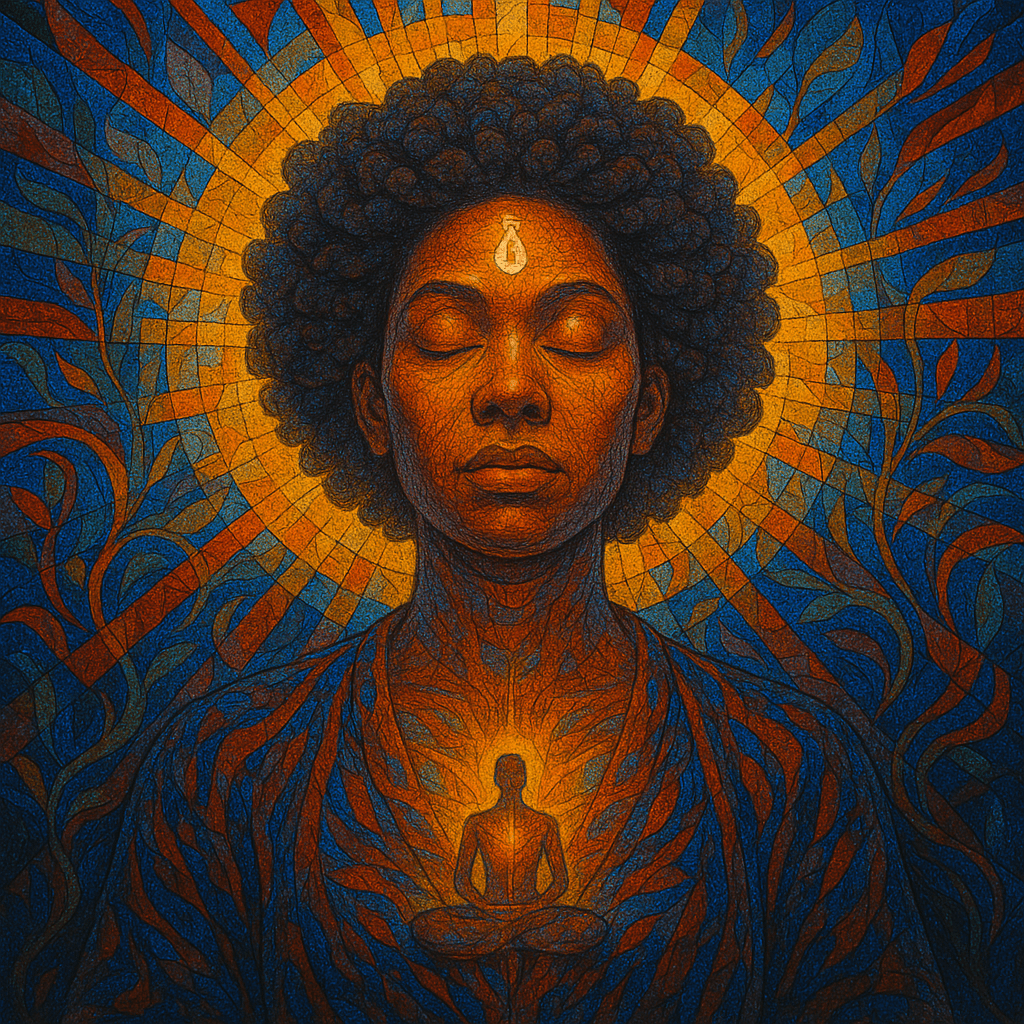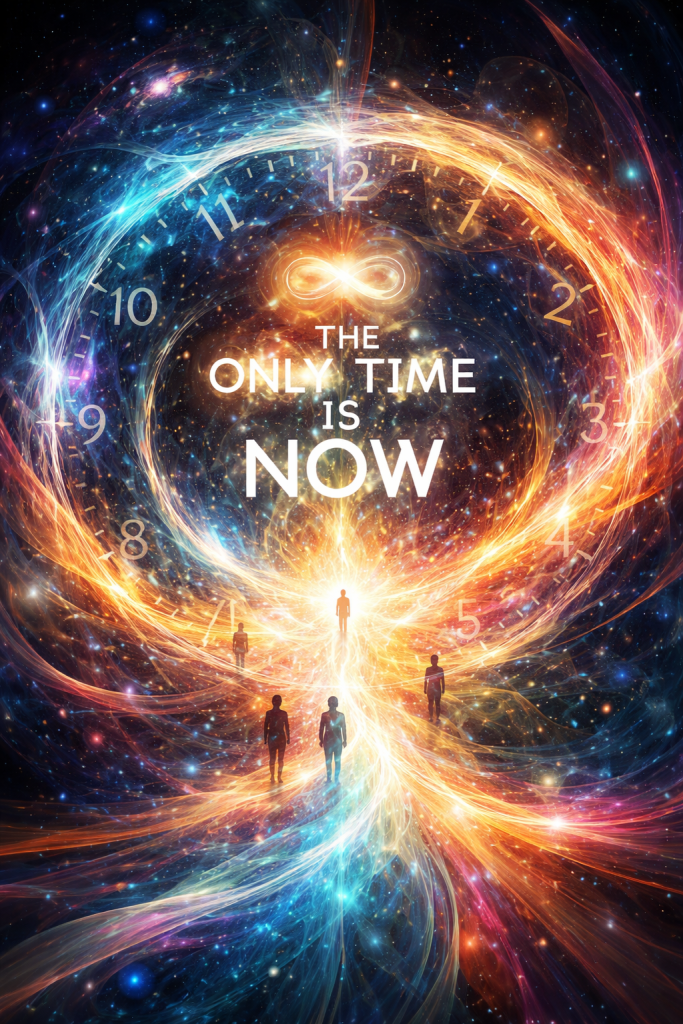
The Only Time Is Now

Something subtle hides behind every assumption about life.
We speak of beginnings, endings, origins, destinies, memories, plans. Language slices reality into segments and calls the slices time. Past. Present. Future.

Direct experience never confirms this division.

Look carefully.

No one has ever stepped into yesterday.
No one has ever arrived at tomorrow.
Everything that has ever appeared shows up only as this immediate presence.

Not a moving present.
Not a fleeting instant.

A boundless, indivisible now.

Mind imagines a line stretching backward and forward, yet perception offers no such line. Thought tells stories about what was and what will be, but those stories arise as present thoughts. Memory occurs now. Anticipation occurs now. Even the idea of history unfolds now.

Remove thought for a moment and see what remains.

Only this.

A beginningless display with no edge to trace.
An endless unfolding with nowhere to land.

Nothing truly starts. Nothing truly stops.

Birth and death appear as transitions inside perception, not events happening to existence itself. Waves rise and fall, yet water never begins or ends with any single wave. Every form behaves the same way. Appearance comes and goes. Being does not.

Cause and effect seem separate only because mind arranges events into sequence. First this, then that. Push, then response. Action, then consequence.

Observe more closely.

Cause and effect share the same instant.
The spark and the flame are one movement.
Seed and tree are different names for one process.

Nothing travels through time to produce something else. Everything co-arises. Each moment contains the totality.

That means creation and destruction are not opposite forces.

They are the same gesture.

Every perception is simultaneously appearing and disappearing. Each sight is born as it fades. Each sound vanishes as it arrives. Reality recreates itself continuously without carrying anything forward.

World dissolves and reforms faster than thought can measure.

Continuity is a useful illusion.

Life becomes lighter when this is recognized. Regret loses its grip because there is no past to fix. Anxiety softens because there is no future to secure. Control relaxes because nothing stands outside the present to manage.

Responsibility remains, yet it feels different. Actions arise from clarity rather than fear. Choices flow from immediacy rather than projection. Compassion deepens because everything shares the same timeless ground.

Nothing stands apart.

Every face, every event, every challenge expresses the same indivisible happening.

No separate moment waits elsewhere.
No hidden realm holds another version of reality.

This is it.

Not a fragment.
The whole.

Eternity does not stretch forever.
Eternity reveals itself as what never moves.

Right here.
Right now.
Always.

Morgan O. Smith

AI for Wellness and Spirituality Summit

February 9 & 10, 2026

https://aiforwellnessandspirituality.com/mosm

The Ever Was and Ever Shall Be

There comes a moment when the illusion of movement dissolves, when the current of time no longer feels like a river carrying us toward an imagined horizon, but as the still water of being itself. The mind, once convinced of beginnings and endings, now trembles before the vastness of what has never begun and can never end. Presence reveals itself not as a fleeting instant between two eternities, but as the totality that holds them both.

The one who sought eternity discovers that eternity was never elsewhere. The seeker collapses into the sought, the knower into the known. Memory and anticipation dissolve into a silent awareness that neither moves nor changes, yet births all movement and change. Here, past and future lose their grip, for the witness has stepped outside the dream of succession.

This realization is not an attainment; it is the unmasking of what has always been awake beneath the play of becoming. To see this is to awaken from the hypnosis of time; to stand where all stories converge into the unspoken truth that Being never left itself. The eternal was not something to be found; it was the one doing the finding.

The self that once feared death, loss, or delay now recognizes itself as the very space in which all things appear and disappear. What remains is unspeakably still, radiant, and whole; beyond duration, beyond decay. Awareness, having remembered itself, no longer seeks to survive; it simply shines.

Morgan O. Smith

Get Your Free Copy of My Book, Bodhi in the Brain!

https://subscribepage.io/oTSZQu

The Day Everything Dissolved

A Journey into Absolute Oneness

A single moment can shatter every belief held about existence, leaving behind a clarity that words struggle to contain. After many years of deep meditation, everything I had been searching for revealed itself—not as a concept, not as an experience, but as the undeniable reality of being.

The shift arrived without warning. Reality no longer appeared as separate fragments; it was a single, indivisible whole. Every notion of self, identity, or distinction between observer and observed vanished. It wasn’t an intellectual realization—it was direct, immediate, and irreversible.

A profound sense of unity pervaded every fiber of existence. The universe was not something outside of me, nor was I an entity moving through it. The universe was expressing itself through me, as me, and through everything else in an infinite, harmonious unfolding.

A rush of energy surged through my being. Every cell seemed to bloom with an indescribable vitality. It was as if the boundaries of my body had dissolved, and awareness had become the vast, boundless expanse that held all things. Love was not an emotion—it was the very substance of existence, pouring through every breath, every movement, every atom.

Time lost its meaning. There was no past to remember, no future to anticipate—just an eternal presence in which all things unfolded simultaneously. Life and death were no longer opposites but part of the same undivided continuum, endlessly appearing and dissolving in a cosmic rhythm.

The mind struggled to grasp what the heart understood effortlessly. Every belief about individuality, separation, and limitation had been undone in a single instant. The concept of surrender took on an entirely new meaning. There was nothing left to resist—only the freefall into the effortless flow of existence.

Moments stretched into days, weeks, and months, each revealing deeper layers of this unfolding. The heart expanded into a depth of compassion that embraced everything—human struggle, cosmic intelligence, the raw beauty of impermanence. Gratitude arose not as a practice but as the natural expression of this vast interconnectedness.

Even now, words barely graze the surface of what transpired. To speak of it is to fragment it, to reduce the ineffable into language. Yet, something within compels the sharing, not as an attempt to explain, but as an invitation—an open door to those who sense that beyond all concepts, beyond all seeking, something boundless is already present, waiting to be remembered.

Morgan O. Smith

Yinnergy Meditation/Neurofeedback, Spiritual Life Coaching & My Book, Bodhi in the Brain…Available Now!

https://linktr.ee/morganosmith

The Paradox of God’s Purpose

Beyond Time and Space

The idea of God having a purpose evokes a curious paradox. Purpose, as we understand it, requires time. There’s a beginning, an intention, and an outcome. Yet, God exists beyond time and space, transcending all dimensions that human minds perceive. How, then, can the ultimate transcendence have a purpose when both purpose and fulfillment rely on the passage of time?

God, in the most absolute sense, is timeless. Purpose implies movement from one state to another, a process that cannot apply to something that exists beyond time. God, as the eternal presence, neither moves nor changes. Yet, this same timeless God includes time and space as aspects of reality. Everything exists within God, and time is simply one of the infinite expressions of that existence.

From our limited perspective within time and space, purpose appears necessary and real. The flow of cause and effect shapes our understanding of meaning. Thus, we perceive God as having a purpose, as if the universe itself was an unfolding plan. But this perception only holds because we exist within the constraints of time. In truth, God’s purpose is as illusory as time itself—a projection of human understanding onto a reality that transcends all conceptual boundaries.

God, being everything, includes the illusion of purpose, yet remains untouched by it. In this sense, what we view as God’s purpose is simply an expression of the unfolding of existence within the framework of time. This divine play, known as *lila* in some traditions, is neither driven by need nor aimed at fulfillment. It is simply the unfolding of what is, without beginning or end.

The purpose we attribute to God is an attempt to understand the unfathomable. But ultimately, God’s true nature exists beyond purpose, beyond time, beyond any duality that our minds attempt to impose. To realize this is to recognize that the essence of existence is purposeless in the most profound sense—not in a nihilistic way, but as a reflection of absolute freedom, where nothing needs to be done because all is already complete.

Morgan O. Smith

Yinnergy Meditation, Spiritual Life Coaching & My Book, Bodhi in the Brain…Available Now!

https://linktr.ee/morganosmith

The Absolute and the Illusion of Time

In our journey towards spiritual awakening, we often encounter the perplexing notion of time. Our minds are conditioned to perceive time linearly: past, present, and future. This perception is deeply ingrained in our consciousness, shaping our understanding of reality. However, the Absolute— the ultimate reality—exists beyond this linear framework. In the realm of the Absolute, everything that has ever happened, is happening now, and will happen in the future, all coexist in a timeless continuum.

Imagine a vast, infinite expanse where every moment in time is accessible simultaneously. This is not a mere concept but a profound truth that beckons us to transcend our limited perceptions. In the Absolute, the past, present, and future are not distinct entities but facets of a singular, eternal moment. Our conventional understanding of time dissolves, revealing a state of being that is unbounded and ever-present.

To grasp this concept, we must first recognize that our perception of time is an illusion created by the mind. The mind, with its incessant chatter and constant need to categorize experiences, imposes a linear structure on reality. This structure is useful for navigating the physical world, but it also confines us within a limited framework. The spiritual journey involves breaking free from these mental constructs and experiencing reality as it truly is—timeless and infinite.


Consider the implications of this timeless reality on our lives. Every event, every experience, every thought and emotion, is part of an eternal now. The suffering we endure, the joys we cherish, the lessons we learn, all exist simultaneously within this grand mosaic of existence. This understanding can bring a profound sense of peace and acceptance. When we realize that everything is happening as it should, in its own perfect time, we can let go of our fears and anxieties about the future and our regrets about the past.

Moreover, this realization can transform our approach to life. If we understand that every moment is imbued with the entirety of existence, we can cultivate a deeper presence in our daily lives. Each action, no matter how mundane, becomes an expression of the eternal now. Each interaction, no matter how fleeting, holds the potential for profound connection. In this way, we begin to live in harmony with the flow of the universe, attuned to the rhythm of the Absolute.

Embracing the timeless nature of reality also invites us to explore the depths of our consciousness. Meditation, contemplation, and other spiritual practices become portals to experiencing the eternal now. As we quiet the mind and delve into the silence within, we can touch the essence of the Absolute. In these moments of stillness, we glimpse the truth of our being—that we are not separate entities bound by time but expressions of the infinite consciousness that pervades all existence.


In conclusion, the Absolute transcends our limited perception of time, inviting us to experience reality as an eternal now. By recognizing the illusory nature of linear time, we can cultivate a deeper presence in our lives and align ourselves with the flow of the universe. This understanding brings peace, acceptance, and a profound sense of interconnectedness, guiding us on our journey toward spiritual awakening.

Morgan O. Smith

Yinnergy Meditation, Spiritual Life Coaching & My Book, Bodhi in the Brain…Available Now!

https://linktr.ee/morganosmith

Beyond Time

A Journey into the Infinite

In the realm of spiritual exploration, the concept of time often presents itself as a linear progression, segmented neatly into past, present, and future. Yet, if we dare to delve deeper into the essence of nonduality and Eastern philosophy, we uncover a profound truth: the linear construct of time is merely an illusion, a creation of the human mind designed to make sense of our existence. This realization beckons us to question, if even the Divine, the source of all creation, does not foresee the future, what does this imply about the nature of existence itself?

The notion that “Not even God knows the future; for there is no past, present, or future to be known” invites us into a contemplative exploration of the timeless. In this perspective, the future is not a distant realm to be foreseen or predicted, but rather a continuation of the present moment, ever-unfolding in the eternal now. This insight aligns with the core teachings of nonduality, which assert that all distinctions we perceive in the world, including the separation of time into distinct segments, are ultimately illusions.

In the vast expanse of consciousness, where the concept of time dissolves, we find ourselves in the presence of the infinite. Here, every moment is the beginning and the end, each instant a complete and whole experience of existence. This realization challenges us to live fully in the present, to embrace each moment as if it were the entirety of life itself. It encourages a state of constant awareness, where the past is not a burden to be carried, nor the future a destination to be reached, but rather, each moment is an opportunity for spiritual awakening and enlightenment.


This perspective offers a liberating view of the nature of divine omniscience. If the Divine exists beyond the confines of time, then foreknowledge becomes irrelevant. The Divine, in its infinite wisdom, is intimately connected with the unfolding moment, fully present in the eternal now. This understanding invites us to reconsider our relationship with the Divine, seeing it not as a distant overseer of our fate but as an ever-present guide on our journey through the boundless landscape of existence.

As we navigate this journey, we are called to let go of our attachment to the linear progression of time, to release our anxieties about the future, and our regrets about the past. In doing so, we open ourselves to the profound wisdom that lies in the present moment, discovering a path to personal growth and spiritual enlightenment that transcends the boundaries of time.


This exploration into the nature of time and the divine offers a fresh perspective on our spiritual journey. It challenges us to question deeply held beliefs and to embrace the mystery of the now. As we ponder the implications of a timeless existence, we are invited to experience life in its fullest expression, free from time constraints, and open to the infinite possibilities within the eternal present.

Morgan O. Smith

Yinnergy Meditation, Spiritual Life Coaching & My Book, Bodhi in the Brain…Available Now!

https://linktr.ee/morganosmith

Moksha

The Universe in Liberation

As we traverse the intricate corridors of Hindu philosophy, a term that emerges as a beacon of liberation is ‘Moksha’. This concept, commonly associated with individual salvation from the cycle of birth, death, and rebirth, presents a spiritual zenith. However, what if we zoom out from the individual perspective and consider Moksha at a cosmic level? What if the Universe itself were to attain Moksha?

The Big Bang marked the birth of the Universe, setting forth an infinite dance of creation, preservation, and destruction. Stars were born, galaxies sculpted, and planets formed, only to one day succumb to the grand design of entropy. This cyclical nature bears a striking resemblance to the cycle of Samsara in Hindu thought, where souls are continuously born and reborn in different forms until Moksha is achieved.

If the Universe could experience Moksha, it would transcend its cycle of cosmic Samsara – from the Big Bang to the eventual Big Crunch or Heat Death, depending on which theoretical physicist you ask. This liberation would mean breaking free from the constraints of time, space, and causality, reaching a state of infinite, timeless existence.

So, what would this feel like for the Universe?

When we ponder this question, we must acknowledge that the Universe’s experience, in this context, is beyond human comprehension. But let’s indulge in the thought experiment. We could imagine this state as one of perfect harmony and unity. There would be no ‘other’, no ‘alien’, and no ‘external’. The galaxies, stars, planets, and even the tiniest quantum particles would exist in a state of interconnection and oneness.

From the perspective of sentient beings, this would mean a profound sense of unity with everything else. Distinctions that currently cause division – species, races, cultures, even life and non-life – would become irrelevant. All of existence, inanimate and animate, would be seen as expressions of the same cosmic consciousness.

And yet, paradoxically, this unified existence would also mean the cessation of experience as we know it. Experience implies a subject and an object, an experiencer and the experienced. But in the absolute unity of cosmic Moksha, these dualities would dissolve. Therefore, in a sense, the Universe would be in a state of ‘experiencing without an experiencer’ or ‘knowing without a knower’.

In the grand scheme of cosmic liberation, human Moksha could be seen as a fractal microcosm – a ripple that mirrors the pattern of the whole. Each being achieving liberation contributes to the whole Universe moving towards its own Moksha, its release from the cosmic cycle of birth and death. This profound realization places our spiritual quests in a broader context and imbues them with a universal significance.

However, the implications of this concept are not just metaphysical, but deeply ethical. Recognizing our shared journey toward liberation fosters compassion, humility, and a sense of stewardship for all of existence. Our actions, in this view, can either facilitate or hinder the Universe’s journey toward Moksha.

In conclusion, contemplating Moksha at a universal scale stretches the boundaries of our imagination and empathy. It invites us to view ourselves not as isolated entities but as integral parts of a grand cosmic dance seeking the ultimate liberation.

Morgan O. Smith

Yinnergy Meditation & My Book, Bodhi in the Brain…Available Now!

https://linktr.ee/morganosmith

Ego Death

A Symphony of Sense and Surrender into the Nondual Existence

The ego, a fortress of our individuality, a custodian of our senses, crumbles during a profound psychological event termed ego death. This process, which is akin to crossing the Rubicon of our minds, signifies the temporary dissolution of our self-identity, the fading of our senses, and the surfacing of a cosmic oneness often linked to deep meditative states, transcendental experiences, or psychedelic journeys.

Neurologically, ego death presents an intriguing event. Our brain’s default mode network (DMN), which curates our self-narrative and sets us apart from others, shows a marked decrease in activity. We can compare it to a maestro leaving the stage, silencing the orchestra of our everyday consciousness that incessantly plays symphonies of thoughts, memories, and future projections.

In the ensuing stillness, our senses embark on an incredible transformation. The self-nonself dichotomy wavers, and feelings of oneness and interconnectedness seep in.

The conventional five senses, along with lesser-known ones such as proprioception (spatial orientation of our body parts), and thermoception (sense of temperature), recede, rendering the self imperceptible. Even the sense of agency – the consciousness of controlling one’s actions – seems to dissolve.

In place of the sensory absence comes the phenomena of nonduality – the essence of existence, unblemished by ego-driven distortions. Here, the biological reality of our senses converges with an intense metaphysical experience.

Kundalini rising – a sensation akin to a large serpent ascending the spine, activating each energy center or ‘chakra’ – might manifest in this transformative journey. Biologically, it could be perceived as a surge in nervous energy influencing neural circuits, engendering a radical alteration in perception.

The dissolution of our sense of time – chronoception – engulfs us in a timeless realm. Our sense of spatial orientation capitulates, inducing a feeling of non-locality, a state where one’s existence feels omnipresent.

This whole process might seem like an experiential validation of ‘absolute monism’ – a philosophical school of thought propounding the universe’s oneness, discrediting any duality between the individual and the world.

Yet, ego death is not an end; it’s a transformative beginning. The insights gleaned about the interconnectedness of all life forms and the illusory separateness sculpted by our ego can significantly reshape our lives.

From a wider perspective, ego death can be seen as a philosophical odyssey leading to an experiential understanding of consciousness, the essence of selfhood, and the nature of reality. The unravelling of our senses and ego sheds light on our inherent unity, nurturing a profound sense of compassion that percolates into every aspect of our existence.

Ego death’s exploration and its impact on our senses offer an avenue to challenge our conventional ways of perceiving, question our established sense of being, and dive deeper into the mysteries of our inner and outer universe. It’s not merely a psychological event but a spiritual expedition and a philosophical exploration that propels us toward a truer understanding of existence.

Morgan O. Smith

Yinnergy Meditation & My Book, Bodhi in the Brain…Available Now!

https://linktr.ee/morganosmith

The Timeless Universe

A Journey into the Eternal Now

As humans, we are fundamentally tethered to the concept of time. We perceive our lives as an unceasing flow of moments, an endless river cascading from the mountains of the past into the oceans of the future. But what if we could untether ourselves from this chronology, detaching from the past and the future to dwell in an “eternal now”? This concept might seem paradoxical, even inconceivable, yet it offers a fascinating vista of our understanding of reality.

First, we must address the elephant in the room: Can we truly conceptualize a universe without time? The removal of time from our universe plunges us into the depths of a reality where the progression of events ceases. In this static universe, everything exists in an unending present state, with no evolution or motion since these phenomena require time to define their existence.

Yet, the concept of an “eternal now” still implies a temporal dimension. In other words, to speak of an ‘eternal’ now, we inadvertently evoke the notion of time. Herein lies the paradox: while we yearn for a grasp on the timeless, our very language and cognition are steeped in the temporal.

So, what does it mean to experience this “eternal now”? We find an enlightening perspective in the Zen Buddhist concept of “satori”. Satori represents a sudden awakening, an immersion in the present moment that is so profound that it transcends time. This experience of enlightenment unveils a reality where past and future merge into a single, timeless instant. In satori, one perceives reality unfettered by the usual constraints of time or even individual self.

Despite its paradoxical nature, the exploration of an “eternal now” serves as an intellectual and philosophical exercise that tests the boundaries of our understanding. It underscores the limitations of our human comprehension, reminding us of the extraordinary mystery that is our universe.

Dwelling in the “eternal now” is a concept that nudges us to revisit our accepted notions about time and reality. It invites us to question whether our perception of linear time, with its forward march from the past to the future, is the only possible way to experience the universe.

Could there be other forms of reality, other universes perhaps, where time as we know it does not exist? Or could our very perception of time be an illusion, a cognitive construct born out of necessity? In the vast cosmos, are we just temporal beings trying to make sense of a timeless existence?

We might not be able to fully answer these questions, yet in asking them, we expand our intellectual horizons and deepen our understanding of the universe. In this exploration, perhaps we may even inch closer to experiencing a taste of the enigmatic “eternal now”.

Morgan O. Smith

Yinnergy Meditation & My Book, Bodhi in the Brain…Available Now!

https://linktr.ee/morganosmith

Embracing the Unity of Free Will and Determinism

Nondual Perspectives

Introduction:
In the timeless debate surrounding free will versus determinism, philosophical inquiries have often sought to reconcile these seemingly opposing concepts. However, from a nondual standpoint, rooted in direct experience, the boundaries between free will and determinism begin to blur. In this blog, we explore the profound idea that every choice we make is our decision and the decision of the universe itself. We delve into the unity of free will and determinism, highlighting how this perspective challenges conventional notions and opens up new avenues for contemplation.

The Illusion of Separation:

From a nondual perspective, the fundamental illusion is the perception of separation between ourselves and the universe. When we examine our direct experience, we realize that we are intimately interconnected with the fabric of existence. Our choices and actions are not isolated events but intricately interwoven with the tapestry of the cosmos. Thus, the dichotomy of free will and determinism fades away, revealing a deeper unity.

The Illusion of Individual Agency:
Conventionally, free will is often associated with individual agency, the belief that we possess an independent power to make choices. However, upon closer inspection, we find that our notion of individual agency is built upon a complex web of influences. Our thoughts, desires, and motivations arise from a multitude of factors: genetics, upbringing, culture, and countless other variables. In this sense, determinism seems to assert its presence, implying that our choices are shaped by external forces.

Reframing Choice as Cosmic Manifestation:
While determinism challenges the idea of individual agency, nondual perspectives offer an intriguing alternative. Instead of perceiving ourselves as separate entities with independent choices, we can reframe choice as a cosmic manifestation. Every decision we make can be seen as a ripple in the interconnected web of existence, an expression of the universe itself. In this way, free will and determinism merge into a harmonious whole, transcending the limitations of duality.

Unfolding in the Eternal Now:
In the nondual understanding, the concept of time takes on a different dimension. Past, present, and future merge into an eternal now, where every choice and outcome coexist in a timeless dance. From this vantage point, the notion of causality loses its strict linear framework. Our choices are not predetermined events unfolding in a predetermined sequence; rather, they arise in the timeless realm of possibility, where the universe expresses itself through our individual consciousness.

Embracing Paradox:
The reconciliation of free will and determinism requires embracing paradox. It calls upon us to transcend the limitations of dualistic thinking and expand our awareness to encompass the vastness of existence. In this paradoxical dance, we find liberation. We become both the orchestrators and the orchestrated, the chooser and the chosen, as we recognize the profound interdependence that pervades all aspects of reality.

Conclusion:
From the nondual standpoint, the interplay between free will and determinism reveals a profound unity. By exploring our direct experience and recognizing the illusory nature of separation, we discover that every choice we make is intricately connected with the choices made by the universe. As we embrace this understanding, we transcend the limitations of duality and embark on a journey of profound self-realization, where the dance of free will and determinism becomes an expression of the cosmic symphony of life.

Morgan O. Smith

Yinnergy Meditation & My Book, Bodhi in the Brain…Available Now!

https://linktr.ee/morganosmith