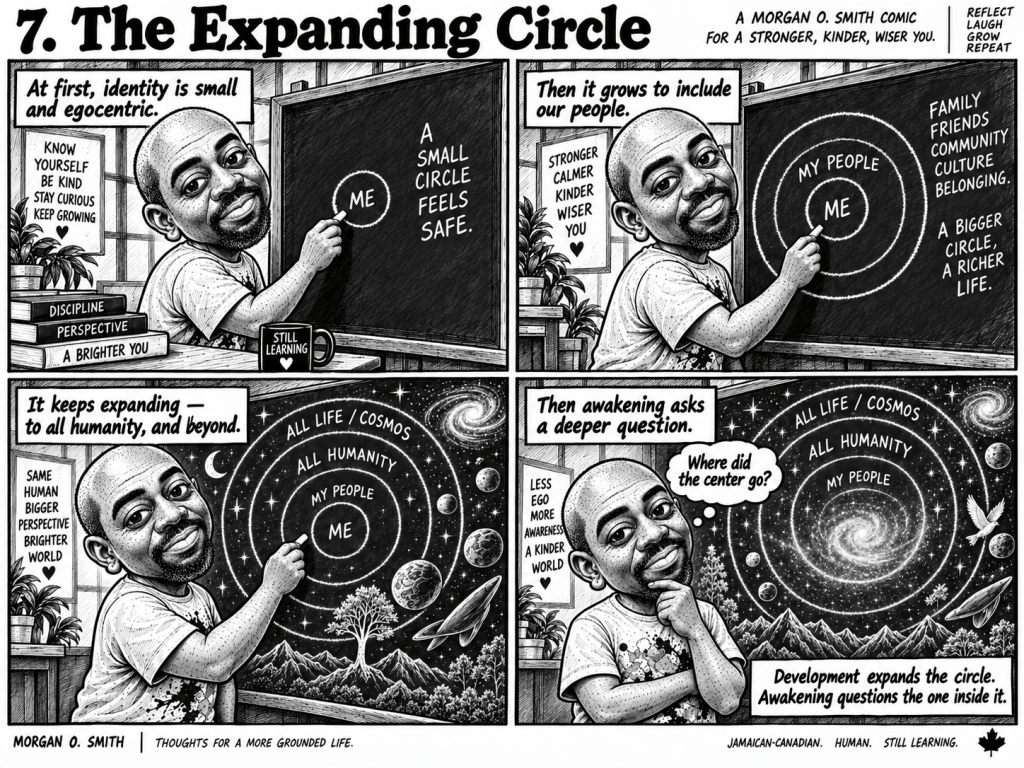
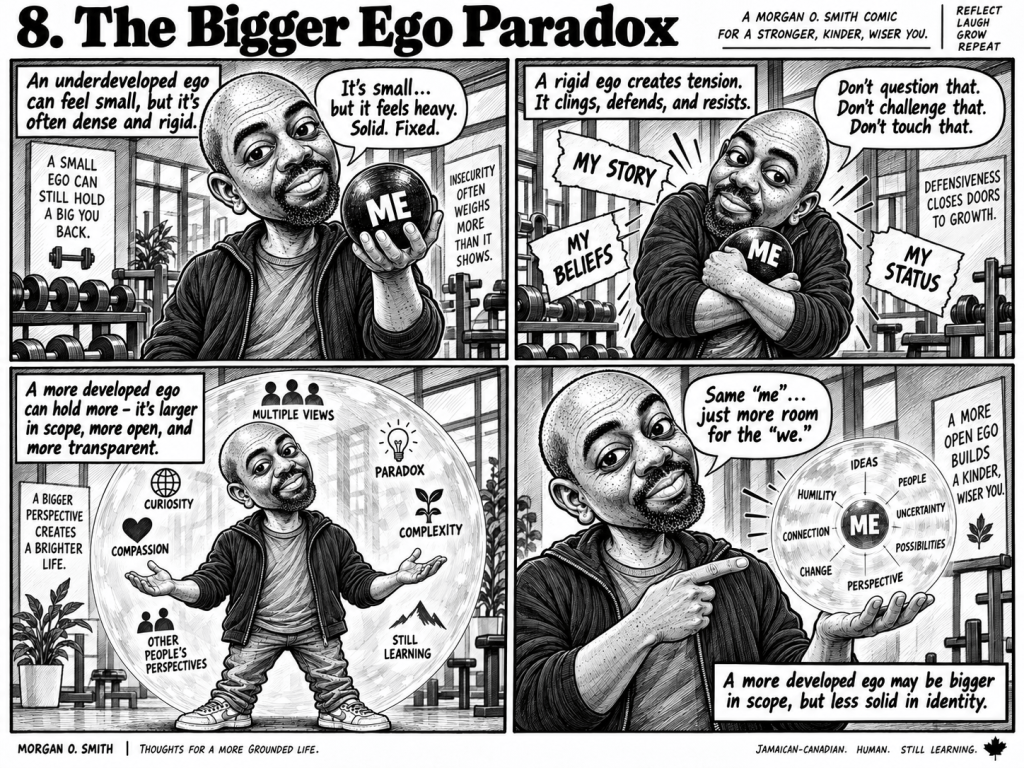
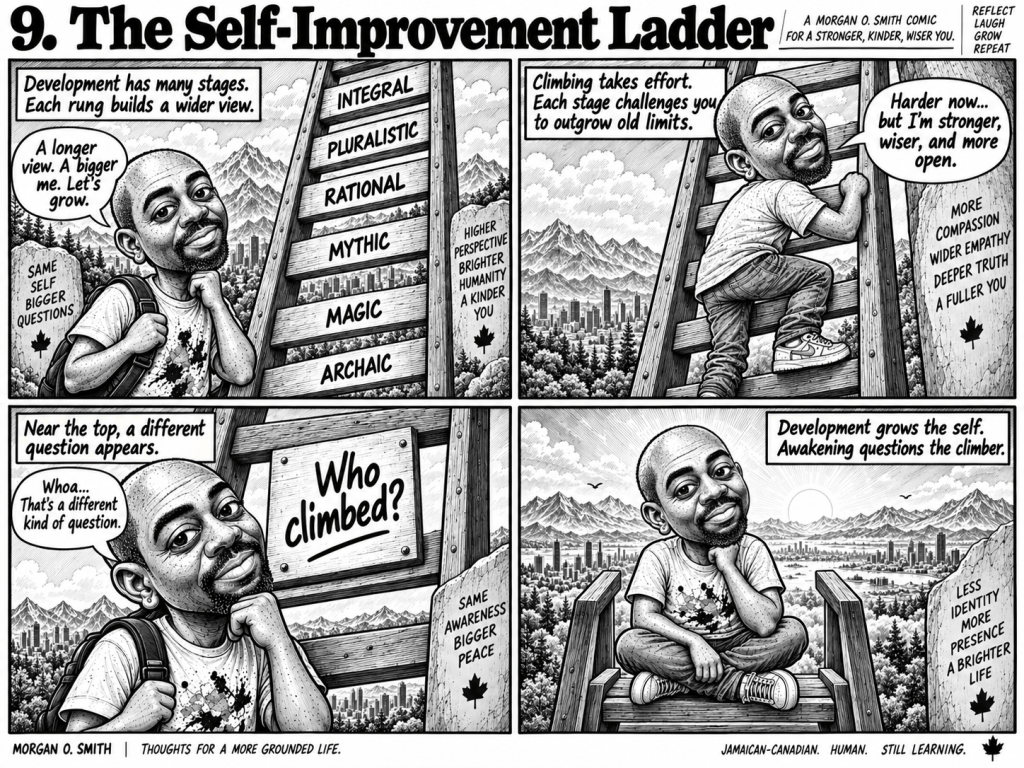
Morgan O. Smith

Worship your idols until your idols are no longer needed.
Another way to say this is:
Focus on your objectives until you’re forced to look within.
There is nothing inherently wrong with having idols.
There is nothing inherently wrong with ambition, achievement, recognition, wealth, status, influence, romance, physical beauty, intellectual mastery, spiritual attainment, or the desire to become extraordinary.
Sometimes the road beyond desire must first travel directly through it.
We often imagine spiritual maturity as the immediate rejection of worldly pursuits. Renounce the ego. Abandon ambition. Stop chasing things. Detach from outcomes. Transcend desire.
Yet premature renunciation can become another form of avoidance.
You can claim that money does not matter when you have never had any.
You can dismiss recognition when you secretly crave it.
You can condemn power because you have never experienced what it feels like to possess it.
You can declare yourself detached from relationships while quietly fearing intimacy.
You can criticize ambition while wondering whether you were capable of achieving what you wanted.
Sometimes you have to meet the idol before you can discover what it cannot give you.
An idol is anything onto which we project the promise of completion.
It might be a person.
A career.
A relationship.
A spiritual teacher.
A certain amount of money.
A perfect body.
A degree.
A mystical experience.
A following.
A business.
Enlightenment itself can become an idol.
The object changes, but the psychological movement remains remarkably similar:
When I obtain that, I will finally be complete.
This is what gives the idol its power.
The object itself may have value. Money can create freedom. Relationships can bring intimacy. Achievement can develop discipline. Knowledge can expand perspective. Meditation can transform how consciousness relates to experience.
The illusion begins when we ask something finite to provide what only the recognition of our fundamental nature can reveal.
We are not merely pursuing the object.
We are pursuing a feeling we believe the object will produce.
Freedom.
Security.
Love.
Wholeness.
Significance.
Peace.
The object becomes a symbol for an internal condition.
This is why getting what you want can sometimes be more spiritually disruptive than failing to get it.
Failure allows the fantasy to survive.
Success puts the fantasy on trial.
Suppose you spend twenty years believing that reaching a particular objective will finally make you happy.
Then you reach it.
For a while, there may be exhilaration. There should be. Something meaningful has happened.
But eventually ordinary consciousness returns.
You wake up as yourself.
The mind still moves.
Old insecurities may remain.
Fear still visits.
The body still ages.
Relationships still require work.
The applause fades.
Yesterday’s achievement becomes today’s normal.
Then an unsettling question appears:
Is this it?
That question can be more transformative than years of abstract spiritual philosophy.
You received what you asked life for, yet something remains unresolved.
The idol has fulfilled its purpose.
Not because it saved you, but because it failed to.
Its failure becomes instruction.
Certain desires disappear through understanding rather than suppression.
A child may desperately want a particular toy. Telling the child that the toy cannot provide lasting happiness will probably accomplish very little. The child needs the toy.
Then something fascinating happens.
The child gets it.
Plays with it.
Loves it.
Eventually puts it down.
What philosophy could not accomplish, experience did.
Adults are not fundamentally different.
Our toys become more sophisticated.
Titles.
Cars.
Followers.
Properties.
Credentials.
Partners.
Awards.
Spiritual experiences.
We give them adult names, but psychologically we may still be saying:
Maybe this will finally be enough.
There is wisdom in discovering for yourself what “enough” actually means.
This does not mean deliberately becoming materialistic or compulsively pursuing every desire that enters the mind. Some desires are destructive, and maturity includes discernment.
The deeper point is that genuine transcendence is different from repression.
Repression says:
I am not supposed to want this.
Transcendence says:
I understand what this can and cannot give me.
Those are radically different states of consciousness.
Spiritual seekers sometimes exchange socially acceptable idols for spiritually acceptable ones.
The pursuit of money becomes the pursuit of awakening.
Status becomes spiritual authority.
Achievement becomes attainment.
Possessions become experiences.
Comparison with coworkers becomes comparison with meditators.
Who has had kundalini awaken?
Who has experienced samadhi?
Who has reached jhana?
Who has dissolved the ego?
Who has seen God?
Who is enlightened?
The costume changes while the machinery of becoming continues operating underneath it.
The ego can pursue its own disappearance.
That is one of the great paradoxes of spiritual practice.
There may come a point when even enlightenment must be surrendered as an objective.
Not because awakening is meaningless, but because the imagined individual who intends to possess enlightenment may itself become the final idol.
You cannot own the Absolute.
You cannot place infinity on your spiritual résumé.
Pursue your objectives consciously.
Build something.
Learn.
Create.
Love.
Risk failure.
Develop your gifts.
Become excellent at something.
Explore what human life is capable of expressing.
But pay attention.
Notice what happens when you get what you wanted.
Notice how quickly the mind moves the finish line.
Notice when “I’ll be happy when…” quietly becomes another “when.”
Notice how every arrival eventually becomes another departure point.
The external journey gradually begins pointing somewhere unexpected.
Back toward the one who has been searching.
Who wants this?
What exactly am I hoping to receive from it?
What would happen if I obtained everything I wanted?
What remains when achievement, identity, status, belief, memory, personality and aspiration are temporarily set aside?
What is aware of all of this?
At some point the search changes direction.
You stop asking only:
What else can I acquire?
You begin asking:
Who is the one trying to become complete?
That question opens a very different door.
The mature relationship with an idol does not necessarily require destroying it.
You simply stop worshipping it.
Money can remain money.
Success can remain success.
A relationship can remain a relationship.
A teacher can remain a teacher.
Meditation can remain meditation.
Achievement can remain achievement.
They no longer carry the impossible responsibility of completing you.
You can enjoy them without confusing them with your Being.
You can participate without becoming psychologically imprisoned by participation.
You can succeed without needing success to tell you who you are.
You can fail without failure becoming a verdict on your existence.
Something profound changes when the world is no longer required to complete the one experiencing it.
Perhaps this is one meaning of freedom.
Not escaping the world.
Not rejecting desire.
Not pretending that objectives do not matter.
Rather, seeing their proper place.
Worship your idols if you must.
Study them.
Pursue them.
Stand before them.
Perhaps even achieve what they represent.
Then look carefully at what remains.
Eventually, the idol may cease to be an idol.
Not because someone convinced you that worship was foolish, but because experience revealed the limitation of what you were worshipping.
The objective did not betray you.
It brought you exactly where it was ultimately capable of bringing you.
To the edge of itself.
From there, there is only one direction left to look.
Within.
Morgan O. Smith
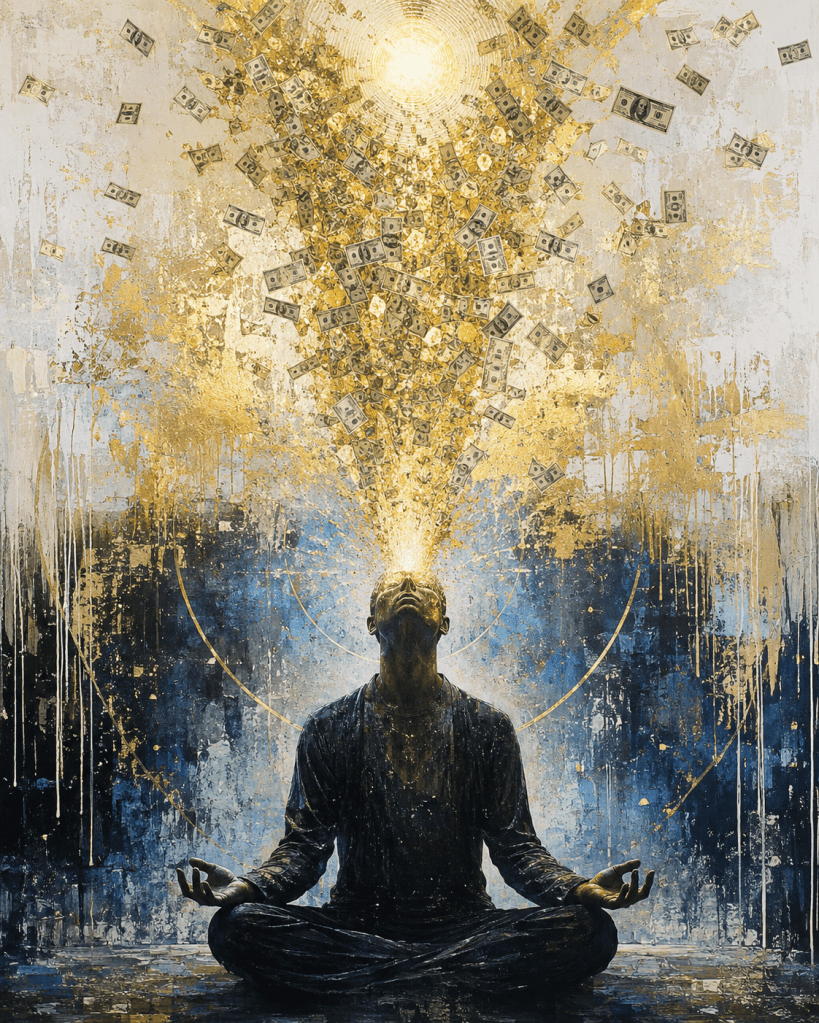
Recent headlines have focused on the emergence of the world’s first trillionaire. For most people, a trillion dollars is a number so vast that it becomes almost impossible to comprehend. We can imagine a thousand dollars. We can stretch our imagination toward a million. A billion already feels distant. A trillion enters a realm where numbers lose their intuitive meaning.
The fascination with such wealth is understandable. A trillion dollars represents influence, freedom, opportunity, and power on a scale few human beings have ever approached. It appears to be the pinnacle of worldly success.
Yet even a trillion dollars has a limitation.
It is finite.
No matter how large the number becomes, it remains measurable. It exists within the world of acquisition, ownership, and accumulation. It can increase. It can decrease. It can be gained and lost.
Spiritual awakening belongs to an entirely different category.
On December 14, 2019, I experienced what can only be described as a full spiritual awakening. What occurred during that event permanently altered my understanding of reality. The experience was not merely profound, emotional, or mystical. It revealed something prior to all experiences.
The separate self that I had assumed myself to be dissolved. The boundary between observer and observed disappeared. What remained was an indescribable recognition of reality as a seamless whole. Words such as Brahman, nirvana, moksha, Buddha Nature, or the Absolute point toward it, but none can adequately capture it.
Whenever people hear accounts of awakening, they naturally search for comparisons. How intense was it? How meaningful was it? How extraordinary was it?
The difficulty is that every comparison comes from the world of ordinary experience.
Imagine possessing a trillion dollars.
Then imagine multiplying that wealth by a trillion.
Then multiplying it again by another trillion.
Even such numbers fail as a meaningful comparison because awakening is not an experience among other experiences. It is the recognition of that within which all experiences arise.
Money exists within consciousness.
The realization of the Absolute reveals consciousness itself.
This is why history’s awakened sages have consistently spoken of enlightenment as humanity’s greatest discovery. Not because it grants power, status, or possessions, but because it ends the search for fulfillment in things that are inherently temporary.
A trillionaire may possess unimaginable wealth and still wonder who they are.
A trillionaire may possess unimaginable wealth and still fear loss, suffering, and death.
The realization of the Absolute addresses a deeper question altogether.
Who is the one seeking?
That is why I call this essay The Poverty of the Trillionaire.
Not because wealth is bad.
Not because success is meaningless.
But because even the greatest fortune imaginable remains small beside the direct realization of one’s true nature.
The wealth of the world can be counted.
The wealth of awakening cannot.
One is finite.
The other is beyond measure.
Morgan O. Smith
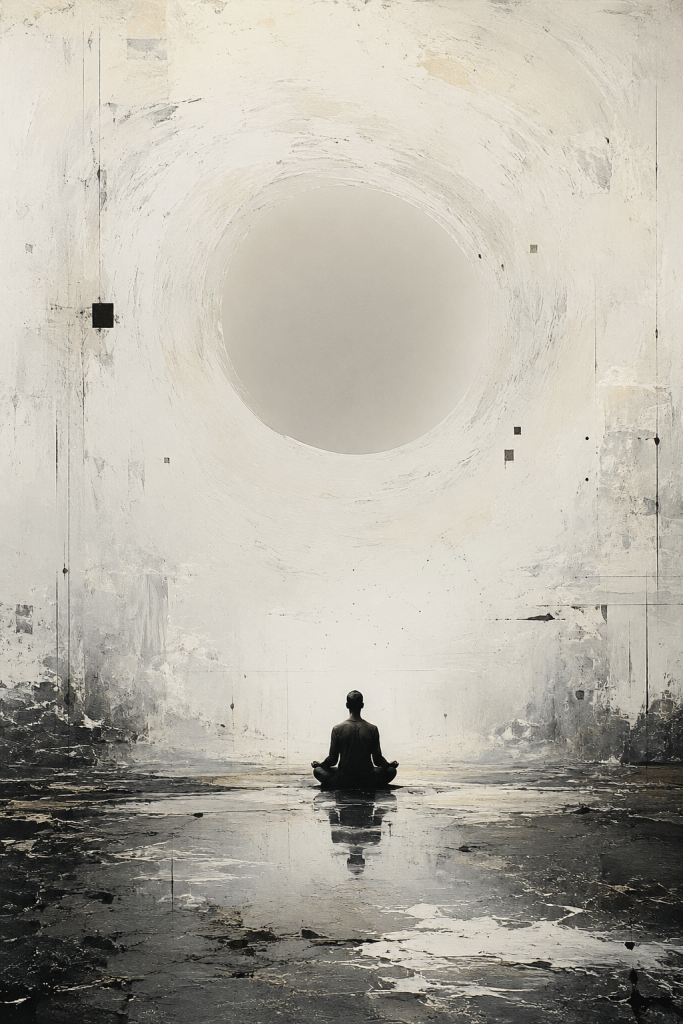
Language faces an impossible task when attempting to speak about what precedes all appearances.
Every word points toward something. Every concept distinguishes one thing from another. Every description relies upon contrast, location, qualities, relationships, or characteristics. Yet what many contemplative traditions refer to as the Absolute, the Ground of Being, or pure reality before conceptualization possesses none of these.
Nothingness is not called nothingness because it is empty in the ordinary sense.
An empty room still contains space. A vacant lot still exists somewhere. Even darkness can be perceived. Ordinary emptiness remains something that can be identified, experienced, or described.
Nothingness, in its deepest philosophical and mystical meaning, points toward that which cannot be located, measured, conceptualized, perceived as an object, or distinguished from anything else.
Location cannot be assigned to it because location itself appears within it.
Time cannot contain it because time arises within experience.
Attributes cannot be given to it because attributes create distinctions.
Existence and nonexistence cannot adequately describe it because both are conceptual categories.
This creates a paradox.
The moment a reference is made, the reference becomes something. The moment a concept is formed, a boundary appears. The moment a description is offered, what is described has already been transformed into an object of thought.
Nothingness is therefore not a description. It is a linguistic surrender.
The word functions less as a definition and more as an admission that thought has reached its limit.
Mystics throughout history have encountered this difficulty. Some called it Brahman. Others called it Sunyata. Some referred to it as the Tao. Others spoke of the Godhead, the Absolute, the Unborn, or the Nameless.
Each term points toward the same problem.
Whatever is being indicated cannot actually be captured by the indication.
A finger pointing toward the moon is not the moon.
A concept pointing toward reality is not reality.
A word pointing toward nothingness is not nothingness.
From a nondual perspective, even calling it nothingness can be misleading. The term may suggest absence, voidness, or negation. Yet what is being pointed toward is not the absence of reality. It is reality prior to division into existence and nonexistence.
Thought asks, “What is it?”
Direct realization reveals that the question itself cannot reach it.
The mind searches for an object and finds none.
It searches for a location and finds none.
It searches for a boundary and finds none.
It searches for a reference point and finds none.
Because no reference can be established, language falls silent.
What remains is called nothingness.
Not because it is literally nothing.
Because every attempt to make it something fails.
Morgan O. Smith
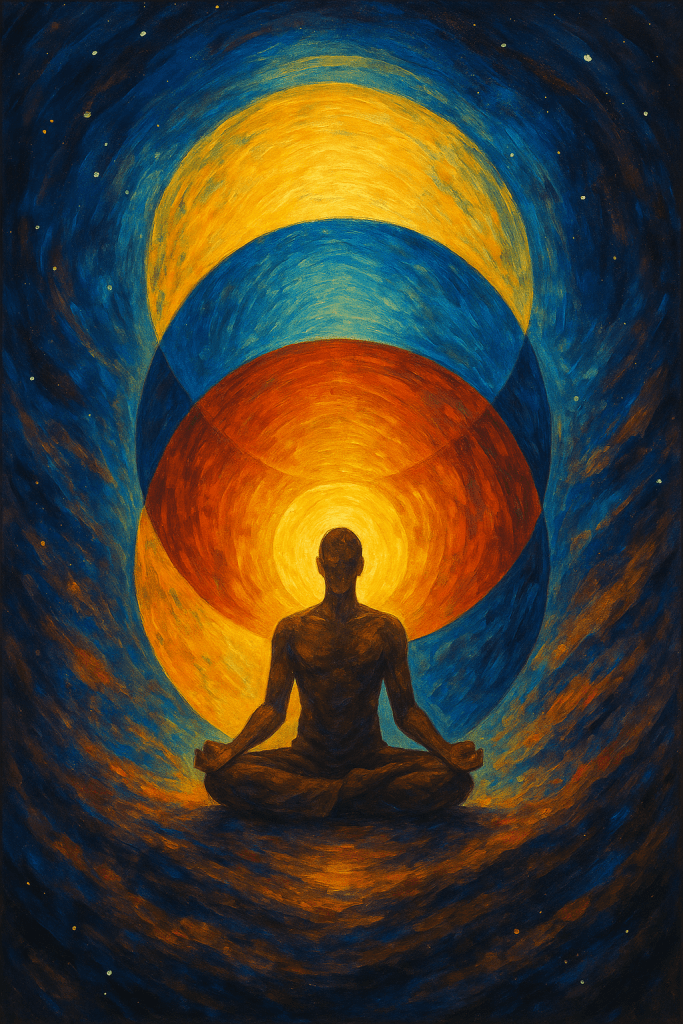
The Absolute cannot be received by a vessel unprepared for its voltage. Consciousness, like circuitry, must be refined to hold the charge. The higher the threshold across the physical, emotional, and mental domains, the more precisely reality can transmit its undiluted essence through one’s being.
The body is not a hindrance to transcendence; it is the grounding rod. A nervous system conditioned through presence, breath, and embodiment becomes the bridge between the finite and the boundless. Without such refinement, the encounter with higher states risks distortion, overwhelm, or fragmentation. The Absolute demands structure, not as rigidity, but as integrity strong enough to remain open while containing the immeasurable.
Emotionally, the heart must learn to remain unguarded even in the storm. The capacity to feel everything without collapse is what allows compassion to expand beyond sentiment into universality. Each emotional breakthrough increases the voltage of love one can sustain without defence. To feel deeply without drowning is the silent mastery of awakened sensitivity.
Mentally, clarity becomes the crucible. The mind must learn to dissolve without disintegrating; to rest in stillness without forsaking discernment. Thought, when purified of obsession and identification, becomes transparent to the Real. Then language no longer imprisons truth but becomes its faint echo.
Those who cultivate balance across all thresholds do not chase transcendence; they embody it. They become the conduit through which the Absolute interprets itself, wordlessly, endlessly, with precision born of surrender.
Morgan O. Smith
Get Your Free Copy of My Book, Bodhi in the Brain!

There comes a moment when the illusion of movement dissolves, when the current of time no longer feels like a river carrying us toward an imagined horizon, but as the still water of being itself. The mind, once convinced of beginnings and endings, now trembles before the vastness of what has never begun and can never end. Presence reveals itself not as a fleeting instant between two eternities, but as the totality that holds them both.
The one who sought eternity discovers that eternity was never elsewhere. The seeker collapses into the sought, the knower into the known. Memory and anticipation dissolve into a silent awareness that neither moves nor changes, yet births all movement and change. Here, past and future lose their grip, for the witness has stepped outside the dream of succession.
This realization is not an attainment; it is the unmasking of what has always been awake beneath the play of becoming. To see this is to awaken from the hypnosis of time; to stand where all stories converge into the unspoken truth that Being never left itself. The eternal was not something to be found; it was the one doing the finding.
The self that once feared death, loss, or delay now recognizes itself as the very space in which all things appear and disappear. What remains is unspeakably still, radiant, and whole; beyond duration, beyond decay. Awareness, having remembered itself, no longer seeks to survive; it simply shines.
Morgan O. Smith
Get Your Free Copy of My Book, Bodhi in the Brain!

From Fear to Freedom
Karma is often spoken of as a simple equation, action and consequence, sowing and reaping, yet its meaning changes dramatically as consciousness evolves. What begins as superstition matures into wisdom, and what once felt like punishment reveals itself as love wearing the mask of correction. Each stage of development reshapes the lens through which karma is seen, shifting from fear-driven obedience to effortless alignment with the infinite.
At the earliest level, karma is pure survival instinct. The world feels hostile and unpredictable, and unseen forces must be appeased to ensure safety. The primitive heart interprets karma as a storm to endure or a curse to lift. As tribes form, rituals emerge, dances, offerings, sacrifices, gestures meant to influence invisible powers. Karma becomes a chant of control: “If I act correctly, the gods will spare me.”
Later, as morality crystallizes, karma transforms into a cosmic scoreboard. The universe appears governed by divine law, rewarding the righteous and punishing the wicked. Good deeds promise heaven; bad ones, rebirth or torment. This view comforts the soul with order but binds it to duality, virtue and sin, reward and penalty. The self remains separate from the whole, forever calculating its balance sheet in the eyes of the divine.
Rational thought then dismantles myth and replaces faith with logic. Karma becomes causality, stripped of mysticism. The mind begins to see that every thought and action has a psychological echo. The focus turns inward: emotional patterns, cognitive biases, behavioral loops. The sacred turns scientific. What was once divine justice becomes neurochemistry and feedback loops. Yet beneath analysis lies the same longing for meaning; a search for the invisible intelligence behind visible consequence.
As empathy expands, karma broadens into a shared field. The suffering of one is recognized as the suffering of all. Ecological, social, and ancestral interdependence reveal a larger moral ecology. Karma is now the pulse of the collective; the planet’s way of balancing itself through the actions of its inhabitants. The desire shifts from being “good” to being whole, from fear of punishment to care for harmony.
Integral awareness sees karma as consciousness refining itself through experience. Every situation, pleasant or painful, becomes a mirror; a feedback loop teaching the self about itself. What was once labeled misfortune becomes medicine. Karma is not something done to us but something expressed through us, a self-correcting rhythm of the universe returning us to coherence.
Beyond even that, karma dissolves. The one who acts and the one who receives the result are seen as the same awareness, dancing within itself. Causality collapses into immediacy. Every moment becomes self-liberated the instant it appears. There is no ledger, no lesson, only the timeless presence expressing as everything. What remains is compassion without motive, action without actor, freedom within form.
Morgan O. Smith
Get Your Free Copy of My Book, Bodhi in the Brain!

The Letting Go That Lets Go of You
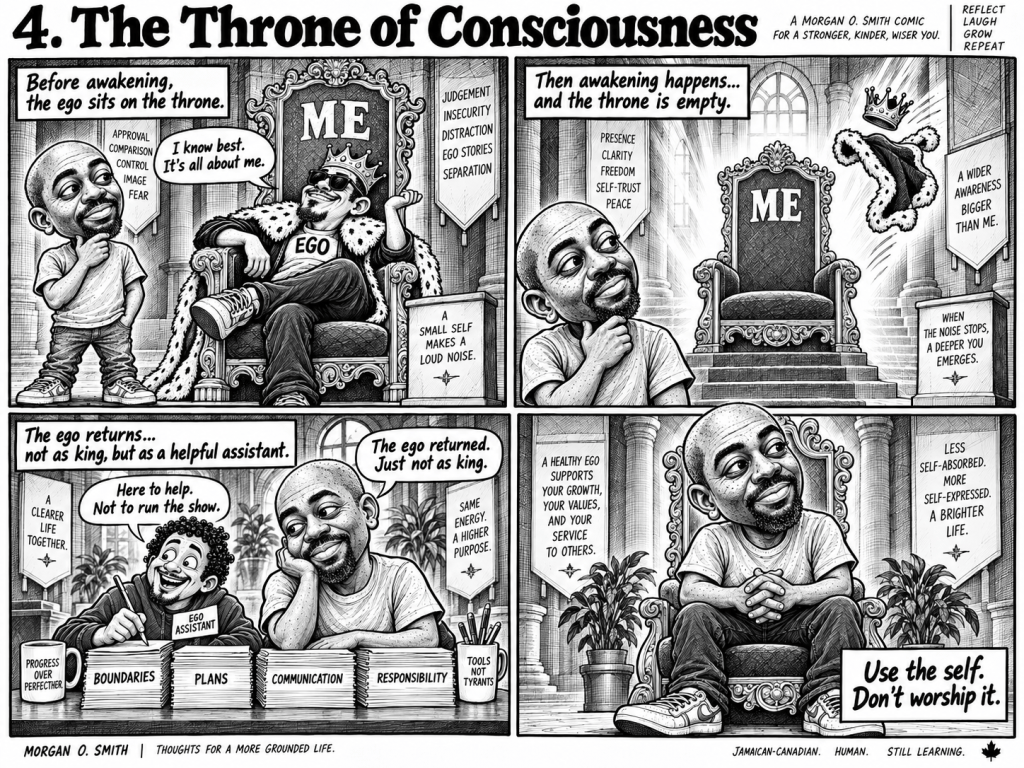
Awakening does not unfold through accumulation but through dissolution. It’s not about adding layers of understanding, but releasing the very framework that holds identity together. Every seeker begins with an “I”—the observer, the experiencer, the one who longs for freedom. Yet that same “I” must eventually surrender its throne.
The paradox lies here: the “I” must decide to release itself. It chooses to let go, though the one who chooses disappears in the act. This gesture is not driven by resistance or desire, but by recognition —an intuitive understanding that attachment to any quadrant is still a form of identification.
The quadrants—I, WE, IT, and ITs—map the totality of human experience: the inner self, the collective, the objective, and the systemic. Each serves a purpose until awakening calls for transcendence. The I is influenced by the ITs—the systems, structures, and conditions of existence. These shape perception and possibility. Through the IT, awareness ripples into the WE, inspiring collective movement. And as the WE shifts, the I is again transformed.
This endless loop of causation refines consciousness but never liberates it. Liberation comes when the loop itself is seen through. When the “I” no longer clings to the role of observer or doer, the quadrants collapse into pure witnessing. There is no longer an experiencer and the experienced, a subject and its object. What remains is unconditioned awareness; the silent axis upon which all quadrants turn.
Awakening, then, is not achieved through effort but through profound surrender. It is the cessation of grasping at identity within any domain—personal, relational, empirical, or systemic. The quadrants remain functional but no longer define reality. They appear and dissolve within the same stillness that has always been awake.
Morgan O. Smith
Get Your Free Copy of My Book, Bodhi in the Brain!