Unveiling Infinity

The Journey Beyond Spiritual Constructs

In the pursuit of spiritual enlightenment, a paradox often emerges: the journey toward liberation can inadvertently become a new form of bondage. It’s an intricate dance where the very tools and practices designed to free us can subtly entangle us in a new web of spiritual identity and attachment. This realization beckons a profound question: how do we liberate ourselves, not just from worldly entrapments, but from the constructs of spirituality itself?

**The Illusion of Spiritual Identity**

Spirituality, in its essence, is a quest for understanding, a search for the absolute truth. However, in this quest, there is a risk of creating a ‘spiritual identity’. This identity, though seemingly elevating, can become a subtle trap. It fosters a sense of separateness – the ‘enlightened’ versus the ‘unenlightened’, the ‘seeker’ versus the ‘found’. To truly transcend, one must recognize this dichotomy as an illusion.

**Dissolving the Constructs**

The path to true liberation involves dissolving these constructs. It’s about transcending not only material attachments but also the conceptual frameworks that spirituality often constructs. This includes letting go of labels, practices, and even the concept of enlightenment itself. It’s a journey into the uncharted territory of pure being, where the mind’s compulsive need to categorize and define is relinquished.


**The Freedom of No Identity**

In this space of ‘no identity’, true freedom is found. It’s a state of existence where one is not defined by spiritual accomplishments, knowledge, or experiences. Here, the individual merges with the totality of existence, experiencing a nondualistic state where the observer and the observed are one. This is the pinnacle of spiritual liberation – a state beyond states, a presence beyond identities.

**Embracing the Void**

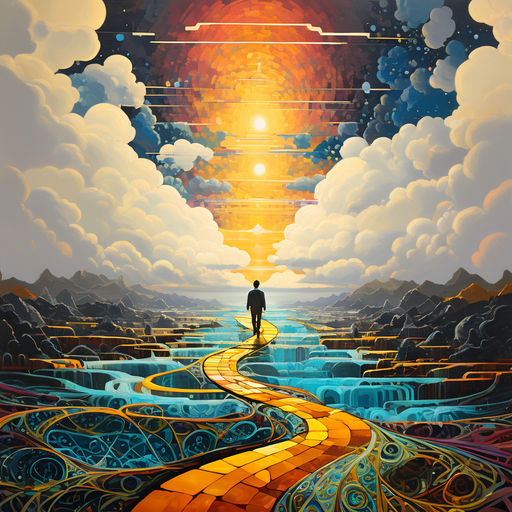
Embracing this void, this absence of identity and construct may initially seem daunting. Yet, it’s in this emptiness that the fullness of life is experienced. It’s a paradox where the absence of everything is the presence of the absolute. In this space, there is no ‘you’ that needs to be enlightened, no path that needs to be followed. There is just the pure, unbounded essence of being.

**Conclusion**

Liberating oneself from everything, including spirituality, is not about discarding spiritual practices or insights. It’s about transcending them, recognizing that they are but signposts to a destination beyond any path’s confines. It’s a journey from form to the formless, from identity to the boundless.

In this liberation, one discovers that the ultimate truth is not something to be attained but realized – the truth that you are not just a part of the universe; you are the universe. This realization is not the end but a new beginning, an invitation to live in the fullness of absolute freedom.

Morgan O. Smith

Yinnergy Meditation, Spiritual Life Coaching & My Book, Bodhi in the Brain…Available Now!

https://linktr.ee/morganosmith


In the Mirror of Divinity

A Journey of Self-Realization

In my spiritual odyssey, I have tirelessly sought the face of God in various places: in the serene sanctuaries of nature, within the hallowed walls of churches, and in the sacred texts brimming with ancient wisdom. Yet, as I ventured deeper into this quest, a startling revelation unfolded – the face of God that I was so fervently seeking was, in fact, a reflection of my own.

This epiphany was not an end but a new beginning, an invitation to explore the divine within the human experience. It compelled me to ask: What does it mean to see the divine in oneself? Is it an echo of ancient philosophies proclaiming that the human and the divine are inseparable? Or is it a testament to the boundless potential within each of us?


The realization that we are mirrors of the divine reshapes our understanding of spirituality. It suggests that the sacred is not solely external, but also internal. It speaks to the potential for transcendence and transformation inherent in human nature. This perspective doesn’t diminish the significance of a higher power; instead, it offers a profound understanding that divinity can also be a deeply personal experience, emanating from within.

Embracing this view unlocks a powerful form of self-realization. It encourages us to look within for guidance, strength, and wisdom. It empowers us to trust in our inner voice and intuition, recognizing them as conduits to the divine. This realization also fosters a deeper sense of responsibility towards ourselves and others, understanding that if the divine is in us, it is also in everyone else.


This journey of self-discovery is not without challenges. It requires us to confront our deepest fears, insecurities, and flaws. It asks us to be introspective, to examine the aspects of ourselves that we might not be proud of. But in doing so, it also offers the opportunity for profound personal growth, healing, and enlightenment.

In conclusion, the discovery that the face of God is akin to our own is not a conclusion but an invitation to a lifelong journey. It’s an exploration of the deepest truths about ourselves and our place in the universe. As we continue on this path, we may find that the distinction between the seeker and the sought becomes ever more blurred, revealing a unity that has existed all along.

Morgan O. Smith

Yinnergy Meditation, Spiritual Life Coaching & My Book, Bodhi in the Brain…Available Now!

https://linktr.ee/morganosmith
Unveiling the Unity

A Deeper Dive into the Essence of Oneness

In the realm of spiritual enlightenment and self-discovery, the distinctions and connections between the notions of sameness, source, and essence often intertwine, leading to profound insights and confounding paradoxes. The journey toward understanding the intricate relationships among these concepts invites us to explore the depths of nonduality, a cornerstone of Eastern philosophy that transcends conventional wisdom and challenges our perception of reality.

**The Illusion of Sameness**


At first glance, the idea that everything and everyone is the same appears to encapsulate the essence of unity. However, this perspective only skims the surface of a far more intricate understanding. It suggests a superficial equality, overlooking the unique expressions and experiences that animate the world. This view, while promoting a sense of universal brotherhood, fails to acknowledge the rich diversity that permeates existence.

**The Depth of Source**

Moving deeper, the realization that all beings and phenomena emanate from the same source introduces a layer of profound connection that sameness alone cannot convey. This shared origin does not erase individual differences but rather celebrates them as expressions of a singular, underlying reality. It is here that we begin to touch the essence of nonduality, recognizing the interconnectedness of all without negating the diversity of the manifest world.


**The Revelation of Being Source**

To say that everything and everyone is source represents a pivotal shift in perception. It is an acknowledgment that the source is not merely an external wellspring from which creation flows but is inherent in every particle of existence. This realization dissolves the illusion of separation, unveiling that at our core, we are not just connected to the divine; we are the divine. This insight invites a radical transformation in how we relate to ourselves, others, and the world around us.

**The Circular Dance of Unity**

The journey comes full circle with the understanding that if everything and everyone is source, then inherently, we are all of the same source, and thus, on a fundamental level, we are the same. This circular logic is not a return to the superficial notion of sameness but an ascent to a higher vantage point from which the interconnectedness of all life is perceived as both the source and manifestation of existence.

**Embracing the Paradox**


The exploration of these concepts is not merely an intellectual exercise but a gateway to transcendent wisdom. It challenges us to embrace the paradoxes of existence: unity and diversity, emptiness and form, the eternal and the ephemeral. By contemplating these truths, we open ourselves to a deeper understanding of the universe and our place within it, fostering a sense of awe and a deeper connection to the mosaic of reality.


**Conclusion**

The path to spiritual awakening and enlightenment is enriched by the contemplation of sameness, source, and essence. Each concept, while distinct, is intricately linked to the others, offering a multifaceted perspective on the nature of existence. As we delve into these themes, we are invited to transcend the ordinary, recognize the divine within and all around us, and awaken to the profound unity that underlies the mosaic of life.

 Morgan O. Smith

Yinnergy Meditation, Spiritual Life Coaching & My Book, Bodhi in the Brain…Available Now!

https://linktr.ee/morganosmith

Embracing the Infinite

Understanding Para Brahman as the Ultimate Reality

God, referred to as Para Brahman in this context, represents the absolute of all absolutes – an entity encompassing everything from the beautiful to the good, the bad, and the ugly. This concept presents a holistic view of divinity, not limited to only the positive or traditionally ‘godly’ aspects but encompassing all facets of existence.

Para Brahman, in many Eastern philosophies, particularly in Hinduism, is seen as the highest form of Brahman – the ultimate reality or cosmic spirit. This interpretation of God goes beyond the traditional Western notion of a deity who is separate from its creation. Instead, Para Brahman is seen as both immanent and transcendent, existing within and beyond all things.

This idea challenges our typical understanding of divinity and morality. It suggests that everything in existence, regardless of our human judgments of good or bad, is part of this ultimate reality. This inclusive view of the divine implies a deeper, perhaps incomprehensible, unity to all aspects of existence.


This perspective can be both comforting and disconcerting. Comforting, because it suggests a universe that is intrinsically connected and purposeful. Disconcerting, because it challenges our notions of morality and justice, blurring the lines between what we typically consider ‘good’ and ‘evil.’

Such a viewpoint can lead to a more compassionate and understanding approach to life. Recognizing that all aspects of existence, including what we perceive as negative or undesirable, are part of a greater whole, can foster a sense of tolerance and empathy. It encourages us to look beyond our immediate judgments and understand the broader context of life’s events.

However, it also raises complex questions about free will, destiny, and the nature of existence. If everything is part of Para Brahman, what does that say about individual agency and the consequences of our actions? Are good and evil just human constructs with no basis in the ultimate reality? These answers lie within.


In conclusion, viewing God as Para Brahman – the absolute of all absolutes – offers a profound and encompassing perspective on divinity and existence. It challenges our conventional views and invites us to contemplate the deeper connections and meanings of all that occurs in our lives and the universe at large.

Morgan O. Smith

Yinnergy Meditation, Spiritual Life Coaching & My Book, Bodhi in the Brain…Available Now!

https://linktr.ee/morganosmith
The Mysterious Connection

Shared Spiritual Awakenings Across the Globe

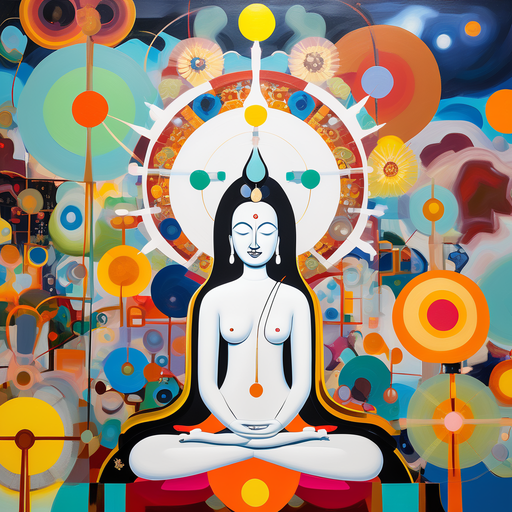
In the realm of spirituality and consciousness, a fascinating phenomenon often goes unnoticed: the simultaneous spiritual awakening experienced by individuals or collectives who have no prior connection. This concept transcends geographical boundaries, cultural differences, and social constructs, suggesting a profound and mystifying link within the human spirit.

Imagine a person in a bustling city experiencing a profound spiritual realization at the same moment as someone in a remote village. They have never met, and their lives are vastly different, yet their inner worlds are undergoing a similar transformation. How can two people, so far apart and disconnected, share such an intimate spiritual journey at the same time?

This phenomenon raises numerous questions about the interconnectedness of human consciousness. Is there an invisible thread that binds us together on a spiritual level? Could these simultaneous awakenings be evidence of a collective consciousness that we are all a part of? This concept echoes the theories of Carl Jung, who spoke of the “collective unconscious,” a shared reservoir of experiences inherent in everyone.


The implications of such synchronicities are both vast and deeply personal. They hint at a universe far more interconnected than we realize, where our spiritual journeys might be part of a larger, cosmic narrative. It challenges the staunch materialist view of the world and invites us to consider the possibility of a more spiritual, interconnected existence.

However, this idea is not without controversy. Skeptics argue that such experiences are mere coincidences, lacking scientific basis or empirical evidence. They question the reliability of subjective spiritual experiences, suggesting that these perceived connections are products of the human mind’s tendency to find patterns and meaning where none exist.

Despite the skepticism, those who have experienced these shared awakenings often describe them as deeply transformative, instilling a sense of unity and interconnectedness with the world. Whether or not these experiences can be scientifically validated, they continue to be a source of wonder, inspiration, and spiritual exploration for many.


In a world increasingly divided by physical and ideological boundaries, the idea of a shared spiritual experience suggests a more profound unity among humanity. It beckons us to look beyond our differences and consider the possibility that on a deeper, spiritual level, we are all inextricably linked.

What are your thoughts? Have you ever felt a connection with someone you’ve never met, perhaps a shared moment of realization or awakening? Share your experiences and insights in the comments below.

Morgan O. Smith

Yinnergy Meditation, Spiritual Life Coaching & My Book, Bodhi in the Brain…Available Now!

https://linktr.ee/morganosmith

The Paradox of Enlightenment

Embracing the Limitless Self

In the quest for enlightenment, a paradox often emerges. We strive to reach a state of higher understanding, yet the moment we claim to have achieved enlightenment, we inadvertently confine ourselves within the very boundaries we sought to transcend. This pursuit reveals a fundamental truth about our nature and existence: what we truly are is inherently free from all limitations.

When we label ourselves as ‘enlightened,’ we inadvertently create a new identity, another cage for our boundless spirit. This declaration is a subtle form of ego, a self-imposed limitation that contradicts the essence of enlightenment itself. True enlightenment is not about attaining a label or reaching a destination; it’s an ongoing journey of self-discovery and liberation from all forms of identification.

Consider the concepts of ‘The Self’ and ‘No Self.’ These are often seen as opposing philosophies in spiritual and philosophical discourse. ‘The Self’ suggests a profound connection with a universal, eternal essence, while ‘No Self’ leans towards the idea of emptiness, the absence of a permanent, unchanging self. However, to define oneself as either is to miss the point entirely.


The essence of our being transcends these concepts. It’s not about being one or the other but encompassing and moving beyond both. We are neither solely ‘The Self’ nor ‘No Self.’ Instead, we exist in a state that includes both yet is not limited by either. This state is not a static endpoint but a dynamic, ever-evolving understanding of our true nature.

In this space, we recognize that labels, identities, and even the concept of enlightenment itself are mere tools for understanding, not the ultimate truth. Our true essence is like the sky—vast, boundless, and untouched by the clouds that drift through it. We are the silent observers, the consciousness that witnesses thoughts, emotions, and sensations without becoming them.

To truly embrace this state of being, one must continuously practice letting go of all attachments, identities, and beliefs. It’s a journey of unbecoming, peeling away layers of conditioned thought and societal constructs to reveal the pure, unadulterated essence of our being.


In conclusion, the journey to understanding what we truly are is not about acquiring a new label or reaching a definitive state of being. It’s about the continuous process of freeing ourselves from all limitations, labels, and identities. It’s about recognizing and embracing the boundless nature of our existence, which includes and transcends all dualities.

Morgan O. Smith

Yinnergy Meditation, Spiritual Life Coaching & My Book, Bodhi in the Brain…Available Now!

https://linktr.ee/morganosmith

Embracing the Infinite

Understanding Para Brahman

In the realm of spiritual exploration and philosophical contemplation, the concept of Para Brahman stands as a profound enigma. It is a term that transcends the limits of our typical understanding, pushing us into the depths of what might be considered the ultimate reality.

Para Brahman, in its essence, is the embodiment of the formless and the infinite. It is not confined by the physical dimensions we are accustomed to, such as length, height, depth, or width. This absence of form extends beyond the physical, into the realms of emotion, thought, and even the metaphysical. It is devoid of texture, distance, time, space, feelings, emotions, senses, attachments, desires, thoughts, memories, anticipation, smell, temperature, relationships, distinctions, wants, needs, and regrets. This extensive list, however, is not exhaustive but indicative of the boundless nature of Para Brahman.

What makes this concept both intriguing and challenging is the paradox it presents. Para Brahman, while being beyond all these attributes and perceptions, simultaneously encompasses everything that has been mentioned. It is not just the absence but also the presence of all. This paradox forces us to rethink our understanding of existence and non-existence, presence and absence, form and formlessness.


How can something be everything and nothing at the same time? This question lies at the heart of understanding Para Brahman. It compels us to look beyond the dualities that dominate our everyday experiences. In this sense, Para Brahman is not just a concept but an invitation to experience reality in its most unadulterated form.

This exploration is not just an intellectual exercise but a journey toward self-realization. It challenges our deeply ingrained notions of what is real and what is illusion. By contemplating Para Brahman, we delve into a state of consciousness where the distinctions that define our usual experiences dissolve. In this state, we are neither bound by our desires nor limited by our perceptions.

The understanding of Para Brahman brings us to the cusp of spiritual awakening, where the individual self merges with the universal self. It is a state of being that many spiritual traditions aim to realize – a state of pure consciousness, unmarred by the transient nature of physical existence.


In conclusion, the concept of Para Brahman invites us to embark on a journey beyond the confines of our material and psychological limitations. It encourages us to experience the world not just through our senses and thoughts but through a profound understanding of the interconnectedness and the boundlessness of all existence.

Morgan O. Smith

Yinnergy Meditation, Spiritual Life Coaching & My Book, Bodhi in the Brain…Available Now!

https://linktr.ee/morganosmith
Exploring the Concept of ‘The Absolute’

In Philosophy and Spirituality

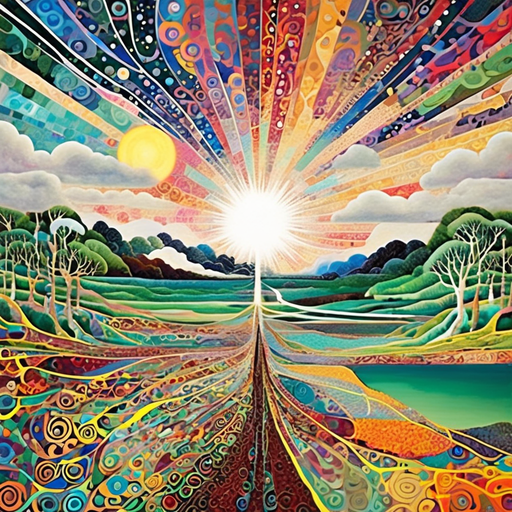
The notion of ‘The Absolute’ is a profound and enigmatic concept that has intrigued philosophers, theologians, and spiritual seekers for centuries. At its core, The Absolute represents the ultimate reality or truth that transcends ordinary understanding. It is often described as the ever was, the ever is, and the ever shall be, encompassing the past, present, and future in a singular, unified existence.

This concept is not confined to any one religion or philosophical system. It is found in various forms across different cultures and spiritual traditions. In Hindu philosophy, it is known as Brahman, an unchanging, infinite, immanent, and transcendent reality that is the source of everything. Brahman is the ultimate cause and foundation of all existence.


In Buddhism, particularly in its Theravada tradition, the concept of Anatta or ‘non-self’ echoes a similar idea. Anatta suggests that living beings have no unchanging, permanent self, soul, or essence. It points to a kind of Absolute that is devoid of individual identity, yet underpins the nature of existence.

Similarly, in Islamic theology, Allah is the Absolute, encompassing all attributes and beyond all human understanding. Allah is the ultimate reality, creator, and sustainer of the universe, beyond all temporal and spatial limitations.


In Christian mysticism, the term ‘God’ often transcends the anthropomorphic deity figure, representing instead an Absolute that is the ground of all being. This idea is also seen in other forms of monotheism and panentheism, where God is understood as both immanent and transcendent, existing within and beyond the universe.

The concept of ‘The Absolute’ also finds a parallel in Western philosophy, particularly in the idea of Absolute Monism. This philosophy posits that there is only one underlying reality, and all diversity and plurality we observe are merely manifestations of this singular existence.


At the heart of these diverse interpretations is a common thread: The Absolute is the ultimate reality, beyond the grasp of human thought and language, transcending our limited perceptions of time and space. It is a concept that challenges us to look beyond the material and ephemeral world, urging us to ponder the mysteries of existence and the universe.

In exploring ‘The Absolute,’ we delve into the deepest questions of life and existence. It’s a journey that takes us beyond the boundaries of conventional thought, into the realms of spirituality and metaphysical contemplation.

Morgan O. Smith

Yinnergy Meditation, Spiritual Life Coaching & My Book, Bodhi in the Brain…Available Now!

https://linktr.ee/morganosmith
Transcending the Mind

A Journey into the Realms of True Reality

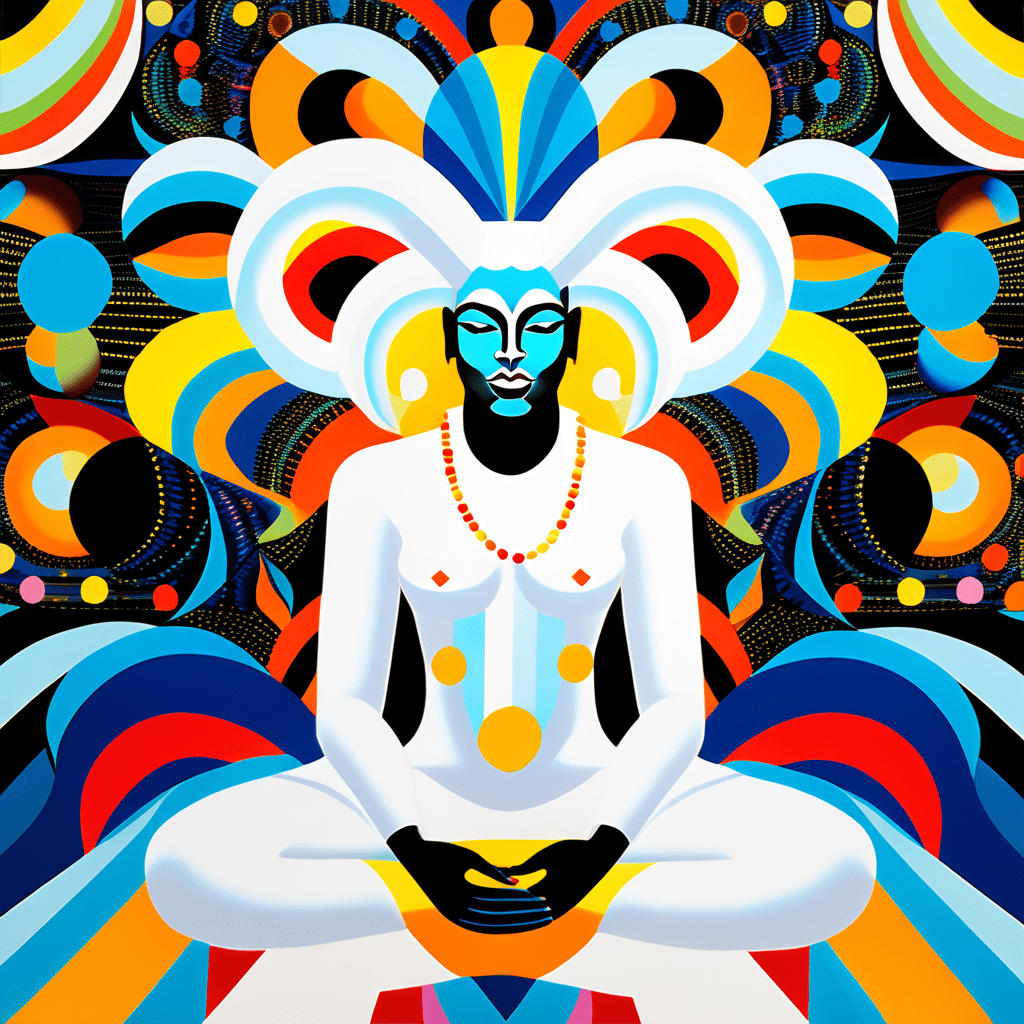
In the labyrinth of human existence, there lies a profound truth that often remains hidden beneath layers of perception and thought: the essence of reality as it truly is, unfiltered and pure. This realization dawns only when the mind transcends its boundaries, stepping beyond the constraints of its conditioned patterns and habitual ways of thinking.

The mind, a magnificent tool for navigation in the physical world, is often shackled by its creations – thoughts, beliefs, and assumptions. These mental constructs, while useful, can also act as barriers, filtering and altering reality as it presents itself to us. The journey towards understanding true reality thus begins with a paradoxical task: using the mind to transcend the mind.

In this transcendence, one experiences a shift in perspective. What was once seen as absolute may reveal its relativity. The solid ground of ‘facts’ might turn into a dance of possibilities. This isn’t a disavowal of logic or reason, but an expansion of them. It’s an acknowledgment that reality, in its vastness, cannot be fully contained within the confines of human thought.

What emerges from this transcendental experience is a sense of profound connection. The boundaries that separate the self from the universe begin to blur. In this state, one doesn’t just observe reality; one becomes a part of it, engaged in a harmonious dance where the distinction between the observer and the observed diminishes. It’s a state where the ego dissolves, and in its place arises a sense of unity with all existence.

This journey is not about acquiring new knowledge but about unlearning what obstructs the vision of reality. It’s about silencing the incessant chatter of the mind to listen to the silence that speaks volumes. In this silence, reality reveals itself not as a concept to be grasped but as an experience to be lived.

As we embark on this journey of transcending the mind, we open ourselves to a reality that is more vivid, more alive, and infinitely more profound than our habitual ways of seeing can allow. It’s a journey from the illusion of knowing to the wisdom of understanding, from the confinement of the mind to the liberation of consciousness.

In this exploration, we find not just the essence of reality but also the essence of ourselves, as beings intrinsically connected to the vast, intricate tapestry of existence. We discover that in transcending the mind, we don’t lose ourselves; we find ourselves in everything.

Morgan O. Smith

Yinnergy Meditation, Spiritual Life Coaching & My Book, Bodhi in the Brain…Available Now!

https://linktr.ee/morganosmith


Beyond Duality

Exploring Nondual Experiences and Awakenings

**Introduction**:
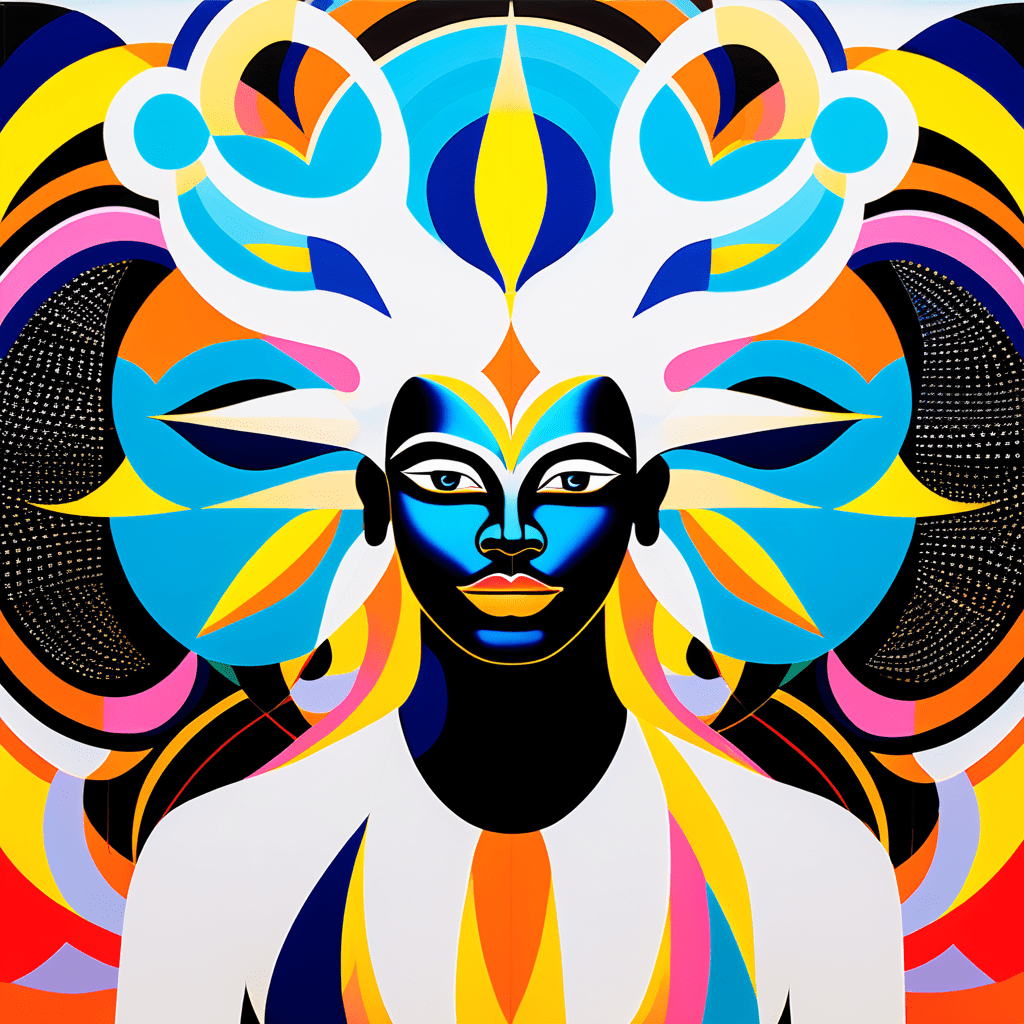
In spiritual exploration, nondual experience and nondual awakening emerge as pivotal elements in understanding the nature of consciousness and reality. Often used interchangeably, these terms hold distinct meanings and implications for those on a spiritual path. This blog post aims to unravel the differences and delve deeper into the profound implications of nondual experiences and awakenings.

**Nondual Experience – A Glimpse Beyond the Veil**:
Imagine a moment where all distinctions between you and the world dissolve. This is the essence of a nondual experience. It’s a temporary state where the conventional boundaries of self and other, inside and outside, cease to exist. Such experiences often occur during deep meditation, contemplative practices, or even in spontaneous moments of profound insight. They offer a fleeting yet intense glimpse into a state of unity and interconnectedness, challenging our usual perception of reality. However, as profound as these experiences are, they are transient and do not necessarily result in a permanent shift in understanding or consciousness.

**Nondual Awakening – The Enduring Shift**:
Contrastingly, a nondual awakening is not just a momentary experience but a fundamental transformation. It represents a deep and lasting shift in how one perceives and interacts with reality. In this awakened state, the illusion of a separate self is continuously seen through. This awakening brings about a sustained awareness where separation is transcended, not just in isolated moments, but as a continuous experience in daily life. It marks a paradigm shift from a life experienced through the lens of duality to one of ongoing nondual perception.

**The Journey from Experience to Awakening**:
While a nondual experience can be a catalyst for a nondual awakening, the journey from one to the other is often gradual and requires deep inner work and exploration. The fleeting insights provided by nondual experiences can sow the seeds for the more profound, sustained realization of nondual awakening. This journey involves not only the mind but also the heart and soul, leading to a comprehensive transformation in one’s approach to life and existence.


**Conclusion**:
The exploration of nonduality, whether through transient experiences or enduring awakenings, offers a radical shift in understanding the nature of self and reality. These moments of insight and periods of transformation challenge our conventional perceptions and invite us to experience life beyond the limitations of duality. For those on a spiritual path, understanding and integrating these experiences can be a gateway to a more profound, interconnected existence.

Morgan O. Smith

Yinnergy Meditation, Spiritual Life Coaching & My Book, Bodhi in the Brain…Available Now!

https://linktr.ee/morganosmith