Embracing the Ephemeral

The Paradox of Change and Nothingness

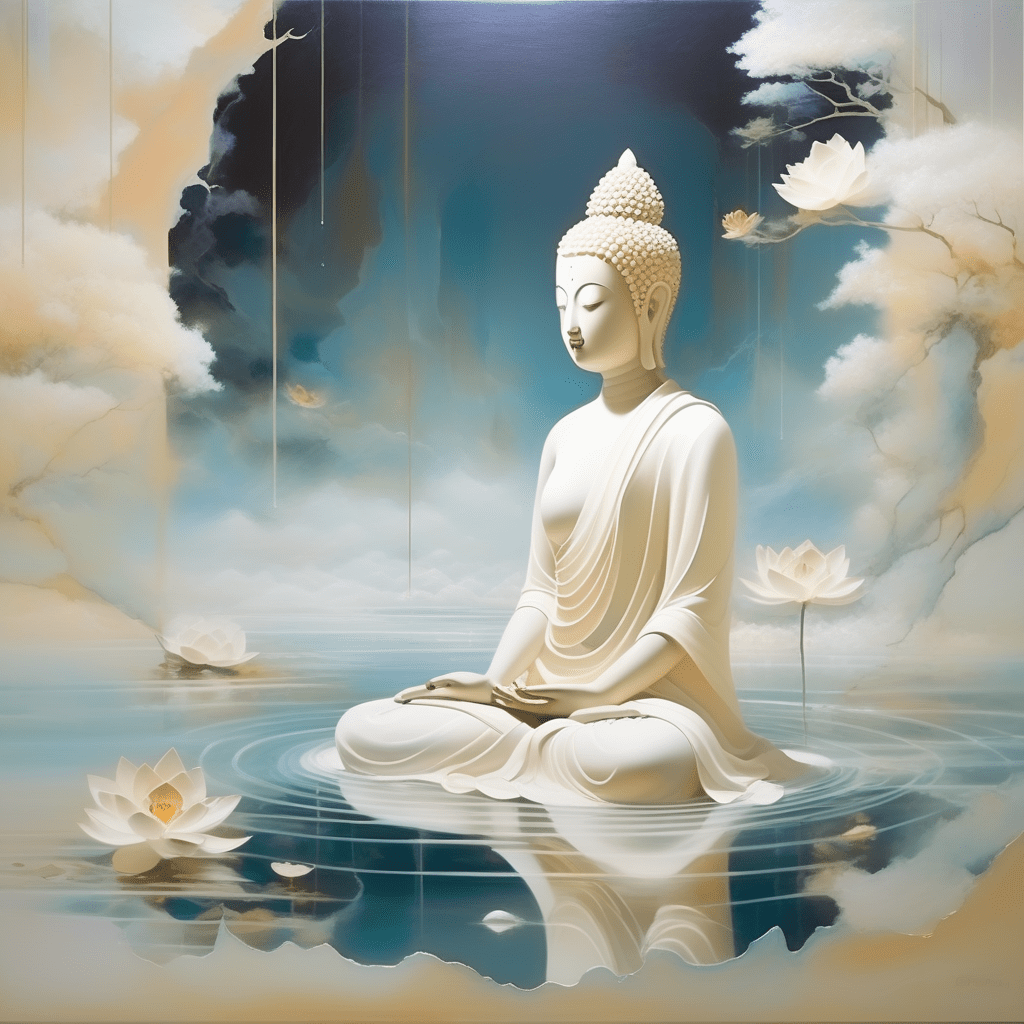
In the realm of existence, the notion that “Nothing is permanent” stands as a profound truth. This phrase, seemingly simple, unravels layers of complexity upon closer inspection. It posits that permanence is an illusion, a transient shadow in the vast continuum of time. The paradox lies in the statement that the only thing permanent is “Nothing.” This “Nothing” is not a void or absence, but a canvas upon which the tapestry of life is constantly being redrawn.

The permanence of “Nothing” implies that change is the only constant. Change, in this context, is both the action and the result of “nothing happening.” It is the dynamic force that propels the universe forward, ensuring that no moment is identical to the last. This constant evolution is what makes life both unpredictable and beautiful. It challenges our understanding of reality, pushing us to accept that what we see as solid and enduring is, in fact, fleeting and malleable.


However, this notion of change does not imply chaos or lack of order. Instead, it suggests a universe governed by the laws of transformation, where each ending is a prelude to a new beginning. In this perpetual cycle, decay gives way to growth, and destruction paves the way for creation. This eternal dance of creation and dissolution is the essence of existence, a reminder that life, in all its forms, is a journey of continuous metamorphosis.

Moreover, the concept of “Nothing” as a permanent state offers a deeper, more philosophical insight. It invites us to ponder the nature of existence and our place within it. Are we, as human beings, mere transient entities caught in the flux of change? Or do we possess an enduring essence that transcends the physical realm? These questions lie at the heart of our search for meaning and purpose in an ever-changing world.


In conclusion, the statement “Nothing is permanent. The only thing that is permanent is Nothing” is more than a mere play on words. It is a profound reflection on the nature of existence, a reminder of the impermanence of the physical world, and an invitation to seek deeper understanding beyond the tangible. It encourages us to embrace change, not as a force of disruption, but as the fundamental essence of life itself.

 Morgan O. Smith

Yinnergy Meditation, Spiritual Life Coaching & My Book, Bodhi in the Brain…Available Now!

https://linktr.ee/morganosmith

Brahman as the Ultimate Reality

In the realm of philosophical and spiritual inquiry, the concept of Brahman stands as a profound cornerstone, especially within the nondual traditions of Eastern philosophy. Brahman, as perceived through this lens, is not just an abstract concept but the very essence of reality itself—a reality that transcends the ordinary experiences of separation and duality which dominate our everyday lives.

At the heart of this understanding is the recognition that there is a fundamental oneness underlying all existence. This oneness, Brahman, is the eternal, unchanging truth that pervades every aspect of the universe. It’s an understanding that challenges the notion of individuality, as it posits that the deepest essence of our being, the Atman, is not separate from Brahman. In this view, the individual self and the universal self are not two but one.


This realization brings us to the experience of Sat-Chit-Ananda. These Sanskrit words translate to ‘existence, consciousness, and bliss.’ When one recognizes that their true nature is Brahman, they experience an unshakeable existence that is beyond birth and death, a consciousness that is vast and all-encompassing, and a bliss that transcends all worldly pleasures and pains.

The journey to this realization is deeply personal and transformative. It involves peeling away the layers of illusion or Maya that cause us to see ourselves as separate from the rest of existence. Through various practices such as meditation, self-inquiry, and devotion, one can gradually come to the direct experience of this truth.


The implications of this realization are vast. In seeing all beings and things as expressions of the same ultimate reality, our approach to life, our values, and our interactions with others undergo a profound shift. Compassion, empathy, and a sense of connectedness naturally arise when one sees themselves in others and others in themselves.

In conclusion, the concept of Brahman as the ultimate reality invites us to look beyond the surface of our experiences and question the very nature of existence. It’s a journey that leads us not only to deep philosophical understanding but also to a transformation of our entire being.

Morgan O. Smith

Yinnergy Meditation, Spiritual Life Coaching & My Book, Bodhi in the Brain…Available Now!
https://linktr.ee/morganosmith


The Dance of the Cosmos

Understanding the Interconnectedness of Existence

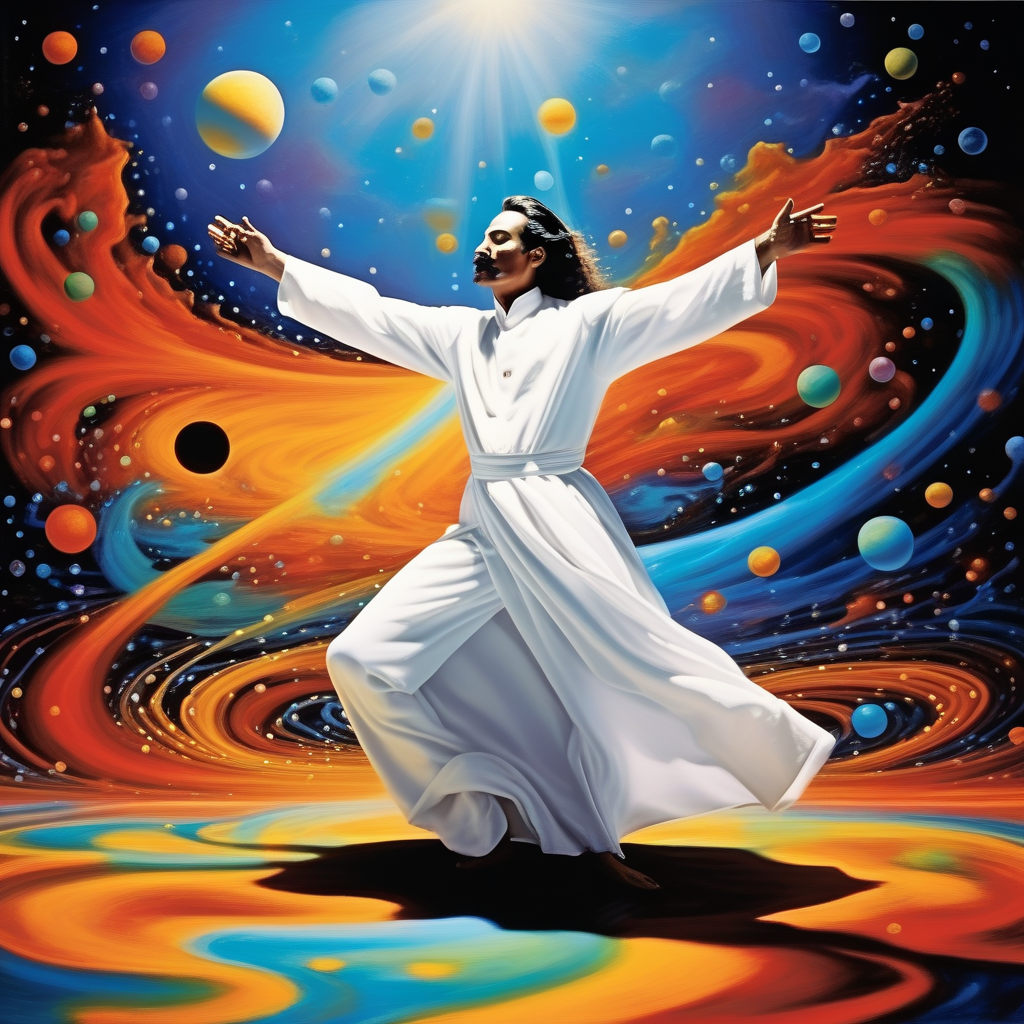
In the grand tapestry of existence, every thread is intricately woven into a larger, more complex pattern. This pattern, a vibrant mosaic of life and energy, highlights the profound interconnectedness of all things in the universe. It is a concept that transcends mere physicality, inviting us to explore the deeper spiritual and metaphysical aspects of our existence.

At the heart of this interconnectedness is the idea that everything in the universe, from the smallest particle to the vastest galaxy, is an expression of divine creativity. This perspective offers a profound sense of unity and harmony, suggesting that every element of the cosmos, including ourselves, is part of a larger, purposeful whole.


The physical universe, in this view, is not a static entity but a dynamic and ever-changing phenomenon. It is characterized by a continual process of transformation, a cycle of dying and rebirthing that underlines the concept of eternal renewal. This cyclical nature of existence echoes in every aspect of our lives, reminding us that change and transformation are not only inevitable but also essential components of the cosmic dance.

In this cosmic scheme, each element plays a crucial role. Like individual notes in a grand symphony, every aspect of the universe contributes to the creation of a harmonious and balanced whole. This interconnectedness implies a deep responsibility: our actions, thoughts, and beliefs have far-reaching consequences, influencing not only our immediate environment but also the broader fabric of existence.


Understanding and embracing this interconnectedness can lead to a more conscious and intentional way of living. It encourages us to recognize the impact of our actions, to live in harmony with the natural world, and to cultivate a sense of compassion and empathy for all beings. It’s a call to see beyond the illusion of separation and to acknowledge our role in the ongoing creation and evolution of the universe.

In conclusion, the concept of interconnectedness in existence is not just a philosophical idea; it’s a call to action. It invites us to participate actively in the cosmic dance, to embrace change, and to contribute positively to the ongoing saga of the universe. By recognizing our interconnected nature, we can find a deeper sense of purpose, belonging, and unity.


Morgan O. Smith

Yinnergy Meditation, Spiritual Life Coaching & My Book, Bodhi in the Brain…Available Now!

https://linktr.ee/morganosmith

Inner Flame

The Dual Paths to Spiritual Enlightenment

Spiritual enlightenment is often perceived as the pinnacle of human consciousness, a state of profound insight and understanding that transcends ordinary perception. But is this enlightenment an attainment through arduous pursuit, or is it a state into which some are born?

The notion of being born spiritually enlightened is intriguing. It implies an intrinsic connection with the divine, an innate wisdom that does not require the rigours of spiritual discipline to uncover. This concept is not new; various traditions speak of souls incarnating with a certain level of spiritual awareness, suggesting that enlightenment is a continuing journey across lifetimes rather than a single life’s goal.


On the other hand, the pursuit of spiritual enlightenment is a cornerstone of many religious and philosophical systems. It is seen as a process of transformation, involving practices such as meditation, self-inquiry, and ethical living. This path suggests that enlightenment is not a starting point but a destination, reached through the cultivation of consciousness and the shedding of ignorance.

The difference between these perspectives raises profound questions. Is enlightenment a universal potential, available to all who seek it, or is it a rarefied state, the birthright of only a chosen few? The journey towards enlightenment, for many, involves peeling back the layers of personal illusion and societal conditioning to reveal a truth that is said to be ever-present, not granted or achieved but realized.


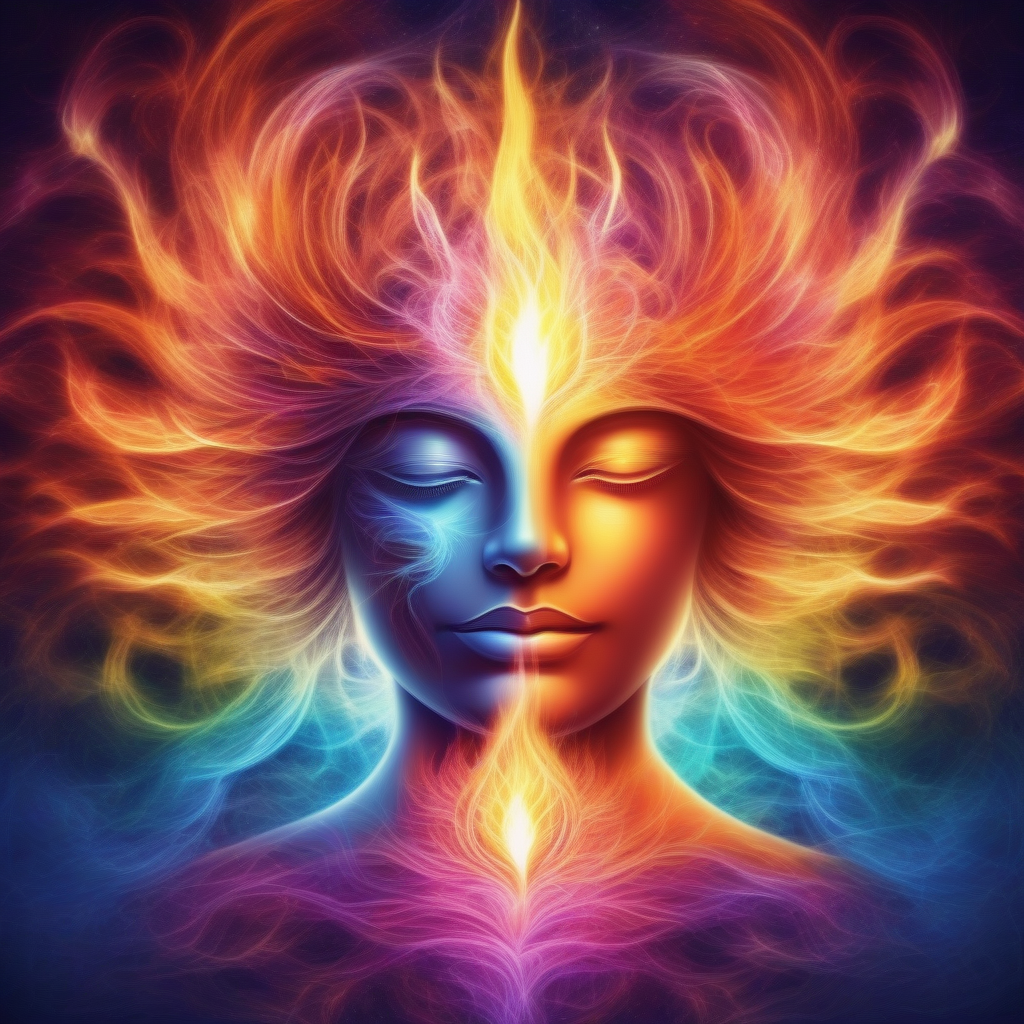
This duality of enlightenment — as both an inherent state and an achievement — reflects the complexity of the human spirit. Perhaps the truest answer lies in the synthesis of both views: that we are all born with a spark of the divine, yet it is through living, learning, and loving that we fan this spark into a flame bright enough to illuminate the depths of our being.

Morgan O.  Smith

Yinnergy Meditation & My Book, Bodhi in the Brain…Available Now!

https://linktr.ee/morganosmith

Illuminating the Mind

The Dual Paths of Enlightenment and Spiritual Awakening

The quest for Enlightenment has been the pinnacle of human aspiration in various domains—intellectual, ethical, and spiritual. At the heart of this quest lies the promise of awakening, a transformative experience that propels an individual beyond the ordinary perception of existence. Yet, despite the shared terminology, Enlightenment and Spiritual Enlightenment diverge on fundamental grounds, embodying distinct trajectories in the pursuit of truth and self-realization.

Enlightenment, in its classic Western sense, refers to the age of reason that dawned in the 17th and 18th centuries. This period was marked by a surge in philosophical thinking, scientific discovery, and the push for political and individual freedoms. It was an era where human intellect, armed with skepticism and inquiry, sought to dispel the shadows of ignorance and dogma. The Enlightenment’s legacy is one of empowered rationality, urging humanity to harness knowledge as the light to guide society toward progress and civilization.

In contrast, Spiritual Enlightenment is an Eastern siren call that echoes through the annals of various religious and metaphysical traditions. It is not merely an expansion of knowledge but a profound transformation of consciousness. Spiritual Enlightenment implies an experiential realization of oneness with the ultimate reality. It is often depicted as the dissolution of the individual ego, a leap into the boundless ocean of divine essence, which exists beyond the material plane and the constructs of intellectual thought.

The distinction between these two is as significant as it is subtle. The Enlightenment champions the mind’s ability to question, to deduce, and to construct, seeking freedom from external tyranny. Meanwhile, Spiritual Enlightenment seeks liberation from the internal chains of desire, ego, and illusion, focusing on transcending the self rather than actualizing it.

One could argue that the paths are not mutually exclusive but are rather complementary. The enlightened mind that questions and reasons can pave the way for a deeper spiritual quest by clearing the underbrush of superstition and prejudice. Conversely, a spiritually awakened soul may view the dance of creation with a profound sense of peace and interconnectedness, bringing a compassionate perspective to the rational world.

In a broader sense, both forms of enlightenment are beacons of human aspiration. Whether it is the light of reason or the glow of spiritual wisdom, each seeks to illuminate the human experience profoundly. It is perhaps in the convergence of these paths that one may find the truest sense of enlightenment—a holistic awakening that marries the mind’s brilliance with the heart’s intuitive depths.

In conclusion, while the Enlightenment speaks to the power of human intellect and the value of empirical truth, Spiritual Enlightenment invites us to explore the mystical depths of our being and the universe. Together, they form a bidirectional odyssey of enlightenment that continues to inspire and challenge humanity to rise above its primal origins and embrace a more illuminated state of existence.

Morgan O.  Smith

Yinnergy Meditation & My Book, Bodhi in the Brain…Available Now!

https://linktr.ee/morganosmith

The Never-Ending Marathon of Spirituality

Many compare life to a race. We’re told to run fast, be the first, and not fall behind. But what if life, particularly the spiritual journey, isn’t about finishing first or even finishing at all? What if it’s a marathon that never ends, where every finish line is simply a starting point for another, deeper quest?

Walking the spiritual path can feel like running a marathon that goes on infinitely. Just when you think you’ve attained enlightenment or reached a higher state of consciousness, another level unfolds. This isn’t to say progress isn’t made, but rather that true spiritual growth is an ever-evolving, never-ending process.

In traditional races, runners have a clear goal: to reach the end as swiftly as possible. But on the spiritual path, the destination is less defined. One might even argue there is no destination. Instead, it’s a continual journey of self-discovery, of understanding, of peeling back layers to find the core of one’s true self.

The beauty of this endless marathon is not in reaching a finish line but in the journey itself. Every step, every challenge, and every revelation is an opportunity for growth and transformation. The hurdles faced along the way aren’t obstacles but lessons, guiding us towards deeper understanding.

In embracing this never-ending journey, we come to see that it’s not about “finishing” or “winning.” It’s about embracing the unknown, learning, evolving, and most importantly, enjoying every step. After all, isn’t the joy of running not in the end but in the very act itself?

When we shift our perspective from a race with an endpoint to a journey without one, we open ourselves to infinite possibilities and depths of understanding. It’s a liberating realization that our spiritual evolution is limitless, bound only by our willingness to keep moving forward.

In conclusion, while the marathon of spirituality may not have a finish line in the traditional sense, it offers something far more valuable: the promise of endless growth, self-discovery, and a deeper connection to the universe and ourselves. So, lace up your spiritual sneakers and embrace the never-ending journey. Because in this marathon, the real prize is the journey itself.

Morgan O.  Smith

Yinnergy Meditation & My Book, Bodhi in the Brain…Available Now!
https://linktr.ee/morganosmith

The Environment’s Role in Spiritual Growth

Spiritual growth is an inward journey that involves deepening self-awareness, a connection to a higher purpose, and a pursuit of inner peace and enlightenment. Though one might perceive spiritual growth as purely internal, the environment plays an instrumental role in shaping this voyage.

**The Outer Reflects the Inner**:
Spirituality isn’t limited to the realm of meditation, prayers, or religious practices. It’s also about understanding oneself to the larger world. The environment serves as a mirror, reflecting the chaos or calm we feel within. A serene setting, like a tranquil forest or a quiet beach, can provide the space needed for introspection, while a tumultuous environment might challenge and refine our spiritual resilience.

**The Playground of Experiences**: Our experiences, heavily influenced by our environment, serve as lessons that guide our spiritual evolution. Facing economic hardships might teach us humility and gratitude while being in a nurturing emotional environment can facilitate feelings of love and empathy. Each environment, with its unique challenges and blessings, offers distinct lessons for our soul’s growth.

**Environmental Genetics and The Enlightened Individual**:
Modern scientific understanding acknowledges that both genes and the environment play roles in determining our characteristics. This interplay is also valid for spiritual inclinations. An individual with a genetic predisposition towards introspection and an environment that encourages self-reflection might have a smoother path toward enlightenment. Conversely, someone genetically predisposed to anxiety but raised in a supportive environment might learn to channel that anxiety into a deeper spiritual quest.

Yet, it’s crucial to remember that enlightenment isn’t a one-size-fits-all concept. The combination of genetics and environment produces a spectrum of enlightened individuals, each with unique strengths, perspectives, and wisdom to offer.

### Balancing Agency with Environmental Influences

While the environment significantly shapes us, spiritual growth also involves recognizing and exercising our agency. It’s about acknowledging environmental influences while taking proactive steps to seek experiences and environments that align with our spiritual goals.

For many, this might mean seeking spiritual communities, immersing oneself in nature, or actively creating a personal sanctuary that facilitates inner reflection and growth. For others, it might involve challenging and transforming their environments.

In conclusion, the environment isn’t just a backdrop against which the drama of life unfolds; it’s an active participant, a teacher, a mirror, and a guide on our spiritual journey. Recognizing its influence can empower us to harness its lessons, navigate its challenges, and embark on a more profound, fulfilling spiritual voyage.

Morgan O.  Smith

Yinnergy Meditation & My Book, Bodhi in the Brain…Available Now!
https://linktr.ee/morganosmith

Blossoming Through Darkness

The Transformation of Negative Traits Through Spiritual Enlightenment

In the journey of spiritual growth, negative traits often serve as impediments, obscuring the path toward enlightenment. Interestingly, these very traits—anger, envy, impatience, and so forth—harbour within them the seeds of their opposites. It’s through the understanding and maturation of these seeds that we can transcend our internal limitations and witness a splendid reversal: the blossoming of negative into positive.

Consider anger, often erupting unbidden and wielding the potential to unleash chaos within interpersonal relationships. Underneath this fiery emotion may lie suppressed pain or unmet needs. As one treads upon the spiritual path, understanding, and embracing this underlying pain is crucial. The eventual enlightenment brings forth patience and compassion, the antithesis of unrestrained ire, nurturing an environment where harmonious relationships can thrive.

Similarly, envy, a profound discomfort at another’s fortune, can be seen as a distorted reflection of admiration and a hidden desire for growth. Through the mirror of spiritual enlightenment, envy transmutes into inspiration, where another’s success becomes a beacon of possibility and motivation, devoid of malice and bitterness.

This remarkable transition from negative to positive is not automatic but rather a potential waiting to be unlocked through deliberate spiritual practice and mindful self-reflection. The moment of spiritual enlightenment does not merely extinguish negative traits but transforms them, allowing an individual to experience their opposites in their fullest expression.

In the deepest troughs of our negative traits lie hidden the peaks of their opposites, waiting to be scaled and unveiled through spiritual maturation. Enlightenment allows us to perceive and navigate this transformation with wisdom, enabling the innate potential of these traits to fully blossom into their most constructive and uplifting expressions.

Morgan O.  Smith

Yinnergy Meditation & My Book, Bodhi in the Brain…Available Now!

https://linktr.ee/morganosmith

The Expansive Self

Beyond the Boundaries of Individual Identity

In the vast tapestry of human experience, one of the most profound and transformative realizations is the awakening to a sense of identity that stretches far beyond the individual self. This philosophical journey, explored by thinkers, mystics, and seekers throughout history, offers an exploration into the very essence of what it means to be human, and more profoundly, what it means to be a part of the cosmos.

### The Layers of Self

**1. The Individual Identity**: Our daily lives are governed by our personal experiences, histories, and beliefs. This individual self, encapsulated by our distinct personalities, desires, and aspirations, is like a drop in the vast ocean of existence.

**2. The Collective Identity**: There are moments, often inspired by shared experiences, when we resonate with a group, whether based on nationality, religion, or shared purpose. Here, the boundaries blur slightly, and the drop becomes a wave, united in its motion with other droplets.

**3. The Universal Self**: Delving deeper, we encounter a realm where the wave realizes it’s not just a part of the ocean, but the ocean itself. This vast sense of identity, encompassing all of life, the universe, and the myriad forms within it, is an experience of unity and oneness with all that exists.

### The Power of Oneness


With an expanded identity, empathy and compassion naturally flourish. The pain and joy of another are no longer abstract experiences; they become deeply personal as if they were our own. This profound interconnectedness also extends to nature, leading to an intrinsic desire to safeguard the environment and all its inhabitants.

Moreover, as one navigates this expanded identity, the grip of personal desires and ego-based needs loosens. Life begins to flow with an acceptance of its unfolding mystery, reducing resistance and enhancing serenity.

### Mystical Insights and Modern Science

Historically, mystics from various traditions spoke of experiences of union with the divine, the universe, or the underlying essence of reality. Today, intriguingly, modern science, especially in fields like quantum physics, hints at ideas of interconnectedness and non-locality. Such insights suggest that the ancient intuitions of interconnectedness may have parallels in our current understanding of the cosmos.

### Challenges of the Expansive Self


However, this journey is not without its pitfalls. As we embrace a broader sense of self, there’s the risk of “spiritual bypassing” – a tendency to use these expansive realizations to sidestep personal issues or challenging emotions. An expansive identity doesn’t negate personal responsibilities or the need for personal boundaries. It invites a deeper engagement with life in all its complexity.

### Conclusion

Our identity’s evolution, from a solitary droplet to the vast ocean, is a journey of consciousness and profound realization. It reminds us that beneath the multiplicity and diversity of existence lies an undercurrent of unity, urging us to rediscover and embrace our place in the cosmos.

As we ponder on the vastness of our identity, it serves as a beacon, guiding us toward a life of deeper meaning, connection, and purpose. In recognizing our expansive self, we find not only our place in the universe but also the universe within ourselves.

Morgan O. Smith

Yinnergy Meditation & My Book, Bodhi in the Brain…Available Now!

https://linktr.ee/morganosmith

The Weight of the World and the Path to Spiritual Awakening

In the vast expanse of our human journey, there are moments of profound weight, where one feels as if they are carrying the burdens of the entire world upon fragile shoulders. This weight, often elusive and ineffable, is the manifestation of our ego, the culmination of our personal experiences intertwined with the collective unconscious of humanity.

Such weight can be overwhelming, sometimes akin to bearing witness to all of the human pain, suffering, and dark episodes of our shared history. Yet, it is said that we are never burdened with more than we can bear. This assertion, though challenging to grasp especially in our moments of despair, points towards a greater purpose – the evolution of the soul.

Those who endure and navigate through this weight, emerging on the other side of its crushing force, often find themselves transformed. The ego, once the dominating force, begins to dissolve, making way for a purer, more profound connection with the universe. This metamorphosis leads to humility, replacing pride and arrogance with an understanding that we are but a tiny fragment of the vast cosmos.

With this newfound humility comes a more receptive heart. Love, compassion, and empathy flow effortlessly, as the barriers that once separated us from others crumble. We begin to truly understand the adage, “Walk a mile in another man’s shoes.” This isn’t just about human-to-human connections; it extends to all life forms. We start recognizing the soul in every being, every flutter of a leaf, every chirp of a bird.

The ultimate realization, perhaps, is the true meaning of the age-old teaching, “Love thy neighbour as thyself.” It is not merely a call for kindness but a revelation that at the core, beyond the layers of ego and societal constructs, we are all one. There is no other; there is only us, interconnected and interdependent.

In conclusion, while the weight of the world can seem unbearable at times, it might just be the universe’s way of preparing us for a deeper connection, for a spiritual awakening that allows us to see beyond the superficial and truly embrace all that is.

Morgan O. Smith

Yinnergy Meditation & My Book, Bodhi in the Brain…Available Now!

https://linktr.ee/morganosmith