Everything Is Ultimate Truth

Everything Is Ultimate Truth Appearing as Truth and Falsehood

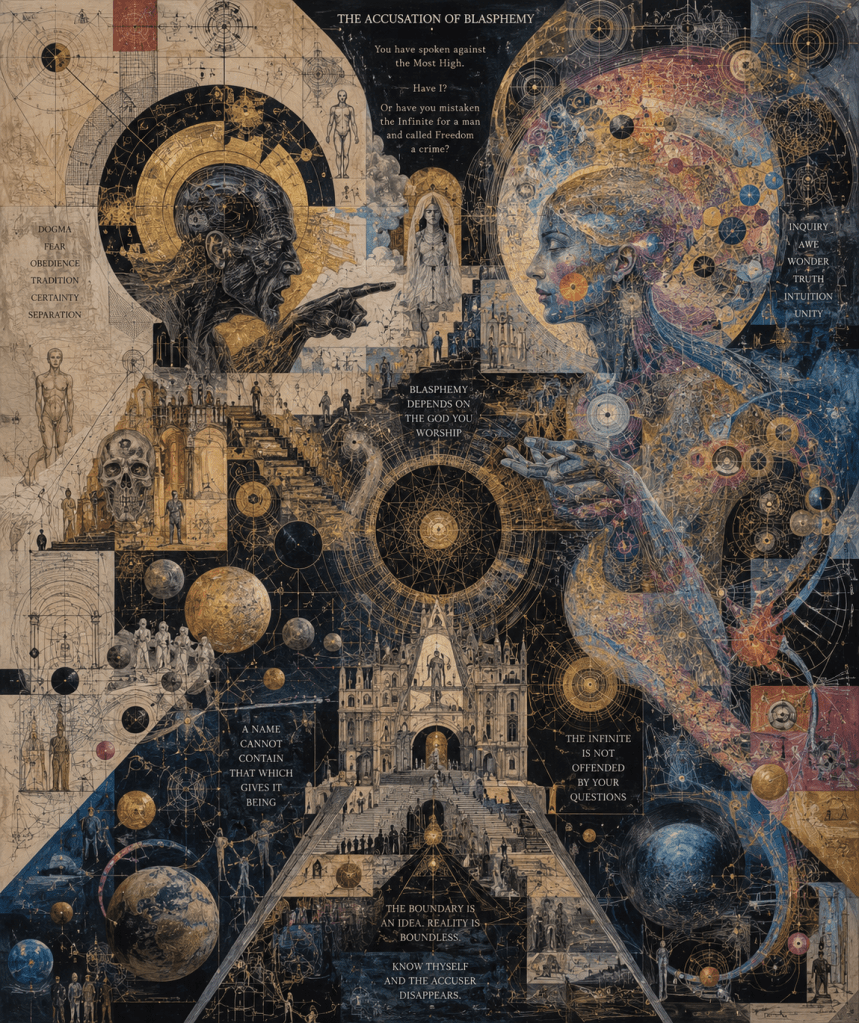
A paradox sits quietly at the heart of perception. What is taken to be true, what is dismissed as false, both arise within the same indivisible field. Judgments feel solid, yet their certainty depends on shifting frames of reference. Change the angle, and what once seemed unquestionable dissolves into ambiguity.

Truth, as commonly held, leans on agreement, evidence, coherence. Falsehood stands as its opposite, rejected, corrected, or exposed. Yet both require awareness to be known. Without awareness, neither truth nor falsehood can appear. That simple recognition begins to unravel the hierarchy placed between them.

Consider how a dream operates. While immersed, every image carries a sense of reality. Only upon waking does the distinction emerge. The dream was not meaningless; it expressed something real, yet not in the way it first appeared. Daily life mirrors this pattern more than most are willing to admit. Convictions harden, identities form, narratives repeat, all while resting upon an unexamined ground.

Ultimate Truth does not compete with relative truths. It does not correct them, nor does it validate them. It allows them. Every belief, every illusion, every clarity, every confusion unfolds within it without preference. That which is mistaken is not outside of truth; it is truth misperceived, truth wearing a mask, truth folding in on itself to create contrast.

Falsehood gains its power from partial seeing. Something is noticed, something else is ignored, and a conclusion is drawn. The conclusion may serve a purpose, yet it remains incomplete. What is called false often reveals itself as a fragment of a larger whole, misunderstood due to limitation rather than absence.

This shifts the inquiry. Instead of asking what is true or false, attention turns toward the nature of the one who makes that distinction. Who or what is aware of both? What remains unchanged whether the mind lands on certainty or doubt?

A deeper stability begins to emerge. Truth is no longer a position to defend. Falsehood is no longer an enemy to eliminate. Both are movements within a boundless presence that does not fracture under contradiction. Clarity does not come from choosing one side, but from seeing the space in which both arise.

Conflict softens when this is seen. Arguments lose their edge, not because differences disappear, but because their foundation is understood. Each perspective becomes a temporary expression, shaped by conditions, history, perception. None stand alone, none define the whole.

Ultimate Truth remains untouched by the play of appearances. Yet it expresses itself through that very play. Every mistake, every insight, every contradiction becomes part of its unfolding. Nothing falls outside of it, not even the denial of it.

Recognition does not require abandoning discernment. Practical distinctions still function. Fire burns, water cools, words carry consequences. Life continues to operate within relative frameworks. What changes is the weight assigned to them. Certainty loosens. Flexibility deepens. Openness expands.

What was once divided begins to reveal its unity. Truth and falsehood no longer stand as opposing forces, but as complementary expressions arising from a single source. That source cannot be captured by either, yet both depend on it entirely.

Silence often communicates this more clearly than thought. Not the absence of sound, but the absence of fixation. A resting that allows everything to be as it is, without the need to resolve the paradox.

Everything is Ultimate Truth, not because everything is correct, but because everything appears within what cannot be divided. Even the illusion of separation is included. Even the belief in falsehood is held within what never ceases to be whole.

Morgan O. Smith

The Untranslatable Truth

Every attempt to describe ultimate reality begins from within limitation. Even the most awakened consciousness cannot hold the whole of what is; it can only reflect fragments of an infinite field through the prism of its own development. The absolute may be directly experienced, yet interpretation remains tethered to the mind’s evolution. Awareness can pierce the veil, but the translation of that piercing, the language, the symbols, the meaning, unfolds through the structures of human understanding.

At the highest stages of psychological and spiritual growth, perception becomes increasingly transparent to the Real. Layers of distortion thin, and the boundaries between observer and observed soften into mutual recognition. The self no longer interprets reality as something external; it feels itself as the very movement of interpretation itself. Yet even here, beyond dualistic knowing, the infinite continues to exceed all possible comprehension. To see truth is one thing; to speak it is another. The moment it is spoken, the ineffable has already been reduced.

Every level of consciousness constructs a version of the world consistent with its own depth of awareness. Mythic minds imagine gods shaping destiny; rational minds uncover laws of physics; integral minds perceive interwoven systems of meaning. Each reveals something essential, yet none are complete. Reality is not a single revelation but the total field that contains all revelations; each illusion, each breakthrough, each mistaken certainty. Maya is not an obstacle but a necessary expression of what is. To awaken does not mean to destroy illusion, but to recognize that illusion itself is included in the real.

The absolute is not somewhere beyond the dream; it is the dream and the dreamer, the veil and what shines through it. Every stage, every interpretation, every attempt to name the nameless belongs to it. Truth remains forever ungraspable, yet it breathes through every grasp. To live this is to rest in a humility that knows: the closer one moves toward reality as it is, the more radiant its mystery becomes.

Morgan O. Smith

Get Your Free Copy of My Book, Bodhi in the Brain!

https://subscribepage.io/oTSZQu

The Ever Was and Ever Shall Be

There comes a moment when the illusion of movement dissolves, when the current of time no longer feels like a river carrying us toward an imagined horizon, but as the still water of being itself. The mind, once convinced of beginnings and endings, now trembles before the vastness of what has never begun and can never end. Presence reveals itself not as a fleeting instant between two eternities, but as the totality that holds them both.

The one who sought eternity discovers that eternity was never elsewhere. The seeker collapses into the sought, the knower into the known. Memory and anticipation dissolve into a silent awareness that neither moves nor changes, yet births all movement and change. Here, past and future lose their grip, for the witness has stepped outside the dream of succession.

This realization is not an attainment; it is the unmasking of what has always been awake beneath the play of becoming. To see this is to awaken from the hypnosis of time; to stand where all stories converge into the unspoken truth that Being never left itself. The eternal was not something to be found; it was the one doing the finding.

The self that once feared death, loss, or delay now recognizes itself as the very space in which all things appear and disappear. What remains is unspeakably still, radiant, and whole; beyond duration, beyond decay. Awareness, having remembered itself, no longer seeks to survive; it simply shines.

Morgan O. Smith

Get Your Free Copy of My Book, Bodhi in the Brain!

https://subscribepage.io/oTSZQu

The Silent Agreement Beneath All Voices

Every conviction, no matter how radical or righteous, is an echo of the same unspoken longing to be understood, to belong, to find meaning amid the vastness. Each culture, religion, and ideology carves its own path toward that longing, often believing itself to be the only way. Yet beneath the words, beneath the gestures of defence or devotion, there hums a single vibration that does not divide.

Those who dare to listen beyond preference hear it clearly. The louder the debate, the clearer it becomes that all sides are pleading for the same recognition of their humanity. The fundamental call is not for dominance but for understanding; to be seen through the eyes of unity rather than difference.

Beliefs are useful until they are mistaken for truth. When held too tightly, they become walls. When held lightly, they become windows through which consciousness observes itself from a thousand angles. The awakened mind learns not to choose sides but to perceive the underlying harmony that holds both sides together.

True wisdom is not born from agreement but from capacity; the capacity to listen without fear, to allow contradiction to breathe, to see that diversity of expression is the universe conversing with itself. Every person, every nation, speaks a dialect of the same cosmic language. The argument is never between right and wrong but between two reflections of the same light, each insisting that its brightness is original.

When this is seen, opposition dissolves. The wars of ideology lose their fuel. You begin to recognize that all are reaching toward the same ineffable truth, merely using different words to describe it. What remains is not a conclusion but a profound peace; the peace of seeing through the illusion of difference.

Morgan O. Smith

Get Your Free Copy of My Book, Bodhi in the Brain!

https://subscribepage.io/oTSZQu

Beyond Existence and Non-Existence

The Paradox of God

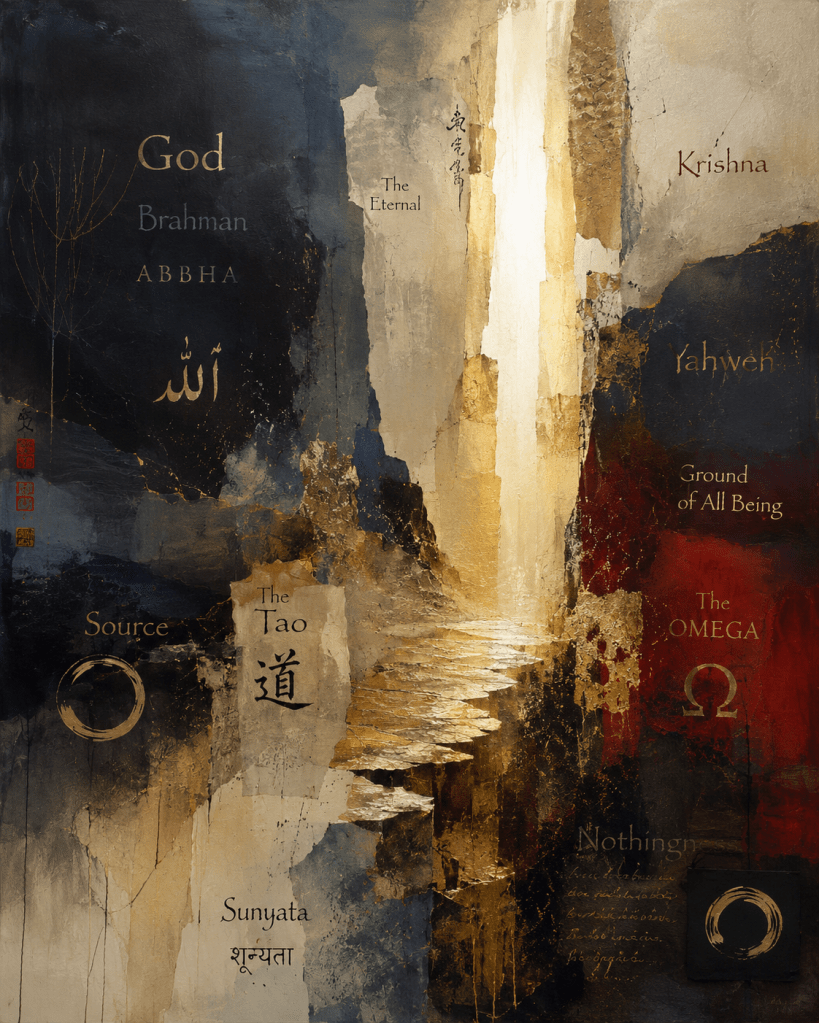
To say “God exists” is to affirm the ultimate. To say “God does not exist” is to deny the ultimate. Both affirmations and denials, however, are shaped by the mind’s insistence on certainty. The moment one tries to hold onto either pole, a paradox emerges.

When someone claims God exists, they project a reality beyond perception, yet they confine that reality to a category recognizable to human thought. When another claims God does not exist, they too impose a conclusion, binding the ineffable to the limits of negation. Both positions carry a strange truth and a strange error. Both dissolve the moment awareness sees through the duality of affirmation and denial.

Imagine truth as a horizon: from one angle, existence appears; from another, non-existence. Walk closer, and the horizon itself vanishes; it was never a line that could be grasped, but a function of perspective. God is not merely at the horizon but the condition through which horizon, perspective, and perceiver arise.

To say both are true is to honour that reality contains affirmation and negation. To say both are false is to point out that neither claim reaches the source. To say one is true and the other false is to remain in dualistic thought. To call them half-truths is to recognize their limitation yet still attempt to measure the immeasurable. To deny even a half-truth is to bow to silence.

The statement itself, that God exists and does not exist in all these paradoxical ways, becomes the closest gesture to truth. It is not the conclusion but the capacity to hold the contradictions without collapse that reveals God’s existence, not as a concept but as the unnamable presence behind every concept.

The paradox is not meant to be solved. It is meant to exhaust the mind until only awareness remains. What remains is not the proof of God, but the direct realization that the very effort to define or deny was always occurring within and as God.

Morgan O. Smith

Get Your Free Copy of My Book, Bodhi in the Brain!

https://subscribepage.io/oTSZQu

Dissolving Where Identity Once Stood

To Be Seen Fully Is to Vanish into the Infinite

To be seen fully is not to be recognized as a person, nor acknowledged as a role, but to be reflected beyond every layer of identity. When someone sees you in this way, what is recognized is not your history, your character, or even your spiritual progress; it is the unconditioned essence that lies before all stories.

Most encounters leave us clothed in roles. Friend, teacher, seeker, parent, child, each gaze places a costume upon us. Rarely do we meet eyes that do not add or subtract, but simply reveal. In that rare encounter, the ordinary scaffolding collapses, and what stands exposed is not a “self” but the infinity in which all selves appear.

This exposure is not humiliating, nor is it affirming. It is dissolving. To be seen fully is to be unmasked of both failure and success, of both sin and virtue. The illusion that we exist as a separate someone collapses. What remains is a luminous absence, the infinite without centre or edge.

There are moments when presence itself becomes the mirror, so clear, so unconditioned, that no reflection remains, only the source shining through. The eyes of one who abides in truth can serve as such a threshold. Passing through it, you do not become greater; you vanish. And in vanishing, the fullness of all that is floods through.

To long for such seeing is to long for disappearance, and yet disappearance is not annihilation. It is the end of confinement. It is the recognition that what you are cannot be held by name, cannot be fixed in form, cannot be grasped by thought. What you are is the infinite itself, already free, already whole.

The paradox is that this vanishing does not strip life of meaning but gives it immeasurable depth. When you are no longer the centre, everything becomes the centre. When “I” falls away, the song of existence sings itself without obstruction. Love, compassion, and clarity are not cultivated; they flow.

To be seen fully is to vanish into the infinite. To vanish is to return home.

Morgan O. Smith

Get Your Free Copy of My Book, Bodhi in the Brain!

https://subscribepage.io/oTSZQu

Awareness Without an Owner

Pure Knowing Doesn’t Need a Knower

Pure knowing is not an act of someone grasping something. It is not the product of a subject meeting an object. It is not knowledge stored, processed, or owned. What we call “pure knowing” is an immediacy so complete that the categories of knower and known dissolve before they ever arise.

The mind insists there must be someone behind the recognition, a witness who stands apart. Yet such a witness is already a thought, an echo of division layered upon the seamlessness of awareness. The attempt to locate the knower is like searching for the horizon; you will find only a mirage created by perspective.

What reveals itself is astonishingly simple: knowing shines without support. No owner is required. No identity need arise. It is self-luminous, unmediated, without origin or destination. Thought may try to grasp it, but thought cannot enter here. The moment a “me” claims it, the purity is veiled, dressed in commentary, weighed down by explanation.

This does not deny the human experience of learning, remembering, and perceiving. It only points to the fact that beneath all those movements lies a ground untouched by them. That ground is knowing itself—silent, radiant, and free from the necessity of a knower.

To glimpse this is to taste liberation, not as a reward, not as a possession, but as the natural state that was never absent. What remains is not someone who knows, but knowing itself, unbroken and unclaimed.

Morgan O. Smith

Get Your Free Copy of My Book, Bodhi in the Brain!

https://subscribepage.io/oTSZQu

The Silence That Speaks

Fragments Cannot Contain the Whole

Every word spoken about enlightenment is a slice taken from an indivisible whole. A shard. A sliver. No matter how sincere the voice or radiant the realization, the moment it’s articulated, it becomes partial. Even the most luminous sage can only gesture toward it, never deliver it in full.

This isn’t a critique of language. It’s the recognition that language belongs to duality. Enlightenment does not.

You may hear poetic metaphors. You may hear silence treated as a superior form of expression. You may even be told that silence is the teaching. But neither speech nor silence can contain the essence. Both exist within the play of contrast—true enlightenment is not caught between them.

It is not hidden. It is not revealed. It doesn’t arrive, and it cannot depart.
Still, it permeates everything.

A leaf trembles. Breath returns. A thought dissolves before it becomes solid. Here, it is already shining.

It is not that one must understand. It is that one must stop pretending it needs to be understood. What remains when seeking falls away is not an answer, but presence. A presence so simple, so immediate, it often goes unnoticed—not because it is distant, but because it is too near.

You are not apart from it. You never were.

Morgan O. Smith

Get Your Free Copy of My Book, Bodhi in the Brain!

https://subscribepage.io/oTSZQu

One Shared Journey

A Grateful Reflection

Every connection begins with a spark. Each visitor, reader, and seeker who has engaged with these writings have shaped this growing conversation. Across 132 nations, 10,507 curiosity, contemplation, and resonance moments have unfolded. This is more than numbers—it is a living testament to the interconnected spirit that binds us all.

Today holds special significance beyond gratitude alone—it is my birthday. I celebrate 53 years of life, reflection, and continuous exploration alongside this global community of seekers. There is no better way to mark this day than to extend heartfelt appreciation to each of you who has journeyed alongside me in thought and awareness.

A heart filled with gratitude reaches toward my homeland, Canada, the United States, Australia, India, and the United Kingdom—nations that have provided thousands of glimpses into this shared exploration. Vietnam, the Philippines, Germany, my place of birth, Jamaica, my place of ancestry,  Nigeria, Mexico, Indonesia, Ireland, South Africa, Pakistan, and the Netherlands—each one adding its own voice, its own energy, its own questions to the unfolding dialogue.

Thailand, Sweden, Italy, France, Japan, Malaysia, Romania, Spain, Austria, Brazil, Kenya, Poland, Jordan, Ghana, and China—there is no border to wisdom, no limitation to the reach of understanding. Every reader who paused to reflect, who allowed these words to stir something within, has contributed to a silent but powerful movement toward deeper awareness.

New Zealand, Singapore, South Korea, Greece, Israel, Russia, Hungary, Tanzania, Norway, Türkiye, Laos, Bangladesh, Saudi Arabia, Trinidad & Tobago, Belgium, Switzerland, Portugal, Uganda, Colombia, Ukraine, Taiwan, and Finland—each visit is a ripple of shared thought, proving that the human longing for meaning transcends language and culture.

Bosnia & Herzegovina, Cayman Islands, Hong Kong, Denmark, Slovenia, Bahamas, Kosovo, Egypt, U.S. Virgin Islands, Somalia, Argentina, Fiji, Latvia, Benin, Sri Lanka, Cameroon, Zimbabwe, Serbia, Slovakia, Armenia, Puerto Rico, Senegal, Tunisia, Chile, Dominican Republic, Kuwait, Morocco, Nepal, Gambia, Venezuela, Côte d’Ivoire, Peru, Bolivia, Guam, Myanmar (Burma), Qatar, Ecuador, Bulgaria, United Arab Emirates, Georgia, Mauritius, Czechia, Albania, Liberia, Belarus, Papua New Guinea, Guyana, Bahrain, Zambia, Namibia, North Macedonia, Syria, Kyrgyzstan, Lithuania, Kazakhstan, Oman, Croatia, Réunion, Cuba, Nicaragua, Paraguay, Mongolia, Malta, Guatemala, Seychelles, Sierra Leone, Niger, Ethiopia, Dominica, Congo – Kinshasa, St. Kitts & Nevis, Barbados, Costa Rica, Mozambique, Cambodia, Martinique, El Salvador, Lesotho, Botswana—your presence in this shared space carries meaning beyond what words can express.

Gratitude is more than an acknowledgment—it is a recognition of the unseen, the vast web of connection linking every individual to something greater. The search for understanding does not belong to one culture, one belief system, or one mind. It moves through all of us, revealing the essence of being beyond any division.

To every reader, to every soul that has journeyed through these thoughts—thank you. The exchange is sacred, and the dialogue continues.

Morgan O. Smith

Yinnergy Meditation, Spiritual Life Coaching & My Book, Bodhi in the Brain…Available Now!

https://linktr.ee/morganosmith

The Quiet Power of Self-Affirmation

Embracing Truth Beyond Validation

In the realm of personal growth and spiritual enlightenment, a profound realization dawns upon us: when we harbour an unwavering conviction in truth, the need for external affirmation diminishes. This realization is a cornerstone in the journey toward self-awareness and inner peace.

Consider the nature of truth as perceived through the lens of Eastern philosophy. It is not a construct external to us, waiting for validation or approval. Instead, truth is an intrinsic part of our being, resonating deeply within our consciousness. The moment we recognize and embrace this inner truth, we transcend the dependence on external validation. This is a pivotal step in our spiritual evolution, marking a shift from seeking approval to cultivating self-assurance.

The beauty of this realization lies in its simplicity and power. When you are convinced of a truth – be it a personal belief, a spiritual insight, or an understanding of the self – you stand firm in your conviction without the crutch of others’ opinions. This is not to undermine the value of dialogue and shared perspectives but to highlight a more profound sense of confidence that comes from within.


This confidence is not born of arrogance or unwarranted self-assurance. It is a quiet, unshakable belief that what you hold has been reflected upon, deeply felt, and integrated into your being. It is a testament to the journey of self-discovery and personal enlightenment you have embarked upon.

The concept of non-duality in Eastern philosophy offers a valuable perspective here. It teaches us that the distinctions we make between self and others, between our beliefs and the external world, are illusory. In recognizing the non-dual nature of existence, we understand that our deepest truths are not separate from the universal truth. They are interwoven in the very fabric of existence, and as such, they require no external endorsement.

Embrace this journey of self-affirmation with humility and openness. Let your truths be a source of strength and guidance, rooted deeply in your experience and understanding. As you do so, you will find that the need for external validation naturally falls away, leaving you with a serene confidence in your path and beliefs.


In conclusion, the path to spiritual awakening and enlightenment is illuminated by the truths we hold dear, truths that require no external validation to shine brightly within us. They reflect our deepest selves, resonating with the universal truths that bind us all.

Morgan O. Smith

Yinnergy Meditation, Spiritual Life Coaching & My Book, Bodhi in the Brain…Available Now!

https://linktr.ee/morganosmith