Destiny and Free Will

The Paradox of the Ultimate Self

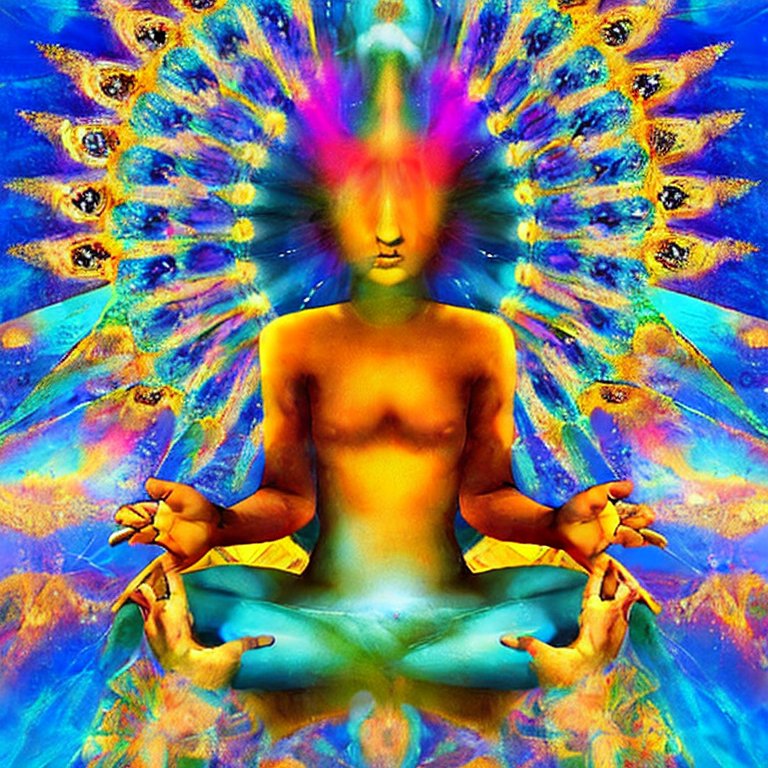
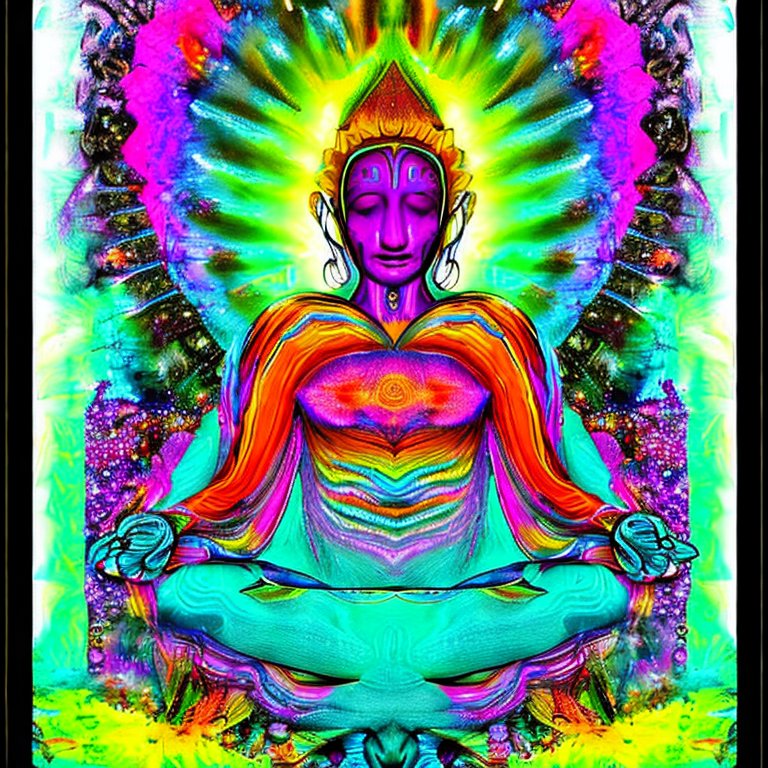
The mind constructs opposites to make sense of its existence. It divides what is whole, fabricating distinctions such as light and dark, good and evil, self and other. Among these conceptual splits, destiny and free will are two of the most debated. One appears as an external force guiding every step, while the other seems to grant agency over choices. But what if both are the same movement of the Ultimate Self, which is also You – before you believed yourself to be anything at all?

The character you take yourself to experience the illusion of choice, just as it experiences the illusion of fate. Both arise within the vast intelligence that is your true nature. The moment a decision unfolds, it is perceived as an act of will. Yet, after the fact, it may appear as if it was meant to be. The distinction between choosing and being led is merely a shift in perception. Neither position is absolute, because all actions, whether seemingly determined or freely chosen, arise from the same singular source.

The very act of contemplating this question – the tension between predestination and volition – is itself an expression of the play. The Self, pretending not to be the Self, weaves the experience of doubt, belief, and questioning. It is an intricate engagement, a dance in which each step is both spontaneous and inevitable. You are the architect of the journey and the wanderer who marvels at the path.

The paradox resolves itself when viewed from clarity. The Ultimate Self is not bound by concepts of fate or autonomy. It moves as a unified expression, neither predetermined nor random, neither forced nor chosen. The illusion of separation gives rise to the belief in one or the other, but when the mirage dissolves, the recognition remains that all movement is of the same origin.

To believe in destiny is to trust that all unfolds exactly as it should. To believe in free will is to recognize yourself as the creator of that unfolding. To see both as true and false is to rest beyond belief itself, in that which has never been bound by choice or fate.

Morgan O. Smith

Yinnergy Meditation/Neurofeedback, Spiritual Life Coaching & My Book, Bodhi in the Brain…Available Now!

https://linktr.ee/morganosmith

Beyond the Surface

Transcending the Illusions of Separation to Realize the Ultimate Self

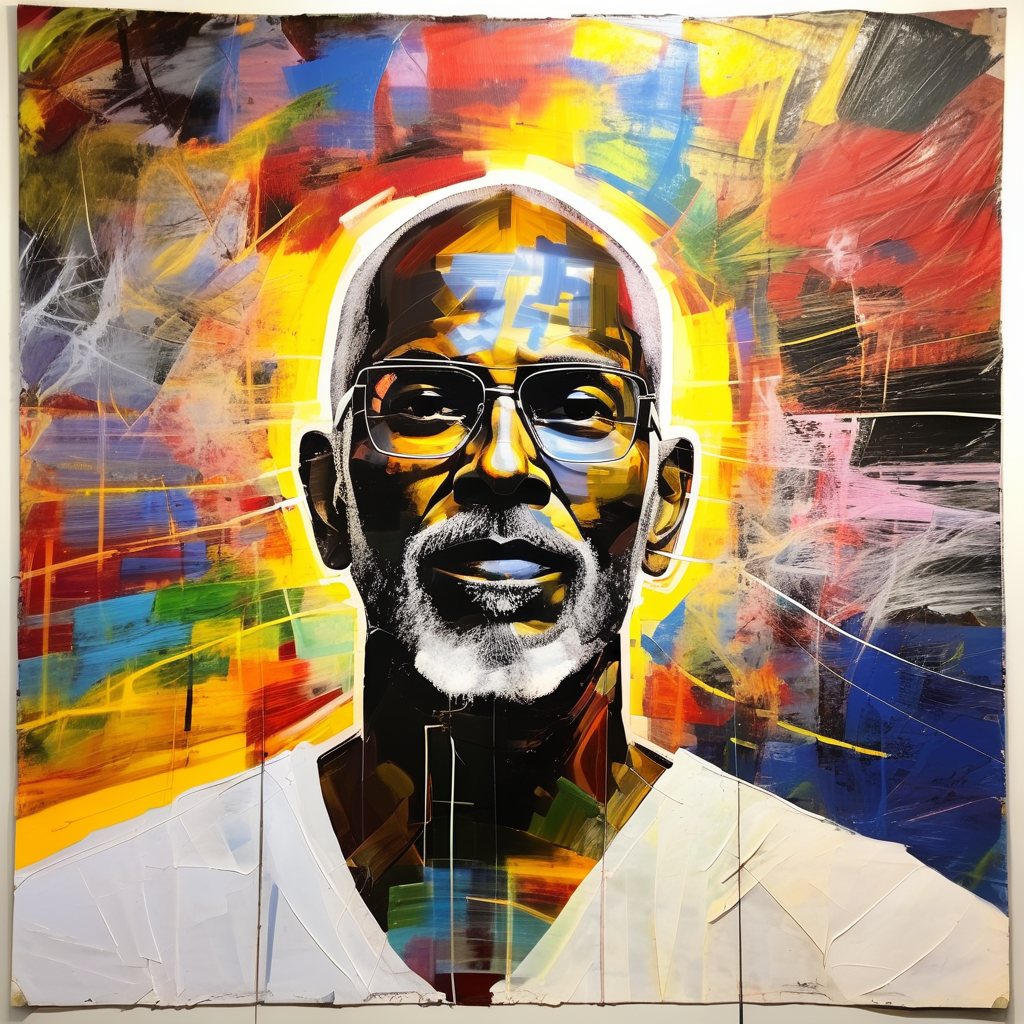
In our multifaceted world, we often define ourselves and others through superficial layers—race, ethnicity, class, gender, and the like. These categorizations, while providing a semblance of identity and belonging, only scratch the surface of our existence. To fully embrace the essence of what it means to be human—and more so, to be a part of this vast universe—we must look deeper.

Consider the notion that what we perceive as differences are merely illusory, a play of forms and shapes, orchestrated on the surface of a much deeper, interconnected reality. This reality is not bound by the constructs that typically define our lives. It is beyond separateness and individuality, and even beyond the distinctions we draw between subjective experience and objective reality.

At the core of all existence lies the Ultimate Self, the ‘I AM That I AM’—a state of being that transcends all layers of diversity and division. This is not a self that can be easily defined by the languages of separation or difference. It is the foundational essence from which all life arises and to which it returns. It is in realizing this fundamental truth that we find true unity and connection.

To reach this profound understanding, one must embark on a journey of inner exploration, shedding layers of conditioned perceptions and societal labels. This journey is not about negating diversity or the richness it brings to our human experience; rather, it’s about seeing diversity as a beautiful expression of the One that pervades all.

As we delve into this realization, we begin to see that every being, every system, material or immaterial, is interwoven into a single, expansive web of existence. This vision of nonduality does not diminish our personal experiences but enriches them, offering a vantage point where we can see the interconnectedness of all life forms.

This perspective invites us to act with greater compassion and understanding, acknowledging that the essence we share is far more profound than the differences that appear to divide us. It challenges us to live with a sense of deep responsibility—not just towards other humans but towards all forms of life, recognizing that we are caretakers of the same shared reality.

As we navigate through our daily lives, let us strive to embody this awareness, to look beyond the immediate appearances and connect with the Ultimate Self in each other. In doing so, we not only transcend the illusory boundaries of race, ethnicity, and gender but also open ourselves to a more holistic and fulfilling experience of life itself.

Morgan O. Smith

Yinnergy Meditation, Spiritual Life Coaching & My Book, Bodhi in the Brain…Available Now!
https://linktr.ee/morganosmith

The Paradox of Unconditional Love

From Relative to Ultimate Self

In the pursuit of understanding love, especially unconditional love, we encounter a profound dichotomy between our relative self and our ultimate self. This journey from dualistic thinking to a non-dualistic state of being offered a rich terrain for philosophical exploration.

#### Relative Self: The Duality of Love and Judgment

The relative self operates in a world of dualities. Here, we are taught to “love the sinner, hate the sin,” a phrase that encapsulates our struggle to navigate the complexities of love intertwined with judgment. This perspective, while grounded in good intentions, often leads us into a labyrinth of conditional affection, where love is metered out based on perceived right or wrong.

However, this is not the endpoint of our journey with love. As relative beings, we are called to observe our actions, thoughts, and emotions without judgment or bias. This doesn’t imply a passive existence but rather an active engagement in self-awareness. It’s about understanding our reactions and biases at every stage of our development.


#### Ultimate Self: Realizing Love as the Essence of Being

Transitioning to the concept of the ultimate self, we enter a realm where the individual self dissolves into a universal consciousness. In this state, “everything is the self, and of the self,” leading to the realization that all there is, is Love – with a capital L. This Love transcends the dualities of the relative self. It is not just an emotion or a state of being but the very essence of existence.

Unconditional love, in this ultimate sense, is not something one can force. It’s a realization that emerges as the soul matures and lets go of attachments and prejudices. It’s recognizing the self in all things and all things in the self.

#### The Path to Unconditional Love

The journey to unconditional love is neither linear nor predictable. It involves years of introspection, meditation, and conscious efforts to detach from the biases and attachments of the relative self. This path requires patience, as unconditional love doesn’t happen overnight.

In this process, action and acceptance go hand in hand. While it’s important to act and change situations for the better, it’s equally vital to accept what cannot be changed. This acceptance is a form of unconditional love, acknowledging that not everything is within our control or needs to be controlled.


#### Conclusion

Unconditional love is more than an ideal; it’s a transformative journey that bridges the gap between the relative and the ultimate self. It’s about realizing that at the core of our being, beyond the layers of judgment and bias, lies an all-encompassing love. This realization dawns not through force but through a gradual awakening of the soul, ready to embrace the self in all its forms.

 Morgan O.  Smith

Yinnergy Meditation & My Book, Bodhi in the Brain…Available Now!

https://linktr.ee/morganosmith

Meditative Practices and the Illusory Nature of the False Self

A Journey Towards Self-Realization

Introduction:
Meditative practices have long been revered as transformative tools in the realm of self-discovery and spiritual growth. They offer a profound pathway for individuals to explore the depths of their consciousness, seeking truth, peace, and liberation. However, beneath the surface lies a fascinating paradox—the false self, which appears as the practitioner, ultimately leads to the revelation of the Ultimate Self, the Ground of All Being.

The Illusion of the False Self:
Within the tapestry of various spiritual traditions, the notion of the false self arises—a deceptive construct born out of our attachments to external roles, labels, and conditioned beliefs. This illusory identity emerges from our tendency to assign significance to transient aspects of our existence, such as social standing, material possessions, and superficial identities. Meditative practices, in their diverse forms, serve as illuminating mirrors, enabling us to perceive the transient nature of the false self and transcend its illusory grasp.

Meditation as a Mirror:
Meditation acts as a reflective surface, offering a clear reflection of the illusory nature of the false self. By turning inward and observing our thoughts, emotions, and sensations without judgment or attachment, we gain a heightened awareness of the ever-changing nature of our experiences. Regular practice nurtures a profound realization—an understanding that our thoughts come and go, emotions rise and subside, and identities shift fluidly. This awakening brings us closer to recognizing that the false self is not a fixed entity but a construct that can be deconstructed through the power of self-inquiry.

The Ultimate Self:
While meditative practices may originate from the false self, they hold within them the potential to reveal the Ultimate Self—the very essence of our being, the Ground of All Being. As we delve deeper into our meditative journey, we begin to touch upon an interconnectedness and unity with the vast cosmos. The boundaries that once separated our individual selves from the external world begin to dissolve, and we catch glimpses of the inherent oneness that permeates all existence. In this expanded state of awareness, the false self loses its grip, and we realize that our essential nature transcends the limitations of individual identity.

Integration and Transformation:
The true essence of meditative practices lies in the interplay between the false self and the Ultimate Self. The false self, while illusory, acts as a vehicle for the exploration and transformation of consciousness. Engaging with meditative practices allows us to intimately observe the patterns and tendencies of the false self, ultimately leading us to transcend its limitations. By embracing the false self as a catalyst for growth, we integrate its lessons and move closer to the realization of our true nature—the Ultimate Self.

Conclusion:
In the realm of meditative practices, the interconnection between the false self and the Ultimate Self invites profound contemplation. While the false self may present itself as real and compelling, it is merely a construct that can be unravelled through the transformative power of meditation. Engaging in these practices propels us on a journey of self-realization, unveiling the essence of our being—the Ground of All Being. Meditative practices serve as bridges, guiding us from the illusion of the false self to the profound truth of our interconnected existence. Embrace these practices, embrace the false self, and embark on the path toward ultimate liberation and self-realization.

Morgan O. Smith

Yinnergy Meditation & My Book, Bodhi in the Brain…Available Now!

https://linktr.ee/morganosmith