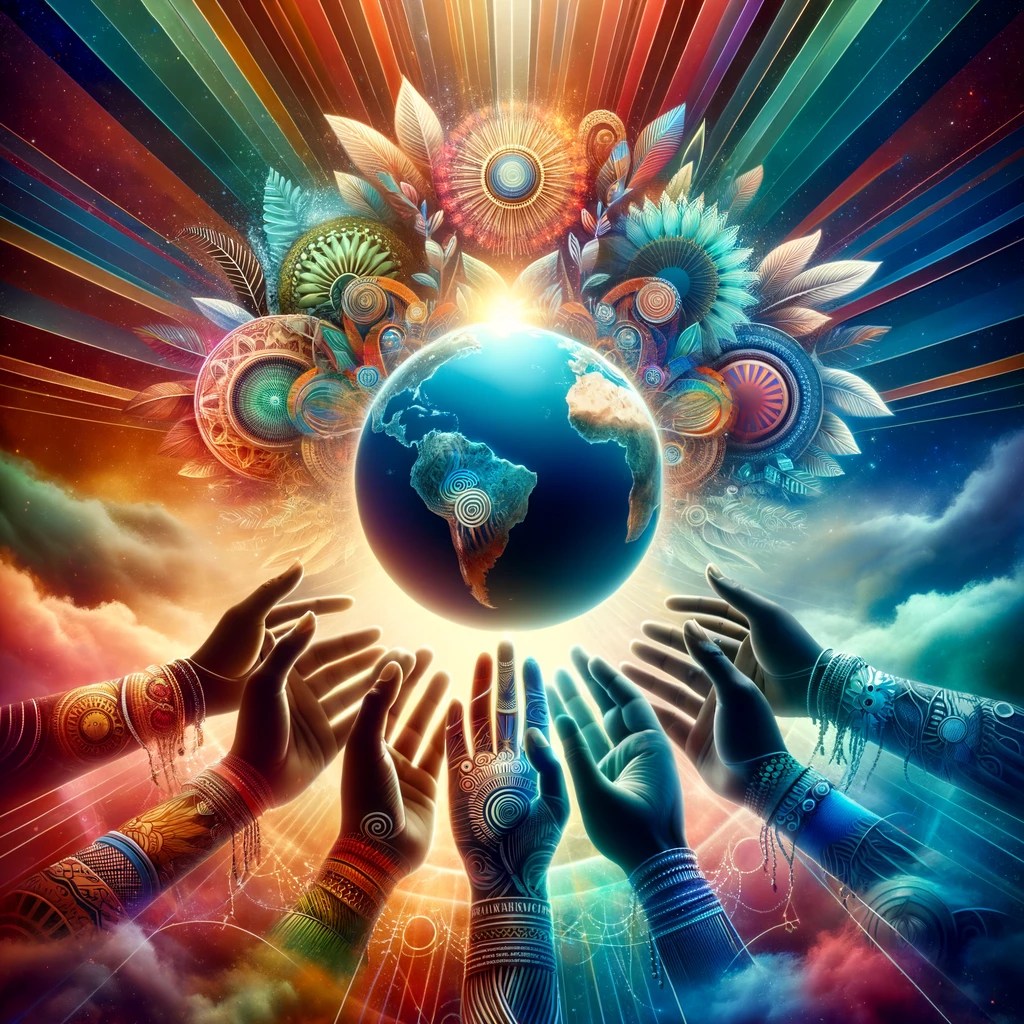
Embracing the Spectrum

Perspectives on Nonduality

In the realm of spirituality and philosophy, nonduality presents a fascinating paradox. It’s a term that evokes both simplicity and complexity, challenging our understanding of reality and existence. At its core, nonduality means ‘not two’ or ‘one without a second’. This concept, often rooted in Eastern philosophies such as Advaita Vedanta, posits that there is no fundamental division in the universe. Everything, at its essence, is the same.

But here’s where it gets intriguing: within this notion of oneness, myriad perspectives and interpretations exist. Each of these perspectives offers a unique lens through which we can view nonduality. Some may see it as a spiritual realization of oneness with the universe, others as a philosophical understanding that transcends physical distinctions. Some approach nonduality through the lens of science, seeking to understand how this concept aligns with the interconnectedness revealed in quantum physics.


What’s remarkable is that all these perspectives are valid and encompassed within the unified reality of nonduality. This inclusivity is precisely what nonduality is about – it’s not just a concept of ‘no distinctions’ in a literal sense, but also a recognition that every interpretation, every perspective, is part of the whole. The variety of viewpoints doesn’t dilute the concept but enriches our understanding and appreciation of it.

This leads us to a profound realization: nonduality isn’t just a concept to be understood intellectually, but an experiential truth to be lived. It encourages us to look beyond the apparent separations and differences that define our everyday existence. In recognizing nonduality, we find a deeper connection with the world around us, seeing ourselves not as isolated beings but as integral parts of a greater whole.


In essence, nonduality teaches us that while we may perceive distinctions and separations in the world, at a fundamental level, these distinctions are illusory. It invites us to experience life not just through the lens of separation but through a lens of unity and interconnectedness. This shift in perspective can be transformative, offering a pathway to greater understanding, compassion, and peace.

As we explore this concept further, it’s essential to remember that nonduality isn’t about negating diversity or individual experiences. Instead, it’s about recognizing the underlying unity that encompasses all diversity. It’s a journey of discovery, where each step in understanding brings us closer to the profound simplicity at the heart of existence.

Morgan O. Smith

Yinnergy Meditation, Spiritual Life Coaching & My Book, Bodhi in the Brain…Available Now!

https://linktr.ee/morganosmith

Beyond Duality

Exploring Nondual Experiences and Awakenings

**Introduction**:
In spiritual exploration, nondual experience and nondual awakening emerge as pivotal elements in understanding the nature of consciousness and reality. Often used interchangeably, these terms hold distinct meanings and implications for those on a spiritual path. This blog post aims to unravel the differences and delve deeper into the profound implications of nondual experiences and awakenings.

**Nondual Experience – A Glimpse Beyond the Veil**:
Imagine a moment where all distinctions between you and the world dissolve. This is the essence of a nondual experience. It’s a temporary state where the conventional boundaries of self and other, inside and outside, cease to exist. Such experiences often occur during deep meditation, contemplative practices, or even in spontaneous moments of profound insight. They offer a fleeting yet intense glimpse into a state of unity and interconnectedness, challenging our usual perception of reality. However, as profound as these experiences are, they are transient and do not necessarily result in a permanent shift in understanding or consciousness.

**Nondual Awakening – The Enduring Shift**:
Contrastingly, a nondual awakening is not just a momentary experience but a fundamental transformation. It represents a deep and lasting shift in how one perceives and interacts with reality. In this awakened state, the illusion of a separate self is continuously seen through. This awakening brings about a sustained awareness where separation is transcended, not just in isolated moments, but as a continuous experience in daily life. It marks a paradigm shift from a life experienced through the lens of duality to one of ongoing nondual perception.

**The Journey from Experience to Awakening**:
While a nondual experience can be a catalyst for a nondual awakening, the journey from one to the other is often gradual and requires deep inner work and exploration. The fleeting insights provided by nondual experiences can sow the seeds for the more profound, sustained realization of nondual awakening. This journey involves not only the mind but also the heart and soul, leading to a comprehensive transformation in one’s approach to life and existence.


**Conclusion**:
The exploration of nonduality, whether through transient experiences or enduring awakenings, offers a radical shift in understanding the nature of self and reality. These moments of insight and periods of transformation challenge our conventional perceptions and invite us to experience life beyond the limitations of duality. For those on a spiritual path, understanding and integrating these experiences can be a gateway to a more profound, interconnected existence.

Morgan O. Smith

Yinnergy Meditation, Spiritual Life Coaching & My Book, Bodhi in the Brain…Available Now!
https://linktr.ee/morganosmith

Beyond the Self

Embracing the Unity of Existence in the Quest for Spiritual Enlightenment

Spiritual enlightenment is a journey that transcends beyond the tangible realms of reality, reaching into the depths of our very existence. It’s an exploration that delves into the core of what it means to be alive, to be conscious. In this journey, enlightenment is not just a destination; it is a continuous process, a state of being that encompasses everything within and beyond every form.

At its essence, spiritual enlightenment is about realizing the interconnectedness of all things. It teaches us that every form, whether tangible or intangible, is imbued with a certain essence, a spark of the divine. This realization helps us to see beyond the superficial differences that separate us, fostering a sense of unity with the universe and everything in it.


One of the key aspects of enlightenment is the dissolution of the ego. Our egos, often constrained by societal norms and personal biases, can limit our understanding and experience of the world. Enlightenment encourages us to shed these limitations, to see beyond the self and to recognize our part in the larger scheme of existence. This perspective not only brings a deeper understanding of the self but also cultivates compassion and empathy for others.

Furthermore, enlightenment is not an escape from reality but a deeper engagement with it. It involves embracing both the light and the dark aspects of life, acknowledging that both pain and joy are integral to the human experience. This acceptance leads to a profound peace, and inner tranquillity that is unshaken by external circumstances.


In conclusion, spiritual enlightenment is an ongoing journey of discovery, where the destination is not a specific point but a continuous expansion of consciousness. It is about realizing that everything is connected, that there is a deeper meaning to our existence, and that true understanding comes from transcending beyond the self.

Morgan O. Smith

Yinnergy Meditation, Spiritual Life Coaching & My Book, Bodhi in the Brain…Available Now!

https://linktr.ee/morganosmith

Navigating the Depths

Nonduality vs. Absolute Monism

In the intricate tapestry of philosophical thought, two concepts often emerge as profound and perplexing: Nonduality and Absolute Monism. These philosophical gems, though seemingly similar, hold distinct perspectives on the nature of existence and the universe.

**Nonduality: The Unity of Existence**

Nonduality, a term often associated with Eastern philosophies, particularly Advaita Vedanta, posits a fundamental principle: reality is one, and the perception of duality or separation is illusory. It suggests that what we experience as separate entities – ourselves, others, and the world around us – are not distinct, but part of a unified whole. The philosophy of Nonduality encourages us to transcend this illusion, to realize that at the core of our being, we are not separate from the universe but one with it.


**Absolute Monism: The Dance of Oneness and Multiplicity**

Absolute Monism, on the other hand, takes a slightly different approach. While it agrees with the principle of oneness, it also acknowledges the existence of multiplicity. This philosophy, as I interpret it, embraces the paradoxes of existence: one and not two, two and not one, one and two, two and one, one within two, two within one, yet simultaneously neither one nor two. It reflects a deeper understanding of the cosmos as a dynamic interplay of unity and diversity, where the singular and the plural coexist in a harmonious yet complex relationship.

**The Interplay and Implications**

The discussion of Nonduality versus Absolute Monism is not just a theoretical exercise but has profound practical implications. In Nonduality, the path to enlightenment or understanding involves the realization of oneness, leading to a sense of peace and connectedness with all. In Absolute Monism, the journey is about embracing and understanding the complexity and paradox of existence, leading to a deep appreciation of life’s multifaceted nature.

Both philosophies, in their essence, guide us toward a greater understanding of our place in the universe. They invite us to look beyond the superficial and to question the very nature of reality.


**Conclusion: A Journey of Understanding**

In the end, whether one leans towards Nonduality or Absolute Monism, the journey is one of deep introspection and understanding. It’s about peeling back the layers of what we perceive and understanding the deeper truths of our existence. As we delve into these philosophies, we find not just answers, but also a greater appreciation for the questions themselves.

Morgan O. Smith

Yinnergy Meditation & My Book, Bodhi in the Brain…Available Now!

https://linktr.ee/morganosmith

The Transcendental Journey

Beyond Self and Society in Pursuit of Enlightenment

The quest for spiritual enlightenment is a profound journey that goes far beyond the realms of the individual self. It is a path that demands transcendence in its truest form – a journey that calls for us to rise above not just our identity, but also the collective constructs that define our existence. This process of transcending encompasses various aspects of life: ego, behaviour, traits, race, gender, community, religion, tradition, culture, species, opposition, and even the environment.

Transcending individuality means moving beyond the ego and the superficial traits that define personal identity. It’s about realizing that at the core, we are more than our personalities, habits, or physical attributes. This realization opens up a new way of experiencing the world, where personal biases and limitations no longer bind us.


Moreover, transcending race, gender, community, and religion involves recognizing the unity and interconnectedness of all beings. It’s about understanding that these social constructs, while significant in our worldly interactions, are not the ultimate truths of our existence. By moving past these distinctions, we embrace a more inclusive and compassionate view of the world.

Transcending tradition and culture is equally critical. It means acknowledging the value and beauty in all cultural expressions while not being limited by any single worldview. This broadens our understanding and appreciation of the diverse tapestry of human experience.


Furthermore, transcending species signifies acknowledging and respecting the interconnectedness and interdependence of all life forms. It’s an acknowledgment that human life is just a part of the vast web of existence, not separate or superior to it.

Transcending opposition and the environment involves realizing that conflict and the perception of separation from nature are illusions. True enlightenment recognizes the harmony and balance inherent in all things and seeks to foster it.

In essence, to attain spiritual enlightenment is to transcend the myriad divisions and categories that fragment our perception of reality. It’s a journey towards seeing and experiencing the underlying unity and interconnectedness of all existence. This path leads not only to personal transformation but also to a more profound understanding and relationship with the world around us.

Morgan O.  Smith

Yinnergy Meditation & My Book, Bodhi in the Brain…Available Now!
https://linktr.ee/morganosmith

Mirrors of the Self

Seeing the Divine in All

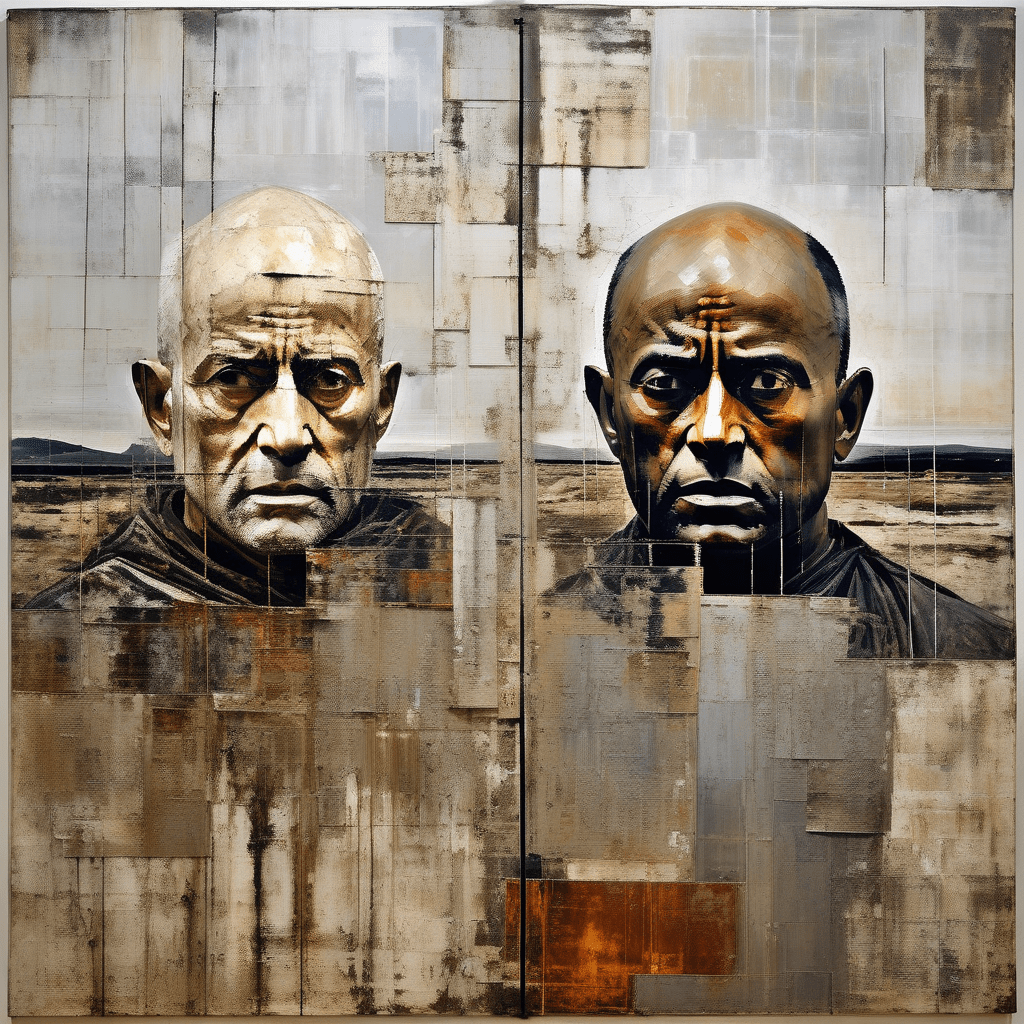
In the vast expanse of existence, each entity and every moment is a reflective surface, giving us a glimpse of our deepest selves. When we peer into the world, what we encounter is not just matter arranged in space but a mosaic of mirrors, each offering a unique reflection of who we are. The idea that everything we perceive is a reflection of our face is not just a poetic sentiment but a profound philosophical proposition that invites introspection about the nature of self and the universe.

The reflections we see are not literal but abstract, distilling our essence in the myriad forms and phenomena around us. This abstraction is where the beauty of perception lies; it is a canvas where the mind can project its inner workings—its hopes, fears, and dreams. The world outside becomes a screen for the drama of the self to unfold, the grand play of consciousness where every actor wears a mask that resembles something within us.

In this grand reflection, if we are to see the face of God, then it must be understood that this divine visage is not an entity separate from us but interwoven into our being. The divine reflection is the totality of the cosmos itself, a unity where every face is indeed an aspect of a greater countenance. If we are made in the image of the divine, as many traditions suggest, then it follows that the divine is also made in the countless images reflected to us.

Every interaction, every glance at nature, every piece of art, and every human invention is a facet of this divine reflection. We are constantly in dialogue with the divine through the medium of our experiences. In recognizing this, we might come to treat each moment with reverence, understanding that in the act of observation, we are participating in a sacred exchange.

As we walk through the world, let us consider that the beauty, the ugliness, the sublime, and the mundane are all part of the same tapestry, woven with threads of the divine. It is not just in the extraordinary that we can glimpse the face of God, but in the ordinary, the overlooked, and the understated. By recognizing the divine reflections in all that we encounter, we open ourselves to a more profound sense of connection and purpose.

In the end, the philosophy that everything is a reflection of our face does not isolate us in solipsism but connects us to a greater whole. It offers a vision of unity, where the self is not an isolated entity but a vibrant echo of the universe, a reflection of the divine face in the mirror of existence.

Morgan O.  Smith

Yinnergy Meditation & My Book, Bodhi in the Brain…Available Now!

https://linktr.ee/morganosmith

The Unity of Being

When Heads, Shoulders, Knees, and Toes Merge into Oneness

The ancient wisdom embedded in children’s songs and games can sometimes surface in the most unexpected of philosophical realms. Take, for instance, the playful melody “Heads, Shoulders, Knees, and Toes.” When investigated through the lens of Nondual philosophy, it becomes a metaphor for a journey toward universal oneness and interconnectedness.

In Nondualism, the self and the universe are not two separate entities, but rather manifestations of a single, unifying reality. The concept of separateness – the idea that heads, shoulders, knees, and toes are distinct parts – is seen as a mere illusion, a construct of our perceptive capabilities. When we immerse ourselves in the quintessential essence that underlies all beings and things, we begin to perceive that beneath the superficial distinctiveness and multiplicity, there is a fundamental oneness.

Just as the child, in the innocence of play, connects each body part in a joyful, seamless movement without pondering the philosophical depth intertwined, perhaps we too, in our adult complexity, can rediscover that inherent interconnectedness. Our heads, representing our thoughts and intellect; our shoulders, symbolizing our burdens and responsibilities; our knees, embodying our flexibility and humility; and our toes, reflecting our foundation and stability, though seemingly separate, all derive from and exist within the same unified source.

In this unity, the dissimilarities and boundaries that appear to separate us from others, from the world, and the divine, dissolve into a boundless ocean of oneness. Our heads, shoulders, knees, and toes, then, become not isolated components, but rather expressions of the singular reality, dancing together in a harmonious rhythm of existence.

The reconciliation of our physical and non-physical aspects, the visible and the invisible, and the manifold and the one, invites us to explore the possibility that we are not merely beings traversing through the world, but the world itself. As we navigate through the multifaceted reality of life, can we embrace the Nondual perspective, perceiving not separateness, but unity in the myriad forms and experiences?

So, we may joyously sing, not just with nostalgia but with profound insight into our existence: “Heads, shoulders, knees, and toes.” In the simplicity of these words, let’s find a reminder that beneath the diversity and complexity of our being, we are all interconnected, interwoven parts of the same undivided reality.

The depth of such unity nudges us to perceive ourselves and the world around us with eyes that see beyond the physical and the apparent, inviting us into a holistic existence where every head, shoulder, knee, and toe sings in unison with our oneness.

Morgan O.  Smith

Yinnergy Meditation & My Book, Bodhi in the Brain…Available Now!

https://linktr.ee/morganosmith

You Are the Universe

The Singularity of Existence

When we look into a mirror, we see a reflection of our physical form. This body, which seems so familiar, is the embodiment of a vast cosmic journey that spans billions of years. The carbon in our cells, the iron in our blood, every particle has been forged in the crucible of stars. We are, quite literally, stardust.

However, the story does not end with mere physicality. Our consciousness, the unique essence that allows us to perceive, reason, and feel, is an integral part of this cosmic tapestry. It’s not a stretch to say that we are the universe experiencing itself.

But why does it seem like we are separate entities? When we look around, we see myriad forms of life, each one seemingly unique. This individuality is a beautiful illusion crafted by the universe. We are like waves in an ocean – while each wave appears distinct, they are all made of the same water, and ultimately, they are the ocean itself.

This realization brings with it profound implications. Every choice we make, and every action we undertake, is not just a result of individual will but the will of the universe. This is not to say that personal agency is an illusion, but rather, it operates in harmony with the cosmic dance of existence.

Consider this: If we truly understand that the person across from us is another version of ourselves, how would that change the way we interact with them? Hatred, jealousy, and malice would be replaced by understanding, compassion, and love.

When we truly understand that the entire universe is within us, and we are the universe, it shifts our perspective. We move from a place of separateness to one of unity. From competition to collaboration. From individualism to universalism.

So the next time you look into a mirror, see more than just your reflection. Recognize the entire cosmos staring back at you. Embrace the wonder of knowing that you are not just a speck in the universe; you ARE the universe.

Morgan O.  Smith

Yinnergy Meditation & My Book, Bodhi in the Brain…Available Now!
https://linktr.ee/morganosmith


The Expansive Self

Beyond the Boundaries of Individual Identity

In the vast tapestry of human experience, one of the most profound and transformative realizations is the awakening to a sense of identity that stretches far beyond the individual self. This philosophical journey, explored by thinkers, mystics, and seekers throughout history, offers an exploration into the very essence of what it means to be human, and more profoundly, what it means to be a part of the cosmos.

### The Layers of Self

**1. The Individual Identity**: Our daily lives are governed by our personal experiences, histories, and beliefs. This individual self, encapsulated by our distinct personalities, desires, and aspirations, is like a drop in the vast ocean of existence.

**2. The Collective Identity**: There are moments, often inspired by shared experiences, when we resonate with a group, whether based on nationality, religion, or shared purpose. Here, the boundaries blur slightly, and the drop becomes a wave, united in its motion with other droplets.

**3. The Universal Self**: Delving deeper, we encounter a realm where the wave realizes it’s not just a part of the ocean, but the ocean itself. This vast sense of identity, encompassing all of life, the universe, and the myriad forms within it, is an experience of unity and oneness with all that exists.

### The Power of Oneness


With an expanded identity, empathy and compassion naturally flourish. The pain and joy of another are no longer abstract experiences; they become deeply personal as if they were our own. This profound interconnectedness also extends to nature, leading to an intrinsic desire to safeguard the environment and all its inhabitants.

Moreover, as one navigates this expanded identity, the grip of personal desires and ego-based needs loosens. Life begins to flow with an acceptance of its unfolding mystery, reducing resistance and enhancing serenity.

### Mystical Insights and Modern Science

Historically, mystics from various traditions spoke of experiences of union with the divine, the universe, or the underlying essence of reality. Today, intriguingly, modern science, especially in fields like quantum physics, hints at ideas of interconnectedness and non-locality. Such insights suggest that the ancient intuitions of interconnectedness may have parallels in our current understanding of the cosmos.

### Challenges of the Expansive Self


However, this journey is not without its pitfalls. As we embrace a broader sense of self, there’s the risk of “spiritual bypassing” – a tendency to use these expansive realizations to sidestep personal issues or challenging emotions. An expansive identity doesn’t negate personal responsibilities or the need for personal boundaries. It invites a deeper engagement with life in all its complexity.

### Conclusion

Our identity’s evolution, from a solitary droplet to the vast ocean, is a journey of consciousness and profound realization. It reminds us that beneath the multiplicity and diversity of existence lies an undercurrent of unity, urging us to rediscover and embrace our place in the cosmos.

As we ponder on the vastness of our identity, it serves as a beacon, guiding us toward a life of deeper meaning, connection, and purpose. In recognizing our expansive self, we find not only our place in the universe but also the universe within ourselves.

Morgan O. Smith

Yinnergy Meditation & My Book, Bodhi in the Brain…Available Now!
https://linktr.ee/morganosmith

You are God Divided

The Infinite Dichotomy of Existence

Every atom, every particle, and every conscious entity in the universe has a story to tell. It’s the story of division, multiplication, and infinite expansion. At the heart of existence lies a profound mystery, one that has perplexed philosophers, scientists, and theologians for millennia. Could it be that we are all fragments of a single entity that chose to divide and diversify, just to experience itself in infinite ways?

Imagine the Absolute Singularity, a singular point of pure potentiality and absolute unity. A point where all is one, and one is all. But, for reasons beyond our comprehension, this singularity chose to divide. First, into two, then four, and so on, in a cascading process of division and multiplication. Each division produced a unique variation, a unique perspective, and a unique experience.

Why would the singularity choose to divide? Perhaps it’s an inherent desire to experience, to know, to feel. Each division brings about a new facet, a new lens through which the universe can observe itself. As we delve deeper into this concept, the notion emerges that we, as conscious beings, are those very lenses. Each of us is a unique perspective, a unique manifestation of that original singularity, trying to make sense of its existence.

The beauty of this perspective is that it places an inherent value on every individual, every creature, and every entity in existence. We are all part of the grand mosaic of life, each playing our part in the unfolding narrative of the universe. As we interact, love, fight, and explore, we contribute to the ever-expanding tapestry of existence.

It’s both humbling and empowering to think of ourselves in this light. If we are all fragments of the same original entity, then there’s an intrinsic connection that binds us all. A cosmic kinship that transcends race, gender, nationality, and even species. It’s a call for unity, compassion, and understanding. For if we harm another, we’re essentially harming a part of ourselves.

As you navigate through life, remember this perspective. See the divine in yourself and others. Understand that your experiences, emotions, and aspirations are all part of a grander narrative. You are both the storyteller and the story, the observer and the observed.

In embracing this duality, we can foster a world where understanding, love, and unity become the norm rather than the exception. It’s a journey worth embarking on, for in understanding our origins, we might just find our destiny.

Morgan O. Smith

Yinnergy Meditation & My Book, Bodhi in the Brain…Available Now!
https://linktr.ee/morganosmith