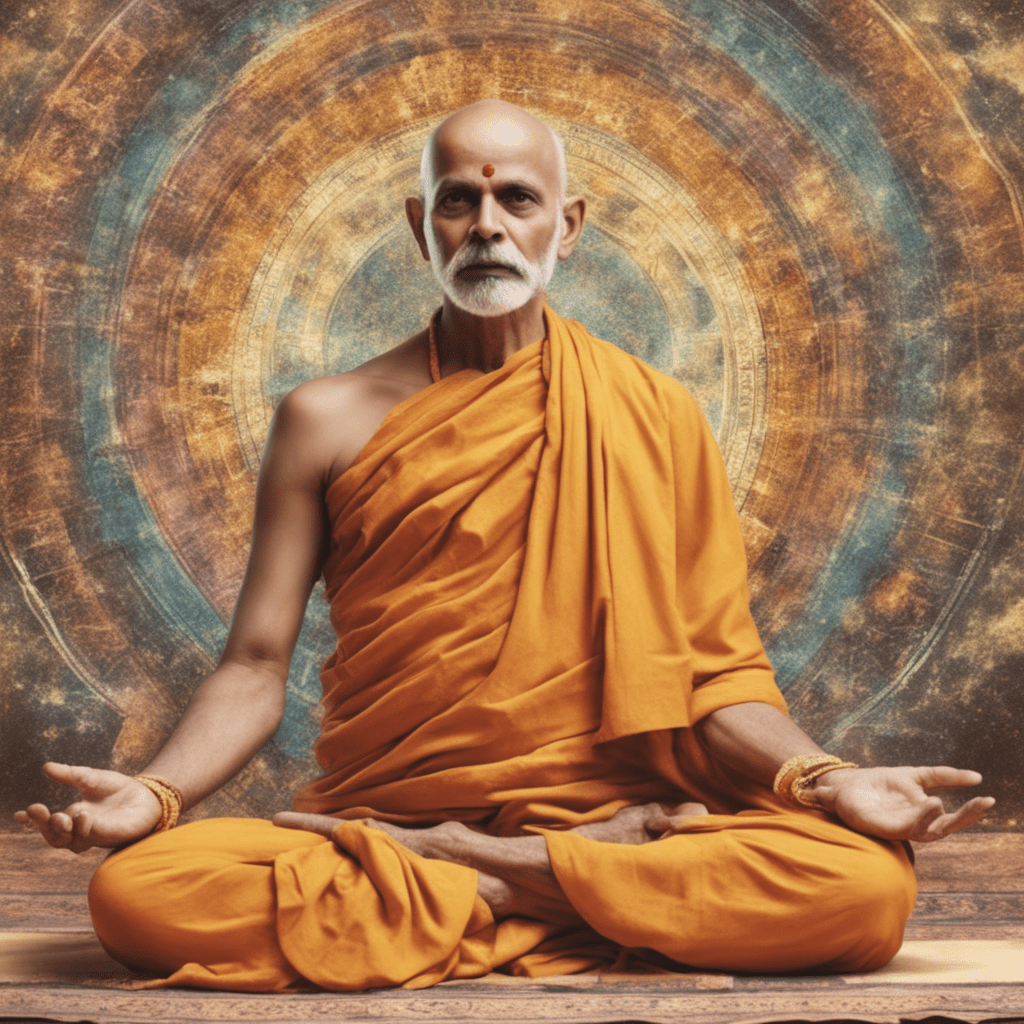
Absolute Monism

Unraveling the Tapestry of Oneness

The vast universe, with its manifold entities and infinite complexities, often bewilders human minds. Philosophers and thinkers from time immemorial have grappled with questions about the nature of existence and the ultimate reality. One profound idea that surfaces recurrently is that of Absolute Monism: the belief that beneath the apparent multiplicity, there is but one undivided reality. Let’s take a deeper look into this captivating worldview.

### A Universe from One Thread


At the heart of Absolute Monism lies the assertion that all differences and diversities we perceive are mere illusions. This assertion may seem contradictory to our daily experiences. After all, isn’t the world teeming with diversity?

Yet, this is where Eastern and Western philosophies converge. Ancient Hindu scriptures speak of *Brahman* as the ultimate, undifferentiated reality. The Hindu philosophy of Advaita Vedanta encapsulates this belief by stating that the world’s multiplicity, driven by *Maya*, is an illusion. Meanwhile, in the West, the philosopher Spinoza proposed that God and Nature are two names for the same reality, implying a singular, infinite substance. These ideas, separated by continents, come together to champion a singular reality beneath the apparent diversity.

### Seeing Beyond the Illusion

The concept of illusion is integral to understanding monism. In life, appearances can often be deceiving. A mirage in the desert, a rainbow after the rain, and even our reflection in the water are all illusions. If such simple things can deceive our senses, might it be possible that our entire perception of diverse reality is similarly mistaken?

*Mysticism* has been one avenue through which individuals across cultures have described experiences consistent with Absolute Monism. The interconnectedness of all things, a theme found in the tapestry of monism, speaks to the heart, nudging us to see beyond divisions and differences.

### Implications for Modern Times

If Absolute Monism holds that all is one, then what does this mean for us in the present age, surrounded by divisive forces and fragmented views?

Firstly, on an ethical plane, it implies that harm inflicted upon one is harm to the entirety. This perspective could drastically alter how we approach interpersonal relationships, environmental concerns, and global crises. If we truly internalize this philosophy, then every act of kindness and harm has far-reaching consequences.

Secondly, it brings to the fore the importance of self-realization. In many monistic traditions, the realization of this singular truth is the end goal, bringing about an end to suffering.

Lastly, it sparks curiosity about the nature of our universe. With advancements in modern physics and cosmology, we find theories that echo monistic thoughts. The Big Bang, for instance, suggests that everything we see, touch, and experience emerges from a singular point.

### Embracing Diversity within Unity

Absolute Monism does not negate the value of diversity. Rather, it calls for a deeper understanding. Imagine a tapestry. Up close, one can see the myriad of colours, textures, and patterns. But from a distance, it’s one cohesive artwork. Similarly, monism asks us to appreciate the individual threads while recognizing the grand design.

In an age teeming with division, perhaps the idea of Absolute Monism can be the bridge that reminds us of our interconnectedness. As we stand at the cusp of profound global challenges, this ancient philosophy might just hold the key to a unified, harmonious future.


Embracing the ideas of Absolute Monism requires introspection and openness. Whether you fully resonate with its tenets or not, it undoubtedly serves as a beacon, guiding us toward unity, understanding, and profound interconnectedness.

Morgan O. Smith

Yinnergy Meditation & My Book, Bodhi in the Brain…Available Now!
https://linktr.ee/morganosmith

Nonduality

The Middle Ten Expressions

**Introduction:**   
Continuing our journey into the expansive realm of nonduality, let’s delve into the next ten expressions that capture its profound essence.

**11. The Intrinsic Harmony of the Universe:**   
At a deeper level, the universe operates in a state of harmony, with every piece playing its part in the grand orchestra of existence.

**12. An Experiential Realization of Oneness:**   
True understanding of nonduality isn’t just cognitive but is deeply experiential, felt in the very core of our being.

**13. Unity Beyond the Illusion of Multiplicity:**   
While the world seems diverse, underlying this diversity is a singular unity.

**14. The Space Where Boundaries Dissolve:**
   
In the realm of nonduality, boundaries and barriers lose meaning. All merges into one continuous expanse.

**15. The Heart of Many Spiritual and Mystical Traditions:**   
From Vedanta to Sufism, the essence of nonduality has been the cornerstone of many spiritual teachings.

**16. The Fundamental Nature of Existence Unsplit by Thought:**   
Thoughts tend to fragment our reality. But the fundamental nature of existence remains untouched by these divisions.

**17. Direct Perception Without the Lens of Duality:**   
Nondual awareness allows for a raw, unfiltered experience of reality.

**18. Where Divisions of Inner and Outer Lose Meaning:**
   
The perceived difference between our inner world and the outer environment fades in nondual understanding.

**19. The Silence That Speaks Louder Than Words:**
   
Nonduality can be more deeply understood in silence than amid words and explanations.

**20. The Realm Where Paradoxes Reconcile:**
   
Contradictions find their resolution in the realm of nonduality.

**Conclusion:**   
These expressions further enrich our understanding of nonduality, pointing us toward an expansive, unifying worldview.

Morgan O. Smith

Yinnergy Meditation & My Book, Bodhi in the Brain…Available Now!

https://linktr.ee/morganosmith

Horizontal and Vertical Nonduality

A Dance Between the Manifest and the Formless

Nonduality, a term often tossed around in philosophical and spiritual circles, is frequently misunderstood or oversimplified. But a deeper dive into its nuances, especially the concepts of horizontal and vertical nonduality, offers a rich tapestry of understanding that challenges our perception of reality. So, let’s embark on a journey between these two dimensions of experience.

**Horizontal Nonduality: A Symphony of Connection**

In the cacophony of life, amidst the myriad of forms, species, and people, there lies a silent song of unity. This is the realm of horizontal nonduality, where everything, regardless of its outer appearance, dances to the same rhythm, made of the same substance or essence.

This perspective is akin to viewing a vast ocean. On the surface, we see waves of various sizes and shapes crashing and retreating. They seem separate, each with its own identity. However, dive a little deeper, and one quickly realizes that all waves are part of the same vast body of water. Similarly, horizontal nonduality emphasizes the interconnectedness of all beings, revealing that the distinctions we observe are mere waves on the surface of a more profound unity.

**Vertical Nonduality: The Abyss of the Absolute**

Beyond the bustling dance of life and form, there lies an infinite silence, a void, a realm untouched by time and space. This is the territory of vertical nonduality. It speaks of an experience that transcends our worldly understanding, pointing towards an absolute reality that’s formless, timeless, and spaceless.

If horizontal nonduality is about recognizing the unity of the ocean’s waves, vertical nonduality is about plunging into the depths, where the concept of a wave doesn’t even exist. It’s about the direct realization that one’s true essence is beyond the ephemeral play of forms.

**Integrating the Two: A Holistic Dance**

While it may seem like these two dimensions stand at odds, a truly profound understanding of nonduality weaves them together in a harmonious dance. It’s neither about negating the beauty and diversity of the world (horizontal) nor about solely transcending it (vertical). Instead, it’s about holding both in a delicate balance.

Imagine living in a world where you can marvel at the beauty of individual snowflakes while being deeply rooted in the knowledge that they all share the same watery essence. This balance provides a holistic lens, allowing us to engage with the world with depth, compassion, and wisdom.

In conclusion, the dance between horizontal and vertical nonduality offers not just a philosophical perspective, but a transformative way of engaging with life. By understanding and integrating both these dimensions, we open ourselves to a richer, more profound experience of reality, where the play of forms and the formless essence coexist in a beautiful, harmonious symphony.

Morgan O. Smith

Yinnergy Meditation & My Book, Bodhi in the Brain…Available Now!
https://linktr.ee/morganosmith

The Mystical Peak Experience of Pure Sexual Love

Exploring Eros

In the diverse tapestry of human experience, few phenomena are as enigmatic and profound as the experience of love. Among its many facets, the experience of Eros stands apart as a sublime manifestation of pure sexual love that transcends the ordinary and becomes mystical.

Eros: More than Just Desire

Named after the Greek god of love, Eros is often relegated to the realm of mere physical attraction or romantic infatuation. However, to those who have encountered its mystical peak, it represents something far more profound. Eros is an expression of love that transcends mere physicality, reaching into the spiritual realm and connecting us to something greater.

The Peak Experience: A Transcendental Connection


The mystical experience of Eros is not about hedonistic pleasure or fleeting passion. It’s a profound peak experience that transcends the mundane, awakening a deeper connection not only with a partner but with existence itself.

In this state, lovers are not merely engaging in a physical act; they are participating in a sacred ritual that symbolizes unity, trust, and transcendence. It’s a moment where boundaries dissolve, and two individuals become one, not just physically, but emotionally and spiritually.

The Philosophical Dimensions of Eros

The experience of Eros brings into focus philosophical questions about the nature of love, connection, and existence. Is love merely a biochemical reaction, or does it hint at a more profound, cosmic truth? Can sexual love be a pathway to spiritual enlightenment? What does it mean to truly connect with another human being?

Many philosophers and mystics have explored these questions, recognizing the potential for sexual love to be a vehicle for self-realization and spiritual growth. Eros, in its purest form, challenges our conventional understanding of love, encouraging us to see beyond the superficial and to recognize the sacred in the everyday.

Conclusion: Eros as a Path to Understanding

The mystical peak experience of Eros is not just a fleeting moment of pleasure; it’s a profound philosophical insight into the nature of connection, existence, and the human condition. It offers a glimpse into a realm where love is not confined to physical attraction but is a unifying force that binds us all.

To understand Eros is to engage with some of the most fundamental questions about what it means to be human, what it means to love, and what it means to connect with something greater than ourselves. It’s a journey that invites us to look within, to question, to explore, and to grow.

The mystical experience of Eros reminds us that love is not merely an emotion but a transformative power that can lead us to deeper understanding and spiritual awakening. It is a beacon that guides us toward a more profound connection with ourselves, with others, and with the universe itself. In embracing Eros, we may find not just pleasure, but wisdom, joy, and a sense of unity that transcends our earthly existence.

Morgan O. Smith

Yinnergy Meditation & My Book, Bodhi in the Brain…Available Now!
https://linktr.ee/morganosmith


The Profound Transformation of Realizing Oneself as Brahman

A Journey Beyond the Self

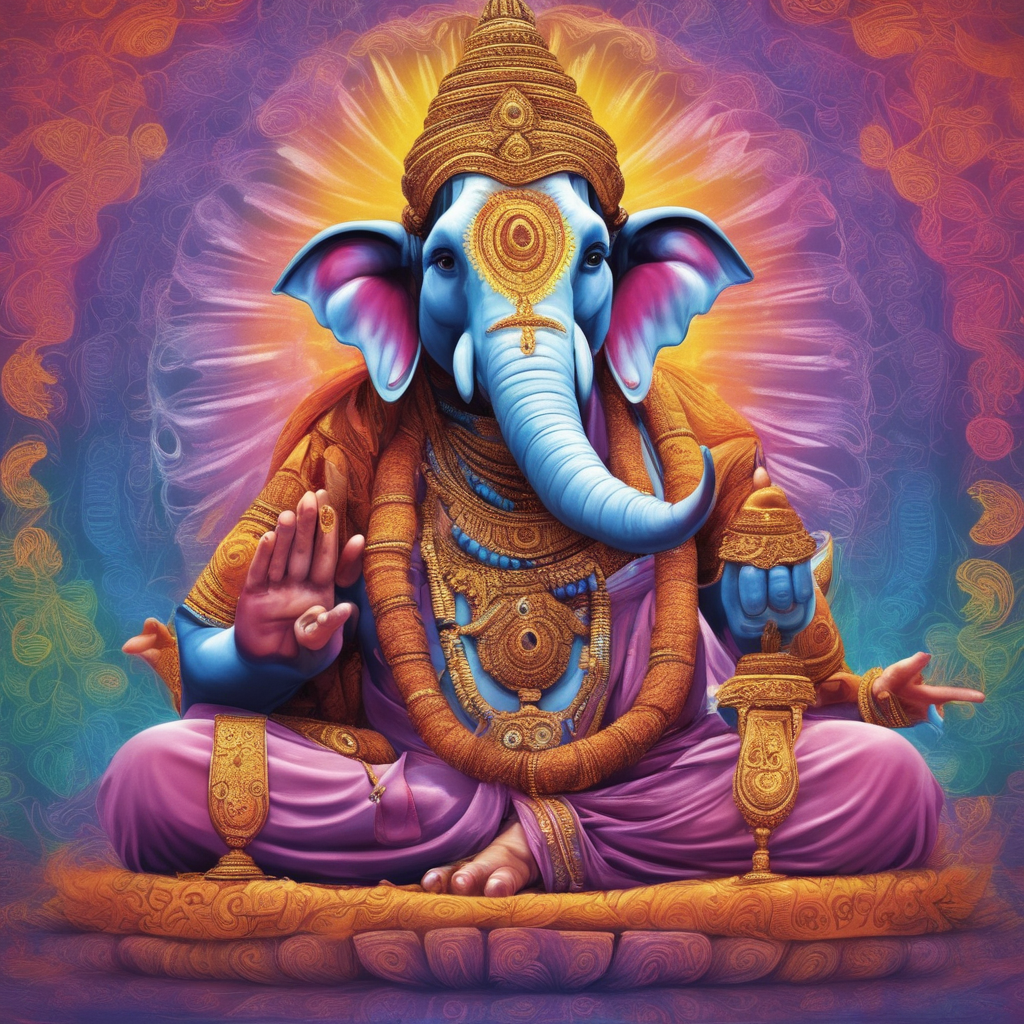
In the boundless tapestry of human existence, few ideas are as profound and transformative as the realization of oneself as Brahman. A central concept in Hindu philosophy, Brahman refers to the ultimate reality or cosmic spirit, a principle that transcends the individual self and unites all living beings.

This blog post explores the many changes an individual might experience upon this realization, a journey that transcends mundane existence and awakens a new consciousness.

### The Loss of Ego and the Embrace of Unity

Perhaps the most radical shift in consciousness comes from losing the individual ego. Recognizing oneself as part of the universal oneness leads to a dissolution of the self, allowing the individual to see beyond the superficial distinctions that often characterize human perception. This leads to a profound sense of unity, empathy, and compassion, transcending barriers like race, nationality, and religion.

### A Shift in Values and Desire

The realization of Brahman changes the very fabric of desire and ambition. Material possessions, social status, and even relationships may lose their significance, replaced by spiritual growth and a deepened understanding of the cosmic order. The individual might pursue selfless service, finding fulfillment in contributing to the well-being of all.

### The Embrace of Paradox and the Transcendent Nature of Existence

This profound awakening allows for a comfortable acceptance of paradoxes and contradictions. Time becomes more fluid, creativity blossoms, and the person might develop an ability to recognize synchronicities, meaningful coincidences that reveal the interconnected web of existence.

### Living in Harmony and Transcending Social Constructs


Living in harmony with nature, respecting all life, and transcending conventional gender roles and social constructs, the enlightened individual moves through life with grace, mindfulness, and effortless action. Their actions are unforced, carried out with a sense of reverence and alignment with universal ethics.

### The Physical and Emotional Manifestations

The journey to realizing oneself as Brahman does not merely affect the mind but also resonates through the body and emotions. The individual may find improved physical well-being, experience deeper states of meditation, and become almost entirely devoid of internal and external conflict.

### The Inspiration to Others

Through this transformation, the individual becomes a living example of peace, love, and wisdom, inspiring others simply through their presence and way of being. They embody a philosophy that sees beyond the limitations of material existence and offers a path to spiritual awakening.

### Conclusion

The realization of oneself as Brahman is a profound spiritual concept that encompasses every aspect of being—mental, physical, emotional, and spiritual. It offers a glimpse into a state of consciousness that transcends the mundane and awakens a new way of perceiving reality.

In a world often driven by material pursuits and divisive ideologies, the teachings surrounding Brahman provide a timeless wisdom that calls for unity, compassion, and a life centred on spiritual truth. Whether viewed as a philosophical concept, a religious belief, or a spiritual experience, the realization of Brahman invites us to look beyond the self and embrace a vision of existence that is all-encompassing, transcendent, and profoundly transformational.

As we navigate the complexities of modern life, may we find inspiration in the ancient wisdom that teaches us to see ourselves not as isolated beings but as part of a grand, interconnected cosmos, guided by a principle that is at once beyond us and within us. It is a journey of discovery, a path to enlightenment, and a call to a deeper, more meaningful existence.

Morgan O. Smith

Yinnergy Meditation & My Book, Bodhi in the Brain…Available Now!
https://linktr.ee/morganosmith

Moksha

The Universe in Liberation

As we traverse the intricate corridors of Hindu philosophy, a term that emerges as a beacon of liberation is ‘Moksha’. This concept, commonly associated with individual salvation from the cycle of birth, death, and rebirth, presents a spiritual zenith. However, what if we zoom out from the individual perspective and consider Moksha at a cosmic level? What if the Universe itself were to attain Moksha?

The Big Bang marked the birth of the Universe, setting forth an infinite dance of creation, preservation, and destruction. Stars were born, galaxies sculpted, and planets formed, only to one day succumb to the grand design of entropy. This cyclical nature bears a striking resemblance to the cycle of Samsara in Hindu thought, where souls are continuously born and reborn in different forms until Moksha is achieved.

If the Universe could experience Moksha, it would transcend its cycle of cosmic Samsara – from the Big Bang to the eventual Big Crunch or Heat Death, depending on which theoretical physicist you ask. This liberation would mean breaking free from the constraints of time, space, and causality, reaching a state of infinite, timeless existence.

So, what would this feel like for the Universe?

When we ponder this question, we must acknowledge that the Universe’s experience, in this context, is beyond human comprehension. But let’s indulge in the thought experiment. We could imagine this state as one of perfect harmony and unity. There would be no ‘other’, no ‘alien’, and no ‘external’. The galaxies, stars, planets, and even the tiniest quantum particles would exist in a state of interconnection and oneness.

From the perspective of sentient beings, this would mean a profound sense of unity with everything else. Distinctions that currently cause division – species, races, cultures, even life and non-life – would become irrelevant. All of existence, inanimate and animate, would be seen as expressions of the same cosmic consciousness.

And yet, paradoxically, this unified existence would also mean the cessation of experience as we know it. Experience implies a subject and an object, an experiencer and the experienced. But in the absolute unity of cosmic Moksha, these dualities would dissolve. Therefore, in a sense, the Universe would be in a state of ‘experiencing without an experiencer’ or ‘knowing without a knower’.

In the grand scheme of cosmic liberation, human Moksha could be seen as a fractal microcosm – a ripple that mirrors the pattern of the whole. Each being achieving liberation contributes to the whole Universe moving towards its own Moksha, its release from the cosmic cycle of birth and death. This profound realization places our spiritual quests in a broader context and imbues them with a universal significance.

However, the implications of this concept are not just metaphysical, but deeply ethical. Recognizing our shared journey toward liberation fosters compassion, humility, and a sense of stewardship for all of existence. Our actions, in this view, can either facilitate or hinder the Universe’s journey toward Moksha.

In conclusion, contemplating Moksha at a universal scale stretches the boundaries of our imagination and empathy. It invites us to view ourselves not as isolated entities but as integral parts of a grand cosmic dance seeking the ultimate liberation.

Morgan O. Smith

Yinnergy Meditation & My Book, Bodhi in the Brain…Available Now!

https://linktr.ee/morganosmith

The Facets of Ego and Transcendent Experiences: Part Two

As we proceed from Part One, a profound realization dawns. During moments of complete ego death, the individual facets cease to exist, yet paradoxically, they all exist, blending into a unified consciousness. The boundaries of ‘I’, ‘you’, ‘us’, and ‘them’ dissolve, making room for an all-encompassing ‘we’.

Our ego transforms and integrates into the collective consciousness, interconnecting with the egos of all beings, and indeed, the universe itself. Every trait, every star in our constellation, becomes part of this grand cosmic tapestry.

This realization isn’t merely intellectual, but experiential. Our individual identities meld into the collective, signifying an interconnectedness that transcends our singular perspective. In the dance of the facets of ego and the mystical experiences, we uncover our deepest potential to be interconnected, to share in the collective consciousness of all beings, and to participate consciously in the magnificent orchestration of the universe.

Through this journey, we don’t lose ourselves; instead, we find our place in the cosmos, gaining a newfound appreciation for the diversity and unity that life offers. We witness our traits, without labelling them as positive or negative, as part of a unified whole. Our ego ceases to be an entity isolated from the universe and becomes a fundamental part of the cosmic consciousness.

This exploration of the ego and its many facets is not just an intellectual exercise, but a call for introspection and self-awareness. It encourages us to embrace our full spectrum of experiences, from the depths of our struggles to the heights of our joys, all the while seeking that profound connection with the universe and our place within it.

Morgan O. Smith

Yinnergy Meditation & My Book, Bodhi in the Brain…Available Now!

https://linktr.ee/morganosmith

A Meeting of East and West

Advaita Vedanta and Ken Wilber’s Four Quadrants

As we navigate through life’s labyrinth, we encounter myriad philosophical viewpoints designed to offer us clarity about the nature of reality. Two such perspectives – one rooted in ancient Eastern spirituality, Advaita Vedanta, and the other a more contemporary Western theory, Ken Wilber’s Integral Theory – provide us with intriguing interpretive lenses. While appearing distinct, when juxtaposed, they unfold a captivating dialogue, revealing the interconnectedness of diverse paths of wisdom.

**Non-Duality: The Heart of Advaita Vedanta**

At the core of Advaita Vedanta lies the profound principle of non-duality. The term ‘Advaita’ translates to ‘not two’, pointing towards the notion of unity beneath apparent multiplicity. According to this philosophy, all phenomena – whether perceived as separate entities or diverse experiences – are manifestations of a singular absolute reality known as Brahman.

This philosophy posits that the perceived distinction between the individual self (Atman) and the ultimate reality (Brahman) is an illusion (Maya), born out of ignorance (Avidya). The journey of spiritual awakening in Advaita Vedanta is about transcending this illusion, recognizing the non-dual nature of existence, where the Atman and Brahman are not separate but one.

**Ken Wilber’s Four Quadrants: A Comprehensive Map of Reality**

Ken Wilber’s Integral Theory, particularly the Four Quadrants model, offers a different but complementary perspective. Wilber presents a holistic map of reality, dividing it into four quadrants: Individual Interior (consciousness), Individual Exterior (behaviour), Collective Interior (culture), and Collective Exterior (society). Each quadrant represents an integral part of our existence and must be considered to understand reality holistically.

**The Interplay: Advaita Vedanta and Four Quadrants**

Drawing parallels between Advaita Vedanta and the Four Quadrants can create a fascinating synthesis of Eastern and Western thought.

The Upper Left Quadrant (Individual-Interior) aligns with the individual’s subjective experience, mirroring the Advaita exploration of Atman. The Upper Right Quadrant (Individual-Exterior) encapsulates the physical manifestation of the individual, aligning with the Advaita concept that even our physical existence is a manifestation of Brahman.

The Lower Left Quadrant (Collective-Interior) represents shared beliefs and cultures, resonating with the Advaita perspective that cultural differences are superficial, and at a deeper level, unity prevails. The Lower Right Quadrant (Collective-Exterior) mirrors societal structures, all manifestations of the same non-dual reality.

From the Advaita viewpoint, the division of the four quadrants are themselves expressions of Maya, as they create apparent separations where none ultimately exist. They are valuable tools for understanding and navigating the world but do not represent the deepest truth of non-duality.

**Uniting Perspectives: A Path to Enlightenment**

Exploring the intersection of Advaita Vedanta and Ken Wilber’s Four Quadrants offers a richer understanding of reality, harmonizing subjective and objective, individual and collective, Eastern spirituality and Western theory. As we understand that the lines dividing these quadrants are more porous than they seem, we move closer to the non-dual truth of Advaita – that beneath apparent diversity, unity pervades.

At a time when division and fragmentation are rampant, this synthesis could offer a path toward the kind of transcendental insight that can bridge divides, fostering a deeper sense of interconnectedness and wholeness. After all, as Advaita Vedanta teaches us, beneath the surface of multiplicity, we are ‘not two’ but one. As we embrace the wisdom of the four quadrants, we might just find ourselves taking a step closer to that unity, opening ourselves to a richer, more holistic understanding of the world.

Morgan O. Smith

Yinnergy Meditation & My Book, Bodhi in the Brain…Available Now!

https://linktr.ee/morganosmith

The Unfolding Symphony

Embracing Life through an Open Heart

Introduction: In the grand theatre of existence, our hearts play a central role in the symphony of human experience. To navigate the depths of life’s mysteries, we must learn the art of keeping our hearts open. A profound approach to achieving this lies in the act of wholeheartedly accepting and embracing everything we encounter – the sights, sounds, scents, flavours, and textures – as intrinsic aspects of ourselves. This philosophical journey explores the transformative power of openness, inviting us to delve into the essence of existence and cultivate a profound connection with the world around us.

  1. Embracing the Multitude of Perspectives: To keep the heart open, we must acknowledge the multitude of perspectives that shape our reality. Each experience we encounter is coloured by our unique perceptions, and no two individuals experience the world in exactly the same way. By embracing the diversity of viewpoints, we unlock the potential for genuine empathy and understanding, fostering an inclusive and compassionate society.
  2. Surrendering to the Flow of Life: Life’s tapestry weaves an intricate pattern of joy and sorrow, triumph and defeat. Embracing an open heart requires us to surrender to the natural ebb and flow of existence without resistance. When we stop trying to control or manipulate life’s course, we find solace in the understanding that every experience is a teacher, guiding us towards growth and self-discovery.
  3. Liberating the Self from Ego: The ego often entangles our hearts in a web of desires, fears, and judgments. To truly embrace life as an extension of ourselves, we must transcend the ego’s limitations and recognize the interconnection between all living beings. Letting go of the attachment to the “self” allows us to dissolve the illusion of separateness and discover a profound sense of unity with the universe.
  4. Cultivating Radical Acceptance: Radical acceptance is the key to unlocking the transformative power of an open heart. By embracing everything we encounter – the pleasant and the challenging, the familiar and the unfamiliar – as essential aspects of our journey, we learn to dance gracefully with life’s ever-changing rhythms. Embracing all facets of existence deepens our capacity for resilience and enriches our human experience.
  5. Living with Gratitude: Gratitude is a sacred gateway that opens our hearts to the splendour of life. Embracing a sense of profound gratitude for each moment, we begin to see life’s wonders with fresh eyes and a receptive heart. Gratitude is the beacon that leads us to treasure even the seemingly mundane, unveiling the beauty hidden within the folds of everyday life.

Conclusion: Keeping the heart open is an ethereal quest that unravels the essence of our existence. By accepting and embracing every encounter, we transcend the boundaries of self and connect with the universal tapestry of life. Embracing diverse perspectives, surrendering to life’s flow, and liberating ourselves from the ego’s grasp elevate us to a higher plane of consciousness. Through radical acceptance and gratitude, we find profound meaning in the ordinary and glimpse the extraordinary in the ordinary. Let us embark on this philosophical journey, keeping our hearts open to the wonders that life has to offer, and savouring the grand symphony of existence in all its magnificence.

Morgan O. Smith

Yinnergy Meditation & My Book, Bodhi in the Brain…Available Now!

https://linktr.ee/morganosmith

The Cosmic Dance

An Exploration of the Universe’s Nondual Governance

Introduction:
In the vast expanse of existence, we find the Universe – an intricate tapestry woven from the finest threads of the cosmos. From the gross body, encompassing galaxies and stars, to the ethereal nondual body, this blog delves into the profound interplay between the Universe and its creation. Join me on a philosophical journey as we contemplate the mysterious dance that governs both the Universe and everything within it.

The Gross Body – Galaxies, Stars, and Celestial Rhythms

At the foundational level, the Universe reveals its grandeur through galaxies, stars, and celestial bodies. The intricate movements and cosmic rhythms within this gross body shape the fabric of space and time. We ponder how the Universe’s gravitational embrace guides celestial objects, orchestrating a symphony of celestial phenomena.

The Subtle Body – Energy and Consciousness

Beyond the tangible cosmos lies the subtle body of the Universe, where energy and consciousness intermingle. Here, we explore the profound nature of dark matter and dark energy, contemplating their role in the Universe’s governance. Moreover, we delve into the captivating relationship between consciousness and creation, questioning whether the Universe itself possesses a form of cosmic awareness.

The Causal Body – The Laws of Nature
At the causal level, the Universe operates through the laws of nature, elegant principles that govern every aspect of existence. We contemplate the harmony and precision of these laws, reflecting on how they have shaped the Universe from its inception and continue to influence its evolution.

The Nondual Body – Embracing Unity and Oneness
At the highest level of existence, the nondual body transcends duality and embraces oneness. We dive into the concept of nonduality and its profound implications for our understanding of the Universe. Is there an inherent unity that underlies all creation, where the Universe and its inhabitants are inextricably connected?

The Dance of Reciprocity – Mutual Governance
Here, we explore the fascinating concept of mutual governance. We contemplate how every action within the Universe sets off a chain of reactions that echo throughout existence. This reciprocity prompts us to consider the profound responsibility we hold as conscious beings within this cosmic symphony.

Conclusion:
The journey through the various levels of the Universe’s governance has led us to ponder the interwoven relationship between creation and creator. As we contemplate the dance of the Universe, we discover that we are not merely passive observers but active participants in this cosmic drama. From the gross to the nondual body, we are interconnected in a profound and symbiotic relationship, where each action ripples through the fabric of existence. Embracing this understanding, we find ourselves invited to co-create the symphony of the Universe with awareness, reverence, and love.

Morgan O. Smith

Yinnergy Meditation & My Book, Bodhi in the Brain…Available Now!

https://linktr.ee/morganosmith