Author, Philosopher, Spiritual Teacher, A Lead Facilitator at Sacred Media's Integral Mastery Academy, Founder of Yinnergy Meditation/Neurofeedback, Bodhi Mental Care & Wellness, Co-founder of KeMor Centre for Innovative Development
In the profound journey of spiritual awakening, there stands a pivotal revelation – the understanding of one’s divine nature. This recognition often confronts the traditional notion of believing in a separate, external deity. When we cling to the belief in a God as an entity apart from ourselves, we inadvertently reinforce the very illusion we seek to transcend. It is a subtle yet profound enigma that underlies much of spiritual discourse.
Belief, in its essence, is a product of the mind. It is an attempt to conceptualize and grasp the infinite, to put boundaries around that which is boundless. This pursuit, while noble in its intention, often leads us astray from the ultimate truth. The idea of a separate God is a manifestation of this endeavour – an externalization of the divine that is, in reality, an intrinsic part of our being.
The realization that “I am God” is not an assertion of egoic supremacy but an awakening to the non-dual nature of existence. In Eastern philosophies, this understanding is not uncommon. It echoes the principles of Advaita Vedanta, where the individual self (Atman) is seen as one with the universal self (Brahman). This realization dissolves the illusion of separation, the root of all delusion. It is a profound awakening to the truth that there is no ‘other’ – there is only the One, manifesting in myriad forms.
This insight brings with it a profound freedom. It liberates us from the confines of narrow belief systems and opens us to a direct experience of the divine. There is no need for belief in this space, for the truth is known directly and experientially. It is a state of being where one is free from the dualities of faith and disbelief, existing in a harmonious union with all that is.
In this understanding, we find a deeper compassion and connection to the world around us. Recognizing the divine in ourselves, we see it in everything else. This is the heart of true spirituality – a state of oneness with all existence.
As we navigate our spiritual paths, let us be mindful of the traps of belief and the freedom that comes with direct knowing. Let us seek not to conceptualize the divine, but to experience it, to become it. In doing so, we step beyond the confines of illusion and into the boundless reality of our true nature.
Morgan O. Smith
Yinnergy Meditation, Spiritual Life Coaching & My Book, Bodhi in the Brain…Available Now!
In the realm of spiritual exploration and philosophical contemplation, the concept of Para Brahman stands as a profound enigma. It is a term that transcends the limits of our typical understanding, pushing us into the depths of what might be considered the ultimate reality.
Para Brahman, in its essence, is the embodiment of the formless and the infinite. It is not confined by the physical dimensions we are accustomed to, such as length, height, depth, or width. This absence of form extends beyond the physical, into the realms of emotion, thought, and even the metaphysical. It is devoid of texture, distance, time, space, feelings, emotions, senses, attachments, desires, thoughts, memories, anticipation, smell, temperature, relationships, distinctions, wants, needs, and regrets. This extensive list, however, is not exhaustive but indicative of the boundless nature of Para Brahman.
What makes this concept both intriguing and challenging is the paradox it presents. Para Brahman, while being beyond all these attributes and perceptions, simultaneously encompasses everything that has been mentioned. It is not just the absence but also the presence of all. This paradox forces us to rethink our understanding of existence and non-existence, presence and absence, form and formlessness.
How can something be everything and nothing at the same time? This question lies at the heart of understanding Para Brahman. It compels us to look beyond the dualities that dominate our everyday experiences. In this sense, Para Brahman is not just a concept but an invitation to experience reality in its most unadulterated form.
This exploration is not just an intellectual exercise but a journey toward self-realization. It challenges our deeply ingrained notions of what is real and what is illusion. By contemplating Para Brahman, we delve into a state of consciousness where the distinctions that define our usual experiences dissolve. In this state, we are neither bound by our desires nor limited by our perceptions.
The understanding of Para Brahman brings us to the cusp of spiritual awakening, where the individual self merges with the universal self. It is a state of being that many spiritual traditions aim to realize – a state of pure consciousness, unmarred by the transient nature of physical existence.
In conclusion, the concept of Para Brahman invites us to embark on a journey beyond the confines of our material and psychological limitations. It encourages us to experience the world not just through our senses and thoughts but through a profound understanding of the interconnectedness and the boundlessness of all existence.
Morgan O. Smith
Yinnergy Meditation, Spiritual Life Coaching & My Book, Bodhi in the Brain…Available Now!
Exploring the Indivisible Reality from Multiple Perspectives
The quest to understand Brahman is a journey into the heart of existence itself, a pursuit that has intrigued philosophers, sages, and seekers for millennia. In the vast expanse of Hindu philosophy, Brahman is the ultimate reality, the fabric of all that exists and beyond. It is both immanent and transcendent, the core of our being and the cosmos. This exploration of Brahman from various perspectives—gross, subtle, causal, and nondual—invites us to expand our minds beyond the limits of ordinary perception. **From the Gross Perspective: Brahman as the World**
When we look at Brahman from the gross perspective, we see the universe in all its material splendour. Here, Brahman is not an abstract concept but the physical universe that we interact with through our senses. It is the mountains, rivers, stars, and galaxies; the dance of creation and destruction visible to the naked eye. This manifestation is known as Saguna Brahman, the form with qualities, where the Divine is seen with attributes and forms, engaged in the act of creation. **From the Subtle Perspective: Brahman as Consciousness**
Venture deeper, and we encounter the subtle perspective. Here, Brahman is the essence of consciousness that animates life. This is not the consciousness that fluctuates with our thoughts and feelings, but the pure awareness that observes, untouched and unchanging. This subtle Brahman also referred to as Nirguna Brahman, is without qualities, where God is not limited by any attributes. It is the silent witness to the play of the universe, the inner light that illuminates our experiences.
**From the Causal Perspective: Brahman as the Source**
Moving into the causal perspective, we touch on the very source of existence. Brahman here is the unseen cause behind everything—the seed from which the tree of the universe grows. This aspect of Brahman is deeply mysterious, for it is the origin of time, space, and causality itself. It is Avidya, ignorance, not in the sense of lack of knowledge, but as the primal forgetfulness that makes us perceive duality in the nondual. **From the Nondual Perspective: Brahman as the One without a Second**
Finally, from the nondual perspective, Brahman is realized as the one without a second—Advaita. It is not a deity, not an entity, not even a ‘thing’ that can be comprehended by the intellect. It is the underlying oneness that pervades all dualities, where the seeker and the sought merge. In this view, the individual self (Atman) and the universal self (Brahman) are the same. All distinctions between creator and creation dissolve, revealing that there is nothing but Brahman—pure existence, consciousness, and bliss (Sat-Chit-Ananda).
This journey through the perspectives of Brahman reflects the layered depths of our existence. From the tangible reality of our day-to-day lives to the deepest spiritual realization, Brahman remains the unchanging truth. Each perspective is a step closer to the ultimate truth, leading us from the outward expressions of divinity to the profound inner revelation that we are, in essence, the infinite Brahman.
To understand Brahman is to expand our awareness across the spectrum of existence. The gross perspective roots us in our environment, the subtle unfolds the inner cosmos, the causal leads us to the primal source, and the nondual reveals our true infinite nature. In contemplating these perspectives, we may find that the journey to understand Brahman is not a journey outward but a profound voyage within, to the very core of who we are.
Morgan O. Smith
Yinnergy Meditation & My Book, Bodhi in the Brain…Available Now!
In the vast tapestry of human experience, one of the most profound and transformative realizations is the awakening to a sense of identity that stretches far beyond the individual self. This philosophical journey, explored by thinkers, mystics, and seekers throughout history, offers an exploration into the very essence of what it means to be human, and more profoundly, what it means to be a part of the cosmos.
### The Layers of Self
**1. The Individual Identity**: Our daily lives are governed by our personal experiences, histories, and beliefs. This individual self, encapsulated by our distinct personalities, desires, and aspirations, is like a drop in the vast ocean of existence.
**2. The Collective Identity**: There are moments, often inspired by shared experiences, when we resonate with a group, whether based on nationality, religion, or shared purpose. Here, the boundaries blur slightly, and the drop becomes a wave, united in its motion with other droplets.
**3. The Universal Self**: Delving deeper, we encounter a realm where the wave realizes it’s not just a part of the ocean, but the ocean itself. This vast sense of identity, encompassing all of life, the universe, and the myriad forms within it, is an experience of unity and oneness with all that exists. ### The Power of Oneness
With an expanded identity, empathy and compassion naturally flourish. The pain and joy of another are no longer abstract experiences; they become deeply personal as if they were our own. This profound interconnectedness also extends to nature, leading to an intrinsic desire to safeguard the environment and all its inhabitants.
Moreover, as one navigates this expanded identity, the grip of personal desires and ego-based needs loosens. Life begins to flow with an acceptance of its unfolding mystery, reducing resistance and enhancing serenity.
### Mystical Insights and Modern Science
Historically, mystics from various traditions spoke of experiences of union with the divine, the universe, or the underlying essence of reality. Today, intriguingly, modern science, especially in fields like quantum physics, hints at ideas of interconnectedness and non-locality. Such insights suggest that the ancient intuitions of interconnectedness may have parallels in our current understanding of the cosmos. ### Challenges of the Expansive Self
However, this journey is not without its pitfalls. As we embrace a broader sense of self, there’s the risk of “spiritual bypassing” – a tendency to use these expansive realizations to sidestep personal issues or challenging emotions. An expansive identity doesn’t negate personal responsibilities or the need for personal boundaries. It invites a deeper engagement with life in all its complexity.
### Conclusion
Our identity’s evolution, from a solitary droplet to the vast ocean, is a journey of consciousness and profound realization. It reminds us that beneath the multiplicity and diversity of existence lies an undercurrent of unity, urging us to rediscover and embrace our place in the cosmos.
As we ponder on the vastness of our identity, it serves as a beacon, guiding us toward a life of deeper meaning, connection, and purpose. In recognizing our expansive self, we find not only our place in the universe but also the universe within ourselves.
Morgan O. Smith
Yinnergy Meditation & My Book, Bodhi in the Brain…Available Now!
We’re all familiar with the concept of the individual ‘self’, the ego, and our personal identity that separates us from others. Conversely, many of us are aware of the concept of the ‘Universal Self’, the unbounded reality that underpins all existence, a staple idea in Eastern Philosophy. But what if we looked at these two states not as polar opposites but as points on a spectrum of selfhood? What if our understanding of ‘self’ could be broadened into a continuum that spans from the individual ego to the Ultimate Reality? In this blog, we explore the Theory of the Spectrum of Selfhood. **Understanding the Spectrum of Selfhood** The Theory of the Spectrum of Selfhood posits a fluid transition from the ‘small self’ or ego to the ‘big self’ or the Ultimate Reality. The journey from the ego-bound state of individual identity to the egoless state of universal consciousness isn’t an abrupt leap but a gradual progression along a continuum of selfhood.
**Navigating the Spectrum** While this process of self-evolution is dynamic and fluid, it might be useful to outline several potential stages or ‘selves’ along the spectrum:
1. **The Empathetic Self**: The first significant step beyond pure self-interest is when we start appreciating and feeling the needs and emotions of others. This is the dawn of less dualistic thinking, where others begin to be seen as extensions of oneself.
2. **The Societal Self**: Here, we become more community-focused, perceiving ourselves as parts of the societies or communities we belong to. We adopt group values, work towards communal goals, and blur the lines between the self and others.
3. **The Global Self**: Progressing further, we extend our consciousness beyond our immediate surroundings to encompass all of humanity. We acknowledge our shared human experiences and feel connected to diverse cultures, races, and backgrounds, which promotes unity and erodes dualistic perspectives.
4. **The Cosmic Self**: At this stage, we expand our identity beyond humanity, resonating with all life forms and the cosmos itself. As a cosmic self, we experience the interconnectedness of all beings and sense a deep unity with the universe, inching closer to non-duality.
5. **The Transcendent Self**: Here, the illusion of a separate self begins to dissolve. We start to experience moments of transcendence where we feel absolutely unified with all that is, leading us further down the path of non-duality.
6. **The Big Self (The Self/Ultimate Reality)**: The final stop on our journey where the individual self is completely transcended. We realize our true nature as pure consciousness and become one with the Ultimate Reality, embodying absolute non-duality.
**A Journey, Not a Destination** Remember, the Theory of the Spectrum of Selfhood presents a journey, a process of becoming, rather than a fixed state to attain. As such, these stages are not rigid or sequential; they provide a framework to understand the fluid and expansive nature of selfhood.
In embarking on this journey, we might find ourselves oscillating between different stages at different times, and that’s perfectly fine. The aim is not to rush through to the ‘end’ but to understand, embrace, and learn from each stage as we continue to evolve and expand our sense of self.
To borrow a phrase from the Greek philosopher Heraclitus, “No man ever steps in the same river twice.” Similarly, our journey along the spectrum of selfhood ensures that we are not the same ‘self’ at any two points in our life. We are always evolving, always expanding, forever journeying toward that Ultimate Reality.
This theory offers a refreshing perspective, and a new lens to view our spiritual evolution and growth. It invites us to acknowledge and accept that our sense of self is not a static or a binary concept but a dynamic and expansive one.
**Implications of the Theory of Spectrum of Selfhood** Understanding ourselves as existing on this spectrum can foster tolerance, empathy, and a deeper connection with all that is around us. As we move along the spectrum, our focus shifts from a purely self-centred perspective towards a more inclusive view that acknowledges our interconnectedness with the universe.
This shift in perspective allows us to approach our lives and interactions with a sense of unity and compassion. It also helps us to appreciate the diversity and complexity of human experiences. After all, we are all on our own unique journey along this spectrum, each of us exploring and expressing different aspects of selfhood at different stages of our lives.
**In Conclusion** The Theory of the Spectrum of Selfhood, while grounded in Eastern philosophy, offers a universal model for understanding and exploring our own identity. By viewing selfhood as a spectrum, we can embrace the complexity, fluidity, and dynamism of our personal and spiritual evolution.
Every moment provides us an opportunity to experience a different point on this spectrum, and each point brings us a step closer to the Ultimate Reality. So, let’s celebrate the journey, acknowledging each phase of selfhood as a stepping stone towards broader awareness and deeper understanding.
And remember, you are not just the drop in the ocean; you are the entire ocean in a drop, ever-evolving, ever-expanding. Happy journeying along your Spectrum of Selfhood!
Morgan O. Smith
Yinnergy Meditation & My Book, Bodhi in the Brain…Available Now!



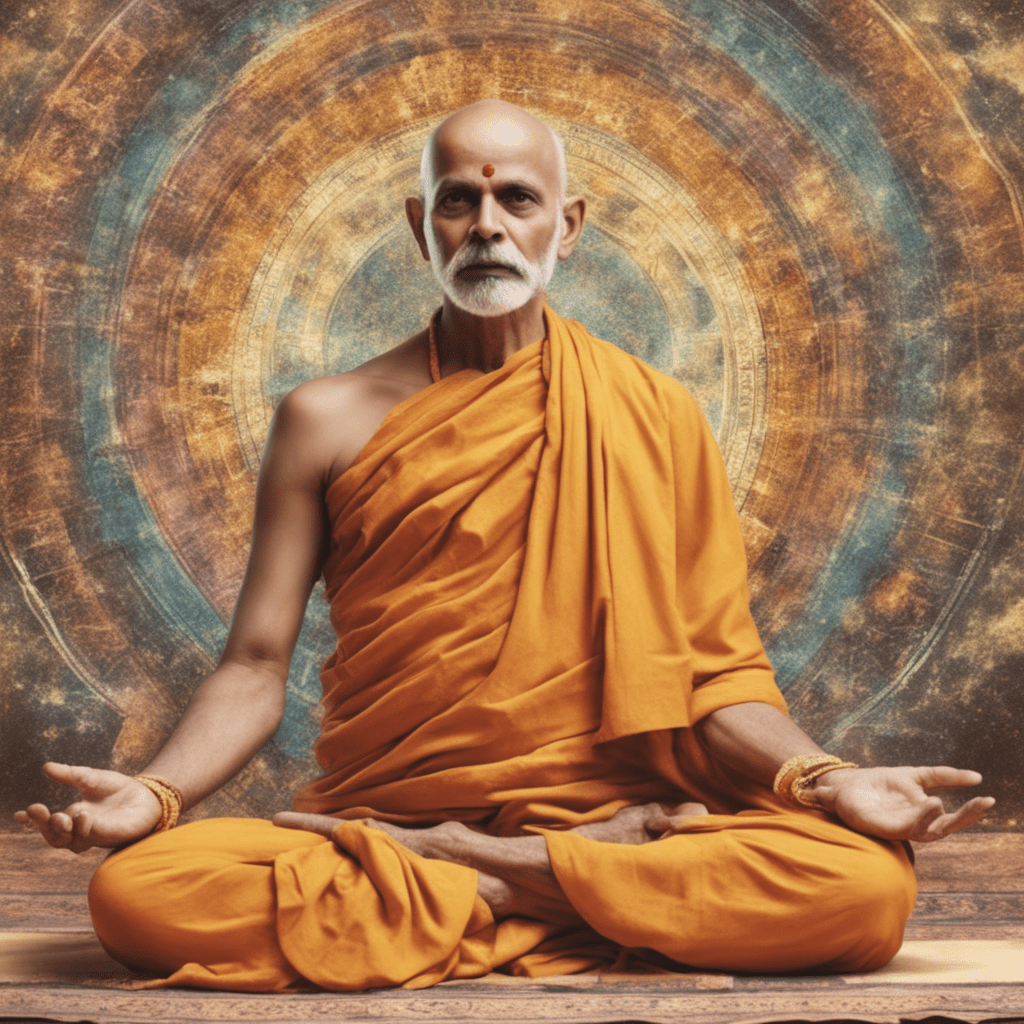

 Morgan O. Smith