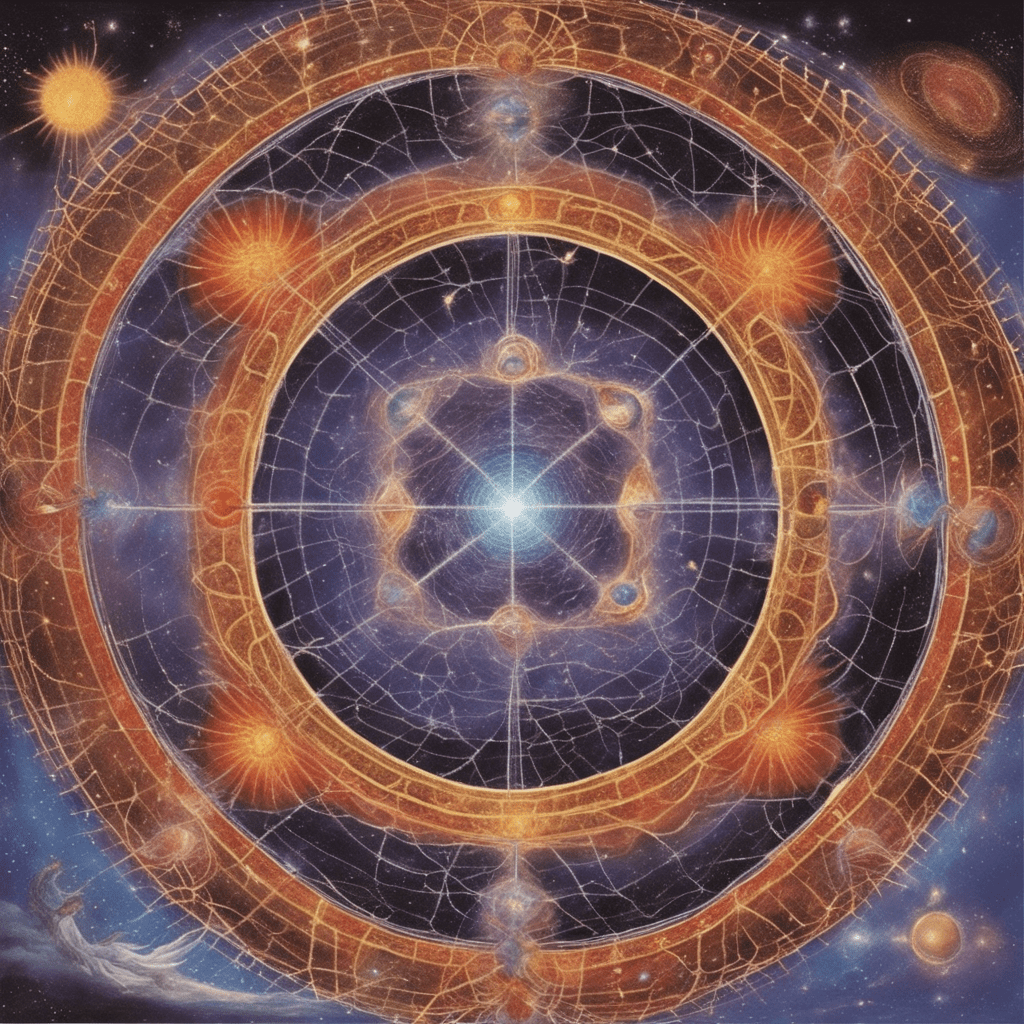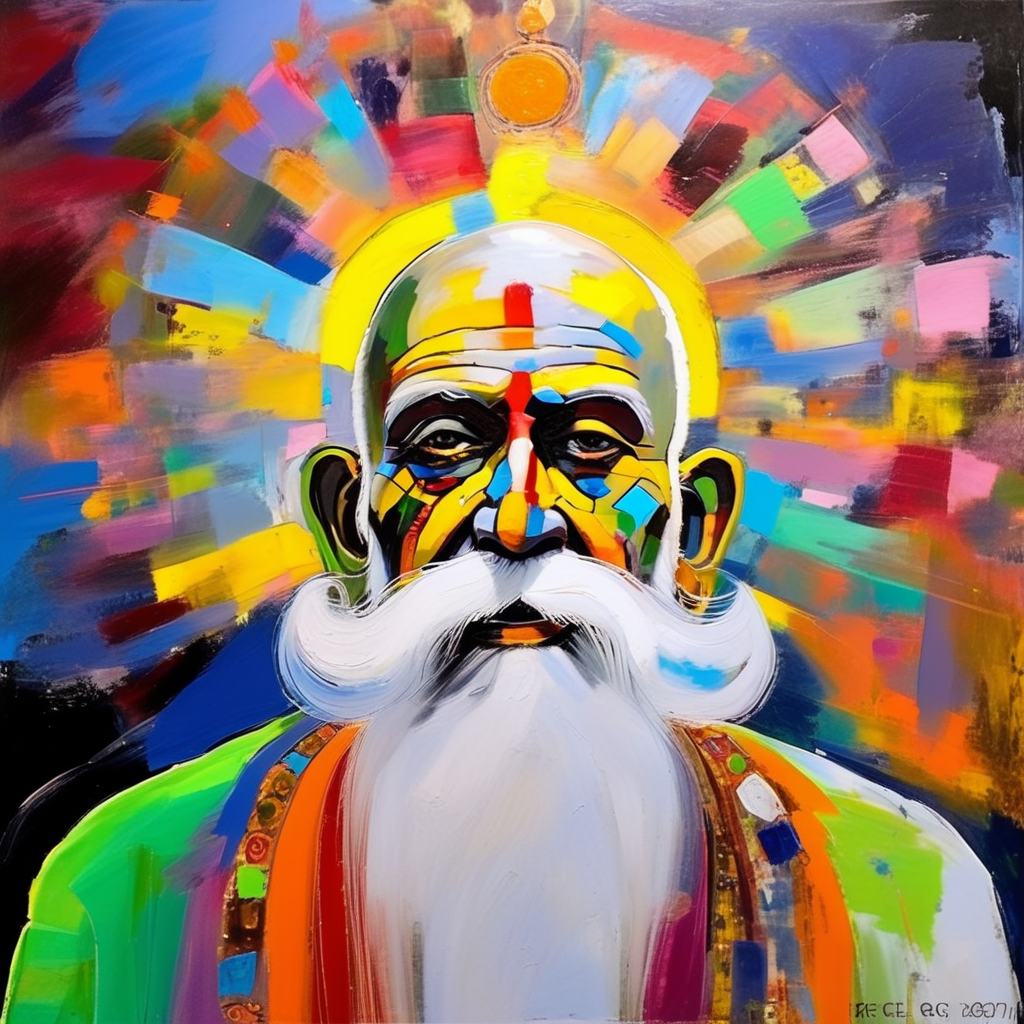
Embracing the Divine Within

The Journey from Knowing to Being

In the profound journey of spiritual awakening, the realization that everything is Brahman marks a pivotal moment of clarity and insight. This realization transcends the intellectual understanding that you, those around you, and the universe itself are intrinsically connected as one divine essence. But intellectual realization alone does not suffice; it must evolve into a deeper, visceral experience.

To truly embody this universal truth, you must engage not only your mind but also your heart and soul. It is one thing to know you are God; it is entirely another to feel this truth resonating deeply within every fibre of your being. This emotional resonance is crucial because it solidifies your understanding into something tangible and palpable. It becomes an unshakeable certainty, a profound knowing that you are, indeed, the divine essence itself.
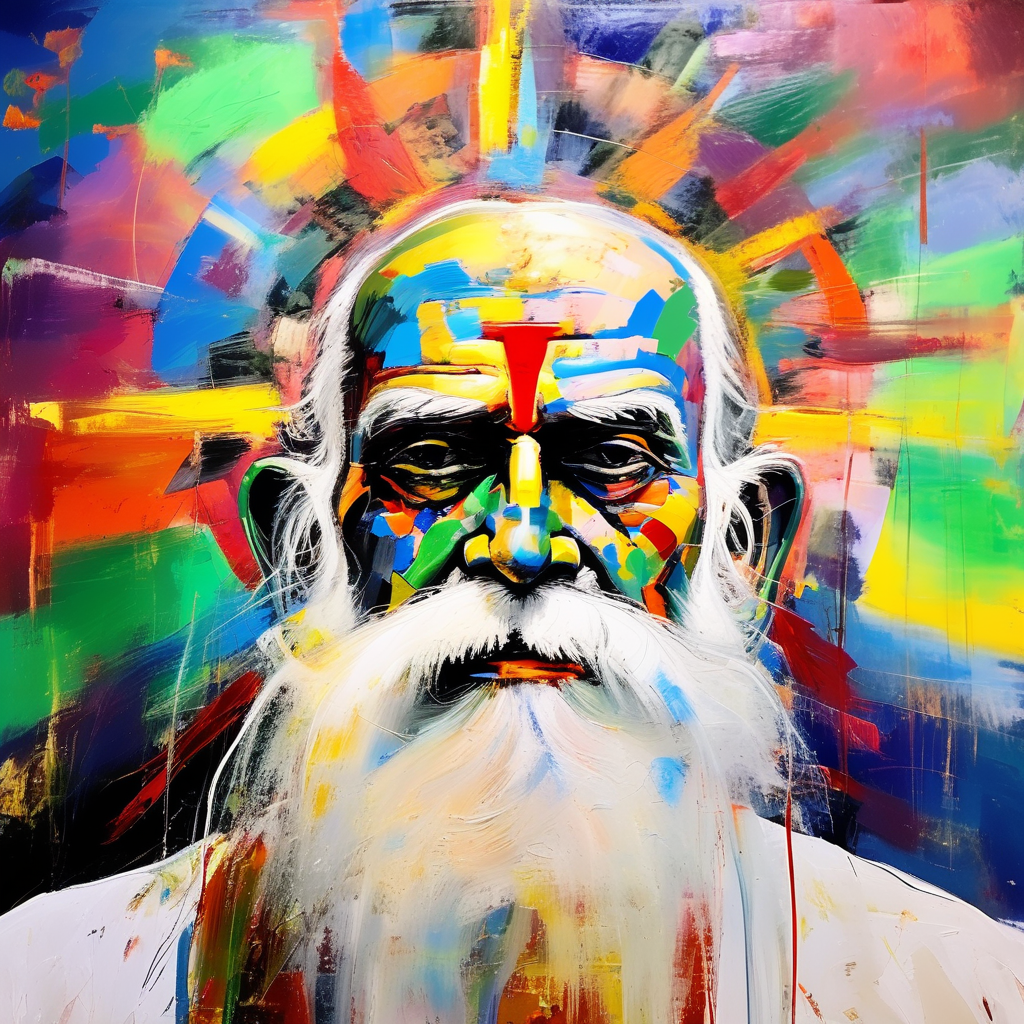

However, realization and feeling are merely the beginning. The next step is to embody this truth in every aspect of your daily life. This embodiment means living from a place of profound unity and compassion, expressing the divinity you have realized in your interactions, decisions, and responses to the world. As you navigate life, seemingly as an individual, you are moving from a foundation grounded in the totality of all existence.

The challenge and beauty of this spiritual path lie in its demand for constant integration of this deep knowledge into the mundane aspects of life. Every moment becomes an opportunity to manifest that divine connection, transforming ordinary experiences into acts of spiritual significance. In this way, the boundary between the sacred and the secular blurs, and all actions become expressions of the divine.
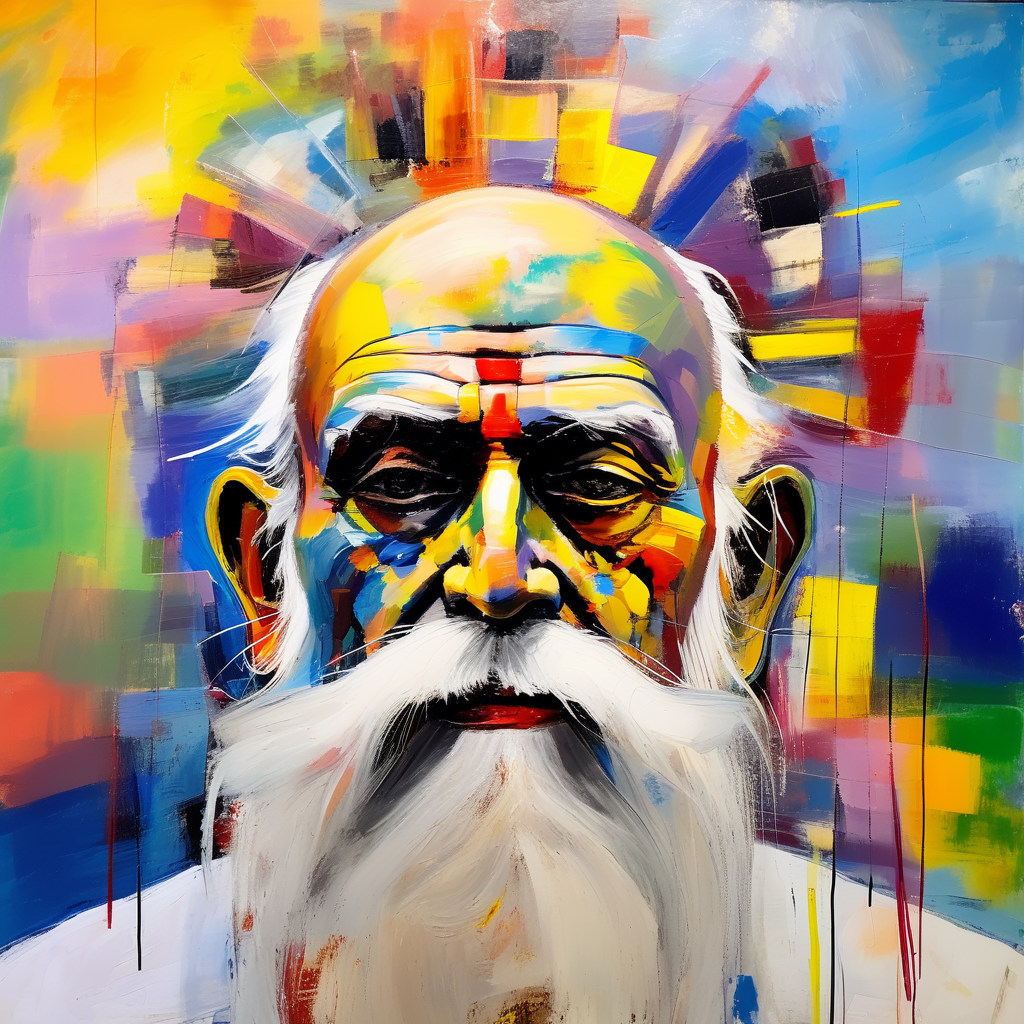

This transformation is not just a personal achievement but a gift to the world. By embodying divinity, you become a beacon of light and wisdom, guiding others toward their realization of the universal truth. In embodying this truth, we all contribute to a collective awakening, a shift towards a more conscious and enlightened world.

Morgan O. Smith

Yinnergy Meditation, Spiritual Life Coaching & My Book, Bodhi in the Brain…Available Now!

https://linktr.ee/morganosmith

The Unseen Journey

Crawling Towards Enlightenment

In the realm of spiritual growth, the path to enlightenment is often misconceived as a sudden emergence into a state of knowing. Yet, the essence of true understanding unfolds gradually, mirroring the natural progression from crawling to walking. This journey is subtle, requiring patience, persistence, and a deep commitment to the inward voyage.

Enlightenment, in its profound simplicity, can be likened to the process of a child learning to navigate the world. Initially, the child crawls, a phase marked by exploration and curiosity. This stage, though seemingly modest, is foundational. It represents the initial stirrings of awareness, where the soul begins to recognize the vastness of its existence beyond the physical constraints. Here, the seeker starts to explore the inner dimensions, crawling through the layers of self, guided by the light of introspection.

The transition from crawling to walking in spiritual terms is not marked by physical growth but by the expansion of consciousness. It involves the gradual shedding of ego, the relinquishment of attachments, and the deepening of one’s connection to the universal truth. This process is not linear but cyclical, with each step forward often accompanied by moments of regression, prompting further introspection and growth.

As we embark on this journey, we learn that enlightenment is not a destination but a way of being. It is the realization that every moment, every breath is an opportunity to be present, to witness the unfolding of life with a heart full of compassion and a mind free from judgment. The path demands a surrendering, a letting go of the need for certainty, and an embrace of the mystery that envelops our existence.

The beauty of this journey lies in its uniqueness for each individual, yet the underlying principle remains the same: one must learn to crawl before one can walk. The initial steps, taken in the darkness of the unknown, are what prepare us for the light of wisdom. It is in the act of crawling, of moving forward with humility and grace, that we pave the way for our spiritual awakening.


Let us then honour the crawl, the gentle, determined exploration of our inner landscapes, for it is here that the seeds of enlightenment are sown. Let us approach each day as a step towards understanding, a movement closer to the harmony that exists between the self and the universe. In doing so, we walk the path of enlightenment, not with haste, but with the deliberate pace of one who understands the value of each moment of awareness.

Morgan O. Smith

Yinnergy Meditation, Spiritual Life Coaching & My Book, Bodhi in the Brain…Available Now!

https://linktr.ee/morganosmith

Navigating the Complexities of Wisdom and Morality

In spirituality and personal development, the distinction between the message and the messenger often becomes blurred. A question that frequently arises is how to approach the teachings of spiritual leaders or gurus who are embroiled in controversies, particularly those involving moral transgressions like sexual assault. The predicament is whether their teachings, often profound and life-changing, lose their value when the teachers themselves fall from grace.

At the core of this dilemma is the age-old debate of separating the art from the artist, the wisdom from the wise. A parallel can be drawn with a simple mathematical truth: “1+1 equals 2.” This statement remains true regardless of who states it – be it a revered mathematician or someone convicted of a heinous crime. The truth, in its purest form, is untainted by the character of its proponent. In the same vein, can spiritual teachings retain their worth even if their source is flawed?

The key lies in discerning the message from the individual. Spiritual teachings, at their best, transcend the personal attributes of the one who delivers them. They tap into a universal truth that is not diminished by personal failings. However, this is not to say that the actions of the teacher are inconsequential. While the wisdom may still hold, the credibility and the moral authority of the teacher to impart these teachings come into question.

This leads to a nuanced approach. One can accept the wisdom that resonates and is beneficial while simultaneously acknowledging and condemning the wrongful actions of the teacher. It is about not idolizing the individual to the point where their failings are ignored or excused. It’s about focusing on the essence of the teachings and applying critical thinking to discern what is valuable and what aligns with one’s ethical and moral compass.

In conclusion, the journey of spiritual growth is inherently personal and complex. It involves navigating through the gray areas where wisdom can be found in imperfect vessels. The challenge is to embrace the truth in the teachings while maintaining a critical awareness of the human fallibility of the teacher. It’s about evolving our understanding of spirituality beyond the confines of idealized figures to a more grounded, discerning, and inclusive practice.

Morgan O. Smith

Yinnergy Meditation, Spiritual Life Coaching & My Book, Bodhi in the Brain…Available Now!

https://linktr.ee/morganosmith


The Imperfection of Spiritual Gurus

Embracing Humanity in the Pursuit of Enlightenment

In the realm of spiritual enlightenment, the figure of the guru often looms large – a beacon of wisdom, a guide towards self-realization. Yet, amidst the reverence and idealization, a fundamental truth often remains unacknowledged: no spiritual guru is perfect. This paradox lies at the heart of a deeper understanding of spiritual growth, where perfection is not a destination, but a journey of constant evolution and self-awareness.

The Dual Nature of the Guru


The guru, in their essence, embodies a unique dualism. On one hand, they are perceived as having attained a state of union with the Self – a transcendental consciousness that surpasses ordinary human experience. This aspect of the guru resonates with a realm beyond the physical, where notions of perfection are redefined in the context of spiritual wholeness.

Conversely, the psychological aspect of the guru is firmly anchored in the human experience. It is a constant reminder that they, too, are subject to the trials and tribulations of the human condition. The guru’s journey is not marked by an escape from humanity but by a deeper immersion into it, embracing its imperfections as part of the broader tapestry of existence.


Perfection is a Process, Not a State

The pursuit of perfection, especially in the spiritual context, is often misconstrued as the attainment of a flawless state. However, this pursuit is more accurately seen as a process – a continual striving for betterment and understanding. The guru, aware of their imperfections, does not seek to eliminate them but to understand and integrate them into their larger spiritual narrative.

This approach demystifies the journey towards enlightenment. It is not about transcending humanity but embracing it in its entirety – with its flaws, contradictions, and challenges. The psychological striving of the guru serves as a powerful reminder that spiritual growth is not about reaching a plateau of perfection but about engaging in an ongoing dialogue with both the self and the universe.

The Metaphor of the Guru

There is something I occasionally mention in my teachings. The saying is that if you hang out with the guru long enough, eventually, the guru will fart. This metaphor, as humorous as it is, holds profound philosophical significance. It symbolizes the inescapable humanity of the spiritual teacher – a reminder that they, too, are bound by the natural laws of existence.

This metaphor serves as a levelling force, bridging the gap between the guru and the seeker. It’s a reminder that spiritual leaders are not infallible deities but fellow travellers on the path of enlightenment. Their wisdom does not stem from their distance from humanity but from their deep engagement with it, warts and all.


Conclusion

In embracing the imperfection of spiritual gurus, we are invited to a more authentic engagement with spirituality. It’s an understanding that enlightenment is not about the erasure of flaws but the acceptance and integration of them into our journey. This perspective fosters a more compassionate and realistic approach to spiritual growth, one that acknowledges the beauty in imperfection and the humanity in the divine.

Morgan O. Smith

Yinnergy Meditation, Spiritual Life Coaching & My Book, Bodhi in the Brain…Available Now!

https://linktr.ee/morganosmith

The Infinite Dance of Karma

The Cosmic Web of Cause and Effect

Karma – a concept that has intrigued minds for ages, symbolizes the infinite dance of cause and effect. It is the fundamental fabric that weaves our actions into the cosmic narrative. Rooted in ancient philosophies, karma isn’t merely a spiritual notion but a universal truth, pointing towards the intertwined reality that everything is connected, directly or indirectly. Our every action, no matter how minuscule, sends ripples across the universe, affecting the self and the collective in ways seen and unseen.

But what exactly is karma? It’s often simplified as the law of moral causation, but its essence runs much deeper. It encompasses every action, and every movement that has ever occurred, is occurring and will occur in the universe. It’s not just a human-centric concept but a universal truth. Every cause sets forth a chain of effects which in turn become causes for further effects. The ceaseless cycle of cause and effect is the cosmic dance of karma.

Imagine the simplicity yet profundity of a heartbeat. With each beat, blood circulates, carrying oxygen and nutrients that sustain life. This seemingly automatic act is karma in motion, a fundamental action upon which the rhythm of life dances.

Now expand this lens outward to include the actions and interactions of all beings, the movement of planets, and the birth, and death of stars. Each of these is both a cause and an effect, weaving an intricate web of karma. The notion that the rotation of the earth around the sun, the drifting of galaxies, and even the cataclysmic explosion of the Big Bang are knots in the vast net of karma evokes a humbling perspective on our existence. It’s not only our deliberate actions that contribute to this cosmic choreography but the natural, involuntary actions and the colossal, unfathomable cosmic events too.

In this boundless network of action and reaction, the dichotomy of good and bad karma surfaces. Our perception of karma is often clouded by our limited understanding and the immediate repercussions we experience. What may seem like bad karma resonating from our actions might open doors of opportunities for another or perhaps, contribute to a larger cosmic narrative that we are yet to comprehend. The notion of good and bad is, after all, a human construct, an attempt to make sense of the vast, intertwined chaos that is the universe.

Every challenge, every serendipity, each misfortune, and stroke of luck, are threads in the cosmic tapestry of karma. Our actions, regardless of their nature, contribute to the greater narrative, pushing the boundaries of our understanding, and urging us to reflect on our place in this infinite dance of karma.

Understanding karma transcends the simplistic moral scales; it’s about recognizing our cosmic interconnectedness and the eternal, beautiful, and sometimes terrifying dance of cause and effect. As we tread along our individual and collective journeys, may we become more mindful of the ripples our actions send across the cosmic sea, contributing to the harmonious symphony of existence?

Morgan O.  Smith

Yinnergy Meditation & My Book, Bodhi in the Brain…Available Now!

https://linktr.ee/morganosmith