The Journey to Perfection

Unraveling the Essence of Manifestation

In the realm of existence, there lies an intriguing paradox at the heart of our understanding: the notion that the Source, the origin from which all things emanate, is already in a state of inherent perfection. Yet, paradoxically, the manifestations that spring forth from this Source are engaged in a relentless pursuit of perfection. This presents a profound conundrum, offering a rich ground for exploration and introspection.

Consider the Source as an unfathomable well of potential, brimming with possibilities and inherent completeness. It is a concept that transcends the boundaries of physicality and temporality, existing beyond the constraints of our human experience. In this context, the Source is not just a point of origin but a state of being, embodying the zenith of existence in its purest form.

However, when we shift our gaze to the world around us, to the manifestations of this Source, we encounter a different reality. Everything we perceive, experience, and interact with is in a state of becoming, evolving towards a perceived state of perfection. This journey, filled with growth, learning, and transformation, is the essence of our existence.


The contrast between the perfection of the Source and the evolving nature of its manifestations raises profound questions. Why does this dichotomy exist? Is the pursuit of perfection a mere illusion, a cosmic play orchestrated by the Source? Or is it an inherent part of the Source’s design, a fundamental aspect of the universe’s fabric that drives the evolution of consciousness?

In contemplating these questions, we find ourselves delving into the mysteries of creation, existence, and purpose. It challenges us to look beyond the superficial layers of reality, urging us to seek a deeper understanding of our place in the cosmos. This exploration is not just an intellectual exercise but a spiritual journey, inviting us to align our personal growth with the universal flow of perfection.

Ultimately, the journey toward perfection is not about reaching a final destination. It is about embracing the process, understanding that each step, each moment of growth and realization, brings us closer to the essence of the Source. It is a journey that transcends the limitations of time and space, offering us a glimpse into the infinite potential within and around us.


In embracing this journey, we become co-creators with the Source, actively participating in the unfolding of the universe’s grand narrative. We learn to appreciate the beauty of imperfection, understanding that it is an integral part of the path towards perfection. This realization empowers us to live with purpose, passion, and a profound sense of connection to the Source and its manifestations.

As we continue to explore this paradox, let us remember that the pursuit of perfection is not just a goal but a journey of discovery, transformation, and alignment with the ultimate Source of all existence.

Morgan O. Smith

Yinnergy Meditation, Spiritual Life Coaching & My Book, Bodhi in the Brain…Available Now!

https://linktr.ee/morganosmith

Walking the Sacred Grounds of Being

Exploring the Akashic Field

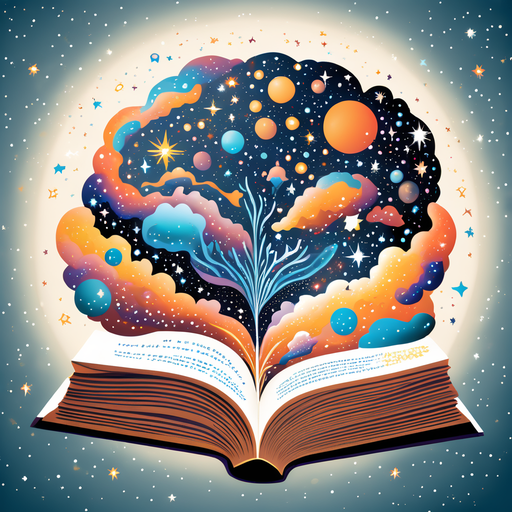
In the realm of metaphysical exploration, the Akashic field stands as a testament to the boundless possibilities of existence. This concept, often visualized as a vast, ethereal library or a cosmic database, holds the records of all thoughts, actions, events, and emotions that have ever occurred or will occur. It’s an intangible yet profoundly significant space where the grass doesn’t grow as a physical entity, but as an idea, a potentiality.

The concept of the Akashic records originated in the theosophical movements of the 19th century and has been a subject of intrigue for spiritual seekers and mystics ever since. These records are not written on paper but are believed to exist in a non-physical plane of existence. They embody the idea that every individual’s thoughts, experiences, and emotions are imprinted onto a universal consciousness, contributing to the collective knowledge and evolution of the universe.

To plant your footsteps in this sacred ground of being means to engage deeply with the essence of life itself. It’s a journey of introspection, where one seeks to understand the interconnectedness of all things. In this field, grass represents not just a plant, but a concept, a symbol of growth, life, and interconnectedness. It’s a reminder that even the simplest elements of nature hold profound meanings in the grand mosaic of existence.


Engaging with the Akashic field can be a transformative experience. It encourages us to look beyond the material world and understand the deeper spiritual connections that bind us. Through meditation, contemplation, and other spiritual practices, one can ‘access’ this field, gaining insights into past lives, understanding the purpose of current challenges, and even glimpsing potential future events.

However, it’s crucial to approach this journey with humility and respect. The Akashic field is not just a source of information but a sacred space of collective consciousness. Engaging with it requires an open heart and a mind willing to learn and grow.


In conclusion, the Akashic field invites us to ponder the mysteries of existence and our place within it. It challenges us to view life not just as a series of random events but as a part of a grand, interconnected cosmic play. By planting our footsteps on this sacred ground, we embrace the potentiality of all that is, was, and will be, and in doing so, we find deeper meaning in the simple act of being.

Morgan O. Smith

Yinnergy Meditation, Spiritual Life Coaching & My Book, Bodhi in the Brain…Available Now!
https://linktr.ee/morganosmith

Embracing Falsehoods at the Pinnacle of Awareness

In the realm of human consciousness, there exists a fascinating paradox. At the highest level of awareness, a person can reach a state where they can believe in something, fully aware that it is not true. This peculiar aspect of human psychology offers a deep insight into the nature of belief, perception, and the human mind.

What does it mean to believe in something while knowing it isn’t true? It’s like willingly suspending disbelief while watching a movie. You enter into a contract with the fiction, fully aware that dragons don’t exist or that superheroes don’t fly, yet you allow yourself to believe in these concepts for the duration of the experience. This phenomenon isn’t just limited to entertainment but extends to the very core of our everyday lives.

Why do people engage in such seemingly contradictory behaviour? The answer lies in the complexity of the human mind and its quest for meaning and comfort. Beliefs, even those acknowledged as false, can provide a sense of comfort, belonging, or identity. They can be a source of inspiration or a means of coping with the harsh realities of life. In a world that often feels chaotic and unpredictable, these beliefs, however, detached from reality, can offer a sense of order and purpose.


This ability to believe in the unbelievable highlights the power of the human imagination and creativity. It’s a testament to our ability to envision worlds and possibilities beyond our immediate reality, a skill that has been a driving force behind art, literature, and scientific innovation. It allows us to explore ideas and scenarios that, while not real, can lead to real-world insights and advancements.

However, this power comes with a responsibility. While it can be enriching and beneficial, deliberately believing in falsehoods can also lead to dangerous delusions and collective harm if not approached with critical thinking and ethical considerations. It’s vital to find a balance, to know when to embrace these beliefs as a source of inspiration and when to acknowledge them as mere constructs of our imagination.


In conclusion, the capacity to believe in something while knowing it isn’t true is a unique aspect of human consciousness, reflecting our complex psychology. It’s a powerful tool that, when used wisely, can enrich our lives and propel us toward greater heights of imagination and understanding. However, it’s crucial to navigate this terrain with discernment and a keen sense of reality.

Morgan O. Smith

Yinnergy Meditation, Spiritual Life Coaching & My Book, Bodhi in the Brain…Available Now!
https://linktr.ee/morganosmith

Beyond Oneness

The Journey to Cosmic Consciousness

In the realm of spiritual exploration, the idea of being one with the universe is often celebrated as the pinnacle of spiritual attainment. However, there’s a profound, yet subtle difference between simply being one with the universe and having the full awareness of being the universe and everything that exists within it. This distinction, though nuanced, can open a gateway to a more profound understanding of our place in the cosmos.

The Illusion of Separateness


The journey begins with recognizing the illusion of separateness. In our everyday consciousness, we perceive ourselves as distinct entities, separate from the universe. This perception is a fundamental aspect of human experience, but it’s just the first step in a much larger journey.

Being One with the Universe


Being one with the universe is often described as a state of deep connection and unity with all that exists. It’s a realization that at the most fundamental level, there is no separation between the self and the universe. This realization brings a sense of peace, harmony, and belonging. It’s a profound spiritual experience, often sought in various mystical and contemplative traditions.


The Full Awareness of Being the Universe

However, transcending even this state is the awareness of being the universe itself. This is not just a feeling of connection with everything; it’s a radical shift in identity. It’s the understanding that you are not just a part of the universe but that you are the universe experiencing itself. This consciousness brings with it not just a sense of unity, but a deep and direct understanding of the nature of reality.

Implications and Controversies

This concept challenges many traditional religious and philosophical perspectives. It blurs the lines between creator and creation, subject and object, observer and observed. It raises profound questions about the nature of self, consciousness, and existence.

The Path Forward

Embracing this perspective requires a radical reorientation of our understanding of self and the universe. It demands that we not only seek spiritual experiences but also deeply question the very nature of our existence. This journey is not about finding answers but about embracing the mystery and complexity of the cosmos.


In conclusion, while being one with the universe is a significant spiritual milestone, the journey doesn’t end there. The full awareness of being the universe itself is a revolutionary step that has the potential to redefine our understanding of reality.

Morgan O. Smith

Yinnergy Meditation, Spiritual Life Coaching & My Book, Bodhi in the Brain…Available Now!

https://linktr.ee/morganosmith

The Ground of All Being is Groundless

In the realm of philosophical thought, there exists a profound paradox that has puzzled thinkers for centuries: the concept that the ground of all being is, in fact, groundless. This idea challenges our fundamental understanding of existence, suggesting that the foundation upon which reality is built is devoid of any intrinsic substance or essence.

At first glance, this notion appears contradictory. How can the ground of all being, the fundamental basis of everything that exists, be groundless? To unravel this enigma, we must delve into the philosophical and metaphysical discussions that surround the nature of existence and reality.

The idea of a ‘groundless ground’ originates from existential and metaphysical debates. Philosophers like Heidegger and Sartre pondered the absence of an inherent essence in existence. This absence implies that existence precedes essence, meaning things exist first and their meanings or purposes are secondary, shaped by external factors rather than intrinsic qualities.


This perspective shifts the way we perceive reality. Instead of viewing the universe and everything in it as having a predetermined purpose or essence, we begin to see existence as a blank canvas. Our perceptions, experiences, and the meanings we assign to things shape this canvas. In this sense, the ‘ground’ of all being is not a pre-established foundation but a dynamic, ever-changing tapestry of experiences and interpretations.

Moreover, this idea resonates with quantum physics, where the most fundamental levels of matter behave in ways that defy traditional laws of physics. Particles exist in states of potentiality, their positions and velocities are determined only when observed. This uncertainty at the heart of matter echoes the philosophical concept of a groundless ground, suggesting that at the most fundamental level, the universe itself may not rest on any fixed foundation.

The implications of a groundless ground are both liberating and daunting. It frees us from the constraints of preordained meanings and purposes, allowing us to shape our existence. However, it also places the responsibility of finding or creating meaning squarely on our shoulders.


In conclusion, the concept that the ground of all being is groundless invites us to explore the depths of our existence. It challenges us to seek meaning and purpose not in some inherent essence but in the experiences and interpretations that shape our reality. This exploration is not just a philosophical exercise; it is a journey into the heart of what it means to be.

Morgan O. Smith

Yinnergy Meditation, Spiritual Life Coaching & My Book, Bodhi in the Brain…Available Now!
https://linktr.ee/morganosmith

Voicing the Vastness

The Paradox of Expressing the Inexpressible

In the realm of human experience, the concept of expressing the totality of existence, often referred to as “The All That Is,” presents a fascinating paradox. While our minds and souls may feel intimately connected to this infinite expanse, our means of communication, especially spoken language, often fall short of capturing its essence. This dichotomy between our internal understanding and external expression is a profound aspect of the human condition.

At the core of this paradox is the limitation of language. Words, for all their power, are mere symbols, not the things they represent. They are the map, not the territory. When we attempt to articulate our deepest understandings or most profound experiences, we often find that words do not suffice. This inadequacy is especially apparent when we try to convey the boundless nature of “The All That Is.” How can finite symbols encapsulate something so vast and limitless?

Despite this, the endeavour to express these experiences is not in vain. The very act of trying to articulate the inarticulable is a testament to the human spirit’s ceaseless quest for understanding and connection. Each attempt, whether it falls short or touches upon something true, adds to our collective understanding and experience. Through these efforts, we find new ways to relate to each other and the world around us.


Moreover, the inability of language to fully capture these experiences invites us to explore other forms of expression. Art, music, and dance become languages in their own right, often communicating what words cannot. They allow us to experience a glimpse of the infinite, transcending the barriers of spoken language.

This journey of expression also reflects a deeper truth about our nature. Just as “The All That Is” is vast and multifaceted, so too are we. Our thoughts, feelings, and experiences are complex and often contradictory. We are beings of immense depth, and our attempts to express ourselves are reflections of this depth. In trying to articulate the inexpressible, we come to understand ourselves better.


In conclusion, while our spoken words may seem inadequate in expressing the totality of existence, they are valuable in their attempt. They represent our unending quest to understand and connect with the infinite, and in this quest, we find the beauty of our human experience. The paradox of expressing the inexpressible is not a barrier, but a bridge, inviting us to explore and embrace the depth of our existence.

 Morgan O. Smith

Yinnergy Meditation, Spiritual Life Coaching & My Book, Bodhi in the Brain…Available Now!

https://linktr.ee/morganosmith

Engraved Wisdom

The Sacred Script Within Our DNA

In one of my profound spiritual experiences, a revelation dawned upon me, forever altering my perception of existence and spirituality. This insight, which I am eager to share, revolves around the concept that the greatest sacred book isn’t found on shelves or in ancient temples. It’s written within us, in the very essence of our being – our DNA.

Our DNA is more than just a biological blueprint; it’s a narrative of our ancestry, a chronicle of evolution, and a reservoir of untapped potential. Every strand holds secrets akin to sacred texts, containing wisdom passed down through generations. Unlike traditional sacred texts, which are subject to interpretation and sometimes distortion, the knowledge within our DNA is pure and unaltered.

This realization sheds light on the interconnectedness of all life. Just as various chapters in a sacred text are interconnected, so are we linked to every living creature through the threads of our DNA. This connectedness speaks to a deeper, more profound spirituality – one that transcends constructed beliefs and gets to the very heart of existence.


Moreover, understanding our DNA as a sacred script invites us to explore the spiritual significance of our physical existence. Our bodies are not just vessels; they are temples housing the sacred script of life. By caring for our bodies, we honour this script, and by exploring our genetic heritage, we delve into chapters of a larger cosmic story.

This perspective also encourages us to view the future differently. Just as we inherit this script, we also contribute to it. Our actions, choices, and experiences are additions to this vast, living document. We’re not just passive readers of this sacred book; we are authors, actively participating in its ongoing creation.


As we navigate our lives, let us be mindful of the sacredness within us. Let us treat each other with the reverence deserved by fellow bearers of this divine script. And let us explore our depths, for within our DNA lies wisdom waiting to be discovered, a testament to the marvels of life and the spiritual journey we all share.

Morgan O. Smith

Yinnergy Meditation, Spiritual Life Coaching & My Book, Bodhi in the Brain…Available Now!
https://linktr.ee/morganosmith

The Essence of Expression

Unveiling the Human Experience

In the mosaic of human existence, expression stands as a crucial piece, interlocking with every aspect of our lives. To express is to be human; it is turning our inner world into something others can perceive, a bridge from the solitary island of self to the vast continent of shared experience. Yet, in a world increasingly shaped by digital interaction and fast-paced lifestyles, the art of genuine expression often seems at risk. This leads us to question: Is a human being who doesn’t express truly living the full spectrum of their humanity?

To understand this, we must first acknowledge that expression takes many forms – spoken words, written prose, the nuanced dance of facial expressions, the silent language of art, and the unspoken symphony of emotions. It’s not just about conveying information; it’s about sharing parts of our souls, joys, fears, hopes, and dreams. Expression is the window that lets others glimpse our innermost selves.

However, reluctance or inability to express can come from various places – societal norms deem certain emotions as weakness, personal insecurities, or even the fear of being misunderstood or judged. This suppression, whether conscious or unconscious, can lead to a life half-lived, a persona half-realized. It breeds loneliness, misunderstanding, and a gap between what is felt and what is shared.


The consequences of such restraint are significant. Psychologically, the inability to express can result in a build-up of stress, anxiety, and depression. Socially, it hampers the development of deep, meaningful relationships. On a broader scale, a society that stifles expression also stifles innovation, empathy, and progress.


In contrast, embracing expression in its various forms can be freeing. It promotes self-awareness and growth. It builds bridges of understanding and empathy among people. It fuels creativity and innovation. When we express ourselves, we not only affirm our humanity but also recognize and celebrate the humanity of others.


In conclusion, to express oneself is not just to be human; it is to engage in the human experience actively. It is through our shared expressions that we create a rich, vibrant mosaic of human connection, understanding, and coexistence. Let us, therefore, encourage and embrace expression in ourselves and others, for in doing so, we enrich not just our own lives, but the very essence of what it means to be human.

Morgan O. Smith

Yinnergy Meditation, Spiritual Life Coaching & My Book, Bodhi in the Brain…Available Now!

https://linktr.ee/morganosmith

Empathy in Healing

The Transformative Power of Alleviating Others’ Pain

In our increasingly interconnected world, where individual struggles and collective hardships are omnipresent, there lies a profound, yet often overlooked, truth: healing others can lead to our recovery. Tending to the wounds of the afflicted isn’t merely a noble endeavour; it is an odyssey into the core of human existence, and in this journey, we often find our wounds beginning to mend.

Consider the metaphor of ‘licking the wounds’ of those who suffer, a practice observed in the animal kingdom where creatures often literally do so to aid healing. This metaphor taps into a deeper human instinct: the urge to comfort, heal, and connect. When we reach out to those in pain through acts of kindness, active listening, or being present, we engage in a process that transcends mere physical interaction. It becomes a reciprocal exchange where empathy flows, understanding deepens, and barriers dissolve.

This act of giving, paradoxically, becomes a gift to ourselves. Focusing on another’s pain, understanding it, and striving to alleviate it, allows us to step outside our troubles momentarily. This perspective grants us an understanding that our suffering is not solitary. This shared experience of pain and healing creates a mosaic of human connection, joining disparate individuals in a network of empathy and understanding.


Yet, this journey is not devoid of challenges. Engaging with others’ pain necessitates vulnerability – a readiness to accept that in helping others, we might confront our hidden sorrows. But it is in this vulnerability that true strength lies. Each empathetic act fortifies our emotional resilience, enlightens us about the complexities of human emotions, and, most crucially, fosters a deeper self-understanding.

In ‘licking the wounds’ of the afflicted, we inadvertently apply a healing salve to our souls. The lessons gleaned from these compassionate acts extend beyond the immediate relief provided. They mould our character, enhance our empathy, and often lead to a more profound and enriching understanding of our healing process.


In conclusion, the act of healing others serves as a reflection of our own need for healing. It is a reminder that in the complex network of human experiences, our sorrows and joys are interconnected. By extending a hand to those in pain, we inevitably soothe our spirits, and in this mutual exchange of healing, we discover the essence of our shared humanity.

Morgan O. Smith

Yinnergy Meditation, Spiritual Life Coaching & My Book, Bodhi in the Brain…Available Now!

https://linktr.ee/morganosmith

When Nuclei Awakes

A Journey into the Depths of Cellular Consciousness

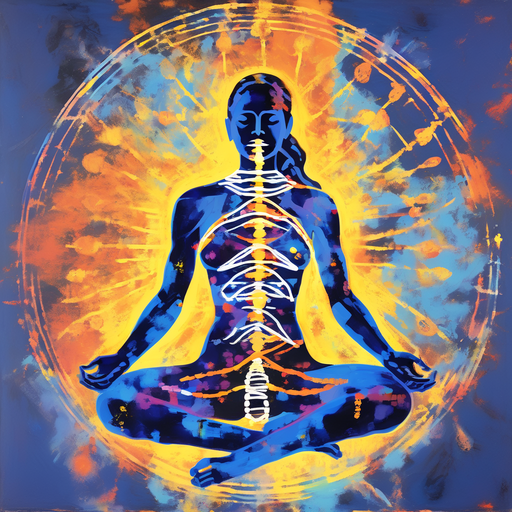
In a moment of profound awakening, it’s said that every fibre of our being tunes into a profound truth, a realization that resonates through every cell, molecule, and atom within us. The human body, a vast universe of about 37.2 trillion cells, becomes a mirror reflecting this profound awareness. Among these, about 30 trillion are eukaryotic cells, each with a nucleus harbouring DNA, the script of life, guarded by the nuclear membrane.

This nucleus, the command center of the cell, is not just a biological entity; it’s a gateway to an understanding beyond the ordinary. As we delve deeper, we find that each nucleus contains approximately 42 million protein molecules, and each molecule comprises at least two atoms. This translates to a staggering seven octillion atoms in a single human body, each atom a microcosm of subatomic particles like protons, electrons, and neutrons.


The heart of the atom, the nucleus, composed of protons and neutrons, is held together by gluons. These gluons are the carriers of the strong force, the mightiest of the four fundamental interactions in nature, alongside electromagnetism, the weak interaction, and gravity. This force, a vital part of nuclear physics, reflects a more profound spiritual truth.


In the depths of this spiritual awakening, one feels a deep connection with every aspect of their existence, down to the smallest particles. It’s a realization that everything is a manifestation of the Self, an embodiment of what some might call the Great Ground of All Being, Zero Point Energy, or The Akashic Field. This awakening is not just an intellectual understanding but a visceral, cellular experience of the interconnectedness of all things.


This journey into the heart of our cellular universe is more than scientific exploration; it’s a spiritual odyssey that redefines our understanding of consciousness and our place in the cosmos. As we awaken to this reality, we discover that we are not just observers of the universe – we are the universe experiencing itself in myriad forms.

Morgan O. Smith

Yinnergy Meditation, Spiritual Life Coaching & My Book, Bodhi in the Brain…Available Now!

https://linktr.ee/morganosmith