The Silent Saviours

Embracing the Sacrifice of Prayerful Saints

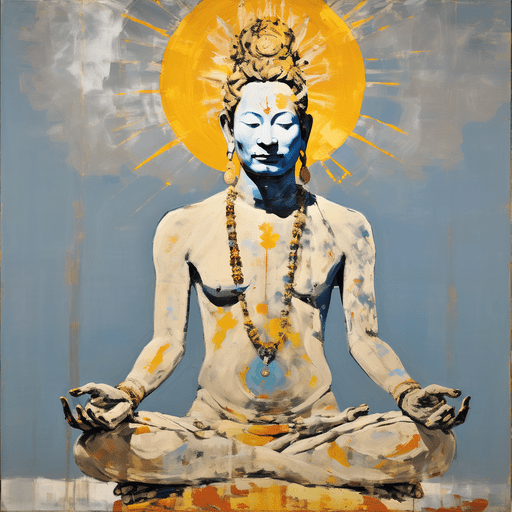
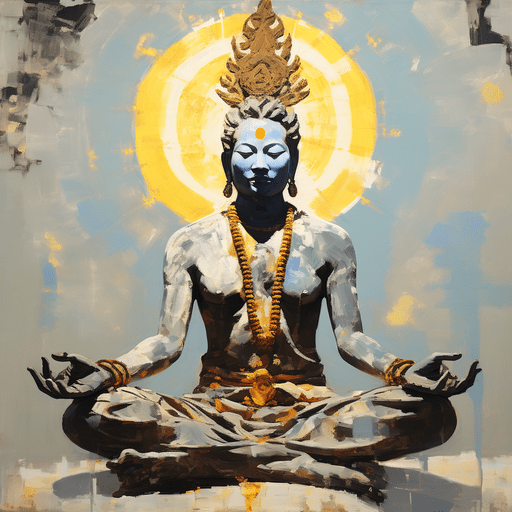
In the quiet corners of the world, far from the clamour of daily life, exist individuals whose lives are dedicated to a profound purpose. These are the saints who have chosen a path of prayer and meditation, not for personal gain, but for the spiritual upliftment of humanity. Their existence raises a thought-provoking question: Can the dedicated prayers and meditations of a few impact the collective consciousness of many?

These saints, often unseen and unrecognized, commit their lives to the pursuit of pure consciousness, believing in its ripple effect across the world. Theirs is a life of sacrifice, one where personal ambitions are set aside for a greater cause. They bend their knees in prayer, not for moments or days, but for a lifetime, believing that their spiritual devotion can bring about a change in the world’s consciousness.

However, this concept is not without controversy. Skeptics argue that such practices are too passive, too removed from the tangible actions required to address the world’s myriad problems. They question the efficacy of prayer and meditation as tools for real change, especially when faced with immediate and pressing challenges.


Yet, the belief in the power of prayer and meditation to transcend physical boundaries and effect change is deeply rooted in various spiritual traditions. It is said that these saints, through their unwavering dedication, touch a realm of consciousness that is beyond the ordinary, sending ripples of peace, compassion, and understanding into the world.

The idea of a few praying and meditating on behalf of many is humbling and empowering. It suggests that spiritual practices have a place alongside physical actions in the quest for a better world. It challenges us to consider the unseen forces at play in our world and to acknowledge the role of spiritual sacrifice in shaping our collective destiny.

Whether one views these saints as misguided dreamers or as silent saviours, their choice to dedicate their lives to prayer and meditation is a testament to the diverse ways humanity seeks to connect with something greater than itself. Their lives challenge us to reflect on the nature of sacrifice, the power of spiritual practice, and the interconnectedness of all beings.


In conclusion, the life of a saint, dedicated to prayer and meditation for the world’s consciousness, is a profound sacrifice that deserves our respect and contemplation. It raises essential questions about the nature of action, spirituality, and our collective responsibility in shaping the consciousness of our world.

Morgan O. Smith

Yinnergy Meditation, Spiritual Life Coaching & My Book, Bodhi in the Brain…Available Now!

https://linktr.ee/morganosmith

Celebrating Black History Month

A Journey Beyond the Shadows of Misconceptions

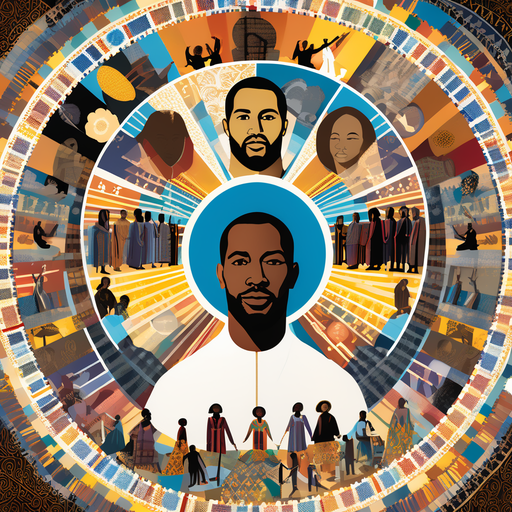
As we embrace the profound significance of Black History Month, we find ourselves at the confluence of reflection and aspiration, a moment to honour the rich heritage and indomitable spirit of the Black community while confronting the shadows cast by historical misconceptions. Among these are the misinterpretations within various religious traditions that have mistakenly associated Black identity with curses or lesser status. This post seeks to illuminate the path toward spiritual enlightenment, transcending beyond these archaic beliefs to a place of unity and universal respect.

#### Christianity, Judaism, and the Misunderstood “Curse of Ham”

Within both Christian and Jewish histories, the narrative of Ham’s curse has been misconstrued to justify racial discrimination. However, a closer examination reveals that this interpretation bears no weight in the sacred texts themselves. When understood in their essence, these texts speak to the inherent dignity of every human being, irrespective of colour or creed.

#### The Teachings of Joseph Smith in Mormonism

Mormonism, through the lens of Joseph Smith’s teachings, has faced scrutiny regarding statements on race. It’s vital to recognize the evolutionary journey of religious communities toward greater inclusivity and understanding. The Latter-day Saints have openly repudiated past racial restrictions, moving towards a more inclusive faith community that acknowledges the divine in every individual.


#### The Mark of Cain and Its Misinterpretations

The “Mark of Cain” has similarly been misapplied as a rationale for racial discrimination. Yet, within the broader Christian and Jewish theological context, this mark is not about race but rather God’s protection. It serves as a reminder that divine judgment belongs to the divine alone, urging us to forsake judgment and embrace compassion.

#### Hinduism’s Caste System and the Quest for Dharma

Hinduism’s caste system, often misrepresented as a racial hierarchy, is fundamentally a social structure misunderstood by many. The essence of Hindu dharma speaks to a cosmic law of righteousness and duty that transcends social divisions, advocating for a society where all individuals are valued for their unique contributions to collective harmony.

#### Transcending Misconceptions: The Spiritual Enlightenment

As we journey through Black History Month, let us anchor ourselves in the wisdom that true spiritual enlightenment transcends all forms of division, recognizing the divine spark within every individual. This enlightenment beckons us to see beyond the superficial differences that have historically divided us, encouraging a collective movement toward understanding, respect, and unity.

In debunking these misconceptions, we honour the spirit of Black History Month and contribute to a world where spirituality and human dignity flourish unbounded by the chains of past misunderstandings. Let this month be a catalyst for change, a time when we reaffirm our commitment to a world where every soul is recognized for its infinite worth and potential.


#### In Conclusion

Black History Month offers us a sacred opportunity to reflect on our spiritual journeys and the universal quest for enlightenment. By challenging and transcending outdated beliefs, we pave the way for a future where spirituality unites rather than divides, celebrating the diversity that enriches our collective human experience.

Morgan O. Smith

Yinnergy Meditation, Spiritual Life Coaching & My Book, Bodhi in the Brain…Available Now!
https://linktr.ee/morganosmith

The Paradox of Suffering

A Perspective on Compassion’s Existence

In a world untouched by suffering and misfortune, one might ponder compassion’s existence or even the necessity. This philosophical contemplation leads us to a profound question: If there were no suffering, would the concept of compassion still hold any significance?

Central to this debate is the idea of the Absolute at the causal stage, a concept that suggests a higher power or universal force responsible for orchestrating the cause and effect in our lives. This notion posits that events and situations are not merely random occurrences but deliberate creations intended to foster specific outcomes or experiences.

Within this framework, suffering and misfortune are seen not as unfortunate byproducts of existence but as essential elements in a grander scheme. They are the variables that necessitate and give birth to compassion. It’s as if the universe, or the Absolute, constructs scenarios to evoke and observe the act of compassion.

This perspective suggests a universe where compassion is a response to suffering and a desired outcome, a necessary expression in the cosmic play. It implies that our experiences of pain and grief are not just happenstances but are integral parts of a larger, perhaps even cosmic, narrative. This narrative is about enduring hardships and the opportunity these hardships present for compassion to arise and flourish. In this view, suffering is not meaningless; rather, it catalyzes the expression of compassion, which could be argued as one of the purest forms of human connection and empathy.

But this viewpoint is not without its controversies. It raises questions about the nature of the Absolute and its role in human affairs. Is suffering deliberately inflicted by a higher power for its amusement or purpose? Does this make the act of compassion a mere tool in a larger, possibly indifferent cosmic game? These questions challenge our understanding of morality and the nature of existence itself.

Furthermore, this perspective can be seen as a double-edged sword. On one hand, it gives a deeper meaning to our struggles, suggesting that our pain and the compassion it invokes are part of a grand, meaningful process. On the other, it might lead to a fatalistic or passive acceptance of suffering, undermining efforts to alleviate it.

In conclusion, the idea that suffering is necessary for compassion presents a challenging yet thought-provoking viewpoint. It forces us to examine the deeper implications of our experiences and the potential purpose behind them. Whether one sees this as a comforting thought or a disturbing implication, it undoubtedly opens up a rich field for philosophical and ethical exploration.

Morgan O. Smith

Yinnergy Meditation, Spiritual Life Coaching & My Book, Bodhi in the Brain…Available Now!

https://linktr.ee/morganosmith

The Tsunami of Spiritual Awakening

Navigating the Transformative Waves

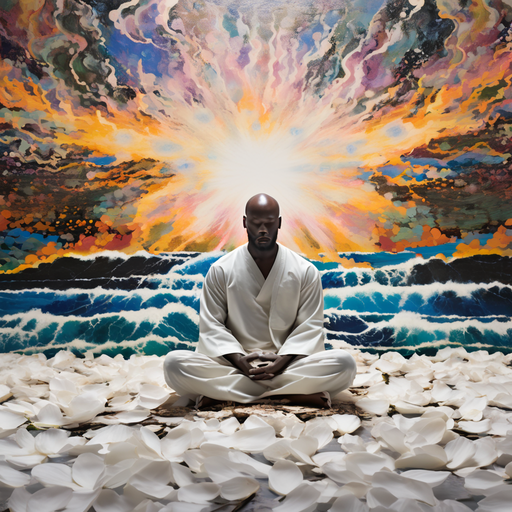
In the journey of spiritual growth, reaching a state of full spiritual awakening can be likened to the immense power and transformative force of a tsunami. Just as a tsunami reshapes the landscape, a spiritual awakening at its highest peak redefines the contours of one’s inner world, unleashing profound changes that ripple through every aspect of existence.

**The Onset of the Wave**


The beginnings of a spiritual awakening are often subtle, much like the imperceptible swell of the ocean that precedes a tsunami. It may start with a sense of restlessness, a longing for something more profound than everyday experiences. This stage is marked by questioning – questioning one’s purpose, the nature of reality, and the deeper truths of existence.

**The Rising Tide**


As the wave gathers momentum, so does the awakening process. This is often where the most intense spiritual experiences occur. Individuals may experience moments of heightened awareness, profound insights, and a deep sense of interconnectedness with the universe. It’s a phase characterized by exhilaration and confusion, as old belief systems crumble and new understandings emerge.


**The Impact**

The peak of a spiritual awakening, akin to the moment a tsunami makes landfall, is both powerful and disruptive. It can upend long-held beliefs, relationships, and life structures. This phase can be challenging, as it demands letting go of the ego and the familiar constructs that once offered security. In its wake, it leaves a transformed landscape – a new way of being and perceiving the world.

**Navigating the Aftermath**


The aftermath of a spiritual tsunami is about integration and rebuilding. It involves finding a new equilibrium, where one’s heightened spiritual awareness becomes a natural part of daily life. This stage is about living from a place of deeper wisdom and compassion, both for oneself and others.

**Embracing the Journey**

A full spiritual awakening is not a destination but a continuous journey. It invites an ongoing exploration of the depths of one’s soul and the mysteries of the universe. It’s a path marked by both challenges and profound beauty, an opportunity to live life with a deeper sense of purpose and connection.


In conclusion, the journey of spiritual awakening is transformative and intense, akin to the power of a tsunami. It reshapes not just individual lives, but can also have a profound impact on the collective consciousness. Embracing this journey requires courage, openness, and a willingness to let go of the familiar shores to explore the depths of the spiritual ocean.

Morgan O. Smith

Yinnergy Meditation, Spiritual Life Coaching & My Book, Bodhi in the Brain…Available Now!

https://linktr.ee/morganosmith

Interpreting Creation

Evolution as a Glimpse into Divine Complexity

The debate between evolution and creationism has been a longstanding one, often polarizing individuals into two distinct camps. However, a thought-provoking perspective emerges when we consider evolution not as a contradiction but as a subset of the divine act of creation. This viewpoint suggests that what we perceive as evolution is, in fact, a limited human interpretation of a much grander and incomprehensible divine plan.

The idea of God creating the universe in seven days is a cornerstone of many religious beliefs. These seven days, often taken literally, could alternatively be viewed as symbolic of a more complex, unfathomable process of creation that transcends human understanding. The ‘days’ may not be 24-hour periods as we know them, but rather, phases in a divine timeline, incomprehensible in length and complexity to the human mind.


Evolution, in this context, can be seen as a mechanism within this divine plan. It’s a process that unfolds over eons, under the guidance of a higher power, the causal aspect of the absolute. It is an expression of the ground of all being, operating within the confines of time and space – constructs that, too, were set in motion by the divine.

This perspective bridges the gap between science and faith, suggesting that evolution is a component of creation, a part of the divine narrative. It invites us to view evolution not as a challenge to theistic beliefs but as an insight into the complexity and majesty of what a higher power can orchestrate.


As we explore this intersection of faith and science, it becomes clear that our understanding of both creation and evolution is limited by our human perspective. What if, instead of viewing them as opposing ideas, we see them as different facets of the same divine truth? This approach doesn’t diminish the importance of scientific inquiry, nor does it undermine the significance of religious belief. Rather, it highlights the vastness of what we are yet to understand and the potential harmony between different realms of human thought.

In conclusion, the dialogue between evolution and creationism need not be a contentious one. It can be a conversation that enriches our understanding of science and spirituality, revealing the interplay between the comprehensible and the unfathomable in the universe’s grand design.

Morgan O. Smith

Yinnergy Meditation, Spiritual Life Coaching & My Book, Bodhi in the Brain…Available Now!

https://linktr.ee/morganosmith

The Birth of a Shamed Male Nation

Confronting the Unconscious Psyche

In 2018, an Ayahuasca ceremony opened my eyes to a profound and unsettling aspect of the male psyche. This experience led me to ponder deeply about the underlying reasons for the continued oppression of women by men, manifested in gender inequality, chauvinism, sexual harassment, and assault. This blog post delves into these complex and often hidden psychological factors.

At the core of this issue lies a ‘bad weed’ in the male unconscious. This aspect is so deeply buried and unacknowledged that most men are unaware of its existence. Even those who recognize it often find themselves too ashamed to confront or discuss it, be it with their male peers, professionals, or female partners.

This hidden part of the male psyche is intricately linked to their sexual identity and perceptions of women, particularly mother figures. For instance, if a man were confronted with an erotic image of a woman from the neck down, his primal reaction might be one of arousal. However, if he realizes that this woman is a younger version of his mother, the ensuing shame and conflict would be immense. This hypothetical scenario highlights the unconscious sexual desires and taboos deeply ingrained in the male psyche.


The maternal figure, a symbol of nurturing and care, becomes paradoxically intertwined with sexual desire in the male unconscious. This creates a profound internal conflict, particularly evident in situations like public breastfeeding, where the nurturing aspect of the female body is perceived in a sexual context. Men’s discomfort in such scenarios is a manifestation of their inability to reconcile these conflicting views of women as both sexual beings and nurturing figures.

This psychological conflict extends to how men perceive their mothers as sexual beings and caregivers. Unable to address or express these complex feelings, men might unconsciously project these emotions onto other women, viewing them through a lens tainted by their unresolved issues with maternal figures. Thus, women who embody aspects of sexuality or nurturing often become targets for male aggression or oppression.


Confronting this deep-seated issue requires a willingness among men to introspect and acknowledge these hidden aspects of their psyche. It is a challenging but necessary journey towards understanding and ultimately changing the unconscious motivations behind gender-based oppression. By facing these uncomfortable truths, men can begin to heal and foster healthier relationships with both themselves and women.

Morgan O. Smith

Yinnergy Meditation, Spiritual Life Coaching & My Book, Bodhi in the Brain…Available Now!

https://linktr.ee/morganosmith

Krishna Kaur

Celebrating the Essence of Black History Month Through the Wisdom of Krishna Kaur Khalsa

In the spirit of Black History Month, it is pivotal to spotlight the luminous figures whose contributions transcend the conventional boundaries of culture, spirituality, and personal growth. Among such esteemed individuals is Krishna Kaur Khalsa, a beacon of Kundalini Yoga and a venerated teacher whose legacy intertwines with the very soul of Black History. My journey with Krishna Kaur, particularly during her visit to Toronto, unveiled a realm of spiritual enlightenment and resilience that continues to inspire.

Krishna Kaur, a pioneer in her field, has not only brought Kundalini Yoga to diverse communities but has also embodied the profound interconnectedness between the African diaspora and Eastern spiritual philosophies. Her teachings, deeply rooted in the tenets of Kundalini Yoga as taught by Yogi Bhajan, illustrate a unique synthesis of cultural heritage and spiritual discipline. This blend is a testament to the power of spiritual practices in fostering community, resilience, and self-empowerment among people of African descent.

The significance of Black History Month lies not just in acknowledging the struggles and achievements of Black individuals but also in celebrating the diverse contributions they have made across various fields—including spirituality and holistic wellness. Krishna Kaur’s journey is a compelling narrative of overcoming barriers, embracing one’s roots, and sharing profound spiritual knowledge with the world. Her dedication to spreading the teachings of Kundalini Yoga far and wide, especially among Black communities, underscores a vital aspect of this celebration: the recognition of spiritual leaders who have been instrumental in nurturing a sense of unity, strength, and enlightenment.

My encounters with Krishna Kaur during her lectures and Kundalini Yoga training sessions in Toronto were transformative. While she encouraged a focus on yoga training, my inclination towards meditation practice remained strong. Despite this divergence in our spiritual practices, the respect and admiration I hold for her wisdom and her holistic approach to Eastern knowledge have only deepened. Krishna Kaur’s teachings, characterized by an unwavering commitment to spiritual awakening and personal growth, have left an indelible mark on my journey and countless others touched by her grace.

As we honour Black History Month, let us remember the luminaries like Krishna Kaur Khalsa who illuminate the paths of spiritual exploration and self-discovery. Her legacy, imbued with the richness of Eastern philosophy, serves as a beacon for all who seek to transcend the boundaries of their individual experiences in pursuit of a more interconnected and enlightened world.

In celebrating Krishna Kaur’s contributions, we are reminded of the broader impact of Black spiritual leaders and their essential role in weaving the fabric of our collective history. Their stories and teachings encourage us to look beyond the surface, explore the depths of our spiritual journeys, and acknowledge the profound ways Black history and spirituality are intertwined.

Morgan O. Smith

Yinnergy Meditation, Spiritual Life Coaching & My Book, Bodhi in the Brain…Available Now!
https://linktr.ee/morganosmith

Embracing the Full Spectrum

A Deeper Understanding of Enlightenment

In our quest to understand enlightenment, we often envision it as perpetual positivity, a beacon of good virtues and admirable qualities. However, this view might be a simplistic interpretation of a concept far more profound and encompassing. To grasp the true essence of enlightenment, we must recognize it as the embodiment of nature in its entirety, not just its appealing aspects.

Enlightenment, in its deepest sense, is not limited to the display of positive attributes; it also encompasses the darker, less admired facets of nature. Nature, in its raw form, is an amalgamation of contrasts—beauty and destruction, calm and chaos. Similarly, an enlightened being embodies all these facets, including those we view negatively.

We often celebrate the sunlit parts of nature while disdaining its storms and upheavals. In parallel, enlightened beings, often idealized for their virtues, might also manifest traits or behaviours we consider negative. This doesn’t necessarily diminish their state of enlightenment; rather, it highlights that enlightenment transcends conventional moral dichotomies. It encompasses a full spectrum of qualities, mirroring the complexity and diversity of nature itself.

Perhaps, when an enlightened individual exhibits behaviours we perceive as negative, it’s not a regression to lower psychological states, but an expression of the entire range of human experience. This concept can be challenging to grasp, especially when viewed from the traditional perspective of enlightenment being a state of flawless virtue.

In essence, true enlightenment is beyond the dualities of good and bad, positive and negative. It is a comprehensive expression of nature in all its forms—the gentle breeze and the raging storm. Recognizing this holistic view of enlightenment invites us to expand our understanding and accept the full spectrum of experiences and traits that constitute the enlightened state.

In this light, enlightenment becomes a journey of embracing all aspects of existence, a voyage that transcends conventional wisdom and invites us to witness the universe in its full, unfiltered majesty.

Morgan O. Smith

Yinnergy Meditation, Spiritual Life Coaching & My Book, Bodhi in the Brain…Available Now!

https://linktr.ee/morganosmith

Ol Doinyo Laetoli le Baaba

Illuminating the Spiritual Legacy of Ol Doinyo Laetoli le Baaba during Black History Month

In the reflective observance of Black History Month, we embark on a journey that transcends the mere recounting of historical achievements, steering us toward the profound realms where spirituality and cultural heritage intersect. The narrative of Black history is incomplete without honouring the luminaries who have sculpted the spiritual landscape of our times. Among these influential figures, the late Ol Doinyo Laetoli le Baaba stands as a beacon of spiritual enlightenment, whose contributions extend far beyond the conventional boundaries of recognition.

Ol Doinyo Laetoli le Baaba, a sage of our era, infused the spiritual discourse with a rich infusion of wisdom drawn from the depths of African spirituality. His teachings, resonating with the essence of interconnectedness, invite us into a realm where the self is not an isolated entity but a part of the vast continuum of existence. This perspective offers a refreshing contrast to the often individualistic narratives prevalent in mainstream spirituality, urging us to rediscover our bonds with nature, community, and the ancestral wisdom that shapes our collective consciousness.

Celebrating Black History Month provides a poignant moment to reflect on how Ol Doinyo Laetoli le Baaba’s legacy enriches our understanding of spirituality. His work exemplifies how the exploration of spiritual depths can be a source of empowerment, resilience, and liberation. In a world fraught with division and superficiality, his teachings serve as a reminder of the power of spiritual unity and the importance of anchoring our lives in values that foster community well-being and harmony with the cosmos.

Moreover, Ol Doinyo Laetoli le Baaba’s contributions challenge us to broaden our spiritual horizons, encouraging an inclusive approach that honours diverse paths to enlightenment. This inclusivity is crucial in our quest for a more compassionate and understanding world, where spirituality becomes a bridge connecting diverse cultures and traditions.

As we celebrate Black History Month, let us honour Ol Doinyo Laetoli le Baaba by embracing his vision of a spiritually awakened society, where the wisdom of all cultures is recognized as integral to our collective journey toward enlightenment. Let his legacy inspire us to delve deeper into the spiritual philosophies that have nurtured resilience and hope in the face of adversity, and to recommit ourselves to the path of spiritual growth and communal upliftment.

In remembering Ol Doinyo Laetoli le Baaba, we are reminded of the vast spiritual wealth embedded in the history and heritage of Black communities. His life and teachings stand as a testament to the enduring strength and beauty of African spirituality, offering a wellspring of inspiration for all who seek to traverse the path of spiritual awakening with authenticity and grace.

Morgan O. Smith

Yinnergy Meditation, Spiritual Life Coaching & My Book, Bodhi in the Brain…Available Now!

https://linktr.ee/morganosmith

The First Glimpse

Awakening to the Marvel of Being

In the boundless journey of spiritual exploration, there exists a moment that stands out with luminous clarity—a moment of awakening. This awakening can be likened to the profound innocence and wonder of a baby discovering its own two feet for the first time. It is a moment of pure astonishment, where the familiar suddenly becomes an ocean of mystery, inviting us to dive deeper into the essence of our very existence.

Awakening, in its essence, is not merely an accumulation of knowledge or an expansion of our cognitive boundaries. Rather, it is an experiential revelation, a direct encounter with the raw fabric of reality itself. Just as a baby gazes upon its feet with awe, recognizing them as extensions of its being, so too does the spiritual seeker come to realize the interconnectedness of all things. This realization is not conceptual but deeply visceral, a knowing that permeates every cell of our being.


This moment of awakening brings with it a profound shift in perception. The world no longer appears as a mere backdrop to our dramas but as a vibrant, living mosaic of which we are an integral part. Everything, from the mundane to the magnificent, is imbued with a sacred significance. The dichotomy between the self and the other begins to dissolve, revealing the underlying unity that is the foundation of all existence.

However, this awakening is not the final destination but the beginning of a profound journey. Like the baby who has just discovered its feet, we are called to explore, to learn, and to grow. Each step is an act of discovery, a chance to deepen our understanding of the self and the universe. The path is not linear but a spiral, where each cycle brings us closer to the core of our being, to the heart of existence.


The challenge, then, is to remain open and receptive, to cultivate a beginner’s mind in the face of the known and the unknown. It requires us to let go of our preconceived notions and embrace the uncertainty that comes with genuine exploration. This journey is not one of seeking external validation but of internal revelation, where each insight illuminates the path a little more.

In essence, the awakening is a call to adventure, an invitation to embark on the most significant exploration of all—the exploration of the self. It beckons us to engage with life’s profound mysteries, to uncover the layers of meaning and existence that lie beneath the surface of everyday reality.


As we navigate this journey, we discover that awakening is not a singular event but a series of moments, each revealing a deeper layer of understanding. Like the baby who delights in each discovery, we too can find joy in the continual unfolding of our spiritual journey, ever deepening our connection to the marvel of being.

Morgan O. Smith

Yinnergy Meditation, Spiritual Life Coaching & My Book, Bodhi in the Brain…Available Now!

https://linktr.ee/morganosmith