Transcending the Mind

A Journey into the Realms of True Reality

In the labyrinth of human existence, there lies a profound truth that often remains hidden beneath layers of perception and thought: the essence of reality as it truly is, unfiltered and pure. This realization dawns only when the mind transcends its boundaries, stepping beyond the constraints of its conditioned patterns and habitual ways of thinking.

The mind, a magnificent tool for navigation in the physical world, is often shackled by its creations – thoughts, beliefs, and assumptions. These mental constructs, while useful, can also act as barriers, filtering and altering reality as it presents itself to us. The journey towards understanding true reality thus begins with a paradoxical task: using the mind to transcend the mind.

In this transcendence, one experiences a shift in perspective. What was once seen as absolute may reveal its relativity. The solid ground of ‘facts’ might turn into a dance of possibilities. This isn’t a disavowal of logic or reason, but an expansion of them. It’s an acknowledgment that reality, in its vastness, cannot be fully contained within the confines of human thought.

What emerges from this transcendental experience is a sense of profound connection. The boundaries that separate the self from the universe begin to blur. In this state, one doesn’t just observe reality; one becomes a part of it, engaged in a harmonious dance where the distinction between the observer and the observed diminishes. It’s a state where the ego dissolves, and in its place arises a sense of unity with all existence.

This journey is not about acquiring new knowledge but about unlearning what obstructs the vision of reality. It’s about silencing the incessant chatter of the mind to listen to the silence that speaks volumes. In this silence, reality reveals itself not as a concept to be grasped but as an experience to be lived.

As we embark on this journey of transcending the mind, we open ourselves to a reality that is more vivid, more alive, and infinitely more profound than our habitual ways of seeing can allow. It’s a journey from the illusion of knowing to the wisdom of understanding, from the confinement of the mind to the liberation of consciousness.

In this exploration, we find not just the essence of reality but also the essence of ourselves, as beings intrinsically connected to the vast, intricate tapestry of existence. We discover that in transcending the mind, we don’t lose ourselves; we find ourselves in everything.

Morgan O. Smith

Yinnergy Meditation, Spiritual Life Coaching & My Book, Bodhi in the Brain…Available Now!

https://linktr.ee/morganosmith


Navigating the Complexities of Wisdom and Morality

In spirituality and personal development, the distinction between the message and the messenger often becomes blurred. A question that frequently arises is how to approach the teachings of spiritual leaders or gurus who are embroiled in controversies, particularly those involving moral transgressions like sexual assault. The predicament is whether their teachings, often profound and life-changing, lose their value when the teachers themselves fall from grace.

At the core of this dilemma is the age-old debate of separating the art from the artist, the wisdom from the wise. A parallel can be drawn with a simple mathematical truth: “1+1 equals 2.” This statement remains true regardless of who states it – be it a revered mathematician or someone convicted of a heinous crime. The truth, in its purest form, is untainted by the character of its proponent. In the same vein, can spiritual teachings retain their worth even if their source is flawed?

The key lies in discerning the message from the individual. Spiritual teachings, at their best, transcend the personal attributes of the one who delivers them. They tap into a universal truth that is not diminished by personal failings. However, this is not to say that the actions of the teacher are inconsequential. While the wisdom may still hold, the credibility and the moral authority of the teacher to impart these teachings come into question.

This leads to a nuanced approach. One can accept the wisdom that resonates and is beneficial while simultaneously acknowledging and condemning the wrongful actions of the teacher. It is about not idolizing the individual to the point where their failings are ignored or excused. It’s about focusing on the essence of the teachings and applying critical thinking to discern what is valuable and what aligns with one’s ethical and moral compass.

In conclusion, the journey of spiritual growth is inherently personal and complex. It involves navigating through the gray areas where wisdom can be found in imperfect vessels. The challenge is to embrace the truth in the teachings while maintaining a critical awareness of the human fallibility of the teacher. It’s about evolving our understanding of spirituality beyond the confines of idealized figures to a more grounded, discerning, and inclusive practice.

Morgan O. Smith

Yinnergy Meditation, Spiritual Life Coaching & My Book, Bodhi in the Brain…Available Now!

https://linktr.ee/morganosmith


Beyond Duality

Exploring Nondual Experiences and Awakenings

**Introduction**:
In spiritual exploration, nondual experience and nondual awakening emerge as pivotal elements in understanding the nature of consciousness and reality. Often used interchangeably, these terms hold distinct meanings and implications for those on a spiritual path. This blog post aims to unravel the differences and delve deeper into the profound implications of nondual experiences and awakenings.

**Nondual Experience – A Glimpse Beyond the Veil**:
Imagine a moment where all distinctions between you and the world dissolve. This is the essence of a nondual experience. It’s a temporary state where the conventional boundaries of self and other, inside and outside, cease to exist. Such experiences often occur during deep meditation, contemplative practices, or even in spontaneous moments of profound insight. They offer a fleeting yet intense glimpse into a state of unity and interconnectedness, challenging our usual perception of reality. However, as profound as these experiences are, they are transient and do not necessarily result in a permanent shift in understanding or consciousness.

**Nondual Awakening – The Enduring Shift**:
Contrastingly, a nondual awakening is not just a momentary experience but a fundamental transformation. It represents a deep and lasting shift in how one perceives and interacts with reality. In this awakened state, the illusion of a separate self is continuously seen through. This awakening brings about a sustained awareness where separation is transcended, not just in isolated moments, but as a continuous experience in daily life. It marks a paradigm shift from a life experienced through the lens of duality to one of ongoing nondual perception.

**The Journey from Experience to Awakening**:
While a nondual experience can be a catalyst for a nondual awakening, the journey from one to the other is often gradual and requires deep inner work and exploration. The fleeting insights provided by nondual experiences can sow the seeds for the more profound, sustained realization of nondual awakening. This journey involves not only the mind but also the heart and soul, leading to a comprehensive transformation in one’s approach to life and existence.


**Conclusion**:
The exploration of nonduality, whether through transient experiences or enduring awakenings, offers a radical shift in understanding the nature of self and reality. These moments of insight and periods of transformation challenge our conventional perceptions and invite us to experience life beyond the limitations of duality. For those on a spiritual path, understanding and integrating these experiences can be a gateway to a more profound, interconnected existence.

Morgan O. Smith

Yinnergy Meditation, Spiritual Life Coaching & My Book, Bodhi in the Brain…Available Now!

https://linktr.ee/morganosmith
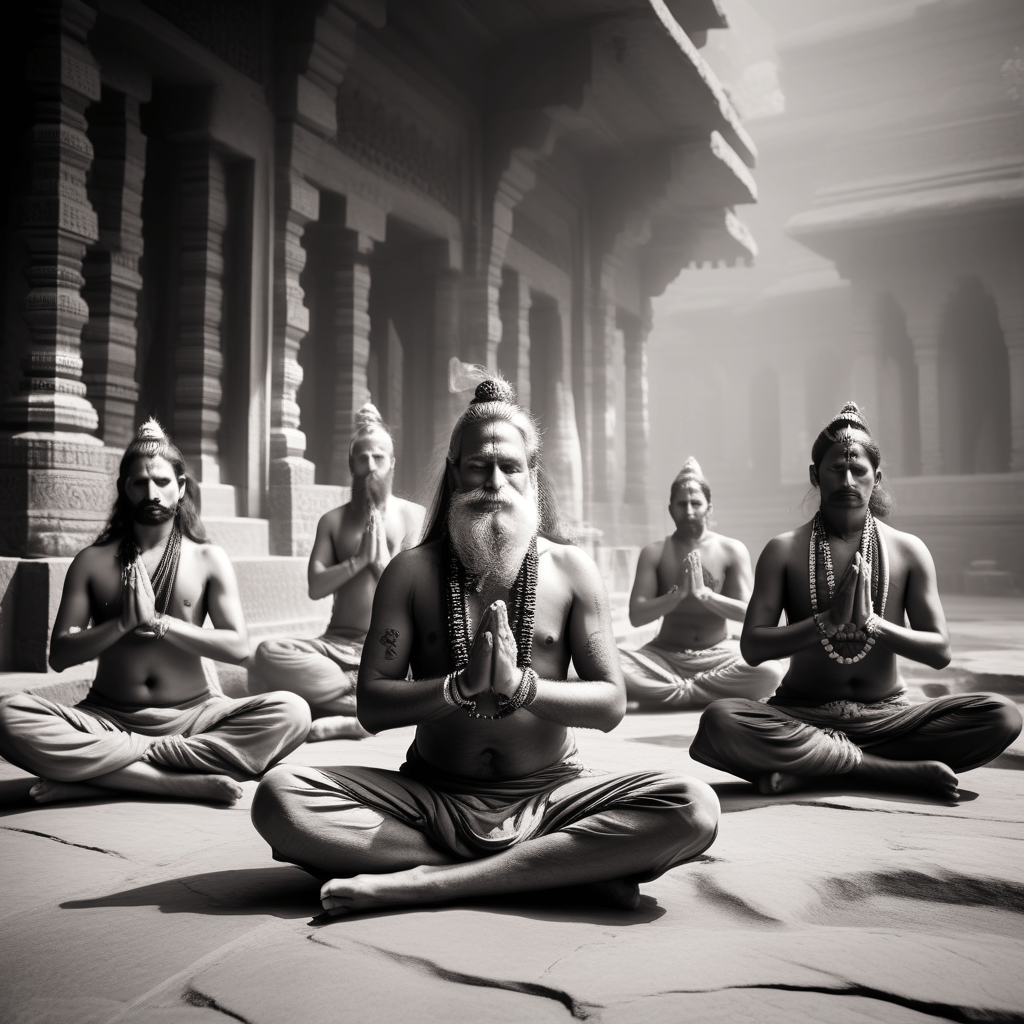
The Souvenir of Spiritual Enlightenment

Beyond the Peak Experience

In the realm of spiritual enlightenment, there lies an experience so profound and transformative that it often defies description. It’s a peak experience, a moment of nondual awareness where the sense of self merges with the universe, transcending the usual barriers of the ego and the mind. Those who attain this state describe it as a moment of absolute clarity, an encounter with the true essence of being. But what happens after this peak experience? How does one integrate this transformative moment into the fabric of everyday life?

The answer lies in the concept of the ‘souvenir’ of spiritual enlightenment. This souvenir is not a physical object, but a subtle, yet profound change within the individual. It’s the lingering essence of the experience, a change in perception and understanding that remains long after the peak moment has passed. This souvenir is a reminder, a glimpse of the infinite that we carry back into our ordinary lives.


This souvenir manifests in various forms. It might be a deepened sense of peace, a newfound ease in dealing with life’s challenges, or a pervasive feeling of connectedness with all things. For some, it’s a shift in values and priorities, leading to a life more aligned with inner truth and compassion. For others, it’s an ongoing journey of self-realization and growth, a path that continuously unfolds with each new insight and understanding.

The phenomenon of spiritual enlightenment itself is vast and incomprehensible, which cannot be fully grasped or retained by the finite human mind. In this light, the souvenir we bring back is not the entirety of the experience, but a fragment, a taste of the infinite that changes us in subtle and profound ways.


To integrate this souvenir into daily life requires patience, awareness, and a willingness to continue the inner journey. It’s about maintaining an openness to the lessons and insights from this transformative experience. It involves embracing the present moment, living with mindfulness and heart, and allowing the essence of the experience to guide and inform our actions and choices.

In conclusion, the nondual peak experience of spiritual enlightenment is a transformative journey that leaves us with a lasting souvenir. This souvenir, though a mere fragment of the vastness of the experience, has the power to profoundly alter our perception, guiding us towards a life of greater awareness, compassion, and connection. As we navigate the complexities of life, this souvenir becomes a beacon, illuminating our path and reminding us of the deeper truths of our existence.

Morgan O. Smith

Yinnergy Meditation, Spiritual Life Coaching & My Book, Bodhi in the Brain…Available Now!

https://linktr.ee/morganosmith

Snow as Sand

The Sahaja Perspective on Finding Paradise in the Everyday

In our spiritual journey, the quest for enlightenment often leads us down paths of deep contemplation and profound realizations. One such metaphor that encapsulates this journey is the concept of seeing snow from a blizzard as sand from a tropical paradise, a core principle of Sahaja, an ancient philosophy rooted in the pursuit of natural simplicity and spontaneous spiritual awareness.

Sahaja teaches us that the world around us, often perceived through the lenses of our preconceived notions and cultural conditioning, holds a deeper, more intrinsic beauty that is akin to paradise. This metaphor, seeing snow as sand, is not about the physical transformation of elements but a radical shift in perception. Just as snow and sand are vastly different in their physical properties, they can represent the dualities of our life experiences – cold and warm, transient and permanent, harsh and soft. However, Sahaja invites us to look beyond these dualities and see the underlying essence, which is pure, unchanging, and blissful.


This transformative perception is not an overnight occurrence but a gradual awakening. As we embark on our spiritual quest, we learn to peel away the layers of our conditioned views, much like shedding winter clothes to feel the warmth of the sun on our skin. The snow, with its cold and aloof nature, symbolizes the challenges and hardships we face in life. In contrast, sand, warm and inviting, represents the ultimate state of contentment and joy. Through Sahaja, we learn to embrace both with equanimity, understanding that paradise is not a distant land to be reached but a state of mind to be realized.

In essence, the philosophy of Sahaja teaches us that paradise is all around us, waiting to be discovered in the mundane, the ordinary, and even in the challenges. It is in the laughter of a child, the quietude of a snowy night, the resilience of a blooming flower in the desert, and the vastness of a starlit sky. It reminds us that every moment is an opportunity to experience the divine, to see the extraordinary in the ordinary.


As we journey through life, let us remember that the snow is also sand, and in every grain of our experiences, paradise awaits. This realization is the essence of Sahaja – seeing the world not as it appears, but as it truly is, an endless expanse of beauty, joy, and peace.

Morgan O. Smith

Yinnergy Meditation, Spiritual Life Coaching & My Book, Bodhi in the Brain…Available Now!

https://linktr.ee/morganosmith

The Imperfection of Spiritual Gurus

Embracing Humanity in the Pursuit of Enlightenment

In the realm of spiritual enlightenment, the figure of the guru often looms large – a beacon of wisdom, a guide towards self-realization. Yet, amidst the reverence and idealization, a fundamental truth often remains unacknowledged: no spiritual guru is perfect. This paradox lies at the heart of a deeper understanding of spiritual growth, where perfection is not a destination, but a journey of constant evolution and self-awareness.

The Dual Nature of the Guru


The guru, in their essence, embodies a unique dualism. On one hand, they are perceived as having attained a state of union with the Self – a transcendental consciousness that surpasses ordinary human experience. This aspect of the guru resonates with a realm beyond the physical, where notions of perfection are redefined in the context of spiritual wholeness.

Conversely, the psychological aspect of the guru is firmly anchored in the human experience. It is a constant reminder that they, too, are subject to the trials and tribulations of the human condition. The guru’s journey is not marked by an escape from humanity but by a deeper immersion into it, embracing its imperfections as part of the broader tapestry of existence.


Perfection is a Process, Not a State

The pursuit of perfection, especially in the spiritual context, is often misconstrued as the attainment of a flawless state. However, this pursuit is more accurately seen as a process – a continual striving for betterment and understanding. The guru, aware of their imperfections, does not seek to eliminate them but to understand and integrate them into their larger spiritual narrative.

This approach demystifies the journey towards enlightenment. It is not about transcending humanity but embracing it in its entirety – with its flaws, contradictions, and challenges. The psychological striving of the guru serves as a powerful reminder that spiritual growth is not about reaching a plateau of perfection but about engaging in an ongoing dialogue with both the self and the universe.

The Metaphor of the Guru

There is something I occasionally mention in my teachings. The saying is that if you hang out with the guru long enough, eventually, the guru will fart. This metaphor, as humorous as it is, holds profound philosophical significance. It symbolizes the inescapable humanity of the spiritual teacher – a reminder that they, too, are bound by the natural laws of existence.

This metaphor serves as a levelling force, bridging the gap between the guru and the seeker. It’s a reminder that spiritual leaders are not infallible deities but fellow travellers on the path of enlightenment. Their wisdom does not stem from their distance from humanity but from their deep engagement with it, warts and all.


Conclusion

In embracing the imperfection of spiritual gurus, we are invited to a more authentic engagement with spirituality. It’s an understanding that enlightenment is not about the erasure of flaws but the acceptance and integration of them into our journey. This perspective fosters a more compassionate and realistic approach to spiritual growth, one that acknowledges the beauty in imperfection and the humanity in the divine.

Morgan O. Smith

Yinnergy Meditation, Spiritual Life Coaching & My Book, Bodhi in the Brain…Available Now!

https://linktr.ee/morganosmith

Embracing the Ephemeral

The Paradox of Change and Nothingness

In the realm of existence, the notion that “Nothing is permanent” stands as a profound truth. This phrase, seemingly simple, unravels layers of complexity upon closer inspection. It posits that permanence is an illusion, a transient shadow in the vast continuum of time. The paradox lies in the statement that the only thing permanent is “Nothing.” This “Nothing” is not a void or absence, but a canvas upon which the tapestry of life is constantly being redrawn.

The permanence of “Nothing” implies that change is the only constant. Change, in this context, is both the action and the result of “nothing happening.” It is the dynamic force that propels the universe forward, ensuring that no moment is identical to the last. This constant evolution is what makes life both unpredictable and beautiful. It challenges our understanding of reality, pushing us to accept that what we see as solid and enduring is, in fact, fleeting and malleable.


However, this notion of change does not imply chaos or lack of order. Instead, it suggests a universe governed by the laws of transformation, where each ending is a prelude to a new beginning. In this perpetual cycle, decay gives way to growth, and destruction paves the way for creation. This eternal dance of creation and dissolution is the essence of existence, a reminder that life, in all its forms, is a journey of continuous metamorphosis.

Moreover, the concept of “Nothing” as a permanent state offers a deeper, more philosophical insight. It invites us to ponder the nature of existence and our place within it. Are we, as human beings, mere transient entities caught in the flux of change? Or do we possess an enduring essence that transcends the physical realm? These questions lie at the heart of our search for meaning and purpose in an ever-changing world.


In conclusion, the statement “Nothing is permanent. The only thing that is permanent is Nothing” is more than a mere play on words. It is a profound reflection on the nature of existence, a reminder of the impermanence of the physical world, and an invitation to seek deeper understanding beyond the tangible. It encourages us to embrace change, not as a force of disruption, but as the fundamental essence of life itself.

 Morgan O. Smith

Yinnergy Meditation, Spiritual Life Coaching & My Book, Bodhi in the Brain…Available Now!

https://linktr.ee/morganosmith
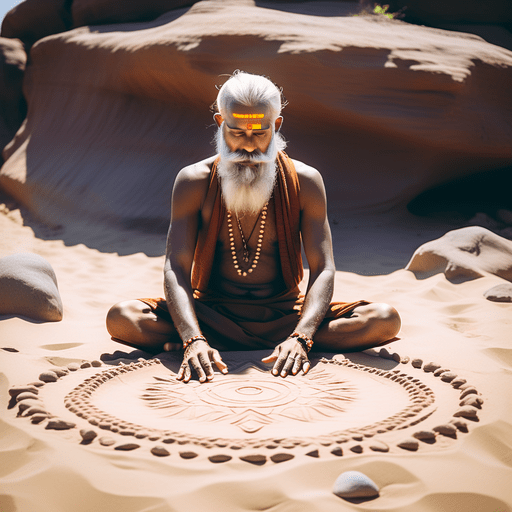
Meditative Practice as a Perpetual State

An Evolutionary Stage in Spiritual Development

In the journey of self-discovery and spiritual growth, the concept of meditation often surfaces as a pivotal practice. However, there’s an evolutionary stage within this practice that transcends beyond the mere act of meditating – it’s the transformation of meditative practice into a perpetual state of meditation. This shift marks a significant milestone in an individual’s spiritual development, where meditation is no longer an isolated activity but an intrinsic part of one’s existence.

## The Essence of Perpetual Meditation

Perpetual meditation is not about allocating specific hours of the day to meditate; it’s about integrating the essence of meditation into every moment of life. This stage is reached when the clarity, calmness, and mindfulness cultivated during meditation persist throughout the day, influencing our thoughts, actions, and interactions. It’s a state where the mind is constantly attuned to the present, free from the clutches of past regrets and future anxieties.

## Evolutionary Spiritual Development

Reaching this stage of perpetual meditation signifies a profound shift in spiritual evolution. It’s a transformation from doing to being – from practicing meditation as a task to living meditatively. This evolution is marked by a heightened sense of awareness and a deep connection with the inner self. It’s a journey from the surface layers of consciousness to the deeper, more subtle realms of existence.

## The Impact on Individual and Collective Consciousness

The transition to a perpetual state of meditation has far-reaching implications, both for the individual and the collective consciousness. On a personal level, it cultivates inner peace, resilience, and a profound understanding of life. On a collective level, it can lead to a more compassionate, empathetic, and conscious society, as individuals who embody this state naturally radiate positivity and understanding.

## Navigating the Path

The path to this evolutionary stage is unique for each individual, yet some universal practices can guide the journey. Regular meditation, mindfulness exercises, and a conscious effort to stay present can gradually lead to the internalization of meditative awareness. It’s a path of patience, persistence, and profound introspection.

## Conclusion

Transforming meditative practice into a perpetual state of meditation is a significant evolutionary step in spiritual development. It’s a journey towards becoming a beacon of peace and awareness, influencing not only one’s life but also the world at large. This state is not an end but a beginning – a gateway to deeper spiritual realms and a more profound understanding of existence.

Yinnergy Meditation


Embark on a transformative journey with Yinnergy Meditation, a distinctive and potent program crafted to unleash your inner capabilities. More than just a meditation technology, Yinnergy guides you on a path of emotional, mental, and spiritual evolution. Experience the depths of meditation, increased tranquillity, and notable improvements in creativity, concentration, and intuition through Yinnergy. Suitable for both novices and experienced practitioners, it offers an accessible yet impactful route to heightened self-awareness and well-being. Choose Yinnergy Meditation for a life filled with clarity, equilibrium, and harmony. Begin your journey of transformation today and connect with your deepest inner strengths!

Remember to make the most of our exclusive Holiday promotion. Apply the discount code R7X9Z2P for special savings on all Yinnergy products during checkout.

https://yinnergy.gumroad.com/

Atoms Within Atoms

Contemplating the Cosmic Scale of Existence

In the grand tapestry of existence, our understanding often finds itself confined within the boundaries of human perception. Yet, when we dare to venture beyond these limits, we encounter a humbling and awe-inspiring perspective. Consider this: each of us is composed of trillions of atoms, minuscule yet intricate components that constitute our very essence. Now, elevate this thought to a cosmic scale. What if our entire universe, with its vast galaxies and nebulae, is but a single atom within the immeasurable body of a higher entity or force, which some may choose to call God?

This analogy invites us to rethink our place in the cosmos. It suggests that just as each atom plays a vital role in the structure and function of our being, so too might our universe contribute to a larger purpose within this colossal entity. This perspective is not to diminish our significance but to expand our understanding of connectivity and purpose. In this cosmic view, every action, thought, and event within our universe could be integral to the workings of a grander scheme, a higher order of existence.

Such a notion also challenges our understanding of God or the ground of all being. Traditionally conceived as an omnipotent and omniscient entity, this view presents God not just as a creator or a distant observer but as a vast, living entity within which universes exist like atoms within a body. This reimagining bridges the gap between the spiritual and the physical, suggesting a universe that is not separate from the divine but intrinsically part of it.

The implications of this perspective are profound. It propels us to consider our actions and their repercussions not just on a worldly scale but as part of a cosmic dance. It encourages a sense of universal responsibility and interconnectedness, urging us to view ourselves not as isolated beings but as integral components of a much larger existence.

In conclusion, the idea that our universe could be akin to an atom within the body of a higher entity redefines our understanding of existence, purpose, and spirituality. It invites us to contemplate our place in the cosmos as inhabitants of a vast universe and as part of a much grander, interconnected whole.

Morgan O. Smith

Yinnergy Meditation, Spiritual Life Coaching & My Book, Bodhi in the Brain…Available Now!

https://linktr.ee/morganosmith

The Profound Journey

Understanding Mystical Experiences and Spiritual Awakenings

**Introduction**:
In the pursuit of understanding life’s profound mysteries, we often come across terms like ‘mystical experience’ and ‘spiritual awakening.’ While these concepts are intertwined in the grand tapestry of spiritual exploration, they hold distinct meanings and implications for the seeker. In this blog post, we delve into the essence of these experiences and how they shape our journey toward enlightenment.

**Mystical Experience – A Moment of Transcendence**:

A mystical experience is like a flash of lightning in the dark night of our existential journey. It’s a transient, profound event that gifts the individual with a sense of unity and oneness with the universe. This experience transcends normal perception and thought, offering a glimpse into a deeper reality that is usually veiled by the mundane aspects of life. Mystical experiences are often described as ineffable – beyond the grasp of language and logic. They can occur spontaneously or be induced through various practices like deep meditation, prayer, or even through profound encounters with nature or art.


**Spiritual Awakening – The Dawn of Consciousness**:
On the other hand, a spiritual awakening is a gradual, transformative process. It’s not just a fleeting moment of insight but a fundamental shift in consciousness. This awakening alters how an individual perceives themselves and their surroundings. It’s akin to waking up from a deep slumber, where one starts to question and understand the deeper aspects of life, self, and the universe. This transformation often leads to personal growth, an increased sense of empathy, and a deeper connection with others. It signifies a lasting change in one’s worldview and approach to life.

**Interconnection and Differences**:
While both mystical experiences and spiritual awakenings can profoundly impact an individual’s life and worldview, they differ in nature and impact. A mystical experience might catalyze a spiritual awakening, yet it can also occur as a standalone event. The key difference lies in their duration and transformative effects. Mystical experiences are short-lived yet intense, whereas spiritual awakenings are long-term, gradually reshaping one’s consciousness and perspective.


**Conclusion**:
In the journey of self-discovery and spiritual growth, both mystical experiences and spiritual awakenings play vital roles. They offer glimpses into the profound mysteries of existence and guide us toward a deeper understanding of our place in the cosmos. As seekers on this path, embracing these experiences can lead us to a more fulfilled and enlightened existence, marked by a profound connection with the world and a deeper understanding of the self.

Morgan O. Smith

Yinnergy Meditation, Spiritual Life Coaching & My Book, Bodhi in the Brain…Available Now!

https://linktr.ee/morganosmith