The Paradox of Purpose in the Ground of All Being

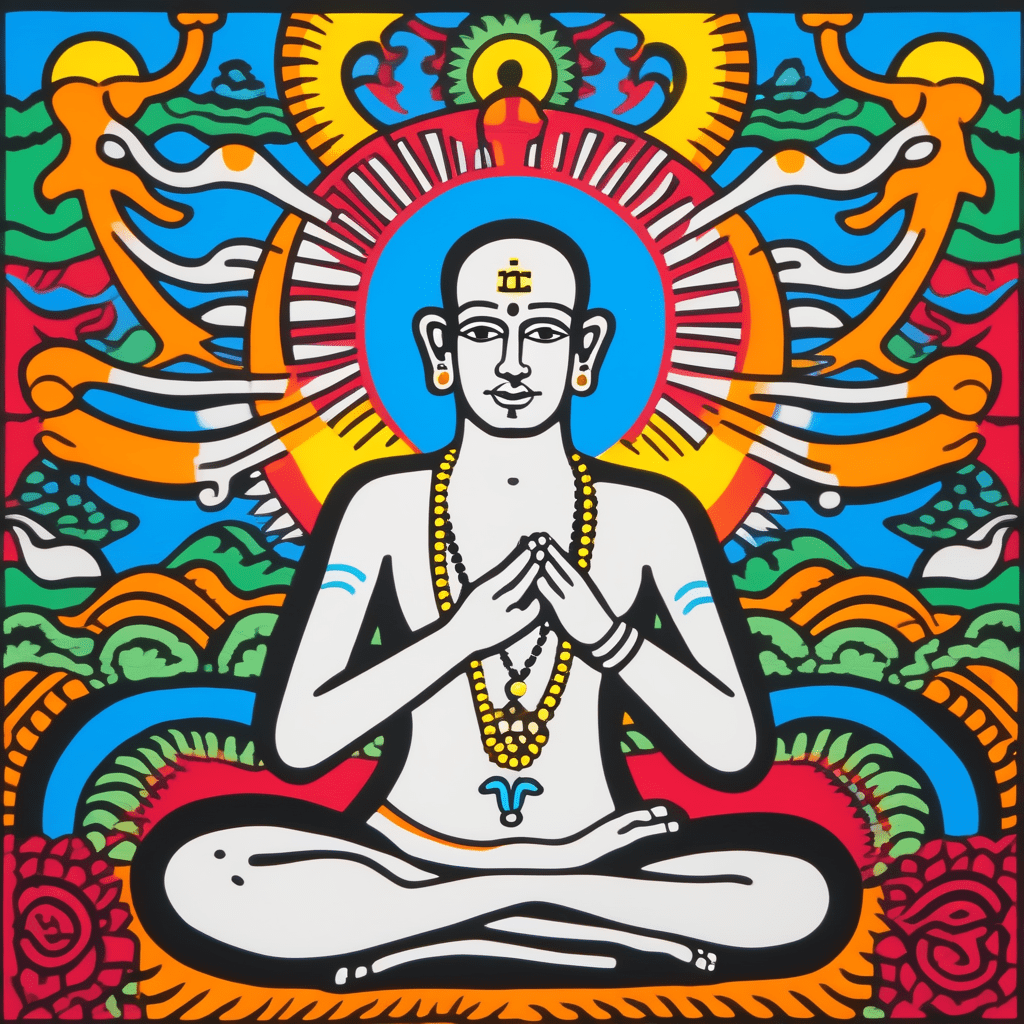
In philosophical discourse, few concepts are as intriguing and paradoxical as the nature of the “ground of all being.” This term, often used in metaphysical and theological discussions, refers to the fundamental basis or underlying reality of all that exists. At the heart of this concept lies a profound paradox concerning purpose.

#### Purposelessness at the Core


The ground of all being, by its very definition, transcends all known dimensions, including space and time. The ultimate reality underpins everything, yet it stands outside the boundaries of our physical and temporal world. In this sense, the ground of all being is inherently purposeless. It does not pursue goals or objectives because it exists beyond the constructs where purpose holds meaning. In its neutrality and transcendence, it simply ‘is’, unburdened by the need for purpose that characterizes human existence.


#### The Emergence of Purpose

Yet, curiously, from this purposeless ground emerges all purpose. The universe, with its myriad galaxies, stars, and planets, including our own, sprang from this foundational reality. Every atom, every life form, every human thought and endeavour finds its origin in this ground of all being. The very space and time that it transcends are the platforms upon which purpose is built and realized. In human terms, purpose is inextricably linked to our existence within space and time. Our goals, dreams, and aspirations are rooted in our temporal journey through life.

#### A Flourishing of Purpose within Constraints


It is within the confines of space and time that purpose finds its expression and fulfillment. Human endeavours, whether artistic, scientific, or personal, unfold within the physical world and over time. The space-time continuum is not just a physical reality but a canvas for manifesting purpose. The ground of all being, while itself devoid of purpose, is the source from which all purposes derive and the stage upon which they play out.


#### Conclusion: A Profound Duality

The ground of all being presents us with a profound duality. It is a realm devoid of purpose, yet it is the very source from which all purpose in the universe springs. This paradox is a philosophical quandary and a reflection of the profound mystery at the heart of existence. In understanding this, we gain a deeper appreciation of the complexities and wonders of the universe and our place within it.

Morgan O. Smith

Yinnergy Meditation, Spiritual Life Coaching & My Book, Bodhi in the Brain…Available Now!

https://linktr.ee/morganosmith

Meditate…

Until Your Internal World Resembles Paradise

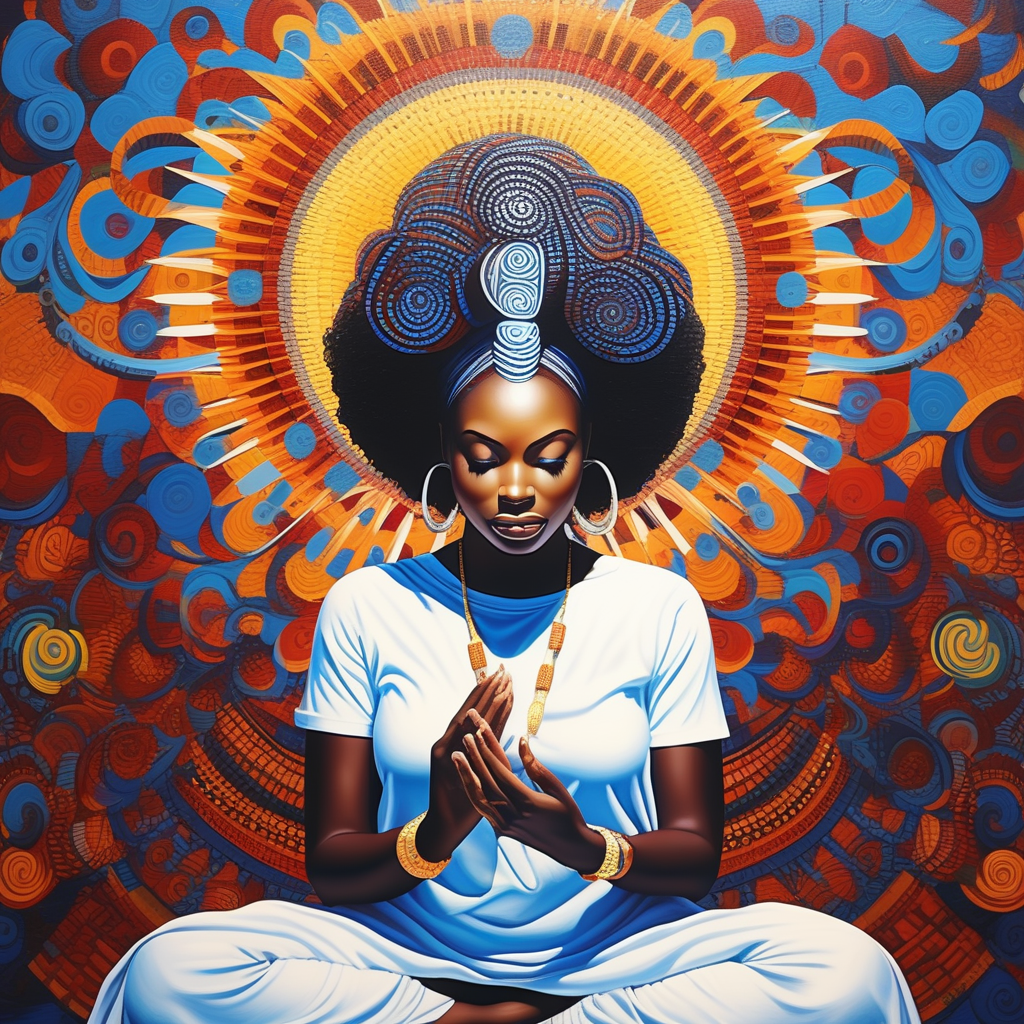
In the bustling chaos of everyday life, where the noise of the external world often drowns out our inner peace, there is a profound need for sanctuary. Not a physical refuge, but a mental oasis that can be accessed anywhere, anytime. This sanctuary is not just a fleeting escape, but a transformation of our internal world into a paradise. The key to unlocking this paradise? Meditation.

Meditation, often misconceived as merely a relaxation technique, is a profound journey toward internal transformation. It’s about finding the silence amidst the noise, the stillness within the storm. Through meditation, we can delve into the depths of our consciousness, explore the landscapes of our minds, and cultivate a garden of tranquillity.

But how does one’s internal world become a paradise? It begins with understanding that paradise is not a physical location, but a state of being. It’s a place of balance, harmony, and a profound understanding of oneself. Meditation guides us toward this state by teaching us to observe our thoughts without attachment, to embrace our emotions without being overwhelmed by them, and to find clarity amid confusion.

As we meditate, we learn to let go of the clutter, the unnecessary burdens that weigh down our spirit. We learn to nurture thoughts and emotions that uplift and support our well-being. Slowly, the internal chaos gives way to a serene landscape, a paradise that is uniquely ours.

This journey, however, is not without its challenges. Just like any paradise, our internal world requires nurturing. It requires patience, dedication, and above all, a willingness to explore and accept ourselves fully. But the rewards are immeasurable. In this internal paradise, we find resilience against external turmoil, a deep sense of peace, and a wellspring of joy that is not dependent on external circumstances.

So, take a moment to close your eyes, breathe deeply, and embark on the most rewarding journey of all – the journey within. Meditate until your internal world blossoms into a paradise, a haven of peace and joy that you carry with you always.

Want to find your paradise within? Discover the transformative power of Yinnergy Meditation, a unique and effective program designed to unlock your inner potential. Yinnergy is not just a meditation method; it’s a journey toward emotional, mental, and spiritual growth. With Yinnergy, you can experience profound deep meditation, heightened relaxation, and a significant boost in creativity, focus, and intuition. It’s an ideal practice for both beginners and seasoned meditators, offering a simple yet powerful path to enhanced well-being and self-awareness. Embrace a life of clarity, balance, and harmony with Yinnergy Meditation. Start your transformative journey today and tap into your deepest potential!

Remember to make the most of our exclusive Holiday promotion. Apply the discount code R7X9Z2P for special savings on all Yinnergy products during checkout.

https://yinnergy.gumroad.com/

Embracing Life’s Paradox

The Path to Tranquility Through Suffering

In the tapestry of human existence, suffering is often perceived as an unwelcome intruder, an aberration in the otherwise serene flow of life. Yet, this perspective overlooks a profound truth: suffering is not just an integral part of life, but it can also be a conduit for deep, transformative growth. The statement, “All life is suffering until we watch our sufferings without bias or judgment,” encapsulates a significant philosophical stance, inviting us to reevaluate our relationship with pain and hardship.

At the core of this idea lies the Buddhist philosophy of Dukkha, which suggests that suffering is inherent in the very fabric of life. This suffering stems from various sources: the pain of change, the anxiety of impermanence, and the dissatisfaction arising from unfulfilled desires. However, the key to alleviating this suffering is not found in the external world but within our perceptions and reactions.


Watching our sufferings without bias or judgment means observing our pains and challenges with a sense of detachment and mindfulness. It’s about recognizing that suffering is a natural part of life and not something to be feared or avoided. This mindful observation allows us to understand the impermanent nature of our experiences, leading to a sense of liberation and peace.

Moreover, this approach transforms suffering from a state of passive endurance to an active process of introspection and learning. It becomes an opportunity to cultivate resilience, empathy, and wisdom. Through this lens, we see that our most challenging moments are often our greatest teachers, guiding us toward a deeper understanding of ourselves and the world around us.


In essence, the path to tranquillity and inner peace is paradoxically paved by accepting and understanding suffering. It is about shifting our perspective from seeing suffering as a curse to embracing it as a catalyst for personal growth and enlightenment.

Morgan O. Smith

Yinnergy Meditation, Spiritual Life Coaching & My Book, Bodhi in the Brain…Available Now!
https://linktr.ee/morganosmith

Gratitude for the Unseen

Recognizing the Service of Our Environment

In our daily lives, we are constantly interacting with, benefiting from, and shaping our environment. Yet, often, we overlook the significance of these interactions. Everything around us, from the most mundane objects to the grandiosity of nature, serves a vital role in our existence. The air we breathe sustains life, the ground we walk on supports our journey, and the objects we use, like chairs and beds, enhance our comfort and well-being. These elements are not just external entities; they are integral parts of our life experience.

What’s more intriguing is the concept that we, in some way, have created this reality. Whether consciously or unconsciously, our choices, perceptions, and actions have contributed to the world we inhabit. This perspective encourages a deeper understanding and appreciation for the environment that serves us tirelessly.


The body, the most intimate and personal aspect of our environment, deserves special recognition. It’s a complex, living system that works relentlessly to support our endeavours, dreams, and survival. Acknowledging the body as a service to our consciousness invites profound gratitude and respect for our physical selves.

This understanding leads to a vital realization: gratitude should be directed inward as much as outward. By appreciating the external world, we acknowledge our role in its creation and existence. It’s a cycle of gratitude that reinforces the idea that we are active participants in our reality, not just passive observers.


In essence, everything around us is a reflection of our inner world. By being grateful for our environment, we cultivate gratitude for ourselves, recognizing our power and responsibility in shaping our world. This outlook fosters a more harmonious relationship with our surroundings, encouraging a life lived with awareness, appreciation, and a deep sense of interconnectedness.

Morgan O. Smith

Yinnergy Meditation, Spiritual Life Coaching & My Book, Bodhi in the Brain…Available Now!

https://linktr.ee/morganosmith

Surrendering to Nondual Suchness

A Journey Beyond the Self

In spiritual exploration, the concept of surrendering to nondual suchness presents a profound and thought-provoking journey. This journey transcends the confines of the individual self, leading one into the embrace of a universal consciousness.

At the heart of this process is the realization that the sense of a separate ‘you’ is an illusion. In nondual suchness, the distinction between self and other dissolves, revealing a state of being where everything is interconnected and unified. This realization is not an intellectual one; it’s an experiential awakening to the true nature of existence.


When we talk about surrendering in this context, it’s not the conventional notion of giving up or admitting defeat. Instead, it’s a letting go of the ego, the false sense of separateness that keeps us entangled in a web of individuality and personal narratives. It’s a release into the flow of life, an unclenching of the fists that hold tightly to personal identity and desires.

This surrender is not an act done by an individual to something greater. Rather, it’s a recognition that the individual self is an integral part of the greater whole. It’s the ‘all that is’ surrendering to itself. In this space, there’s no doer; there’s just the unfolding of life in its myriad forms, a dance of cosmic consciousness.

This understanding brings about a profound sense of peace and freedom. It’s a liberation from the burdens of the self, a release from the relentless pursuit of personal gain, and an end to the suffering caused by attachment and aversion. In this state, one experiences life in its purest form, unfiltered by the ego’s desires and fears.


Surrendering to nondual suchness is a journey that challenges our deepest-held beliefs and perceptions. It invites us to look beyond the surface of things, to see the interconnectedness of all life, and to experience the world not as a collection of separate entities but as a unified whole.

As we embark on this journey, we find that the path is not always easy. It requires a willingness to let go, to trust in the natural flow of life, and to open ourselves to a reality that transcends the personal. But for those who dare to take this path, the rewards are immeasurable: a sense of oneness with all that is, a deep and abiding peace, and an unshakeable joy that comes from being in harmony with the true nature of existence.

 Morgan O. Smith

Yinnergy Meditation, Spiritual Life Coaching & My Book, Bodhi in the Brain…Available Now!

https://linktr.ee/morganosmith

Choice as Cosmic Manifestation

In a world often bound by the chains of determinism, where every event is seen as a mere consequence of a prior one, the concept of choice emerges as a beacon of freedom, a testament to the transcendental nature of human consciousness. This perspective offers a radical, yet profound alternative: choices are not just personal expressions or random occurrences; they are, in essence, expressions of the universe itself.

The fabric of our universe is intricately woven with the threads of time, space, and matter. Yet, within this complex tapestry lies a deeper truth, one that transcends the apparent duality of cause and effect. In this view, every choice we make is not simply a product of past influences or future aspirations; it is an immediate and direct expression of the universe’s ever-unfolding narrative.


This notion brings us to the concept of the ‘eternal now.’ Unlike the linear progression of time as we perceive it, the eternal now posits a realm where past, present, and future coalesce into a singular, timeless existence. In this realm, every choice is an act of creation, a moment where the universe expresses itself through our consciousness. It is in these moments that we are not merely individuals making isolated decisions; we are the universe experiencing itself, exploring its infinite possibilities.

The implications of this perspective are both liberating and daunting. It suggests that our choices are far more significant than personal preferences or responses to external stimuli. They are cosmic in scale, contributing to the grand narrative of existence itself. It invites us to view our decisions not just as personal crossroads but as contributions to the ongoing creation of reality.


In conclusion, viewing choice as a cosmic manifestation offers a new dimension to our understanding of free will and determinism. It proposes that our choices are neither predestined nor random, but are integral parts of the universe’s continuous journey through time and existence. It’s an invitation to embrace the profound interconnectedness of all things and to recognize our role as the creator itself in the magnificent tapestry of life.

Morgan O. Smith

Yinnergy Meditation, Spiritual Life Coaching & My Book, Bodhi in the Brain…Available Now!
https://linktr.ee/morganosmith

Universal Consciousness

The Unity of All Existence

In philosophy and spirituality, the concept of a universal consciousness presents a fascinating and thought-provoking perspective. This idea posits that consciousness pervades every aspect of the universe – from the smallest atom to the vastest galaxy, and even across dimensions beyond our immediate perception. This universal consciousness is not just a passive observer; it is an active, integral part of everything that exists.

When we delve into the experiences described by myself and others who have reached what we refer to as “nondual peak experiences,” we encounter descriptions of a profound realization. In these moments, the boundaries between the self and the cosmos blur, leading to an experience of unity that is both awe-inspiring and deeply humbling. Such experiences suggest that at our most fundamental level, we are not separate entities navigating an indifferent universe; rather, we are this vast, interconnected cosmic tapestry.


This realization of oneness with and as the universe has profound implications. It challenges the conventional notion of individuality and separateness. In recognizing that we are this larger whole, our perspective on life, ethics, and our relationship with the natural world undergoes a significant shift. This holistic view fosters a sense of responsibility not just towards our immediate environment or community, but towards the entire cosmos.

Moreover, the concept of universal consciousness invites us to reconsider our understanding of reality itself. If consciousness is not merely a byproduct of the brain, but a fundamental aspect of the universe, then our exploration of reality must extend beyond the physical and into the realms of the mind and spirit. This opens up new avenues for understanding the nature of existence and our place within it.


As we continue to explore this concept, we are compelled to ask profound questions: What is the nature of this universal consciousness? How does our consciousness interact with it? And what does this interconnectedness mean for the future of humanity and the cosmos?

In conclusion, the idea of a universal consciousness offers a radical yet enlightening perspective on our existence. It invites us to view ourselves not as isolated beings, but as integral components of an awe-inspiring, interconnected universe. This realization has the potential to transform not only our self-perception but also our approach to life, ethics, and our collective future.

Morgan O. Smith

Yinnergy Meditation, Spiritual Life Coaching & My Book, Bodhi in the Brain…Available Now!

https://linktr.ee/morganosmith

Brahman as the Ultimate Reality

In the realm of philosophical and spiritual inquiry, the concept of Brahman stands as a profound cornerstone, especially within the nondual traditions of Eastern philosophy. Brahman, as perceived through this lens, is not just an abstract concept but the very essence of reality itself—a reality that transcends the ordinary experiences of separation and duality which dominate our everyday lives.

At the heart of this understanding is the recognition that there is a fundamental oneness underlying all existence. This oneness, Brahman, is the eternal, unchanging truth that pervades every aspect of the universe. It’s an understanding that challenges the notion of individuality, as it posits that the deepest essence of our being, the Atman, is not separate from Brahman. In this view, the individual self and the universal self are not two but one.


This realization brings us to the experience of Sat-Chit-Ananda. These Sanskrit words translate to ‘existence, consciousness, and bliss.’ When one recognizes that their true nature is Brahman, they experience an unshakeable existence that is beyond birth and death, a consciousness that is vast and all-encompassing, and a bliss that transcends all worldly pleasures and pains.

The journey to this realization is deeply personal and transformative. It involves peeling away the layers of illusion or Maya that cause us to see ourselves as separate from the rest of existence. Through various practices such as meditation, self-inquiry, and devotion, one can gradually come to the direct experience of this truth.


The implications of this realization are vast. In seeing all beings and things as expressions of the same ultimate reality, our approach to life, our values, and our interactions with others undergo a profound shift. Compassion, empathy, and a sense of connectedness naturally arise when one sees themselves in others and others in themselves.

In conclusion, the concept of Brahman as the ultimate reality invites us to look beyond the surface of our experiences and question the very nature of existence. It’s a journey that leads us not only to deep philosophical understanding but also to a transformation of our entire being.

Morgan O. Smith

Yinnergy Meditation, Spiritual Life Coaching & My Book, Bodhi in the Brain…Available Now!
https://linktr.ee/morganosmith


Bend the Mind, Twist the Mind, Stretch the Mind, Crunch the Mind

In the labyrinth of our thoughts, we often find ourselves entangled in a web of complexities and perplexities. The mind, a powerful tool, yet an enigma, needs to be bent, twisted, stretched, and sometimes crunched to unlock its true potential. But what happens when we let it remain still?

The Power of Stillness

In stillness, there is a profound awakening. When the relentless chatter of the mind ceases, we step into a realm of pure awareness. It’s akin to the calm after a storm, where clarity emerges from the chaos. In this tranquil state, the mind becomes a mirror, reflecting the movements of the universe in its truest form.


Universal Movements and the Mind


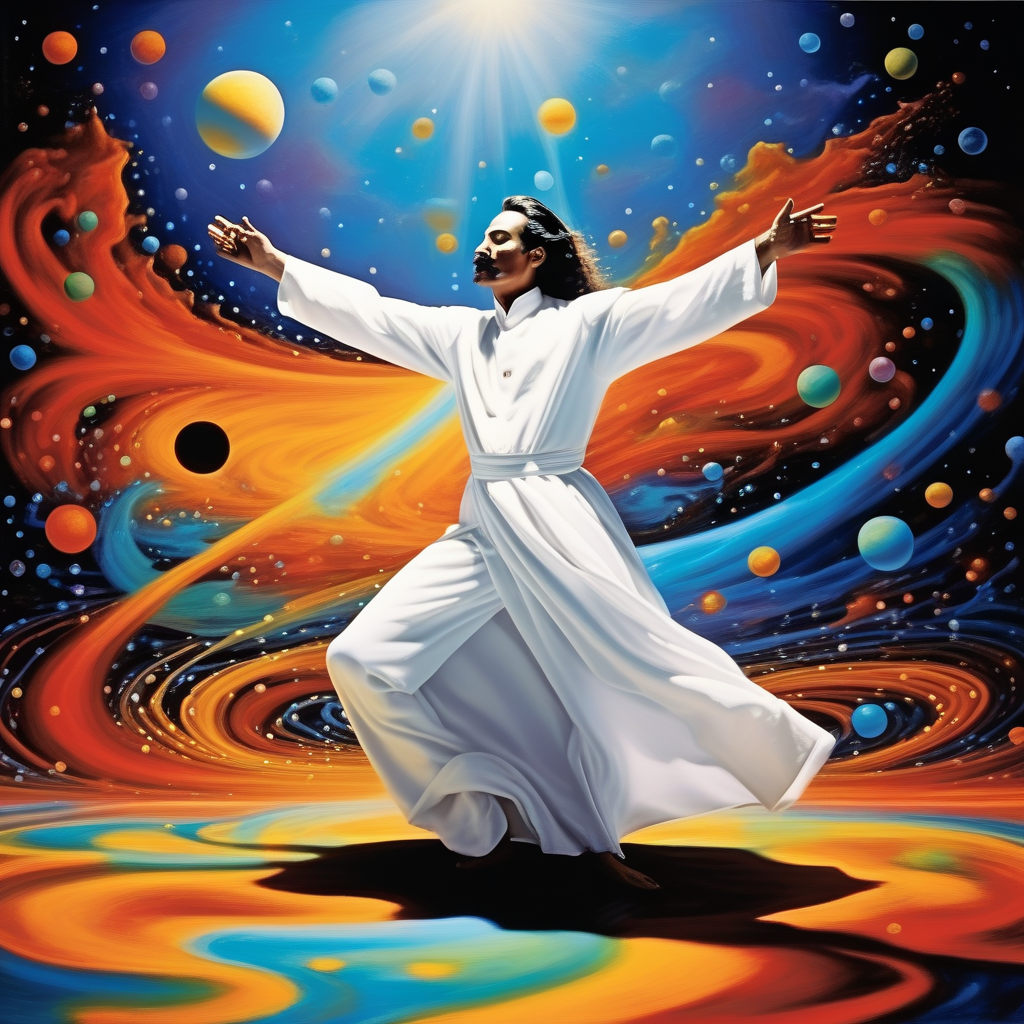
The universe is in constant motion – stars burn, galaxies spin, and life evolves. In our usual state of mental noise, we are detached from this cosmic dance. However, as our mind quiets, we begin to synchronize with these universal rhythms. This synchronization is not just observation; it is a profound connection, an understanding that we are part of this grand symphony.

The Mind’s Journey

Bending, twisting, stretching, and crunching the mind are not just metaphorical. These are processes of challenging our thoughts, questioning our beliefs, and stretching our understanding. It’s a journey from the known to the unknown, from certainty to curiosity, from noise to silence.


Conclusion

The still mind is not a void; it is full of awareness. It’s a state where we realize that we are not separate from the universe but integral to it. It’s a realization that every thought, every action is a ripple in the cosmic ocean. This understanding doesn’t come from the constant churning of thoughts but from the serene stillness where we hear the universe speak.

Morgan O. Smith

Yinnergy Meditation, Spiritual Life Coaching & My Book, Bodhi in the Brain…Available Now!

https://linktr.ee/morganosmith

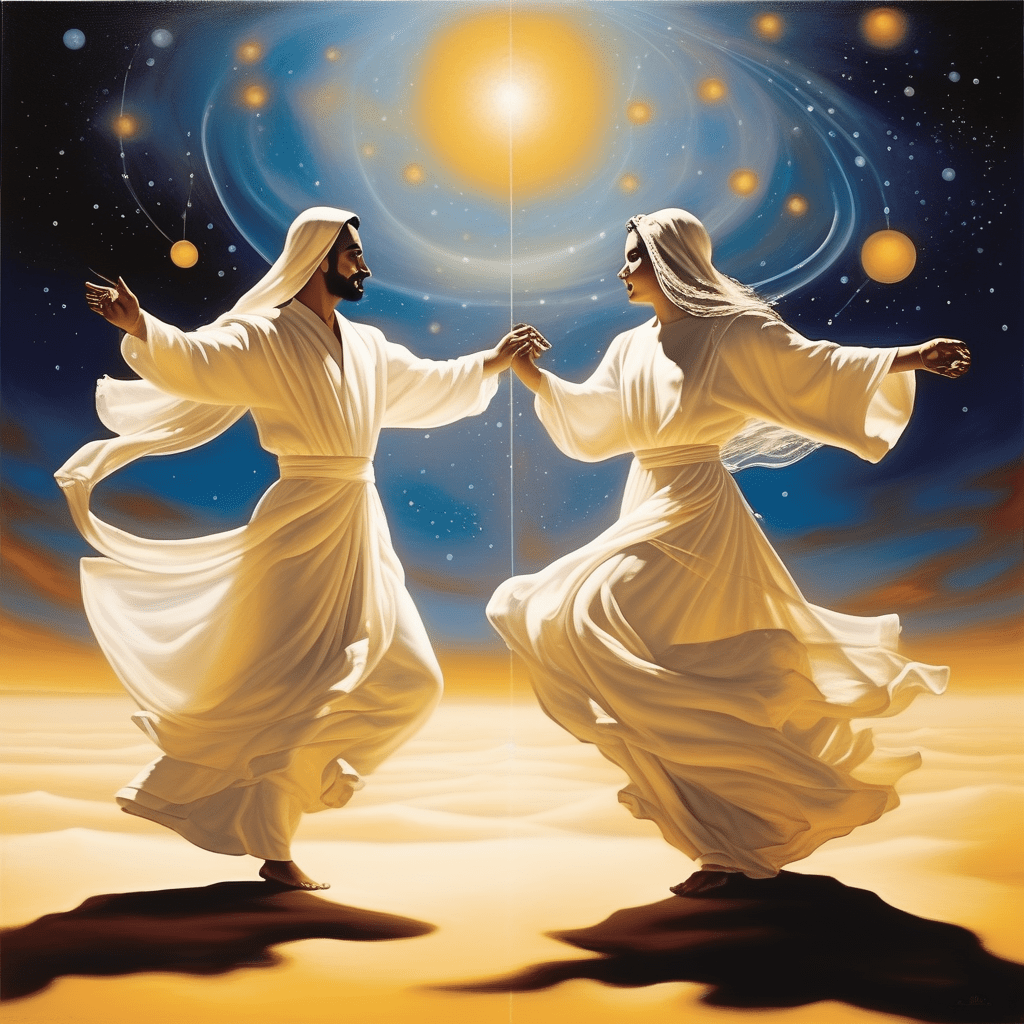
The Dance of the Cosmos

Understanding the Interconnectedness of Existence

In the grand tapestry of existence, every thread is intricately woven into a larger, more complex pattern. This pattern, a vibrant mosaic of life and energy, highlights the profound interconnectedness of all things in the universe. It is a concept that transcends mere physicality, inviting us to explore the deeper spiritual and metaphysical aspects of our existence.

At the heart of this interconnectedness is the idea that everything in the universe, from the smallest particle to the vastest galaxy, is an expression of divine creativity. This perspective offers a profound sense of unity and harmony, suggesting that every element of the cosmos, including ourselves, is part of a larger, purposeful whole.


The physical universe, in this view, is not a static entity but a dynamic and ever-changing phenomenon. It is characterized by a continual process of transformation, a cycle of dying and rebirthing that underlines the concept of eternal renewal. This cyclical nature of existence echoes in every aspect of our lives, reminding us that change and transformation are not only inevitable but also essential components of the cosmic dance.

In this cosmic scheme, each element plays a crucial role. Like individual notes in a grand symphony, every aspect of the universe contributes to the creation of a harmonious and balanced whole. This interconnectedness implies a deep responsibility: our actions, thoughts, and beliefs have far-reaching consequences, influencing not only our immediate environment but also the broader fabric of existence.


Understanding and embracing this interconnectedness can lead to a more conscious and intentional way of living. It encourages us to recognize the impact of our actions, to live in harmony with the natural world, and to cultivate a sense of compassion and empathy for all beings. It’s a call to see beyond the illusion of separation and to acknowledge our role in the ongoing creation and evolution of the universe.

In conclusion, the concept of interconnectedness in existence is not just a philosophical idea; it’s a call to action. It invites us to participate actively in the cosmic dance, to embrace change, and to contribute positively to the ongoing saga of the universe. By recognizing our interconnected nature, we can find a deeper sense of purpose, belonging, and unity.


Morgan O. Smith

Yinnergy Meditation, Spiritual Life Coaching & My Book, Bodhi in the Brain…Available Now!
https://linktr.ee/morganosmith