Absolute Causality and the Epiphany of Absolute Monism

In the profound journey of spiritual exploration, a moment stands out as particularly transformative: the moment of spiritual enlightenment. This isn’t just a fleeting insight; it’s an experiential understanding of “Absolute Monism”. This is a state where one perceives the unity and interconnectedness of all things, leading to an astonishing realization: every action, behaviour, situation, or event, regardless of its scale or significance, is intrinsically linked to the very cause of the universe’s existence – the Big Bang.

This concept, which I term “Absolute Causality”, posits that the Big Bang isn’t just a distant historical event; it’s an ongoing process that manifests in every aspect of our lives. This perspective radically alters our understanding of time, causality, and our place in the universe. We begin to see that our every action isn’t merely a drop in the ocean but is, in fact, part of the ocean itself.


Absolute Monism, in this context, becomes more than a philosophical idea; it’s a lived experience. It dissolves the illusion of separation between the self and the universe, leading to a profound sense of unity and interconnectedness with all existence. This realization fosters a deeper sense of responsibility and mindfulness in our actions, as we understand that what we do has a ripple effect throughout the fabric of the cosmos.

Furthermore, Absolute Causality redefines our understanding of time. Rather than viewing the Big Bang as a one-time event in the distant past, we perceive it as an eternal process that continuously unfolds in every moment. This view aligns with certain interpretations of quantum physics, suggesting that time is not linear but a more complex, interconnected web of events and possibilities.

In conclusion, the experience of Absolute Monism and the realization of Absolute Causality offer a transformative lens through which we can view our existence. It’s a perspective that encourages us to live more consciously, understanding that our actions are not just our own but part of a grand, cosmic dance that began with the universe itself.

 Morgan O. Smith

Yinnergy Meditation, Spiritual Life Coaching & My Book, Bodhi in the Brain…Available Now!

https://linktr.ee/morganosmith

Embracing the Now

The Path to Ego Death and True Awareness

In our relentless pursuit of self-improvement and understanding, we often overlook a fundamental truth: the power of simply being in the present moment. This idea, though simple, holds profound implications for our journey towards inner peace and self-realization.

**Letting Go of Judgment and Bias**

To truly embrace the present, we must first release ourselves from the shackles of judgment and bias. This means observing our experiences, thoughts, and feelings without labelling them as good or bad, right or wrong. It’s about being an impartial witness to our own life.


**The Surrender to ‘What Is’**

Surrendering to ‘what is’ requires a deep acceptance of the present moment, regardless of its nature. It’s not about resignation or defeat; rather, it’s an active engagement with the now. In doing so, we allow life to flow naturally, without the resistance that often leads to suffering.

**Death of the Ego**


The ego, often seen as our conscious self or identity, thrives on differentiation, judgment, and past-future thinking. By embracing the present and letting go of these traits, we facilitate the ‘death’ of the ego. Now this does mean losing our sense of self, transcending the limited, subjective view of the ego.


**A New Perspective**

As we learn to live in the present, our perspective on life shifts. We begin to see the interconnectedness of all things and the beauty in simplicity. The burdens of past regrets and future anxieties lighten, offering a sense of liberation.

**Final Thoughts**

The journey towards ego death and true awareness is not about gaining something new but about losing the misconceptions and biases that cloud our true nature. It’s a path of unlearning, of returning to the essence of who we are.

Morgan O. Smith

Yinnergy Meditation, Spiritual Life Coaching & My Book, Bodhi in the Brain…Available Now!

https://linktr.ee/morganosmith

Kundalini and Beyond

Unraveling the Layers of Absolute Reality

In the realm of spiritual exploration, Kundalini is often revered as a pinnacle experience, a symbol of ultimate awakening and enlightenment. Yet, it’s crucial to understand that Kundalini, as profound as it may be, is not the zenith of absolute reality unless one chooses to define absolute reality as Kundalini itself.

Kundalini, described in many spiritual traditions as a dormant energy located at the base of the spine, is often associated with a powerful awakening, leading to heightened awareness and spiritual enlightenment. This transformative energy is said to travel up through the chakras, or energy centers, culminating in a profound expansion of consciousness. However, this is not the final destination in the journey of spiritual realization.


The concept of absolute reality, in various philosophical and spiritual systems, goes beyond any single experience or state. It is the ultimate truth that underlies all existence, transcending the limits of individual consciousness and phenomena. While Kundalini awakening can be a significant milestone in one’s spiritual journey, it is, in essence, a part of the grand tapestry of experiences that guides us toward understanding this absolute reality.

This brings us to an intriguing point: the journey toward absolute reality is not linear, nor is it the same for everyone. Kundalini might be a crucial step for some, while others may tread a different path toward the same destination. The beauty of spiritual exploration lies in its diversity and the individualized paths we embark upon.


In conclusion, while Kundalini is a powerful and transformative experience, it is a facet of a larger, more complex journey toward understanding absolute reality. This journey is rich with various experiences and insights, each contributing to our understanding of the profound truth that underlies our existence.

Morgan O. Smith

Yinnergy Meditation, Spiritual Life Coaching & My Book, Bodhi in the Brain…Available Now!

https://linktr.ee/morganosmith

Beyond the Self

Embracing the Unity of Existence in the Quest for Spiritual Enlightenment

Spiritual enlightenment is a journey that transcends beyond the tangible realms of reality, reaching into the depths of our very existence. It’s an exploration that delves into the core of what it means to be alive, to be conscious. In this journey, enlightenment is not just a destination; it is a continuous process, a state of being that encompasses everything within and beyond every form.

At its essence, spiritual enlightenment is about realizing the interconnectedness of all things. It teaches us that every form, whether tangible or intangible, is imbued with a certain essence, a spark of the divine. This realization helps us to see beyond the superficial differences that separate us, fostering a sense of unity with the universe and everything in it.


One of the key aspects of enlightenment is the dissolution of the ego. Our egos, often constrained by societal norms and personal biases, can limit our understanding and experience of the world. Enlightenment encourages us to shed these limitations, to see beyond the self and to recognize our part in the larger scheme of existence. This perspective not only brings a deeper understanding of the self but also cultivates compassion and empathy for others.

Furthermore, enlightenment is not an escape from reality but a deeper engagement with it. It involves embracing both the light and the dark aspects of life, acknowledging that both pain and joy are integral to the human experience. This acceptance leads to a profound peace, and inner tranquillity that is unshaken by external circumstances.


In conclusion, spiritual enlightenment is an ongoing journey of discovery, where the destination is not a specific point but a continuous expansion of consciousness. It is about realizing that everything is connected, that there is a deeper meaning to our existence, and that true understanding comes from transcending beyond the self.

Morgan O. Smith

Yinnergy Meditation, Spiritual Life Coaching & My Book, Bodhi in the Brain…Available Now!
https://linktr.ee/morganosmith

Embracing Fear in the Journey to God-Realization

Finding Harmony in Human and Divine Experiences

Fear, often perceived as a negative emotion, does not simply vanish upon reaching a state of God-realization or profound spiritual awakening. This insight sheds light on a profound truth about our human experience: we are here to embrace the full spectrum of life, including emotions and experiences that seem to contradict our divine nature.

The essence of being human lies in experiencing contrast. We understand light because of darkness, joy due to sorrow, and similarly, the divine by experiencing the non-divine. In this journey of life, fear is just as essential as love or joy. It’s not an obstacle to spiritual growth but a facet of it.


When fear arises, the approach shouldn’t be to suppress or eliminate it but to observe it with neutrality. Watching fear without judgment or bias is a practice of mindfulness. It allows us to understand fear, not as an enemy, but as a part of our human experience. This observation leads to acceptance – accepting fear as it is, not as we wish it to be.

The ultimate goal of spiritual or God-realized living is not about eradicating emotions like fear. It’s about embracing and accepting them. It’s about realizing that our spiritual nature coexists with our human emotions. Acceptance doesn’t mean passive resignation; it means understanding the nature of reality and our reactions to it. It’s about finding peace amid all experiences – both divine and human.


As we embark on this journey, let’s remind ourselves: whatever happens, let it be okay. This acceptance is not a defeat but a victory of understanding over resistance, of peace over turmoil. Embrace your humanity, embrace your divinity, and in the dance of these opposites, find the harmony of existence.

Morgan O. Smith

Yinnergy Meditation, Spiritual Life Coaching & My Book, Bodhi in the Brain…Available Now!

https://linktr.ee/morganosmith

Beyond Belief

Embracing Enlightenment Beyond Philosophical Boundaries

Philosophies, at their core, are a tapestry of beliefs and principles that guide our understanding of the world and our place in it. They offer frameworks for interpreting life’s complexities, from the ancient wisdom of Hinduism and Buddhism to the foundational teachings of Christianity and beyond. Each philosophy, with its unique perspectives and teachings, resonates differently with individuals, often aligning with their inherent values and worldviews.

However, a profound transformation occurs when one experiences a spiritual awakening. This awakening transcends the conventional realm of beliefs and ideologies. It’s a profound realization that our true essence lies beyond the constructs of any philosophy. In this enlightened state, the distinctions between different philosophies blur, as the awakened individual perceives a universal truth that underlies all teachings.

Spiritual awakening brings about a shift in consciousness where the ego, once the center of our universe, becomes an enlightened ego. This enlightened ego no longer clings to rigid belief systems; instead, it navigates the world with a newfound understanding and flexibility. It acknowledges that while philosophies can provide guidance and insight, they are not absolute truths but rather tools that help us make sense of our journey.


In this light, philosophies are not rendered obsolete, but their role in our lives is significantly altered. They become references rather than doctrines, offering insights that complement the inner wisdom gained through spiritual awakening. The enlightened ego uses these philosophies not as definitive answers but as aids in its continuous journey of growth and understanding.

In essence, spiritual awakening marks a transition from seeking truth in external philosophies to discovering it within. It’s an invitation to view the world and its myriad philosophies not as definitive guides but as mirrors, reflecting parts of the universal truth that resides within each of us.


Morgan O. Smith

Yinnergy Meditation & My Book, Bodhi in the Brain…Available Now!
https://linktr.ee/morganosmith

Embracing Our True Nature

The Journey to Satcitananda

In our journey through life, it’s not uncommon to feel less than magnificent. Yet, it is essential to remember that magnificence isn’t just a part of us; it is us. Our true essence lies in a state known as Ananda – a state of bliss. This concept is deeply rooted in the philosophical idea of Satcitananda, which translates to truth (Sat), consciousness (Chit), and bliss (Ananda).

#### The Distractions of Daily Life


Our daily lives are filled with distractions. These distractions, whether they be work, relationships, or personal challenges, can make us lose sight of our true nature. In such moments, we might only be aware of our existence, neglecting the aspects of consciousness and bliss. This limited awareness can make us feel disconnected, not just from ourselves but from the world around us.


#### Existence Beyond Individuality

When we talk about existence in the context of Satcitananda, we’re referring to something much grander than just existing as an individual entity. It’s about recognizing the interconnectedness of all things and understanding that our existence is part of a larger, more profound reality.

#### Consciousness Beyond Self

Similarly, when we speak of consciousness, it’s not just about individual awareness. It’s about a universal consciousness that connects all beings. This consciousness is more than just our thoughts and perceptions; it’s an awareness that transcends the self and touches the essence of everything in the universe.


#### The Trifecta of Satcitananda

We are not just one or two of these elements – existence, consciousness, and bliss – but all three, and more. We are a complex tapestry of experiences and qualities that make up our true selves. Recognizing and embracing this can lead to a deeper understanding of our place in the world and our connection to everything around us.

#### Conclusion

In essence, the journey towards realizing our nature as Satcitananda is a journey inward. It’s about peeling back the layers of distraction and societal conditioning to reveal the truth of who we are. It’s a journey worth embarking on, for it leads to a deeper, more fulfilling experience of life.

 Morgan O. Smith

Yinnergy Meditation & My Book, Bodhi in the Brain…Available Now!
https://linktr.ee/morganosmith

Beyond Happiness

Embracing Non-Attachment and Eternal Bliss through Meditation

Creating a state of non-attachment and achieving contentment in life is a journey that many strive for. The key to this profound state of being lies in the practice of meditation, a tool that has been revered for centuries across various cultures for its transformative powers.

### The Illusion of Happiness


Happiness, as we often perceive it, is a fleeting emotion, a temporary state influenced by external circumstances. It’s like chasing the wind – always shifting and changing. This chase can often lead to a cycle of highs and lows, leaving us feeling more drained than fulfilled.

### Embracing Non-Attachment

Non-attachment, on the other hand, is a more stable state. It’s about finding peace and contentment regardless of the situation. This doesn’t mean becoming indifferent or emotionless. Rather, it’s about observing life’s ebbs and flows without being mentally and emotionally consumed.


### The Role of Meditation

Meditation is the bridge that leads us to non-attachment. Through consistent practice, meditation allows us to observe our thoughts and feelings without getting entangled in them. It’s like watching clouds pass by in the sky – they come and go, but the sky remains unchanged. This detachment from our transient thoughts and emotions reveals a deeper truth about our existence.

### Realization of the Self

As one delves deeper into meditation, a realization dawns – that we are the ground of all being. This profound understanding shows us that our true nature is not bound by the transient nature of worldly experiences. We are something more substantial, more permanent.

### Eternal Bliss

This realization paves the way for bliss, which is different from happiness. Bliss is a state of eternal contentment, unshaken by the changing tides of life. It’s a deep, internal fulfillment that does not depend on external factors.


### Conclusion

Non-attachment and bliss are states that can be realized through the practice of meditation. By observing our thoughts and emotions without attachment, we can discover the unchanging truth of our existence, leading to a life of deep contentment and eternal bliss.

 Morgan O. Smith

Yinnergy Meditation & My Book, Bodhi in the Brain…Available Now!
https://linktr.ee/morganosmith

Navigating the Depths

Nonduality vs. Absolute Monism

In the intricate tapestry of philosophical thought, two concepts often emerge as profound and perplexing: Nonduality and Absolute Monism. These philosophical gems, though seemingly similar, hold distinct perspectives on the nature of existence and the universe.

**Nonduality: The Unity of Existence**

Nonduality, a term often associated with Eastern philosophies, particularly Advaita Vedanta, posits a fundamental principle: reality is one, and the perception of duality or separation is illusory. It suggests that what we experience as separate entities – ourselves, others, and the world around us – are not distinct, but part of a unified whole. The philosophy of Nonduality encourages us to transcend this illusion, to realize that at the core of our being, we are not separate from the universe but one with it.


**Absolute Monism: The Dance of Oneness and Multiplicity**

Absolute Monism, on the other hand, takes a slightly different approach. While it agrees with the principle of oneness, it also acknowledges the existence of multiplicity. This philosophy, as I interpret it, embraces the paradoxes of existence: one and not two, two and not one, one and two, two and one, one within two, two within one, yet simultaneously neither one nor two. It reflects a deeper understanding of the cosmos as a dynamic interplay of unity and diversity, where the singular and the plural coexist in a harmonious yet complex relationship.

**The Interplay and Implications**

The discussion of Nonduality versus Absolute Monism is not just a theoretical exercise but has profound practical implications. In Nonduality, the path to enlightenment or understanding involves the realization of oneness, leading to a sense of peace and connectedness with all. In Absolute Monism, the journey is about embracing and understanding the complexity and paradox of existence, leading to a deep appreciation of life’s multifaceted nature.

Both philosophies, in their essence, guide us toward a greater understanding of our place in the universe. They invite us to look beyond the superficial and to question the very nature of reality.


**Conclusion: A Journey of Understanding**

In the end, whether one leans towards Nonduality or Absolute Monism, the journey is one of deep introspection and understanding. It’s about peeling back the layers of what we perceive and understanding the deeper truths of our existence. As we delve into these philosophies, we find not just answers, but also a greater appreciation for the questions themselves.

Morgan O. Smith

Yinnergy Meditation & My Book, Bodhi in the Brain…Available Now!
https://linktr.ee/morganosmith

The Ultimate Context

Authenticity and the Tapestry of Life

In my spiritual journey and teachings, I have always emphasized the importance of authenticity. I believe that when we strip away the layers of pretense from our spiritual practices, what we are left with is a genuine quest for truth. This journey towards authenticity is not just a path to spiritual enlightenment, but also a journey of self-discovery.

I often describe life as a tapestry of personal narratives. Each one of us contributes our unique thread to this tapestry, weaving stories of joy, sorrow, triumph, and struggle. These personal narratives are significant, yet they form part of a larger, immutable context — what I refer to as the Ultimate Reality or Ultimate Context. This Ultimate Context is the backdrop against which our individual stories unfold.

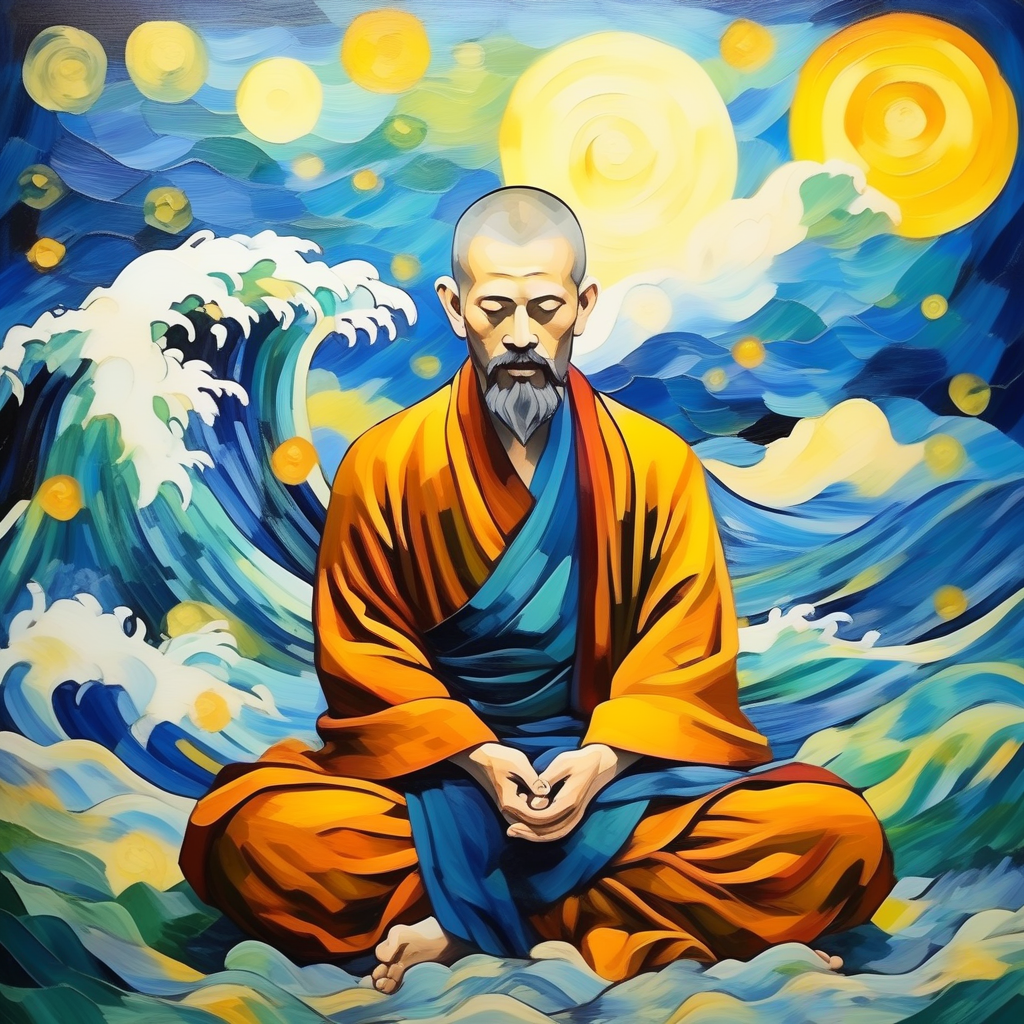
This concept of the Ultimate Context is akin to a vast ocean, with our individual lives symbolized as transient waves. While each wave has its unique shape and journey, it is not separate from the ocean. Similarly, our lives, with their narratives, are part of a larger, interconnected reality. Our experiences, no matter how personal or unique, are intrinsically linked to this broader context.

The recognition of this Ultimate Context invites us to view our lives from a broader perspective. It encourages us to find meaning not just in the personal ups and downs of our daily existence but in our connection to something greater than ourselves. It is a reminder that our individual stories, while important, are part of a vast, interconnected universe, which is ultimately The Self.


In embracing this perspective, we find a deeper sense of purpose and belonging. We begin to understand that our journeys, no matter how solitary they may seem, are integral parts of a grand, cosmic narrative. This realization brings a sense of peace and grounding, as we understand that our lives are woven into the very fabric of existence itself.

Morgan O. Smith

Yinnergy Meditation & My Book, Bodhi in the Brain…Available Now!

https://linktr.ee/morganosmith