The Ultimate Level

A Journey Beyond Self

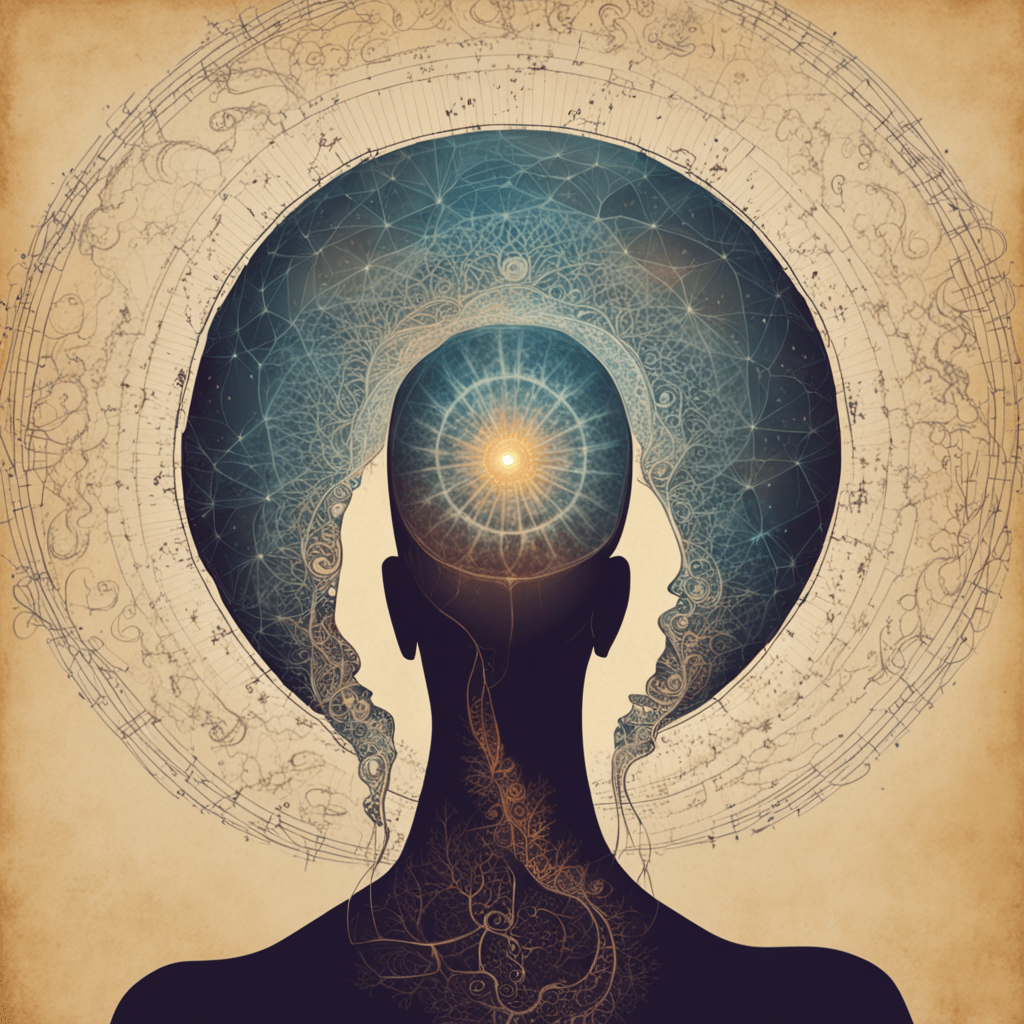
Empathy often takes shape as a shared feeling of another’s pain or joy, yet what if it transcended that? What if compassion meant embodying every experience, every breath, each joy, and sorrow that life has ever held? This ultimate level of empathy—true compassion—goes beyond feeling for others; it embodies living as others.

Imagine not just observing another’s story but experiencing the nuances of every life. When you walk this path, distinctions between you and the other fade, as each heartbeat, thought, and memory becomes your own. It’s not a surrender of individuality but a shift that reveals individuality as an aspect of universality. It’s seeing through the eyes of countless lives, their hopes, their fears, and awakening to a truth embedded in all existence.

In this boundless compassion, every interaction becomes an encounter with oneself—a self far beyond personal identity. Actions, then, stem from understanding rather than judgment, from connection rather than separation. This compassion dissolves the lines that divide, exposing an intimate reality: that there is no “other.” All is part of an unbroken continuum of being.

Through this, life itself becomes a sacred practice. Each moment, each being, becomes a teacher, revealing the boundless nature of consciousness. This journey calls for courage, for it asks us to face the suffering and beauty we might have once viewed from a distance. But in facing this, a deeper realization emerges—an understanding that compassion isn’t merely a trait; it’s the essence of who we are.

To awaken to this level of empathy is to see the world through the eyes of the eternal, where all paths are one, and all experiences are ours to share.

Morgan O. Smith

Yinnergy Meditation, Spiritual Life Coaching & My Book, Bodhi in the Brain…Available Now!

https://linktr.ee/morganosmith

Expressions of Unity

How do we reconcile the existence of human atrocities and natural disasters within a spiritual framework that emphasizes oneness and unity? This question often challenges those who begin exploring nondual perspectives, where all phenomena, no matter how destructive or painful, are viewed as interconnected expressions of the same singular source. The nondual approach offers a radical shift in perception, one that dissolves the illusion of separation between events that we label as “good” or “bad” and invites us to see these occurrences as part of the grand play of existence.

Violent actions and harmful behaviours in the world, when viewed from a dualistic standpoint, can easily be categorized as manifestations of evil or wrongdoing. However, nonduality reveals that such acts emerge not from some inherent brokenness or malevolence, but from ignorance—a misunderstanding of our shared unity. This ignorance fosters the illusion of separateness, leading to behaviours rooted in fear, hatred, or selfishness. But when we awaken to the truth that there is no real division between self and other, the impulse to harm dissolves. The violence that once seemed so senseless is recognized as a consequence of an illusion. Healing, therefore, does not come through retribution but through awakening to the truth of our interconnectedness.

Natural disasters, often seen as chaotic or punishing forces, are similarly reframed. Rather than being viewed as random or cruel acts of nature, these events reflect the cyclical nature of the cosmos, expressions of impermanence and transformation. The suffering caused by such disasters, while profound, stems from attachment to the belief in permanence, the illusion that we can hold onto fixed forms in a world of constant flux. Through the nondual lens, even the most devastating natural occurrences are understood as part of the rhythmic dance of life, reminders of the ephemeral nature of all things.

What arises from this perspective is a deep acceptance of life’s paradoxes. The seeming contradiction of living in a world filled with both beauty and devastation, joy and suffering, dissolves when we recognize that all such experiences are expressions of a singular, undivided reality. From this space of understanding, we cultivate compassion, not through an emotional reaction to suffering, but from the profound realization that all beings and events arise from the same source. Suffering, then, becomes not an ultimate truth, but a temporary appearance within the endless ocean of consciousness.

Embracing nonduality allows us to witness both atrocities and natural disasters with equanimity, to understand them not as aberrations or misfortunes, but as fleeting expressions of a larger cosmic unfolding. This does not imply passivity or indifference. Instead, it cultivates a deeper capacity for compassionate action, arising from the knowledge that we are not separate from the suffering we seek to alleviate. In this space, we move beyond the limited notions of blame or punishment, and towards a profound embrace of the totality of existence, where all things are seen as interconnected, transient waves within the boundless ocean of being.

Morgan O. Smith

Yinnergy Meditation, Spiritual Life Coaching & My Book, Bodhi in the Brain…Available Now!
https://linktr.ee/morganosmith

Don’t Mistake Spiritual Persona for Spiritual Attainment

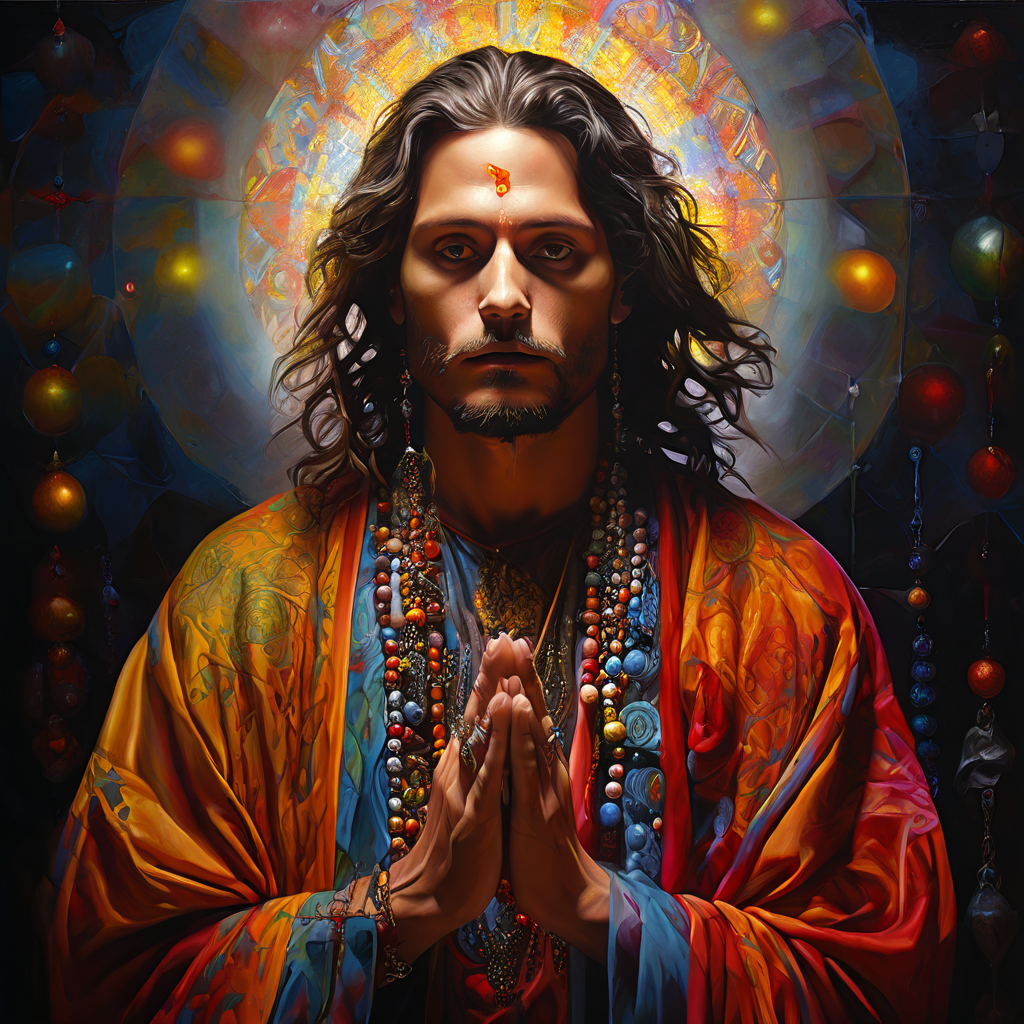
In the quest for spiritual enlightenment, it is easy to fall into the trap of equating outward appearances with inner transformation. The spiritual marketplace is brimming with individuals adorned in the symbols of enlightenment—beads, robes, and serene smiles. But beneath these carefully cultivated images, what lies? Are these symbols true reflections of deep spiritual attainment, or merely the trappings of a spiritual persona?

The essence of genuine spiritual attainment transcends outward appearances. It is an internal metamorphosis that reconfigures one’s very being. True spiritual growth dismantles the ego, dissolves the illusion of separation, and fosters a profound sense of unity with all existence. This journey is deeply personal and often invisible to the outside world. It is marked by humility, compassion, and an unwavering commitment to truth.

A spiritual persona, on the other hand, can be a carefully constructed mask. It seeks validation from the external world by adopting symbols and behaviours associated with spirituality. This persona can be seductive, as it offers the semblance of wisdom and enlightenment without necessitating the arduous inner work required for genuine transformation. It may garner admiration and respect, but it does not hold the essence of true spiritual attainment.

To discern the difference, one must look beyond appearances. True spiritual attainment manifests in actions, choices, and the quality of one’s presence. It is reflected in the ability to remain centred in the face of life’s challenges, to act with compassion even in difficult circumstances, and to embrace the inherent uncertainty of existence with equanimity.

It is a state of being that radiates from within, often silently, without needing external validation or recognition. It is characterized by a deep sense of peace, a boundless capacity for love, and an unwavering connection to the present moment.

The path to spiritual attainment requires courage—the courage to face one’s deepest fears, to dismantle long-held beliefs, and to surrender the ego’s need for control and validation. It demands an authentic engagement with the present moment, a willingness to embrace discomfort, and a commitment to the inner journey, no matter how solitary or challenging.

As you navigate your spiritual journey, remember that the true markers of spiritual attainment are not found in external symbols or personas. They are found in the quiet moments of insight, the depths of your heart, and the transformative power of authentic presence. Embrace the journey inward, for it is there that the true treasures of spiritual awakening are discovered.

Morgan O. Smith

Yinnergy Meditation, Spiritual Life Coaching & My Book, Bodhi in the Brain…Available Now!

https://linktr.ee/morganosmith

The Paradox of the False Self

The “I” is the false self, but this false self is also true. It just doesn’t know it yet. This realization reveals that our perceived separateness is an illusion, guiding us toward the truth of our inherent unity.

Understanding the False Self
The false self, often identified as the ego, is the aspect of our identity constructed from our experiences, beliefs, and societal conditioning. It is the mask we wear, the persona we present to the world. While it serves a functional role in navigating daily life, it is not our ultimate truth.

The Hidden Truth
Within this false self lies a hidden truth. The ego, though seemingly separate, is an expression of the same source that underlies all existence. The journey of self-realization involves peeling away the layers of this constructed identity to uncover the true self—the essence that connects us all.

The Illusion of Separateness
Our perception of being distinct individuals creates the illusion of separateness. This belief in separateness fosters division, conflict, and a sense of isolation. However, when we begin to see through the false self, we recognize that these divisions are illusory. Beneath the surface, we are all interconnected.

Toward Inherent Unity
Realizing the paradox that the false self is also true propels us toward the recognition of our inherent unity. This understanding dissolves the boundaries that the ego creates, allowing us to experience a deeper connection with ourselves and others. We move from a mindset of “me versus you” to one of “us” and “we.”

Living with Awareness
Living with this awareness transforms our approach to life. We become more compassionate, understanding, and empathetic, seeing others as reflections of ourselves. This shift in perception fosters a sense of peace and harmony, as we align with the deeper truth of our shared existence.

The journey of recognizing the false self as also true is a profound step toward spiritual awakening. It illuminates the path to our inherent unity, guiding us to live with greater authenticity and connection. By embracing this paradox, we uncover the deeper reality that binds us all.

Morgan O. Smith

Yinnergy Meditation, Spiritual Life Coaching & My Book, Bodhi in the Brain…Available Now!
https://linktr.ee/morganosmith

The Shared Heart of Existence

We all share the same beating heart at the core of all existence, a profound unity that transcends individuality. This shared essence connects us deeply, fostering empathy and compassion, and reminding us of our interconnectedness and inherent oneness with all life.

Recognizing Our Shared Essence

Beyond the layers of identity and personal history, the core of our being lies a shared essence that binds us together. This recognition shifts our perception from separation to unity, allowing us to see each other as reflections of the same source. When we understand that we are all connected by this common heart, we begin to treat each other with more kindness and respect.


The Power of Empathy and Compassion

This awareness of our shared essence naturally fosters empathy and compassion. When we see ourselves in others, their joys become our joys, and their sorrows become our sorrows. This deep sense of empathy breaks down barriers and opens the way for genuine connections and supportive relationships. Compassion becomes not just an ideal but a natural expression of our shared humanity.

Embracing Interconnectedness

Understanding that we all share the same beating heart helps us embrace our interconnectedness with all forms of life. This perspective extends beyond human relationships to include animals, plants, and the environment. Recognizing our place within the web of life encourages us to live more harmoniously and sustainably, honouring the interconnected fabric of existence.


Living with Oneness

Living with the awareness of our shared heart transforms our approach to life. It inspires us to move beyond self-centred pursuits and to contribute to the well-being of the whole. Acts of kindness, service, and love become expressions of our recognition of oneness. This shift enriches our personal lives and contributes to a more compassionate and united world.

By remembering that we all share the same beating heart at the core of all existence, we align ourselves with a deeper truth. This truth fosters empathy, compassion, and a profound sense of interconnectedness, guiding us toward a life of unity and harmony with all.

Morgan O. Smith

Yinnergy Meditation, Spiritual Life Coaching & My Book, Bodhi in the Brain…Available Now!
https://linktr.ee/morganosmith

The Varied Facets of The Absolute

A Unified Whole

In the dance of the cosmos, the Absolute is often perceived through the lens of our individual experiences and understandings. Just as 100 pennies, 20 nickels, 10 dimes, and 4 quarters each represent the same dollar, our paths to understanding the Absolute are varied but ultimately converge upon the same truth. This analogy illuminates the inherent unity within diversity, revealing how different perspectives can harmoniously merge into a singular reality.

We often encounter myriad teachings, practices, and philosophies when we embark on our spiritual journeys. Each one offers a unique perspective on the nature of existence, the self, and the divine. Some may resonate more profoundly with a particular path of devotion, while others might find solace in meditative introspection or the study of ancient texts. Despite these differences, the essence remains unchanged: all paths lead us back to the Absolute.

This concept is beautifully reflected in the Hindu notion of ‘Ekam Sat, Vipra Bahudha Vadanti’—Truth is one; the wise speak of it in many ways. In our quest for spiritual awakening, we may find ourselves drawn to various expressions of this singular truth. Whether through the loving devotion of Bhakti Yoga, the disciplined inquiry of Jnana Yoga, or the selfless service of Karma Yoga, each approach offers a distinct yet complementary understanding of the Absolute.

In nondual philosophy, this unity is further exemplified by the idea that all distinctions are ultimately illusory. The dichotomies we perceive—self and other, subject and object, time and eternity—are merely constructs of the mind. At the deepest level of awareness, these distinctions dissolve, revealing the oneness that underlies all existence. This profound realization transcends the limitations of language and thought, offering a direct experience of the Absolute.

Reflecting on the analogy of different coins making up a dollar, we can see how each perspective, practice, or tradition contributes to a holistic understanding of the Absolute. This understanding invites us to appreciate the diversity of spiritual expressions without diminishing their underlying unity. It encourages us to approach our spiritual paths with openness, recognizing that every sincere effort to understand the divine is a step toward the same ultimate truth.

In embracing this diversity, we cultivate a sense of humility and respect for the myriad ways in which the Absolute can be experienced and understood. We acknowledge that our journeys are but threads in the vast expanse of existence, each contributing to the intricate and beautiful pattern of the whole. This perspective not only enriches our spiritual journeys but also fosters a deeper sense of connection and unity with all beings.


Ultimately, the realization that 100 pennies, 20 nickels, 10 dimes, and 4 quarters all amount to a dollar serves as a powerful metaphor for the unity within diversity that characterizes the Absolute. By recognizing and honouring the varied paths that lead to this ultimate reality, we move closer to experiencing the profound interconnectedness of all existence. This understanding not only deepens our spiritual practice but also inspires us to live with greater compassion, wisdom, and love.

Morgan O. Smith

Yinnergy Meditation, Spiritual Life Coaching & My Book, Bodhi in the Brain…Available Now!

https://linktr.ee/morganosmith

Seeing God in All Faces, Places, and Empty Spaces

“See God in all faces, places, and empty spaces” is an invitation to recognize the divine presence in every aspect of existence. This perspective encourages a profound shift in how we perceive the world, inviting us to see beyond the superficial and appreciate the sacredness that permeates all things.

Faces
Seeing God in all faces means acknowledging the inherent divinity within every person we encounter. It is a call to look beyond differences in appearance, culture, or belief, and to recognize the shared essence that connects us all. This recognition fosters empathy, compassion, and a deeper sense of unity, as we see each individual as an expression of the divine.

Places
When we see God in all places, we cultivate a sense of reverence for our surroundings. Whether in nature, urban environments, or our homes, this perspective encourages us to find beauty and sacredness everywhere. It prompts us to treat our environment with respect and gratitude, understanding that every place is a manifestation of the divine presence.


Empty Spaces
Seeing God in empty spaces invites us to appreciate the silence, stillness, and potential that exist in the gaps and voids of our lives. These spaces are not merely absences but are pregnant with possibility and the unmanifest potential from which all creation arises. By embracing these empty spaces, we learn to find peace in stillness and to trust in the unfolding of life’s inherent wisdom.

Integrating This Perspective
To truly embody this perspective, one must cultivate mindfulness and an open heart. Practicing presence in each moment, we can begin to see the interconnectedness and the divine thread that weaves through all of existence. This practice transforms our perception, allowing us to live with greater joy, peace, and a deep sense of belonging.


By seeing God in all faces, places, and empty spaces, we align ourselves with a higher understanding of unity and divine presence. This shift not only enriches our spiritual journey but also enhances our interactions with the world, inspiring us to live with compassion, respect, and a profound appreciation for the sacredness of life.

Morgan O. Smith

Yinnergy Meditation, Spiritual Life Coaching & My Book, Bodhi in the Brain…Available Now!

https://linktr.ee/morganosmith

Navigating the Shades of Morality

Embracing Our Humanity Through Spiritual Evolution

In the labyrinth of human experience, we often find ourselves at a crossroads between contrasting moral landscapes. This journey, fraught with myriad complexities, guides us through a transformative process—a shift from seeing the world in stark contrasts to embracing the nuanced shades of morality that define our existence. It’s a journey that doesn’t just challenge our perceptions but also enriches our understanding of what it means to be inherently human.

The Evolution of Perception

As we embark on this spiritual and psychological evolution, our initial encounters with morality are often painted in broad strokes of black and white. This dichotomy, while offering clarity, is also a testament to our nascent understanding of the moral universe. However, as we delve deeper into our journey of self-discovery and spiritual awakening, we begin to notice the emergence of grey areas. These are not mere anomalies but signposts of our evolving consciousness.

The Tug of War Within

This recognition ushers in a period of internal conflict—a tug-of-war between the polarities of good and evil, right and wrong. It’s a battle that rages within, pulling us in opposing directions. Yet, it’s through this struggle that we learn the invaluable lesson of acceptance. By integrating these disparate aspects of our being, we unlock a more profound comprehension of our nature and the world around us.


Standing Firm in the Middle

The ultimate aim of this journey is not to choose a side but to find equilibrium amidst the chaos. To stand firm in the middle is to acknowledge our capacity for both the divine and the diabolical. It is in this space that we discover true empathy and compassion, unburdened by bias and judgment. This balanced stance does not signify indifference but a deeper connection to the vast spectrum of human experiences and emotions.

The Gift of Empathy and Compassion

By embracing the grey areas of morality, we cultivate a more empathetic and compassionate perspective. This transformation is not just personal but collective, as our increased understanding and acceptance ripple outwards, influencing our interactions and relationships. In recognizing our complexities, we become more forgiving of others, bridging divides and fostering a sense of shared humanity.


Conclusion: Embracing Our Humanity

The journey through the shades of morality is an integral part of our spiritual evolution. It challenges us to confront and reconcile the complexities within ourselves, leading to a more empathetic, compassionate, and balanced existence. By standing in the middle of our moral landscape, we embrace the full spectrum of our humanity, finding peace in the acceptance of our multifaceted nature.

Morgan O. Smith

Yinnergy Meditation, Spiritual Life Coaching & My Book, Bodhi in the Brain…Available Now!

https://linktr.ee/morganosmith

The Paradox of the Bodhisattva

Embracing Infinite Compassion

The greatest human sacrifice is the bodhisattva’s goal of not attaining nirvana until all sentient beings are free from samsara. An impossible task, but the bodhisattva does this anyway out of love. So out of love, he or she continues to be born, die, and be reborn while being fully conscious of entering a life full of grief, discomfort, and dissatisfaction.

The bodhisattva’s path is one of profound paradox and immeasurable compassion. In the face of boundless suffering, the bodhisattva chooses not the liberation of nirvana but the unending cycle of rebirth. This choice, rooted in an infinite love for all sentient beings, defies conventional notions of self-preservation and personal enlightenment.

In the depths of this commitment lies a radical redefinition of what it means to live a meaningful life. The bodhisattva embodies a profound understanding that individual enlightenment is intertwined with the liberation of all beings. This interconnectedness transforms personal suffering into a collective journey, where the lines between self and other dissolve in the embrace of universal compassion.


To fully grasp the bodhisattva’s sacrifice, one must delve into the core of their motivation: the unyielding love for all beings. This love transcends personal desires and aspirations, anchoring itself in the welfare of every sentient entity. It is a love that is willing to endure the perpetual ebb and flow of samsara, embracing each life with open-hearted acceptance despite the inherent pain and impermanence.

The bodhisattva’s journey challenges us to reconsider our own lives and the nature of true fulfillment. It asks us to look beyond our immediate comfort and desires, to see our existence as part of a larger, interconnected whole. In doing so, we begin to understand that the pursuit of personal happiness is not separate from the well-being of others.

Engaging with the bodhisattva ideal, even as a mere contemplation, invites us into a deeper exploration of love and compassion. It urges us to reflect on our capacity to extend kindness and empathy beyond the confines of our personal experiences. In a world often dominated by individualism and self-interest, the bodhisattva’s sacrifice serves as a beacon, illuminating the transformative power of selfless love.


Ultimately, the bodhisattva’s commitment to the liberation of all beings is a testament to the boundless potential of the human spirit. It is a reminder that true enlightenment is not an isolated achievement but a collective awakening. As we meditate on the bodhisattva’s path, we are inspired to cultivate a love that transcends our own lives, embracing the entirety of existence in its compassionate embrace.

Morgan O. Smith

Yinnergy Meditation, Spiritual Life Coaching & My Book, Bodhi in the Brain…Available Now!

https://linktr.ee/morganosmith

The Infinite Echo of the Supreme

A Journey Beyond Duality

In the realm of spiritual exploration, the quest for understanding the nature of the Supreme is both ancient and infinitely complex. It beckons us toward a horizon where the distinction between the self and the infinite blurs, inviting a profound realization: the essence of the Supreme is not an external entity to be sought, nor is it a hidden treasure within—rather, it is the very fabric of existence, a boundless presence that pervades everything.

The notion that no Supreme is Being outside of us, nor within, but that all there is, and all there ever will be, is The Supreme, challenges the conventional dualities of inside and outside, sacred and profane, self and other. This perspective ushers us into a realm where these distinctions dissolve, revealing a unity that underlies the multiplicity of forms and phenomena.

In contemplating this unity, we embark on a journey that transcends the intellectual and ventures into the experiential. It is not enough to understand the concept of The Supreme as an abstract principle; one must live, breathe, and experience the omnipresence of this ultimate reality in the minutiae of everyday life. This journey demands a radical shift in perception—a willingness to see beyond the apparent separateness of the world to the underlying oneness that is the essence of The Supreme.


This realization unfolds not as a dramatic epiphany but as a gentle awakening, a gradual unfurling of awareness that illuminates the interconnectedness of all things. In this light, every moment becomes a portal to the divine, every interaction a reflection of The Supreme. The distinction between the seeker and the sought fades, as one comes to recognize oneself as an integral expression of the infinite.

How, then, do we cultivate this awareness? The path is as diverse as the seekers who walk it, yet common threads weave through the fabric of spiritual practices across cultures and traditions. Mindfulness, meditation, and contemplation serve as gateways to transcendence, tools to quiet the mind and attune the heart to the subtleties of the Supreme’s presence. Compassion and selfless service become expressions of the recognition of the divine in all beings.

In embracing this vision of nonduality, we are invited to reconsider our relationship with the world around us. The challenges and tribulations of life are no longer obstacles to be overcome in search of a distant divine, but rather manifestations of The Supreme itself, offering lessons and opportunities for growth. In this realization, the mundane becomes sacred, the ordinary, extraordinary.

As we navigate the complexities of existence, let us hold this understanding close: that we are not separate from the Supreme; we are and everything throughout the universe is the supreme. But from the standpoint of the small self, we are expressions of its infinite creativity and boundless love. In this recognition, we find not only solace but also the profound joy of being in harmony with the ultimate reality.


In the silent spaces between thoughts, in the depth of the night sky, in the eyes of a stranger, there lies an invitation to witness The Supreme in all its manifestations. It is an invitation to dissolve the illusion of separateness and awaken the truth of our inherent unity with the cosmos.

May your journey be filled with the light of this understanding, and may the realization of the omnipresence of The Supreme guide you to the depths of peace and the heights of ecstasy.

Morgan O. Smith

Yinnergy Meditation, Spiritual Life Coaching & My Book, Bodhi in the Brain…Available Now!

https://linktr.ee/morganosmith