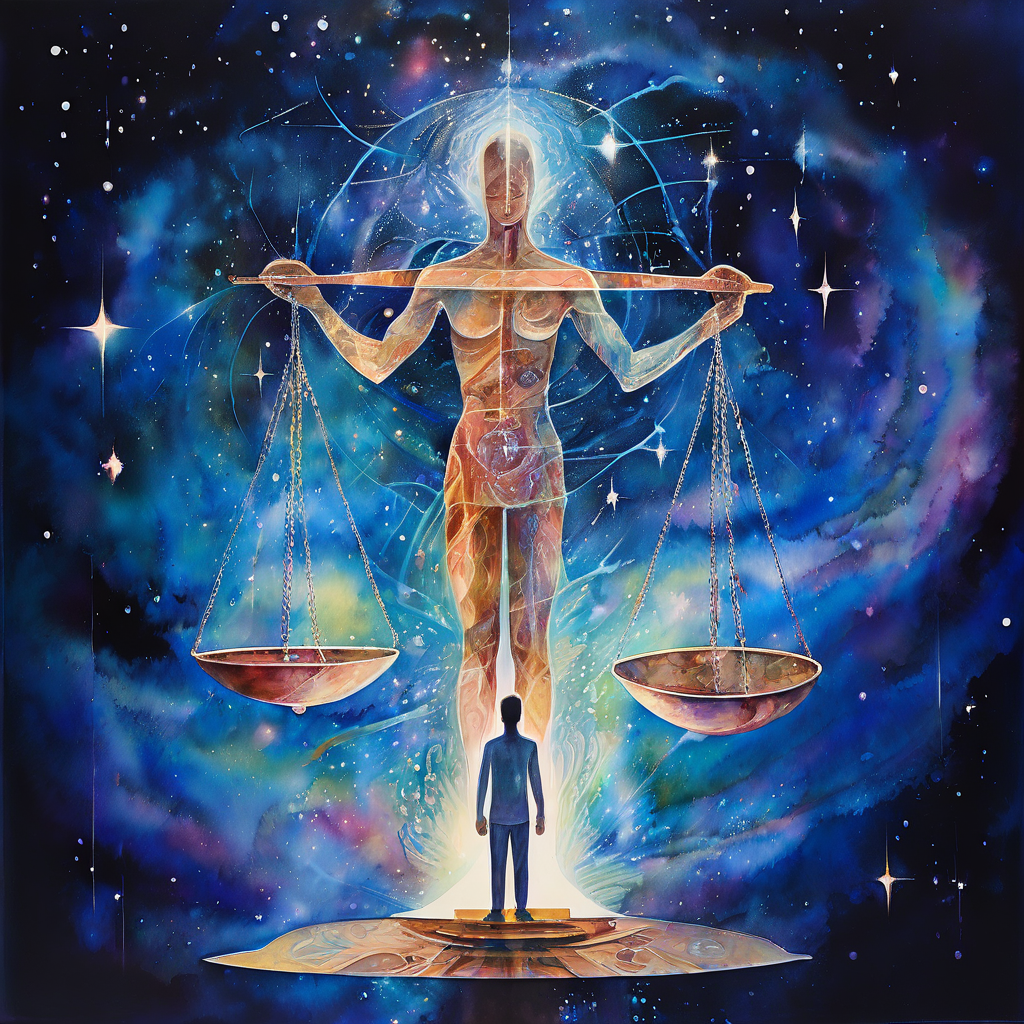
A-Dual to Dual to Nondual

The Evolution of Consciousness

The evolution of consciousness from a-dual to dual to nondual mirrors the profound journey of human development and spiritual awakening. This path reflects the unfolding of awareness from the pure, undifferentiated state of infancy, through the complexities of duality, and ultimately to the profound realization of nonduality.

The A-Dual State: The Innocence of a Newborn

A newborn baby embodies the a-dual state—a condition of pure, undivided awareness. In this state, there is no sense of separation; the infant exists in a realm of unity where distinctions between self and other, subject and object, have not yet formed. The newborn’s consciousness is a reflection of the primal unity of existence, an experience of pure presence and potential.

The Emergence of Duality: The World of Distinctions

As the child grows, the consciousness transitions into the dual state. This is the realm where the distinctions and separations that characterize our daily lives begin to emerge. The child starts to recognize the difference between self and other, experiencing the world as a collection of distinct objects and entities. This dualistic perception is essential for navigating and understanding the complexities of life.

In the dual state, we develop our sense of identity and individuality. We learn to interact with the world, to differentiate between pleasure and pain, success and failure, love and fear. However, this separation can also lead to feelings of isolation, conflict, and a sense of being incomplete.

The Nondual Realization: The Return to Unity

A full spiritual awakening marks the transition from dual to nondual consciousness. This realization transcends the distinctions of duality, revealing the underlying unity of all existence. In the nondual state, the boundaries between self and other dissolve, and we perceive the interconnectedness of all things.

Nondual awareness is the recognition that the multiplicity of forms and phenomena are expressions of a single, boundless reality. It is an experience of profound unity where the apparent separations of duality are seen as illusory. This realization brings a deep sense of peace, compassion, and unconditional love, as we understand that we are part of a greater whole.

Embracing the Journey

The journey from a-dual to dual to nondual is not a linear path but a continuous unfolding of consciousness. It invites us to embrace the innocence of the a-dual state, navigate the complexities of duality, and ultimately awaken to the nondual realization. This journey encourages us to live with mindfulness, recognizing the sacredness in every moment and every experience.

By understanding and embracing this evolutionary process, we can navigate life with greater wisdom and grace. We learn to hold the paradoxes of existence, finding harmony in the interplay of opposites. This path is not about escaping the world but engaging with it more deeply, with an open heart and a clear mind.

The evolution of consciousness from a-dual to dual to nondual offers a profound framework for understanding our spiritual journey. It reminds us that beyond the apparent separations lies a deeper truth—a truth that can transform our perception and inspire us to live with greater compassion, wisdom, and love.

Morgan O. Smith

Yinnergy Meditation, Spiritual Life Coaching & My Book, Bodhi in the Brain…Available Now!

https://linktr.ee/morganosmith

The Dissolution of the “I”

A Journey Beyond Self

In the quiet moments of our existence, we often find ourselves pondering the nature of identity and consciousness. What does it mean to truly know oneself? How can we navigate the complex interplay of ego and essence? These questions have occupied the minds of mystics and philosophers for millennia, yet they remain as relevant today as ever.

At the heart of these inquiries lies a profound realization: the dissolution of the “I.” This moment of enlightenment is not merely an intellectual understanding but a visceral, transformative experience. It is a point where the sense of self, the familiar “I” that anchors our daily lives, dissolves into something far greater and more expansive.

In this state, the boundaries that define our individuality blur and eventually vanish. The distinctions between self and other, inner and outer, become meaningless. This dissolution is not an annihilation but a return to the source—a reabsorption into the universal consciousness from which all things arise.

This experience is often described as a merging with pure awareness, where the perceiver and the perceived become one. It is a space where all dualities collapse, leaving only the pure presence of being. Here, there is no longer a separate observer; the “I” that once clung to its identity dissolves within itself, recognizing that it was never separate from the whole.

Such a realization can be both liberating and disorienting. The dissolution of the “I” challenges our deepest assumptions about who we are and what reality is. It invites us to embrace the paradox that while we appear as individuals, we are simultaneously the entirety of existence experiencing itself. This shift in perception allows for a deeper connection with the world, fostering a sense of unity and compassion that transcends the limited scope of personal concerns.

Yet, this journey is not without its challenges. The ego, with its myriad attachments and identifications, often resists this dissolution. It fears the loss of control, the end of its narrative. But in letting go, we do not lose ourselves; rather, we find our true essence—a boundless, infinite presence that is the very ground of being.

In this realization, life takes on a new dimension. Every moment becomes a manifestation of the infinite, every interaction a dance of the divine. The dissolution of the “I” is not an endpoint but a continuous unfolding, a deepening into the mystery of existence. It is an invitation to live from a place of profound openness and love, to see the world through the eyes of the infinite.

As we navigate this journey, let us remember that the dissolution of the “I” is not an escape from reality but a deeper engagement with it. It is a call to awaken to our true nature and to recognize the sacredness of all life. In this space, we find the freedom to be fully present, fully alive, and fully ourselves—beyond the limitations of the ego, in the infinite expanse of pure being.

Morgan O. Smith

Yinnergy Meditation, Spiritual Life Coaching & My Book, Bodhi in the Brain…Available Now!

https://linktr.ee/morganosmith

Emptiness and Form

Exploring the Essence of Ultimate Reality

In the vast expanse of spiritual philosophy, the concept of ultimate reality often emerges as a profound focal point of contemplation. At its core, ultimate reality is a paradox: an emptiness encompassing all that takes form. This paradox invites us to explore the intricate dance between the seen and the unseen, the manifest and the unmanifest, and the ever-present flow between these states of being.

Emptiness, in its essence, is not a void in the conventional sense. It is a fertile ground, a boundless potential from which all phenomena arise. This emptiness is not devoid of life; rather, it is the very source of existence, the womb of creation. It is in this emptiness that the seed of every form, every thought, and every experience is planted and nourished.

When we speak of “everything that takes form,” we refer to the myriad expressions of life—mountains and rivers, thoughts and emotions, stars and galaxies. These forms are the manifestations of the underlying emptiness, brought into being through the dance of energy and consciousness. They are transient, ever-changing, yet intimately connected to the unchanging, formless essence from which they emerge.

This understanding challenges us to look beyond the superficial appearances of the world. It encourages us to see the impermanent nature of forms, not as a cause for despair, but as an invitation to connect with the timeless reality that underlies all existence. This connection fosters a deep sense of peace and acceptance, as we recognize that everything, in its transient nature, is a part of a greater whole.

To truly grasp the nature of this ultimate reality, one must move beyond intellectual understanding and into direct experience. This requires a quieting of the mind, a stilling of the incessant chatter that often distracts us from the subtle truths of existence. In moments of deep meditation or profound insight, we may glimpse this ultimate reality—a state where the distinction between emptiness and form dissolves, and we perceive the unity that lies at the heart of all things.

In this state of awareness, we see that emptiness is not a lack, but a fullness—a fullness that contains all possibilities, all potentialities. It is a space of infinite creativity, where the play of consciousness unfolds without limit. This realization transforms our perception, allowing us to live with a sense of wonder and reverence for the mystery of existence.

As we navigate the challenges and joys of life, this understanding can be a guiding light. It reminds us that, at our core, we are not separate from the world around us, but deeply connected to it. In embracing the paradox of emptiness and form, we find a deeper meaning in our experiences and a greater compassion for all beings.

The journey to this understanding is a lifelong one, filled with moments of clarity and confusion, insight and doubt. Yet, each step on this path brings us closer to the heart of the mystery, where we may find a profound sense of peace and a recognition of the sacredness of all life.

Morgan O. Smith

Yinnergy Meditation, Spiritual Life Coaching & My Book, Bodhi in the Brain…Available Now!
https://linktr.ee/morganosmith

The Quantum Dance of Consciousness

Bridging Absolute Monism and Superposition

In the vast expanse of human experience and scientific inquiry, there are moments when disparate realms converge, revealing profound insights into the nature of reality. One such convergence is the spiritually enlightened peak experience of absolute monism and the quantum phenomenon of superposition. This intersection invites us to explore a deeper, more integrated understanding of existence.

The Experience of Absolute Monism

Imagine a moment of profound stillness, where the boundaries that define you dissolve, and the illusion of separation fades away. In this state, you experience a boundless unity, a seamless oneness with all that is. This is the essence of absolute monism—a direct, transformative experience that reveals the interconnectedness of all existence. It is a realization that transcends intellectual understanding, touching the core of being and altering one’s perception of reality.

Superposition in Quantum Physics

Quantum physics, the realm of the very small, offers a striking parallel to this mystical experience. Superposition is a principle where a quantum system exists in multiple states simultaneously until it is observed. This phenomenon challenges our classical notions of a fixed, definite reality, suggesting instead a universe that is inherently probabilistic and interconnected. The act of observation plays a crucial role in collapsing these multiple possibilities into a single, observable state.

Bridging the Spiritual and the Scientific

At first glance, the realms of spiritual enlightenment and quantum physics might seem worlds apart. Yet, they both point toward a deeper, underlying unity. In absolute monism, the dissolution of duality reveals an undivided reality. Similarly, in quantum physics, superposition reflects a state of potentiality where all possibilities coexist.

The Role of Observation

In the spiritual journey, the realization of absolute monism often emerges through deep meditation or transformative experiences. This form of “observation” collapses the illusion of separateness, unveiling the unity of existence. In quantum mechanics, it is the act of measurement that collapses a superposition into a definite state. Both suggest that consciousness or awareness plays a pivotal role in shaping reality.

Indeterminacy and Unity

The indeterminate nature of superposition aligns with the spiritual insight that ultimate reality transcends fixed forms and definitions. Both perspectives invite us to embrace a more fluid and interconnected understanding of existence. They challenge us to move beyond rigid, binary thinking and to appreciate the complexity and beauty of a reality that is both unified and diverse.

Transformation of Perception

Experiencing absolute monism can profoundly transform how we perceive ourselves and the world. It fosters a sense of unity, compassion, and interconnectedness. Similarly, understanding superposition can expand our perception of the physical world, challenging classical assumptions and inviting us to explore the mysteries of the quantum realm.

Conclusion

The convergence of absolute monism and superposition offers a rich, thought-provoking perspective on the nature of reality. It reminds us that the boundaries between science and spirituality are not as rigid as they seem. Both realms, in their own ways, point toward a deeper truth—a universe where unity, interconnectedness, and the role of consciousness are fundamental. By exploring these intersections, we embark on a journey that not only broadens our understanding but also deepens our appreciation for the profound mysteries of existence.

Morgan O. Smith

Yinnergy Meditation, Spiritual Life Coaching & My Book, Bodhi in the Brain…Available Now!
https://linktr.ee/morganosmith

The Dance of Awareness

Contextual vs. Content Enlightenment

In the labyrinth of spiritual exploration, the nuanced differences between contextual and content enlightenment invite us to delve deeper into our understanding of consciousness. These dimensions, though intertwined, offer distinct perspectives on our journey toward self-realization. Let us explore the intricate play between whole and detailed awareness, qualities and their absence, and the dichotomy of shape and form versus the formless.

Contextual Enlightenment: Embracing the Whole

Contextual enlightenment transcends the specifics, inviting us to embrace the entire spectrum of existence as a unified whole. It is akin to perceiving the vast, boundless ocean rather than focusing on individual waves. This level of awareness envelops all experiences, thoughts, and sensations, recognizing their interconnectedness and the underlying unity.

In this sense, whole awareness is the recognition of the seamless fabric of reality. It dissolves the boundaries that separate the observer from the observed, the thinker from the thought. It is an expansive, inclusive state where everything is perceived as part of a larger, harmonious cosmic dance.

Content Enlightenment: The Beauty of Details

In contrast, content enlightenment delves into the specifics, illuminating each moment’s unique qualities and characteristics. It is the meticulous study of individual waves within the ocean, appreciating their distinct forms and patterns. This awareness sharpens our focus on the particulars, allowing us to see the intricacies and subtleties that compose the whole.

Detailed awareness is the keen observation of the myriad expressions of existence. It celebrates the diversity of forms, experiences, and sensations, recognizing their intrinsic value and beauty. This level of enlightenment encourages us to engage deeply with the present moment, savouring each nuance and detail.

Qualities vs. Without Qualities: The Essence of Being

The dichotomy of qualities versus the absence of qualities highlights another layer of our spiritual journey. Qualities refer to the attributes and characteristics that define our experiences and perceptions. They are the colours, textures, and flavours of our existence, shaping our understanding of reality.

Without qualities, however, points to a deeper, more subtle aspect of being. It is the state of pure awareness, devoid of any specific attributes or characteristics. This formless essence transcends the dualities of good and bad, pleasure and pain, presence and absence. It is the unmanifest potential from which all qualities arise and dissolve.

Shape and Form vs. The Formless: The Ultimate Paradox

Finally, the interplay between shape and form versus the formless presents the ultimate paradox of our spiritual exploration. Shape and form represent the tangible, perceivable aspects of existence. They are the visible, audible, and tactile manifestations of the underlying reality.

The formless, on the other hand, is the primordial ground of being. It is the unchanging, eternal essence that transcends all forms and shapes. This paradox invites us to see beyond the apparent duality, recognizing that shape and form are but temporary expressions of the formless. In this realization, we find the unity of all existence, the seamless flow between the manifest and the unmanifest.

Conclusion

In our quest for enlightenment, we are called to navigate these intricate dimensions of awareness. Contextual enlightenment invites us to embrace the whole, while content enlightenment beckons us to appreciate the details. The play of qualities and their absence, and the dance between shape, form, and the formless, guide us toward a deeper understanding of our true nature.

By holding these perspectives in balance, we can cultivate a holistic, integrated awareness that honours both the unity and diversity of existence.

Morgan O. Smith

Yinnergy Meditation, Spiritual Life Coaching & My Book, Bodhi in the Brain…Available Now!
https://linktr.ee/morganosmith

A Mind Blown is a Mind Well-Known

Exploring the Expansive Realms of Consciousness

In the quest for self-discovery and enlightenment, the moments when our minds are truly blown—those instants of awe where the familiar boundaries of understanding dissolve—are not just moments of wonder, but gateways to deeper knowing. These transformative experiences, where we glimpse the infinite expanse of consciousness, serve as profound awakenings that redefine our perception of self and universe.

Imagine standing at the edge of a cosmic ocean. Each wave, from the smallest ripple to the towering tsunami, symbolizes the various levels of consciousness we experience. In our daily lives, we paddle near the shore, within the safe confines of routine thoughts and conventional wisdom. Yet, it’s beyond this shoreline where the depth of our being lies. When a thought, insight, or experience—seemingly simple or strikingly profound—blows our mind, it’s akin to a powerful wave that pulls us into deeper waters, into the uncharted territory of our inner selves.

What does it mean to have one’s mind blown? It is to be thrust into the vastness of the unknown, to confront the mysteries of existence head-on without the armour of preconceived notions. This confrontation is not merely intellectual; it is deeply spiritual. It is the raw encounter with the divine dance of creation and destruction, where every held belief is challenged and reformed in the crucible of direct experience.

Such moments are not about losing oneself but rediscovering oneself as part of a grander scheme. They are about touching the essence of the cosmos, feeling the pulse of life that permeates everything. These instances remind us that we are not just isolated beings moving through a static world; we are dynamic participants in a vibrant, evolving universe.

To cultivate a mind that welcomes being blown—a well-known mind—is to foster a state of openness and curiosity. It involves nurturing a fearless approach to the unknown, a willingness to let go of the ego’s desire for certainty and an embrace of the profound mysteries that life offers. It is a journey of constant evolution, where each mind-blowing moment is a call to a deeper exploration of reality, urging us to look beyond the apparent to the underlying oneness that connects all.

In conclusion, the mind that is blown is indeed a mind that is known—not just in the intellectual sense, but in the profound, experiential, and transformative understanding of the self and the universe. As we navigate through these expansive realms of consciousness, let us cherish these mind-blowing moments as precious opportunities for growth and enlightenment.

Morgan O. Smith

Yinnergy Meditation, Spiritual Life Coaching & My Book, Bodhi in the Brain…Available Now!

https://linktr.ee/morganosmith

The Sensory Symphony of Consciousness

In the intricate dance of existence, consciousness manifests through sensory experiences defining our reality. Every sight, sound, scent, taste, touch, and feeling is not just a mere encounter with the external world but a profound engagement with the essence of our being. To perceive consciousness in all its forms is to realize that we are not separate from it; rather, we are the very fabric of this profound phenomenon.

Consider the visual realm: the colours and shapes that fill our vision are not just physical phenomena but expressions of consciousness itself. Each hue and form reflects the inner light that animates our awareness. As we observe the world, we are essentially witnessing the dance of consciousness within and around us.

In the realm of sound, every note and melody, every whisper and roar, are vibrations of consciousness. The act of listening becomes a meditation on the auditory expressions of our inner self, each sound waves a ripple in the ocean of awareness. Here, consciousness sings its symphony, echoing the eternal essence of our true nature.

The sense of smell brings with it a more subtle dimension of consciousness. Each fragrance and aroma is a whisper of the world’s essence, an invitation to delve deeper into the mystery of existence. Through smell, we are reminded of the interconnectedness of all things, as the scents we inhale become part of our very being.


Taste, too, is a profound encounter with consciousness. The flavours that dance on our tongues are not just chemical interactions but intimate dialogues with the essence of life. Every taste is a moment of communion with the universe, a reminder that we are one with all that we consume.

Touch, perhaps the most immediate of senses, grounds us in the physicality of consciousness. The textures and temperatures we feel are direct interactions with the world’s essence. Through touch, we are reminded of the physical presence of consciousness, the palpable reality of our interconnected existence.

Emotions, the feelings that course through us, are the most direct expressions of consciousness. Each emotion, whether joy or sorrow, anger or love, is a wave within the ocean of our being. These feelings remind us of the fluid, dynamic nature of consciousness, ever-changing yet eternally present.

To fully grasp that we are consciousness is to transcend the very concept itself. It is to recognize that the perceiver and the perceived are the same. In this realization, the boundaries between the self and the world dissolve, revealing the seamless unity of existence. We are not just participants in the dance of consciousness; we are the dance itself.


In this state of transcendence, every sensory experience becomes a gateway to deeper understanding, a reminder of our true nature. As we navigate the world, let us remember that we are engaging with the essence of our being in every sight, sound, smell, taste, touch, and feeling. For in the grand symphony of existence, we are both the musicians and the music, the creators and the creation, forever intertwined in the infinite play of consciousness.

Morgan O. Smith

Yinnergy Meditation, Spiritual Life Coaching & My Book, Bodhi in the Brain…Available Now!

https://linktr.ee/morganosmith

Are We Truly God? Exploring the Divine Paradox

In the quest for spiritual enlightenment, a profound question often arises: Are we truly God? The answer, paradoxically, is both affirmative and negative. This might seem bewildering, but it encapsulates the essence of our being and the nature of existence itself.

Yes, We Are:

At the core of our being lies a spark of the divine. Every moment of clarity, every act of compassion, every intuitive insight reflects our inherent divinity. In moments of deep meditation or mystical experience, we touch upon a state of unity where the boundaries between self and the universe dissolve. We feel the interconnectedness of all things, experiencing firsthand the truth of our divine nature.

No, We’re Not:

Conversely, we are also distinct from the absolute. Our daily lives, with their trials and tribulations, remind us of our limitations. We experience separation, individuality, and the constraints of physical existence. These experiences ground us in the reality that, while we may embody aspects of the divine, we are not the totality of it. The ego, with its desires and fears, maintains the illusion of separateness.


Maybe We Are, Maybe We’re Not:

The coexistence of these opposing truths leads us to a deeper understanding. This paradox mirrors the dual nature of existence: the finite and the infinite, the known and the unknown. It is within this dynamic interplay that the essence of our being resides. By embracing this paradox, we move beyond binary thinking and open ourselves to the fluidity of existence.

Understanding the Paradox:

To truly grasp this paradox is to recognize that our existence transcends simplistic definitions. We are both the wave and the ocean, distinct yet inseparable. In acknowledging our divine potential while also accepting our human limitations, we embark on a journey of self-discovery that is both humbling and empowering.


Conclusion:

This paradoxical truth—that we are simultaneously divine and not—invites us to embrace the full spectrum of our existence. It challenges us to live with openness, curiosity, and a deep sense of wonder. By doing so, we honour the complexity of our being and the mysterious beauty of the universe.

Morgan O. Smith

Yinnergy Meditation, Spiritual Life Coaching & My Book, Bodhi in the Brain…Available Now!
https://linktr.ee/morganosmith

The Absolute and the Illusion of Time

In our journey towards spiritual awakening, we often encounter the perplexing notion of time. Our minds are conditioned to perceive time linearly: past, present, and future. This perception is deeply ingrained in our consciousness, shaping our understanding of reality. However, the Absolute— the ultimate reality—exists beyond this linear framework. In the realm of the Absolute, everything that has ever happened, is happening now, and will happen in the future, all coexist in a timeless continuum.

Imagine a vast, infinite expanse where every moment in time is accessible simultaneously. This is not a mere concept but a profound truth that beckons us to transcend our limited perceptions. In the Absolute, the past, present, and future are not distinct entities but facets of a singular, eternal moment. Our conventional understanding of time dissolves, revealing a state of being that is unbounded and ever-present.

To grasp this concept, we must first recognize that our perception of time is an illusion created by the mind. The mind, with its incessant chatter and constant need to categorize experiences, imposes a linear structure on reality. This structure is useful for navigating the physical world, but it also confines us within a limited framework. The spiritual journey involves breaking free from these mental constructs and experiencing reality as it truly is—timeless and infinite.


Consider the implications of this timeless reality on our lives. Every event, every experience, every thought and emotion, is part of an eternal now. The suffering we endure, the joys we cherish, the lessons we learn, all exist simultaneously within this grand mosaic of existence. This understanding can bring a profound sense of peace and acceptance. When we realize that everything is happening as it should, in its own perfect time, we can let go of our fears and anxieties about the future and our regrets about the past.

Moreover, this realization can transform our approach to life. If we understand that every moment is imbued with the entirety of existence, we can cultivate a deeper presence in our daily lives. Each action, no matter how mundane, becomes an expression of the eternal now. Each interaction, no matter how fleeting, holds the potential for profound connection. In this way, we begin to live in harmony with the flow of the universe, attuned to the rhythm of the Absolute.

Embracing the timeless nature of reality also invites us to explore the depths of our consciousness. Meditation, contemplation, and other spiritual practices become portals to experiencing the eternal now. As we quiet the mind and delve into the silence within, we can touch the essence of the Absolute. In these moments of stillness, we glimpse the truth of our being—that we are not separate entities bound by time but expressions of the infinite consciousness that pervades all existence.


In conclusion, the Absolute transcends our limited perception of time, inviting us to experience reality as an eternal now. By recognizing the illusory nature of linear time, we can cultivate a deeper presence in our lives and align ourselves with the flow of the universe. This understanding brings peace, acceptance, and a profound sense of interconnectedness, guiding us on our journey toward spiritual awakening.

Morgan O. Smith

Yinnergy Meditation, Spiritual Life Coaching & My Book, Bodhi in the Brain…Available Now!

https://linktr.ee/morganosmith