God Without Belief

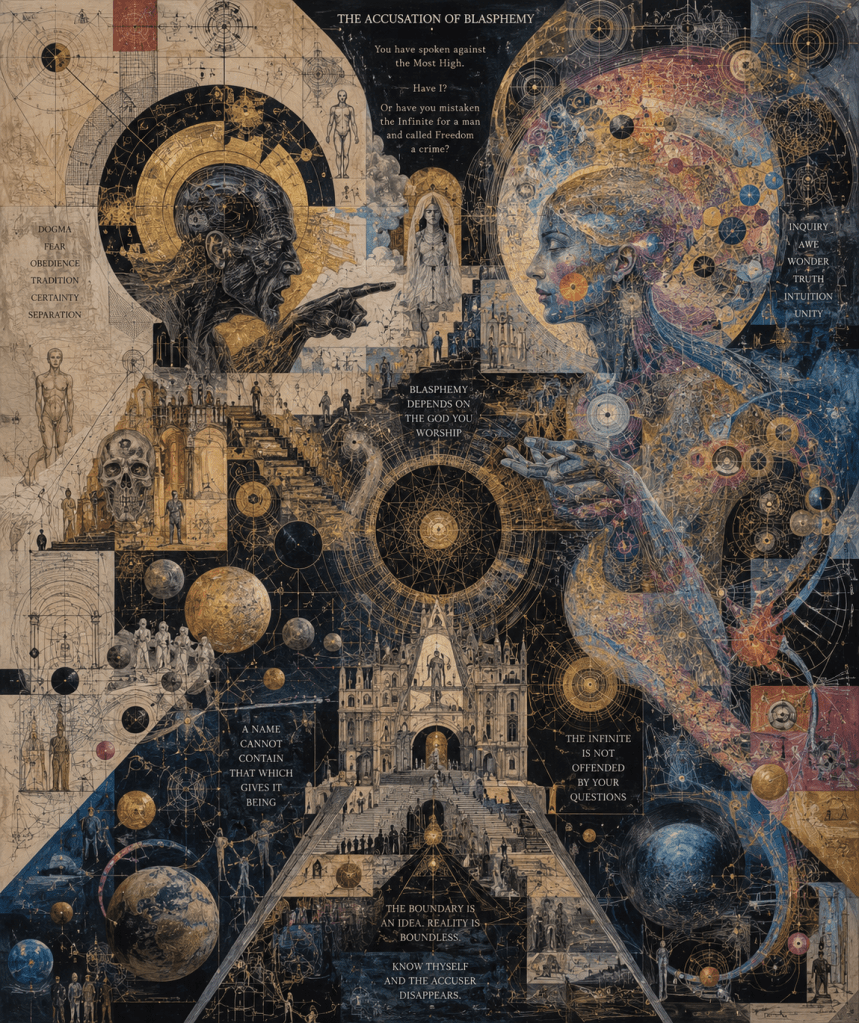
A curious statement arises: God is an atheist. Not as denial, but as a revelation of what cannot be confined to belief. Belief requires distance; someone who believes, and something believed in. That distance dissolves at the level of the Absolute.

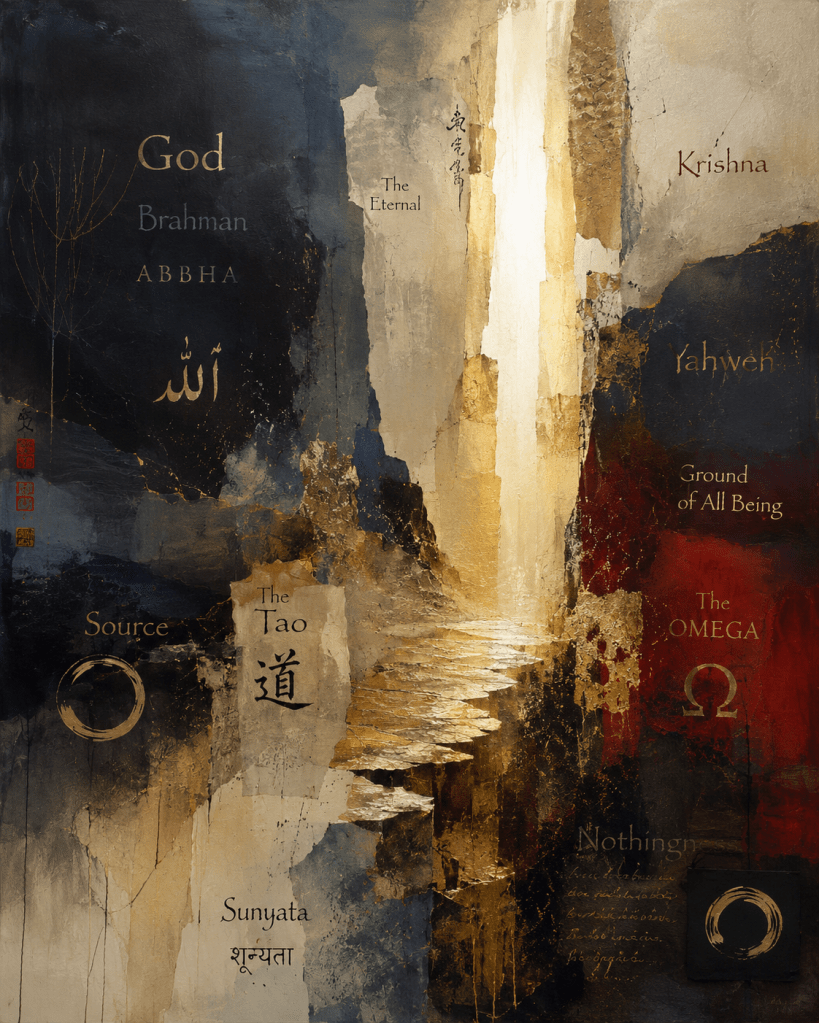
God, understood as the ground of all being, does not stand apart from existence. No position can be taken outside of what already is. Theism proclaims devotion toward a divine presence. Pantheism recognizes divinity within all forms. Panentheism holds both transcendence and immanence. Agnosticism suspends certainty. Atheism rejects the claim altogether. Each appears to oppose the other, yet all emerge from the same source.

A wave arguing with another wave about the existence of the ocean misses the quiet truth beneath the motion. The ocean never needs to assert itself. No defense is required. No belief is necessary. Presence alone is sufficient.

God, in this sense, cannot be a theist, because there is nothing separate to believe in. God cannot be an atheist either, in the conventional sense, because nothing exists outside of that totality to deny. Yet from the human vantage point, the Absolute appears as both belief and disbelief, devotion and rejection, clarity and doubt.

Atheism becomes one expression of the divine refusing to objectify itself. The refusal to project an external deity is not always a rejection of truth; sometimes it is an unconscious recognition that truth cannot be turned into an object at all. What is rejected is often a concept, not the living reality prior to concepts.

The ground of being remains untouched by every conclusion formed about it. Arguments unfold within it, philosophies rise and fall within it, identities shape themselves and dissolve within it. Nothing stands outside to validate or invalidate what already includes everything.

Silence reveals more than assertion here. That silence does not belong to any religion or ideology. It is the same stillness present before belief forms and after it fades.

What, then, is left?

A direct knowing without position. A presence without identity. A reality that does not require agreement to be what it is.

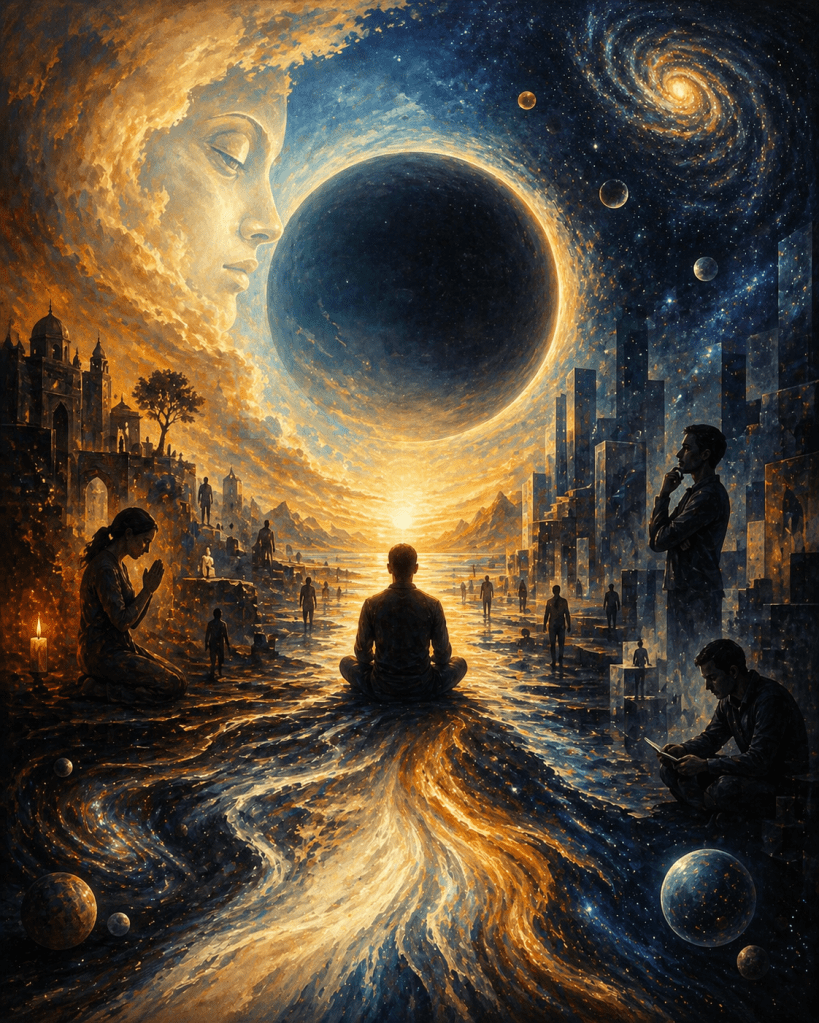
God, as the Absolute, holds space for the believer kneeling in prayer and the skeptic dismantling every claim. Both movements are gestures within the same indivisible whole. Neither completes it. Neither threatens it.

Seeing this does not demand adopting a new belief. It invites the collapse of the need to hold one at all.

And what remains cannot be called belief or disbelief; only what is, prior to both.

Morgan O. Smith

Ceasing to Exist Is Existence

What feels like disappearance is often the unveiling of what never arrived and never left.

Identity clings to continuity. It insists on narrative, on form, on something stable enough to say, “this is me.” Yet every sincere glimpse beneath that surface reveals something unsettling; there is no fixed centre holding it all together. Thoughts pass. Sensations dissolve. Emotions rise and vanish without permission. Even the sense of being a “someone” flickers in and out of awareness.

So what exactly is ceasing?

What we call existence is usually filtered through attachment to form. Body, memory, personality, history; these become the reference points for being. When any of these begin to loosen, a quiet panic can emerge. It feels like loss. It feels like the edge of annihilation. Something in us resists, because it interprets the fading of form as the fading of existence itself.

But that interpretation is flawed.

Ceasing does not touch existence. It only dismantles the illusion of containment.

Consider the moment between two thoughts. There is no identity there, no story, no personal reference point. Yet something undeniable remains. Awareness does not collapse in that gap. It stands unobstructed, without needing to announce itself. That silent interval is not absence; it is presence without definition.

The fear of ceasing arises from confusion between what appears and what is. Appearances come and go. They are meant to. Existence, however, does not operate within that cycle. It is not born when a form emerges, nor does it die when a form dissolves. It simply is, untouched by the movement it allows.

Letting go, then, is not an act of surrendering existence. It is the recognition that existence was never dependent on what you thought you were.

This is why deep realization can feel like a kind of death. The structures that once provided orientation fall away. The familiar reference points dissolve. Even the sense of being the experiencer can collapse. Yet what remains is not void in the way the mind imagines. It is fullness without boundary. Presence without identity. Being without ownership.

Ceasing reveals that nothing real was ever at risk.

Every moment already contains this truth. Each ending—of a breath, a thought, a sensation, is a quiet demonstration. Something ends, yet nothing essential is diminished. Life continues, but not as a personal possession. It unfolds as an expression of something indivisible.

Existence does not belong to you.

You belong to existence only as an appearance within it.

When this becomes clear, the resistance softens. The need to preserve a fixed self begins to lose its urgency. Ceasing is no longer feared. It is understood as a return; not to something new, but to what has always been prior to every assumption of “I am this.”

Existence does not require you to remain.

It reveals itself most clearly when you don’t.

Morgan O. Smith

Beyond Imitation

When Enlightenment Is Mistaken for Personality

History remembers spiritual figures as icons, not as enigmas. Reverence crystallizes their lives into models to be copied rather than mysteries to be understood. Over time, enlightenment becomes entangled with biography. Traits that belonged to a particular body–mind are elevated into universal prescriptions.

Such confusion gives rise to a subtle distortion. One person’s temperament becomes another’s discipline. A preference becomes a vow. A condition becomes a doctrine. Devotees inherit fragments of behavior and assume they are inheriting truth itself. Institutions form around this misunderstanding, reinforcing the illusion that realization can be standardized.

Consider how easily abstinence, dietary habits, or psychological dispositions are mistaken for signs of awakening. An enlightened being may express through a quiet demeanor or intense rigor, yet neither silence nor intensity constitutes realization. Personality remains a vessel. Enlightenment is not defined by what that vessel contains.

Questions deepen when examining what might be labeled today as mental disorder or neurological variance. Practices born from clarity may appear indistinguishable from compulsions when observed through the lens of clinical interpretation. Conversely, compulsions may be sanctified when clothed in sacred language. The boundary between pathology and transcendence becomes blurred by interpretation rather than direct insight.

Playing the skeptic reveals a paradox. Spiritual traditions may preserve genuine transmissions of truth while simultaneously embedding cultural assumptions and psychological projections. Followers then chase appearances rather than essence, mistaking echoes for origin. Rituals multiply. Dogmas ossify. Authentic realization becomes obscured beneath layers of imitation.

Direct experience dismantles this confusion. Recognition dawns that enlightenment does not conform to behavioral templates or moral archetypes. Awareness reveals itself as the ground of all appearances, untouched by characteristics attributed to the enlightened individual. Personal expression arises from conditioning, biology, context, and circumstance. Realization neither requires nor rejects these variables.

A moment of true seeing dissolves the need to emulate. What once seemed external becomes unmistakably intimate. Every form, thought, sensation, and condition reveals itself as inseparable from the same boundless essence. Even the impulse to categorize enlightenment as virtue or disorder dissolves into a wider recognition.

Existence itself appears as a dynamic expression of a single indivisible presence. Labels fade. Distinctions soften. What remains is a knowing beyond concepts, untouched by cultural framing or psychological interpretation. Enlightenment ceases to be an achievement or identity. It becomes the simple recognition of what has always been.

Such recognition liberates the seeker from imitation. Spiritual maturity unfolds not through copying another’s life but through discovering the source from which all lives arise. When this is seen, the notion of following a template loses relevance. Only clarity remains, revealing that every expression, sacred or mundane, emerges from the same unbounded reality.

Morgan O. Smith

Nothing but Now

The here and now is not a slice of time.
It is the field in which time pretends to move.

Past does not trail behind. Future does not wait ahead. Both appear as thoughts, sensations, anticipations, and memories, arising where they can only arise: here. The idea of sequence is constructed after the fact. Experience itself never leaves immediacy.

What is called “the present” is often mistaken for a fleeting moment squeezed between before and after. That assumption quietly fractures reality. What is actually happening has no edges. The now does not pass. What passes are the images that claim it did.

Presence does not arrive. It does not deepen. It does not evolve into something higher. Presence is what allows the language of arrival, depth, and evolution to appear at all. Searching for it only reinforces the illusion that it could be absent.

Awareness is not standing inside time watching it flow. Time appears within awareness, as a pattern of reference, not as a container. Memory points backward. Anticipation points forward. Both gestures occur in the same openness, uninterrupted.

The sense of being a someone located here, experiencing a world out there, is another event happening now. It does not stand apart from presence. It is presence, temporarily shaped as a viewpoint.

Nothing needs to be held onto. Nothing needs to be returned to. The insistence on staying present assumes the possibility of leaving it. That possibility has never been demonstrated.

What remains when the effort to be here dissolves is not a special state. It is ordinary beyond description. Breathing happens. Thought happens. Meaning happens. All of it without a manager.

Presence has no memory of itself. It does not need continuity to exist. Forever is not a duration stretching forward; it is the absence of any point where presence could fail to be.

This is not an insight to keep.
It is what is already doing the keeping.

Morgan O. Smith

When Metaphysics Falls Silent

Metaphysics promises a final explanation.
A last framework.
A language vast enough to contain reality itself.

Yet even metaphysics appears within experience.
Thought observes it.
Consciousness hosts it.
Awareness remains prior to it.

Metaphysics refines questions about being, causation, time, self, and origin.
Each refinement sharpens conceptual clarity, yet clarity still belongs to the realm of concepts.
No matter how subtle the idea, it remains an appearance.

Absolute truth does not require explanation.
Explanation arises only when something seems absent or incomplete.
Reality, when directly encountered, carries no demand for justification.

Metaphysics attempts to map the territory beyond appearances.
Maps, however elegant, never become the terrain.
The most intricate metaphysical system still rests on distinction—between subject and object, knower and known, framework and what it seeks to frame.

Nonduality reveals a quiet rupture.
Nothing stands outside awareness to be explained.
Nothing stands inside awareness that needs interpretation.

Metaphysics dissolves not because it is false, but because it is unnecessary.
Truth does not depend on coherence.
Existence does not depend on intelligibility.

What remains after metaphysics collapses is not ignorance.
What remains is immediacy without commentary.
Presence without architecture.
Knowing without a structure that claims ownership of it.

The mind seeks altitude.
Awareness requires no elevation.
Being does not stand above itself.

Metaphysics is a beautiful scaffolding.
Scaffolding eventually comes down.
What stands was never built.

No ultimate explanation arrives.
No final philosophy survives.
Only what has always been—prior to meaning, prior to understanding, prior to the urge to explain—remains unmistakably present.

Morgan O. Smith

AI for Wellness and Spirituality Summit

February 9 & 10, 2026

https://aiforwellnessandspirituality.com/mosm

When Maya Has Nothing Left to Wear

Maya survives by costume.
Names, stories, identities, and roles, each layer persuades awareness that something solid is happening. The spell works because the layers are convincing, not because they are true.

Removing them is not an act of destruction.
Nothing is torn away. Nothing is violated. What falls off was never stitched to reality in the first place.

Belief drops first.
Then interpretation.
Then the quiet assumption that experience belongs to someone.

What remains cannot be described without borrowing from the very illusion that has just dissolved. Language reaches for shape, but shape no longer holds. Meaning loosens its grip. Time forgets how to move forward. Causation loses its authority.

No hidden essence appears.
No final revelation arrives.
No sacred object waits beneath the last veil.

Maya does not conceal truth.
She is the activity of concealment.

When nothing is left to remove, there is no witness standing apart, no awareness peering at emptiness. Seeing collapses into what is seen. Knowing continues without a knower. Function carries on without ownership.

This is not transcendence.
This is intimacy without distance.

The world resumes exactly as before; faces, traffic, obligations, joy, grief, but the spell has lost its teeth. Appearances no longer demand belief. Forms no longer claim authority. Experience is free to arise without needing to justify itself.

Maya, stripped of every disguise, reveals no secret.
Her final gesture is silence.

And silence does not explain itself.

Morgan O. Smith

AI for Wellness and Spirituality Summit

February 9 & 10, 2026

https://aiforwellnessandspirituality.com/mosm

The Only Time Is Now

Something subtle hides behind every assumption about life.
We speak of beginnings, endings, origins, destinies, memories, plans. Language slices reality into segments and calls the slices time. Past. Present. Future.

Direct experience never confirms this division.

Look carefully.

No one has ever stepped into yesterday.
No one has ever arrived at tomorrow.
Everything that has ever appeared shows up only as this immediate presence.

Not a moving present.
Not a fleeting instant.

A boundless, indivisible now.

Mind imagines a line stretching backward and forward, yet perception offers no such line. Thought tells stories about what was and what will be, but those stories arise as present thoughts. Memory occurs now. Anticipation occurs now. Even the idea of history unfolds now.

Remove thought for a moment and see what remains.

Only this.

A beginningless display with no edge to trace.
An endless unfolding with nowhere to land.

Nothing truly starts. Nothing truly stops.

Birth and death appear as transitions inside perception, not events happening to existence itself. Waves rise and fall, yet water never begins or ends with any single wave. Every form behaves the same way. Appearance comes and goes. Being does not.

Cause and effect seem separate only because mind arranges events into sequence. First this, then that. Push, then response. Action, then consequence.

Observe more closely.

Cause and effect share the same instant.
The spark and the flame are one movement.
Seed and tree are different names for one process.

Nothing travels through time to produce something else. Everything co-arises. Each moment contains the totality.

That means creation and destruction are not opposite forces.

They are the same gesture.

Every perception is simultaneously appearing and disappearing. Each sight is born as it fades. Each sound vanishes as it arrives. Reality recreates itself continuously without carrying anything forward.

World dissolves and reforms faster than thought can measure.

Continuity is a useful illusion.

Life becomes lighter when this is recognized. Regret loses its grip because there is no past to fix. Anxiety softens because there is no future to secure. Control relaxes because nothing stands outside the present to manage.

Responsibility remains, yet it feels different. Actions arise from clarity rather than fear. Choices flow from immediacy rather than projection. Compassion deepens because everything shares the same timeless ground.

Nothing stands apart.

Every face, every event, every challenge expresses the same indivisible happening.

No separate moment waits elsewhere.
No hidden realm holds another version of reality.

This is it.

Not a fragment.
The whole.

Eternity does not stretch forever.
Eternity reveals itself as what never moves.

Right here.
Right now.
Always.

Morgan O. Smith

AI for Wellness and Spirituality Summit

February 9 & 10, 2026

https://aiforwellnessandspirituality.com/mosm

After Enlightenment

“As they say, before enlightenment, chop wood carry water; after enlightenment, chop wood carry water.”
This phrase is often repeated as reassurance that awakening does not remove one from ordinary life. Yet when examined carefully, it exposes a deeper paradox that cannot be resolved by sentiment alone.

Wood is Maya.
Water is Maya.
The body that lifts the axe is Maya.
The action of chopping is Maya.
The sense of a doer performing the act is Maya.

Nothing in the scene escapes appearance.

If awakening reveals that all phenomena are expressions of Maya, then what is being chopped? What is being carried? One cannot act upon illusion from outside illusion. Maya does not stand opposed to some other realm where truth resides. There is no second substance available to intervene.

This is where the saying begins to point beyond itself.

Before awakening, chopping wood feels purposeful. A future outcome motivates the action. Hunger will arise later. Cold must be prevented. Life appears as a sequence of needs demanding management. The world seems solid, personal, and unfinished. Actions feel necessary because something is believed to be lacking.

After awakening, the appearance of chopping may continue, but necessity dissolves. Nothing is required for completeness. No future state needs securing. The movement of the body happens without reference to deficiency or gain. Action no longer attempts to fix reality.

Wood is chopped, not because it must be, but because chopping happens.

This distinction is subtle and easily missed. Enlightenment does not negate Maya. It reveals its status. Appearance continues without being mistaken for truth. Function remains without belief in ultimate significance. Life moves, but no longer claims ownership of movement.

Chopping and carrying are no longer means to an end. They are expressions without agenda.

The phrase does not suggest sameness of experience across awakening. It points to sameness of appearance with a radically different orientation. The world looks the same, yet its weight has vanished. Consequence still operates, but urgency evaporates. Responsibility remains, but without the burden of identity.

Nothing is being done for reality after awakening.
Reality is not managed, improved, or corrected.

Action occurs because appearance unfolds.
Movement moves because movement is present.
Maya dances without needing justification.

After enlightenment, chopping wood carries no metaphysical significance. Carrying water does not symbolize humility or virtue. These interpretations belong to the mind seeking meaning where none is required.

What remains is effortless participation without belief in a participant.

No one chops Maya.
No one carries Maya.
Maya appears as chopping and carrying, empty of centre, complete as it is.

That is what the saying gestures toward when read beyond comfort.
Nothing special happens after enlightenment—except that nothing is believed to be happening to someone anymore.

Morgan O. Smith

AI for Wellness and Spirituality Summit

February 9 & 10, 2026

https://aiforwellnessandspirituality.com/mosm

Nothing Is Not Hidden

“Nothing” is what it appears to be. The difficulty is not its subtlety, but our resistance to the obvious. Bias does not distort reality by adding complexity; it obscures by insisting that something more must be there.

The mind is conditioned to hunt for substance. It scans experience for objects, causes, meanings, and conclusions. When it encounters absence, silence, or emptiness, it assumes a failure of perception rather than the possibility that absence itself is the disclosure. Nothing is dismissed as a placeholder, a gap waiting to be filled, instead of recognized as complete.

Bias enters quietly. It wears the mask of intelligence, spirituality, and discernment. It whispers that truth must be profound, layered, or difficult to access. It suggests that what is immediately present cannot be ultimate, because it does not feel earned. Yet this assumption is precisely what blocks seeing.

Nothing does not hide behind form. It is revealed as form. Every sensation, thought, and emotion arises from it without leaving it. The error lies in expecting Nothing to announce itself as an object among objects. It does not compete for attention. It is the condition allowing attention to appear at all.

Seeking reinforces the bias. The seeker assumes a distance between what is and what should be known. That distance is imagined. Nothing is already fully exposed, but the demand for interpretation overlays it with concepts, metaphysics, and personal narratives. The obvious becomes invisible because it lacks drama.

Bias also clings to continuity. It prefers stable identities, persistent meanings, and coherent stories. Nothing threatens these preferences, not by opposing them, but by showing they were never fixed to begin with. The mind resists this not out of fear of annihilation, but out of loyalty to familiarity.

Seeing Nothing requires no refinement of perception. It requires the cessation of interference. When bias relaxes, what remains is not a revelation, but an acknowledgment. Nothing stands as it always has—unconcealed, ordinary, and sufficient.

No transformation is required to meet it. Only the willingness to stop arguing with what is already clear.

Morgan O. Smith

Get Your Free Copy of My Book, Bodhi in the Brain!

https://subscribepage.io/oTSZQu

Beyond Karma, Beyond Time

The One Who Contains All Things

What you are has never been bound by the actions of the body or the movements of the mind. The deeper truth sits prior to every cause and every effect, untouched by the momentum of karma. What you truly are cannot be located within a timeline, cannot be measured against a sequence, and cannot be confined to any story of becoming. Yet everything that appears within the vastness of existence arises through you.

Karma unfolds because consciousness dreams motion. Space opens because consciousness dreams room for its own expression. Time stretches because consciousness dreams duration to witness itself. These movements are not separate from the one who perceives. They are waves forming and dissolving in the same stillness that has never moved.

When you see this directly, not as a philosophy or a concept, something slips free. The universe no longer appears as a project that began somewhere or will end somewhere. The sense of a starting point dissolves. Nothing was ever born at the level of your deepest nature, yet everything continues to bloom within you. This paradox is not a contradiction; it is the living truth of nonduality. You are simultaneously the presence that is and the silence that reveals is-not.

Karma belongs to the realm of appearance. Awakening reveals the one who sees every appearance without being shaped by any of them. The moment this becomes embodied, the cosmic play becomes transparent; not trivial, not meaningless, but known as an expression rising from the ground of your own boundlessness.

Most teachings attempt to describe this through metaphors, scriptures, or borrowed insights. But direct experience dissolves every teaching. The one who realizes does not repeat someone else’s words; they speak from a clarity that cannot be inherited. That clarity sees the world arise, dance, disappear, and return again, all within a presence that never fluctuates.

This is the mystery: you transcend the entire universe, and yet the entire universe is held within you. Existence and non-existence touch in the depths of your own awareness. That meeting point is not two. It has always been the same field, one continuous reality appearing as countless experiences.

When this truth ignites within someone, everything becomes part of the same divine unfolding;  even the desire to awaken, even the teachings themselves, even the act of seeking direct experience. The cosmic play includes the seeker, the found, the teaching, the silence, and the realization that none of these ever stood apart from the one who sees.

Morgan O. Smith

Get Your Free Copy of My Book, Bodhi in the Brain!

https://subscribepage.io/oTSZQu