The Precision of Perception

Why Interpretation Shapes Your Awakening

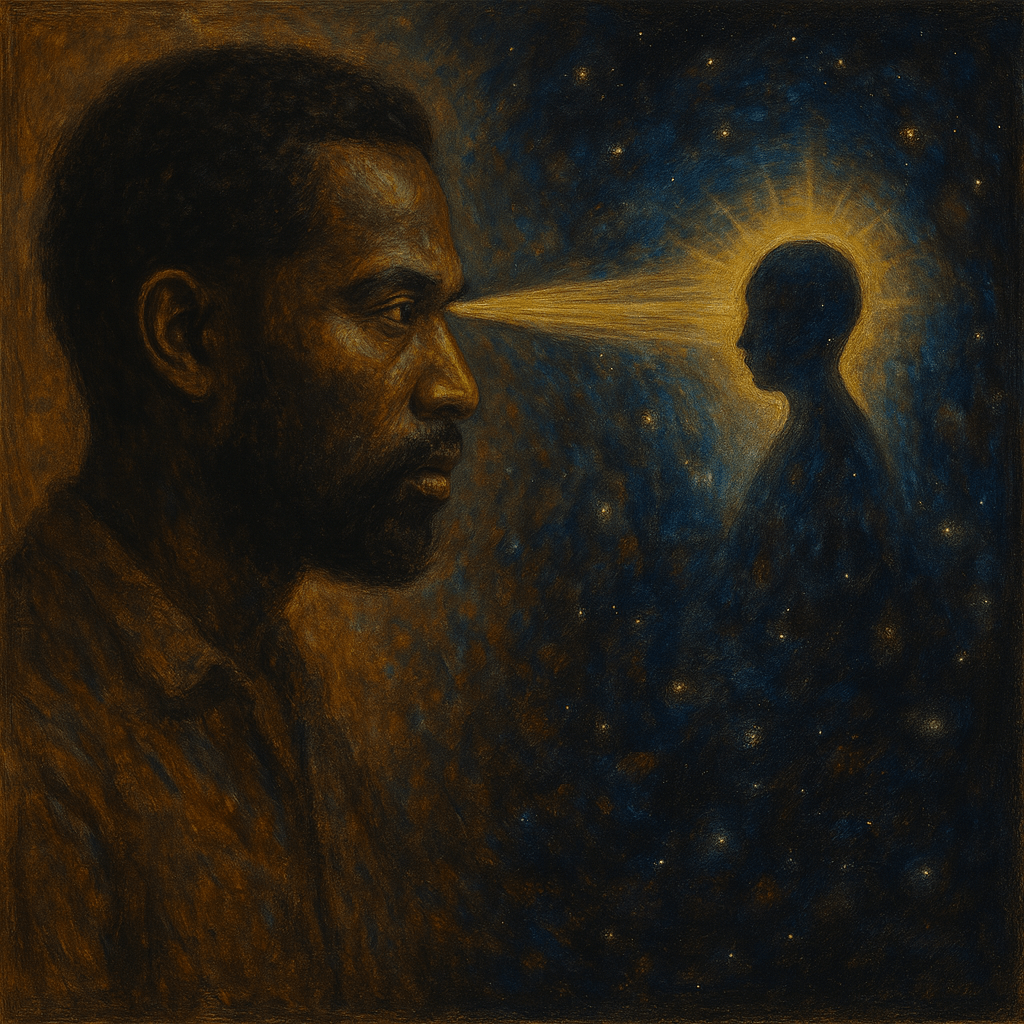
Reality isn’t hiding. What conceals it is the web of interpretations spun by the mind: assumptions, projections, and inherited beliefs. Yet, paradoxically, it is through interpretation that one begins to peel away those very veils. Every interpretation is a mirror. The question is: what is it reflecting?

Interpretation matters because it reveals where you are on the developmental spiral. Crude, reactive interpretations reflect lower rungs of psychological growth; often rooted in fear, blame, or a need for certainty. As awareness matures, interpretations become more nuanced, inclusive, and paradox-tolerant. They start to echo the underlying unity of things, rather than just categorize them.

Interpretation is not merely a mental activity. It is a soul signal. The more refined it becomes, the closer it gets to silence, the point where no interpretation is needed. That is the paradox. The highest interpretation doesn’t claim to know; it bows. It listens. It dissolves.

Yet such dissolution is not a regression into vagueness. It is the clarity that comes when all interpretations have done their job and exhausted their usefulness. Then what remains is the directness of being—your true nature—not as a conclusion, but as the very absence of conclusion.

This is why interpretation is not to be dismissed but refined. It is a bridge. And the more accurate your interpretation of the world, the closer you walk toward the unconditioned—what no interpretation can contain, but all of them secretly point toward.

What you interpret is what you live. Misinterpret life, and you suffer. Align with it, and you awaken. Accuracy in perception is not about being “right”; it is about being real. Every step you take toward clearer interpretation is a step toward the Real that has no opposite.

Morgan O. Smith

Get Your Free Copy of My Book, Bodhi in the Brain!

https://subscribepage.io/oTSZQu

Awareness Without an Owner

Pure Knowing Doesn’t Need a Knower

Pure knowing is not an act of someone grasping something. It is not the product of a subject meeting an object. It is not knowledge stored, processed, or owned. What we call “pure knowing” is an immediacy so complete that the categories of knower and known dissolve before they ever arise.

The mind insists there must be someone behind the recognition, a witness who stands apart. Yet such a witness is already a thought, an echo of division layered upon the seamlessness of awareness. The attempt to locate the knower is like searching for the horizon; you will find only a mirage created by perspective.

What reveals itself is astonishingly simple: knowing shines without support. No owner is required. No identity need arise. It is self-luminous, unmediated, without origin or destination. Thought may try to grasp it, but thought cannot enter here. The moment a “me” claims it, the purity is veiled, dressed in commentary, weighed down by explanation.

This does not deny the human experience of learning, remembering, and perceiving. It only points to the fact that beneath all those movements lies a ground untouched by them. That ground is knowing itself—silent, radiant, and free from the necessity of a knower.

To glimpse this is to taste liberation, not as a reward, not as a possession, but as the natural state that was never absent. What remains is not someone who knows, but knowing itself, unbroken and unclaimed.

Morgan O. Smith

Get Your Free Copy of My Book, Bodhi in the Brain!

https://subscribepage.io/oTSZQu

The Subtle Distinctions of Oneness, Nonduality, and the Sacred

To speak of oneness is to point to a direct perception where boundaries dissolve and all things merge into a singular whole. It is an overwhelming intimacy with existence itself—nothing stands apart, no subject or object remains. The experience carries a profound sense of union, yet it still acknowledges a felt “all” that has become “one.”

Nonduality, by contrast, is not the merging of things into one but the recognition that no separation ever truly existed to begin with. The very categories of “one” and “many” collapse. There is no subject perceiving unity, no object being unified—just the unbroken reality that precedes both. Here, the language of experience falters because even the notion of “an experience” implies duality between experiencer and what is experienced.

To call all things divine or sacred is yet another register. This perception imbues life with reverence, not only as one undivided whole but as shimmering expressions of the holy. Every moment, every being, every breath radiates significance. It is not merely that things are nondual, but that the nondual reality is inherently worthy of devotion. The sacred quality does not rest on belief; it is revealed when perception is refined enough to sense the luminous depth at the heart of being.

The distinctions are subtle, yet they matter. Oneness offers belonging. Nonduality uproots the illusion of separation. The sacred awakens awe and reverence for what is. Together, they sketch the contours of realization, each layer illuminating a different face of truth.

When all three—oneness, nonduality, and the sacred—merge seamlessly, a higher recognition dawns: absolute monism. Here, the whole of existence is seen as a single reality that is simultaneously one, beyond duality, and inherently divine. Nothing is outside of it, nothing is other than it, nothing is less than it. The boundaries of philosophy, devotion, and direct experience collapse into the same source. This is not a synthesis of perspectives but the revelation that they have always been expressions of the same truth. Absolute monism discloses the indivisible essence where belonging, emptiness, and holiness are not separate qualities but different ways of perceiving what is eternally and already the case.

Morgan O. Smith

Get Your Free Copy of My Book, Bodhi in the Brain!

https://subscribepage.io/oTSZQu

Did I Have a Spiritual Awakening?

If the question lingers, “Did I have a spiritual awakening?” it often points to a deeper truth: perhaps it has not yet happened. Those who have passed through the unmistakable shift into awakened awareness do not wrestle with that doubt. There is a quiet certainty, not born of belief, but of direct experience.

Language can vary. Some may never utter the phrase spiritual awakening or enlightenment. They may frame it through their own culture, symbolism, or personal metaphors. Yet no matter the vocabulary, the essence remains beyond question.

When the event has truly unfolded, it is like rising from sleep. You do not analyze whether you are awake; you simply are. The recognition is immediate, complete, and irreversible. What remains is the unfolding of life through the clarity of that seeing.

Awakening is not a theory to adopt or an idea to flirt with. It is the dismantling of the imagined self, the collapse of boundaries, and the revelation of a reality that was always here, quietly waiting to be noticed.

Morgan O. Smith

Get Your Free Copy of My Book, Bodhi in the Brain!

https://subscribepage.io/oTSZQu

My Religion Is Liberation

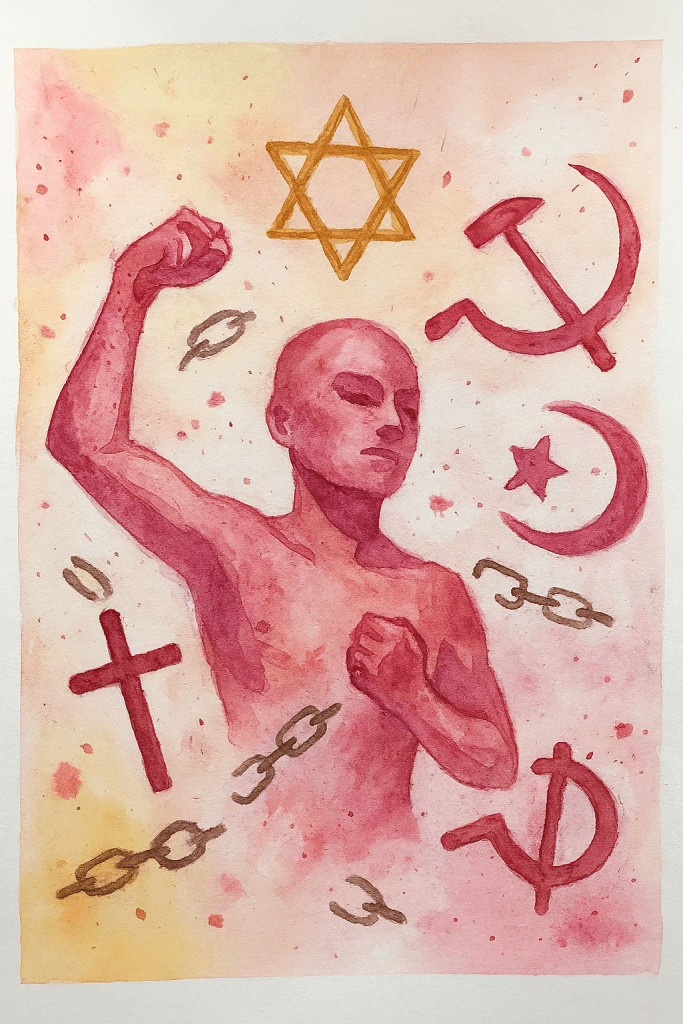
Religion need not be a creed one defends or a ritual one performs. For some of us, it is the recognition of the bars we forge around our own minds—and the relentless devotion to dissolving them. Liberation becomes both the path and the sanctuary.

This isn’t about conversion, salvation, or belonging to any particular sect. It is about noticing the prison of belief itself. Every concept, every identity, every longing for certainty can become a gatekeeper denying entry to our own boundless nature.

Liberation demands a fierce honesty. It asks that we examine the illusions that hold our suffering in place, not as moral failings but as invitations to see through the lie of separation. The true heresy in this religion is clinging to what we think we know about ourselves, about others, about reality itself.

No priest is needed here. Authority resides in awareness, and awareness has no master. The teacher is the arising of life as it is—grief, joy, confusion, clarity. Each moment grants a new chance to recognize the play of experience without getting caught in it.

Liberation is not found by rejecting the world but by perceiving its emptiness and fullness simultaneously. Every object, thought, and sensation is free of substance even as it shines in unmistakable vividness. This paradox isn’t a puzzle to solve but a doorway to live through.

When liberation is the religion, love ceases to be a commandment and becomes the ground of being. Judgment collapses, not because everything is permitted, but because everything is understood as oneself. The compulsion to divide the sacred from the profane, the pure from the impure, loses its grip.

Such a path offers no final doctrine. It holds no promise of eternal reward. Yet it is more generous than any creed that trades truth for comfort. It is the faith of those willing to die before death—to watch every cherished certainty burn so that what cannot be burned may reveal itself.

Those who walk this path do so alone, yet never apart.

Morgan O. Smith

Get Your Free Copy of My Book, Bodhi in the Brain!

https://subscribepage.io/oTSZQu

Knowing vs. Believing

The Subtle Divide Between Truth and Interpretation

Knowing there’s a God is not a religious concept; believing in a God is.
One is a recognition—silent, direct, and intimate. The other is a construct—layered with doctrines, culture, and inherited symbols.

What is known requires no belief. It reveals itself without needing validation, much like light doesn’t require agreement to be seen. The moment belief arises, there is already a distance. A gap. A reaching toward what seems separate.

Belief is an echo of knowing, distorted by time, language, and fear.
It builds shrines to certainty where awe once stood unguarded. It memorizes truths that once moved freely through silence. And often, it turns the unknowable into a caricature—a God of preferences, sides, and punishments.

Knowing is not about having answers. It’s the crumbling of the question.
It doesn’t declare “There is a God.”
It dissolves the very boundary between the knower and what is known. There is no longer a subject seeking an object. Only the raw immediacy of Being aware of itself.

Those who know are rarely interested in convincing others.
Those who believe often are.

The danger isn’t belief itself—it’s mistaking belief for truth.
Truth, when known, renders belief obsolete.
It doesn’t divide, it doesn’t declare superiority—it simply is.

To know is to surrender the need for interpretation.
To believe is often to defend the interpretation, even at the cost of truth.

And yet, belief can serve as a bridge. A necessary illusion for those not yet ready to let go of the comfort of form. But let it be a bridge, not a home.

Morgan O. Smith

Get Your Free Copy of My Book, Bodhi in the Brain!

https://subscribepage.io/oTSZQu

The Myth of the Whole Truth

Because the experience is unexplainable, all the greatest sacred books of all times are really books of half-truths and half-lies.

This isn’t an insult—it’s a revelation.

No scripture, however exalted, has ever captured the raw, wordless pulse of the Real. What they offer are sketches of shadows on the wall of a fire no mind can touch. Symbols masquerading as substance. Descriptions chasing something that dissolves the moment language arrives.

Truth isn’t what’s written—it’s what remains when writing fails.

Those who encountered the Infinite didn’t leave behind instruction manuals. They left metaphors, myths, and paradoxes—each shaped by the lens of a time, a culture, a mind trying to say what cannot be said. The half-truth lies in the gesture toward transcendence. The half-lie forms when that gesture becomes fixed, dogmatized, and taken as absolute.

And yet, there’s beauty in the attempt. Even the most distorted scripture carries a scent of the ineffable. But to follow that scent requires radical honesty—the willingness to discard even the sacred if it becomes a substitute for direct knowing.

Experience doesn’t need belief. It doesn’t argue. It doesn’t convert.

It just is—before the page, before the priest, before the thought.

The final surrender is not to a teaching, but to the silence underneath it.

Morgan O. Smith

Get Your Free Copy of My Book, Bodhi in the Brain!

https://subscribepage.io/oTSZQu

The Silence That Speaks

Fragments Cannot Contain the Whole

Every word spoken about enlightenment is a slice taken from an indivisible whole. A shard. A sliver. No matter how sincere the voice or radiant the realization, the moment it’s articulated, it becomes partial. Even the most luminous sage can only gesture toward it, never deliver it in full.

This isn’t a critique of language. It’s the recognition that language belongs to duality. Enlightenment does not.

You may hear poetic metaphors. You may hear silence treated as a superior form of expression. You may even be told that silence is the teaching. But neither speech nor silence can contain the essence. Both exist within the play of contrast—true enlightenment is not caught between them.

It is not hidden. It is not revealed. It doesn’t arrive, and it cannot depart.
Still, it permeates everything.

A leaf trembles. Breath returns. A thought dissolves before it becomes solid. Here, it is already shining.

It is not that one must understand. It is that one must stop pretending it needs to be understood. What remains when seeking falls away is not an answer, but presence. A presence so simple, so immediate, it often goes unnoticed—not because it is distant, but because it is too near.

You are not apart from it. You never were.

Morgan O. Smith

Get Your Free Copy of My Book, Bodhi in the Brain!

https://subscribepage.io/oTSZQu

The Unveiling of the Absolute

Beyond Self, Beyond Knowing

There comes a moment when the dissolution of identity is no longer a metaphor, but an unmistakable reality. What once seemed separate—self and other, observer and observed—vanishes into the great singularity that is neither governed by measure nor confined by perception. In that unveiling, it becomes self-evident that existence is not a sum of parts, nor an interplay of subject and object, but an indivisible wholeness beyond all duality. The infinite, unbound by any law, does not require validation—it simply is.

No longer an idea or a belief, the One stands as an undeniable presence—an unshakable certainty. This knowing bypasses thought, untouched by structure or interpretation. It is direct, unfiltered, immediate, and absolute. Once shackled by questions, the mind ceases its restless inquiry, for the answer is not separate from the questioner. Here, the eternal does not unfold in time; it is the ever-present now, where past and future collapse into a singular, timeless recognition.

This realization is not a possession of the mind, nor an achievement of effort. It is a boundless, all-pervading awareness that, when touched, annihilates the illusion of separation. The seeker dissolves into that which was sought. Love ceases to be an emotion—it is revealed as the very substance of all things, the living essence of existence itself.

To encounter this absolute presence is to stand at the threshold of an unfathomable vastness, where even awe is devoured by the sheer immensity of being. What remains is neither silence nor sound, neither stillness nor movement, but an overflowing fullness beyond description. No imitation, no concept, no sublime experience in the relative world can parallel this recognition. It is pure actuality—without form, without boundary, yet wholly complete.

Those who glimpse this cannot return unchanged. The mind may attempt to grasp it, but the knowing is already deeper than thought. What was once seen as limitation is revealed as boundless freedom. What was once sought outside is known to be ever-present. And in that recognition, the paradox dissolves, leaving only That Which Is.

Morgan O. Smith

Yinnergy Meditation/Neurofeedback, Spiritual Life Coaching & My Book, Bodhi in the Brain…Available Now!

https://linktr.ee/morganosmith

The Collapse of Illusion

Navigating the Aftermath of Awakening

Reality fractures in a single instant, revealing itself as something altogether ungraspable. The moment of absolute recognition—the unfiltered, direct encounter with Truth—tears through the mind like a bolt of cosmic lightning, leaving no belief unshaken, no identity intact. The self, as it was once understood, dissolves into the vastness, leaving behind nothing but raw awareness.

A revelation of such magnitude is both exhilarating and devastating. The world remains as it was, yet nothing remains the same. The return to ordinary existence feels disjointed, as if waking from a dream only to realize the dream is what was once called life. Conversations that once held meaning now seem hollow, ambitions that once fueled passion now appear weightless. The social frameworks that once dictated identity—the career, the friendships, the personal convictions—suddenly feel like distant echoes of a forgotten language.

A solitude arises, not necessarily by choice, but as an inevitable consequence of perceiving beyond the familiar constructs. People speak, but the words seem veiled in a fog of assumptions and conditioned perspectives. What was once music now carries an indescribable depth, revealing textures previously unnoticed. Colours take on a vibrancy beyond sight, whispering truths beyond language. The ordinary world hums with a resonance that cannot be explained, only felt.

Attempting to articulate the experience proves futile. Language stumbles over itself, unable to capture the unspeakable. Those who listen often respond with polite nods, skepticism, or outright dismissal. A few may lean in with genuine curiosity, yet without direct experience, understanding remains confined to intellectualization. Words, at best, become poetic approximations, metaphors stretching toward something that cannot be contained within the mind.

This is the paradox of awakening. The very moment that reveals the boundless unity of existence also exposes the fragmented nature of human perception. The mind wants to categorize, to make sense, to translate the infinite into the finite. But Truth is not something to be grasped; it is something to be surrendered into.

Isolation does not come from arrogance, nor from a desire to detach, but from the realization that much of what once passed as reality was a mirage. The process of reintegration is neither smooth nor predictable. There is grief in letting go of the known, yet immense freedom in no longer being bound by it. What remains is a quiet certainty—an understanding that cannot be proven, only lived.

This path is not for the faint-hearted. It is not about enlightenment as an achievement or an identity. It is about dissolution. It is about dying before death. And in that dissolution, what remains is the eternal presence, the silent witness, the infinite unfolding of what has always been.

Morgan O. Smith

Yinnergy Meditation/Neurofeedback, Spiritual Life Coaching & My Book, Bodhi in the Brain…Available Now!

https://linktr.ee/morganosmith