Knowing vs. Believing

The Subtle Divide Between Truth and Interpretation

Knowing there’s a God is not a religious concept; believing in a God is.
One is a recognition—silent, direct, and intimate. The other is a construct—layered with doctrines, culture, and inherited symbols.

What is known requires no belief. It reveals itself without needing validation, much like light doesn’t require agreement to be seen. The moment belief arises, there is already a distance. A gap. A reaching toward what seems separate.

Belief is an echo of knowing, distorted by time, language, and fear.
It builds shrines to certainty where awe once stood unguarded. It memorizes truths that once moved freely through silence. And often, it turns the unknowable into a caricature—a God of preferences, sides, and punishments.

Knowing is not about having answers. It’s the crumbling of the question.
It doesn’t declare “There is a God.”
It dissolves the very boundary between the knower and what is known. There is no longer a subject seeking an object. Only the raw immediacy of Being aware of itself.

Those who know are rarely interested in convincing others.
Those who believe often are.

The danger isn’t belief itself—it’s mistaking belief for truth.
Truth, when known, renders belief obsolete.
It doesn’t divide, it doesn’t declare superiority—it simply is.

To know is to surrender the need for interpretation.
To believe is often to defend the interpretation, even at the cost of truth.

And yet, belief can serve as a bridge. A necessary illusion for those not yet ready to let go of the comfort of form. But let it be a bridge, not a home.

Morgan O. Smith

Get Your Free Copy of My Book, Bodhi in the Brain!

https://subscribepage.io/oTSZQu

The Myth of the Whole Truth

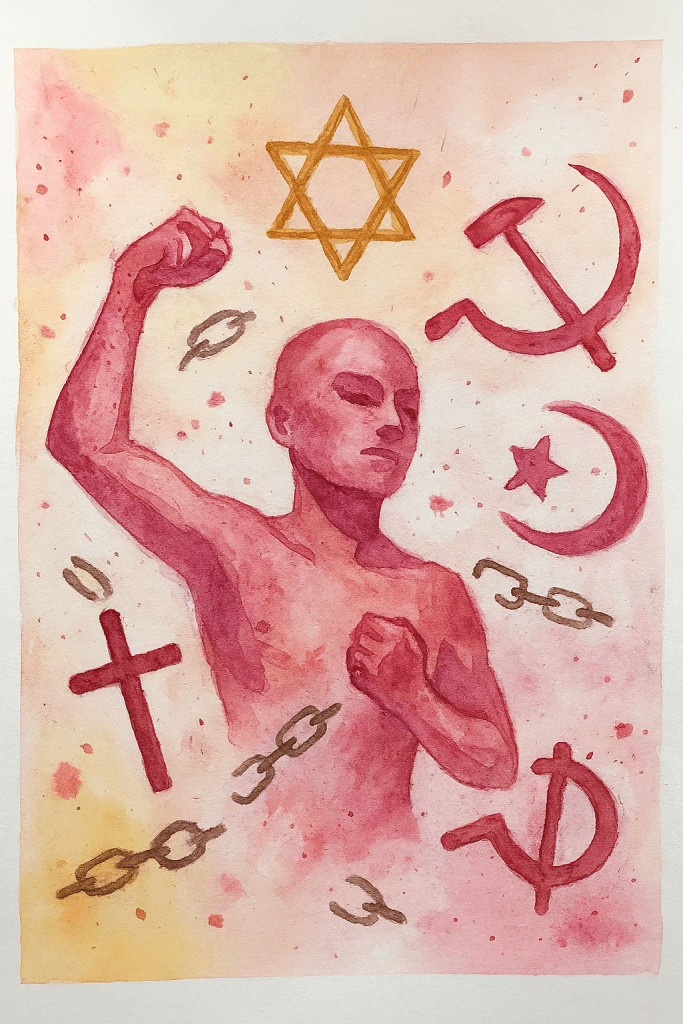
Because the experience is unexplainable, all the greatest sacred books of all times are really books of half-truths and half-lies.

This isn’t an insult—it’s a revelation.

No scripture, however exalted, has ever captured the raw, wordless pulse of the Real. What they offer are sketches of shadows on the wall of a fire no mind can touch. Symbols masquerading as substance. Descriptions chasing something that dissolves the moment language arrives.

Truth isn’t what’s written—it’s what remains when writing fails.

Those who encountered the Infinite didn’t leave behind instruction manuals. They left metaphors, myths, and paradoxes—each shaped by the lens of a time, a culture, a mind trying to say what cannot be said. The half-truth lies in the gesture toward transcendence. The half-lie forms when that gesture becomes fixed, dogmatized, and taken as absolute.

And yet, there’s beauty in the attempt. Even the most distorted scripture carries a scent of the ineffable. But to follow that scent requires radical honesty—the willingness to discard even the sacred if it becomes a substitute for direct knowing.

Experience doesn’t need belief. It doesn’t argue. It doesn’t convert.

It just is—before the page, before the priest, before the thought.

The final surrender is not to a teaching, but to the silence underneath it.

Morgan O. Smith

Get Your Free Copy of My Book, Bodhi in the Brain!
https://subscribepage.io/oTSZQu

The Silence That Speaks

Fragments Cannot Contain the Whole

Every word spoken about enlightenment is a slice taken from an indivisible whole. A shard. A sliver. No matter how sincere the voice or radiant the realization, the moment it’s articulated, it becomes partial. Even the most luminous sage can only gesture toward it, never deliver it in full.

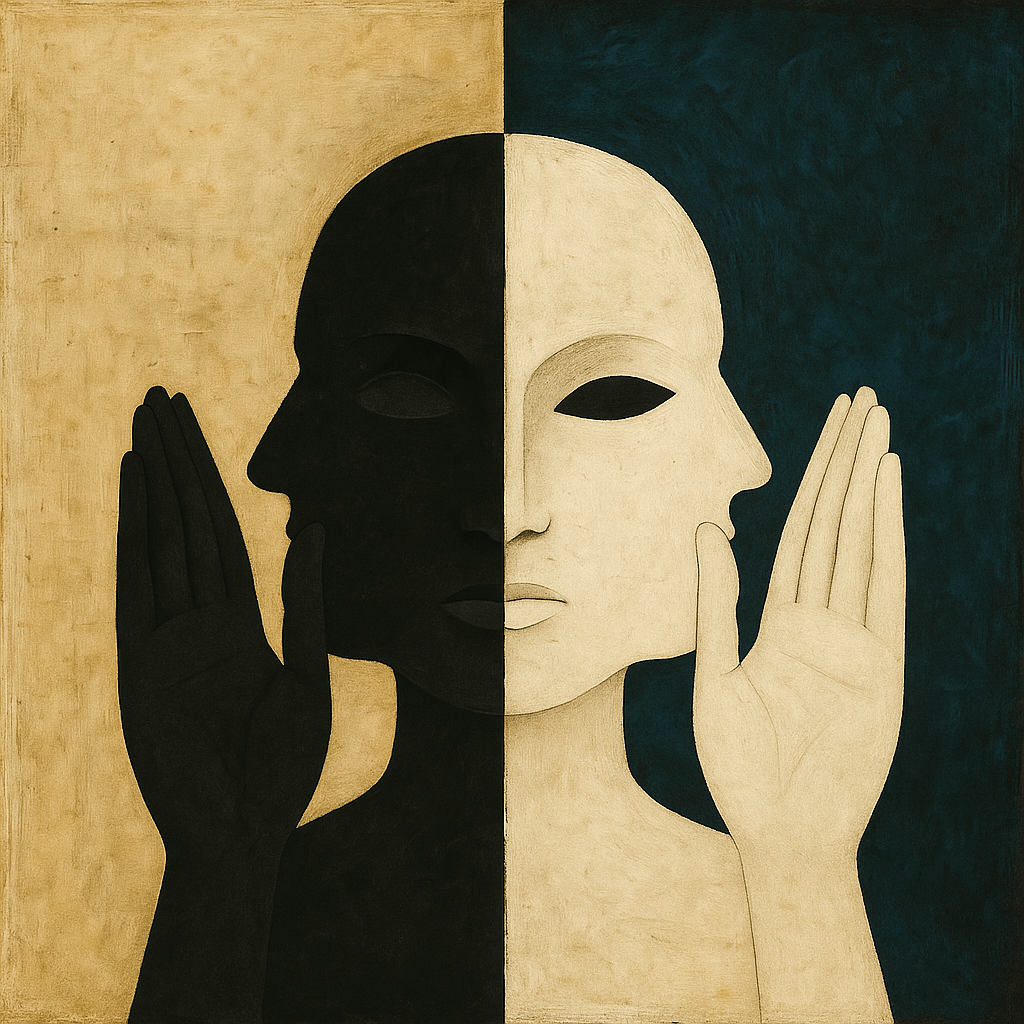
This isn’t a critique of language. It’s the recognition that language belongs to duality. Enlightenment does not.

You may hear poetic metaphors. You may hear silence treated as a superior form of expression. You may even be told that silence is the teaching. But neither speech nor silence can contain the essence. Both exist within the play of contrast—true enlightenment is not caught between them.

It is not hidden. It is not revealed. It doesn’t arrive, and it cannot depart.
Still, it permeates everything.

A leaf trembles. Breath returns. A thought dissolves before it becomes solid. Here, it is already shining.

It is not that one must understand. It is that one must stop pretending it needs to be understood. What remains when seeking falls away is not an answer, but presence. A presence so simple, so immediate, it often goes unnoticed—not because it is distant, but because it is too near.

You are not apart from it. You never were.

Morgan O. Smith

Get Your Free Copy of My Book, Bodhi in the Brain!
https://subscribepage.io/oTSZQu

The Unveiling of the Absolute

Beyond Self, Beyond Knowing

There comes a moment when the dissolution of identity is no longer a metaphor, but an unmistakable reality. What once seemed separate—self and other, observer and observed—vanishes into the great singularity that is neither governed by measure nor confined by perception. In that unveiling, it becomes self-evident that existence is not a sum of parts, nor an interplay of subject and object, but an indivisible wholeness beyond all duality. The infinite, unbound by any law, does not require validation—it simply is.

No longer an idea or a belief, the One stands as an undeniable presence—an unshakable certainty. This knowing bypasses thought, untouched by structure or interpretation. It is direct, unfiltered, immediate, and absolute. Once shackled by questions, the mind ceases its restless inquiry, for the answer is not separate from the questioner. Here, the eternal does not unfold in time; it is the ever-present now, where past and future collapse into a singular, timeless recognition.

This realization is not a possession of the mind, nor an achievement of effort. It is a boundless, all-pervading awareness that, when touched, annihilates the illusion of separation. The seeker dissolves into that which was sought. Love ceases to be an emotion—it is revealed as the very substance of all things, the living essence of existence itself.

To encounter this absolute presence is to stand at the threshold of an unfathomable vastness, where even awe is devoured by the sheer immensity of being. What remains is neither silence nor sound, neither stillness nor movement, but an overflowing fullness beyond description. No imitation, no concept, no sublime experience in the relative world can parallel this recognition. It is pure actuality—without form, without boundary, yet wholly complete.

Those who glimpse this cannot return unchanged. The mind may attempt to grasp it, but the knowing is already deeper than thought. What was once seen as limitation is revealed as boundless freedom. What was once sought outside is known to be ever-present. And in that recognition, the paradox dissolves, leaving only That Which Is.

Morgan O. Smith

Yinnergy Meditation/Neurofeedback, Spiritual Life Coaching & My Book, Bodhi in the Brain…Available Now!

https://linktr.ee/morganosmith

The Collapse of Illusion

Navigating the Aftermath of Awakening

Reality fractures in a single instant, revealing itself as something altogether ungraspable. The moment of absolute recognition—the unfiltered, direct encounter with Truth—tears through the mind like a bolt of cosmic lightning, leaving no belief unshaken, no identity intact. The self, as it was once understood, dissolves into the vastness, leaving behind nothing but raw awareness.

A revelation of such magnitude is both exhilarating and devastating. The world remains as it was, yet nothing remains the same. The return to ordinary existence feels disjointed, as if waking from a dream only to realize the dream is what was once called life. Conversations that once held meaning now seem hollow, ambitions that once fueled passion now appear weightless. The social frameworks that once dictated identity—the career, the friendships, the personal convictions—suddenly feel like distant echoes of a forgotten language.

A solitude arises, not necessarily by choice, but as an inevitable consequence of perceiving beyond the familiar constructs. People speak, but the words seem veiled in a fog of assumptions and conditioned perspectives. What was once music now carries an indescribable depth, revealing textures previously unnoticed. Colours take on a vibrancy beyond sight, whispering truths beyond language. The ordinary world hums with a resonance that cannot be explained, only felt.

Attempting to articulate the experience proves futile. Language stumbles over itself, unable to capture the unspeakable. Those who listen often respond with polite nods, skepticism, or outright dismissal. A few may lean in with genuine curiosity, yet without direct experience, understanding remains confined to intellectualization. Words, at best, become poetic approximations, metaphors stretching toward something that cannot be contained within the mind.

This is the paradox of awakening. The very moment that reveals the boundless unity of existence also exposes the fragmented nature of human perception. The mind wants to categorize, to make sense, to translate the infinite into the finite. But Truth is not something to be grasped; it is something to be surrendered into.

Isolation does not come from arrogance, nor from a desire to detach, but from the realization that much of what once passed as reality was a mirage. The process of reintegration is neither smooth nor predictable. There is grief in letting go of the known, yet immense freedom in no longer being bound by it. What remains is a quiet certainty—an understanding that cannot be proven, only lived.

This path is not for the faint-hearted. It is not about enlightenment as an achievement or an identity. It is about dissolution. It is about dying before death. And in that dissolution, what remains is the eternal presence, the silent witness, the infinite unfolding of what has always been.

Morgan O. Smith

Yinnergy Meditation/Neurofeedback, Spiritual Life Coaching & My Book, Bodhi in the Brain…Available Now!

https://linktr.ee/morganosmith

Letting Go of the Construct

Spirituality has become another label, another concept bound by ideas of what it should or shouldn’t be. The moment it is named, it is framed and shaped by cultural, religious, and personal narratives that define and confine it. But what happens when all constructs dissolve? When even spirituality is seen for what it is—a creation of the mind attempting to grasp the ungraspable?

The urge to define the ineffable is natural. Language serves as a bridge, but it also creates the illusion of separation. Concepts such as enlightenment, awakening, and self-realization become reference points, yet they remain external to direct experience. The mind, conditioned to seek understanding through form, builds belief systems around these concepts, turning what is limitless into something structured.

There comes a point when every definition falls away. Not because one rejects spirituality, but because it no longer holds weight. The very act of seeking dissolves into presence. What remains is not a version of spirituality, not an ideology or a practice, but an unfiltered beingness that does not need validation.

Some may find this unsettling. Without the scaffolding of beliefs, where does one stand? But this is precisely the point – there is no need to stand anywhere. Reality unfolds moment by moment, unbound by spiritual ideals. Even the notion of transcendence implies moving beyond something, yet nothing was ever separate to begin with.

To live without a construct of spirituality does not mean rejecting wisdom or practice. Meditation, contemplation, and insight may continue, but they arise naturally rather than as steps toward an imagined goal. There is no longer a need to fit into any category – neither spiritual nor non-spiritual. Life simply moves, and awareness rests in itself.

The challenge is not in abandoning spirituality but in seeing through its necessity. When the river meets the ocean, it does not hold onto its name. It merges, not as an act of seeking, but because it was never separate to begin with.

Morgan O. Smith

Yinnergy Meditation/Neurofeedback, Spiritual Life Coaching & My Book, Bodhi in the Brain…Available Now!

https://linktr.ee/morganosmith

Proof No Longer Needed

Once You Have Experienced It, Proof Is No Longer Needed

Doubt thrives in the absence of direct experience. The intellect demands evidence, constructing elaborate justifications for what it cannot yet grasp. But when the veil is lifted – when the mind, body, and awareness dissolve into the unshakable certainty of direct realization – proof becomes irrelevant.

Imagine explaining fire to someone who has never felt its warmth. You could describe its heat, flickering light, and how it devours wood and dances in the wind. Yet words would always fall short. The person might nod, ask for scientific studies, or debate its existence. But the moment their hand hovers near a flame, every question vanishes. There is no longer belief or disbelief -only knowing.

Spiritual awakening functions the same way. Those who have never touched the boundless stillness of their true nature often seek validation from philosophy, neuroscience, or comparative religion. They need the reassurance of others and the intellectual security of consensus. But the one who has dissolved into that stillness no longer seeks permission to believe. Knowing arises effortlessly, beyond language or logic.

This is why those who have crossed the threshold often struggle to articulate their experience. The attempt to translate it into words feels like drawing water from the ocean with a thimble. Everything that could be said remains insufficient. So they speak in metaphors, paradoxes, and silence.

Skepticism serves a purpose. It prevents blind acceptance and encourages discernment. But its power dissolves in the face of truth lived directly. Once seen, it cannot be unseen. Once known, it cannot be doubted.

For those still searching, no explanation will suffice. For those who have arrived, no explanation is necessary.

Morgan O. Smith

Yinnergy Meditation, Spiritual Life Coaching & My Book, Bodhi in the Brain…Available Now!

https://linktr.ee/morganosmith

The Unutterable Silence of Awakening

Awakening defies articulation. To attempt to describe it is to attempt to capture the wind in your hands. Words fall short, no matter how poetic, for what unfolds in the direct experience of awakening exists beyond language, beyond thought, beyond even the sense of “I.”

Many speak of awakening with eloquence, detailing radiant visions or profound realizations. Yet, these narratives, however beautiful, point not to the experience itself but to the mind’s interpretation of it. The mind, ever the storyteller, attempts to reduce the infinite into the finite—an impossible task. To truly know awakening is to step into a space where words crumble, where the sense of separation dissolves, and where only silence remains.

Awakening isn’t an event to possess or explain; it is an unravelling. It feels like the collapsing of a boundary you didn’t realize was there. What remains is indescribable, for there is no longer a “you” separate from it to describe it.

This doesn’t mean one cannot share insights or reflect on the shifts that arise after awakening. But those insights are not awakening itself—they are the ripples of an unfathomable stillness. Awakening is not what you think it is; it cannot be. The moment you attach a concept or image to it, you have moved away from its essence.

So, if you’ve managed to neatly define your spiritual awakening, pause. Ask yourself: who is telling this story? Is this the awakening, or is this the ego dressing itself in spiritual robes? Authentic awakening is not something you have—it is something you are. And when the truth of that hits, no words will suffice.

In the wake of awakening, the need to articulate dissolves. Silence becomes the truest expression of the infinite. Perhaps this is why the great sages often spoke so little, allowing their presence to say what words never could.

Morgan O. Smith

Yinnergy Meditation, Spiritual Life Coaching & My Book, Bodhi in the Brain…Available Now!

https://linktr.ee/morganosmith

Nonduality and the Integral        

Untangling Two Profound Perspectives

When people speak about nonduality, they often weave together concepts that belong to the realm of the integral perspective. The two may seem intertwined, yet their essence is profoundly distinct. Recognizing this difference can deepen our understanding of both and expand our capacity for spiritual insight.

Nonduality points directly to the ultimate truth: the indivisibility of reality. It is the recognition that all distinctions are illusory. The subject-object split dissolves, revealing a seamless unity. It is not merely a philosophical perspective but an experiential truth—a recognition that transcends intellectual grasping. Nonduality is the realization that there is no “two,” only “one,” and even that word dissolves into silence.

Integral thinking, on the other hand, provides a comprehensive map of reality, embracing the complexity of human experience. It categorizes and contextualizes the subjective, objective, intersubjective, and interobjective dimensions of existence. Integral frameworks are invaluable for navigating personal and collective evolution, offering tools for harmonizing the many aspects of life.

The Key Distinction

Nonduality exists beyond frameworks, maps, or categories. It does not concern itself with the relative interplay of quadrants, stages, or states. Nonduality is the recognition that all such distinctions are themselves empty—useful only until their utility is seen through.

Integral thinking is rooted in relativity. It thrives on distinctions and relationships, aiming to integrate them into a cohesive understanding. It does not negate duality but works within it to foster greater awareness and wholeness. Integral thinking can support a journey toward nondual realization, but it remains distinct from the destination itself.

Why the Confusion?

The conflation arises because many seekers first encounter nonduality through conceptual frameworks, often presented in an integral context. The integral perspective’s ability to unify seemingly disparate truths can feel like a step toward nondual awareness. However, while the integral celebrates the diversity of perspectives, nonduality obliterates them, revealing a singular, indivisible presence.

The integral is a bridge; nonduality is the infinite expanse beyond the bridge. One operates within the realm of mind and relativity, while the other beckons toward the formless essence that precedes thought itself.

Moving Beyond Concepts

The beauty lies in recognizing that both have their place. Integral approaches help organize and clarify our understanding, guiding us toward greater clarity and balance in the relative world. Yet, true liberation comes when we let go of even the most exquisite maps and plunge into the direct experience of what is.

Nonduality is not something to be understood. It is what remains when all attempts at understanding fall away. To grasp this distinction is to open oneself to the ineffable—a leap that no framework can contain.

Morgan O. Smith

Yinnergy Meditation, Spiritual Life Coaching & My Book, Bodhi in the Brain…Available Now!

https://linktr.ee/morganosmith

The Paradox of Divine Knowledge

Beyond the Mind’s Perception

God knows nothing yet knows everything—a contradiction that stands as a perfect reflection of the nature of absolute reality. This enigmatic statement, like a koan, invites deeper contemplation beyond linear thinking. It points to a knowledge that defies conceptual grasp, a knowing that cannot be possessed by the mind.

To say God knows everything implies omniscience—a perfect awareness of all events, possibilities, and outcomes within the realm of manifestation. Yet, to say God knows nothing points to an awareness that transcends any form of subject-object relationship. Here, knowledge is not fragmented into parts. Rather, it exists as a pure, nondual state of being.

This paradox can only be resolved through a radical shift in perception. From the mind’s perspective, knowing implies a knower and a known—a separation that inherently breeds confusion. The clearer this division becomes, the more apparent the contradiction. But from the perspective of absolute awareness, there is no such division. Knowing and not knowing collapse into a single essence, a seamless flow where everything is already perfectly held without the need for grasping or possessing.

The confusion arises only when one attempts to use a dualistic framework to analyze a nondual reality. For those entrenched in rational thought, this statement appears illogical. Yet, the crystal clarity of this confusion emerges when seen through the lens of direct experience. God’s knowing is not intellectual; it is a luminous stillness that enfolds every possible expression of existence without ever defining itself through those expressions.

What, then, does it mean for God to “know nothing”? It signifies the emptiness of all forms, a state where no thought, label, or concept can fully capture what is. It is a knowing that is the essence of all things yet free from the content of knowing itself. There are no judgments, no biases, no preferences—just a silent, omnipresent witnessing. The awareness is so pure that it does not even recognize itself as “knowing” in the conventional sense. It is like the sky holding all clouds yet remaining untouched by their presence or absence.

This is the clarity that lies within the paradox: God knows everything because God is everything. Simultaneously, God knows nothing because God is not bound by the limitations of any particular knowledge. The confusion dissolves when we release the need to categorize and understand reality through fixed structures.

To experience this confusion as crystal clear requires embracing the humility of not knowing. When all concepts, beliefs, and labels are dropped, what remains is a pure awareness that is as empty as it is full. The mind may struggle to grasp this state, but the heart recognizes it intuitively. It is a state of grace, a luminous unknowing that is beyond the reach of both thought and language.

Paradox is not a flaw in understanding; it is the gateway to freedom. It invites one to look beyond the confines of intellect and rest in a knowing that cannot be spoken. This is the ultimate clarity: a confusion that reveals the divine nature of all that is.

Morgan O. Smith

Yinnergy Meditation, Spiritual Life Coaching & My Book, Bodhi in the Brain…Available Now!

https://linktr.ee/morganosmith