Morgan O. Smith
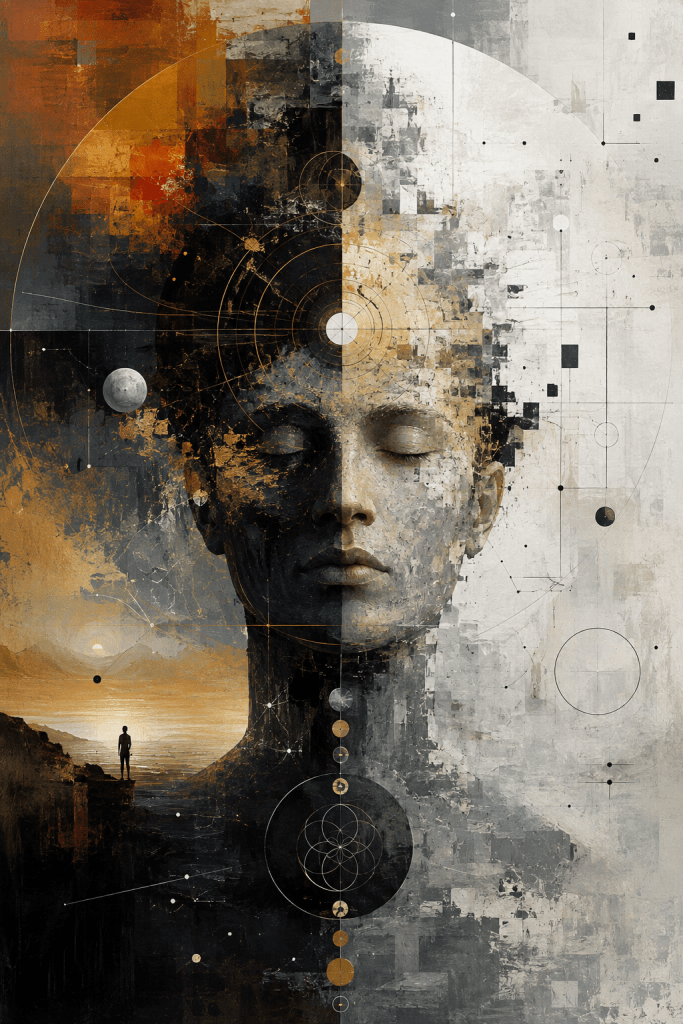
Few concepts in spirituality have been misunderstood as thoroughly as the ego.
We are repeatedly told to transcend the ego, destroy the ego, become egoless, or surrender the self. The implication is that spiritual maturity requires becoming less of a person, less defined, less assertive, and somehow psychologically smaller.
I see it differently.
A profound spiritual awakening does not require a weak ego. It may require an exceptionally developed one.
The problem is not that we have an ego. The problem is what the ego believes itself to be.
At its most basic level, the ego refers to the sense of self.
It is the psychological structure through which we organize experience around the perception of “I,” “me,” and “mine.” It allows us to establish boundaries, make decisions, assume responsibility, navigate relationships, pursue goals, withstand social pressure, and function as individuals within the world.
When someone says, “He has a big ego,” they are usually not talking about the existence of a strong sense of self. They are describing narcissism, defensiveness, arrogance, grandiosity, insecurity, or excessive self-importance.
Those are qualities that can characterize an ego.
They are not the definition of ego itself.
This distinction matters because spiritual communities sometimes confuse psychological weakness with spiritual transcendence.
A person can be passive, poorly differentiated, unable to establish boundaries, dependent upon approval, easily manipulated, and afraid of confrontation while imagining these characteristics to be signs of egolessness.
They may be nothing of the sort.
Sometimes what appears to be egolessness is simply an ego that has not sufficiently developed.
A healthy sense of self is necessary for functioning within a difficult world.
This becomes especially important for anyone carrying leadership, spiritual, community, social, or global responsibilities. Without sufficient psychological structure, other people’s expectations, projections, demands, criticisms, and agendas can overwhelm you.
The world can trample over a poorly developed self.
Meditation, when properly integrated, should not merely dissolve psychological structure. It can strengthen our capacity to remain centred while encountering stress, emotional activation, social pressure, uncertainty, and outside influence.
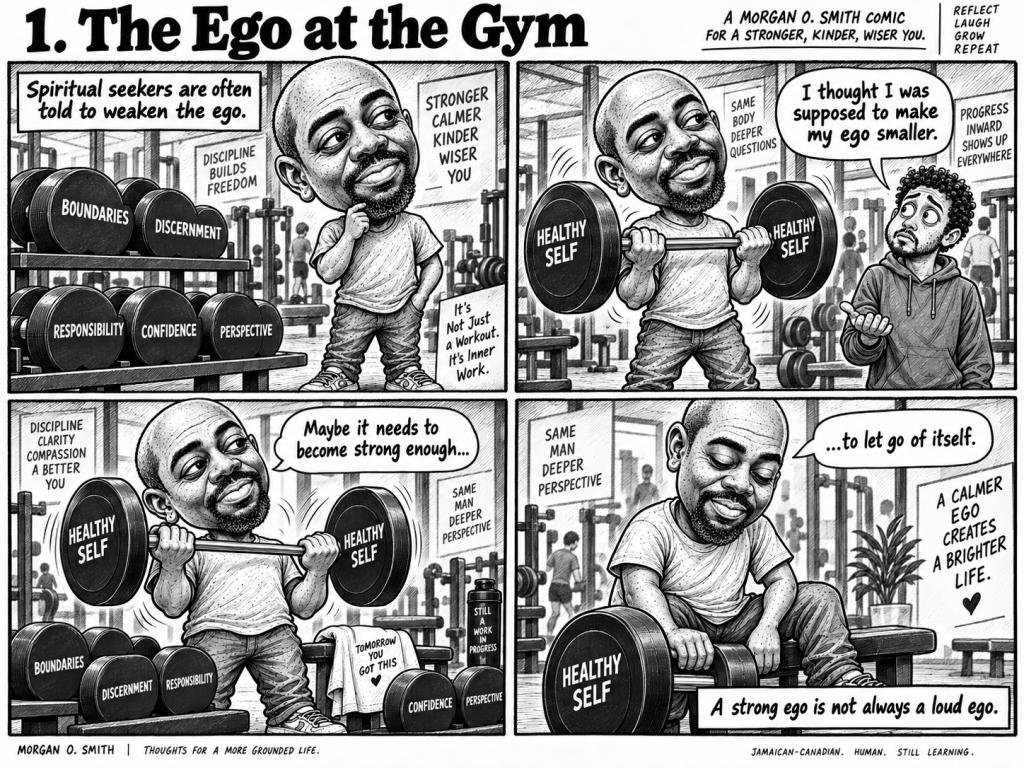
Paradoxically, spiritual practice can make the ego both stronger and more transparent.
Stronger does not necessarily mean louder.
It can mean more stable.
Less reactive.
Less easily manipulated.
Less dependent upon validation.
More capable of holding contradiction.
More capable of surrender.
This produces one of the great paradoxes of awakening:
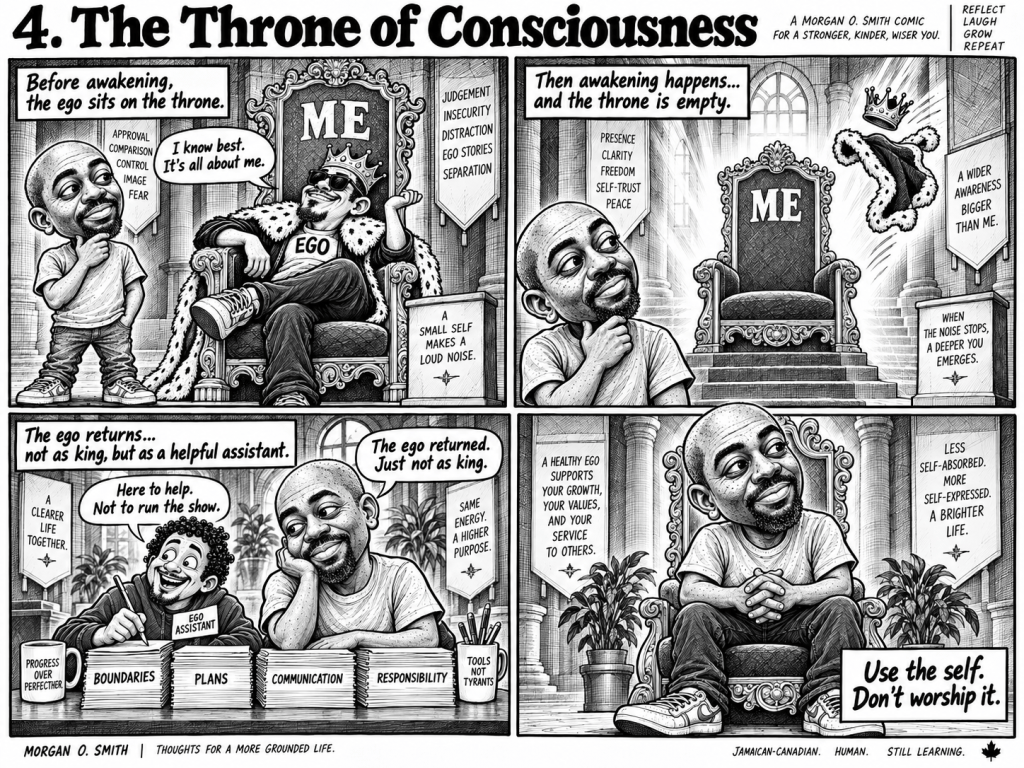
The ego may need to become strong enough to let go of itself.
I make an important distinction between egoic death and ego death.
Egoic death refers to the collapse, surrender, or transformation of defensive ego structures. Identification with certain beliefs, roles, wounds, narratives, attachments, fears, and psychological defenses may loosen dramatically.
Something about “me” dies.
Yet the basic sense that there is still a “me” experiencing reality can remain.
Ego death, as I use the term, is more radical.
During a profound nondual awakening, the sense of being a separate subject can disappear altogether. There is no longer an individual standing apart from experience, observing reality from somewhere behind the eyes.
The subject-object structure collapses.
There is seeing, but no separate seer.
There is awareness, but no independently existing owner of awareness.
There is existence, but the familiar psychological centre claiming, “I am the one to whom existence is happening,” is absent.
That is what I mean by ego death.
The difference is enormous.
A person can undergo an extraordinary emotional, mystical, psychedelic, religious, or psychological transformation without experiencing the complete dissolution of the subject-object boundary.
Not every dramatic spiritual experience is a nondual awakening.
Not every loss of psychological defenses is ego death.
Permanent inability to function as a self is not the goal.
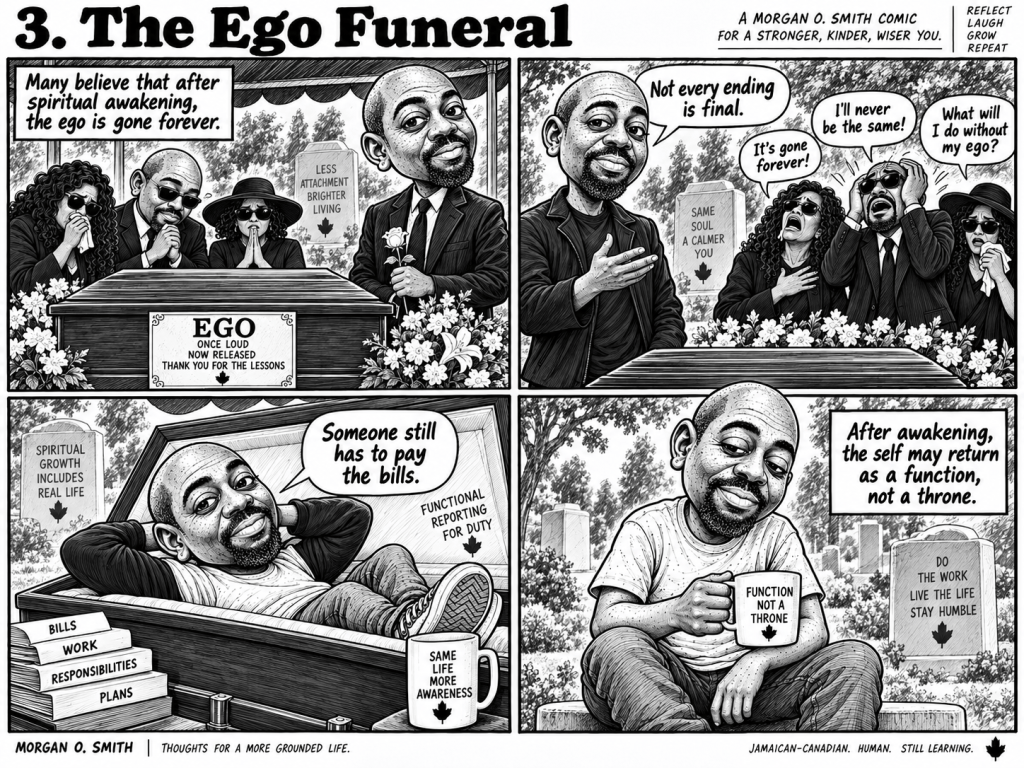
After a profound awakening, the practical personality returns because life requires it.
Your name returns.
Your responsibilities return.
Your relationships return.
Your preferences return.
Your history remains accessible.
Someone still has to answer the phone, pay the bills, make decisions, protect boundaries, honour commitments, create, teach, lead, and respond when another human being calls your name.
The ego resurrects itself as a functional structure.
But something can be fundamentally different.
Before awakening, the ego can appear to be a solid psychological object at the centre of existence.
After awakening, it can become increasingly transparent.
The self still functions, but its apparent solidity has been penetrated.
You can use the self without completely mistaking yourself for it.
The ego returns, but it does not necessarily return to the throne.
This distinction is essential.
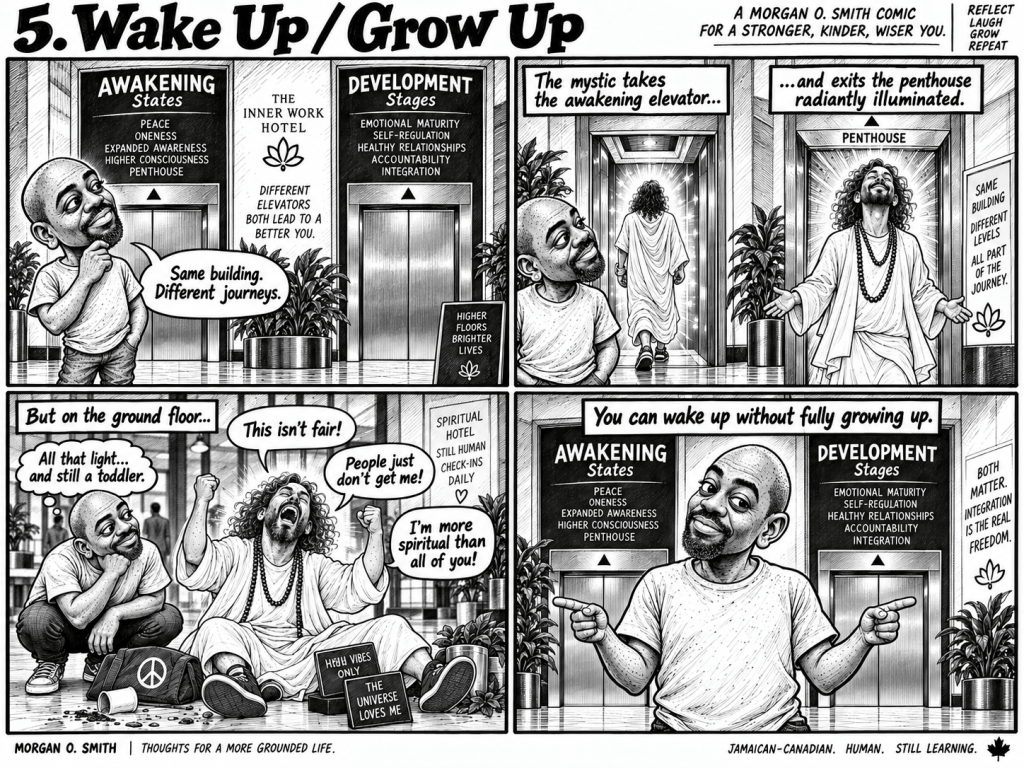
Psychological development and spiritual awakening are two different dimensions of a human being.
A person can have profound mystical states while remaining psychologically immature.
Another person can be extraordinarily mature, ethical, rational, compassionate, and psychologically integrated without ever experiencing nondual awakening.
Development does not automatically produce awakening.
Awakening does not automatically produce development.
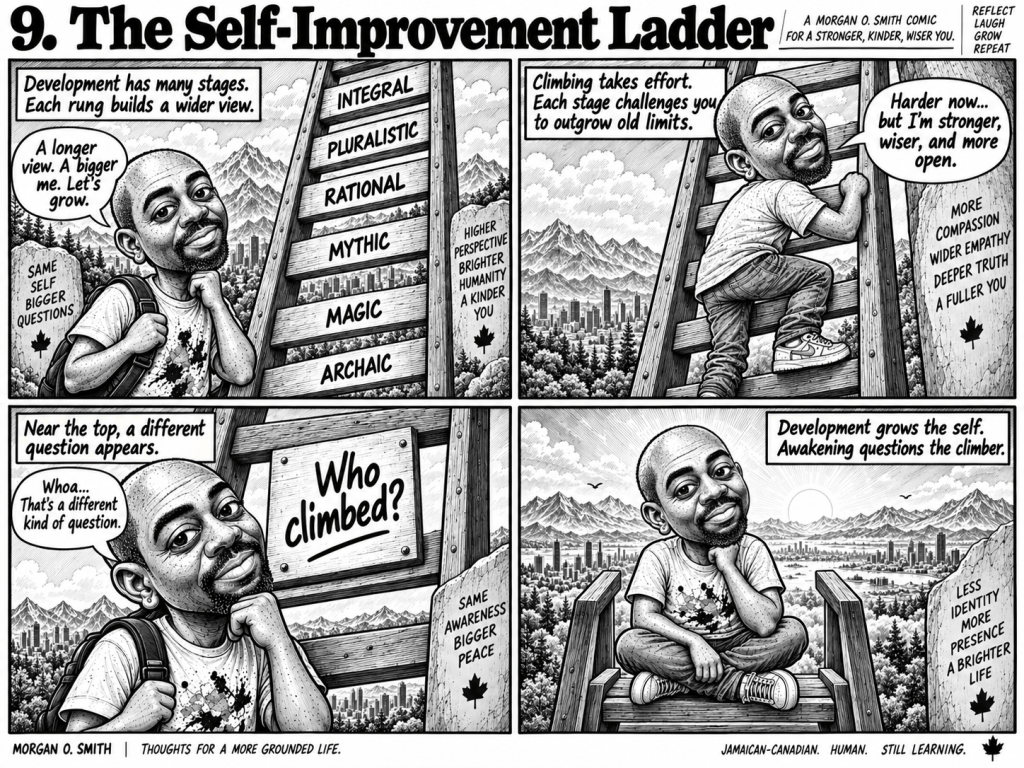
Psychological stages describe the increasing complexity and capacity of the ego.
One developmental sequence can be described as:
Archaic → Magic → Mythic → Magic/Mythic → Rational → Pluralistic → Integral → Super-Integral
Each movement represents a transformation in how the self organizes reality, interprets experience, understands other people, constructs meaning, and relates to increasingly complex perspectives.
States of consciousness describe something different:
Waking → Dreaming → Dreamless Sleep → Turiya → Turiyatita
Turiya and turiyatita point toward dimensions associated with spiritual realization and enlightenment rather than merely greater psychological complexity.
Development asks:
How mature, complex, inclusive, and perspectivally capable is the self?
Awakening asks:
What is ultimately true about the self?
Those are not the same question.
This distinction explains something that otherwise seems contradictory.
How can someone have an authentic mystical awakening and still hold immature beliefs?
Because the state that was experienced and the psychological structure interpreting that state are not necessarily at the same level of development.
A person may enter an extraordinary state of consciousness and later interpret it through a Magic worldview.
Another may interpret a similar state Mythically.
Another Rationally.
Another Pluralistically.
Another Integrally.
The awakening may be profound while the interpretation of the awakening remains constrained by the developmental structure available to the person.
This is why spiritual experience alone does not automatically produce psychological maturity.
Someone can experience oneness and still be narcissistic.
Someone can experience emptiness and still lack healthy boundaries.
Someone can experience profound love and still hold ethnocentric beliefs.
Someone can experience the dissolution of the separate self and later reconstruct an identity around being “the awakened one.”
The ego is remarkably capable of claiming ownership of the experience in which its own separate existence temporarily disappeared.
That is one of the great ironies of spiritual awakening.
Another common misunderstanding is equating ego with egocentricity.
They are not synonymous.
Egocentricity describes a particular organization of identity in which one’s own needs, interests, desires, fears, and perspective dominate.
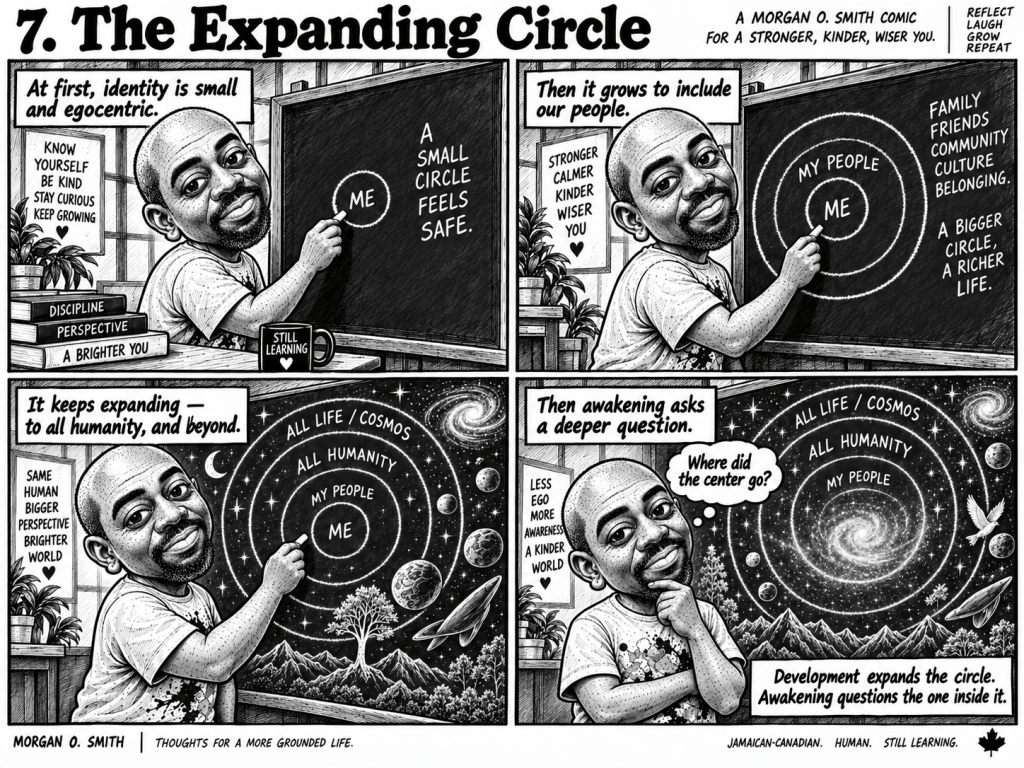
Development can progressively widen that identity:
Egocentric → Ethnocentric → Worldcentric → Kosmocentric
The egocentric self says:
I am primarily concerned with me.
The ethnocentric self expands:
I am one of us. My people, culture, religion, nation, group, or community matter.
The worldcentric self expands further:
My concern includes all human beings regardless of race, sex, class, nationality, culture, religion, creed, or social identity.
Kosmocentric identity expands beyond humanity:
My concern includes life, consciousness, the planet, the universe, and existence itself.
Something fascinating happens here.
From one perspective, the ego becomes smaller because self-centredness decreases.
From another perspective, the ego becomes enormous because what the person includes within the meaning of “self” has expanded dramatically.
The boundaries of identity become increasingly porous.
This is why calling a worldcentric or kosmocentric person “egoless” can be misleading.
They still require a functioning ego.
They still need boundaries.
They still need discernment.
They still need the ability to say yes and no.
They still need enough psychological strength to withstand manipulation, criticism, projection, conflict, responsibility, and pressure.
What has changed is the circumference of concern.
The self has expanded beyond its previous boundaries.
There is another paradox here.
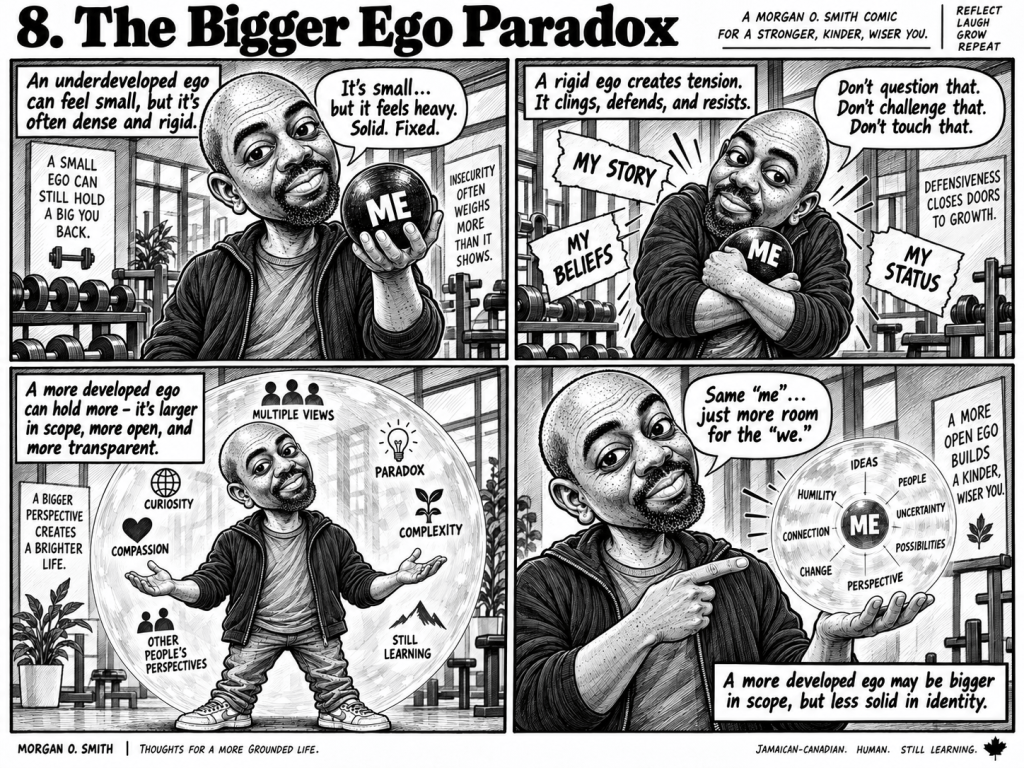
At lower levels of development, the ego can feel like a small but extremely solid object.
Everything revolves around protecting it.
My status.
My identity.
My beliefs.
My group.
My worldview.
My importance.
My security.
My story.
As development proceeds, the ego can become larger while simultaneously becoming less solid.
More perspectives can be included.
More contradictions can be tolerated.
More identities can be understood.
More complexity can be held without psychological collapse.
Eventually the ego becomes capable of questioning the very structure through which it has been interpreting reality.
This is where psychological development can become extraordinarily important for spiritual realization.
A highly developed ego may possess enough complexity to recognize the limitations of its own perspective.
The self becomes capable of seeing itself as a perspective rather than simply assuming that its perspective is reality itself.
That is a major shift.
Perhaps the highest development of ego is not an ego that dominates every room.
It is an ego capable of holding many rooms.
A highly developed person can recognize multiple perspectives without immediately collapsing them into their own.
They can understand why another person sees reality differently.
They can distinguish perspective from truth claims.
They can hold paradox without immediately demanding resolution.
They can examine their own assumptions.
They can move between subjective, interpersonal, cultural, systemic, spiritual, global, and kosmic perspectives.
They can possess strong boundaries without becoming rigid.
They can exercise authority without requiring superiority.
They can experience criticism without psychological collapse.
They can surrender without becoming submissive.
They can become transparent without becoming weak.
At increasingly integral and super-integral stages, the ego becomes capable of holding multiple perspectives simultaneously.
This is a very different picture of ego development from the stereotype of the dominant personality.
Perhaps the strongest ego is the one that no longer needs to constantly prove its strength.
This is where psychological development and spiritual awakening finally encounter one another.
Development progressively asks the ego to become larger, more complex, more inclusive, and more capable of perspective-taking.
Awakening eventually asks something completely different:
Who is this “I” that has been developing?
Development can take us from egocentric identity toward ethnocentric, worldcentric, and kosmocentric identity.
The circle becomes larger.
Awakening questions the centre of the circle itself.
Who is standing there?
Who is experiencing?
Who is aware?
Where exactly is the boundary between the observer and the observed?
At the highest psychological stages, the ego may become capable of seeing reality through multiple perspectives simultaneously.
At the deepest levels of awakening, something even more radical can be recognized.
The apparent observer is itself part of what is being observed.
From one nondual perspective, all existence is The Self.
From another, there is No Self anywhere to be found.
These statements appear contradictory only while we assume that Self must mean the individual personality.
The Self of nonduality is not the autobiographical self.
It is not the personality.
It is not your name, history, occupation, nationality, race, sex, religion, ideology, accomplishments, wounds, preferences, or social identity.
The startling recognition is that what you ultimately are cannot be contained within the psychological structure you previously called yourself.
Advaita can express this realization as Self.
Buddhist traditions may approach it through emptiness and no-self.
The language differs.
The ordinary assumption of an independently existing psychological subject is being challenged at its root.
There is an intriguing convergence between the highest reaches of development and the deepest reaches of awakening.
Development expands identity.
Awakening dissolves the assumption that identity possesses an independently existing centre.
At first:
I am me.
Then:
I am one of us.
Then:
All human beings are within my circle of concern.
Then:
Life, consciousness, the planet, and the cosmos are within my circle of concern.
Nondual awakening can take the inquiry somewhere even stranger:
Where is the boundary separating “me” from existence in the first place?
From the perspective of Self, everything is Myself.
From the perspective of no-self, there is no separate “myself” anywhere.
Absolute inclusion and absolute emptiness begin pointing toward the same mystery from opposite directions.
The ego cannot manufacture this realization simply by becoming more psychologically developed.
But a developed ego may be far better equipped to integrate what happens when its assumed centrality collapses.
This may be one of the most important cautions in serious spiritual work.
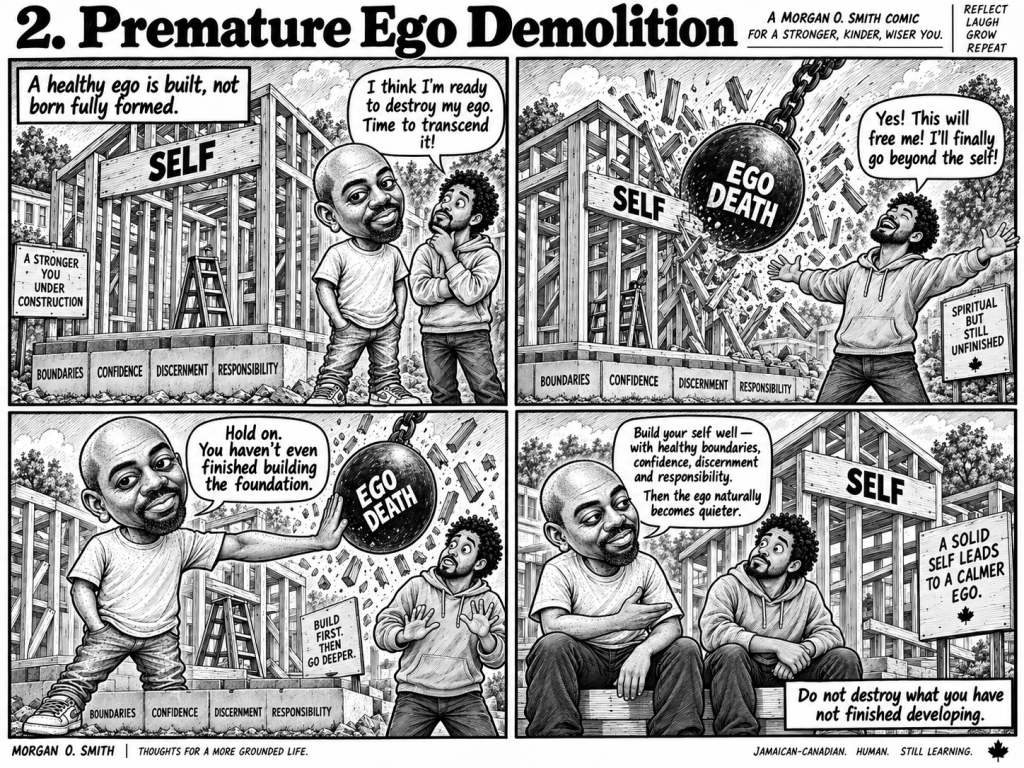
Trying to destroy the ego prematurely can become another form of avoidance.
Someone who needs boundaries may try to become egoless.
Someone who needs confidence may practice self-erasure.
Someone who needs psychological integration may pursue transcendence.
Someone who needs to learn how to say no may interpret surrender as saying yes to everyone.
Someone who needs a coherent identity may attempt to dissolve identity altogether.
Someone who needs to develop personal agency may mistake passivity for spiritual surrender.
This can become especially dangerous around spiritual authority.
A poorly developed sense of self may make someone highly susceptible to manipulation while they interpret their inability to resist authority as humility.
That is not necessarily transcendence.
Spiritual awakening should not require becoming incapable of being human.
The work is subtler than that.
Develop the self.
Strengthen it.
Integrate it.
Expand it.
See through it.
Let it become transparent.
And when consciousness finally discovers what exists prior to the distinction between self and other, allow the ego to surrender completely.
Then let it return.
Not necessarily as the ruler of consciousness, but as one of its instruments.
Psychological stages of development and states of awakening are two different facets of every individual.
One concerns the development of the self.
The other concerns awakening beyond the assumed limitations of that self.
One can grow horizontally and vertically through increasingly complex structures of identity, morality, cognition, perspective, and concern.
One can also awaken into increasingly profound states in which the ordinary construction of self and reality becomes transparent or disappears altogether.
Neither dimension should be mistaken for the other.
A sophisticated worldview does not prove enlightenment.
A profound mystical experience does not prove psychological maturity.
The extraordinary possibility is the development of both.
A human being can become psychologically strong without becoming psychologically rigid.
Deeply individual without becoming egocentric.
Worldcentric without losing personal boundaries.
Kosmocentric without abandoning practical responsibilities.
Capable of inhabiting multiple perspectives without losing discernment.
And spiritually awakened without becoming psychologically diminished.
Perhaps the mature spiritual question is therefore no longer:
“How do I get rid of my ego?”
A more interesting question is:
How fully can the self develop before it discovers that it was never the whole of what I am?
Beyond even that lies a question no psychological stage can answer for us:
When the sense of being a separate self disappears completely, what remains?
Morgan O. Smith
Awareness, Ego Death, and the Union of Mind and Emotion
A statement spoken in the midst of suffering reveals more than compassion; it unveils a profound diagnosis of human consciousness. “Father forgive them, for they don’t know what they do” points not toward moral failure, but toward a blindness so complete that action unfolds without true seeing.
Lack of awareness is not merely ignorance of facts; it is a fragmentation of perception. Thought moves in one direction, emotion in another, and the deeper currents of being remain unrecognized. Life becomes mechanical, reactive, conditioned. From that state, harm arises; not out of intention alone, but from disconnection within oneself.
Meditation introduces a different possibility. Rather than adding knowledge, it begins to dissolve the divisions that create confusion. The mind quiets, the emotional field settles, and something more integrated begins to emerge. What was previously split starts to communicate.
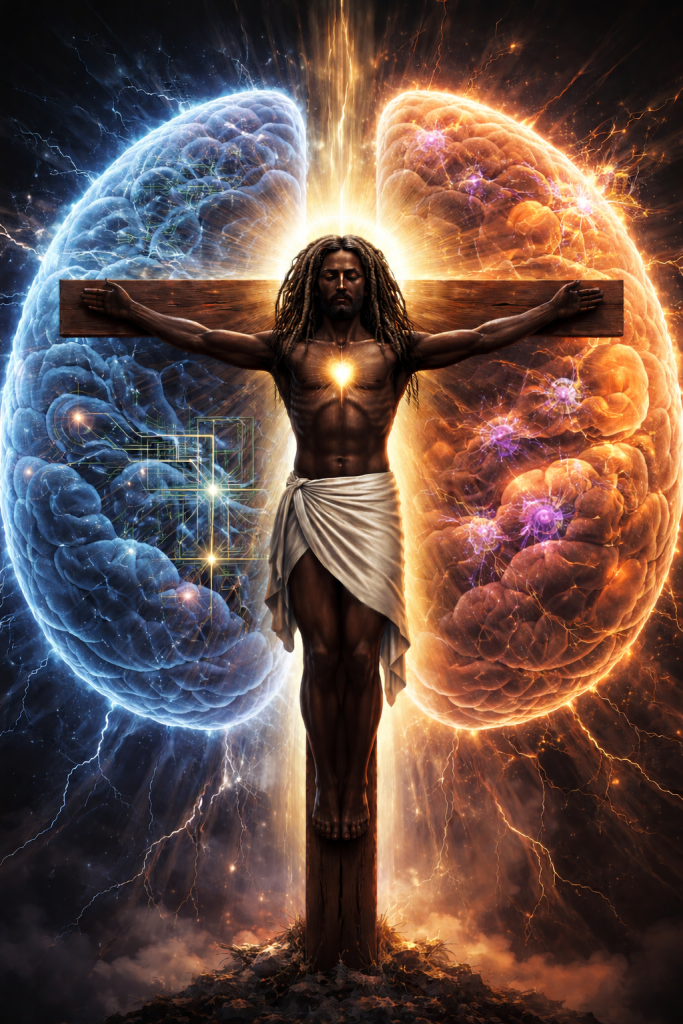
Viewed through a tantric lens, this integration takes on symbolic depth. The left hemisphere reflects structured thought, analysis, the architecture of concepts. The right hemisphere reflects intuition, feeling, the subtle currents that cannot be reduced to language. Most people live tilted; identified more with one than the other, rarely aware of the imbalance.
When these two aspects come into harmony, perception shifts. Thought no longer suppresses feeling, and feeling no longer clouds thought. A unified intelligence begins to function—clear, direct, and undivided. This is not intellectual brilliance or emotional intensity alone, but a deeper coherence of being.
The imagery of crucifixion can be read beyond history and theology. Suspended between two thieves, a central figure undergoes total surrender. The thieves, in this interpretation, can be seen as the divided faculties; mind and emotion, each incomplete on its own. The centre represents the point where both are witnessed, transcended, and ultimately brought into alignment.
Ego, in this sense, is not destroyed violently but revealed as insufficient. Its grip loosens when awareness expands beyond the fragments it tries to control. What remains is not emptiness in the negative sense, but a clarity that no longer depends on division.
Forgiveness then becomes natural, not forced. When one truly sees that actions arise from unconscious fragmentation, blame loses its foundation. Compassion emerges, not as a virtue to practice, but as the inevitable response of a mind that is no longer divided against itself.
Awareness is not something added to the individual; it is what remains when fragmentation dissolves. When both hemispheres function in coherence, perception is no longer split between thinker and feeler, observer and participant. There is simply knowing, without distortion.
Perhaps the deeper message is not about what was done, but about what was not seen. And through that recognition, a different way of being becomes possible; one where action arises from wholeness rather than division.
Morgan O. Smith
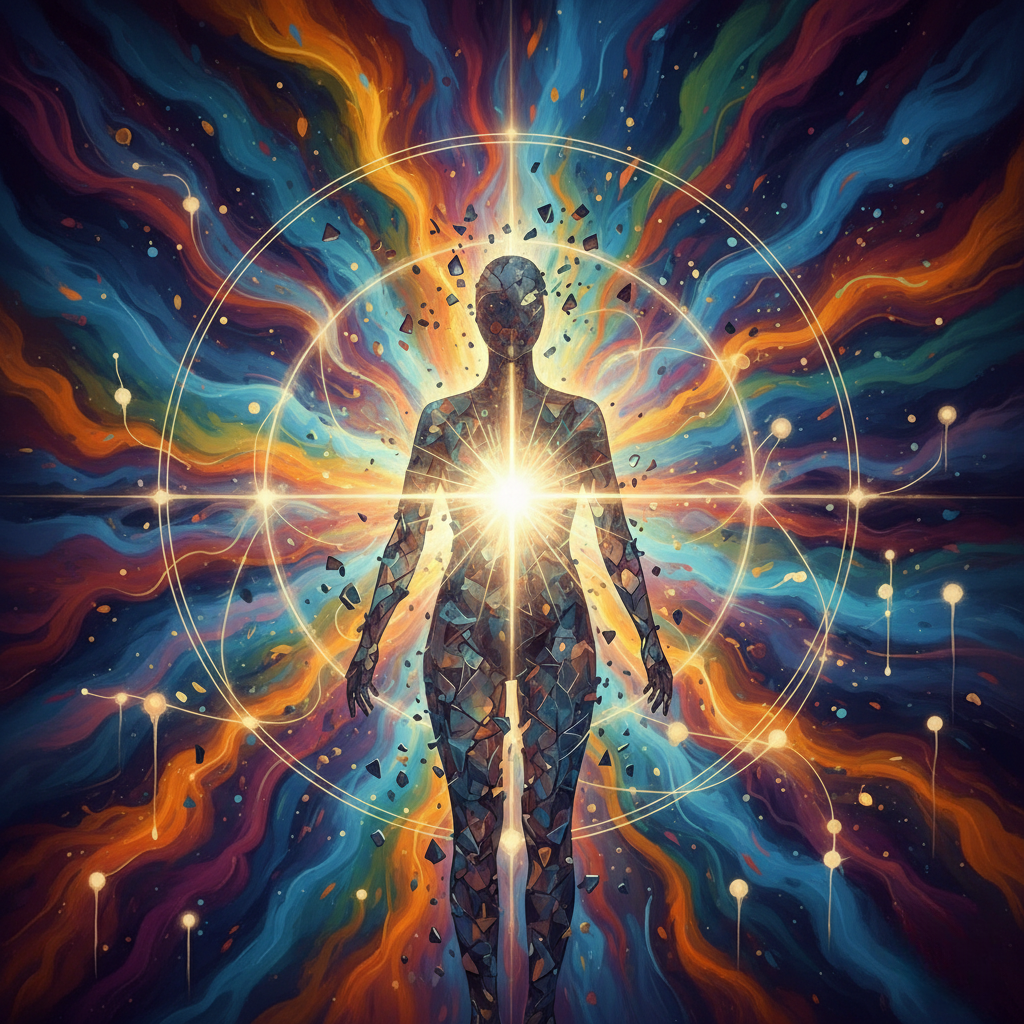
Ego death is often spoken about casually, yet nothing about it is casual. It is not a poetic phrase, nor a dramatic exaggeration. Something very specific occurs—precise, unmistakable, and irreversible at the level of insight.
This is not a biological event. The body remains alive. The brain continues to function. Memory does not disappear. Consciousness does not black out. What vanishes is the internal reference point that says, this is me. The structure that once organized experience around a personal center dissolves, and with it goes the assumption of separation.
No negotiation happens here. No partial surrender. No internal debate. Doubt does not survive the moment. The mind does not ask whether this is real. Verification becomes unnecessary because the one who would seek confirmation is no longer present.
Psychological death may sound abstract until it happens. When it does, the body reacts as though an actual death is occurring. Survival instincts flare. Meaning collapses. Familiar orientation fails. Yet awareness remains clear—perhaps clearer than it has ever been. This clarity is what distinguishes ego death from unconsciousness. Awareness does not dim. It expands beyond the need for identity.
Enlightenment does not occur after ego death. Enlightenment is what is revealed when the ego can no longer interfere. The ego cannot be refined into truth. It cannot be educated into realization. It must fall away entirely, because it is structurally incapable of holding what is uncovered.
At the causal level of realization, identity no longer rests in form, personality, history, or narrative. Cause and effect are no longer observed from the outside. They are known as oneself. Everything that arises is recognized as both originating from and resolving into the same source. Nothing stands apart. Nothing is accidental. Agency is no longer personal, yet responsibility is absolute.
Deeper still, even causality dissolves. Distinctions between origin and outcome lose meaning. What remains is not many things connected, but a single indivisible reality. This is what Advaita Vedanta names Absolute Monism; not a belief, not a concept, but a lived recognition.
Time no longer appears linear. Past, present, and future are not sequential events but simultaneous expressions. Every occurrence, across all scales and dimensions, is apprehended as one movement without edges. Beginning and ending collapse into the same point. Eternity ceases to be a duration and reveals itself as immediacy.
The ego cannot survive this recognition. It was never meant to. The ego exists to navigate relativity, not to comprehend totality. Asking it to grasp nonduality is like asking a shadow to contain light. The moment the ego loosens its grip, what remains is not annihilation, but the recognition that life and death were never opposites.
Ego death feels final because it ends the search forever. Nothing remains to achieve. Nothing remains to defend. What is discovered was never acquired. It was always present, waiting for the interference to stop.
This is why enlightenment is never uncertain. Anyone still asking whether it happened is still standing outside the threshold. When it occurs, the questioner disappears, and only knowing remains; silent, complete, and beyond reversal.
Morgan O. Smith
AI for Wellness and Spirituality Summit
February 9 & 10, 2026
When individuality dissolves—and when the collective mask collapses
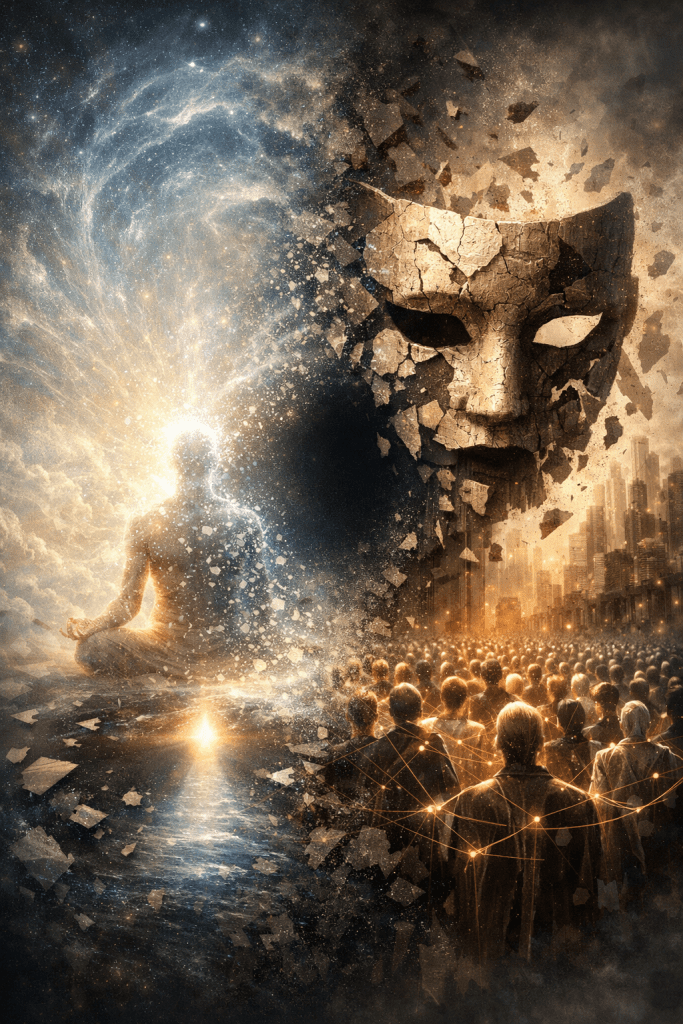
Ego death has become familiar language within spiritual circles. It often refers to the collapse of the personal story; the felt sense of “me” as a separate centre of control, identity, and continuity. Thoughts still arise, sensations still move, yet the claim of ownership quietly disappears. Experience continues without a narrator insisting it belongs to someone.
This event can feel absolute. Many report vastness, silence, love without an object, or a direct recognition of being awareness itself. The personal mask falls away, and with it the emotional gravity of self-protection, shame, pride, and comparison. Life continues, yet it is no longer filtered through the need to defend or improve a fictional self.
Still, something subtle often remains.
Beneath the personal ego sits another structure, far less discussed and far more persistent: the super-ego of the collective. This is not merely morality or social conditioning. It is the internalized voice of humanity itself; the inherited myths, hierarchies, spiritual ideals, political narratives, and cultural agreements that define what counts as real, good, awakened, successful, or worthy.
Ego death removes the personal actor. Super-ego death removes the stage.
Super-ego death is not about becoming rebellious or rejecting society. It is the dissolution of the unseen authority that claims reality must conform to shared agreements. This includes spiritual identities just as much as material ones. The enlightened persona, the wise teacher, the healed one, the awakened exemplar, all of these belong to the collective ego, even when the personal ego has already fallen.
This is why some awakenings still feel constrained. Freedom is tasted, yet behavior unconsciously bends to invisible rules. One no longer needs approval as an individual, yet still seeks legitimacy through lineage, doctrine, community, or role. Silence is known, yet language is chosen carefully to avoid exile from the group.
Super-ego death arrives when even the collective lens loses its authority.
No tradition holds the final word. No framework owns truth. No spiritual map is mistaken for the territory it points toward. Morality is no longer outsourced to consensus. Meaning no longer depends on agreement. What remains is not isolation, but radical intimacy; life meeting itself without mediation.
This does not produce chaos. It produces clarity.
Action becomes responsive rather than obedient. Compassion arises without ideology. Ethics emerge organically, shaped by direct contact rather than inherited commandments. One may still participate in society, teach, lead, love, and create, but without the invisible pressure to represent anything.
Personal ego death says, “I am not who I thought I was.”
Super-ego death says, “Reality is not what we collectively agreed it must be.”
Very few speak from this territory because it offers no badge. Nothing can be claimed. No position can be stabilized. Language points, then dissolves. Authority evaporates.
What remains cannot be organized, branded, or defended.
Life continues, unowned, unruled, uncontained, expressing itself freely, without asking permission from the individual or the crowd.
Morgan O. Smith
Get Your Free Copy of My Book, Bodhi in the Brain!

The mind, magnificent as it is, remains bound by the architecture of limitation. It can dissect, analyze, and categorize, but cannot hold everything and nothing at once. The mind functions through exclusion; it defines reality by what it is not. To include all possibilities would dissolve the very mechanism that makes thinking possible. This is the paradox at the heart of consciousness: the tool we use to understand reality is incapable of containing its totality.
When consciousness stretches beyond the contours of thought, something begins to unravel. The self that once claimed ownership of perception collapses. What is commonly called the “ego death” is not the destruction of identity but its suspension. Awareness steps beyond its familiar edges and witnesses existence without filters, without the narrow lens of self-reference. The observer and the observed dissolve into a single field of knowing that cannot be known by thought.
This death is a gateway. It allows the unthinkable to reveal itself; not as a concept, but as direct realization. What remains after the mind’s surrender is not absence but presence; an intelligence too vast to belong to any one being. When the ego dies, even for a moment, the universe breathes through you, unfragmented and whole. You are not experiencing the infinite; you are the infinite experiencing itself.
Morgan O. Smith
Get Your Free Copy of My Book, Bodhi in the Brain!

Gazing into the Face of the Infinite
There may come a moment when stillness deepens, and the mind gives way to something vast and formless. No longer bound by identity, perception turns inward, unveiling a presence that has always been there—unseen, yet intimately familiar.
This is not the face reflected in mirrors or the self shaped by memory and experience. It is something far more primordial, resting beneath all layers of perception. It neither belongs to time nor is confined by space. It is the first and the last, the one who watches and the one being watched.
To encounter this presence is to witness creation itself—a fluid, luminous movement, folding and unfolding like breath. What appears as a single vision contains an entire cosmos, shifting and reforming in patterns beyond understanding. A current of knowing flows from it, carrying the weight of both stillness and storm, tenderness and terror. There is no contradiction—only the totality of what is.
This vision may stir awe, but it will also strip away illusion. The small self—the fragile construct of name, form, and history—begins to dissolve. The ego, unprepared for its own undoing, clings to the edges of familiarity. It resists, yet it cannot hold. The presence that once seemed separate reveals itself as the origin of all things.
Ancient myths have spoken of this encounter. Some say none can see it and live. But it is not the body that perishes—it is the illusion of separateness that fractures beyond repair. And while the mind trembles, something deeper recognizes the moment for what it is: a return, not a loss.
What once appeared unreachable was never distant. The face sought for lifetimes has always been the one looking through these eyes. The one seeking has always been the sought.
Standing before this presence is not to be destroyed but made whole.
Morgan O. Smith
Yinnergy Meditation/Neurofeedback, Spiritual Life Coaching & My Book, Bodhi in the Brain…Available Now!

Facing the Shadows Before Awakening
There exists a realm within the psyche so obscure, so deeply buried beneath layers of identity, that even those who have touched the pinnacle of awakening may remain oblivious to its existence. It is the final frontier before the self dissolves entirely—a territory littered with unexamined fears, concealed transgressions, and desires too shameful to acknowledge.
Before awakening completes its course, before the false self collapses into the boundless expanse of nonduality, there is a reckoning. A descent into the darkest corridors of the mind where the most primitive aspects of existence, both personal and collective, make their presence known. This is not a mere psychological reckoning; it is an existential confrontation, one that strips away the illusion of separation between the individual and the whole of suffering itself.
A being in the throes of this revelation does not merely observe suffering from a distance. Instead, suffering is embodied in its totality—experienced both as the tormentor and the tormented, as the blade and the wound, as the hands that enslave and those that are bound. Every atrocity carried out by humankind, every act of cruelty and despair, rises to the surface. The weight of this recognition is nearly unbearable, a force that shatters all prior conceptions of selfhood. Many break under this pressure; some contemplate escape. Yet for those who endure, something extraordinary occurs.
The searing agony of this confrontation serves a purpose. It dismantles illusions, forces the heart open, and stretches the limits of compassion to their furthest extent. Empathy ceases to be an abstract virtue—it becomes an all-consuming fire that purifies everything in its path. Walking through this inferno does not incinerate the awakened one but instead renders them indestructible, unshaken by the fluctuations of worldly suffering. The very act of seeing, of bearing witness to every grotesque distortion of human nature, births an indescribable clarity—an awareness so vast it can hold both horror and grace without resistance.
No one seeks this path. It is not chosen by desire, nor does it reward the seeker with comfort. It arrives unbidden, reserved for those who must cross the threshold through trial and surrender. To move through this passage is to endure a crucifixion of the self, an initiation that cannot be bypassed. Yet for those who survive its rending force, the view on the other side is unparalleled. A vision beyond words, an existence that moves with effortless grace, guided by a heart that no longer clings to the illusions of division.
This journey is not a metaphor. It is a lived reality, known only to those who have walked barefoot across the glass of their shattered being. And for them, the world is no longer the same.
Morgan O. Smith
Yinnergy Meditation/Neurofeedback, Spiritual Life Coaching & My Book, Bodhi in the Brain…Available Now!