The Face of God and the End of Seeing

Most claim to have glimpsed the divine return with words that struggle to hold the weight of such an encounter. Many never return at all. To see the face of God and live is to step beyond the boundary where existence dissolves, where the self is unmade, and where reality, as it was once known, folds into itself like a dream dissolving at dawn.

Yet, what does it mean to see the face of God? Is it an experience of light so blinding that perception shatters? Is it a presence so vast that identity collapses? Or is it something even more elusive – something that was always here, hidden in the folds of ordinary awareness?

Some traditions warn against such an encounter, suggesting that no mortal can bear it and remain intact. Others speak of it as the ultimate reward, the final unveiling before absolute union. Yet, the paradox remains: how can one see the source of all things when the very act of seeing implies separation?

The face of God is neither a thing to be seen nor an object to be grasped. It is not found by looking outward or inward, for it is the very looking itself. The one who searches, the act of searching, and the sought-after presence all collapse into a singularity where distinctions dissolve. The moment of recognition is not a discovery but an obliteration – the end of every illusion that once passed for truth.

To live beyond such an encounter is to live without the weight of selfhood as it was once known. The personal dissolves, yet presence remains. There is nothing left to hold onto, yet nothing is missing. Some might call this madness. Others, liberation. But labels fall apart before the silent immensity of what remains.

Those who have seen and lived do not return with doctrine. They do not bring commandments carved into stone or revelations bound in pages. They return with an absence, a quiet, an emptiness more alive than any presence. And in that emptiness, a love beyond measure, a freedom beyond desire, and a knowing beyond thought.

Not all will understand. That, too, is part of the design.

Morgan O. Smith

Yinnergy Meditation/Neurofeedback, Spiritual Life Coaching & My Book, Bodhi in the Brain…Available Now!

https://linktr.ee/morganosmith

The Catalyst for the Ego’s Demise

The experience often referred to as “ego death” is not the obliteration of the self, but rather the dissolution of its illusions. The ego, a construct woven from the threads of identity, attachment, and fear, functions as a survival mechanism. It clings to roles, titles, and the narrative of separation to sustain its existence. Yet, this clinging obscures the deeper truth of who we are—a boundless consciousness that cannot be confined by labels or stories.

Ego death is not an event brought about by force, but a consequence of profound surrender. It arises when the conditions are ripe, often catalyzed by deep meditation, spiritual awakening, or transformative life experiences. These moments of clarity reveal the ego for what it is: a temporary construct, a shadow cast by the mind in its attempt to define the undefinable.

The catalyst for this unravelling often comes disguised. It may appear as a crisis—a moment when the identity we have constructed no longer holds up against the weight of reality. It may manifest as awe, where the boundaries of self dissolve in the face of something greater than the mind can grasp. Sometimes, it is the gradual erosion of ego through years of contemplation and self-inquiry, as if the winds of awareness slowly wear away the stone of selfhood.

The process of ego death can feel terrifying. The ego perceives its dissolution as annihilation, a threat to its very existence. Yet, for the one who witnesses this unravelling, it is liberation. What is revealed is not a void, but fullness—an infinite presence, free of the limitations imposed by the ego’s grip.

Paradoxically, the ego’s demise does not result in the loss of individuality, but a clearer expression of it. Freed from the distortions of fear and attachment, the individual becomes a unique channel for universal consciousness. Actions flow not from a sense of lack or separation, but from wholeness and authenticity.

This death of the ego is not a single moment, but an ongoing practice of letting go. It requires vigilance and a willingness to face the shadows that linger in the mind. Each time the ego asserts itself through judgment, resistance, or attachment, it offers an opportunity to recognize its presence and release its hold.

The catalyst for the ego’s demise is ultimately the realization that it was never truly alive. It is a phantom, a mirage that dissolves when illuminated by the light of awareness. In its absence, what remains is not emptiness, but the unshakable truth of being—a truth that was always present, quietly waiting to be revealed.

Morgan O. Smith

Yinnergy Meditation, Spiritual Life Coaching & My Book, Bodhi in the Brain…Available Now!
https://linktr.ee/morganosmith

The Multilayered Journey of Ego Dissolution

In the intricate dance of spiritual awakening, the ego stands as both a necessary companion and a formidable obstacle. Our journey to self-realization often involves peeling away the layers of this multifaceted construct, each layer representing a different aspect of our perceived identity.

The ego, much like an onion, is composed of multiple layers. These layers symbolize the various roles, beliefs, and attachments we accumulate throughout our lives. Initially, shedding these layers can be a liberating experience. We feel lighter, more connected to our true selves, and less bound by societal expectations and personal fears. Each removed layer brings us closer to a state of purity and clarity.

However, the concept of ego death transcends the gradual shedding of these layers. Ego death is not merely about peeling back the onion to its core; it is about transcending the very existence of the onion itself. It is the profound realization that the core was an illusion all along, a construct of the mind designed to give us a sense of separateness and control.

Imagine reaching a point where even the scent of the onion no longer lingers. This metaphor captures the essence of true ego death—a state where not only the layers but the very notion of an individual self dissolve into the infinite. It is the ultimate surrender, where the boundaries between the self and the cosmos blur into non-existence, revealing the underlying oneness of all.


This experience can be both terrifying and liberating. The fear of losing our identity is a natural response, as the ego is deeply ingrained in our sense of self-preservation. Yet, the liberation that follows is unparalleled. Without the confines of the ego, we experience reality in its purest form, untainted by personal biases or desires. We become conduits for the divine flow of life, embracing the totality of existence with an open heart and mind.

Ego death is not a one-time event but an ongoing process of dissolution and rebirth. Each moment of awareness, each act of surrender, contributes to the gradual dismantling of the ego’s hold. In this continuous journey, we learn to embrace the paradox of being both nothing and everything simultaneously. We recognize that our true essence is not defined by our identity but by our intrinsic connection to the universal consciousness.

As we navigate this path, it is essential to cultivate compassion and patience for ourselves. The layers of the ego are intricate and deeply rooted, and their dissolution requires gentle persistence. By embracing the journey with humility and openness, we allow the process to unfold naturally, guided by the inner wisdom that transcends the ego’s limitations.


In conclusion, the journey of ego dissolution is a profound exploration of our true nature. It invites us to move beyond the superficial layers of identity and experience the boundless reality of our interconnected existence. Through this journey, we discover that true freedom lies not in the absence of identity but in the realization of our inherent oneness with all that is.

Morgan O. Smith

Yinnergy Meditation, Spiritual Life Coaching & My Book, Bodhi in the Brain…Available Now!
https://linktr.ee/morganosmith

The Crucible of Transformation

Ego Death and Enlightenment in the Story of Yeshu’a

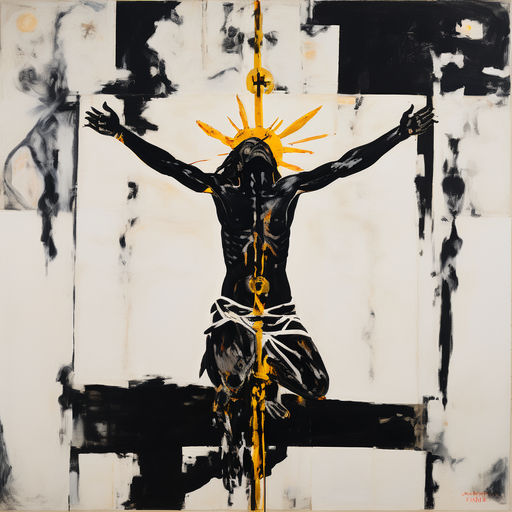
In the narrative of Yeshu’a, commonly known as Jesus Christ, the events leading up to and including the crucifixion and subsequent resurrection offer profound allegorical insights into the journey toward spiritual awakening and enlightenment. This narrative, when viewed through the lens of spiritual and psychological metamorphosis, echoes the concept of ego death — a foundational experience on the path to profound personal transformation and enlightenment.

The Crucifixion: An Allegory for Ego Death

Ego death represents the dissolution of the self-constructed identity, a moment where the illusion of the ‘I’, with all its attachments and identities, is seen through and transcended. In the story of Yeshu’a, the crucifixion symbolizes this intense moment of surrender. It is a vivid depiction of the relinquishment of personal identity, desires, and the very notion of selfhood, akin to the spiritual surrender required for the dissolution of the ego.

This moment is not about physical demise but rather a metaphorical death, where all that is false must be surrendered and ‘crucified’. The agony in the garden of Gethsemane, where Yeshu’a confronts his impending crucifixion, mirrors the inner turmoil one faces when confronting the ego’s dissolution. It’s a profound surrender to a will greater than one’s own, to a state of being that transcends individual identity.

The Resurrection: Enlightenment and Spiritual Awakening

Following the allegory of ego death, the resurrection emerges as a powerful symbol of enlightenment and spiritual awakening. In the aftermath of the ego’s dissolution, a new consciousness is born — one that is not confined by the limitations and illusions of personal identity. This is the ‘resurrected’ state, where one experiences a profound sense of unity with all existence, an unshakable peace, and an intrinsic understanding of one’s true nature beyond the ego.

The resurrection signifies the ultimate triumph over the limitations of the egoic mind, a rebirth into a state of consciousness where love, compassion, and wisdom prevail. It reflects the awakening to a life lived in profound alignment with the universal truths, embodying the essence of nonduality — where the distinction between self and other, life and death, is recognized as an illusion.

Reflections for the Spiritual Seeker

The narrative of Yeshu’a’s crucifixion and resurrection serves as a rich allegorical framework for understanding the journey toward spiritual enlightenment. It challenges us to confront our egoic constructs, to courageously face the dissolution of our self-imposed identities, and to emerge transformed by the experience of our intrinsic, undivided nature.

As spiritual seekers, this story invites us to reflect on our journey towards self-realization, encouraging us to embrace the crucible of transformation and to emerge, like Yeshu’a, reborn into the light of awareness and unity. It is a reminder that true liberation and enlightenment lie not in the avoidance of suffering or the clinging to identity but in the profound surrender and transcendence of the ego.

Morgan O. Smith

Yinnergy Meditation, Spiritual Life Coaching & My Book, Bodhi in the Brain…Available Now!

https://linktr.ee/morganosmith

Exploring the Nondual State of Turiyatitta

Beyond the Ego’s Realm

In the journey of spiritual awakening, particularly during the Enlightenment period, we encounter profound concepts that challenge our understanding of self and existence. Among these concepts is the intriguing idea of the nondual state known as Turiyatitta. This state signifies a pivotal transformation where the individual transcends ordinary consciousness, reaching a realm beyond the ego’s grasp.

### The Death of the Ego


At the heart of this transformation lies the “death of the ego.” This term, often shrouded in mysticism, refers to a significant shift in one’s perception of self. In our usual state, we identify strongly with our ego, which is essentially our constructed self-image, replete with our personal history, beliefs, and idiosyncrasies. The ego thrives on differentiation, seeing the self as separate from others and the world at large.


### Turiyatitta: The Nondual Experience

However, in the state of Turiyatitta, this differentiation dissolves. It is a state where the boundaries that separate the individual from the experience are no longer present. In simpler terms, the experiencer (the individual) and the experience become indistinguishable. This is a profound realization, where one no longer views themselves as an isolated entity navigating through an external world, but rather as an integral part of a unified whole.

### Implications of Nonduality

This nondual perspective offers a radical shift in understanding the nature of existence. It challenges the deeply ingrained notion of individualism that pervades many cultures. In Turiyatitta, the sense of separation, which is the root cause of much of our suffering – be it in the form of loneliness, competition, or conflict – dissolves. What remains is a sense of oneness, a deep connection with all that is.


### The Journey to Enlightenment

Reaching this state is often described as the pinnacle of the spiritual journey, a key milestone in the path to Enlightenment. It requires deep introspection, meditation, and often, guidance from spiritual teachings and mentors. It’s not merely an intellectual understanding but a lived, experiential reality.

### Conclusion


The concept of Turiyatitta, and the experience of nondual awareness it describes, presents a fascinating and potentially transformative perspective on life and existence. It invites us to reconsider our relationship with ourselves, others, and the world around us, promising a path toward greater harmony, peace, and understanding.

Morgan O. Smith

Yinnergy Meditation, Spiritual Life Coaching & My Book, Bodhi in the Brain…Available Now!
https://linktr.ee/morganosmith

Embracing the Now

The Path to Ego Death and True Awareness

In our relentless pursuit of self-improvement and understanding, we often overlook a fundamental truth: the power of simply being in the present moment. This idea, though simple, holds profound implications for our journey towards inner peace and self-realization.

**Letting Go of Judgment and Bias**

To truly embrace the present, we must first release ourselves from the shackles of judgment and bias. This means observing our experiences, thoughts, and feelings without labelling them as good or bad, right or wrong. It’s about being an impartial witness to our own life.


**The Surrender to ‘What Is’**

Surrendering to ‘what is’ requires a deep acceptance of the present moment, regardless of its nature. It’s not about resignation or defeat; rather, it’s an active engagement with the now. In doing so, we allow life to flow naturally, without the resistance that often leads to suffering.

**Death of the Ego**


The ego, often seen as our conscious self or identity, thrives on differentiation, judgment, and past-future thinking. By embracing the present and letting go of these traits, we facilitate the ‘death’ of the ego. Now this does mean losing our sense of self, transcending the limited, subjective view of the ego.


**A New Perspective**

As we learn to live in the present, our perspective on life shifts. We begin to see the interconnectedness of all things and the beauty in simplicity. The burdens of past regrets and future anxieties lighten, offering a sense of liberation.

**Final Thoughts**

The journey towards ego death and true awareness is not about gaining something new but about losing the misconceptions and biases that cloud our true nature. It’s a path of unlearning, of returning to the essence of who we are.

Morgan O. Smith

Yinnergy Meditation, Spiritual Life Coaching & My Book, Bodhi in the Brain…Available Now!
https://linktr.ee/morganosmith

Embracing the Shadows

The Transformative Power of the Dark Night of the Soul

In the depths of human experience, where the light of understanding seems but a distant memory, we find ourselves in the midst of what Saint John of the Cross coined the “dark night of the soul.” This phrase has transcended its religious origins to signify a period of profound personal turmoil and existential crisis that, paradoxically, can lead to the most profound spiritual awakening.

The dark night of the soul is not simply a period of trouble or depression. It is a crucible in which the very foundations of identity, belief, and understanding are melted down. It is the unsettling void where the familiar dissolves, and we are left seemingly alone, wrestling with the most fundamental questions of our existence. Why am I here? What is my purpose? Is there any meaning to my suffering?

However, within this darkness lies a peculiar grace. The darkness, dense and impenetrable, confronts us with our deepest fears and insecurities. Stripped of all pretense, the ego is humbled, and the spirit becomes pliable. It is here, in the surrender to the unknown, that the light of awakening begins to seep through. As the Persian poet Rumi once said, “The wound is the place where the Light enters you.” Our wounds and our darkness become the very openings through which a new understanding can emerge.

The transformation that follows is often not one that pulls us out of the dark, but rather one that illuminates the night itself. We find that this darkness was not the absence of light, but the very medium through which a deeper, subtler light could be perceived—a light of truth that the glaring sun of our previously held certainties and convictions could never reveal.

In the embrace of the dark night, the soul learns the language of paradox. The loss of everything that once seemed sure becomes the freedom to explore truth without constraint. In letting go of what we thought we knew, we become open to an entirely new way of being. This is not the light of day with its clear boundaries and definitions, but the soft glow of twilight that admits to mysteries we can never fully grasp or articulate.

This spiritual awakening is not a destination but a continual unfolding. As dawn follows the darkest hour, our awakening is an ever-evolving process where new challenges and understandings emerge. The dark night becomes a passage, a womb of rebirth. Like the phoenix arising from the ashes, our spirits are reborn from the very trials that seemed to threaten our undoing.

And so, the dark night of the soul is not to be feared or avoided but embraced as an essential passage to a deeper, more authentic spiritual life. The darkness is not the end of the journey but a vital, indeed crucial, part of it—a passage that refines, teaches, and ultimately enlightens, granting us wisdom that shines all the brighter for having known the depths of shadow.

Morgan O.  Smith

Yinnergy Meditation & My Book, Bodhi in the Brain…Available Now!

https://linktr.ee/morganosmith

A Spiritual Journey with Paramahamsa Vishwananda

Ever since September 3rd, 2019, there has been one figure that repeatedly stands out in my memories, the guiding light that has transformed my life – Paramahamsa Sri Swami Vishwananda.

The journey began at Trinity St. Paul’s in Toronto. On that fateful day, I was fortunate enough to receive darshan from him. For those unfamiliar with this term, darshan is the divine sight – a soul-touching blessing one receives from a spiritually enlightened guru. It’s a deeply personal and transformative moment, where one locks eyes with the guru and dives into an ocean of spiritual energy.

Only a few months after this momentous encounter, in November, I experienced a profound nondual spiritual awakening. This spiritual crescendo further intensified in December when I submerged into a state known as Nirvikalpa Samadhi. This was not just any awakening; it was the death of the ego, a realization of my own Supreme Identity, connecting me to all of existence and beyond.

The reverberations of this awakening persisted. Shortly after, I was swept into a whirlwind of a full kundalini awakening. It was as if every chakra within me came alive, culminating with my crown chakra which unleashed a cascade of radiant lotus petals made out of pure light. To say this was monumental would be an understatement; it was an experience that etched itself deep into my soul.

However, the universe, as always, had its plans. The following year, as the world found itself grappling with a pandemic, physical interactions became a luxury. Undeterred, I, along with several fellow seekers, virtually sought the darshan of Paramahamsa Vishwananda.

Yet, the universe has its rhythm and the circle turned full once again. As the pandemic ebbed, last September, Paramahamsa Vishwananda graced Toronto with his presence. We were fortunate enough to bask in his divine presence, in person. My recent memories bring me to August 26th and then again on September 2nd when a smaller group of us made our way to Elmira, New York, to the serene premises of the Paranitya Narasimha Temple. It was here, in the sacred surroundings, that we received the darshan from Paramahamsa Vishwananda. The gleam in his eyes when he recognized me, the warmth of his smile, and our brief yet impactful conversation – these are memories I cherish. His gratitude towards us for travelling so far was heartwarming. But all I could do was thank him, for the transformation he triggered within me, for allowing me to see myself for who I truly am. It remains the most cherished gift I have ever received.

My spiritual voyage with Paramahamsa Vishwananda is one of love, awakening, and profound transformation. A journey that I hope continues, leading me to further depths and heights of spiritual realizations.

Morgan O. Smith

Yinnergy Meditation & My Book, Bodhi in the Brain…Available Now!

https://linktr.ee/morganosmith

The Facets of Ego and Transcendent Experiences: Part Two

As we proceed from Part One, a profound realization dawns. During moments of complete ego death, the individual facets cease to exist, yet paradoxically, they all exist, blending into a unified consciousness. The boundaries of ‘I’, ‘you’, ‘us’, and ‘them’ dissolve, making room for an all-encompassing ‘we’.

Our ego transforms and integrates into the collective consciousness, interconnecting with the egos of all beings, and indeed, the universe itself. Every trait, every star in our constellation, becomes part of this grand cosmic tapestry.

This realization isn’t merely intellectual, but experiential. Our individual identities meld into the collective, signifying an interconnectedness that transcends our singular perspective. In the dance of the facets of ego and the mystical experiences, we uncover our deepest potential to be interconnected, to share in the collective consciousness of all beings, and to participate consciously in the magnificent orchestration of the universe.

Through this journey, we don’t lose ourselves; instead, we find our place in the cosmos, gaining a newfound appreciation for the diversity and unity that life offers. We witness our traits, without labelling them as positive or negative, as part of a unified whole. Our ego ceases to be an entity isolated from the universe and becomes a fundamental part of the cosmic consciousness.

This exploration of the ego and its many facets is not just an intellectual exercise, but a call for introspection and self-awareness. It encourages us to embrace our full spectrum of experiences, from the depths of our struggles to the heights of our joys, all the while seeking that profound connection with the universe and our place within it.

Morgan O. Smith

Yinnergy Meditation & My Book, Bodhi in the Brain…Available Now!

https://linktr.ee/morganosmith

Ego Death

A Symphony of Sense and Surrender into the Nondual Existence

The ego, a fortress of our individuality, a custodian of our senses, crumbles during a profound psychological event termed ego death. This process, which is akin to crossing the Rubicon of our minds, signifies the temporary dissolution of our self-identity, the fading of our senses, and the surfacing of a cosmic oneness often linked to deep meditative states, transcendental experiences, or psychedelic journeys.

Neurologically, ego death presents an intriguing event. Our brain’s default mode network (DMN), which curates our self-narrative and sets us apart from others, shows a marked decrease in activity. We can compare it to a maestro leaving the stage, silencing the orchestra of our everyday consciousness that incessantly plays symphonies of thoughts, memories, and future projections.

In the ensuing stillness, our senses embark on an incredible transformation. The self-nonself dichotomy wavers, and feelings of oneness and interconnectedness seep in.

The conventional five senses, along with lesser-known ones such as proprioception (spatial orientation of our body parts), and thermoception (sense of temperature), recede, rendering the self imperceptible. Even the sense of agency – the consciousness of controlling one’s actions – seems to dissolve.

In place of the sensory absence comes the phenomena of nonduality – the essence of existence, unblemished by ego-driven distortions. Here, the biological reality of our senses converges with an intense metaphysical experience.

Kundalini rising – a sensation akin to a large serpent ascending the spine, activating each energy center or ‘chakra’ – might manifest in this transformative journey. Biologically, it could be perceived as a surge in nervous energy influencing neural circuits, engendering a radical alteration in perception.

The dissolution of our sense of time – chronoception – engulfs us in a timeless realm. Our sense of spatial orientation capitulates, inducing a feeling of non-locality, a state where one’s existence feels omnipresent.

This whole process might seem like an experiential validation of ‘absolute monism’ – a philosophical school of thought propounding the universe’s oneness, discrediting any duality between the individual and the world.

Yet, ego death is not an end; it’s a transformative beginning. The insights gleaned about the interconnectedness of all life forms and the illusory separateness sculpted by our ego can significantly reshape our lives.

From a wider perspective, ego death can be seen as a philosophical odyssey leading to an experiential understanding of consciousness, the essence of selfhood, and the nature of reality. The unravelling of our senses and ego sheds light on our inherent unity, nurturing a profound sense of compassion that percolates into every aspect of our existence.

Ego death’s exploration and its impact on our senses offer an avenue to challenge our conventional ways of perceiving, question our established sense of being, and dive deeper into the mysteries of our inner and outer universe. It’s not merely a psychological event but a spiritual expedition and a philosophical exploration that propels us toward a truer understanding of existence.

Morgan O. Smith

Yinnergy Meditation & My Book, Bodhi in the Brain…Available Now!

https://linktr.ee/morganosmith