The Eternal Renewal

Embracing the Continuum of Birth Within

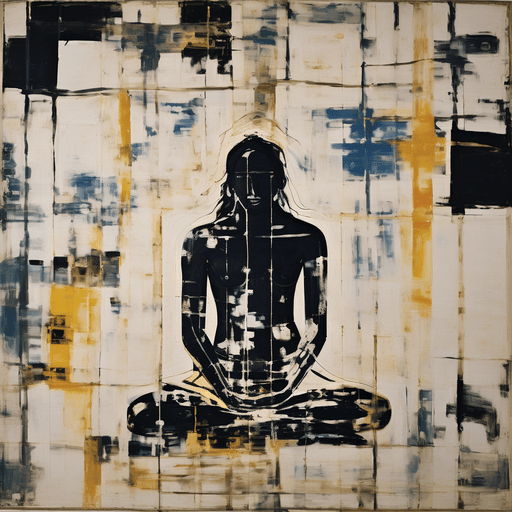
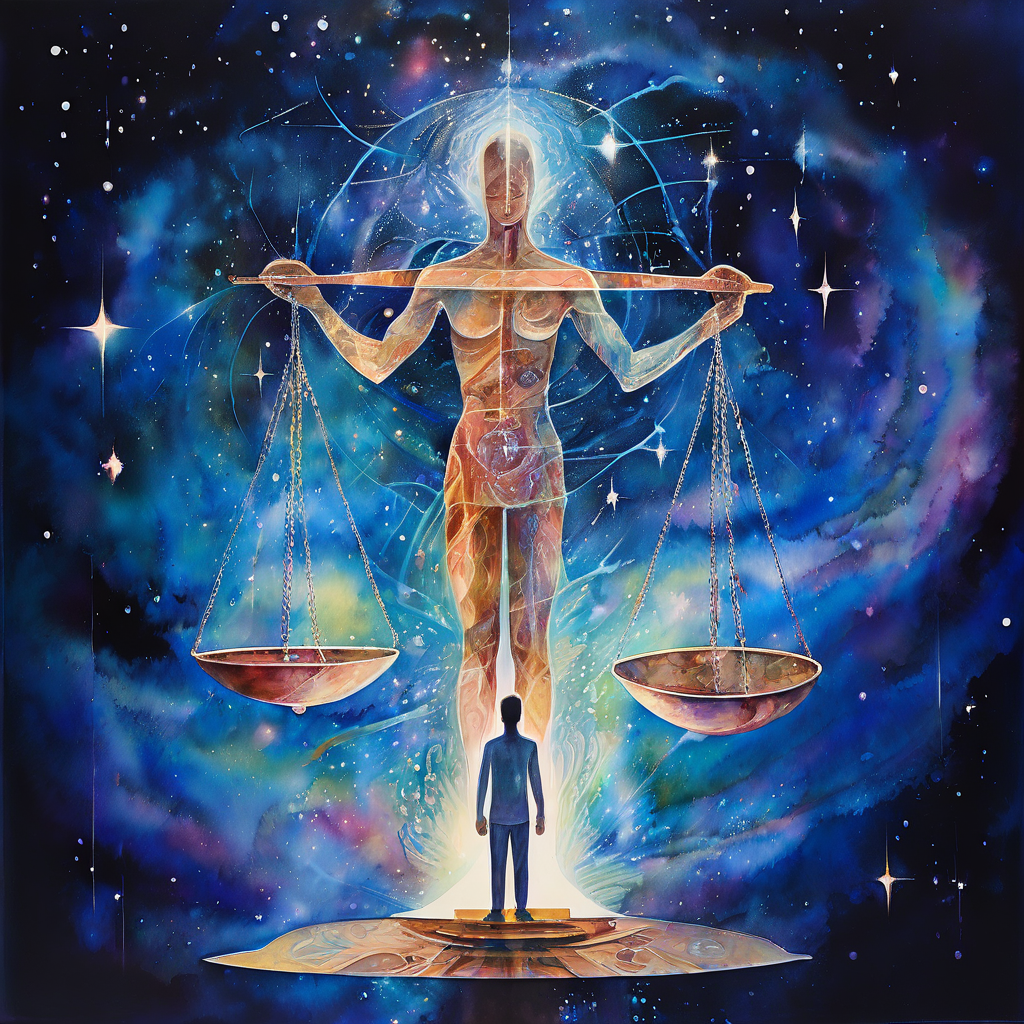
In the vast expanse of existence, where time weaves through the essence of being, a profound truth murmurs to those willing to listen: Every day is your birthday. This statement, far from being a mere poetic flourish, unveils the cyclical nature of our existence, where each moment is a celebration of birth, a testament to the miraculous cycle of being and becoming.

Imagine, if you will, a universe where every tick of the clock heralds the arrival of a new you, reborn amidst the infinite possibilities that the cosmos offers. This is not a fantasy, but a reflection of the deeper reality that underlies our everyday experience. Here, you are both the sculptor and the clay, the painter and the canvas, the cause and the effect. You are not merely a bystander in the grand spectacle of existence but a central figure, continuously crafting and recrafting your essence in the boundless dance of creation.

This perspective shifts the paradigm from a linear trajectory of birth, life, and death to a more intricate, multidimensional experience. You are not moving towards an endpoint, but rather, you are eternally birthing yourself into existence, moment by moment. Each breath is a rebirth, each thought a creation, each action a ripple across the vast ocean of being.


Consider the implications of this understanding. If every moment is a birth, then every moment is ripe with potential, teeming with the promise of new beginnings. The struggles and challenges of yesterday do not define you; rather, they serve as the labour pains of the new self you are birthing today. This realization empowers you to live with a sense of perpetual renewal, to embrace the fluidity of your being, and to cultivate a life that reflects the boundless creativity of the universe itself.

Moreover, this continuous rebirth transcends the individual, echoing through the interconnected web of existence. You are a microcosm of the cosmos, a reflection of the all-encompassing oneness that binds every atom, every star, and every galaxy together. In birthing yourself, you contribute to the birthing of the world, each act of creation a thread in the ever-unfolding fabric of reality.

In this dance of continuous becoming, mindfulness becomea key. To be aware of each moment’s birthing potential is to live fully, to recognize the sacredness in the mundane, and to find the extraordinary in the ordinary. This awareness invites a celebration of existence, a joyful acknowledgment of the miracle of being, and a profound understanding that, indeed, every day is your birthday.


Let us then approach each day, each moment, with the wonder it deserves, embracing the eternal cycle of birth and rebirth that defines the very essence of our existence. For in this understanding, we find not only the key to our transformation but also the secret to a life lived in harmony with the infinite dance of the cosmos.

Morgan O. Smith

Yinnergy Meditation, Spiritual Life Coaching & My Book, Bodhi in the Brain…Available Now!
https://linktr.ee/morganosmith

Beyond the Illusion of Knowing

A Journey into Absolute Awareness

In the vast expanse of our existence, the quest for knowledge often becomes the cornerstone of our identity. Yet, what if the very foundation upon which we build our understanding of reality is itself an illusion? This exploration delves into the profound realization that true awareness transcends the confines of conventional knowing, inviting us into a realm where the essence of wisdom lies in embracing the unknown.

The human mind, a marvel of evolution, is innately driven by an insatiable thirst for knowledge. We categorize, analyze, and store information, believing that the accumulation of facts leads us closer to the truth. However, this pursuit, albeit noble, may inadvertently tether us to a mirage. The belief in a definitive understanding of the universe and our place within it is a construct, a byproduct of the mind’s inherent need to grasp, define, and control.

Absolute awareness unfolds when we step beyond this illusion when we release the need to know and instead embrace the vastness of not knowing. This state of consciousness is not a void or absence of knowledge but a profound acknowledgment of the limitations of our conceptual frameworks. It is an acceptance that the essence of reality, in its infinite complexity, cannot be fully contained or comprehended by the constructs of human thought.


In this space of absolute awareness, we encounter the true essence of being. It is here, in the silence beyond thoughts and the duality of known and unknown, that we experience the pure state of consciousness. This experience transcends the intellectual understanding of nonduality; it is a direct encounter with the indivisible wholeness of existence. The realization that the observer and the observed are not separate entities but manifestations of the same underlying reality dismantles the illusion of separation, leading us to a state of unity with all that is.

Embracing this perspective shifts the way we engage with the world. When we recognize that our conventional knowledge is a drop in the ocean of existence, we approach life with humility and openness. This shift does not devalue the pursuit of knowledge but places it in a broader context where the mystery of existence is acknowledged and revered. It encourages a mode of being where every moment is an opportunity for awe and wonder, free from the constraints of needing to know and understand everything.

This journey into absolute awareness invites us to live in a state of perpetual discovery, where the acceptance of not knowing becomes a source of freedom and liberation. It challenges us to find comfort in the uncertainty, to find peace in the unanswerable questions, and to find enlightenment in the realization that in the grand scheme of existence, we are both everything and nothing.


As we navigate this path, we understand that the essence of wisdom lies not in the accumulation of knowledge but in the profound acceptance of the unknown. This realization is not the end but the beginning of a truly enlightened existence, where every breath is an invitation to experience the infinite depth of the present moment.

Morgan O. Smith

Yinnergy Meditation, Spiritual Life Coaching & My Book, Bodhi in the Brain…Available Now!

https://linktr.ee/morganosmith

The Symphony of Creation

Unveiling the Genius Behind Existence

In the grand opera of the universe, each element, each particle, whispers the secrets of a brilliant design. Far beyond the mundane, there lies a realm where the extraordinary is the norm and where the mundane is but a shadow. It is in this realm that we find the enlightened mind, the architect of existence.

Consider the intricate dance of atoms, the harmonious order in chaos, and the delicate balance of ecosystems. These are not mere coincidences or the product of random happenstance. They are the signatures of a mind that transcends our understanding, an intelligence that weaves complexity and simplicity into a seamless whole.

This enlightened mind does not create with heavy hands but rather orchestrates with a subtlety that eludes our immediate perception. Its genius lies not in grandiose gestures but in the quiet unfolding of life, in the gentle progression of time, and in the silent nurturing of space.


To appreciate this, one must step beyond the boundaries of conventional thought. We must view the universe not as a mechanical system but as a dynamic, living entity. Every star, every grain of sand, and every beat of a heart is a note in a cosmic melody, a melody composed by the enlightened mind.

Our quest for understanding, our drive for knowledge, is perhaps the echo of this mind within us. As we unravel the mysteries of the cosmos, we are, in a sense, uncovering the thoughts of this universal intelligence. Each discovery, each breakthrough, is a step closer to comprehending the incomprehensible.


In conclusion, the enlightened mind is not a distant deity or an abstract concept. It is the very essence of existence, the core of reality. It is the artist, and the universe is its masterpiece. Recognizing this transforms our perception, turning every moment into an opportunity to witness the sublime artistry of existence.

Morgan O. Smith

Yinnergy Meditation, Spiritual Life Coaching & My Book, Bodhi in the Brain…Available Now!

https://linktr.ee/morganosmith

The Journey to Perfection

Unraveling the Essence of Manifestation

In the realm of existence, there lies an intriguing paradox at the heart of our understanding: the notion that the Source, the origin from which all things emanate, is already in a state of inherent perfection. Yet, paradoxically, the manifestations that spring forth from this Source are engaged in a relentless pursuit of perfection. This presents a profound conundrum, offering a rich ground for exploration and introspection.

Consider the Source as an unfathomable well of potential, brimming with possibilities and inherent completeness. It is a concept that transcends the boundaries of physicality and temporality, existing beyond the constraints of our human experience. In this context, the Source is not just a point of origin but a state of being, embodying the zenith of existence in its purest form.

However, when we shift our gaze to the world around us, to the manifestations of this Source, we encounter a different reality. Everything we perceive, experience, and interact with is in a state of becoming, evolving towards a perceived state of perfection. This journey, filled with growth, learning, and transformation, is the essence of our existence.


The contrast between the perfection of the Source and the evolving nature of its manifestations raises profound questions. Why does this dichotomy exist? Is the pursuit of perfection a mere illusion, a cosmic play orchestrated by the Source? Or is it an inherent part of the Source’s design, a fundamental aspect of the universe’s fabric that drives the evolution of consciousness?

In contemplating these questions, we find ourselves delving into the mysteries of creation, existence, and purpose. It challenges us to look beyond the superficial layers of reality, urging us to seek a deeper understanding of our place in the cosmos. This exploration is not just an intellectual exercise but a spiritual journey, inviting us to align our personal growth with the universal flow of perfection.

Ultimately, the journey toward perfection is not about reaching a final destination. It is about embracing the process, understanding that each step, each moment of growth and realization, brings us closer to the essence of the Source. It is a journey that transcends the limitations of time and space, offering us a glimpse into the infinite potential within and around us.


In embracing this journey, we become co-creators with the Source, actively participating in the unfolding of the universe’s grand narrative. We learn to appreciate the beauty of imperfection, understanding that it is an integral part of the path towards perfection. This realization empowers us to live with purpose, passion, and a profound sense of connection to the Source and its manifestations.

As we continue to explore this paradox, let us remember that the pursuit of perfection is not just a goal but a journey of discovery, transformation, and alignment with the ultimate Source of all existence.

Morgan O. Smith

Yinnergy Meditation, Spiritual Life Coaching & My Book, Bodhi in the Brain…Available Now!

https://linktr.ee/morganosmith

The Ground of All Being is Groundless

In the realm of philosophical thought, there exists a profound paradox that has puzzled thinkers for centuries: the concept that the ground of all being is, in fact, groundless. This idea challenges our fundamental understanding of existence, suggesting that the foundation upon which reality is built is devoid of any intrinsic substance or essence.

At first glance, this notion appears contradictory. How can the ground of all being, the fundamental basis of everything that exists, be groundless? To unravel this enigma, we must delve into the philosophical and metaphysical discussions that surround the nature of existence and reality.

The idea of a ‘groundless ground’ originates from existential and metaphysical debates. Philosophers like Heidegger and Sartre pondered the absence of an inherent essence in existence. This absence implies that existence precedes essence, meaning things exist first and their meanings or purposes are secondary, shaped by external factors rather than intrinsic qualities.


This perspective shifts the way we perceive reality. Instead of viewing the universe and everything in it as having a predetermined purpose or essence, we begin to see existence as a blank canvas. Our perceptions, experiences, and the meanings we assign to things shape this canvas. In this sense, the ‘ground’ of all being is not a pre-established foundation but a dynamic, ever-changing tapestry of experiences and interpretations.

Moreover, this idea resonates with quantum physics, where the most fundamental levels of matter behave in ways that defy traditional laws of physics. Particles exist in states of potentiality, their positions and velocities are determined only when observed. This uncertainty at the heart of matter echoes the philosophical concept of a groundless ground, suggesting that at the most fundamental level, the universe itself may not rest on any fixed foundation.

The implications of a groundless ground are both liberating and daunting. It frees us from the constraints of preordained meanings and purposes, allowing us to shape our existence. However, it also places the responsibility of finding or creating meaning squarely on our shoulders.


In conclusion, the concept that the ground of all being is groundless invites us to explore the depths of our existence. It challenges us to seek meaning and purpose not in some inherent essence but in the experiences and interpretations that shape our reality. This exploration is not just a philosophical exercise; it is a journey into the heart of what it means to be.

Morgan O. Smith

Yinnergy Meditation, Spiritual Life Coaching & My Book, Bodhi in the Brain…Available Now!

https://linktr.ee/morganosmith

The Philosophical Puzzle

Nothing vs. No Thing

In philosophy, linguistics, and even quantum physics, the concepts of “nothing” and “no thing” stir a deep, often controversial, debate. At first glance, they seem like mere play on words, but their implications run much deeper, touching upon the core of our understanding of existence and reality.

“Nothing,” in its purest sense, refers to the absence of anything. It’s not just an empty space, because even a vacuum is something. It’s the total lack of being, the absolute zero of existence. Philosophers have long grappled with the concept of nothingness, questioning whether it’s even possible to conceive of ‘nothing’ at all. After all, even talking about ‘nothing’ is talking about something.

On the flip side, “no thing” seems to imply a different nuance. It suggests the absence of specific things, rather than the absence of all things. This phrase allows for the existence of some form of reality, even if it’s not the one we are familiar with. It’s the realm where concepts and potentialities live, unmanifested but real in their own right.


The debate between nothing and no thing takes us into the heart of existential questions. Does the universe require something to exist, or can there be a state of true nothingness? And if ‘nothing’ exists, what are its properties? This is not just philosophical musing; it has practical implications in fields like quantum mechanics, where the fabric of reality is in constant flux, and ‘nothingness’ can spontaneously give rise to particles.

The controversy deepens when we consider human perception and language. Our minds are wired to think in terms of things and entities, making it incredibly challenging to conceptualize a state of ‘no thing’ or ‘nothing.’ This linguistic and cognitive limitation shapes our understanding of the world and perhaps limits our ability to grasp the true nature of reality.


In conclusion, the debate over nothing versus no thing is not just a matter of semantics. It’s a profound inquiry into the nature of existence, the limits of human understanding, and the mysteries of the universe. It prompts us to question, explore, and perhaps, accept that some aspects of reality are beyond the grasp of our current knowledge.

Morgan O. Smith

Yinnergy Meditation, Spiritual Life Coaching & My Book, Bodhi in the Brain…Available Now!

https://linktr.ee/morganosmith

Embracing the Moment of Nondual Suchness

Beyond the Realm of Experience

In the intricate journey of understanding consciousness and existence, we often stumble upon a profound concept: the moment of nondual suchness. This concept, deeply rooted in Eastern philosophies, especially in Zen Buddhism, transcends the conventional boundaries of experience and knowledge. It presents a paradox that challenges our fundamental understanding of reality: at the moment of nondual suchness, direct experience cannot be experienced.

What does this mean, and why is it significant? To explore this, we must delve into the nature of nonduality. Nonduality refers to a state of consciousness where the distinction between the subject and object dissolves. It is a realization that there is no ‘me’ separate from the rest of existence. In this state, the usual dualistic framework of perceiver and perceived, experiencer and experienced, falls away.

This leads us to the crux: if there is no separation between the experiencer and the experience, can we truly say that an experience is happening? The moment of nondual suchness suggests that in its purest form, experience transcends the dichotomy of subject and object. You do not experience the moment; you become the moment. There is no ‘you’ observing, feeling, or thinking about the experience; there is just the undifferentiated reality of what is.


This notion can be controversial and thought-provoking because it contradicts our everyday experience where we are constantly distinguishing ourselves from our experiences. We are taught to value our perceptions, emotions, and thoughts as what defines us. Yet, the concept of nondual suchness invites us to consider a state of being where these personal distinctions are not just irrelevant, but nonexistent.

Why is this perspective important? It encourages a radical shift in how we perceive ourselves and the world around us. It challenges us to let go of our habitual patterns of thought, our constant categorization, and our deep-seated need to analyze and differentiate. By contemplating nondual suchness, we open ourselves to a more holistic understanding of existence, one that is not confined by the limits of individual perspective.

In practical terms, embracing this concept can lead to a profound sense of peace and connectedness. When the illusion of separateness falls away, so do the conflicts and struggles born from it. What remains is a state of pure being, unburdened by the complexities of dualistic thinking.


To conclude, the moment of nondual suchness presents a radical and transformative viewpoint that challenges our conventional understanding of experience. It invites us to question the very nature of our existence and to explore a realm of consciousness beyond the limitations of individual perception.

Morgan O. Smith

Yinnergy Meditation, Spiritual Life Coaching & My Book, Bodhi in the Brain…Available Now!
https://linktr.ee/morganosmith

Beyond Labels

A Journey Through the Essence of Nonduality

In a world quick to cast judgment and affix labels, my exploration of nonduality has often been met with skepticism and disdain. Accusations of being “crazy,” “insane,” and “delusional” are hurled at me through social media, texts, and even face-to-face encounters. Yet, such reactions prompt me to question the very foundation of belief and perception in our society.

Consider for a moment the myriad of beliefs that have shaped human history and consciousness. How many individuals hold steadfast to the notion that the earth was crafted in seven days? Or that Eve emerged from Adam’s rib? Legends of Moses parting the Red Sea, Elijah ascending to heaven in a chariot of fire, Jonah’s survival within a whale, and the virgin birth and resurrection of Jesus Christ are not merely stories but are cornerstones of faith for countless people. These narratives, alongside the belief in entities like Satan or the practice of praying to an unseen force, might seem irrational or imaginary to some, yet they are deeply ingrained in the spiritual fabric of many cultures.


The juxtaposition of such beliefs against the skepticism faced by nonduality advocates raises a compelling question: Who, indeed, is the “crazy” one? This is not to disparage or belittle any set of beliefs but to highlight the subjective nature of sanity and rationality in the context of spiritual understanding. Nonduality, at its core, transcends the dichotomies of belief and disbelief, inviting a profound engagement with the essence of existence beyond the confines of conventional narratives.

Nonduality does not seek to undermine or replace traditional religious beliefs; instead, it offers a lens through which we might perceive unity in apparent diversity, seeing the interconnectedness of all things beyond the superficial separations imposed by language, culture, and individual perspective. It beckons us to explore the depth of our being, to recognize the intrinsic nature that we share with the universe itself.


The resistance faced by nondual perspectives is not a sign of their invalidity but a testament to their power to challenge and expand our understanding of reality. It is an invitation to dialogue, to introspection, and ultimately, to a more inclusive comprehension of the spiritual journey that encompasses all of humanity.

In embracing nonduality, we are not discarding the richness of diverse spiritual traditions but are deepening our engagement with the mystery that lies at the heart of existence. We are invited to witness the unfolding of life with an openness that transcends labels and judgments, recognizing that the true essence of spirituality cannot be confined to words or concepts.

So, as we navigate the waters of belief and skepticism, let us do so with a sense of curiosity and wonder, acknowledging that the quest for understanding is a path shared by all, regardless of the labels we may encounter along the way.

Morgan O. Smith

Yinnergy Meditation, Spiritual Life Coaching & My Book, Bodhi in the Brain…Available Now!

https://linktr.ee/morganosmith

All Life is Yoga

The Essence of Existence and Awareness
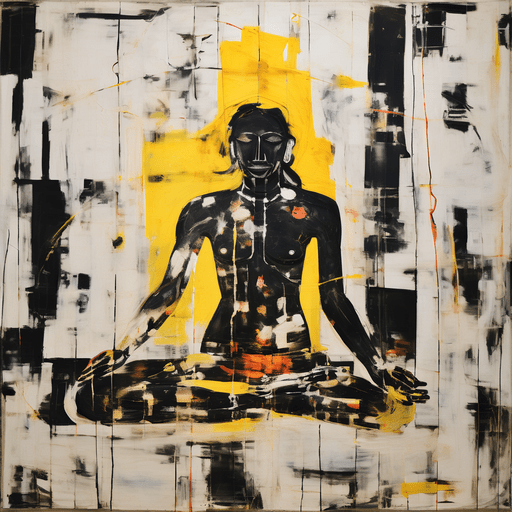
In the grand mosaic of life, the concept of Yoga transcends beyond its commonly perceived boundaries of physical postures and breath control. It is a profound philosophy and a way of living that interweaves through every aspect of our existence. The assertion “All life is Yoga” is not just a statement but a deep realization that unfolds the interconnectedness of everything around us.

Yoga, in its truest sense, is not confined to the mats or the tranquil corners of meditation halls. It is present in every breath, every step, and in the pulsating rhythm of the universe. The situations we encounter, the events that unfold, the actions we undertake, and the interactions we engage in, all embody the essence of Yoga. These elements serve as mirrors, reflecting the principles of unity, balance, and harmony that Yoga espouses.

Moreover, this perspective extends to the wider construct of civilization. Every culture, community, and era holds the essence of Yoga within its core. The way societies operate, the values they cherish, and the progress they pursue are manifestations of Yoga in a collective form. The principles of coexistence, empathy, and understanding that are integral to societal development are, in essence, Yoga in action.

In the broader context, the entire expanse of existence is a form of Yoga. The cosmos, with its infinite galaxies, stars, and planets, follows a celestial dance that echoes the principles of Yoga. The natural world, with its intricate ecosystems and life forms, demonstrates the interdependence and harmony that are central to Yoga.

The practice of Yoga, in its various forms, is a journey towards the full awareness of these truths. It is a path that leads to the recognition of the oneness of all existence, the interconnectivity of life, and the profound wisdom that lies in understanding that “All life is Yoga.”

In embracing this philosophy, we open ourselves to a more mindful, compassionate, and connected way of living. We learn to see Yoga in everything and everyone, realizing that every moment is an opportunity to practice awareness, kindness, and unity. This understanding has the power to transform not only individual lives but also the world at large, steering us toward a more harmonious and enlightened existence.

Morgan O. Smith

Yinnergy Meditation, Spiritual Life Coaching & My Book, Bodhi in the Brain…Available Now!
https://linktr.ee/morganosmith

Where Did God Come From?

The question of where God came from strikes at the core of numerous philosophical, theological, and metaphysical discussions. It’s a question that has fascinated scholars, believers, and skeptics alike for centuries. At the heart of this inquiry lies the paradoxical nature of God’s existence: God is often described as omnipresent and nonlocal, transcending the concepts of space and time that define our physical reality.

To ponder upon where God came from is to delve into the depths of the unknown. It is widely held in many theological beliefs that God is the uncaused cause, the source from which all things emanate. This perspective leads to the intriguing notion that God came from nowhere. Nowhere, in this context, is not a physical location but a metaphorical representation of the absence of space and time – a realm beyond our comprehension.


This idea ties closely with the concept of God being nonlocal. Nonlocality, often discussed in quantum mechanics, suggests that an entity can be present everywhere simultaneously. In spiritual and metaphysical terms, this translates to the omnipresence of God. The omnipresence of God means that God exists beyond physical boundaries, in a state of being that encompasses all existence yet is bound by none.

What makes this concept even more thought-provoking is the idea that the pure essence of God is the absence of everything that exists. This notion posits that God is fundamentally different from everything we perceive in our universe. While our reality is defined by physicality, emotions, thoughts, spirituality, and metaphysical elements, the essence of God is distinct from all these. God, in this sense, is the ultimate reality, a state of pure being that transcends all known dimensions of existence.


Consequently, the physical, emotional, mental, spiritual, and metaphysical presence that we attribute to God are reflections or manifestations of this ultimate reality in forms that are comprehensible to us. They represent how we, as humans, perceive and connect with the divine. Each aspect – whether physical, emotional, mental, spiritual, or metaphysical – offers a different lens through which to understand and relate to the divine mystery that is God.

In conclusion, the question of where God came from leads us not to a definitive answer but to a deeper understanding of the nature of existence itself. It encourages us to explore the boundaries of our understanding and to accept the mystery that lies at the heart of all that is.

Morgan O. Smith

Yinnergy Meditation, Spiritual Life Coaching & My Book, Bodhi in the Brain…Available Now!

https://linktr.ee/morganosmith