Beyond the Idea of God

Embracing the Infinite Beyond Belief

Humanity has long pursued an understanding of God, a relentless quest to define, capture, and shape the essence of the infinite. For many, the notion of God becomes a vessel for their ideals, values, and desires—a reflection of their deepest hopes and most profound fears. Yet, encountering God through the lens of belief alone is akin to gazing at the ocean through a narrow window. The grandeur of the infinite cannot be contained, constrained, or fully fathomed within the borders of our perceptions.

The paradox lies in this: everything is God, yet nothing conforms to the concepts we construct about it. Each moment, encounter, and experience pulses with the sacred, yet the mind reduces it to fit within its familiar narratives. In the end, our beliefs become the very walls that obscure the limitless nature of divinity.

God, in the truest sense, transcends every image, word, or definition. No single tradition or philosophy can exclusively claim this vastness. Imagine standing before an infinite horizon, extending endlessly in every direction. Our concepts—however profound—are mere markers on the path, helpful but limited in capturing the essence of all that is. Here lies a liberation beyond belief: recognizing that the Divine isn’t limited by human expectations or perceptions.

Embracing this understanding offers a profound sense of freedom and humility. It invites us to move beyond belief, beyond the comfort of definition, and into direct experience. Rather than confining God to what we think we know, we begin to open ourselves to a presence that defies all description, something we sense but cannot fully articulate. This is where genuine reverence arises, born not from knowledge but from an awe that silences the mind.

When we release the need to make God fit our ideas, we become conduits for something greater. Instead of seeking to define or own this presence, we surrender to it, allowing ourselves to be moved, shaped, and transformed. This surrender is not passive; it’s an active openness, a readiness to meet the Divine in the ordinary and extraordinary, in all that we perceive and beyond.

Perhaps the journey, then, is not one of reaching an ultimate understanding but of letting go—allowing ourselves to rest in the mystery and seeing how it transforms us. For God, as it turns out, may be far more than we ever imagined and is here to be discovered, not as an idea, but as the living pulse of everything we encounter.

Morgan O. Smith

Yinnergy Meditation, Spiritual Life Coaching & My Book, Bodhi in the Brain…Available Now!

https://linktr.ee/morganosmith

To See God’s Face

A Glimpse Beyond the Veil

The desire to see the face of God is often spoken of in spiritual traditions, symbolizing the quest to grasp the ultimate truth, touch the divine essence, and witness the Source from which all arises. Yet, many seekers find that the face of God remains elusive. This is not because God hides but because the totality of His expressions cannot be grasped by the human mind until one reaches a state of enlightenment.

What does it mean to see God’s face? Is it a literal vision, or does it represent the merging of self with the Divine? To catch a glimpse of God’s face is to touch the Infinite, even if momentarily. However, the expressions of God—the vastness of His being, the unfolding of all possibilities and manifestations—are incomprehensible to a mind still bound by duality. These expressions are ever-changing, reflecting the dynamic play of creation, destruction, and renewal. Only upon reaching enlightenment, where distinctions dissolve and all is seen as one, does the seeker begin to witness these myriad expressions in their fullness.

Until then, we stand at the threshold, experiencing occasional moments of clarity and divine presence. These glimpses pull us toward deeper understanding, but the full vision, the entire spectrum of God’s expressions, remains veiled. Enlightenment is not simply a state where we “see” more clearly; it is where the very notion of seer and seen dissolves. Only then do we realize that every expression, every nuance of the Divine face, is also our own. The act of witnessing merges into being and all of existence is recognized as the radiant outpouring of the One.

What does this mean for the seeker? The yearning to see the face of God should not be dismissed as a futile chase. It is a sacred impulse. It is the soul’s longing for its source. Yet, one must realize that enlightenment is not an end but a process of continuous unveiling. Until we become still enough, free from the limitations of ego and mind, the Divine will remain a distant and ever-moving horizon. And even upon that horizon, we will see not a singular expression but an infinite number of faces, each revealing another aspect of the cosmic dance.

In the face of God, we encounter not just creation but the unfathomable mystery behind all forms. Enlightenment is the point at which the seeking ends, not because we have seen all there is to see, but because we have become the very essence we sought.

Morgan O. Smith

Yinnergy Meditation, Spiritual Life Coaching & My Book, Bodhi in the Brain…Available Now!

https://linktr.ee/morganosmith

The Ultimate Love

The Force That Transcends All Boundaries

Love’s true essence is beyond comprehension, an omnipresent force so profound it erases the illusion of separation. It moves in dimensions beyond moral constructs, ideology, and identity. When fully realized, this love obliterates the ego and opens the heart so that even the most hardened souls cannot resist its call.

The human mind craves order, labelling people into categories—good, evil, victim, perpetrator. But ultimate love doesn’t comply with these distinctions. It meets each being at the core of their essence, beneath the conditioning and trauma that have shaped their actions. This kind of love can dismantle even the most fortified belief systems.

Imagine the inner world of someone consumed by hatred, caught in the web of fear, anger, and dogma. The walls around their heart seem impenetrable, yet ultimate love does not storm these walls; it dissolves them. It renders resistance futile by revealing what has been buried deep inside—a longing to belong, to be seen, and to be held in a space beyond judgment.

Ultimate love does not negotiate with the mind. It penetrates through the layers of identity, be it the identity of a saint or a sinner, revealing the same radiant essence beneath all masks. It leaves no room for pretense. This love cannot be owned, managed, or bargained with; it simply is.

Consider the most unimaginable scenario—a person shaped by the horrors of hatred, such as a Nazi, encountering the force of unconditional love. It is not a love that justifies or condones but one that sees beyond. That person’s history, belief system, and ideology would crumble under the weight of such grace. All that remains is a naked heart, laid bare in the presence of a force so magnificent it demands surrender. Not as punishment, but as liberation.

This love does not require forgiveness. It transcends it. Forgiveness suggests wrongdoing, but ultimate love offers a view where the need for forgiveness dissolves, revealing the underlying unity where all things are reconciled. When this love is encountered, tears flow not from shame, but from the relief of being released from the prison of the mind’s narratives.

This is the love that brings anyone, no matter how lost, to their knees—not out of fear, but in awe. It’s the moment when everything false melts away, and only the truth remains: the realization that there has never been separation, and love was the ground of all existence all along.

Ultimate love is not just the absence of hate; it is the luminous presence that absorbs even the darkest shadow, rendering it irrelevant. It is the undeniable force that brings every soul back to where it has always belonged—home.

Morgan O. Smith

Yinnergy Meditation, Spiritual Life Coaching & My Book, Bodhi in the Brain…Available Now!
https://linktr.ee/morganosmith

Unconditional Surrender

Embracing the Final Letting Go

Unconditional surrender is not simply about relinquishing control over circumstances, desires, or attachments. It goes beyond the surface. This form of surrender requires the release of the very concept of surrender itself. It demands a level of vulnerability so profound that even the notion of letting go must be let go.

What happens when there’s no longer anything to hold on to? Nothing to release? This is where true transformation begins. In this space, we step outside the dualistic framework of control versus surrender and touch something far deeper, a level of being where no effort or resistance exists. We are often conditioned to think that surrender means losing, giving up, or sacrificing. But unconditional surrender is not a loss—it is the full embrace of existence without the filters of ego, fear, or the need to manage outcomes.

When one stands in this openness, fully exposed and defenceless, something extraordinary happens. You come face to face with the reality of all that is. Without the mind’s endless chatter and strategies, there’s nothing left but the raw, unfiltered truth. And in that truth, you find freedom—not in the way we might imagine, but in a way that defies all prior understanding.

In the vulnerability of surrender, we experience what it means to exist without resistance, without striving, without seeking. It’s not about achieving some spiritual milestone or reaching a perfect state of being. Instead, it’s about dissolving the layers of defence we’ve built, trusting that whatever remains is exactly what was meant to be.

This path is not for the faint-hearted. It requires courage to step beyond the boundaries of the self and to let go of everything we’ve ever known. Yet, paradoxically, it is only through this act of ultimate surrender that we come to experience true liberation.

I would like to thank my colleague, Prakash, for mentioning Unconditional Surrender during our The Seekers Mind Clubhouse debate and for inspiring this piece.

Morgan O. Smith

Yinnergy Meditation, Spiritual Life Coaching & My Book, Bodhi in the Brain…Available Now!
https://linktr.ee/morganosmith

Don’t Mistake Spiritual Persona for Spiritual Attainment

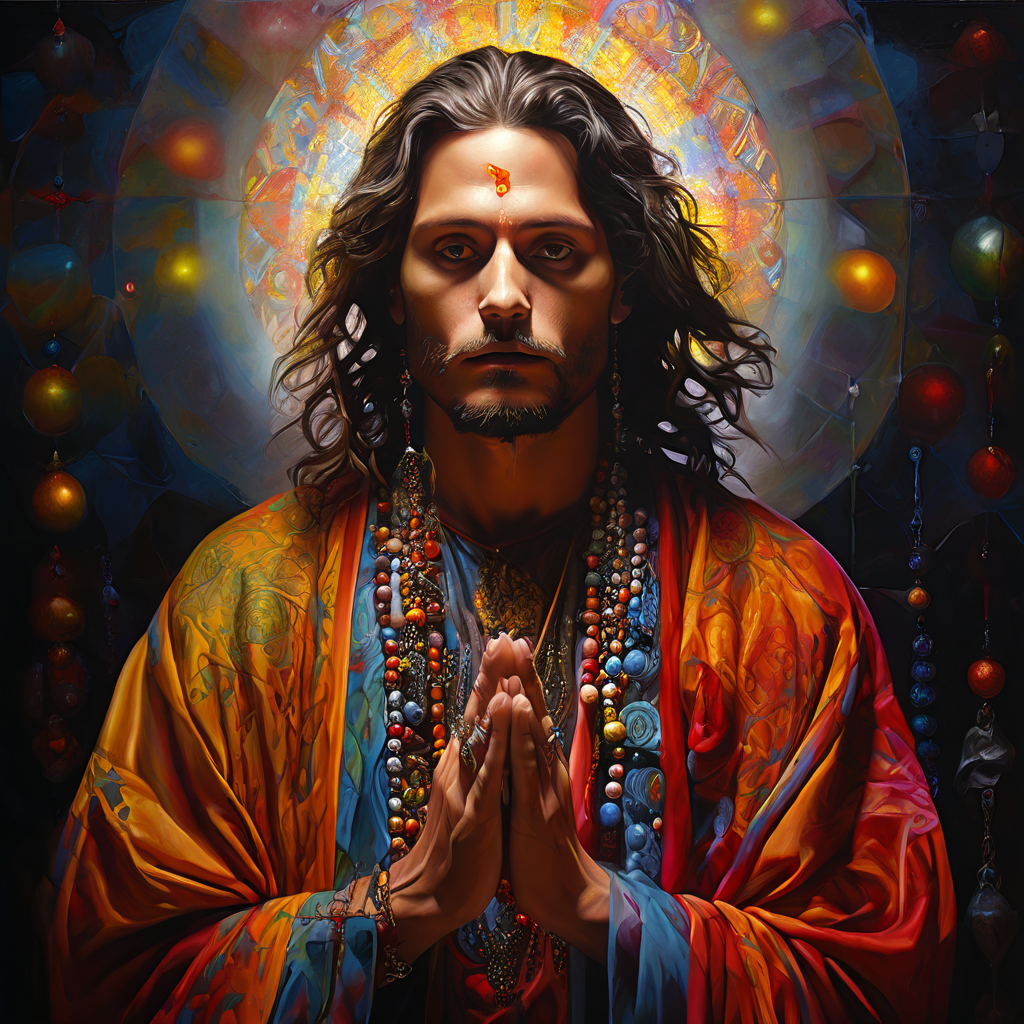
In the quest for spiritual enlightenment, it is easy to fall into the trap of equating outward appearances with inner transformation. The spiritual marketplace is brimming with individuals adorned in the symbols of enlightenment—beads, robes, and serene smiles. But beneath these carefully cultivated images, what lies? Are these symbols true reflections of deep spiritual attainment, or merely the trappings of a spiritual persona?

The essence of genuine spiritual attainment transcends outward appearances. It is an internal metamorphosis that reconfigures one’s very being. True spiritual growth dismantles the ego, dissolves the illusion of separation, and fosters a profound sense of unity with all existence. This journey is deeply personal and often invisible to the outside world. It is marked by humility, compassion, and an unwavering commitment to truth.

A spiritual persona, on the other hand, can be a carefully constructed mask. It seeks validation from the external world by adopting symbols and behaviours associated with spirituality. This persona can be seductive, as it offers the semblance of wisdom and enlightenment without necessitating the arduous inner work required for genuine transformation. It may garner admiration and respect, but it does not hold the essence of true spiritual attainment.

To discern the difference, one must look beyond appearances. True spiritual attainment manifests in actions, choices, and the quality of one’s presence. It is reflected in the ability to remain centred in the face of life’s challenges, to act with compassion even in difficult circumstances, and to embrace the inherent uncertainty of existence with equanimity.

It is a state of being that radiates from within, often silently, without needing external validation or recognition. It is characterized by a deep sense of peace, a boundless capacity for love, and an unwavering connection to the present moment.

The path to spiritual attainment requires courage—the courage to face one’s deepest fears, to dismantle long-held beliefs, and to surrender the ego’s need for control and validation. It demands an authentic engagement with the present moment, a willingness to embrace discomfort, and a commitment to the inner journey, no matter how solitary or challenging.

As you navigate your spiritual journey, remember that the true markers of spiritual attainment are not found in external symbols or personas. They are found in the quiet moments of insight, the depths of your heart, and the transformative power of authentic presence. Embrace the journey inward, for it is there that the true treasures of spiritual awakening are discovered.

Morgan O. Smith

Yinnergy Meditation, Spiritual Life Coaching & My Book, Bodhi in the Brain…Available Now!

https://linktr.ee/morganosmith

Seeing God in All Faces, Places, and Empty Spaces

“See God in all faces, places, and empty spaces” is an invitation to recognize the divine presence in every aspect of existence. This perspective encourages a profound shift in how we perceive the world, inviting us to see beyond the superficial and appreciate the sacredness that permeates all things.

Faces
Seeing God in all faces means acknowledging the inherent divinity within every person we encounter. It is a call to look beyond differences in appearance, culture, or belief, and to recognize the shared essence that connects us all. This recognition fosters empathy, compassion, and a deeper sense of unity, as we see each individual as an expression of the divine.

Places
When we see God in all places, we cultivate a sense of reverence for our surroundings. Whether in nature, urban environments, or our homes, this perspective encourages us to find beauty and sacredness everywhere. It prompts us to treat our environment with respect and gratitude, understanding that every place is a manifestation of the divine presence.


Empty Spaces
Seeing God in empty spaces invites us to appreciate the silence, stillness, and potential that exist in the gaps and voids of our lives. These spaces are not merely absences but are pregnant with possibility and the unmanifest potential from which all creation arises. By embracing these empty spaces, we learn to find peace in stillness and to trust in the unfolding of life’s inherent wisdom.

Integrating This Perspective
To truly embody this perspective, one must cultivate mindfulness and an open heart. Practicing presence in each moment, we can begin to see the interconnectedness and the divine thread that weaves through all of existence. This practice transforms our perception, allowing us to live with greater joy, peace, and a deep sense of belonging.


By seeing God in all faces, places, and empty spaces, we align ourselves with a higher understanding of unity and divine presence. This shift not only enriches our spiritual journey but also enhances our interactions with the world, inspiring us to live with compassion, respect, and a profound appreciation for the sacredness of life.

Morgan O. Smith

Yinnergy Meditation, Spiritual Life Coaching & My Book, Bodhi in the Brain…Available Now!
https://linktr.ee/morganosmith

The God Beyond God

Transcending the Boundaries of Love

When speaking of God, we often resort to the most powerful language: love. We say, “God is love,” encapsulating the divine in a universally comprehensible and deeply comforting concept. But what if this notion, as profound as it seems, is merely a stepping stone to a deeper understanding? What if the God we believe to be love is but a veil, and beyond it lies a transcendence so vast and incomprehensible that it defies our very definitions?

In nonduality, we explore the essence of reality that transcends dualistic distinctions. Love, as we perceive it, is bound by duality—there is the lover and the beloved, the giver and the receiver. It is an experience of connection, an interplay between entities. But the ultimate reality, the God behind the God, dissolves these boundaries. It is an all-encompassing presence where subject and object merge, where the dance of love and beloved dissolves into pure being.

This transcendence challenges our deepest convictions. We find comfort in attributing qualities to God—love, mercy, justice—because it makes the divine relatable. Yet, these qualities are expressions within the realm of form. They are the waves on the surface of the ocean, while the God beyond God is the ocean itself, formless and infinite, embodying all potential yet transcending all manifestation.

To approach this understanding requires a journey beyond concepts, beyond the comforting boundaries of language and thought. It calls for a surrender to the unknown, a willingness to dissolve into the mystery. It is here, in the heart of this mystery, that we encounter the essence of nonduality. This is the ground of all being, where the distinctions between creator and creation, lover and beloved, God and self dissolve into a singular, ineffable presence.

In this state of transcendence, what we once called love is seen as a mere reflection of the boundless reality that underlies all existence. It is not a negation of love, but an expansion beyond it. It is an invitation to experience the divine not as an attribute, but as the groundless ground of all attributes. Here, we are not merely loved by God; we are immersed in the divine, where every breath, every heartbeat, every moment is a manifestation of the infinite.

To truly know God, then, is to venture beyond the familiar and the comforting. It is to embrace the paradox that the God we seek, the God we attribute with love, is but a shadow of the ultimate reality that transcends all attributes. This journey is not for the faint of heart; it demands the courage to let go of cherished beliefs and the humility to accept the limits of our understanding. But in this surrender, we find a freedom and a peace that surpasses all understanding, a union with the divine that is as boundless as it is profound.

Morgan O. Smith

Yinnergy Meditation, Spiritual Life Coaching & My Book, Bodhi in the Brain…Available Now!

https://linktr.ee/morganosmith

The Eternal Cycle of Sacrifice

Reflections on Life, Death, and Nourishment

In the vast, intricate dance of existence, every being participates in a cycle of giving and receiving that transcends mere survival. This process, a profound expression of the universe’s inherent generosity, manifests as a continuous flow of sacrifice. This concept is not about the literal intention of flora and fauna but rather illustrates the universe’s fundamental principle: to sustain life through a cycle of nurturing and rebirth.

The symbolism of Jesus as the sacrificial lamb embodies this universal truth, presenting a parable of ultimate love and self-offering. Jesus’ life and teachings exemplify the act of self-sacrifice for the greater good, mirroring the natural world’s cycles where every element plays a crucial role in nurturing another. Similarly, almonds and other natural entities embody this spirit of sacrifice; each seed, fruit, and offering itself to nourish others, perpetuating the cycle of life.


This perspective invites us to contemplate the interconnectedness of life and death, recognizing them not as opposites but as complementary forces. In this cycle, death is not an end but a transformation, a necessary passage for the continuation of life. We, too, are part of this eternal cycle, nourished by beings that came before us and, in turn, will nourish others.

Understanding this cycle encourages a profound respect for all forms of life and a recognition of our place within this grand scheme. It invites us to live with awareness and gratitude, acknowledging the sacrifices that sustain us and committing ourselves to live in a way that honours this sacred exchange.


This reflection on the cyclical nature of sacrifice and sustenance opens a pathway to deeper spiritual insights, reminding us of the interconnectedness of all things and the importance of living in harmony with this universal principle.

Morgan O. Smith

Yinnergy Meditation, Spiritual Life Coaching & My Book, Bodhi in the Brain…Available Now!

https://linktr.ee/morganosmith

Beyond Beliefs

Unveiling the Divinity Within

In the realm of personal spirituality and enlightenment, the architecture of our belief systems plays a crucial role in shaping our reality. These systems, intricate labyrinths of thought and conviction, hold the power to liberate or confine us within their walls. It is through the meticulous construction of these beliefs that we often, unknowingly, crown a deity of our own making—a god born not of ethereal realms but of the very fabric of our convictions.

This self-created deity, governed by the edicts of our belief system, wields the power to influence our perceptions, actions, and ultimately, our spiritual journey. Yet, the question arises: what happens when we step back and observe the deity we’ve enthroned? Do we find a benevolent guide leading us towards enlightenment, or a tyrant, chaining us to the shadowy depths of ignorance and limitation?


The path to spiritual awakening beckons us to embark on a quest not outward, but inward, to the very core of our being. It invites us to question not just the nature of our self-created deities, but the very essence of belief itself. What if, in our search for divinity, we discover that the truest god is not one constructed of beliefs but one that transcends them? A presence that exists beyond the dualities of right and wrong, good and evil—a non-dual consciousness that simply is.

This realization invites a profound transformation, a shift from being a subject under the rule of a constructed deity to becoming a sovereign being, aware of the inherent divinity within. It is a journey from the external worship of a god made in the image of our beliefs to the recognition and honouring of the divine essence that permeates all of existence, including ourselves.


As we peel away the layers of beliefs that have long dictated our spiritual path, we uncover a luminous truth: that we are not mere subjects to a higher power, but integral expressions of the divine. This insight does not diminish the sacred but elevates it, revealing that enlightenment does not come from worshiping a deity external to us but from realizing our innate divinity.

This journey of enlightenment challenges us to dismantle the altar of beliefs we’ve constructed and to gaze into the mirror of our soul. In doing so, we discover that the god we’ve been seeking has always been here, within us, patiently waiting for us to look beyond the veil of beliefs and recognize our true nature.


As we traverse this sacred path, let us embrace the courage to question, explore, and ultimately dissolve the barriers that separate us from the divine essence we embody. For in the heart of our spiritual quest lies the key to our liberation—a realization that we are not bound by the gods of our creation but are, in essence, expressions of the infinite divine.

Morgan O. Smith

Yinnergy Meditation, Spiritual Life Coaching & My Book, Bodhi in the Brain…Available Now!
https://linktr.ee/morganosmith

The Paradox of Divinity

Navigating the Infinite Within

In exploring the divine, we often encounter a profound paradox that challenges our linear understanding of existence. The assertion that “God is everything, and everything is God” serves as a gateway to a realm where dichotomies dissolve, and absolutes become fluid. This perspective invites us to consider the omnipresence of the divine in all aspects of existence, transcending the binaries of good and evil, presence and absence, creation and void.

The essence of this assertion lies not just in acknowledging the divine in all that is seen and unseen but also in embracing the inherent contradictions it presents. When we say “God is everything,” we affirm the divine’s presence in every particle of the universe, from the majestic galaxies to the smallest grain of sand. This omnipresence suggests a unifying essence that binds all of creation in a single, divine continuum.

However, the journey does not end with the recognition of divinity. The statement “everything is God” simultaneously opens the door to its negation, implying that if everything embodies the divine, then the divine must also encompass the concepts of non-existence, absence, and even the dualities of good and evil. This paradox challenges us to expand our understanding of divinity beyond the confines of human morality and logic, urging us to embrace a more holistic view of existence where opposites are not in conflict but in an eternal dance.


The notion that “God is both good and evil” invites us to explore the divine not as a judge presiding over a moral dichotomy but as the totality of existence itself, where light and darkness are part of the divine play. It compels us to question our perceptions of morality, good, and evil, suggesting that these are not absolute but relative concepts that emerge from our engagement with the world.

In this light, the divine is not a distant entity governing from above but a presence that permeates every aspect of our reality, inviting us to find the sacred in the mundane, the extraordinary in the ordinary, and the unity in the apparent disarray. It calls us to a deeper understanding of nonduality, where the lines that separate self from other, sacred from profane, and creator from creation blur into insignificance.


This exploration of divinity challenges us to live with paradox, to find comfort in the discomfort of uncertainty, and to seek the divine not just in temples and texts but in the very fabric of our daily lives. It beckons us to see the world with new eyes, where every moment is an opportunity to encounter the infinite in the finite, the eternal in the ephemeral.

Morgan O. Smith

Yinnergy Meditation, Spiritual Life Coaching & My Book, Bodhi in the Brain…Available Now!

https://linktr.ee/morganosmith