Beyond the Lens of Devotion

How Presence Reveals Consciousness

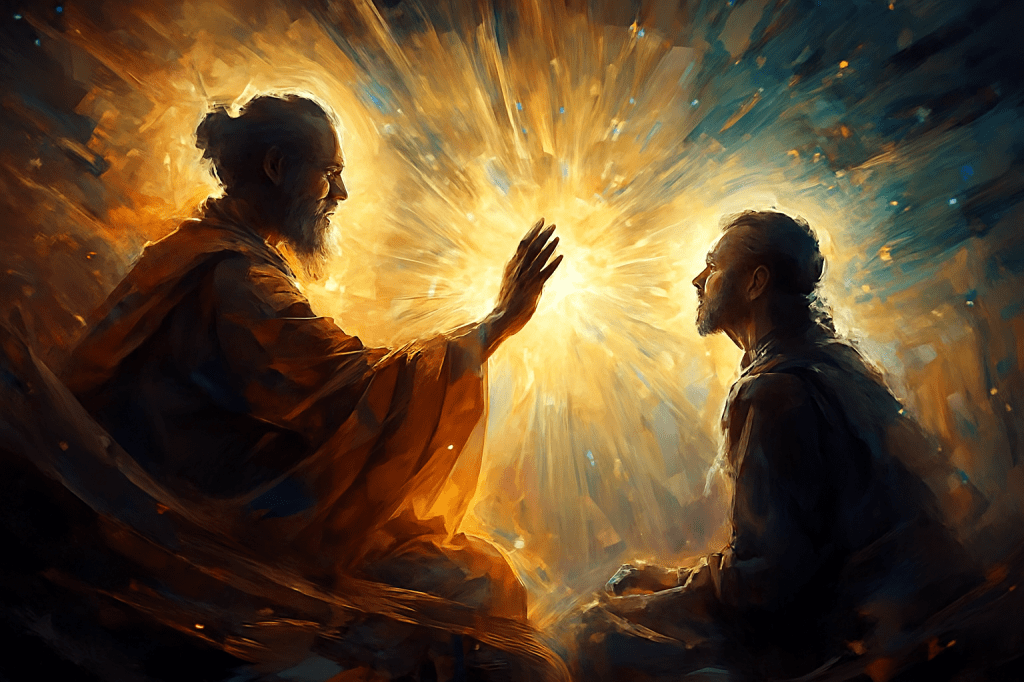
Most people think of darshan as a moment where a seeker looks upon a teacher, saint, or deity. Yet something far more nuanced unfolds beneath that outward exchange. The gaze, the silence, the presence, each thread of the encounter shapes consciousness in ways that depend on the inner maturity of the one receiving it.

A childlike stage approaches darshan with awe charged by emotion. The world feels animated by invisible forces, and a teacher appears to hold the keys to destiny itself. Nothing is questioned; everything is absorbed. Power seems to live outside the self, radiating from the figure who stands upon the altar or sits upon the asana.

A more developed stage begins to untangle symbol from projection. Presence is recognized not as magic, but as psychology refined into ritual. A teacher’s gaze becomes a mirror through which hidden material rises. Nervous systems synchronize, emotions unravel, archetypes awaken. What once felt supernatural becomes profoundly human, yet no less sacred for being understood.

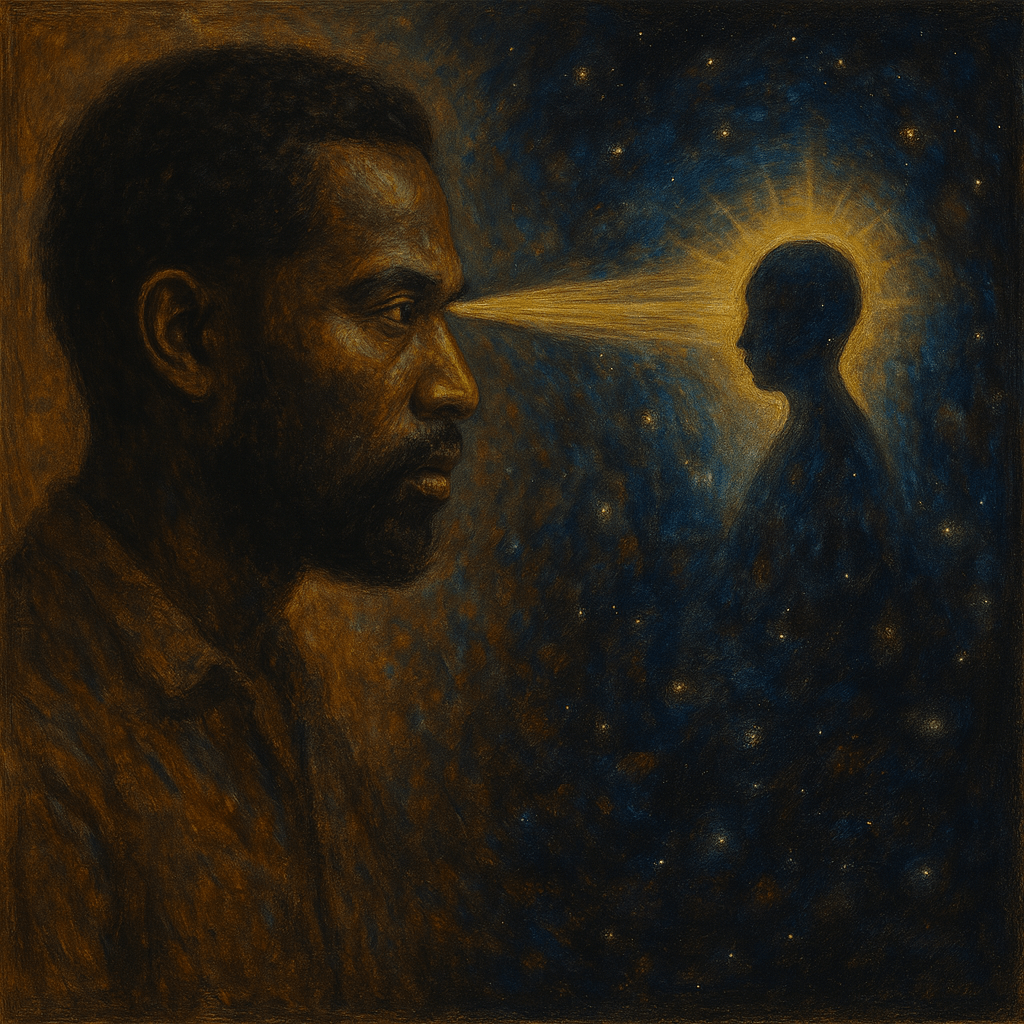
A deeper stage meets darshan without seeking a blessing at all. Awareness recognizes its own reflection across an imagined divide. The teacher’s presence becomes a steady flame, revealing the same light in the one who looks. The moment turns transparent; subject and object thin into a single field. No transmission is required because nothing is actually transferred. Consciousness simply stands revealed to itself.

Darshan, then, is not a singular practice but a spectrum. It can soothe fear, unlock psychological insight, or open the doorway into the unbounded. Each layer is valid. Each layer meets the seeker where they stand. The mystery lies in how the same ritual changes meaning as consciousness evolves.

Perhaps the most profound realization is this: the power of darshan has never been contained within the one who gives it. The power rests in the depth of the one who receives.

Morgan O. Smith

Get Your Free Copy of My Book, Bodhi in the Brain!

https://subscribepage.io/oTSZQu

Trans-Rational vs. Pre-Rational

The Subtle Distinction of True Spiritual Maturity

Many spiritual paths appear radiant on the surface, filled with symbols, mantras, and promises of transcendence. Yet beneath the surface lies a crucial divide often overlooked: the difference between pre-rational and trans-rational spirituality. Both appear to reach beyond logic, yet one regresses beneath it while the other transcends it entirely. To the untrained eye, they can look identical.

The pre-rational domain is instinctive, emotional, and magical. It belongs to an earlier structure of consciousness that sees reality through myth, projection, and emotional fusion. The pre-rational individual feels connected to life, but that connection is often undifferentiated; there is no clear boundary between the self and the world. Intuition replaces discernment. Myth replaces direct knowing. This is the consciousness of the dreamer who mistakes imagination for revelation. Many who fall into this category speak the language of mysticism but remain bound by emotional dependency and unexamined belief.

The trans-rational individual, on the other hand, has journeyed through the rational mind, not around it. They have integrated logic, science, and self-reflection into their foundation. Their transcendence is not an escape from intellect but a movement beyond its limitations. The mind becomes a servant rather than a master. Awareness expands to include paradox, complexity, and the ineffable without denying the relative truth of reason. Where the pre-rational personality confuses fantasy with insight, the trans-rational sees through both fantasy and logic as partial mirrors of the Real.

Many spiritual communities confuse these two movements, what Ken Wilber calls the pre/trans fallacy. Mystical language, emotional intensity, or devotion can appear “advanced,” when in fact they may mask regression to earlier, unintegrated states. True trans-rational realization does not deny the world; it refines perception until all appearances reveal the same unbroken consciousness. It honours both matter and spirit as dimensions of the same reality, seeing no need to reject one for the other.

The pre-rational seeks comfort in transcendence; the trans-rational finds freedom in presence. The former escapes complexity; the latter embraces it as divine play. One dissolves into illusion; the other dissolves illusion itself. The difference is not about how high one climbs, but how fully one includes.

Morgan O. Smith

Join us for our free virtual Zoom/YouTube group meditation session tonight, Wednesday, November 12th, at 8:00 PM ET. Please have your headphones or earbuds ready for the full experience. Take an hour for yourself to unwind, breathe, and reconnect.

Meeting ID: 859 0097 8411

Passcode: 676036

The Untranslatable Truth

Every attempt to describe ultimate reality begins from within limitation. Even the most awakened consciousness cannot hold the whole of what is; it can only reflect fragments of an infinite field through the prism of its own development. The absolute may be directly experienced, yet interpretation remains tethered to the mind’s evolution. Awareness can pierce the veil, but the translation of that piercing, the language, the symbols, the meaning, unfolds through the structures of human understanding.

At the highest stages of psychological and spiritual growth, perception becomes increasingly transparent to the Real. Layers of distortion thin, and the boundaries between observer and observed soften into mutual recognition. The self no longer interprets reality as something external; it feels itself as the very movement of interpretation itself. Yet even here, beyond dualistic knowing, the infinite continues to exceed all possible comprehension. To see truth is one thing; to speak it is another. The moment it is spoken, the ineffable has already been reduced.

Every level of consciousness constructs a version of the world consistent with its own depth of awareness. Mythic minds imagine gods shaping destiny; rational minds uncover laws of physics; integral minds perceive interwoven systems of meaning. Each reveals something essential, yet none are complete. Reality is not a single revelation but the total field that contains all revelations; each illusion, each breakthrough, each mistaken certainty. Maya is not an obstacle but a necessary expression of what is. To awaken does not mean to destroy illusion, but to recognize that illusion itself is included in the real.

The absolute is not somewhere beyond the dream; it is the dream and the dreamer, the veil and what shines through it. Every stage, every interpretation, every attempt to name the nameless belongs to it. Truth remains forever ungraspable, yet it breathes through every grasp. To live this is to rest in a humility that knows: the closer one moves toward reality as it is, the more radiant its mystery becomes.

Morgan O. Smith

Get Your Free Copy of My Book, Bodhi in the Brain!

https://subscribepage.io/oTSZQu

The Evolution of Karma

From Fear to Freedom

Karma is often spoken of as a simple equation, action and consequence, sowing and reaping, yet its meaning changes dramatically as consciousness evolves. What begins as superstition matures into wisdom, and what once felt like punishment reveals itself as love wearing the mask of correction. Each stage of development reshapes the lens through which karma is seen, shifting from fear-driven obedience to effortless alignment with the infinite.

At the earliest level, karma is pure survival instinct. The world feels hostile and unpredictable, and unseen forces must be appeased to ensure safety. The primitive heart interprets karma as a storm to endure or a curse to lift. As tribes form, rituals emerge, dances, offerings, sacrifices, gestures meant to influence invisible powers. Karma becomes a chant of control: “If I act correctly, the gods will spare me.”

Later, as morality crystallizes, karma transforms into a cosmic scoreboard. The universe appears governed by divine law, rewarding the righteous and punishing the wicked. Good deeds promise heaven; bad ones, rebirth or torment. This view comforts the soul with order but binds it to duality, virtue and sin, reward and penalty. The self remains separate from the whole, forever calculating its balance sheet in the eyes of the divine.

Rational thought then dismantles myth and replaces faith with logic. Karma becomes causality, stripped of mysticism. The mind begins to see that every thought and action has a psychological echo. The focus turns inward: emotional patterns, cognitive biases, behavioral loops. The sacred turns scientific. What was once divine justice becomes neurochemistry and feedback loops. Yet beneath analysis lies the same longing for meaning; a search for the invisible intelligence behind visible consequence.

As empathy expands, karma broadens into a shared field. The suffering of one is recognized as the suffering of all. Ecological, social, and ancestral interdependence reveal a larger moral ecology. Karma is now the pulse of the collective; the planet’s way of balancing itself through the actions of its inhabitants. The desire shifts from being “good” to being whole, from fear of punishment to care for harmony.

Integral awareness sees karma as consciousness refining itself through experience. Every situation, pleasant or painful, becomes a mirror; a feedback loop teaching the self about itself. What was once labeled misfortune becomes medicine. Karma is not something done to us but something expressed through us, a self-correcting rhythm of the universe returning us to coherence.

Beyond even that, karma dissolves. The one who acts and the one who receives the result are seen as the same awareness, dancing within itself. Causality collapses into immediacy. Every moment becomes self-liberated the instant it appears. There is no ledger, no lesson, only the timeless presence expressing as everything. What remains is compassion without motive, action without actor, freedom within form.

Morgan O. Smith

Get Your Free Copy of My Book, Bodhi in the Brain!

https://subscribepage.io/oTSZQu

The Silent Agreement Beneath All Voices

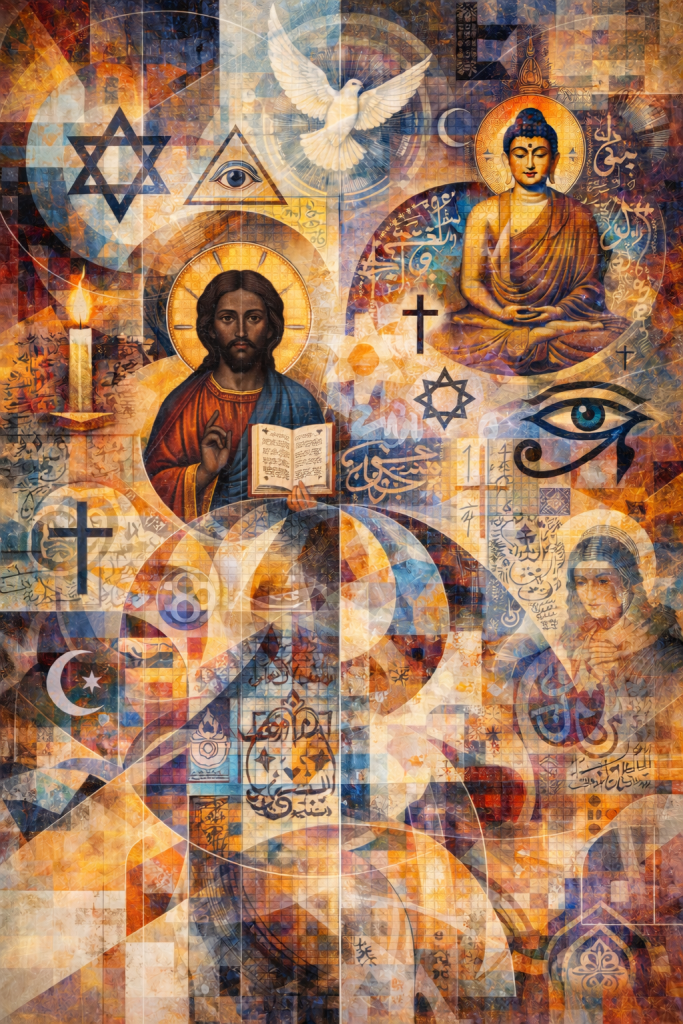
Every conviction, no matter how radical or righteous, is an echo of the same unspoken longing to be understood, to belong, to find meaning amid the vastness. Each culture, religion, and ideology carves its own path toward that longing, often believing itself to be the only way. Yet beneath the words, beneath the gestures of defence or devotion, there hums a single vibration that does not divide.

Those who dare to listen beyond preference hear it clearly. The louder the debate, the clearer it becomes that all sides are pleading for the same recognition of their humanity. The fundamental call is not for dominance but for understanding; to be seen through the eyes of unity rather than difference.

Beliefs are useful until they are mistaken for truth. When held too tightly, they become walls. When held lightly, they become windows through which consciousness observes itself from a thousand angles. The awakened mind learns not to choose sides but to perceive the underlying harmony that holds both sides together.

True wisdom is not born from agreement but from capacity; the capacity to listen without fear, to allow contradiction to breathe, to see that diversity of expression is the universe conversing with itself. Every person, every nation, speaks a dialect of the same cosmic language. The argument is never between right and wrong but between two reflections of the same light, each insisting that its brightness is original.

When this is seen, opposition dissolves. The wars of ideology lose their fuel. You begin to recognize that all are reaching toward the same ineffable truth, merely using different words to describe it. What remains is not a conclusion but a profound peace; the peace of seeing through the illusion of difference.

Morgan O. Smith

Get Your Free Copy of My Book, Bodhi in the Brain!

https://subscribepage.io/oTSZQu

Beyond the Quadrants

The Letting Go That Lets Go of You

Awakening does not unfold through accumulation but through dissolution. It’s not about adding layers of understanding, but releasing the very framework that holds identity together. Every seeker begins with an “I”—the observer, the experiencer, the one who longs for freedom. Yet that same “I” must eventually surrender its throne.

The paradox lies here: the “I” must decide to release itself. It chooses to let go, though the one who chooses disappears in the act. This gesture is not driven by resistance or desire, but by recognition —an intuitive understanding that attachment to any quadrant is still a form of identification.

The quadrants—I, WE, IT, and ITs—map the totality of human experience: the inner self, the collective, the objective, and the systemic. Each serves a purpose until awakening calls for transcendence. The I is influenced by the ITs—the systems, structures, and conditions of existence. These shape perception and possibility. Through the IT, awareness ripples into the WE, inspiring collective movement. And as the WE shifts, the I is again transformed.

This endless loop of causation refines consciousness but never liberates it. Liberation comes when the loop itself is seen through. When the “I” no longer clings to the role of observer or doer, the quadrants collapse into pure witnessing. There is no longer an experiencer and the experienced, a subject and its object. What remains is unconditioned awareness; the silent axis upon which all quadrants turn.

Awakening, then, is not achieved through effort but through profound surrender. It is the cessation of grasping at identity within any domain—personal, relational, empirical, or systemic. The quadrants remain functional but no longer define reality. They appear and dissolve within the same stillness that has always been awake.

Morgan O. Smith

Get Your Free Copy of My Book, Bodhi in the Brain!

https://subscribepage.io/oTSZQu

The Precision of Perception

Why Interpretation Shapes Your Awakening

Reality isn’t hiding. What conceals it is the web of interpretations spun by the mind: assumptions, projections, and inherited beliefs. Yet, paradoxically, it is through interpretation that one begins to peel away those very veils. Every interpretation is a mirror. The question is: what is it reflecting?

Interpretation matters because it reveals where you are on the developmental spiral. Crude, reactive interpretations reflect lower rungs of psychological growth; often rooted in fear, blame, or a need for certainty. As awareness matures, interpretations become more nuanced, inclusive, and paradox-tolerant. They start to echo the underlying unity of things, rather than just categorize them.

Interpretation is not merely a mental activity. It is a soul signal. The more refined it becomes, the closer it gets to silence, the point where no interpretation is needed. That is the paradox. The highest interpretation doesn’t claim to know; it bows. It listens. It dissolves.

Yet such dissolution is not a regression into vagueness. It is the clarity that comes when all interpretations have done their job and exhausted their usefulness. Then what remains is the directness of being—your true nature—not as a conclusion, but as the very absence of conclusion.

This is why interpretation is not to be dismissed but refined. It is a bridge. And the more accurate your interpretation of the world, the closer you walk toward the unconditioned—what no interpretation can contain, but all of them secretly point toward.

What you interpret is what you live. Misinterpret life, and you suffer. Align with it, and you awaken. Accuracy in perception is not about being “right”; it is about being real. Every step you take toward clearer interpretation is a step toward the Real that has no opposite.

Morgan O. Smith

Get Your Free Copy of My Book, Bodhi in the Brain!

https://subscribepage.io/oTSZQu

Beyond the Self

The Seven Perspectives of Awakening

Most discussions of growth and consciousness circle around the familiar: self, community, humanity, cosmos. Yet the movement of awareness does not stop there. The journey of awakening stretches beyond common frames, carrying identity through successive widenings until even perspective itself dissolves into the unnameable.

First Person – Egocentric

Awareness begins with the single pronoun: I. At this stage, the centre of existence is survival, desire, and self-interest. Spirituality here often means seeking relief, comfort, or control. The lens is narrow, but it is the soil from which broader care must grow.

Second Person – Ethnocentric

Identity expands to we. Family, tribe, religion, or nation become the circle of belonging. Meaning and devotion are tied to group loyalty, while outsiders remain less significant. Spiritual life often manifests as faith in a shared path or allegiance to a sacred tradition.

Third Person – Worldcentric

The pronoun shifts again, embracing they. Humanity as a whole is recognized as one family. Every person, regardless of background, is seen as worthy of dignity and care. This is the ground of universal ethics, human rights, and global responsibility. Spirituality speaks in the language of compassion that knows no borders.

Fourth Person – Kosmocentric

Perspective opens to all. Identity now includes every sentient being, every ecosystem, every galaxy. Care extends beyond human concerns to the life of the Earth and the vast cosmos itself. Spiritual experience often takes on a mystical quality here, where the boundary between self and universe fades into transparency.

Fifth Person – Evolutionary/Integral

A new horizon appears: awareness not only of beings and worlds, but of perspectives themselves. The self sees how “I, we, they, all” arise, evolve, and interrelate. Nothing is fixed; everything is a process. Awakening is understood as developmental, dynamic, ever-unfolding. The soul learns to hold multiple truths at once, to integrate rather than divide.

Sixth Person – Nondual

At this point, perspective collapses. The subject-object split dissolves. I, you, we, they, all, perspectives—everything appears as movements of the same luminous field. This is not an expanded view but the direct recognition that views themselves are appearances within awareness. Spiritual awakening here becomes radical intimacy with all that is.

Seventh Person – The Unmanifest

Beyond even the witness lies the groundless ground. This is not a vantage point but the source of all vantage points. No subject, no object, no seer, no seen. Pure Suchness. Emptiness that is full. From here, compassion arises not by choice but as the spontaneous flow of reality itself.

Closing Reflection

Each stage includes what came before and reaches beyond it. To live awakened is not to discard the earlier circles but to embrace them as nested truths. Self-care, community bonds, global ethics, cosmic reverence, evolutionary vision, nondual awareness, and the unmanifest ground—each is real, each is necessary. Together, they sketch the arc of awakening as it bends toward wholeness.

Morgan O. Smith

Get Your Free Copy of My Book, Bodhi in the Brain!

https://subscribepage.io/oTSZQu

Beyond the Quadrants

Direct Encounter with the Supreme Identity

The quadrants—I, We, It, and Its—are not just theoretical maps of experience. They can be lived, felt, and directly known in ways that reveal both their necessity and their ultimate transparency. Each quadrant opens as a doorway, and when entered deeply, each dissolves into the same ground that holds them all.

The “I” – Subjective Interior

The first-person self, the one who says “I,” often feels like the most fundamental reference point of life. Yet, in moments of profound awareness, this identity begins to unravel. The familiar sense of a centre collapses into boundless subjectivity that no longer belongs to a person. Awareness remains, but it is no longer tethered to the small self. The “I” is recognized as inseparable from the infinite.

The “WE” – Intersubjective Communion

Beyond the personal lies the shared field of relationship. Here, connection is no longer about agreement or dialogue but about an unspoken resonance. Every being, every presence, becomes part of a silent communion. The walls between self and other fall away, revealing a unity that feels more intimate than words could ever capture.

The “IT” – Objective Reality

The external world, seen through clear perception, ceases to be “out there.” Light, form, and movement are no longer divided from the one who sees. Reality appears luminous, alive, inseparable from the awareness that beholds it. Object and subject reveal themselves as two sides of the same indivisible presence.

The “ITS” – Systems and Networks

The interwoven fabric of existence discloses itself as a living system. Breath, heartbeat, ecosystems, and galaxies are perceived not as separate mechanisms but as one movement—an intricate symphony without a conductor. The interconnections are not abstractions but a direct felt sense of everything breathing together.

Beyond Quadrants – The Supreme Identity

As each quadrant is seen through, they collapse into the unbroken ground of Being. This cannot be named as “I,” “We,” “It,” or “Its.” It is the source that gives rise to them all while remaining untouched by their distinctions. This is the Supreme Identity—timeless, boundless, indivisible.

When lived from this recognition, the quadrants are not discarded but liberated. They no longer bind perception to fixed standpoints. Instead, they shine as transparent facets of a jewel that was never fractured. Every act, every relationship, every perception becomes a clear expression of the ground itself.

The Supreme Identity is not somewhere else, waiting to be found. It is what was always here—before the quadrants, within them, and beyond them.

Morgan O. Smith

Get Your Free Copy of My Book, Bodhi in the Brain!

https://subscribepage.io/oTSZQu

Beyond Quadrants

The Supreme Identity

The quadrants of experience—I, We, It, and Its—have long been a lens through which consciousness organizes reality. Each provides a vital perspective: the subjective interior of the self, the shared intersubjective domain, the objective forms of matter, and the interobjective systems of the whole. These lenses do not compete; they illuminate the multiple dimensions of existence. Yet, any frame cannot contain the essence of reality, no matter how inclusive or comprehensive it may be.

What reveals itself when awareness no longer clings to a particular quadrant? A vastness appears that cannot be named solely as an “I,” nor reduced to the communion of “We.” It is not confined to the world of objects, nor to the vast interplay of systems. The Supreme Identity both transcends and enfolds these domains, existing as their ground and source.

This Identity is not separate from the quadrants; it is their silent witness and animating force. Just as light contains within it every visible colour yet is itself colourless, the Supreme Identity contains every possible perspective while remaining free of perspective altogether. When seen clearly, the quadrants dissolve into expressions of a singular field that cannot be divided.

What makes this recognition so profound is that it shatters the tendency of consciousness to fixate. The mind grasps for a standpoint—self, relationship, object, or system—but here, every standpoint is unmasked as a partial gesture of the whole. The Supreme Identity does not stand against them; it whispers through them. The “I” speaking, the “We” sharing, the “It” observed, the “Its” interlinked—all are nothing other than its unfolding.

Realizing this does not negate the quadrants. Rather, it liberates them. Each becomes transparent, shining as a clear facet of a jewel that was never fractured to begin with. The Supreme Identity calls forth a recognition: the One is never elsewhere. It is already present, before all perspectives, yet manifesting as each.

To live from this recognition is not to abandon life’s frameworks but to embody their ground. Every conversation, every act, every encounter reveals the unbroken presence that cannot be named yet pervades all. The quadrants remain as tools of navigation, but the navigator is no longer lost.

Morgan O. Smith

Get Your Free Copy of My Book, Bodhi in the Brain!

https://subscribepage.io/oTSZQu