The Silent Agreement Beneath All Voices

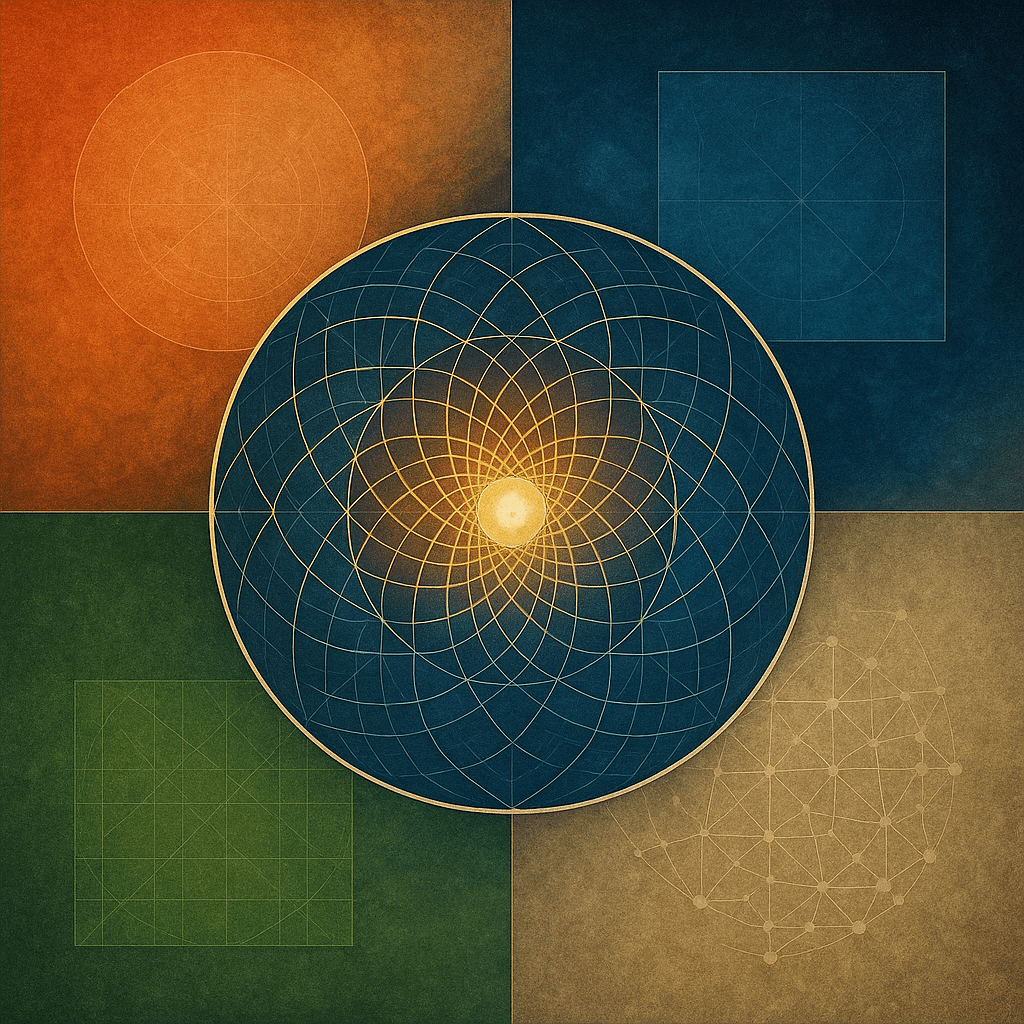
Every conviction, no matter how radical or righteous, is an echo of the same unspoken longing to be understood, to belong, to find meaning amid the vastness. Each culture, religion, and ideology carves its own path toward that longing, often believing itself to be the only way. Yet beneath the words, beneath the gestures of defence or devotion, there hums a single vibration that does not divide.

Those who dare to listen beyond preference hear it clearly. The louder the debate, the clearer it becomes that all sides are pleading for the same recognition of their humanity. The fundamental call is not for dominance but for understanding; to be seen through the eyes of unity rather than difference.

Beliefs are useful until they are mistaken for truth. When held too tightly, they become walls. When held lightly, they become windows through which consciousness observes itself from a thousand angles. The awakened mind learns not to choose sides but to perceive the underlying harmony that holds both sides together.

True wisdom is not born from agreement but from capacity; the capacity to listen without fear, to allow contradiction to breathe, to see that diversity of expression is the universe conversing with itself. Every person, every nation, speaks a dialect of the same cosmic language. The argument is never between right and wrong but between two reflections of the same light, each insisting that its brightness is original.

When this is seen, opposition dissolves. The wars of ideology lose their fuel. You begin to recognize that all are reaching toward the same ineffable truth, merely using different words to describe it. What remains is not a conclusion but a profound peace; the peace of seeing through the illusion of difference.

Morgan O. Smith

Get Your Free Copy of My Book, Bodhi in the Brain!

https://subscribepage.io/oTSZQu

Beyond the Quadrants

The Letting Go That Lets Go of You

Awakening does not unfold through accumulation but through dissolution. It’s not about adding layers of understanding, but releasing the very framework that holds identity together. Every seeker begins with an “I”—the observer, the experiencer, the one who longs for freedom. Yet that same “I” must eventually surrender its throne.

The paradox lies here: the “I” must decide to release itself. It chooses to let go, though the one who chooses disappears in the act. This gesture is not driven by resistance or desire, but by recognition —an intuitive understanding that attachment to any quadrant is still a form of identification.

The quadrants—I, WE, IT, and ITs—map the totality of human experience: the inner self, the collective, the objective, and the systemic. Each serves a purpose until awakening calls for transcendence. The I is influenced by the ITs—the systems, structures, and conditions of existence. These shape perception and possibility. Through the IT, awareness ripples into the WE, inspiring collective movement. And as the WE shifts, the I is again transformed.

This endless loop of causation refines consciousness but never liberates it. Liberation comes when the loop itself is seen through. When the “I” no longer clings to the role of observer or doer, the quadrants collapse into pure witnessing. There is no longer an experiencer and the experienced, a subject and its object. What remains is unconditioned awareness; the silent axis upon which all quadrants turn.

Awakening, then, is not achieved through effort but through profound surrender. It is the cessation of grasping at identity within any domain—personal, relational, empirical, or systemic. The quadrants remain functional but no longer define reality. They appear and dissolve within the same stillness that has always been awake.

Morgan O. Smith

Get Your Free Copy of My Book, Bodhi in the Brain!

https://subscribepage.io/oTSZQu

The Precision of Perception

Why Interpretation Shapes Your Awakening

Reality isn’t hiding. What conceals it is the web of interpretations spun by the mind: assumptions, projections, and inherited beliefs. Yet, paradoxically, it is through interpretation that one begins to peel away those very veils. Every interpretation is a mirror. The question is: what is it reflecting?

Interpretation matters because it reveals where you are on the developmental spiral. Crude, reactive interpretations reflect lower rungs of psychological growth; often rooted in fear, blame, or a need for certainty. As awareness matures, interpretations become more nuanced, inclusive, and paradox-tolerant. They start to echo the underlying unity of things, rather than just categorize them.

Interpretation is not merely a mental activity. It is a soul signal. The more refined it becomes, the closer it gets to silence, the point where no interpretation is needed. That is the paradox. The highest interpretation doesn’t claim to know; it bows. It listens. It dissolves.

Yet such dissolution is not a regression into vagueness. It is the clarity that comes when all interpretations have done their job and exhausted their usefulness. Then what remains is the directness of being—your true nature—not as a conclusion, but as the very absence of conclusion.

This is why interpretation is not to be dismissed but refined. It is a bridge. And the more accurate your interpretation of the world, the closer you walk toward the unconditioned—what no interpretation can contain, but all of them secretly point toward.

What you interpret is what you live. Misinterpret life, and you suffer. Align with it, and you awaken. Accuracy in perception is not about being “right”; it is about being real. Every step you take toward clearer interpretation is a step toward the Real that has no opposite.

Morgan O. Smith

Get Your Free Copy of My Book, Bodhi in the Brain!

https://subscribepage.io/oTSZQu

Beyond the Self

The Seven Perspectives of Awakening

Most discussions of growth and consciousness circle around the familiar: self, community, humanity, cosmos. Yet the movement of awareness does not stop there. The journey of awakening stretches beyond common frames, carrying identity through successive widenings until even perspective itself dissolves into the unnameable.

First Person – Egocentric

Awareness begins with the single pronoun: I. At this stage, the centre of existence is survival, desire, and self-interest. Spirituality here often means seeking relief, comfort, or control. The lens is narrow, but it is the soil from which broader care must grow.

Second Person – Ethnocentric

Identity expands to we. Family, tribe, religion, or nation become the circle of belonging. Meaning and devotion are tied to group loyalty, while outsiders remain less significant. Spiritual life often manifests as faith in a shared path or allegiance to a sacred tradition.

Third Person – Worldcentric

The pronoun shifts again, embracing they. Humanity as a whole is recognized as one family. Every person, regardless of background, is seen as worthy of dignity and care. This is the ground of universal ethics, human rights, and global responsibility. Spirituality speaks in the language of compassion that knows no borders.

Fourth Person – Kosmocentric

Perspective opens to all. Identity now includes every sentient being, every ecosystem, every galaxy. Care extends beyond human concerns to the life of the Earth and the vast cosmos itself. Spiritual experience often takes on a mystical quality here, where the boundary between self and universe fades into transparency.

Fifth Person – Evolutionary/Integral

A new horizon appears: awareness not only of beings and worlds, but of perspectives themselves. The self sees how “I, we, they, all” arise, evolve, and interrelate. Nothing is fixed; everything is a process. Awakening is understood as developmental, dynamic, ever-unfolding. The soul learns to hold multiple truths at once, to integrate rather than divide.

Sixth Person – Nondual

At this point, perspective collapses. The subject-object split dissolves. I, you, we, they, all, perspectives—everything appears as movements of the same luminous field. This is not an expanded view but the direct recognition that views themselves are appearances within awareness. Spiritual awakening here becomes radical intimacy with all that is.

Seventh Person – The Unmanifest

Beyond even the witness lies the groundless ground. This is not a vantage point but the source of all vantage points. No subject, no object, no seer, no seen. Pure Suchness. Emptiness that is full. From here, compassion arises not by choice but as the spontaneous flow of reality itself.

Closing Reflection

Each stage includes what came before and reaches beyond it. To live awakened is not to discard the earlier circles but to embrace them as nested truths. Self-care, community bonds, global ethics, cosmic reverence, evolutionary vision, nondual awareness, and the unmanifest ground—each is real, each is necessary. Together, they sketch the arc of awakening as it bends toward wholeness.

Morgan O. Smith

Get Your Free Copy of My Book, Bodhi in the Brain!
https://subscribepage.io/oTSZQu

Beyond the Quadrants

Direct Encounter with the Supreme Identity

The quadrants—I, We, It, and Its—are not just theoretical maps of experience. They can be lived, felt, and directly known in ways that reveal both their necessity and their ultimate transparency. Each quadrant opens as a doorway, and when entered deeply, each dissolves into the same ground that holds them all.

The “I” – Subjective Interior

The first-person self, the one who says “I,” often feels like the most fundamental reference point of life. Yet, in moments of profound awareness, this identity begins to unravel. The familiar sense of a centre collapses into boundless subjectivity that no longer belongs to a person. Awareness remains, but it is no longer tethered to the small self. The “I” is recognized as inseparable from the infinite.

The “WE” – Intersubjective Communion

Beyond the personal lies the shared field of relationship. Here, connection is no longer about agreement or dialogue but about an unspoken resonance. Every being, every presence, becomes part of a silent communion. The walls between self and other fall away, revealing a unity that feels more intimate than words could ever capture.

The “IT” – Objective Reality

The external world, seen through clear perception, ceases to be “out there.” Light, form, and movement are no longer divided from the one who sees. Reality appears luminous, alive, inseparable from the awareness that beholds it. Object and subject reveal themselves as two sides of the same indivisible presence.

The “ITS” – Systems and Networks

The interwoven fabric of existence discloses itself as a living system. Breath, heartbeat, ecosystems, and galaxies are perceived not as separate mechanisms but as one movement—an intricate symphony without a conductor. The interconnections are not abstractions but a direct felt sense of everything breathing together.

Beyond Quadrants – The Supreme Identity

As each quadrant is seen through, they collapse into the unbroken ground of Being. This cannot be named as “I,” “We,” “It,” or “Its.” It is the source that gives rise to them all while remaining untouched by their distinctions. This is the Supreme Identity—timeless, boundless, indivisible.

When lived from this recognition, the quadrants are not discarded but liberated. They no longer bind perception to fixed standpoints. Instead, they shine as transparent facets of a jewel that was never fractured. Every act, every relationship, every perception becomes a clear expression of the ground itself.

The Supreme Identity is not somewhere else, waiting to be found. It is what was always here—before the quadrants, within them, and beyond them.

Morgan O. Smith

Get Your Free Copy of My Book, Bodhi in the Brain!

https://subscribepage.io/oTSZQu

Beyond Quadrants

The Supreme Identity

The quadrants of experience—I, We, It, and Its—have long been a lens through which consciousness organizes reality. Each provides a vital perspective: the subjective interior of the self, the shared intersubjective domain, the objective forms of matter, and the interobjective systems of the whole. These lenses do not compete; they illuminate the multiple dimensions of existence. Yet, any frame cannot contain the essence of reality, no matter how inclusive or comprehensive it may be.

What reveals itself when awareness no longer clings to a particular quadrant? A vastness appears that cannot be named solely as an “I,” nor reduced to the communion of “We.” It is not confined to the world of objects, nor to the vast interplay of systems. The Supreme Identity both transcends and enfolds these domains, existing as their ground and source.

This Identity is not separate from the quadrants; it is their silent witness and animating force. Just as light contains within it every visible colour yet is itself colourless, the Supreme Identity contains every possible perspective while remaining free of perspective altogether. When seen clearly, the quadrants dissolve into expressions of a singular field that cannot be divided.

What makes this recognition so profound is that it shatters the tendency of consciousness to fixate. The mind grasps for a standpoint—self, relationship, object, or system—but here, every standpoint is unmasked as a partial gesture of the whole. The Supreme Identity does not stand against them; it whispers through them. The “I” speaking, the “We” sharing, the “It” observed, the “Its” interlinked—all are nothing other than its unfolding.

Realizing this does not negate the quadrants. Rather, it liberates them. Each becomes transparent, shining as a clear facet of a jewel that was never fractured to begin with. The Supreme Identity calls forth a recognition: the One is never elsewhere. It is already present, before all perspectives, yet manifesting as each.

To live from this recognition is not to abandon life’s frameworks but to embody their ground. Every conversation, every act, every encounter reveals the unbroken presence that cannot be named yet pervades all. The quadrants remain as tools of navigation, but the navigator is no longer lost.

Morgan O. Smith

Get Your Free Copy of My Book, Bodhi in the Brain!

https://subscribepage.io/oTSZQu

What Can I Control?

A Nondual Reflection on the Illusion of Distinction

From a young age, we are taught to divide reality into two columns: what belongs to us and what belongs to others, what we can shape and what is beyond reach. This dualistic framework—“mine” versus “not mine,” “inner” versus “outer”—seems practical, especially when navigating the everyday world. But there comes a moment, often brought on by grace or deep inquiry, when this neat partition dissolves, and all that remains is undivided suchness.

From a conventional perspective, distinguishing between the self and the other is wise. One learns to take responsibility for thoughts, feelings, and actions while relinquishing attempts to control the mental and emotional weather of others. Yet this distinction is ultimately a mirage from the viewless view of Nonduality. There are no separate selves, no isolated thoughts floating inside “my” head, no truly foreign behaviour arising “over there.”

The very idea of control is a construct built atop the illusion of separation. In the deepest experience of pure awareness, even the one who seeks control disappears. There is only the arising of thoughts, feelings, actions, and phenomena within a seamless field of being. The idea that “my” thoughts are within “my” control is as illusory as the belief that someone else’s behaviour is truly “theirs.”

And yet, following such an experience, life continues. The body-mind returns to its rhythms. It begins again to label, to assign, to plan. What then? One doesn’t unlearn the insight. Instead, there arises a profound shift—a knowing that while dualistic functioning remains useful in relative existence, the truth of no-boundary consciousness pervades it all.

Over time, particularly as one matures into what Integral Theory calls the integral stage of development, a synthesis emerges. The subjective and the objective no longer stand opposed. Responsibility is no longer about control—it becomes an expression of harmony. One can hold space for others’ words and actions without trying to fix them, just as one can engage one’s thoughts and behaviours without clinging to the illusion of authorship.

There is no inside or outside. No one to control, and nothing to control. Just an unfolding—flawless in its mystery, unified in its movement.

Morgan O. Smith

Yinnergy Meditation/Neurofeedback, Spiritual Life Coaching & My Book, Bodhi in the Brain…Available Now!

https://linktr.ee/morganosmith

Nonduality and the Integral        

Untangling Two Profound Perspectives

When people speak about nonduality, they often weave together concepts that belong to the realm of the integral perspective. The two may seem intertwined, yet their essence is profoundly distinct. Recognizing this difference can deepen our understanding of both and expand our capacity for spiritual insight.

Nonduality points directly to the ultimate truth: the indivisibility of reality. It is the recognition that all distinctions are illusory. The subject-object split dissolves, revealing a seamless unity. It is not merely a philosophical perspective but an experiential truth—a recognition that transcends intellectual grasping. Nonduality is the realization that there is no “two,” only “one,” and even that word dissolves into silence.

Integral thinking, on the other hand, provides a comprehensive map of reality, embracing the complexity of human experience. It categorizes and contextualizes the subjective, objective, intersubjective, and interobjective dimensions of existence. Integral frameworks are invaluable for navigating personal and collective evolution, offering tools for harmonizing the many aspects of life.

The Key Distinction

Nonduality exists beyond frameworks, maps, or categories. It does not concern itself with the relative interplay of quadrants, stages, or states. Nonduality is the recognition that all such distinctions are themselves empty—useful only until their utility is seen through.

Integral thinking is rooted in relativity. It thrives on distinctions and relationships, aiming to integrate them into a cohesive understanding. It does not negate duality but works within it to foster greater awareness and wholeness. Integral thinking can support a journey toward nondual realization, but it remains distinct from the destination itself.

Why the Confusion?

The conflation arises because many seekers first encounter nonduality through conceptual frameworks, often presented in an integral context. The integral perspective’s ability to unify seemingly disparate truths can feel like a step toward nondual awareness. However, while the integral celebrates the diversity of perspectives, nonduality obliterates them, revealing a singular, indivisible presence.

The integral is a bridge; nonduality is the infinite expanse beyond the bridge. One operates within the realm of mind and relativity, while the other beckons toward the formless essence that precedes thought itself.

Moving Beyond Concepts

The beauty lies in recognizing that both have their place. Integral approaches help organize and clarify our understanding, guiding us toward greater clarity and balance in the relative world. Yet, true liberation comes when we let go of even the most exquisite maps and plunge into the direct experience of what is.

Nonduality is not something to be understood. It is what remains when all attempts at understanding fall away. To grasp this distinction is to open oneself to the ineffable—a leap that no framework can contain.

Morgan O. Smith

Yinnergy Meditation, Spiritual Life Coaching & My Book, Bodhi in the Brain…Available Now!

https://linktr.ee/morganosmith

The Convergence of Quadrants

A Journey from Relative to Ultimate Reality

In the realms of Integral Theory, our perception of reality is intricately divided into four primary dimensions or perspectives: the subjective (‘I’), the intersubjective (‘We’), the objective (‘It’), and the interobjective (‘Its’). These perspectives serve as the foundational pillars through which we navigate our relative existence, framing our experiences, relationships, and understanding of the world around us. These quadrants, when represented graphically, are not just abstract concepts but are reflective of the comprehensive ways in which we engage with reality.

However, the journey toward spiritual awakening introduces a profound transformation in this perception. As one advance towards the state of Turiyatitta, a term deeply rooted in Eastern philosophy signifying a state beyond the waking, dreaming, and deep sleep states, a remarkable unification occurs. In Turiyatitta, the boundaries that once separated the ‘I’ from ‘We’, the ‘We’ from ‘It’, and the ‘It’ from ‘Its’, dissolve into a seamless oneness. This state transcends the distinctions between the subjective and the objective, the individual and the collective, and the observer and the observed.


The exploration of Turiyatitta challenges the compartmentalized view of reality presented by Integral Theory. It invites us into a realm where the delineations between the upper-left (I), lower-left (We), upper-right (It), and lower-right (Its) quadrants blur, suggesting that these divisions are merely constructs of a relative reality. In the ultimate reality experienced through Turiyatitta, these quadrants converge, revealing that at the most profound level, there is no distinction between ‘I’ and ‘We’, ‘We’ and ‘It’, ‘It’ and ‘Its’—everything becomes interconnected, a unified whole.

This revelation has significant implications for our spiritual and philosophical journeys. It suggests that the ultimate truth lies not in the separation and analysis of reality into distinct quadrants but in the recognition of the inherent oneness that underlies all existence. The experience of Turiyatitta offers a direct encounter with this oneness, an experiential understanding that transcends intellectual comprehension and invites us into a direct, immediate experience of unity.


Engaging with this perspective does not invalidate the usefulness of the four quadrants in navigating our relative reality. Instead, it enriches our understanding by adding depth to our perception, allowing us to see beyond the surface distinctions and appreciate the underlying unity that connects all aspects of existence. This holistic view fosters a deeper sense of empathy, interconnectedness, and a profound appreciation for the mystery that is life itself.

As we navigate our spiritual path, the exploration of Turiyatitta and the convergence of the four quadrants invite us to reconsider our understanding of reality. It encourages us to look beyond the apparent separations and to embrace the unity that encompasses all aspects of our existence. In doing so, we open ourselves to a more profound, interconnected, and unified experience of reality, one that transcends the limitations of our conventional perspectives and guides us toward a deeper realization of the ultimate truth.

Morgan O. Smith

Yinnergy Meditation, Spiritual Life Coaching & My Book, Bodhi in the Brain…Available Now!

https://linktr.ee/morganosmith

Eyes Wide Shut

Unveiling the Invisible Universe Within

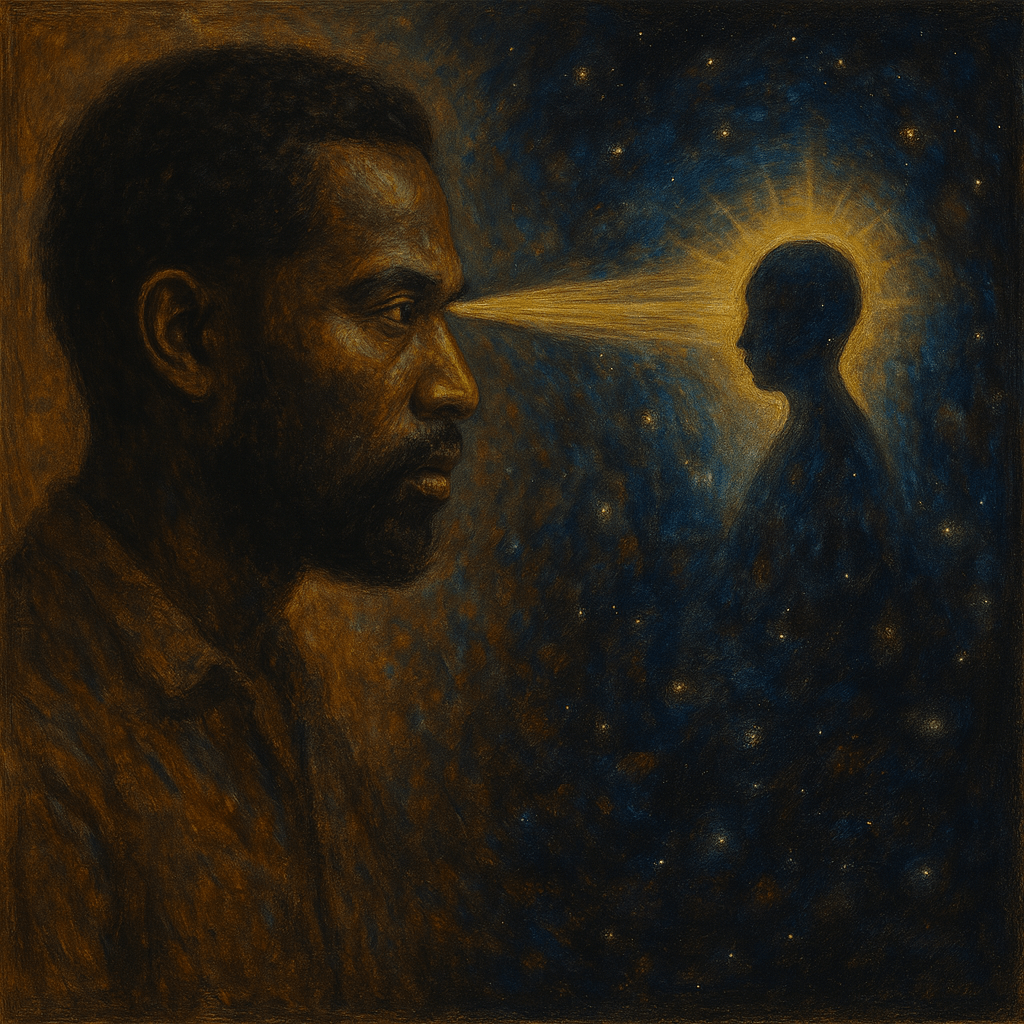
In the silent depths of introspection, where thoughts cease their constant dance, lies a universe – vast, profound, and largely unexplored. This universe, your inner cosmos, remains hidden to many, discernible only to those who venture beyond the veil of the mundane. It’s a realm where the mind’s eye, with eyes wide shut, sees what is invisible to the physical gaze.

In this sacred space, the concept of nonduality blossoms. Here, the dichotomies of self and other, observer and observed, dissolve into a seamless expanse of consciousness. This realization is not an intellectual one; it is an experiential awakening, where one’s essence merges with the infinite.

Eastern philosophy, with its rich heritage and profound insights, offers a map to navigate this inner universe. It teaches us that our true nature is not confined to the limited identity we often cling to. Instead, it guides us to see ourselves as integral parts of a larger, interconnected whole. In this realization, the illusion of separation fades, and we begin to experience life in its totality.


Integral Theory furthers this journey by offering a framework that harmonizes diverse perspectives. It encourages us to integrate multiple dimensions of our being – emotional, mental, physical, and spiritual. This holistic approach fosters a deeper understanding of ourselves and the world around us, leading to more meaningful and enriched life experiences.

Yet, the journey inward is not merely an intellectual exercise. It’s a path paved with the heart’s wisdom, a journey toward spiritual awakening and enlightenment. It’s about transcending the ordinary to touch the extraordinary, about finding the stillness within the storm. In this stillness, we encounter peak mystical experiences, moments where time stands still, and we are at one with all that is.

Embracing this inner journey transforms how we view ourselves and the world. We start to see beauty in the mundane, wisdom in silence, and truth in simplicity. Our interactions become more compassionate, our actions more mindful, and our lives more purposeful.


I invite you to embark on this profound journey. Close your eyes to see the unseen, listen to the silence to hear the unspoken, and still your mind to understand the incomprehensible. In doing so, you may just discover that the entire universe resides within you, waiting to be explored.

Morgan O. Smith

Yinnergy Meditation, Spiritual Life Coaching & My Book, Bodhi in the Brain…Available Now!

https://linktr.ee/morganosmith