What Can I Control?

A Nondual Reflection on the Illusion of Distinction

From a young age, we are taught to divide reality into two columns: what belongs to us and what belongs to others, what we can shape and what is beyond reach. This dualistic framework—“mine” versus “not mine,” “inner” versus “outer”—seems practical, especially when navigating the everyday world. But there comes a moment, often brought on by grace or deep inquiry, when this neat partition dissolves, and all that remains is undivided suchness.

From a conventional perspective, distinguishing between the self and the other is wise. One learns to take responsibility for thoughts, feelings, and actions while relinquishing attempts to control the mental and emotional weather of others. Yet this distinction is ultimately a mirage from the viewless view of Nonduality. There are no separate selves, no isolated thoughts floating inside “my” head, no truly foreign behaviour arising “over there.”

The very idea of control is a construct built atop the illusion of separation. In the deepest experience of pure awareness, even the one who seeks control disappears. There is only the arising of thoughts, feelings, actions, and phenomena within a seamless field of being. The idea that “my” thoughts are within “my” control is as illusory as the belief that someone else’s behaviour is truly “theirs.”

And yet, following such an experience, life continues. The body-mind returns to its rhythms. It begins again to label, to assign, to plan. What then? One doesn’t unlearn the insight. Instead, there arises a profound shift—a knowing that while dualistic functioning remains useful in relative existence, the truth of no-boundary consciousness pervades it all.

Over time, particularly as one matures into what Integral Theory calls the integral stage of development, a synthesis emerges. The subjective and the objective no longer stand opposed. Responsibility is no longer about control—it becomes an expression of harmony. One can hold space for others’ words and actions without trying to fix them, just as one can engage one’s thoughts and behaviours without clinging to the illusion of authorship.

There is no inside or outside. No one to control, and nothing to control. Just an unfolding—flawless in its mystery, unified in its movement.

Morgan O. Smith

Yinnergy Meditation/Neurofeedback, Spiritual Life Coaching & My Book, Bodhi in the Brain…Available Now!

https://linktr.ee/morganosmith

Nonduality and the Integral        

Untangling Two Profound Perspectives

When people speak about nonduality, they often weave together concepts that belong to the realm of the integral perspective. The two may seem intertwined, yet their essence is profoundly distinct. Recognizing this difference can deepen our understanding of both and expand our capacity for spiritual insight.

Nonduality points directly to the ultimate truth: the indivisibility of reality. It is the recognition that all distinctions are illusory. The subject-object split dissolves, revealing a seamless unity. It is not merely a philosophical perspective but an experiential truth—a recognition that transcends intellectual grasping. Nonduality is the realization that there is no “two,” only “one,” and even that word dissolves into silence.

Integral thinking, on the other hand, provides a comprehensive map of reality, embracing the complexity of human experience. It categorizes and contextualizes the subjective, objective, intersubjective, and interobjective dimensions of existence. Integral frameworks are invaluable for navigating personal and collective evolution, offering tools for harmonizing the many aspects of life.

The Key Distinction

Nonduality exists beyond frameworks, maps, or categories. It does not concern itself with the relative interplay of quadrants, stages, or states. Nonduality is the recognition that all such distinctions are themselves empty—useful only until their utility is seen through.

Integral thinking is rooted in relativity. It thrives on distinctions and relationships, aiming to integrate them into a cohesive understanding. It does not negate duality but works within it to foster greater awareness and wholeness. Integral thinking can support a journey toward nondual realization, but it remains distinct from the destination itself.

Why the Confusion?

The conflation arises because many seekers first encounter nonduality through conceptual frameworks, often presented in an integral context. The integral perspective’s ability to unify seemingly disparate truths can feel like a step toward nondual awareness. However, while the integral celebrates the diversity of perspectives, nonduality obliterates them, revealing a singular, indivisible presence.

The integral is a bridge; nonduality is the infinite expanse beyond the bridge. One operates within the realm of mind and relativity, while the other beckons toward the formless essence that precedes thought itself.

Moving Beyond Concepts

The beauty lies in recognizing that both have their place. Integral approaches help organize and clarify our understanding, guiding us toward greater clarity and balance in the relative world. Yet, true liberation comes when we let go of even the most exquisite maps and plunge into the direct experience of what is.

Nonduality is not something to be understood. It is what remains when all attempts at understanding fall away. To grasp this distinction is to open oneself to the ineffable—a leap that no framework can contain.

Morgan O. Smith

Yinnergy Meditation, Spiritual Life Coaching & My Book, Bodhi in the Brain…Available Now!

https://linktr.ee/morganosmith

The Convergence of Quadrants

A Journey from Relative to Ultimate Reality

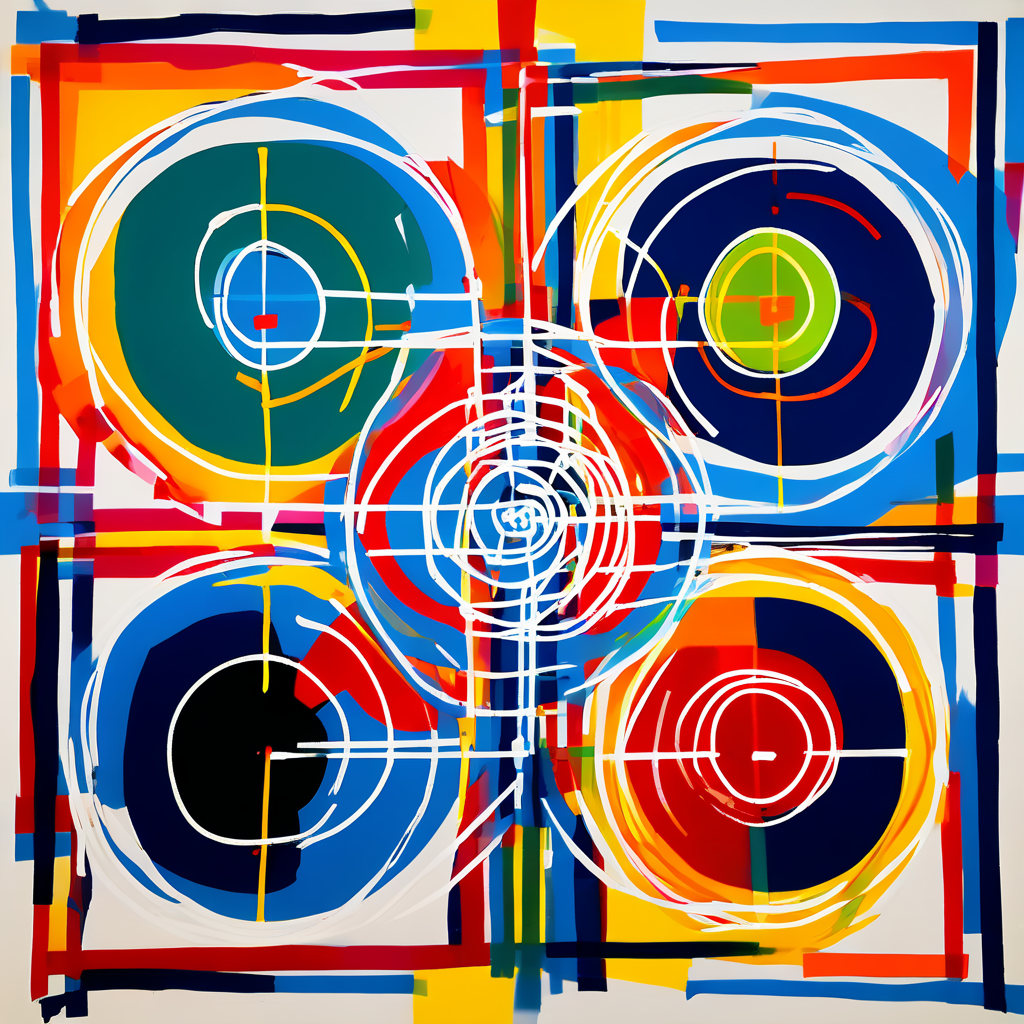
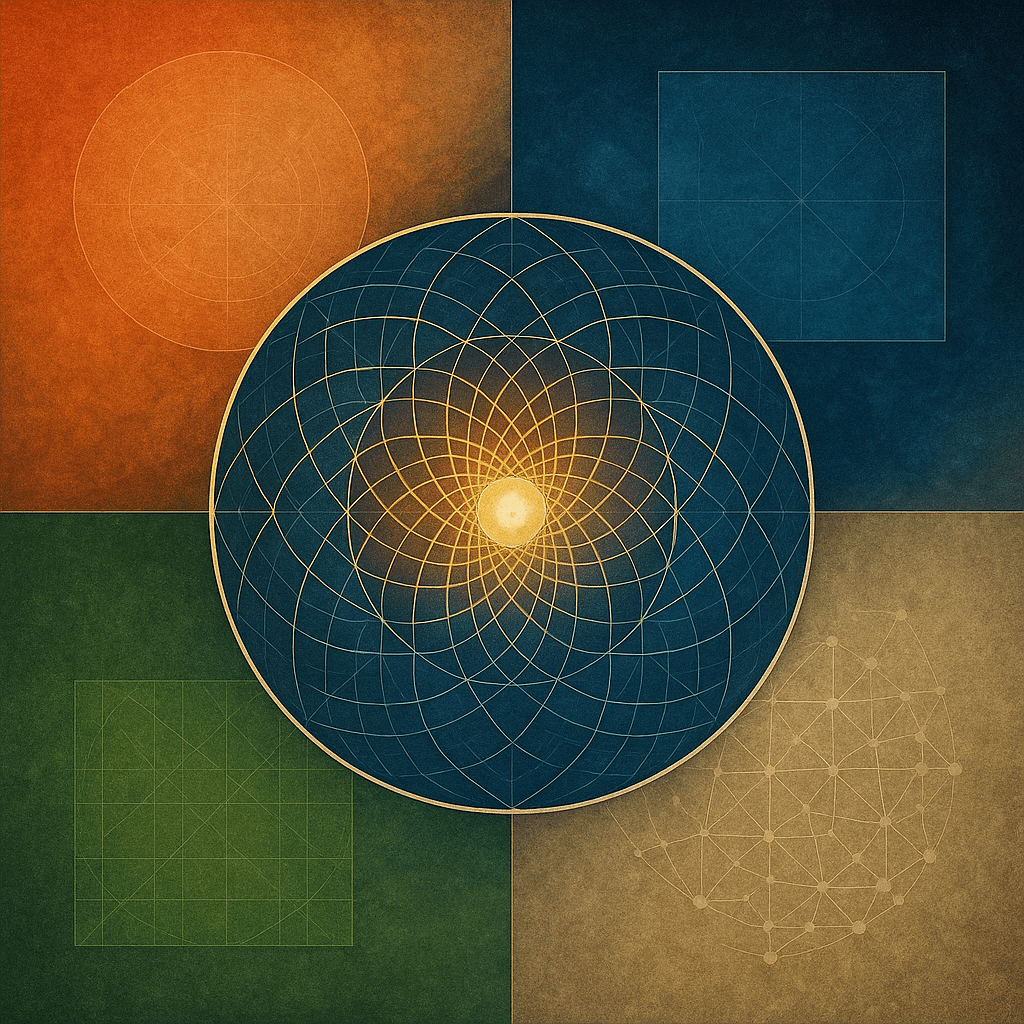
In the realms of Integral Theory, our perception of reality is intricately divided into four primary dimensions or perspectives: the subjective (‘I’), the intersubjective (‘We’), the objective (‘It’), and the interobjective (‘Its’). These perspectives serve as the foundational pillars through which we navigate our relative existence, framing our experiences, relationships, and understanding of the world around us. These quadrants, when represented graphically, are not just abstract concepts but are reflective of the comprehensive ways in which we engage with reality.

However, the journey toward spiritual awakening introduces a profound transformation in this perception. As one advance towards the state of Turiyatitta, a term deeply rooted in Eastern philosophy signifying a state beyond the waking, dreaming, and deep sleep states, a remarkable unification occurs. In Turiyatitta, the boundaries that once separated the ‘I’ from ‘We’, the ‘We’ from ‘It’, and the ‘It’ from ‘Its’, dissolve into a seamless oneness. This state transcends the distinctions between the subjective and the objective, the individual and the collective, and the observer and the observed.


The exploration of Turiyatitta challenges the compartmentalized view of reality presented by Integral Theory. It invites us into a realm where the delineations between the upper-left (I), lower-left (We), upper-right (It), and lower-right (Its) quadrants blur, suggesting that these divisions are merely constructs of a relative reality. In the ultimate reality experienced through Turiyatitta, these quadrants converge, revealing that at the most profound level, there is no distinction between ‘I’ and ‘We’, ‘We’ and ‘It’, ‘It’ and ‘Its’—everything becomes interconnected, a unified whole.

This revelation has significant implications for our spiritual and philosophical journeys. It suggests that the ultimate truth lies not in the separation and analysis of reality into distinct quadrants but in the recognition of the inherent oneness that underlies all existence. The experience of Turiyatitta offers a direct encounter with this oneness, an experiential understanding that transcends intellectual comprehension and invites us into a direct, immediate experience of unity.


Engaging with this perspective does not invalidate the usefulness of the four quadrants in navigating our relative reality. Instead, it enriches our understanding by adding depth to our perception, allowing us to see beyond the surface distinctions and appreciate the underlying unity that connects all aspects of existence. This holistic view fosters a deeper sense of empathy, interconnectedness, and a profound appreciation for the mystery that is life itself.

As we navigate our spiritual path, the exploration of Turiyatitta and the convergence of the four quadrants invite us to reconsider our understanding of reality. It encourages us to look beyond the apparent separations and to embrace the unity that encompasses all aspects of our existence. In doing so, we open ourselves to a more profound, interconnected, and unified experience of reality, one that transcends the limitations of our conventional perspectives and guides us toward a deeper realization of the ultimate truth.

Morgan O. Smith

Yinnergy Meditation, Spiritual Life Coaching & My Book, Bodhi in the Brain…Available Now!

https://linktr.ee/morganosmith

Eyes Wide Shut

Unveiling the Invisible Universe Within

In the silent depths of introspection, where thoughts cease their constant dance, lies a universe – vast, profound, and largely unexplored. This universe, your inner cosmos, remains hidden to many, discernible only to those who venture beyond the veil of the mundane. It’s a realm where the mind’s eye, with eyes wide shut, sees what is invisible to the physical gaze.

In this sacred space, the concept of nonduality blossoms. Here, the dichotomies of self and other, observer and observed, dissolve into a seamless expanse of consciousness. This realization is not an intellectual one; it is an experiential awakening, where one’s essence merges with the infinite.

Eastern philosophy, with its rich heritage and profound insights, offers a map to navigate this inner universe. It teaches us that our true nature is not confined to the limited identity we often cling to. Instead, it guides us to see ourselves as integral parts of a larger, interconnected whole. In this realization, the illusion of separation fades, and we begin to experience life in its totality.


Integral Theory furthers this journey by offering a framework that harmonizes diverse perspectives. It encourages us to integrate multiple dimensions of our being – emotional, mental, physical, and spiritual. This holistic approach fosters a deeper understanding of ourselves and the world around us, leading to more meaningful and enriched life experiences.

Yet, the journey inward is not merely an intellectual exercise. It’s a path paved with the heart’s wisdom, a journey toward spiritual awakening and enlightenment. It’s about transcending the ordinary to touch the extraordinary, about finding the stillness within the storm. In this stillness, we encounter peak mystical experiences, moments where time stands still, and we are at one with all that is.

Embracing this inner journey transforms how we view ourselves and the world. We start to see beauty in the mundane, wisdom in silence, and truth in simplicity. Our interactions become more compassionate, our actions more mindful, and our lives more purposeful.


I invite you to embark on this profound journey. Close your eyes to see the unseen, listen to the silence to hear the unspoken, and still your mind to understand the incomprehensible. In doing so, you may just discover that the entire universe resides within you, waiting to be explored.

Morgan O. Smith

Yinnergy Meditation, Spiritual Life Coaching & My Book, Bodhi in the Brain…Available Now!

https://linktr.ee/morganosmith

God Through the Lens of Integral Theory

From Archaic Roots to Super Integral Horizons

Integral Theory, a comprehensive framework developed by philosopher Ken Wilber, offers a unique lens to understand the evolution of human consciousness and culture. Through this lens, the concept of God, a central figure in many spiritual and religious traditions, has undergone a profound transformation. This blog post explores this transformation from the archaic to the super integral stage, shedding light on how our perception of the divine reflects our developmental stage.

The Archaic Understanding of God

In the archaic stage, the earliest human consciousness, God was perceived in a very elemental and life-centric manner. This stage, characterized by a deep connection with nature and the immediate physical environment, saw God as an omnipresent force, deeply intertwined with the natural world. The divine was not seen as a distinct entity but as an integral part of the living earth.

The Traditional View of God

As humanity entered the traditional stage, God began to take on a more anthropomorphic character. Here, God was often seen as a supreme being, ruling over the universe with omnipotence and omniscience. This stage reflected a hierarchical view of the world, with God at the apex, guiding and judging human affairs according to a set of moral and ethical codes.


The Modern Perspective on God

The modern stage brought a significant shift. The Enlightenment and the rise of scientific rationalism introduced a more skeptical view of God. The divine was often seen as a construct of human thought, a necessary idea to explain the unknown in a pre-scientific world. In this stage, God was often relegated to the margins of society, as human reason and empirical evidence took center stage.

The Postmodern Interpretation of God

Postmodernism, with its emphasis on relativism and subjectivity, offered a pluralistic view of God. Here, God was understood in multiple ways, reflecting the diverse perspectives of various cultures and individual experiences. The divine was no longer seen as a singular, absolute entity but as a concept open to interpretation and personal meaning.

The Super Integral Conception of God


Finally, the super integral stage, a more recent development in human consciousness, presents a holistic and inclusive understanding of God. This stage integrates the insights of all previous stages, seeing God as a multifaceted and evolving concept. Here, God is not just a being or an idea but an all-encompassing reality that transcends and includes all stages of development. This view acknowledges the complexity and depth of the divine, embracing both the immanent and transcendent aspects of God.


In conclusion, the journey from the archaic to the super integral understanding of God reflects our evolutionary path as human beings. As our consciousness expands, so does our perception of the divine, revealing the limitless potential of both humanity and God.

Morgan O. Smith

Yinnergy Meditation, Spiritual Life Coaching & My Book, Bodhi in the Brain…Available Now!

https://linktr.ee/morganosmith

A Meeting of East and West

Advaita Vedanta and Ken Wilber’s Four Quadrants

As we navigate through life’s labyrinth, we encounter myriad philosophical viewpoints designed to offer us clarity about the nature of reality. Two such perspectives – one rooted in ancient Eastern spirituality, Advaita Vedanta, and the other a more contemporary Western theory, Ken Wilber’s Integral Theory – provide us with intriguing interpretive lenses. While appearing distinct, when juxtaposed, they unfold a captivating dialogue, revealing the interconnectedness of diverse paths of wisdom.

**Non-Duality: The Heart of Advaita Vedanta**

At the core of Advaita Vedanta lies the profound principle of non-duality. The term ‘Advaita’ translates to ‘not two’, pointing towards the notion of unity beneath apparent multiplicity. According to this philosophy, all phenomena – whether perceived as separate entities or diverse experiences – are manifestations of a singular absolute reality known as Brahman.

This philosophy posits that the perceived distinction between the individual self (Atman) and the ultimate reality (Brahman) is an illusion (Maya), born out of ignorance (Avidya). The journey of spiritual awakening in Advaita Vedanta is about transcending this illusion, recognizing the non-dual nature of existence, where the Atman and Brahman are not separate but one.

**Ken Wilber’s Four Quadrants: A Comprehensive Map of Reality**

Ken Wilber’s Integral Theory, particularly the Four Quadrants model, offers a different but complementary perspective. Wilber presents a holistic map of reality, dividing it into four quadrants: Individual Interior (consciousness), Individual Exterior (behaviour), Collective Interior (culture), and Collective Exterior (society). Each quadrant represents an integral part of our existence and must be considered to understand reality holistically.

**The Interplay: Advaita Vedanta and Four Quadrants**

Drawing parallels between Advaita Vedanta and the Four Quadrants can create a fascinating synthesis of Eastern and Western thought.

The Upper Left Quadrant (Individual-Interior) aligns with the individual’s subjective experience, mirroring the Advaita exploration of Atman. The Upper Right Quadrant (Individual-Exterior) encapsulates the physical manifestation of the individual, aligning with the Advaita concept that even our physical existence is a manifestation of Brahman.

The Lower Left Quadrant (Collective-Interior) represents shared beliefs and cultures, resonating with the Advaita perspective that cultural differences are superficial, and at a deeper level, unity prevails. The Lower Right Quadrant (Collective-Exterior) mirrors societal structures, all manifestations of the same non-dual reality.

From the Advaita viewpoint, the division of the four quadrants are themselves expressions of Maya, as they create apparent separations where none ultimately exist. They are valuable tools for understanding and navigating the world but do not represent the deepest truth of non-duality.

**Uniting Perspectives: A Path to Enlightenment**

Exploring the intersection of Advaita Vedanta and Ken Wilber’s Four Quadrants offers a richer understanding of reality, harmonizing subjective and objective, individual and collective, Eastern spirituality and Western theory. As we understand that the lines dividing these quadrants are more porous than they seem, we move closer to the non-dual truth of Advaita – that beneath apparent diversity, unity pervades.

At a time when division and fragmentation are rampant, this synthesis could offer a path toward the kind of transcendental insight that can bridge divides, fostering a deeper sense of interconnectedness and wholeness. After all, as Advaita Vedanta teaches us, beneath the surface of multiplicity, we are ‘not two’ but one. As we embrace the wisdom of the four quadrants, we might just find ourselves taking a step closer to that unity, opening ourselves to a richer, more holistic understanding of the world.

Morgan O. Smith

Yinnergy Meditation & My Book, Bodhi in the Brain…Available Now!

https://linktr.ee/morganosmith

The Integral Journey

Growing Up, Waking Up, Cleaning Up, and Showing Up – A Holistic Approach to Personal Development

Introduction:
In the pursuit of personal growth and self-improvement, it is essential to adopt a holistic approach that encompasses various dimensions of our being. Drawing inspiration from Integral Theory, which offers a comprehensive framework for understanding human development, we explore the significance of four interconnected aspects: growing up, waking up, cleaning up, and showing up. Just as focusing solely on arm development in bodybuilding would lead to an imbalanced physique, neglecting any of these dimensions can leave us lopsided, imbalanced, or incomplete in our personal evolution.

1. Growing Up: Strengthening the Foundation
Growing up refers to the process of psychological and emotional maturation, moving from egocentric to ethnocentric and ultimately to world-centric perspectives. Just as a solid foundation is crucial for a balanced physique, growing up establishes the groundwork for our personal growth. It involves developing self-awareness, emotional intelligence, and social skills. Without this dimension, we may struggle to navigate relationships and fail to comprehend the broader context in which our lives unfold.

2. Waking Up: Expanding Consciousness

Waking up signifies the transcendence of limited egoic identification and the realization of our true nature. It involves cultivating mindfulness, spiritual awareness, and insight into the nature of reality. In bodybuilding terms, waking up is akin to expanding the mind-muscle connection, allowing us to tap into hidden potential and experience a heightened sense of being. Neglecting this dimension can result in a lack of purpose, spiritual disconnect, or a failure to appreciate the interconnectedness of all things.

3. Cleaning Up: Healing and Integration

Cleaning up involves acknowledging and addressing our personal shadow, unresolved traumas, and subconscious patterns. It entails embarking on a journey of self-reflection, therapy, or other healing modalities to integrate fragmented aspects of ourselves. In bodybuilding, cleaning up corresponds to maintaining overall bodily health, addressing muscle imbalances, and preventing injuries. Ignoring this aspect can lead to recurring emotional challenges, self-sabotage, or a sense of being held back by unresolved issues.

4. Showing Up: Authentic Action in the World
Showing up refers to actively participating and contributing to the world around us, aligned with our values and purpose. It involves expressing our unique gifts, making a difference, and living a life of authenticity. In bodybuilding, showing up corresponds to showcasing our developed muscles on stage, embodying the results of our efforts. Neglecting this aspect may result in a lack of fulfillment, a sense of disconnection from our true passions, or a failure to make a meaningful impact.

Conclusion:
Just as a bodybuilder strives for a balanced physique by developing all muscle groups, a comprehensive approach to personal development is vital for a holistic and fulfilling life. By embracing the principles of growing up, waking up, cleaning up, and showing up, as outlined by Integral Theory, we invite a transformative journey that nurtures our physical, mental, emotional, and spiritual dimensions. Only by cultivating these interconnected aspects can we achieve true harmony, fulfillment, and a well-rounded evolution toward our highest potential.

Morgan O. Smith

Yinnergy Meditation & My Book, Bodhi in the Brain…Available Now!

https://linktr.ee/morganosmith

The Harmony Within

Exploring Integral Theory’s Perspectives on Nature vs. Nurture

Introduction:
In the quest to unravel the essence of human existence, the age-old debate of Nature vs. Nurture finds itself intertwined in the heart of discourse. The Integral Theory, founded by philosopher Ken Wilber, offers a unique lens to dissect this debate through its Four Quadrants. This thought-provoking analysis aims to delve into how the Integral Theory’s Four Quadrants elucidate the interplay between nature and nurture.

The Four Quadrants:
For context, Integral Theory’s Four Quadrants are a framework to understand reality. They are: Interior-Individual (Upper-Left), Exterior-Individual (Upper-Right), Interior-Collective (Lower-Left), and Exterior-Collective (Lower-Right). These quadrants reflect the inner and outer, as well as the individual and collective dimensions of existence.

1. Interior-Individual (Upper-Left) – The Subjective Self:
Here, nature manifests as the innate essence, such as genetic predispositions and temperament. Nurture, on the other hand, shapes our consciousness through personal experiences and emotions. The harmony or dissonance between one’s nature and the nurturing influences could define their subjective reality.

2. Exterior-Individual (Upper-Right) – The Observable Self:

In this quadrant, nature is viewed through the lens of biology – our brain structure, hormones, and genetic makeup. Nurture is the external stimuli that alter our biology. Understanding how the external environment (nurture) impacts our physiological being (nature) helps in comprehending the fluidity of human behaviour.

3. Interior-Collective (Lower-Left) – Shared Cultural Values:
This quadrant takes into account the collective consciousness, where nature represents the innate human desire to belong and socialize. Nurture is the culture we imbibe. It is critical to examine how societal norms and values (nurture) can either support or conflict with our innate tendencies (nature).

4. Exterior-Collective (Lower-Right) – Social Structures:

The Lower-Right quadrant emphasizes the social systems and structures. Here, nature is the evolution of societies, while nurture represents the societal systems such as education, law, and governance. The structures that societies create (nurture) can either facilitate or hinder the natural progression of human evolution.

Finding Balance:

The Integral Theory’s Four Quadrants reveal the intricate tapestry woven by the threads of nature and nurture. Recognizing the dialogues between these dimensions empowers us to find balance. Are we honoring our innate essence while being responsive to external influences? How are our societal structures and shared values nurturing our natural propensities or thwarting them?

Conclusion:
As we navigate through the currents of existence, the Integral Theory’s Four Quadrants provide us with the compass to explore the depths of Nature vs. Nurture. By seeking harmony between our inherent nature and the nurturing environments, we create a symphony that resonates with the very core of human existence. It is through this understanding that we can work towards a more holistic, compassionate, and evolved society.

Morgan O. Smith

Yinnergy Meditation & My Book, Bodhi in the Brain…Available Now!

https://linktr.ee/morganosmith

Journey to the Ultimate

The Spiritual Awakening of Absolute Monism & Integral Theory

Introduction:

In our diverse universe, imagine a state of consciousness where everything converges into a singular, unified essence. A state where you’re not just you, but rather, an intricate piece of the grand cosmic tapestry, seamlessly woven into the fabric of existence. Welcome to the spiritual awakening of Absolute Monism via the lens of Integral Theory—a journey that transcends the self and experiences the whole, simultaneously, in all its diverse magnificence.

The Quadrants of Integral Theory:

1. The ‘I’ Awakening: Transcending the Self
Personal subjective experiences make up our individual worlds. But what happens when these individual worlds collapse into a singular, universal experience? This is the spiritual awakening in the “I” quadrant. Here, you no longer perceive yourself as separate from the universe. You recognize your thoughts, emotions, and consciousness as expressions of the universal consciousness, leading to an inner peace that extends beyond conventional understanding. You start identifying with the all-encompassing “One”.

2. The ‘We’ Awakening: Dissolving Boundaries

The “We” quadrant is where cultural experiences and shared values reside. Awakening here means transcending societal constructs. The realization dawns that every life form, despite its apparent differences, shares the same underlying essence. A profound sense of empathy, compassion, and unity replaces the illusion of separation between “us” and “them”.

3. The ‘It’ Awakening: Synchronized Existence
The “It” quadrant focuses on our actions and behaviours, the outward expression of our internal states. In the Absolute Monism context, you begin to see yourself as an integral part of the cosmos, operating under universal laws. This awareness induces a deep resonance with nature, promoting a harmonious co-existence with all beings and a seamless flow in action.

4. The ‘It’s’ Awakening: Unified Reality
In the “Its” quadrant, the focus shifts to societal structures and systems. A spiritual awakening in this quadrant facilitates the understanding that these structures are not independent but are integral parts of the all-encompassing One. Society, nature, and the cosmos are seen as interconnected facets of a singular, unified reality.

Conclusion:

Experiencing all four quadrants simultaneously leads to a profound shift in consciousness—an unwavering sense of interconnectedness, an innate understanding of the unity of existence, and an indomitable peace with the ebb and flow of life. It’s a transcendence that integrates all aspects of reality into an all-encompassing experience of oneness—an embodiment of Absolute Monism through the framework of Integral Theory.

Indeed, this spiritual awakening illuminates the essence of Absolute Monism—the philosophical view that all aspects of reality are manifestations of the same ultimate essence or spirit. Are we ready to embark on this journey toward a unified consciousness? For, in this ultimate spiritual awakening, we discover the extraordinary in the ordinary, and the universe in ourselves.

Morgan O. Smith

Yinnergy Meditation & My Book, Bodhi in the Brain…Available Now!

https://linktr.ee/morganosmith

The Evolution of Communication

Drawing Parallels between Integral Theory and Telephony

Integral Theory, developed by philosopher Ken Wilber, is a comprehensive framework that seeks to reconcile the diverse theories and philosophies concerning reality and human experience. It encapsulates every field of human inquiry, from art and science to morality and spirituality, drawing on multiple perspectives to provide a holistic understanding. Integral Theory presents a model of human development that outlines a series of stages, each more complex and encompassing than the last, from the basic “Archaic” to the highly evolved “Super-Integral” stage.

Now, imagine drawing parallels between this theory and something as commonplace as a telephone. Have you ever wondered about the connections between seemingly unrelated aspects of life? This blog will explore an interesting correlation between the evolution of the telephone and Ken Wilber’s Integral Theory, from the “Archaic” to the “Super-Integral” stage. The trajectory of both illustrates the ongoing transcending and including of previous stages, manifesting new, emergent qualities. Top of Form

**Archaic Stage and the Telephone’s Birth**

The “Archaic” stage of Integral Theory focuses on basic survival needs. This parallels the advent of the telephone by Alexander Graham Bell. This rudimentary device served the basic need of communication, carrying sound across distances, a technological marvel of its time, akin to the struggle for survival in the archaic stage of human development.

**The Magical Mystery of Telephones**

Next, in the “Magic” stage, life is influenced by mythic belief systems and superstitions. When the telephone was initially introduced, it was seen as a ‘magical’ or mystical object. The ability to convey voices over long distances was mysterious, and to many, unexplainable. The enchantment associated with this new invention was reminiscent of the enchantment found in the magical stage of human consciousness.

**Mythic Stage and Societal Norms**

Moving into the “Mythic” stage, life is governed by rules and cultural norms. As telephones became common household items, societal norms formed around their usage. There were specific protocols to adhere to while talking on the phone, hours during which calls were acceptable, and even areas designated for phone use. This stage was a reflection of the normative rules associated with the mythic stage of Integral Theory.

**Rational Stage and the Age of Landlines**

As we move into the “Rational” stage, logic and scientific reasoning become dominant. Analogously, this corresponds with the era of landlines and the systematic network of telephone lines. Improvements and expansions were driven by scientific advancements and logical problem-solving, reflecting the rational thinking associated with this stage of human consciousness.

**Pluralistic Stage and the Advent of Mobile Phones**

The “Pluralistic” stage of Integral Theory values multiple perspectives. In telephony, this could be likened to the birth of mobile phones and the internet, initiating a new era of communication diversity. The introduction of different communication modes (text, voice, video, etc.), and a plethora of apps and platforms catered to various needs, mirroring the pluralistic appreciation of different viewpoints.

**Smartphones and the Integral Stage**

The “Integral” stage of Integral Theory recognizes the importance of all previous stages and values continuous development. This is best represented by the advent of smartphones, which integrated all previous modes of communication, along with additional features. The smartphone, a single device capable of myriad functionalities, symbolizes the integral stage, acknowledging and valuing the entire evolutionary journey of the phone.

**Super-Integral Stage and the Future of Phones**

Finally, the “Super-Integral” stage entails the ongoing transcending and including of previous levels, leading to the emergence of new qualities. In the context of phones, this could be seen as future technologies like holographic communication or brain-computer interfaces. Such technologies, by integrating and transcending all previous stages, would create a form of communication that’s currently unimaginable, reflecting the emergent potential of the super-integral stage.

In conclusion, the progression of Integral Theory and the evolution of the telephone showcase the fascinating dynamics of growth, integration, and transcendence. As we look forward to what the future holds, let’s appreciate how far we’ve come, with an integral perspective on the marvels of technology and consciousness alike. This exploration encourages us to appreciate the past, navigate the present, and shape the future with an inclusive, forward-thinking approach. It also serves as a reminder that progress is not about abandoning old stages for new ones. Instead, it’s about integrating the lessons, strengths, and wisdom of each stage to form a more holistic and effective approach.

As we peer into the future of telephony and human development alike, we stand on the brink of a Super-Integral era—a time of unforeseen innovation and progression. The future of phones might include features like holographic communication or brain-computer interfaces, with advancements integrating and transcending all previous stages. In the same vein, as we evolve in our collective consciousness, we’re creating a world that is unimaginable from the perspective of earlier stages.

In essence, our evolution—whether technologically or consciously—reflects the unending dance of integration and transcendence, each stage building upon and encompassing the last. As we recognize this, we can approach every new stage, every leap forward, every breakthrough with a sense of awe and gratitude, understanding that it stands on the shoulders of the countless transformations that came before.

In both the evolution of the telephone and human consciousness, there is one constant: change. As we navigate this ever-evolving landscape, let’s remember to appreciate the journey as much as the destination, and to value every stage as an integral step toward an exciting, emergent future. The path ahead is not just about reaching new heights, but also about deepening our understanding of the intricate, beautiful tapestry of our shared evolution.

Our journey toward the Super-Integral stage, much like the future of telephony, promises to be a fascinating voyage of discovery and growth. Here’s to celebrating each milestone along the way, and looking forward to the incredible possibilities that await.

Morgan O. Smith

Yinnergy Meditation & My Book, Bodhi in the Brain…Available Now!

https://linktr.ee/morganosmith