Walking the Sacred Grounds of Being

Exploring the Akashic Field

In the realm of metaphysical exploration, the Akashic field stands as a testament to the boundless possibilities of existence. This concept, often visualized as a vast, ethereal library or a cosmic database, holds the records of all thoughts, actions, events, and emotions that have ever occurred or will occur. It’s an intangible yet profoundly significant space where the grass doesn’t grow as a physical entity, but as an idea, a potentiality.

The concept of the Akashic records originated in the theosophical movements of the 19th century and has been a subject of intrigue for spiritual seekers and mystics ever since. These records are not written on paper but are believed to exist in a non-physical plane of existence. They embody the idea that every individual’s thoughts, experiences, and emotions are imprinted onto a universal consciousness, contributing to the collective knowledge and evolution of the universe.

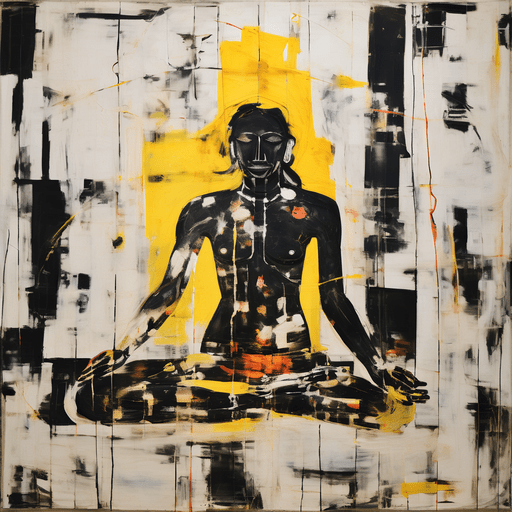
To plant your footsteps in this sacred ground of being means to engage deeply with the essence of life itself. It’s a journey of introspection, where one seeks to understand the interconnectedness of all things. In this field, grass represents not just a plant, but a concept, a symbol of growth, life, and interconnectedness. It’s a reminder that even the simplest elements of nature hold profound meanings in the grand mosaic of existence.


Engaging with the Akashic field can be a transformative experience. It encourages us to look beyond the material world and understand the deeper spiritual connections that bind us. Through meditation, contemplation, and other spiritual practices, one can ‘access’ this field, gaining insights into past lives, understanding the purpose of current challenges, and even glimpsing potential future events.

However, it’s crucial to approach this journey with humility and respect. The Akashic field is not just a source of information but a sacred space of collective consciousness. Engaging with it requires an open heart and a mind willing to learn and grow.


In conclusion, the Akashic field invites us to ponder the mysteries of existence and our place within it. It challenges us to view life not just as a series of random events but as a part of a grand, interconnected cosmic play. By planting our footsteps on this sacred ground, we embrace the potentiality of all that is, was, and will be, and in doing so, we find deeper meaning in the simple act of being.

Morgan O. Smith

Yinnergy Meditation, Spiritual Life Coaching & My Book, Bodhi in the Brain…Available Now!

https://linktr.ee/morganosmith

The Ground of All Being is Groundless

In the realm of philosophical thought, there exists a profound paradox that has puzzled thinkers for centuries: the concept that the ground of all being is, in fact, groundless. This idea challenges our fundamental understanding of existence, suggesting that the foundation upon which reality is built is devoid of any intrinsic substance or essence.

At first glance, this notion appears contradictory. How can the ground of all being, the fundamental basis of everything that exists, be groundless? To unravel this enigma, we must delve into the philosophical and metaphysical discussions that surround the nature of existence and reality.

The idea of a ‘groundless ground’ originates from existential and metaphysical debates. Philosophers like Heidegger and Sartre pondered the absence of an inherent essence in existence. This absence implies that existence precedes essence, meaning things exist first and their meanings or purposes are secondary, shaped by external factors rather than intrinsic qualities.


This perspective shifts the way we perceive reality. Instead of viewing the universe and everything in it as having a predetermined purpose or essence, we begin to see existence as a blank canvas. Our perceptions, experiences, and the meanings we assign to things shape this canvas. In this sense, the ‘ground’ of all being is not a pre-established foundation but a dynamic, ever-changing tapestry of experiences and interpretations.

Moreover, this idea resonates with quantum physics, where the most fundamental levels of matter behave in ways that defy traditional laws of physics. Particles exist in states of potentiality, their positions and velocities are determined only when observed. This uncertainty at the heart of matter echoes the philosophical concept of a groundless ground, suggesting that at the most fundamental level, the universe itself may not rest on any fixed foundation.

The implications of a groundless ground are both liberating and daunting. It frees us from the constraints of preordained meanings and purposes, allowing us to shape our existence. However, it also places the responsibility of finding or creating meaning squarely on our shoulders.


In conclusion, the concept that the ground of all being is groundless invites us to explore the depths of our existence. It challenges us to seek meaning and purpose not in some inherent essence but in the experiences and interpretations that shape our reality. This exploration is not just a philosophical exercise; it is a journey into the heart of what it means to be.

Morgan O. Smith

Yinnergy Meditation, Spiritual Life Coaching & My Book, Bodhi in the Brain…Available Now!

https://linktr.ee/morganosmith

Celebrating Black History Month

The Metaphysical and Spiritual Contributions of the Dogon Tribe

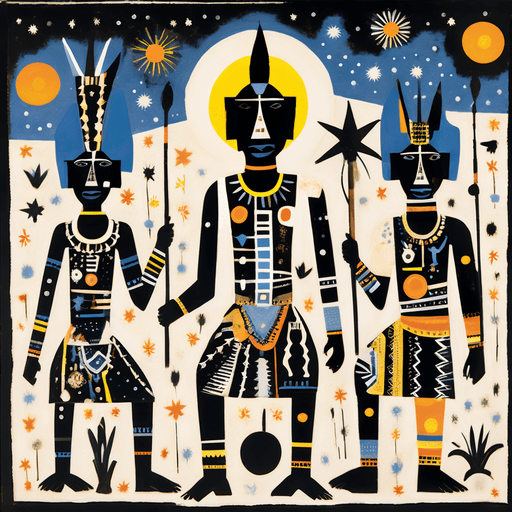
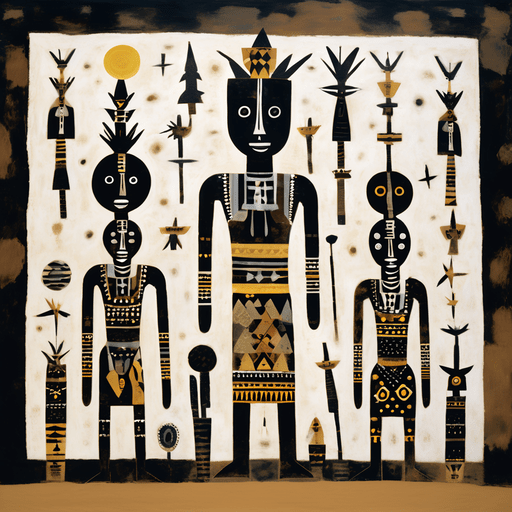
As we immerse ourselves in the rich observance of Black History Month, it is essential to explore not only the historical and cultural milestones achieved by African descendants but also the profound spiritual and metaphysical insights they have offered to the world. Among these contributions, the Dogon Tribe of Mali stands out, offering a unique perspective on the cosmos that intertwines with both spirituality and advanced astronomical understanding.

The Dogon people, with their intricate cosmology, have fascinated scholars and spiritual seekers alike. Their knowledge of the stars, particularly Sirius, and its companion stars, predates modern astronomical discoveries, suggesting a deep connection between their spiritual practices and a sophisticated understanding of the cosmos. This alignment between the heavens and the human spirit is not just a matter of intellectual curiosity; it serves as a bridge to the profound, illustrating how spirituality and empirical knowledge can coexist and enrich one another.


One of the most striking aspects of Dogon spirituality is their myth of creation, which is imbued with metaphysical significance. The Dogon describes the universe’s creation in terms that resonate with quantum physics and cosmology, speaking of a primordial egg from which all existence emerged in a resonant explosion of sound. This narrative parallels modern scientific theories about the Big Bang, suggesting that the Dogon had insights into the nature of the universe that science has only recently begun to understand.

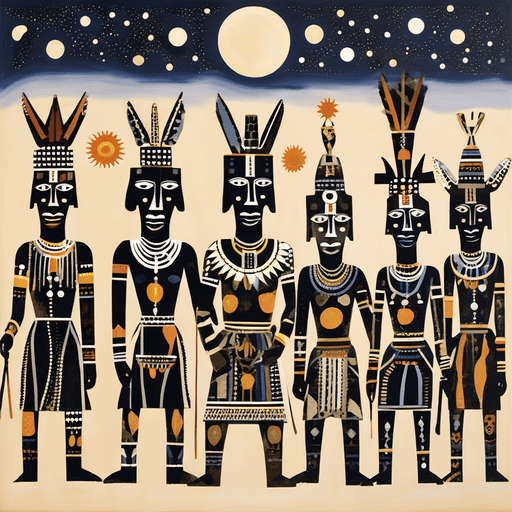
Moreover, the Dogon’s spiritual practices, including their rituals and ceremonies, are deeply symbolic and offer insights into the nature of reality, consciousness, and the interconnectedness of all life. Their masked dances and sacred rituals are not merely cultural performances but are imbued with a deeper meaning, serving as a conduit to the ancestral and the divine. These practices offer a window into how the Dogon perceive the universe and their place within it, embodying a holistic view that sees the spiritual and the material worlds as interconnected and interdependent.


The significance of the Dogon’s contributions to metaphysics and spirituality cannot be overstated. Their understanding of the cosmos challenges the dichotomy often drawn between science and spirituality, suggesting a more integrated approach to understanding the universe and our place within it. As we celebrate Black History Month, reflecting on the Dogon Tribe’s legacy invites us to expand our perspectives and appreciate the profound ways in which African spirituality has enriched the global mosaic of knowledge and belief.

In recognizing the Dogon Tribe’s contributions, we not only honour their legacy but also affirm the value of integrating diverse perspectives into our understanding of the universe. This celebration is a reminder of the rich spiritual heritage that African cultures offer to the world, a heritage that deepens our understanding of the cosmos, spirituality, and ourselves.


As we continue to explore and celebrate the contributions of African descendants during Black History Month, let us remember the Dogon Tribe’s remarkable insights into the metaphysical and spiritual realms. Their legacy is a beacon that guides us toward a more integrated and holistic understanding of the universe, encouraging us to embrace the wisdom found in the unity of science and spirituality.

Morgan O. Smith

Yinnergy Meditation, Spiritual Life Coaching & My Book, Bodhi in the Brain…Available Now!

https://linktr.ee/morganosmith

Where Did God Come From?

The question of where God came from strikes at the core of numerous philosophical, theological, and metaphysical discussions. It’s a question that has fascinated scholars, believers, and skeptics alike for centuries. At the heart of this inquiry lies the paradoxical nature of God’s existence: God is often described as omnipresent and nonlocal, transcending the concepts of space and time that define our physical reality.

To ponder upon where God came from is to delve into the depths of the unknown. It is widely held in many theological beliefs that God is the uncaused cause, the source from which all things emanate. This perspective leads to the intriguing notion that God came from nowhere. Nowhere, in this context, is not a physical location but a metaphorical representation of the absence of space and time – a realm beyond our comprehension.


This idea ties closely with the concept of God being nonlocal. Nonlocality, often discussed in quantum mechanics, suggests that an entity can be present everywhere simultaneously. In spiritual and metaphysical terms, this translates to the omnipresence of God. The omnipresence of God means that God exists beyond physical boundaries, in a state of being that encompasses all existence yet is bound by none.

What makes this concept even more thought-provoking is the idea that the pure essence of God is the absence of everything that exists. This notion posits that God is fundamentally different from everything we perceive in our universe. While our reality is defined by physicality, emotions, thoughts, spirituality, and metaphysical elements, the essence of God is distinct from all these. God, in this sense, is the ultimate reality, a state of pure being that transcends all known dimensions of existence.


Consequently, the physical, emotional, mental, spiritual, and metaphysical presence that we attribute to God are reflections or manifestations of this ultimate reality in forms that are comprehensible to us. They represent how we, as humans, perceive and connect with the divine. Each aspect – whether physical, emotional, mental, spiritual, or metaphysical – offers a different lens through which to understand and relate to the divine mystery that is God.

In conclusion, the question of where God came from leads us not to a definitive answer but to a deeper understanding of the nature of existence itself. It encourages us to explore the boundaries of our understanding and to accept the mystery that lies at the heart of all that is.

Morgan O. Smith

Yinnergy Meditation, Spiritual Life Coaching & My Book, Bodhi in the Brain…Available Now!

https://linktr.ee/morganosmith

The Ground of All Beings vs. The Ground of All Being

In the realm of philosophy, the concepts of “the ground of all beings” and “the ground of all being” often emerge as central themes in discussions about existence, consciousness, and the nature of reality. These concepts, while seemingly similar, offer distinct perspectives on how we understand the universe and our place within it.

**The Ground of All Beings**


“The ground of all beings” refers to the idea that the foundation of reality is the multitude of individual entities that exist. This perspective sees the universe as a collection of distinct beings, each with its essence and characteristics. According to this view, the diversity of objects, organisms, and entities contributes to the fabric of reality. It emphasizes plurality, acknowledging the unique qualities and experiences of each being. This approach often aligns with perspectives that value individuality and the richness that comes from varied existences.

**The Ground of All Being**

On the other hand, “the ground of all being” suggests a more unified view of existence. Here, the focus is on the underlying reality that connects all things, rather than the things themselves. This concept points to a fundamental source or essence that underpins everything. It’s often associated with ideas of oneness or the belief in a universal substance or consciousness that permeates all. This perspective is prominent in various spiritual and metaphysical beliefs, where the unity of existence is emphasized over individual differences.

**Philosophical Implications**


The debate between these two views is significant in philosophy as it shapes our understanding of the world. If we lean towards “the ground of all beings,” we might focus on the differences and separateness of things, leading to a worldview that celebrates diversity and individuality. Conversely, embracing “the ground of all being” could lead to a more holistic view of life, where interconnectedness and unity are fundamental.


**Conclusion**

Ultimately, these concepts are not just abstract philosophical ideas but are also reflective of our everyday experiences and how we perceive our relationship with the world. Whether we see the universe as a tapestry of distinct threads or as a single, interconnected whole, these views shape our beliefs, values, and actions. As such, the exploration of these concepts is not just a philosophical exercise but a journey into understanding the very nature of existence itself.

Morgan O. Smith

Yinnergy Meditation, Spiritual Life Coaching & My Book, Bodhi in the Brain…Available Now!

https://linktr.ee/morganosmith

Can One Choose to Go Back to Being Unenlightened?

The journey toward enlightenment is often viewed as a one-way path, leading to a state of spiritual awakening that fundamentally changes one’s perception of the world and self. But is it possible to revert to a state of unenlightenment? This question opens a fascinating philosophical debate.

#### The Irreversibility of Enlightenment


Once an individual experiences spiritual enlightenment, it is commonly believed that this transformation is irreversible. In spiritual traditions like Hinduism, Buddhism, and various mystic philosophies, enlightenment—referred to as Sahaja Samadhi, Turiyatitta, Nirvana, Nibbana, Moksha, Bodhi, and other names—is seen as the ultimate achievement. It’s a profound understanding of the universe and one’s place, transcending ordinary perception.

The idea of willingly abandoning such a state seems counterintuitive. Why would one return to a less aware state after enlightenment? For those who have experienced this profound awakening, giving it up, especially while in the human body, seems unimaginable.


#### The Divine Paradox

However, when considering the divine or absolute reality—referred to in various traditions as God, Brahman, Allah, or the Ground of All Being—there’s an intriguing paradox. This ultimate reality is believed to manifest itself in all forms of existence, encompassing every species and aspect of the universe. In doing so, it seemingly relinquishes its state of pure enlightenment to become the myriad forms of life and matter.

#### The Bodhisattva’s Choice

In Mahayana Buddhism, the concept of the Bodhisattva presents another unique perspective. A Bodhisattva is an individual who has caught a glimpse of enlightenment but chooses not to enter this state fully. This choice is made out of compassion, with the vow to help all sentient beings achieve enlightenment before achieving it themselves fully. This represents a profound sacrifice and a different understanding of enlightenment, not as a personal achievement but as a collective goal.


#### Conclusion

The question of whether one can choose to return to unenlightenment is complex and multi-faceted, deeply rooted in various spiritual traditions and philosophical contemplations. It invites us to consider the nature of spiritual awakening, the role of the divine in the cosmos, and the interconnectedness of all beings in the journey toward enlightenment.

Morgan O. Smith

Yinnergy Meditation, Spiritual Life Coaching & My Book, Bodhi in the Brain…Available Now!

https://linktr.ee/morganosmith

The Paradox of the Universe

When we gaze into the vast expanse of the universe, a fundamental question arises: What is the universe made of? It seems like a straightforward inquiry, one that science could answer with theories of matter, energy, particles, and forces. However, upon deeper reflection, the answer becomes less about physics and more about philosophy. The universe, in its most enigmatic form, is made of itself, which paradoxically, is nothing.

This concept, while initially sounding absurd, invites us to explore the nature of existence and the fabric of reality. The universe isn’t just a collection of galaxies, stars, and planets; it’s an intricate tapestry of existence, interwoven with the threads of time, space, and consciousness. To say the universe is made of itself is to acknowledge that it is a self-contained entity, not requiring an external creator or an outside source of substance.


Delving deeper, the idea of the universe being ‘nothing’ challenges our understanding of ‘nothingness’. In philosophy, ‘nothing’ is often considered a state of non-existence, an absence of everything. Yet, in the context of the universe, ‘nothing’ transforms into a concept of boundless potential. This ‘nothing’ is not an emptiness (not in the traditional sense) but a source of all creation, a primordial state from which everything emerged.

This perspective aligns with some interpretations of quantum physics, where the vacuum of space is not empty but teeming with energy and potentiality. It’s in this ‘nothingness’ that particles pop in and out of existence, creating the fabric of reality as we perceive it. Therefore, the universe is made of itself and nothing is not a contradiction but a profound insight into the nature of reality.


The implications of this thought are vast and deeply philosophical. It suggests that the universe, and by extension, our existence, is a self-generated, self-sustaining phenomenon. We are not just in the universe; we are of the universe – an integral part of this grand, incomprehensible entity that is both everything and nothing.

In conclusion, the question of what the universe is made of leads us down a path of deep philosophical contemplation. It reveals that the universe, in its essence, is a paradox, defying the conventional understanding of existence and non-existence. It’s a reminder of the mystery and wonder that surrounds us, an invitation to ponder the unfathomable depths of reality.

Morgan O. Smith

Yinnergy Meditation, Spiritual Life Coaching & My Book, Bodhi in the Brain…Available Now!

https://linktr.ee/morganosmith

The Paradox of Understanding

Embracing the Ground of All Being

As we embark on the journey of understanding the essence of our existence, we often find ourselves entangled in a paradoxical quest. The profound pursuit of comprehending the ‘ground of all being’ – the foundational reality that underpins our very existence – is a path treaded by philosophers, mystics, and thinkers alike. Yet, this quest often comes to a halt, not because of a lack of effort, but because of the nature of what we seek to understand.

The ground of all being, by its very definition, transcends the boundaries of human comprehension. It is an entity or a state that exists beyond the limits of our cognitive abilities. We, as beings limited by our perceptions and understanding, often find this concept elusive. It’s akin to asking a fish to describe water; the fish knows it exists within water, but cannot perceive it as something separate from its existence.


However, the journey doesn’t end here. There’s a transformative realization that emerges when we stop trying to intellectually grasp this foundational reality. It’s when we let go of the need to understand and become one with the comprehension itself. This shift in perspective is profound. We move from a state of trying to ‘know’ to a state of ‘being’ in knowledge.

This transformation leads to a profound understanding of ourselves. We are not merely what we appear to be – physical entities navigating through life’s complexities. Instead, we are embodiments of comprehension, part of the vast, interconnected web of existence. We are both the seekers and the embodiment of what is sought.


Upon this realization, the world transforms before our eyes. Everything we perceive becomes imbued with an intrinsic beauty. This beauty is not a superficial aesthetic; it’s a deeper recognition of the interconnectedness and the sacredness of all that is. In comprehending our place in this grand tapestry, we find beauty in the mundane, the ordinary, and even the chaotic.

In conclusion, the quest to comprehend the ground of all being leads us back to ourselves. It’s a journey from seeking understanding outside to finding it within. As we embrace this journey, we find that beauty lies not just in what we see, but in the eyes of the comprehensive – in our newfound ability to perceive the world through the lens of interconnectedness and oneness.

Morgan O. Smith

Yinnergy Meditation, Spiritual Life Coaching & My Book, Bodhi in the Brain…Available Now!

https://linktr.ee/morganosmith

Exploring the Concept of ‘The Absolute’

In Philosophy and Spirituality

The notion of ‘The Absolute’ is a profound and enigmatic concept that has intrigued philosophers, theologians, and spiritual seekers for centuries. At its core, The Absolute represents the ultimate reality or truth that transcends ordinary understanding. It is often described as the ever was, the ever is, and the ever shall be, encompassing the past, present, and future in a singular, unified existence.

This concept is not confined to any one religion or philosophical system. It is found in various forms across different cultures and spiritual traditions. In Hindu philosophy, it is known as Brahman, an unchanging, infinite, immanent, and transcendent reality that is the source of everything. Brahman is the ultimate cause and foundation of all existence.


In Buddhism, particularly in its Theravada tradition, the concept of Anatta or ‘non-self’ echoes a similar idea. Anatta suggests that living beings have no unchanging, permanent self, soul, or essence. It points to a kind of Absolute that is devoid of individual identity, yet underpins the nature of existence.

Similarly, in Islamic theology, Allah is the Absolute, encompassing all attributes and beyond all human understanding. Allah is the ultimate reality, creator, and sustainer of the universe, beyond all temporal and spatial limitations.


In Christian mysticism, the term ‘God’ often transcends the anthropomorphic deity figure, representing instead an Absolute that is the ground of all being. This idea is also seen in other forms of monotheism and panentheism, where God is understood as both immanent and transcendent, existing within and beyond the universe.

The concept of ‘The Absolute’ also finds a parallel in Western philosophy, particularly in the idea of Absolute Monism. This philosophy posits that there is only one underlying reality, and all diversity and plurality we observe are merely manifestations of this singular existence.


At the heart of these diverse interpretations is a common thread: The Absolute is the ultimate reality, beyond the grasp of human thought and language, transcending our limited perceptions of time and space. It is a concept that challenges us to look beyond the material and ephemeral world, urging us to ponder the mysteries of existence and the universe.

In exploring ‘The Absolute,’ we delve into the deepest questions of life and existence. It’s a journey that takes us beyond the boundaries of conventional thought, into the realms of spirituality and metaphysical contemplation.

Morgan O. Smith

Yinnergy Meditation, Spiritual Life Coaching & My Book, Bodhi in the Brain…Available Now!

https://linktr.ee/morganosmith

Atoms Within Atoms

Contemplating the Cosmic Scale of Existence

In the grand tapestry of existence, our understanding often finds itself confined within the boundaries of human perception. Yet, when we dare to venture beyond these limits, we encounter a humbling and awe-inspiring perspective. Consider this: each of us is composed of trillions of atoms, minuscule yet intricate components that constitute our very essence. Now, elevate this thought to a cosmic scale. What if our entire universe, with its vast galaxies and nebulae, is but a single atom within the immeasurable body of a higher entity or force, which some may choose to call God?

This analogy invites us to rethink our place in the cosmos. It suggests that just as each atom plays a vital role in the structure and function of our being, so too might our universe contribute to a larger purpose within this colossal entity. This perspective is not to diminish our significance but to expand our understanding of connectivity and purpose. In this cosmic view, every action, thought, and event within our universe could be integral to the workings of a grander scheme, a higher order of existence.

Such a notion also challenges our understanding of God or the ground of all being. Traditionally conceived as an omnipotent and omniscient entity, this view presents God not just as a creator or a distant observer but as a vast, living entity within which universes exist like atoms within a body. This reimagining bridges the gap between the spiritual and the physical, suggesting a universe that is not separate from the divine but intrinsically part of it.

The implications of this perspective are profound. It propels us to consider our actions and their repercussions not just on a worldly scale but as part of a cosmic dance. It encourages a sense of universal responsibility and interconnectedness, urging us to view ourselves not as isolated beings but as integral components of a much larger existence.

In conclusion, the idea that our universe could be akin to an atom within the body of a higher entity redefines our understanding of existence, purpose, and spirituality. It invites us to contemplate our place in the cosmos as inhabitants of a vast universe and as part of a much grander, interconnected whole.

Morgan O. Smith

Yinnergy Meditation, Spiritual Life Coaching & My Book, Bodhi in the Brain…Available Now!

https://linktr.ee/morganosmith