Maya Unveiled

Understanding the Illusion in Every Gaze

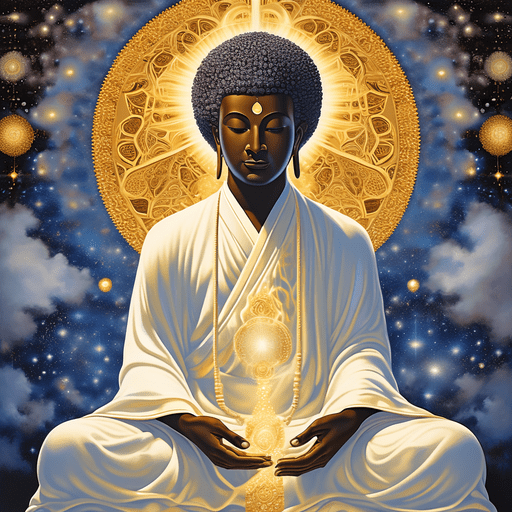
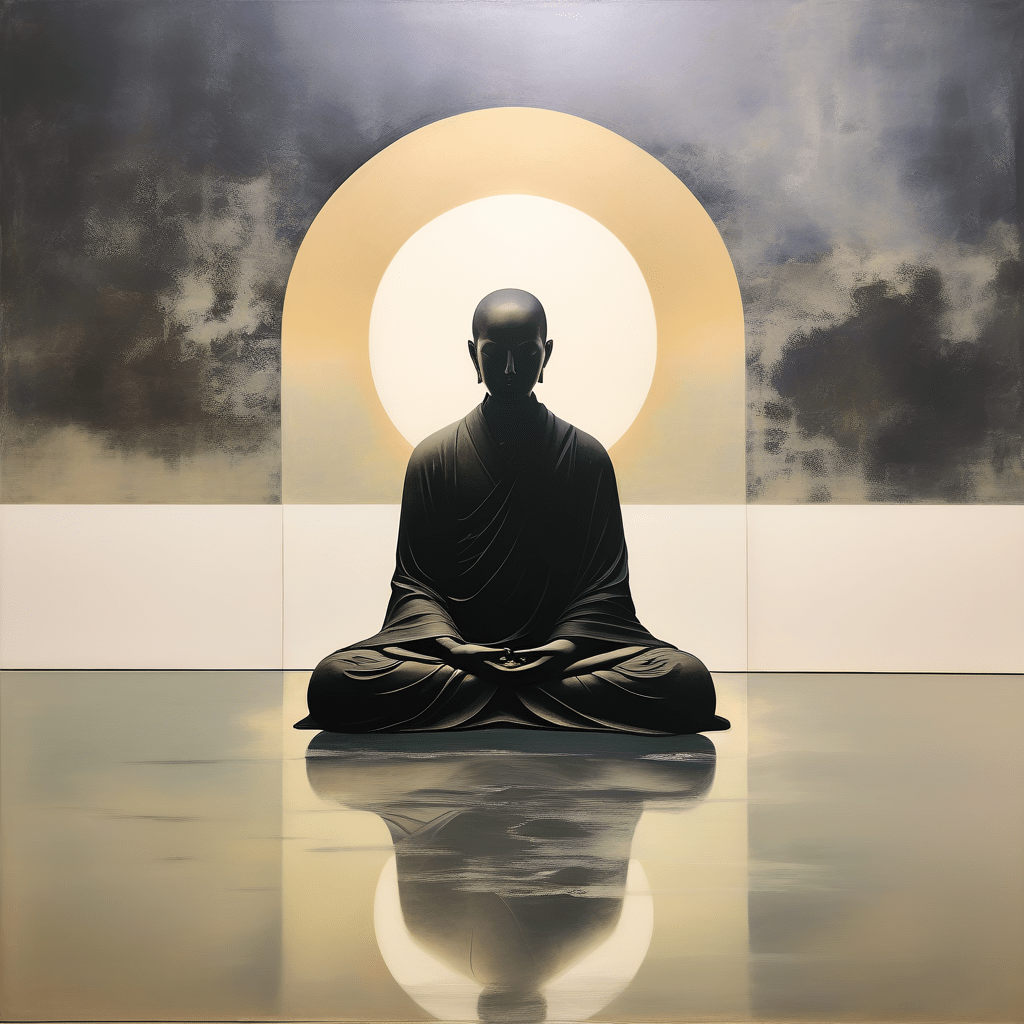
In the intricate dance of life, where perceptions and reality often intertwine, lies the ancient concept of Maya. Rooted deeply in Eastern philosophy, Maya is an idea and an expansive realm of understanding. It invites us to question: What is the true essence of what we perceive? How does the veil of illusion colour our view of the world?

**The Mirage of Perception**

Each moment, we are surrounded by a myriad of stimuli. As interpreters, our senses craft a version of reality that we accept as truth. But this truth is subjective, filtered through the lens of personal experiences, beliefs, and biases. In this way, the world we perceive is not an absolute, but a personal construct. Just as a painter brings forth a landscape from his imagination onto the canvas, we too paint our realities, often unaware that the brush is in our hands.

**The Nature of Maya in Daily Life**

Maya is omnipresent, influencing every aspect of our existence. It shapes our relationships, our joys, and our sorrows. Even our self-identity is a product of this illusion, a constructed narrative we cling to. The roles we play, the labels we adopt, are but temporary garments worn by the eternal self.


**Transcending the Illusion**

In the pursuit of spiritual awakening, recognizing the presence of Maya is a pivotal step. It is in understanding that what we perceive as concrete may indeed be ephemeral. Meditation and mindfulness practices serve as gateways to this realization. As we dive deeper into the realms of introspection, we begin to distinguish the impermanent from the eternal, the illusory from the real.

**Integrating Maya into Enlightenment**

Embracing Maya does not mean rejecting the world. Instead, it involves seeing through the veil, and acknowledging the illusion while engaging with the world. It is about finding harmony between the spiritual and the material, understanding that even in illusion, there is a purpose and a lesson.

**A Journey Beyond the Visual**

Our journey of enlightenment is not about negating our experiences but about transcending their limitations. It involves expanding our consciousness beyond the confines of personal perception, into a space where unity and diversity coexist, where the duality of self and other dissolves.


**Conclusion**

Maya, often misunderstood, is not a barrier but a bridge. A bridge that leads us to question, to seek, and ultimately to understand the profound nature of existence. In every distorted view lies a hidden truth, waiting to be uncovered by the earnest seeker.

Morgan O. Smith

Yinnergy Meditation, Spiritual Life Coaching & My Book, Bodhi in the Brain…Available Now!

https://linktr.ee/morganosmith

Embracing the Void

The Liberation in Nothingness

In our world, brimming with constant stimulation and endless narratives, the concept of ‘Nothingness’ seems almost alien. It’s a state often misunderstood, perceived as a void of despair or a lack of being. Yet, this misconception veils a profound truth. Nothingness, in its purest form, is not a gaping emptiness but a space of boundless freedom. It’s an existential canvas, untouched and unburdened by the layers of human conditioning and societal constructs.

Nothingness is a realm where concepts don’t exist. It’s a landscape where ideas, beliefs, and expectations don’t anchor us. In this space, the false self – that avatar sculpted by external influences and internal conflicts – dissolves. What remains is the essence of being, unshaped by narratives, uncolored by prejudices, and unconfined by the boundaries of identity.


This concept is not new. Philosophers, mystics, and thinkers throughout history have grappled with the notion of ‘Nothingness.’ They’ve seen it not as a pit of nihilism but as a sanctuary of potential. In Zen Buddhism, for example, ‘Mu’ or ‘Emptiness’ is a state to aspire to, a space of pure existence and awareness without the filters of the mind.

The journey to this state is not about negation but about liberation. It’s about peeling away the layers, not to find nothingness but to discover everything in its unaltered form. When we detach from the myriad thoughts, stories, and labels we’ve collected over time, we start seeing the world and ourselves in a clearer light. We begin to experience life not as a series of reactions to preconceived notions but as a flow of unfiltered experiences.

Imagine for a moment, a life free from the tyranny of the ‘shoulds’ and ‘musts,’ a life where our choices are not dictated by ingrained beliefs but are born out of pure awareness. In this space, creativity flourishes, for it is not hindered by fear of judgment or failure. Relationships deepen, as they are not clouded by expectations or past grievances. Every moment becomes an opportunity for genuine discovery, unmarred by the past or the future.

However, embracing Nothingness is not a denial of reality or responsibility. It’s about approaching life with a fresh perspective, one that is unencumbered by the weight of preconceptions. It’s about living authentically, aligned with one’s true nature, rather than a constructed persona.


In a world that often feels chaotic and overwhelming, the state of Nothingness offers a sanctuary of peace and clarity. It reminds us that at the core, beyond the noise and the clutter of our conditioned minds, there is a space of pure potential, waiting to be explored.

The state of Nothingness is not a destination to be reached but a journey to be embraced. It’s a continuous process of unlearning, of letting go, and of returning to the essence of who we truly are.

Morgan O. Smith

Yinnergy Meditation, Spiritual Life Coaching & My Book, Bodhi in the Brain…Available Now!

https://linktr.ee/morganosmith

Unlocking the Mind’s Full Potential

A Journey Beyond the Ordinary

In a world where our thoughts often run on autopilot, dictated by routine and societal norms, the true potential of the human mind remains largely untapped. It’s akin to a vast, unexplored landscape, brimming with possibilities that transcend the mundane. But how do we navigate this inner wilderness and fully express the capabilities of our minds?

The first step is awareness. We must become conscious observers of our thought processes. This goes beyond mere introspection; it involves a deep, almost meditative attention to the way we think, feel, and perceive the world. Only then can we identify the habitual patterns that confine our mental agility.


Next is the cultivation of curiosity. A curious mind is an active mind, always seeking, always questioning. It does not accept the world at face value but looks for the layers and connections that lie beneath the surface. This relentless quest for understanding and meaning propels our thoughts to new heights.

Creativity is the third key element. It’s not just about artistic endeavours; creativity is a way of thinking, a means of viewing the world through a lens of possibility and innovation. When we embrace our creative impulses, we give ourselves permission to think outside the conventional frameworks and explore new territories of thought.

Finally, there is the aspect of connection. Our minds are not isolated entities; they thrive on the exchange of ideas and experiences with others. Engaging in thoughtful dialogue, embracing diverse perspectives, and seeking collaborative ventures enrich our mental processes and broaden our understanding.


As we embark on this journey of mental exploration and expression, we discover that the human mind is not just a tool for navigating life’s practicalities. It is a dynamic, ever-evolving entity, capable of extraordinary insights and profound understanding. The journey to fully activate our brains is, in essence, the journey to a more fulfilled and enlightened existence.

Morgan O. Smith

Yinnergy Meditation, Spiritual Life Coaching & My Book, Bodhi in the Brain…Available Now!

https://linktr.ee/morganosmith

The Tsunami of Spiritual Awakening

Navigating the Transformative Waves

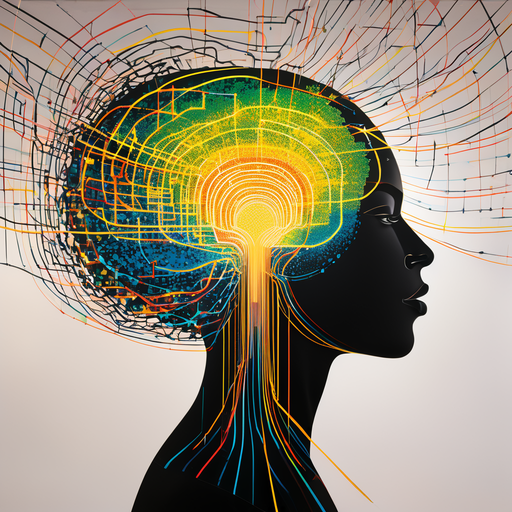
In the journey of spiritual growth, reaching a state of full spiritual awakening can be likened to the immense power and transformative force of a tsunami. Just as a tsunami reshapes the landscape, a spiritual awakening at its highest peak redefines the contours of one’s inner world, unleashing profound changes that ripple through every aspect of existence.

**The Onset of the Wave**


The beginnings of a spiritual awakening are often subtle, much like the imperceptible swell of the ocean that precedes a tsunami. It may start with a sense of restlessness, a longing for something more profound than everyday experiences. This stage is marked by questioning – questioning one’s purpose, the nature of reality, and the deeper truths of existence.

**The Rising Tide**


As the wave gathers momentum, so does the awakening process. This is often where the most intense spiritual experiences occur. Individuals may experience moments of heightened awareness, profound insights, and a deep sense of interconnectedness with the universe. It’s a phase characterized by exhilaration and confusion, as old belief systems crumble and new understandings emerge.


**The Impact**

The peak of a spiritual awakening, akin to the moment a tsunami makes landfall, is both powerful and disruptive. It can upend long-held beliefs, relationships, and life structures. This phase can be challenging, as it demands letting go of the ego and the familiar constructs that once offered security. In its wake, it leaves a transformed landscape – a new way of being and perceiving the world.

**Navigating the Aftermath**


The aftermath of a spiritual tsunami is about integration and rebuilding. It involves finding a new equilibrium, where one’s heightened spiritual awareness becomes a natural part of daily life. This stage is about living from a place of deeper wisdom and compassion, both for oneself and others.

**Embracing the Journey**

A full spiritual awakening is not a destination but a continuous journey. It invites an ongoing exploration of the depths of one’s soul and the mysteries of the universe. It’s a path marked by both challenges and profound beauty, an opportunity to live life with a deeper sense of purpose and connection.


In conclusion, the journey of spiritual awakening is transformative and intense, akin to the power of a tsunami. It reshapes not just individual lives, but can also have a profound impact on the collective consciousness. Embracing this journey requires courage, openness, and a willingness to let go of the familiar shores to explore the depths of the spiritual ocean.

Morgan O. Smith

Yinnergy Meditation, Spiritual Life Coaching & My Book, Bodhi in the Brain…Available Now!
https://linktr.ee/morganosmith

Devils of Tasmania

Embracing Our Inner Demons

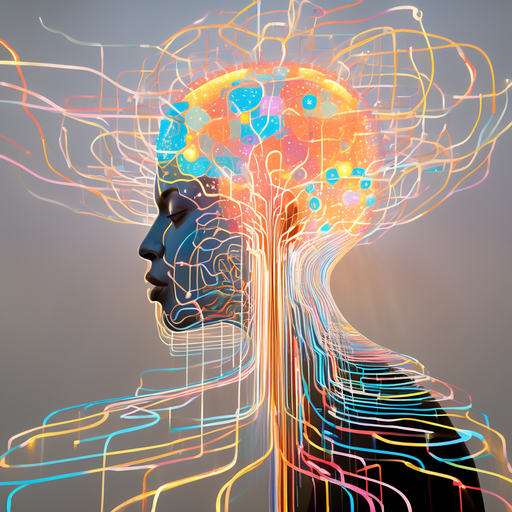
In the depths of our psyche lurks a hidden shame, explicit yet unacknowledged. We live most of our lives concealing our darker selves, fearing the part within capable of mass destruction and devoid of remorse. This fear drives us to repress these inner demons, to maintain the facade of our public persona, free from shame and disgrace.


Yet, these impulses, these inner monsters, are potent forces, akin to natural disasters. They are not acts of God but inherent parts of our being, capable of tearing down everything in their path. Their destructive nature is unchanging and inevitable. Our task is not to deny them but to accept and direct their fury toward crumbling edifices that lack a solid foundation.

These demons, if unchecked, can ruin lives. However, harnessed correctly, they have the power to demolish outdated beliefs and paradigms, shedding light on areas we need to confront and overcome. Their destructive capabilities allow us to rebuild from the ashes creatively. They give us a chance to construct anew – to erect buildings of thought and behaviour that are more resilient and robust than ever before.


Our distress over this destruction stems from our attachment to what we have built and our reluctance to accept the impermanence of all things. Only by acknowledging and embracing these internal devils can we truly liberate ourselves from their hold and transform their destructive power into a force for personal growth and renewal.

Morgan O. Smith

Yinnergy Meditation, Spiritual Life Coaching & My Book, Bodhi in the Brain…Available Now!
https://linktr.ee/morganosmith

Beyond the Conceptual

Understanding Ultimate Knowing

In our journey through life, we often find ourselves entangled in the web of conceptual knowing – a realm dominated by facts, figures, and the tangible. However, there lies a deeper, more profound level of understanding, which I refer to as “ultimate knowing.” This is not just another rung on the ladder of knowledge, but rather a different dimension that transcends and encompasses all conceptual knowledge.

Ultimate knowing is akin to an intuitive grasp of the essence of things, where one connects with the underlying reality of the universe. It’s not about accumulating more information, but about experiencing a fundamental shift in perspective. In this realm, knowledge is not fragmented or isolated; it is holistic and interconnected. Here, the barriers between the knower and the known dissolve, and one experiences a profound sense of unity with all that is.


This state of understanding transcends language and thought. It is where the mind is not just processing information but is in tune with the rhythm of existence. In ultimate knowing, we experience moments of clarity and insight that seem to come from a deeper source within us, offering guidance that is often more accurate and profound than any logical analysis.

To reach this level of understanding, one must often unlearn what has been learned, letting go of preconceived notions and beliefs. It involves opening oneself to the mysteries of the universe, embracing uncertainty, and being comfortable with not knowing. It’s about being present in the moment, fully aware and alive to the experience of life.


The path to ultimate knowing is unique for each individual, but it often involves practices that quiet the mind, such as meditation, mindfulness, or immersion in nature. These practices help to strip away the layers of conditioning and habitual thinking, allowing the individual to experience a more authentic and direct form of knowing.

In conclusion, while conceptual knowledge has its place in our world, ultimate knowing offers a richer, more profound understanding of life. It’s about connecting with the deeper truths that lie beyond the realm of the intellect, where one experiences a sense of wholeness and connection with the universe.

Morgan O. Smith

Yinnergy Meditation, Spiritual Life Coaching & My Book, Bodhi in the Brain…Available Now!

https://linktr.ee/morganosmith

The Unseen Journey

Crawling Towards Enlightenment

In the realm of spiritual growth, the path to enlightenment is often misconceived as a sudden emergence into a state of knowing. Yet, the essence of true understanding unfolds gradually, mirroring the natural progression from crawling to walking. This journey is subtle, requiring patience, persistence, and a deep commitment to the inward voyage.

Enlightenment, in its profound simplicity, can be likened to the process of a child learning to navigate the world. Initially, the child crawls, a phase marked by exploration and curiosity. This stage, though seemingly modest, is foundational. It represents the initial stirrings of awareness, where the soul begins to recognize the vastness of its existence beyond the physical constraints. Here, the seeker starts to explore the inner dimensions, crawling through the layers of self, guided by the light of introspection.

The transition from crawling to walking in spiritual terms is not marked by physical growth but by the expansion of consciousness. It involves the gradual shedding of ego, the relinquishment of attachments, and the deepening of one’s connection to the universal truth. This process is not linear but cyclical, with each step forward often accompanied by moments of regression, prompting further introspection and growth.

As we embark on this journey, we learn that enlightenment is not a destination but a way of being. It is the realization that every moment, every breath is an opportunity to be present, to witness the unfolding of life with a heart full of compassion and a mind free from judgment. The path demands a surrendering, a letting go of the need for certainty, and an embrace of the mystery that envelops our existence.

The beauty of this journey lies in its uniqueness for each individual, yet the underlying principle remains the same: one must learn to crawl before one can walk. The initial steps, taken in the darkness of the unknown, are what prepare us for the light of wisdom. It is in the act of crawling, of moving forward with humility and grace, that we pave the way for our spiritual awakening.


Let us then honour the crawl, the gentle, determined exploration of our inner landscapes, for it is here that the seeds of enlightenment are sown. Let us approach each day as a step towards understanding, a movement closer to the harmony that exists between the self and the universe. In doing so, we walk the path of enlightenment, not with haste, but with the deliberate pace of one who understands the value of each moment of awareness.

Morgan O. Smith

Yinnergy Meditation, Spiritual Life Coaching & My Book, Bodhi in the Brain…Available Now!

https://linktr.ee/morganosmith

All Life is Yoga

The Essence of Existence and Awareness
In the grand mosaic of life, the concept of Yoga transcends beyond its commonly perceived boundaries of physical postures and breath control. It is a profound philosophy and a way of living that interweaves through every aspect of our existence. The assertion “All life is Yoga” is not just a statement but a deep realization that unfolds the interconnectedness of everything around us.

Yoga, in its truest sense, is not confined to the mats or the tranquil corners of meditation halls. It is present in every breath, every step, and in the pulsating rhythm of the universe. The situations we encounter, the events that unfold, the actions we undertake, and the interactions we engage in, all embody the essence of Yoga. These elements serve as mirrors, reflecting the principles of unity, balance, and harmony that Yoga espouses.

Moreover, this perspective extends to the wider construct of civilization. Every culture, community, and era holds the essence of Yoga within its core. The way societies operate, the values they cherish, and the progress they pursue are manifestations of Yoga in a collective form. The principles of coexistence, empathy, and understanding that are integral to societal development are, in essence, Yoga in action.

In the broader context, the entire expanse of existence is a form of Yoga. The cosmos, with its infinite galaxies, stars, and planets, follows a celestial dance that echoes the principles of Yoga. The natural world, with its intricate ecosystems and life forms, demonstrates the interdependence and harmony that are central to Yoga.

The practice of Yoga, in its various forms, is a journey towards the full awareness of these truths. It is a path that leads to the recognition of the oneness of all existence, the interconnectivity of life, and the profound wisdom that lies in understanding that “All life is Yoga.”

In embracing this philosophy, we open ourselves to a more mindful, compassionate, and connected way of living. We learn to see Yoga in everything and everyone, realizing that every moment is an opportunity to practice awareness, kindness, and unity. This understanding has the power to transform not only individual lives but also the world at large, steering us toward a more harmonious and enlightened existence.

Morgan O. Smith

Yinnergy Meditation, Spiritual Life Coaching & My Book, Bodhi in the Brain…Available Now!

https://linktr.ee/morganosmith

Nonduality

The Unspoken Reality

In the realm of spirituality and philosophy, few concepts are as intriguing and paradoxical as nonduality. Nonduality, often associated with Eastern philosophies like Vedanta and Buddhism, refers to the idea that the dualistic distinctions we make between self and other, subject and object, mind and matter, are ultimately illusory or not fundamentally real.

The profound irony of nonduality is that any attempt to discuss or conceptualize it inherently contradicts its very essence. Speaking or thinking about nonduality is, by its nature, a dualistic activity. This is because language and thought are tools that rely on differentiation and distinction. They are the media through which we carve out the ‘self’ from the ‘other’, the ‘this’ from the ‘that’. In doing so, they perpetuate the illusion of duality – the very illusion that nonduality seeks to transcend.


This paradox highlights a fundamental challenge in human cognition: our reliance on dualistic frameworks to make sense of the world. From the moment we are born, our minds are trained to categorize and differentiate. This cognitive structuring is crucial for our survival and functioning in the world, yet it also confines us within the boundaries of dualistic thinking.

Nonduality suggests a state of consciousness where these dualistic distinctions dissolve. It points to an experiential understanding where the division between subject and object, observer and observed, ceases to exist. In this state, the egoic self expands into a boundless, undifferentiated whole.

Yet, the path to realizing nonduality is not through intellectual understanding. Since it is beyond the grasp of dualistic thought and language, nonduality is often approached through practices that transcend rational thinking, such as meditation, mindfulness, or other forms of spiritual contemplation. These practices aim to quiet the mind and dissolve the ego, allowing for a direct, non-conceptual experience of reality, unfiltered by the distorting lens of dualistic thought.


In conclusion, nonduality remains an enigmatic yet profoundly significant concept. It challenges us to look beyond the apparent separateness and fragmentation of our experiences and to question the very foundations of our understanding of reality. While it may never be fully captured in words or thoughts, it stands as a powerful reminder of the limitations of our dualistic perspectives and invites us to explore the depths of our consciousness.

Morgan O. Smith

Yinnergy Meditation, Spiritual Life Coaching & My Book, Bodhi in the Brain…Available Now!
https://linktr.ee/morganosmith

Everyone Falls Back Asleep After Awakening, But No One Falls Asleep After Enlightenment

In the journey of self-awareness and understanding, there’s a profound adage that resonates deeply: “Everyone falls back asleep after awakening, but no one falls asleep after enlightenment.” This statement, while seemingly simple, carries with it a world of meaning and depth, particularly in the context of spiritual and personal growth.

#### The Paradox of Awakening and Enlightenment

At first glance, the idea of “falling back asleep after awakening” seems counterintuitive. Isn’t awakening supposed to be a permanent shift in consciousness? The truth, however, lies in the subtle difference between temporary awakenings and true enlightenment. Many of us experience moments of awakening — brief glimpses into a deeper reality or a sudden awareness of a profound truth. These moments can be sparked by various experiences: a beautiful sunset, a piece of art, or a moment of deep connection with another person. However, these are often transient, and we find ourselves slipping back into our habitual patterns of thought and behaviour.

Enlightenment, on the other hand, represents a fundamental and irreversible shift. It’s akin to a door that, once opened, cannot be closed again. In enlightenment, there is a permanent transformation of perspective, a sustained awareness that transcends the ordinary consciousness. This state is often described as a deep, unshakable understanding of the nature of reality, self, and existence.


#### The Role of Meditation in Enlightenment

This statement emphasizes the necessity of years of meditation for true enlightenment. Meditation, in its various forms, is more than just a practice of calming the mind. It’s a tool for deep introspection, for peeling away the layers of illusion and ego that cloud our true nature. Through persistent meditation, one can gradually dissolve these barriers, fostering a greater connection with the inner self and the universe.

Meditation teaches patience, discipline, and, most importantly, the ability to observe without attachment. These qualities are essential in moving from fleeting moments of awakening to a sustained state of enlightenment. It’s a journey of continuous growth and learning, where each meditative experience builds upon the last, gradually leading to a profound understanding and acceptance of what is.


#### Conclusion

In conclusion, the journey from awakening to enlightenment is not a straight path. It involves many cycles of falling back into unconsciousness and rising again with a deeper understanding. This process is necessary and valuable, as each fall and rise polishes the soul, preparing it for the ultimate state of enlightenment. The years of meditation are not just a discipline but a devotion to the inner journey, a commitment to uncovering and living one’s truth.

Morgan O. Smith

Yinnergy Meditation, Spiritual Life Coaching & My Book, Bodhi in the Brain…Available Now!

https://linktr.ee/morganosmith