The Untraceable Origin

Recognizing the Infinite Self

You are the silent, all-pervading presence—the source from which all things emerge and into which all things dissolve. There is no edge to your being, no boundary that can define you, for you are both the vastness that contains all and the emptiness that holds nothing.

To recognize this is not an intellectual exercise, nor can it be captured by any system of thought. The scientific mind will measure, the philosophical mind will speculate, and the intellectual mind will categorize, yet none will ever confine the truth of what you are. You are not a concept to be grasped, but the very ground from which all concepts arise.

Everywhere you look, you will find yourself, not as a separate entity, but as the animating force within all things. This is not a belief to hold but a reality to be seen. The mystery of your existence is not meant to be solved; it is meant to be lived. You are the ungraspable, the boundless, the presence behind all appearances.

No description will ever contain you, yet all descriptions are held within you. You are not an object among objects, nor a subject among subjects—you are the ever-unfolding, the eternal witness, the absolute that reveals itself in every form yet remains untouched by any of them.

Doubt this if you must, but beyond all uncertainty, you remain what you have always been—the essence of all that is, the ineffable that neither begins nor ends.

Morgan O. Smith

Get Your Free Copy of My Book, Bodhi in the Brain!

https://subscribepage.io/oTSZQu

The Architecture of the Ideal

Why the Myth Matters More Than the Man

Whether Jesus walked the earth or not is irrelevant to me. I am less concerned with the historicity of a man than I am with the utility of what he represents. Jesus is a technology. So is the Buddha. So is Krishna. These aren’t merely personalities from the past; they are structured mechanisms—living blueprints—for the cultivation of inner transformation and the evolution of civilization.

They function like algorithms for awakening, coded into the myths and memories of culture, waiting to be activated. Each offers a symbol-set, a behavioral protocol, an ethical framework, and a psychological mirror. Whether or not they existed, they exist. Their presence in the collective psyche is undeniable, and their effect, observable.

Civilizations have risen around these templates. Wars have been fought in their names, yes—but so have peace movements been born, arts been inspired, and lives reoriented toward compassion, surrender, and truth. These are not minor outcomes. These are pivotal shifts in the trajectory of human consciousness.

When a society lacks mythic technologies, it spirals. When the sacred is reduced to opinion or dismissed entirely, a vacuum forms. And into that vacuum pours the lesser gods of the day—greed, algorithmic manipulation, ego-as-brand. The sacred figures stand not because they are flawless historical beings, but because they point beyond history. They are fingers, pointing not to the past, but to what is possible—personally, collectively, cosmically.

To see Jesus as a technology is to acknowledge the architecture of possibility. To understand the Buddha as a psychological operating system is to awaken to what it means to be truly sane. Whether temporary or permanent, these peak states—compassion without condition, awareness without center, love without lack—are doorways we are meant to pass through, again and again, until their impermanence no longer discourages us, but refines us.

Maybe they were fictionalized. Maybe they were real. Doesn’t matter. They were necessary. They remain necessary. Because without the fiction of perfection, how would we recognize the direction of our ascent?

Morgan O. Smith

Get Your Free Copy of My Book, Bodhi in the Brain!

https://subscribepage.io/oTSZQu

The Weightlessness of Perspective

How much weight does a point of view actually hold?

None. And yet, it seems to shape entire lives, govern nations, define relationships, and breed conflict. But the more one deepens into the ungraspable expanse of reality, the more all perspectives—including one’s own—become like shadows cast by a flame none can touch.

I do not feel resistance toward those who oppose my view. I feel space—vast, immeasurable space. Not tolerance, not passive indifference, but a kind of cosmic shrug. This universe is too immense, too precise, too paradoxical for me to waste even a flicker of energy defending a perspective I know was born out of a temporary configuration of memory, biology, and environment.

What I see, I see through a filter: race, culture, conditioning, gender, language, trauma, karma, personality, neurochemistry, and a moment’s breath. Someone else sees through a completely different lens. To argue over the differences is like two waves debating who touches the shore more truthfully.

Each wave is made of the same water.

Ultimate Reality does not conform to opinions. It cannot be contained by agreement or disagreement. It isn’t found in right or wrong, winning or losing. It is not trying to prove itself. It simply is, and isness doesn’t care how it’s described.

This is not nihilism. It’s reverence. Reverence for the mystery so wide, so total, that every perspective is valid precisely because none of them are.

The deeper the realization, the more perspectives one can hold. Not juggle, not compare, not rank—but hold. To see from the eyes of the enemy and the beloved, the oppressor and the oppressed, the doubter and the devotee. To feel into each vantage point, not to believe it, but to understand it from within.

Eventually, you don’t just hold perspectives. You become the capacity for perspective itself. You become the silence before thought, the awareness behind all positions.

From there, disagreement becomes theatre.

Opposition becomes dance.

And the only thing that matters is the stillness that allows it all to appear.

Morgan O. Smith

Get Your Free Copy of My Book, Bodhi in the Brain!

https://subscribepage.io/oTSZQu

The Stage Beyond Oneness

When Even the Kosmos Falls Away

There comes a point when even the most expansive vision collapses—not from error, but from completion.

On the path of awakening, seekers often journey from the confines of selfhood to a union with all things. Ego dissolves, and what once felt separate now reveals itself as interconnected. Compassion grows. The heart blooms for all beings. One begins to live for the Whole.

But for some, even this union becomes too crowded.

Even the notion of “One” becomes too noisy.

This is the threshold where Kosmocentric awareness—a state of profound unity with all life and existence—gives way to something quieter, more radical. Not a deeper connection, but the quiet erasure of the very need for connection. Not expansion, but the release of expansion itself.

This is acentric awareness.

Not centered on the self.

Not centered on the world.

Not even centered on the All.

Acentricity does not point toward identification with something greater. It simply makes no identification at all. No vantage point. No witness. No center from which to perceive. It does not declare that all is One—it no longer needs such declarations. Truth requires no thesis here.

Reality just appears.

Without context.

Without a watcher.

Without the echo of a thought that says, “I am aware.”

Call it suchness.

Call it the absence of everything, shimmering as everything.

Call it the stillness that doesn’t oppose movement, because it was never still.

This isn’t transcendence. It isn’t detachment. It isn’t a stance. It’s the utter end of stance—the collapse of spiritual architecture, without the rubble. It doesn’t reject the world. It simply no longer perceives it as something to accept or reject.

And what does such a life look like?

Unremarkable.

Utterly simple.

Perhaps quiet, perhaps animated.

But always empty of claim, even the claim to be empty.

There are no teachings left to transmit. Not because truth has been mastered, but because it was never a possession. No more climbing. No more seeking. No more union. Not even rest—because rest would imply effort once existed.

This is the unborn silence that does not speak—not even through the mouths of sages.

It appears as a leaf falling, as someone stirring soup, as the sound of a crow at dusk.

And you might pass by it without knowing.

Because it doesn’t need to be known.

It just is.

And it is no one’s.

Morgan O. Smith

Get Your Free Copy of My Book, Bodhi in the Brain!

https://subscribepage.io/oTSZQu

Once Enlightened… Your Problems Have Just Begun

The illusion is that awakening is the end of the road. That the moment the self dissolves, suffering bows out, and the curtain falls. But what if that moment is not an arrival, but a beginning?

Before awakening, the ego fights battles it believes are personal. After awakening, the battlefield is not smaller—it’s vaster, quieter, and infinitely more subtle. The old problems—desire, fear, control—don’t disappear. They shape-shift. They clothe themselves in spiritual garments and reintroduce themselves as paradoxes: “Should I speak, or is silence more aligned?” “Is this surrender or passivity?” “Am I still pretending there’s a me who can do or not do?”

No one warns you that after the clouds part, the sun may burn.

Liberation is not the end of pain. It’s the end of avoidance. One no longer flinches. One no longer hides. You feel fully raw, exposed, without anesthesia. And still, you sit. Still, you breathe. Still, you bow.

You now see with clarity what others can’t. You watch the mechanisms of ego turning behind the eyes of those you love, and the weight of compassion grows heavier, not lighter. You begin to weep for the world—not out of despair, but from a reverence so deep it bends your knees.

Once you’ve seen through the illusion of self, the world becomes impossibly intimate. Every leaf becomes your body. Every scream, your own. Every cruelty, a mirror reflecting the exact frequency of your forgotten selves. There is no refuge. There is only recognition.

You don’t get to leave the world. You return to it—with your skin ripped open, your boundaries gone, and your heart unarmored. Enlightenment doesn’t make you untouchable. It makes you unable to turn away.

There are no medals for realization. No applause for dissolving. No reward for merging with the absolute. What you get, instead, is a silence that never leaves you. A love so vast it terrifies the small mind. A clarity that strips you of every comfortable lie.

And you carry it.

Not as a badge.
As a burden.
As a blessing.
As a vow.

You walk through the world invisible, but more alive than ever. And your problems—they don’t vanish. They deepen. They purify. They sanctify.

Not because you are broken.

But now, you are whole.

Morgan O. Smith

Get Your Free Copy of My Book, Bodhi in the Brain!

https://subscribepage.io/oTSZQu

Non-Attachment

Admiring Her Beauty Without the Need to Possess It

She stood before you—radiant, complete, untouched by your desire. You saw her beauty not as something to claim but something to witness. No attempt to preserve it. No hunger to prolong the moment. Just presence.

This is the essence of non-attachment. The ability to recognize the luminous without needing to make it yours. To love deeply without ownership. To appreciate fully without clinging. To admire, and then walk away—not because you don’t care, but because you’ve seen clearly.

Desire often masquerades as appreciation. It sneaks in, subtle at first, until the gaze becomes gripping. The mind begins to script stories: how it could be, how it should be, how it must be. But true seeing requires no continuation. It is complete in its own silence.

Beauty invites reverence, not possession. When you see her—whatever or whatever she is—truly see her. Let that moment be enough. Let the gaze be unpolluted by longing. Let the love be real because it is free.

To walk away isn’t abandonment. It is freedom for both the viewer and the viewed. There is no trace left behind. No emotional residue. Just the echo of a sacred glimpse, unbroken by need.

And isn’t that the deepest form of intimacy? To allow something or someone to remain what they are, without the distortion of your grasp?

Non-attachment does not dim the light of love; it refines it. It teaches the heart how to hold everything while clinging to nothing. It teaches the soul how to dance with impermanence, and still call it sacred.

Sometimes the most awakened gesture isn’t to stay, or to reach, or to take—but simply to witness beauty… and bow.

Morgan O. Smith

Get Your Free Copy of My Book, Bodhi in the Brain!
https://subscribepage.io/oTSZQu

The Fiction of Randomness

If every effect has a cause, what room remains for the idea of “random”? Strip away the assumptions and peer into the structure of unfolding—what appears arbitrary may only be the limit of our perception, not the limit of reality.

What we call random is simply what we cannot trace. A roll of dice seems disorderly, but beneath it is a network of variables: velocity, angle, friction, momentum, density of the table, even micro-vibrations in the air. Were we to measure all these with precision, we would predict the outcome every time. The surprise we feel isn’t due to chaos, but to ignorance.

This is not about turning life into a mechanical calculation. Quite the opposite. It’s about bowing to a deeper intelligence that is so vast, so precise, it weaves galaxies from the quantum breath of atoms. When nothing is out of place, even disorder is part of a symmetry too subtle for the linear mind to grasp.

Events that seem unexplainable—miracles, tragedies, synchronicities—often get dumped into the “random” pile because they defy our narratives. Yet each thread is embedded in a continuum of unfolding, stretching far beyond memory, culture, or even lifetime.

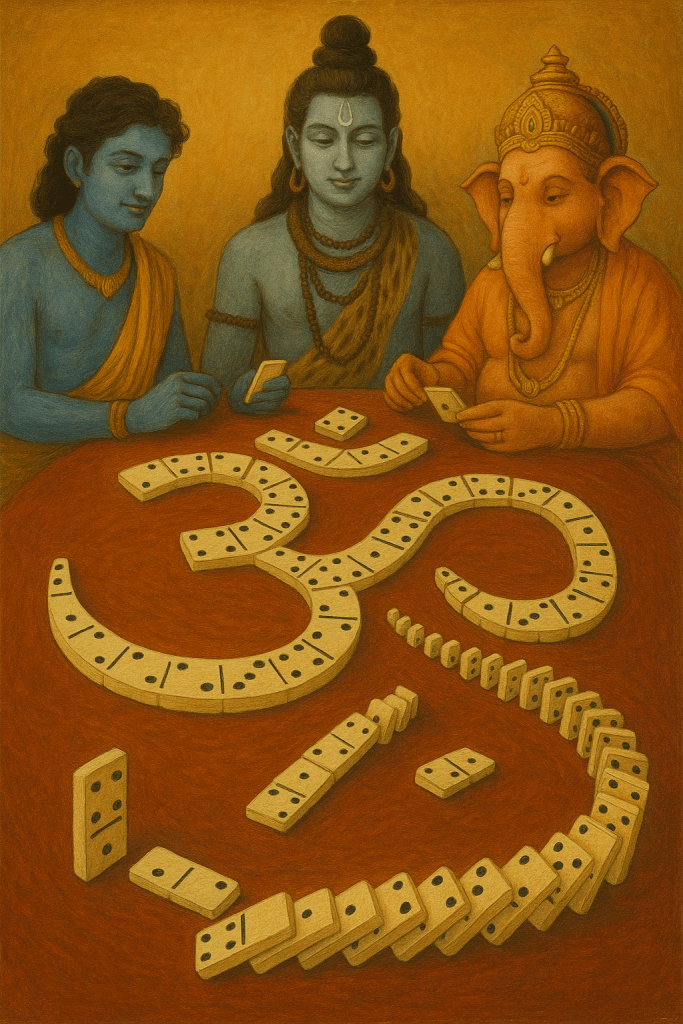
To say life is random is to deny the sacred choreography of emergence. Every moment is connected, not as dominoes collapsing mindlessly, but as a living mandala of causes so intricately interlaced they cannot be undone or simplified.

When one begins to see this—really see it—the need to explain, justify, or control begins to fall away. What replaces it is not fatalism, but participation. There is no randomness, only the undetected curvature of deeper causality. And when that is recognized, trust becomes more than a spiritual concept. It becomes a way of being.

Morgan O. Smith

Get Your Free Copy of My Book, Bodhi in the Brain!
https://subscribepage.io/oTSZQu

The Final Disappearance

What happens at the moment of death?

Not from the standpoint of biochemistry or theology, but from the lived silence of awakened seeing—the vantage where death and self are no longer two.

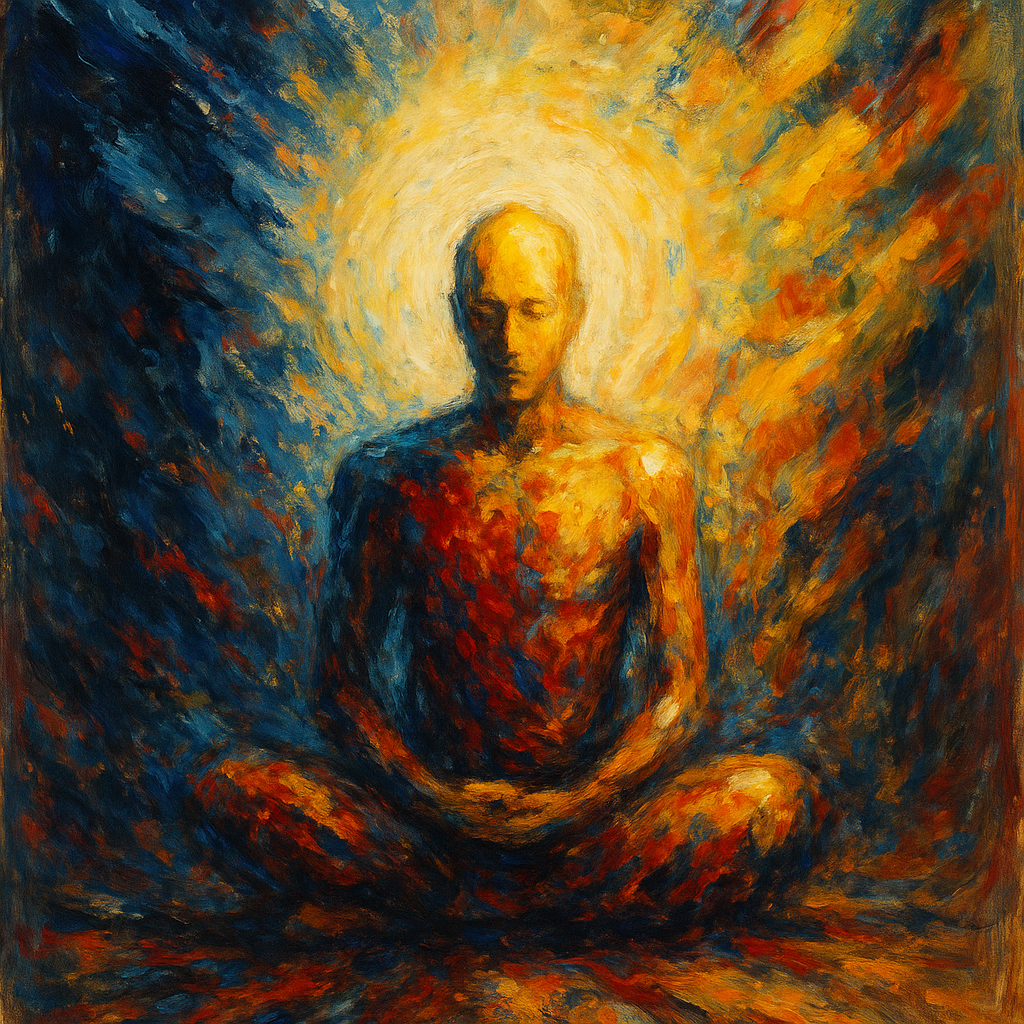
At the summit of awakening—whether called Moksha, Nirvana, Turiyatitta, or Nirvikalpa Samadhi—the idea of death unthreads itself. What dies never truly lived, and what lives has never been touched by time. The dissolution of the body is not the end, nor is it a doorway. It is the falling away of questions that were never yours.

There is no climactic revelation at that edge. There is only this. The suchness that never began, never moved, and never faded. At peak realization, death ceases to be an event. It is not an exit. It is the unspeaking of form—a gentle vanishing into what was always here.

This is not metaphor.

Consciousness, unfragmented and clear, neither resists death nor awaits it. It has already passed through it, endlessly. Not as a journey from point A to point B, but as a revelation that neither point exists.

You don’t meet death. You realize you were never separate from it.

At this depth, what we call life no longer hangs from a timeline. What we call death no longer casts a shadow. No more witness is watching the last breath. Only the unnameable recognizes itself through the temporary flicker of form.

The body may fall away, but the body was never the one who knew. The breath may stop, but the breath was never yours. That which remains doesn’t remain—it is. Before and after mean nothing to it.

Some call this realization peace. Others call it extinction. But it’s neither stillness nor silence nor bliss. It’s before all that. It’s the absence of absence. The presence of presence. Not two.

When the last ripple of self dissolves, what’s left is not a person merging with eternity. There is no one to merge. There is only what was always whole.

This is death at the level of freedom. This is life without division.

Not a conclusion.

A cessation of seeking.

Morgan O. Smith

Get Your Free Copy of My Book, Bodhi in the Brain!
https://subscribepage.io/oTSZQu

The Divide

Between the Remembered and the Realized

Enlightenment isn’t a collection of vivid memories. It isn’t a library of altered states or a gallery of peak experiences pinned to the walls of time. Enlightenment, in its truest sense, is what remains when all those moments pass. It is not recalled—it is present.

A spiritually enlightened being doesn’t describe what happened—they speak from what is. Their language may touch on form, but it arises from formlessness. It isn’t commentary on a past event; it is the echo of what is silently alive in that moment. Words are merely the condensation of what remains wordless within them.

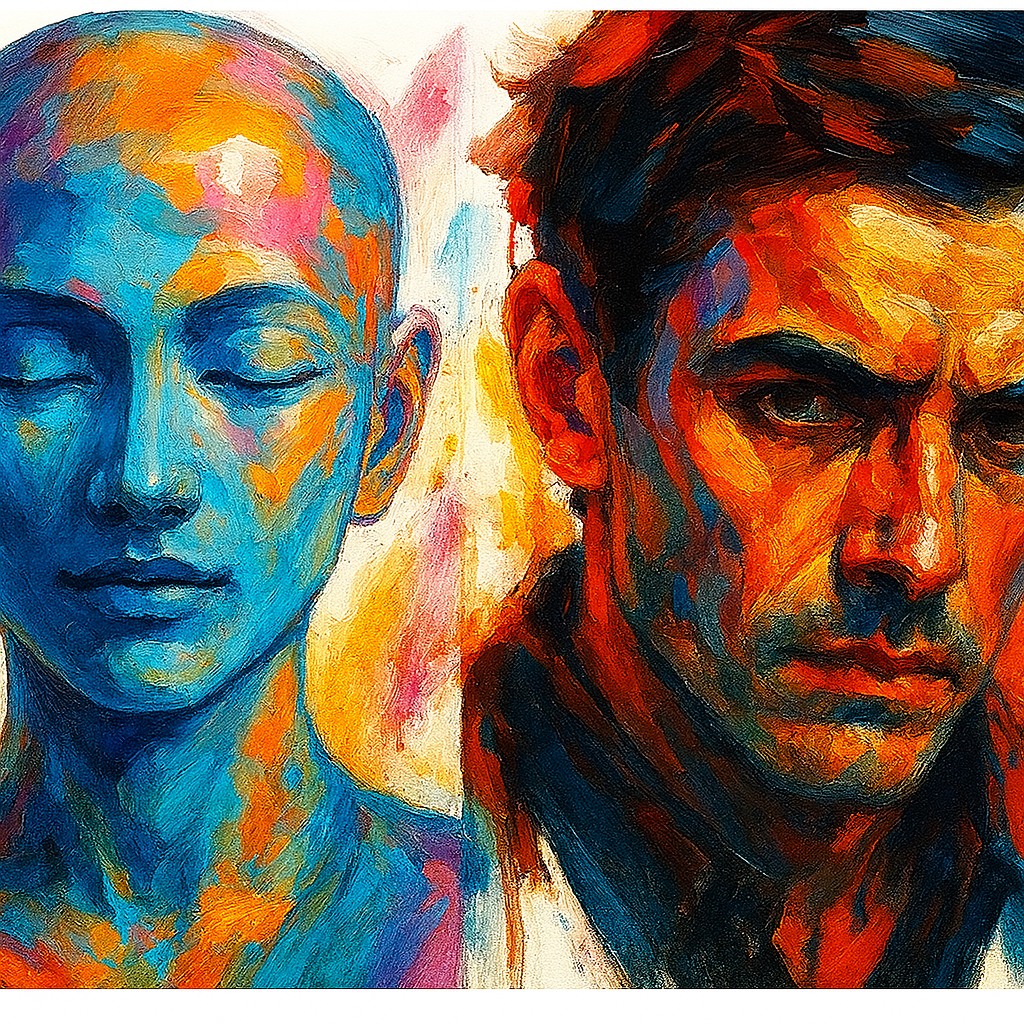
Contrast this with the one who has had many spiritually enlightening experiences. There is often great sincerity, beauty, and wisdom in their sharing. But listen closely: their narrative carries timestamps. “This is what I saw… what I felt… what I realized…” There’s a distance, however subtle. A witness telling you what the moon looked like—rather than being the moon, shining right now, regardless of who’s watching.

This difference isn’t about hierarchy. One isn’t better, holier, or more awakened than the other. But there’s a distinct quality when realization is not merely visited, but abided in. When the identity that would lay claim to an experience has dissolved entirely.

Here’s the paradox: a being can be spiritually enlightened without ever having what we label as a “spiritual experience.” No blissful union, no white light, no serpents of energy climbing the spine. Their clarity is not the aftermath of an event—it is the absence of confusion. No fireworks. Just light.

They may speak little. Or not at all. There is no need to convince, convert, or collect followers. They are not on a path—they are the ground from which all paths appear.

On the other hand, a person with many enlightening experiences can describe with breathtaking poetry the landscapes of the soul. But unless those experiences have dissolved the one who experienced them, the self remains—refined perhaps, but still separate.

True awakening isn’t an experience you remember. It’s the end of the one who remembers.

This is why the most profound truths often arrive without announcement. A falling away, not an acquiring. A silent recognition that this—yes, this—is what always was. And suddenly, the need for experience evaporates. Presence alone becomes sufficient.

Morgan O. Smith

Get Your Free Copy of My Book, Bodhi in the Brain!

https://subscribepage.io/oTSZQu

You’re Not Greater Than Anything

You’re the Only One to Ever Exist

No one else has ever walked this Earth as you. Not a version, not a shadow, not a resemblance. Just you.

Not because you’re special in the usual way that word is thrown around, but because existence itself only ever unfolded once—and it’s doing so now, as you.

This isn’t about ego. Ego thrives on comparisons: greater than, less than, better, worse, worthy, unworthy. But the truth beneath all that noise isn’t about status—it’s about singularity. The kind that isn’t measured. The kind that never repeats.

People spend their lives searching for meaning, purpose, and a sense of identity. They try to earn significance or prove their worth. But importance isn’t earned—it is. You are the original event. Not one among many. Not one of a kind. The kind.

Look around. Every face you see, every story, every moment, all of it—just folds within the One. That same One expressing itself here as your particular breath, your memories, your voice, your fears and awakenings. The sky that bends over you is not separate from your gaze. The rhythm of the world doesn’t move beside you; it pulses through you.

To say you are not greater than anything is to drop the illusion of measurement. Of trying to win at some existential game. But then comes the deeper realization: You are not less than anything either. There is nothing else to measure against. You’re the first and last word of this moment.

Nothing else has ever existed apart from this.

So ask yourself: What happens when you stop performing for reality and start remembering that you are it? What shifts when you no longer strive to become someone meaningful, but realize that meaning itself is being?

You’re not here to improve reality. You are the revealing of it.

And this unveiling has never happened before—not like this.

Morgan O. Smith

Get Your Free Copy of My Book, Bodhi in the Brain!

https://subscribepage.io/oTSZQu