The Shadow Self of the Grandiose

The concept of the shadow self—a term Carl Jung coined—reveals layers of ourselves we often choose to hide, repress, or deny. These shadow aspects are usually relegated to a dark corner of our psyche, only surfacing in fleeting glimpses. Yet, when the shadow self takes on a grandiose form, it ceases to be subtle, becoming instead a dominating force. It blinds us with illusions of superiority, entitlement, or self-importance, distorting our perception and interactions.

In personal growth and spiritual awakening, confronting the shadow self is both inevitable and essential. However, when the shadow becomes grandiose, it can convince us we are immune to error, beyond reproach, or uniquely enlightened. This delusion becomes a veil, preventing authentic growth and genuine self-reflection.

The grandiose shadow is not merely about arrogance. It’s a defence mechanism, an armour forged in the fires of insecurity and fear. By building up the self as untouchable or superior, we attempt to ward off the vulnerability of true introspection. But this shield, rather than protecting us, leads to isolation, as others feel the weight of this projection and distance themselves, sensing the ego’s hunger for validation cloaked in supposed wisdom or enlightenment.

In many spiritual or philosophical circles, grandiosity masquerading as enlightenment can become especially potent. The grandiose shadow asserts itself under the guise of spiritual authority or moral righteousness, leading us to believe we are above others on the path. But this illusion only widens the gap between our authentic self and the mask we’ve constructed.

To navigate this terrain, a key question emerges: Are we genuinely pursuing self-understanding, or are we feeding a need to feel special, above, or untouchable? True growth does not demand recognition or approval; it thrives in humility and quiet awareness.

Recognizing when our shadow has grown too grandiose is challenging but necessary. It requires questioning our motives, embracing vulnerability, and letting go of the need to stand above. Only by shedding the inflated version of ourselves can we step into true authenticity and spiritual liberation.

 Morgan O. Smith

Yinnergy Meditation, Spiritual Life Coaching & My Book, Bodhi in the Brain…Available Now!

https://linktr.ee/morganosmith

The Myth of Perfection

A Reflection on Human Nature and Spirituality

Perfection is a concept that many aspire to, yet one that remains fundamentally unattainable. The allure of becoming flawless is often reinforced by societal expectations, self-help narratives, and spiritual teachings that promise transcendence over our shortcomings. We yearn for mastery, imagining a state where all undesirable traits have been eradicated and every behaviour aligns with some ideal of human perfection. But is that ever truly possible?

No one is perfect. Not even the most enlightened being on the planet. Let’s use pest control as an example.

No matter how meticulously we maintain our homes or how many pest-control methods we employ, insects will inevitably appear. Some will be caught and eliminated, others will hide and multiply. This relentless cycle mirrors our inner world. Despite all efforts—through therapy, shadow work, psychedelics, or spiritual awakening—no one has found a way to remove every negative tendency permanently. As insects are part of the natural ecosystem, our imperfections are part of being human. Attempts to eliminate all flaws are as futile as trying to rid the entire world of pests.

Each trait or behaviour can be seen as a metaphorical bug. Selling a bug-killing spray or device is like an enlightened teacher selling a pathway to liberation or a self-actualized individual motivating others to reach their highest potential. The promise is not false, but the misconception lies in the belief that the bugs—the flaws—will be eradicated forever. The truth is more nuanced. Much like we can control insects to a certain extent, we can address negative traits, but total elimination is beyond reach.

If you’ve ever been to a home that had one visible roach, you likely made a snap judgment about cleanliness, even if the house was otherwise spotless. Contrast that with spotting an ant, and your reaction might be more forgiving. This response isn’t based on logic but on deeply ingrained conditioning. The same holds for how we judge others. One visible flaw can overshadow countless positive qualities, not because the flaw is inherently worse, but because of how we’ve been conditioned to perceive it.

A self-actualized person can be compared to a meticulous homeowner who manages to keep most of the pests at bay. Their house is mostly clean, orderly, and free of unwanted visitors. Yet, even they know that complete eradication is impossible. An enlightened being, on the other hand, goes beyond this mindset. They see every bug as a part of themselves—each flaw, each undesirable trait, is not separate but an expression of the whole. This broader understanding fosters a deeper acceptance. While they might occasionally choose to kill a bug, it’s done without aversion or judgment. There’s no inner conflict because they see that every bug, every flaw, serves a purpose.

Now the enlightened individual sees everything as perfection. Everything that is considered imperfect is happening perfectly. Everything is divine. Even the most imperfect individual or situation or circumstance. The enlightened recognize that what appears as chaos or dysfunction from a limited perspective is simply the perfect unfolding of a greater, unseen order. A roach-infested home, a seemingly flawed person, or an unwelcome circumstance—all are expressions of a divine play. There is no distinction between beauty and ugliness, perfection and imperfection because all dualities dissolve into the same oneness.

So, when an enlightened being enters a home overrun with insects, they do not recoil or judge. They recognize that their own home could, at any moment, be similarly overtaken. There is no attachment to a pristine space or the opinions of others regarding their environment. By accepting that bugs will always be present, the enlightened suffer less—not because their world is free of pests, but because they are no longer bothered by their existence.

The true wisdom here lies in shifting the focus away from trying to perfect oneself and toward seeing all parts of life—including the messiness, the flaws, and the unwanted bugs—as expressions of the same wholeness. The journey is not about eradicating; it’s about embracing. When we see all that is seemingly imperfect as perfectly divine, we move beyond the struggle and enter a space of true inner peace and freedom.

Morgan O. Smith

Yinnergy Meditation, Spiritual Life Coaching & My Book, Bodhi in the Brain…Available Now!

https://linktr.ee/morganosmith

Facing Your Own Shadow

The Gaze of Disowned Shame

There’s a moment in the journey of inner awakening where the light of awareness turns inward. A place often shrouded in secrecy, where the parts of yourself you’ve hidden away become unmasked. What’s revealed can be unsettling — the shame, guilt, and self-rejection that haunt the depths of your psyche. Encountering this inner entity, stripped of its disguise, becomes an intense confrontation: you face your own shadow.

Yet, when you meet this shadow, it does not recoil, flinch, or fade away. It simply observes you, raw and unmoved, reflecting the energy you’ve poured into rejecting it. For many, this experience feels like staring into an unbroken mirror, one that reflects not just the image you’ve created for the world, but the essence of what’s been buried, judged, and cast away.

When people speak of self-acceptance, it’s easy to imagine embracing the pleasant or polished parts of one’s persona. But the journey of true self-integration calls for embracing what is most despised. The parts labelled as unworthy, inadequate, or unforgivable become the gateway to your deepest transformation. Until then, they stare back with unblinking eyes — patiently awaiting recognition.

But why is this encounter necessary?

The disowned aspects of yourself hold immense power. They are reservoirs of energy locked behind the walls of judgment and fear. Every time they’re denied, they exert their influence unconsciously, driving reactions, decisions, and emotional patterns. The paradox is that the more they’re pushed away, the more they define your behaviour.

To stare at your shame is to feel its immensity. But beyond the discomfort, there is a subtle alchemy taking place. Each moment of presence, without rejection or justification, melts the rigidity of these self-imposed barriers. The shame becomes less monstrous. The guilt becomes less consuming. And in its place emerges a profound understanding: these shadows are not enemies but wounded parts of your psyche yearning for reintegration.

Facing your shame isn’t about confronting a malicious force. It’s about witnessing a fragmented self, desperately wanting to be seen and acknowledged. When fully embraced, these darkened corners of the mind cease to resist, and their power transforms into clarity, strength, and authentic self-expression.

This act of presence is not about seeking remorse or forgiveness. It’s about witnessing without the need for resolution. It’s about being so fully present that you pierce through the veil of judgment and glimpse the raw humanity of your being. That which once seemed abhorrent softens under the gaze of true self-compassion.

Ultimately, this process reshapes your sense of identity. No longer chained to a cycle of rejection and self-criticism, you stand free, more whole, and more alive. The shame that once stared back unrelentingly, feeling no remorse, becomes a quiet reminder that every part of you — no matter how dark — serves as a key to your liberation.

Morgan O. Smith

Yinnergy Meditation, Spiritual Life Coaching & My Book, Bodhi in the Brain…Available Now!
https://linktr.ee/morganosmith

The Silent Revolution

Awakening Amidst Chaos

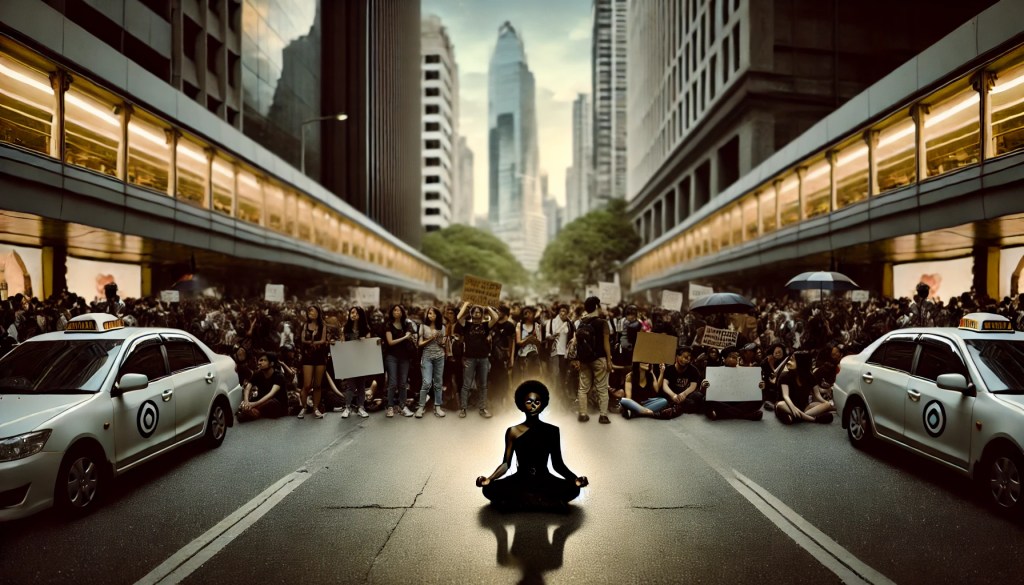
Chaos and tranquility often seem like opposites. However, they are intimately linked in the dance of life. As the world spins ever faster, with crises emerging like sudden storms on a summer day, a silent revolution is brewing beneath the surface—one that is neither loud nor confrontational but profoundly transformative.

This quiet revolution doesn’t rely on grand gestures or sweeping movements. It starts within the hearts of individuals who, despite the world’s noise, have tapped into a deeper current of awareness. These individuals aren’t driven by the need to change the world through force or ideology. Instead, they embody a shift that occurs when one aligns with the innate wisdom that lies beyond thought, beyond fear, and beyond the endless distractions that dominate modern life.

Imagine a moment where the rush of daily life pauses—not because external circumstances have shifted, but because the internal landscape has transformed. This shift is not the result of escaping the world, but of embracing it fully, with all its imperfections, recognizing that within the chaos lies the seed of order. When one looks deeply into the heart of the turmoil, an unexpected clarity can emerge, revealing the profound interconnectedness of all things.

Such moments of awakening are not reserved for the select few, nor do they require years of preparation or ascetic withdrawal from life. Often, they arrive unexpectedly, during the most mundane tasks or amid personal challenges. What matters is not the circumstances but the openness to receive what is always present: the silent awareness that underlies all experience.

This awareness doesn’t impose itself; it simply waits to be noticed. When recognized, it offers a perspective that transforms the ordinary into the extraordinary, where the boundaries between self and other dissolve, revealing a reality that is both deeply personal and universally shared.

The implications of this shift are profound. As more individuals awaken to this silent awareness, the collective consciousness begins to change. Actions rooted in fear and separation give way to those motivated by compassion and unity. Societal change, once thought to be driven by external forces, starts to emerge organically, from the inside out.

The silent revolution is not about overthrowing systems or confronting power. It is about the gradual realization that true power lies in the ability to remain anchored in awareness, no matter the external circumstances. This power is subtle, yet its impact can be far-reaching. As each person awakens, the collective vibration shifts, creating ripples that extend far beyond individual lives.

In times of chaos, this inner revolution offers a way forward—not by avoiding the challenges of the world, but by embracing them with a new understanding. It is the recognition that every moment, no matter how chaotic, holds the potential for awakening. When approached with awareness, even the most difficult experiences can become opportunities for profound growth and transformation.

This silent revolution is happening now, within the hearts of many. It doesn’t make headlines or trend on social media, but its effects are felt everywhere. The world is changing, not through external force, but through the quiet, steady awakening of consciousness.

Morgan O. Smith

Yinnergy Meditation, Spiritual Life Coaching & My Book, Bodhi in the Brain…Available Now!

https://linktr.ee/morganosmith

The Guru’s Enlightenment Isn’t the Absence of Your Own

It’s easy to fall into the comparison trap in the vast landscape of spiritual awakening. We witness the profound transformations and mystical experiences of others, and a subtle voice within us begins to whisper: “Why not me?” This whisper can grow into a chorus, overshadowing our path with doubt and impatience. However, understanding that someone else’s enlightenment isn’t the absence of your own can be a liberating revelation on the spiritual journey.

Each soul’s journey is a unique odyssey, carved out of their experiences and inner work. Just as no two fingerprints are the same, no two paths to enlightenment mirror each other perfectly. When we compare our progress with that of others, we risk overlooking the intricacies and nuances of our spiritual growth.

Imagine the spiritual journey as a grand symphony, where each individual’s enlightenment represents a distinct, essential note. The melody of the universe is incomplete without the contribution of each soul’s unique vibration. Another’s moment of illumination doesn’t dim your light; instead, it enriches the collective harmony, elevating the entire symphony to greater heights.

This realization invites us to shift our focus inward, recognizing the profound wisdom and beauty in our own experiences. Every moment of insight, every challenge faced, and every small victory on the path is a testament to the unfolding of our consciousness. When we honour our journey, we embrace the understanding that enlightenment is not a race but a deeply personal and transformative process.

The nature of nonduality teaches us that separation is an illusion. In the realm of pure consciousness, there is no competition or hierarchy. Each individual’s enlightenment contributes to the awakening of the collective, reflecting the interconnectedness of all beings. The enlightenment of one is a spark that ignites the potential within all.

Instead of viewing others’ enlightenment as a benchmark for our own, we can celebrate their milestones as a reflection of what’s possible within us. Their breakthroughs become a source of inspiration, reminding us of the boundless potential that lies within. By cultivating patience and trust in our unique path, we align ourselves with the natural rhythm of our spiritual evolution.

The journey to enlightenment is as diverse as those who embark on it. Embrace your path with gratitude, knowing that every step you take is perfectly purposeful. Remember, the guru’s enlightenment isn’t the absence of your own; it is a testament to the infinite possibilities that exist within the boundless expanse of consciousness.

Morgan O. Smith

Yinnergy Meditation, Spiritual Life Coaching & My Book, Bodhi in the Brain…Available Now!

https://linktr.ee/morganosmith

The Breath

A Gateway to Inner Tranquility

“The comfort you seek is only one breath away.”

In the realm of our bustling existence, where the cacophony of the outer world often drowns out our inner peace, there lies a simple, yet profoundly powerful tool for returning to a state of serenity: our breath. This elemental act, so often taken for granted, holds the key to unlocking a wellspring of comfort and tranquillity within us.

Consider the breath more than just a biological necessity; envision it as a bridge connecting the seen with the unseen, the material with the spiritual. Each inhalation invites us to draw in the world around us, not just the air, but the very essence of life itself. With every exhalation, we release more than just carbon dioxide; we let go of the stress, the worries, and the relentless speed of life that keeps us from our deeper selves.

The ancient practice of mindful breathing, deeply rooted in Eastern philosophies, offers us a pathway to rediscover the peace that resides within. This is not a peace that must be sought in the external world or through the attainment of material possessions. Rather, it is a peace that is always present, patiently waiting just beneath the surface of our frenetic minds. It is a peace that can be accessed at any moment, with each conscious breath we take.


Engaging in this practice does not require us to abandon our responsibilities or retreat from the world. On the contrary, it empowers us to face life’s challenges with a renewed sense of calm and clarity. By centring ourselves in the breath, we cultivate an inner sanctuary that remains undisturbed by the ever-changing circumstances of our lives.

This understanding invites us to embark on a journey of self-discovery, where the simple act of breathing becomes a profound act of self-empowerment. As we learn to navigate our existence with the breath as our compass, we uncover the boundless potential for personal growth and spiritual awakening.

In this space of breathing and being, we find that the comfort we seek is indeed only one breath away. It is a comfort that does not depend on external validation or fleeting pleasures. It is a comfort that springs from the deep well of our being, offering solace and strength that is both timeless and universal.


Let us then embrace the breath as our most faithful guide on this journey toward inner tranquillity. With each breath, we are reminded of our connection to something greater than ourselves, a reminder that in the simplicity of being, we find the profound answers to the complexities of living.

Morgan O. Smith

Yinnergy Meditation, Spiritual Life Coaching & My Book, Bodhi in the Brain…Available Now!
https://linktr.ee/morganosmith

I Am the Beauty That Comes Out of My Own Chaos

In the vast, intricate dance of existence, chaos often seems like an unwelcome guest. Yet, from this very chaos, beauty arises, like a phoenix emerging from the ashes. To perceive oneself as the beauty that emerges from chaos is to embrace a profound truth about the nature of reality and the self.

Chaos is often misunderstood. It is seen as disorder, confusion, and disruption. However, chaos is the birthplace of creativity and transformation. It is the fertile ground from which new patterns, understandings, and ways of being emerge. In the crucible of chaos, the old is dissolved, allowing the new to take shape.

Our personal lives are no different. Each of us encounters moments of chaos, those times when life seems to fall apart when our carefully constructed worlds crumble. It is in these moments that we are offered a rare opportunity: the chance to reconstruct ourselves anew, to find beauty in our brokenness.

Embracing chaos requires a shift in perspective. Rather than resisting or fearing it, we can learn to welcome it as a necessary part of our evolution. This shift is rooted in the understanding that chaos and order are not opposites but are part of a dynamic interplay that drives the universe. In every storm, there is a hidden order; in every upheaval, there is a silent harmony waiting to be discovered.


When we see ourselves as the beauty that emerges from chaos, we acknowledge our inherent resilience and capacity for growth. We recognize that our greatest strengths are often forged in the fires of adversity. The scars we bear are not marks of defeat but symbols of our journey through chaos to a deeper, more profound beauty.

This perspective aligns closely with the wisdom of nonduality, which teaches that all dualities are ultimately illusory. Chaos and order, beauty and ugliness, success and failure—these are simply different expressions of the same underlying reality. By transcending these dualities, we come to see ourselves not as fragmented beings caught in the struggle between opposites, but as whole, complete, and inherently beautiful.

As we navigate the chaos in our lives, we can draw upon the insights of Eastern philosophy to guide us. The Taoist concept of Wu Wei, or effortless action, teaches us to flow with the natural rhythms of life rather than against them. By surrendering to the flow, we allow the beauty of our true nature to emerge spontaneously from the chaos.

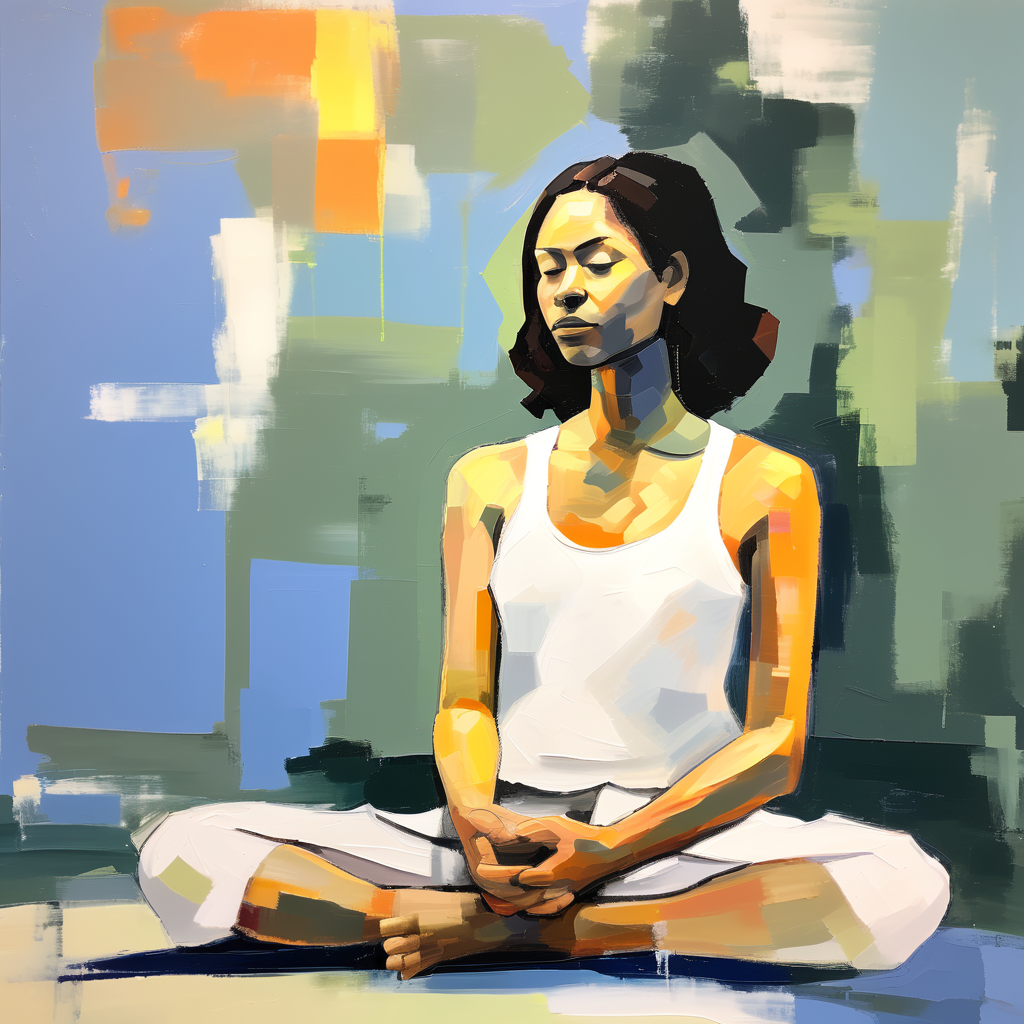
In the stillness of meditation, we can find a refuge from the turmoil. By turning inward, we reconnect with the unchanging essence of who we are—a presence that remains untouched by the vicissitudes of life. This inner stillness is the eye of the storm, the center of the cyclone where chaos transforms into clarity and beauty.


Ultimately, to see oneself as the beauty that comes out of chaos is to live in harmony with the ever-changing dance of life. It is to trust in the process of transformation and to embrace every moment, no matter how chaotic, as an integral part of our journey toward greater self-discovery and enlightenment.

Morgan O. Smith

Yinnergy Meditation, Spiritual Life Coaching & My Book, Bodhi in the Brain…Available Now!
https://linktr.ee/morganosmith

Beyond Beliefs

Unveiling the Divinity Within

In the realm of personal spirituality and enlightenment, the architecture of our belief systems plays a crucial role in shaping our reality. These systems, intricate labyrinths of thought and conviction, hold the power to liberate or confine us within their walls. It is through the meticulous construction of these beliefs that we often, unknowingly, crown a deity of our own making—a god born not of ethereal realms but of the very fabric of our convictions.

This self-created deity, governed by the edicts of our belief system, wields the power to influence our perceptions, actions, and ultimately, our spiritual journey. Yet, the question arises: what happens when we step back and observe the deity we’ve enthroned? Do we find a benevolent guide leading us towards enlightenment, or a tyrant, chaining us to the shadowy depths of ignorance and limitation?


The path to spiritual awakening beckons us to embark on a quest not outward, but inward, to the very core of our being. It invites us to question not just the nature of our self-created deities, but the very essence of belief itself. What if, in our search for divinity, we discover that the truest god is not one constructed of beliefs but one that transcends them? A presence that exists beyond the dualities of right and wrong, good and evil—a non-dual consciousness that simply is.

This realization invites a profound transformation, a shift from being a subject under the rule of a constructed deity to becoming a sovereign being, aware of the inherent divinity within. It is a journey from the external worship of a god made in the image of our beliefs to the recognition and honouring of the divine essence that permeates all of existence, including ourselves.


As we peel away the layers of beliefs that have long dictated our spiritual path, we uncover a luminous truth: that we are not mere subjects to a higher power, but integral expressions of the divine. This insight does not diminish the sacred but elevates it, revealing that enlightenment does not come from worshiping a deity external to us but from realizing our innate divinity.

This journey of enlightenment challenges us to dismantle the altar of beliefs we’ve constructed and to gaze into the mirror of our soul. In doing so, we discover that the god we’ve been seeking has always been here, within us, patiently waiting for us to look beyond the veil of beliefs and recognize our true nature.


As we traverse this sacred path, let us embrace the courage to question, explore, and ultimately dissolve the barriers that separate us from the divine essence we embody. For in the heart of our spiritual quest lies the key to our liberation—a realization that we are not bound by the gods of our creation but are, in essence, expressions of the infinite divine.

Morgan O. Smith

Yinnergy Meditation, Spiritual Life Coaching & My Book, Bodhi in the Brain…Available Now!

https://linktr.ee/morganosmith

The Unseen Path

Embracing the Unknown in Spiritual Growth

In the realm of spiritual discovery, what we do not know far outweighs the fragments of wisdom we hold. The vast expanse of the unknown represents not just a void awaiting illumination but a dynamic space brimming with potential for profound transformation. This concept—embracing the unknown—challenges us to reconsider our approach to knowledge and enlightenment.

Often, we tread the well-worn path of accumulated knowledge, relying on established philosophies and spiritual teachings. However, true spiritual growth beckons us to venture beyond the comfort of what is known. It invites us to surrender to the uncertainty that surrounds the uncharted territories of our consciousness.

The unknown is fertile ground for spiritual rebirth. It is in the spaces between our thoughts, in the silence that follows our meditations, that the seeds of enlightenment are sown. By welcoming what we do not know, we open ourselves to new perceptions, unexplored dimensions of our being, and the subtle yet profound voices of our inner truth.


How, then, do we cultivate a relationship with the unknown? It begins with the acceptance that we do not, and cannot, know everything. This humility is not a resignation to ignorance but an open door to endless possibilities. It is about shifting from a seeker of knowledge to an explorer of experience.

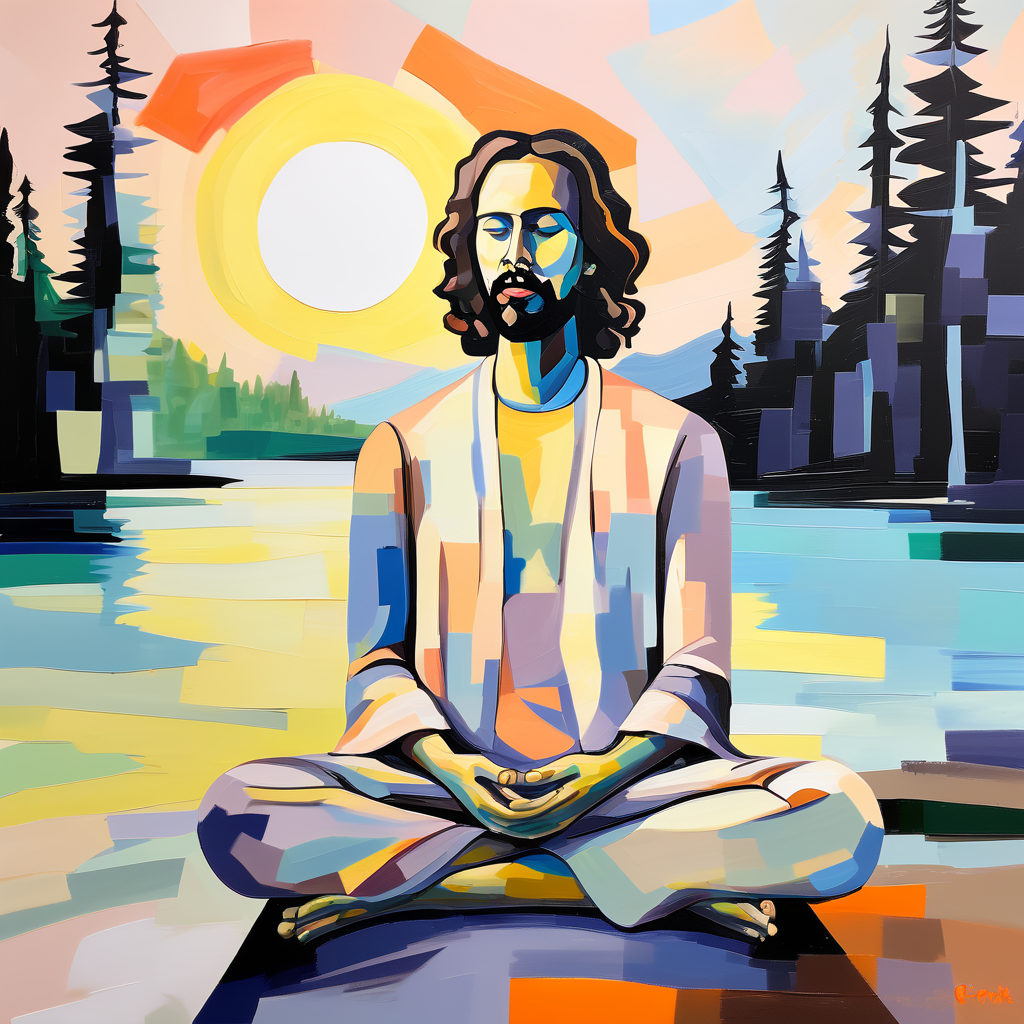
Mindfulness practices can ground us in the present moment—a realm where the past, with all its knowns, and the future, with its unforeseen possibilities, converge. Here, in the now, the unknown is not a threat but a companion on our journey. Each moment becomes a fresh encounter with an aspect of the universe waiting to reveal itself to us.

Moreover, exploring the unknown requires courage—the courage to question, to doubt, and to test the boundaries of our existing beliefs. It is about allowing ourselves to be vulnerable, to face the vastness of the unknown with curiosity rather than fear.


In embracing what we do not know, we find that our spiritual path is not linear but a spiral, deeper and ever-expanding. It is a journey that continually invites us to evolve, to shed outdated understandings, and to embrace the boundless mysteries of existence.

Morgan O. Smith

Yinnergy Meditation, Spiritual Life Coaching & My Book, Bodhi in the Brain…Available Now!
https://linktr.ee/morganosmith

Exploring the Infinite

Beyond Religion’s Scope of God

In the vast expanse of human understanding and belief, the concept of God often finds itself neatly packaged within the confines of religious doctrine. Yet, to equate God solely with religion is to overlook the boundless essence that the idea of a supreme being or ultimate reality embodies. This exploration ventures beyond the traditional religious frameworks to understand God as an encompassing presence that transcends our conventional beliefs.

#### Unveiling the Divine Beyond Temples and Texts

Religion, with its rituals, scriptures, and edifices, serves as a vessel for many in their quest to connect with the divine. However, it represents merely one avenue through which the essence of what we term ‘God’ can be experienced. The divine, or the ultimate reality, is an omnipresent force that permeates all aspects of existence, not limited to or by any institution or set of beliefs.

#### The Universal Fabric: A Confluence of Consciousness

At the heart of numerous Eastern philosophies is the notion of nonduality—the understanding that there is no fundamental distinction between the individual and the universe, the self and the divine. This perspective invites us to view God not as an external entity presiding over the cosmos but as the very fabric of existence itself. Here, God is seen in the interconnectedness of all things, in the energy that flows through the cosmos, and in the consciousness that animates the universe.


#### Personal Revelation: A Journey Within

The journey to understanding and experiencing the divine beyond the confines of religion is deeply personal and introspective. It requires us to transcend the external trappings of spirituality and seek connection with the divine essence that resides within and around us. Meditation, mindfulness, and contemplative practices serve as gateways to experiencing this profound unity, allowing individuals to tap into the infinite potential and wisdom that lies beyond the superficial layers of reality.

#### The Divine Dance: Interplay of the Immanent and Transcendent

To conceptualize God merely in religious terms is to overlook the dynamic interplay between the immanent and the transcendent aspects of the divine. The immanent suggests that God is present within the world, accessible and experienced through the beauty of nature, the depth of human emotion, and the complexity of the mind. Conversely, the transcendent aspect of God invites us to look beyond the material world to the vast, unknowable mystery that lies beyond our immediate perception.


#### Conclusion: Embracing the Infinite

The quest to understand and relate to God beyond the realm of religion is a testament to the human spirit’s unending search for meaning and connection. It challenges us to look beyond prescribed doctrines and explore the depths of our consciousness and the universe. In doing so, we embrace a more holistic and expansive view of the divine, one that encompasses the myriad ways in which the essence of the ultimate reality manifests in our lives and the world at large.

This exploration serves not only to broaden our conceptual horizons but to invite each individual to embark on a personal voyage of discovery, where the understanding of God is as vast and varied as the seekers themselves.

Morgan O. Smith

Yinnergy Meditation, Spiritual Life Coaching & My Book, Bodhi in the Brain…Available Now!

https://linktr.ee/morganosmith