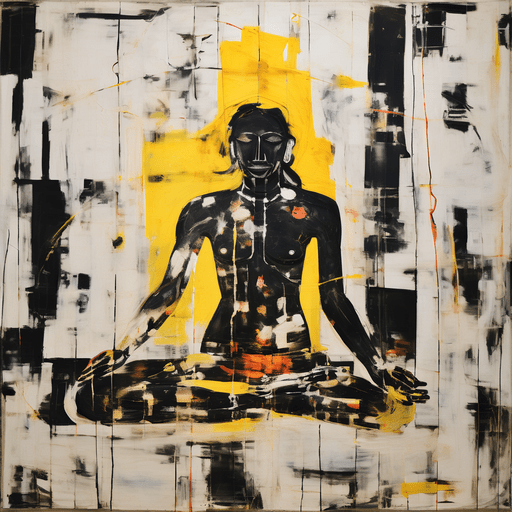
The Echo of You

How Others Shape the Illusion of Self

Every mind that encounters you constructs a version of who you are—one that exists only within their perception. These projections are not reflections of an objective truth but rather interpretations woven from personal history, emotions, and unconscious biases. The self you recognize as you dissolves into a multiplicity of shifting impressions, each molded by the observer’s lens.

A single glance, a brief interaction, a conversation—these moments serve as the brushstrokes that paint an image of you in another’s mind. That rendering is not built from the essence of your being but from their expectations, fears, desires, and past experiences. You become a mirror reflecting not your own face but the fragmented archetypes stored within them.

Eight billion people could know of your existence, and within those eight billion minds, eight billion versions of you would reside—each unique, each tethered to the individual’s understanding of reality. Some may see wisdom where others see arrogance, kindness where others perceive naivety, or detachment where others sense depth. Each impression, though deeply felt by the observer, is nothing more than a personal myth—an illusion shaped by the inner world of the one perceiving.

This ongoing act of creation is not limited to how others see you; it extends to how you see them. The individuals encountered are rarely experienced as they are but instead as projections of our own conditioning. An idea of them forms, colored by past wounds, cultural imprints, and unconscious expectations. Thus, every relationship becomes a dance of illusions, where two constructs interact rather than two beings truly seen for what they are.

If these imagined versions of one another are so deeply ingrained, what remains when they fall away? What is left when perception no longer dictates existence? The formless, nameless presence that remains is not confined by labels or interpretations—it simply is. And in that space, where no definitions persist, the need to be seen, understood, or accepted dissolves into something far greater than any construct a mind could create.

Morgan O. Smith

Get Your Free Copy of My Book, Bodhi in the Brain!

https://subscribepage.io/oTSZQu

One Shared Journey

A Grateful Reflection

Every connection begins with a spark. Each visitor, reader, and seeker who has engaged with these writings have shaped this growing conversation. Across 132 nations, 10,507 curiosity, contemplation, and resonance moments have unfolded. This is more than numbers—it is a living testament to the interconnected spirit that binds us all.

Today holds special significance beyond gratitude alone—it is my birthday. I celebrate 53 years of life, reflection, and continuous exploration alongside this global community of seekers. There is no better way to mark this day than to extend heartfelt appreciation to each of you who has journeyed alongside me in thought and awareness.

A heart filled with gratitude reaches toward my homeland, Canada, the United States, Australia, India, and the United Kingdom—nations that have provided thousands of glimpses into this shared exploration. Vietnam, the Philippines, Germany, my place of birth, Jamaica, my place of ancestry,  Nigeria, Mexico, Indonesia, Ireland, South Africa, Pakistan, and the Netherlands—each one adding its own voice, its own energy, its own questions to the unfolding dialogue.

Thailand, Sweden, Italy, France, Japan, Malaysia, Romania, Spain, Austria, Brazil, Kenya, Poland, Jordan, Ghana, and China—there is no border to wisdom, no limitation to the reach of understanding. Every reader who paused to reflect, who allowed these words to stir something within, has contributed to a silent but powerful movement toward deeper awareness.

New Zealand, Singapore, South Korea, Greece, Israel, Russia, Hungary, Tanzania, Norway, Türkiye, Laos, Bangladesh, Saudi Arabia, Trinidad & Tobago, Belgium, Switzerland, Portugal, Uganda, Colombia, Ukraine, Taiwan, and Finland—each visit is a ripple of shared thought, proving that the human longing for meaning transcends language and culture.

Bosnia & Herzegovina, Cayman Islands, Hong Kong, Denmark, Slovenia, Bahamas, Kosovo, Egypt, U.S. Virgin Islands, Somalia, Argentina, Fiji, Latvia, Benin, Sri Lanka, Cameroon, Zimbabwe, Serbia, Slovakia, Armenia, Puerto Rico, Senegal, Tunisia, Chile, Dominican Republic, Kuwait, Morocco, Nepal, Gambia, Venezuela, Côte d’Ivoire, Peru, Bolivia, Guam, Myanmar (Burma), Qatar, Ecuador, Bulgaria, United Arab Emirates, Georgia, Mauritius, Czechia, Albania, Liberia, Belarus, Papua New Guinea, Guyana, Bahrain, Zambia, Namibia, North Macedonia, Syria, Kyrgyzstan, Lithuania, Kazakhstan, Oman, Croatia, Réunion, Cuba, Nicaragua, Paraguay, Mongolia, Malta, Guatemala, Seychelles, Sierra Leone, Niger, Ethiopia, Dominica, Congo – Kinshasa, St. Kitts & Nevis, Barbados, Costa Rica, Mozambique, Cambodia, Martinique, El Salvador, Lesotho, Botswana—your presence in this shared space carries meaning beyond what words can express.

Gratitude is more than an acknowledgment—it is a recognition of the unseen, the vast web of connection linking every individual to something greater. The search for understanding does not belong to one culture, one belief system, or one mind. It moves through all of us, revealing the essence of being beyond any division.

To every reader, to every soul that has journeyed through these thoughts—thank you. The exchange is sacred, and the dialogue continues.

Morgan O. Smith

Yinnergy Meditation, Spiritual Life Coaching & My Book, Bodhi in the Brain…Available Now!

https://linktr.ee/morganosmith

The Philosophical Essence of Satan and God

I’ve been asked on occasion if I believe in the existence of Satan. My response is layered and nuanced. Philosophically, metaphorically, and symbolically, I acknowledge the concept of Satan, but I don’t subscribe to the personified version of Satan or a devil that is meant to be taken literally. To me, such a belief is irrational. Instead, Satan symbolizes everything evil or negative within the human experience.

Now, one might ask if I believe in God. My answer, while seemingly at the opposite extreme, follows a similar logic. From a literal standpoint, I don’t believe in God as a distinct entity. Rather, I assert that everything in existence is God, including myself, you, everyone, and everything else. This understanding stems from my awakening, which I claim to be a profound truth (though my interpretation of this truth is limited). In essence, God is the absolute—everything in and out of existence.

Religions like Christianity often refer to God as the alpha and the omega, the beginning and the end. If everything is God, then does this include Satan? My answer is unequivocally yes. According to certain texts, God created Satan, formerly known as Lucifer, who was God’s perfect angel. Some might argue that God created Lucifer, but Lucifer isn’t God. To this, I pose a series of questions.

If God created Lucifer, what did God make Lucifer out of? You might say pure light. But what is light made of? Oscillating electric and magnetic fields. Are these fields the alpha and the omega? No. So, what are oscillating electric and magnetic fields made of? Electromagnetic waves. Are electromagnetic waves the alpha and the omega? Again, no. What are electromagnetic waves made from? We can trace this down to the concept of emergent space-time.

Is emergent space-time the alpha and the omega, the beginning and the end? If we consider God as the absolute, then it must be. If emergent space-time is equivalent to God, then at its essence, Lucifer is made out of God. Even if you adhere to the idea that God made Lucifer ex nihilo (out of nothing), and if God is absolute, then this must include nothing (preceding emergent space-time itself). Thus, God encompasses both everything and nothing.

In this holistic view, the existence of Satan and the nature of God merge into a singular, all-encompassing reality. This perspective encourages us to transcend literal interpretations and embrace a deeper, more integrated understanding of existence, where all dichotomies dissolve into the absolute.

Morgan O. Smith

Yinnergy Meditation, Spiritual Life Coaching & My Book, Bodhi in the Brain…Available Now!

https://linktr.ee/morganosmith

The Paradox of Perfection

Divine Flaws in a Flawless Existence

In the realm of spirituality and philosophy, the concept of a perfect God is often contemplated with reverence and awe. This perfect entity, in many traditions, is seen as the embodiment of absolute purity, wisdom, and power. Yet, there lies a paradox at the heart of divinity: the expression of flaws within the framework of perfection. This notion challenges our conventional understanding of perfection and invites us to explore the deeper, more nuanced aspects of the divine and its manifestation in the world.

Consider for a moment the idea that a perfect God expresses its flaws perfectly. This statement that I am making is not a contradiction, but a profound acknowledgment of the complexity and depth inherent in the divine nature. It suggests that what we perceive as flaws are not mistakes or oversights but, rather, intentional expressions of the divine essence. These ‘flaws’ offer a window into the incomprehensible wisdom of the divine, serving as reminders of the limitless ways in which perfection can manifest.

The beauty of this concept lies in its ability to humanize the divine, making it more accessible and relatable to us. In our own lives, we strive for perfection, often berating ourselves for our flaws and failures. However, if we embrace the perspective that even in divinity, there exists a form of perfection that includes flaws, we can begin to view our imperfections not as failures, but as integral parts of our unique journey. This shift in perspective encourages a more compassionate and forgiving approach to self-growth and personal development.


Furthermore, the idea of a perfect God expressing flaws perfectly invites us to reevaluate our understanding of the world around us. The imperfections we observe in nature, in human behaviour, and the unfolding of events may not be random chaos but, perhaps, expressions of a larger, divine plan. This realization opens up a space for a deeper acceptance of the world as it is, fostering a sense of peace and trust in the unfolding of life’s mysteries.

In exploring the paradox of divine flaws, we are encouraged to engage with our spiritual journey more openly and curiously. It prompts us to question our assumptions about perfection, divinity, and the nature of reality itself. By contemplating how a perfect God might express flaws perfectly, we are invited into a richer, more dynamic relationship with the spiritual aspects of existence.

This exploration is not just a philosophical exercise but a practical guide for living. It teaches us to embrace our complexities and contradictions, to find beauty in imperfection, and to see the divine not as a distant, unattainable ideal but as a present, living truth reflected in every aspect of our lives.


In closing, let us ponder the myriad ways in which perfection and imperfection coexist within and around us. May this contemplation inspire a deeper appreciation for the mysterious, imperfectly perfect nature of the divine and encourage us to embrace our flaws as perfectly expressed aspects of our being.

Morgan O. Smith

Yinnergy Meditation, Spiritual Life Coaching & My Book, Bodhi in the Brain…Available Now!

https://linktr.ee/morganosmith

The Ground of All Being is Groundless

In the realm of philosophical thought, there exists a profound paradox that has puzzled thinkers for centuries: the concept that the ground of all being is, in fact, groundless. This idea challenges our fundamental understanding of existence, suggesting that the foundation upon which reality is built is devoid of any intrinsic substance or essence.

At first glance, this notion appears contradictory. How can the ground of all being, the fundamental basis of everything that exists, be groundless? To unravel this enigma, we must delve into the philosophical and metaphysical discussions that surround the nature of existence and reality.

The idea of a ‘groundless ground’ originates from existential and metaphysical debates. Philosophers like Heidegger and Sartre pondered the absence of an inherent essence in existence. This absence implies that existence precedes essence, meaning things exist first and their meanings or purposes are secondary, shaped by external factors rather than intrinsic qualities.


This perspective shifts the way we perceive reality. Instead of viewing the universe and everything in it as having a predetermined purpose or essence, we begin to see existence as a blank canvas. Our perceptions, experiences, and the meanings we assign to things shape this canvas. In this sense, the ‘ground’ of all being is not a pre-established foundation but a dynamic, ever-changing tapestry of experiences and interpretations.

Moreover, this idea resonates with quantum physics, where the most fundamental levels of matter behave in ways that defy traditional laws of physics. Particles exist in states of potentiality, their positions and velocities are determined only when observed. This uncertainty at the heart of matter echoes the philosophical concept of a groundless ground, suggesting that at the most fundamental level, the universe itself may not rest on any fixed foundation.

The implications of a groundless ground are both liberating and daunting. It frees us from the constraints of preordained meanings and purposes, allowing us to shape our existence. However, it also places the responsibility of finding or creating meaning squarely on our shoulders.


In conclusion, the concept that the ground of all being is groundless invites us to explore the depths of our existence. It challenges us to seek meaning and purpose not in some inherent essence but in the experiences and interpretations that shape our reality. This exploration is not just a philosophical exercise; it is a journey into the heart of what it means to be.

Morgan O. Smith

Yinnergy Meditation, Spiritual Life Coaching & My Book, Bodhi in the Brain…Available Now!

https://linktr.ee/morganosmith

The Paradox of Suffering

A Perspective on Compassion’s Existence

In a world untouched by suffering and misfortune, one might ponder compassion’s existence or even the necessity. This philosophical contemplation leads us to a profound question: If there were no suffering, would the concept of compassion still hold any significance?

Central to this debate is the idea of the Absolute at the causal stage, a concept that suggests a higher power or universal force responsible for orchestrating the cause and effect in our lives. This notion posits that events and situations are not merely random occurrences but deliberate creations intended to foster specific outcomes or experiences.

Within this framework, suffering and misfortune are seen not as unfortunate byproducts of existence but as essential elements in a grander scheme. They are the variables that necessitate and give birth to compassion. It’s as if the universe, or the Absolute, constructs scenarios to evoke and observe the act of compassion.

This perspective suggests a universe where compassion is a response to suffering and a desired outcome, a necessary expression in the cosmic play. It implies that our experiences of pain and grief are not just happenstances but are integral parts of a larger, perhaps even cosmic, narrative. This narrative is about enduring hardships and the opportunity these hardships present for compassion to arise and flourish. In this view, suffering is not meaningless; rather, it catalyzes the expression of compassion, which could be argued as one of the purest forms of human connection and empathy.

But this viewpoint is not without its controversies. It raises questions about the nature of the Absolute and its role in human affairs. Is suffering deliberately inflicted by a higher power for its amusement or purpose? Does this make the act of compassion a mere tool in a larger, possibly indifferent cosmic game? These questions challenge our understanding of morality and the nature of existence itself.

Furthermore, this perspective can be seen as a double-edged sword. On one hand, it gives a deeper meaning to our struggles, suggesting that our pain and the compassion it invokes are part of a grand, meaningful process. On the other, it might lead to a fatalistic or passive acceptance of suffering, undermining efforts to alleviate it.

In conclusion, the idea that suffering is necessary for compassion presents a challenging yet thought-provoking viewpoint. It forces us to examine the deeper implications of our experiences and the potential purpose behind them. Whether one sees this as a comforting thought or a disturbing implication, it undoubtedly opens up a rich field for philosophical and ethical exploration.

Morgan O. Smith

Yinnergy Meditation, Spiritual Life Coaching & My Book, Bodhi in the Brain…Available Now!

https://linktr.ee/morganosmith

The Philosophical Puzzle

Nothing vs. No Thing

In philosophy, linguistics, and even quantum physics, the concepts of “nothing” and “no thing” stir a deep, often controversial, debate. At first glance, they seem like mere play on words, but their implications run much deeper, touching upon the core of our understanding of existence and reality.

“Nothing,” in its purest sense, refers to the absence of anything. It’s not just an empty space, because even a vacuum is something. It’s the total lack of being, the absolute zero of existence. Philosophers have long grappled with the concept of nothingness, questioning whether it’s even possible to conceive of ‘nothing’ at all. After all, even talking about ‘nothing’ is talking about something.

On the flip side, “no thing” seems to imply a different nuance. It suggests the absence of specific things, rather than the absence of all things. This phrase allows for the existence of some form of reality, even if it’s not the one we are familiar with. It’s the realm where concepts and potentialities live, unmanifested but real in their own right.


The debate between nothing and no thing takes us into the heart of existential questions. Does the universe require something to exist, or can there be a state of true nothingness? And if ‘nothing’ exists, what are its properties? This is not just philosophical musing; it has practical implications in fields like quantum mechanics, where the fabric of reality is in constant flux, and ‘nothingness’ can spontaneously give rise to particles.

The controversy deepens when we consider human perception and language. Our minds are wired to think in terms of things and entities, making it incredibly challenging to conceptualize a state of ‘no thing’ or ‘nothing.’ This linguistic and cognitive limitation shapes our understanding of the world and perhaps limits our ability to grasp the true nature of reality.


In conclusion, the debate over nothing versus no thing is not just a matter of semantics. It’s a profound inquiry into the nature of existence, the limits of human understanding, and the mysteries of the universe. It prompts us to question, explore, and perhaps, accept that some aspects of reality are beyond the grasp of our current knowledge.

Morgan O. Smith

Yinnergy Meditation, Spiritual Life Coaching & My Book, Bodhi in the Brain…Available Now!

https://linktr.ee/morganosmith

The Paradox of Stillness

Understanding the Dynamic Tranquility of a Tree Trunk

In the heart of nature’s serene expanse, one often overlooks the profound lessons embedded in the simplest of sights. Take, for instance, the trunk of a tree. At first glance, it epitomizes stillness, an unchanging pillar in a world constantly in flux. But this apparent stillness is a mosaic crafted from countless actions and interactions, a profound manifestation of what can be termed ‘absolute stillness’.

The Dynamic World of the Stationary

To truly appreciate the stillness of a tree trunk, we must delve into the bustling world it conceals. The trunk, standing unyielding, is a hub of relentless activity. Sap courses through its veins, carrying life-sustaining nutrients and water from the roots to the leaves. Though invisible to the naked eye, this flow is a ceaseless dance of molecular interactions, a symphony of life that sustains the tree.

Absolute Stillness: A Philosophical Paradox

The concept of absolute stillness arises as a philosophical paradox when we consider the incessant activity that constitutes the tree trunk’s stillness. This paradox nudges us to rethink our understanding of stillness. Is it merely the absence of visible motion, or is it a state achieved through a balance of forces, a harmonious interplay of elements that cancel each other out, resulting in what we perceive as stillness?

A Lesson in Equilibrium and Harmony

The tree trunk, in its majestic calmness, teaches us a vital lesson about equilibrium and harmony. Just as the actions and interactions within it maintain its stillness, our lives too are a constant balancing act. Emotions, thoughts, and actions intertwine, often leading us to a state of internal equilibrium that mirrors the stillness of the tree trunk.

Embracing the Stillness Within

In our fast-paced world, embracing stillness is often challenging. Yet, the tree trunk stands as a testament to the beauty and necessity of finding balance. It reminds us that stillness is not the absence of life or motion but a peaceful coexistence of dynamic forces.

In conclusion, the stillness of a tree trunk is not a mere absence of motion but a dynamic state of balance and harmony. It invites us to explore the depths of our being, find our equilibrium, and appreciate the profound tranquillity that lies in the heart of action.

Morgan O. Smith

Yinnergy Meditation, Spiritual Life Coaching & My Book, Bodhi in the Brain…Available Now!

https://linktr.ee/morganosmith

Burn Bodhi Tree Burn

Dispelling Illusions in the Quest for Enlightenment

In a provocative turn of thought, the recent symbolic burning of the Bodhi tree, a revered figure in Buddhist lore as the tree under which Buddha attained enlightenment, stirs a profound metaphysical debate. This act, far from being a mere iconoclastic gesture, serves as a powerful metaphor for a deeper philosophical introspection into the nature of enlightenment and reality.

The Bodhi tree, in this context, is not just a physical entity but a symbol of the very concept of enlightenment. Its burning signifies the rejection of material and conceptual attachments, even those as sacred as the Bodhi tree and the Buddha himself. This metaphorical act challenges the adherents of Buddhism and spiritual seekers to question the very foundation of their beliefs.


The argument posits that both the Bodhi tree and the Buddha are manifestations within ‘Maya’, the illusory world as described in various Eastern philosophies. According to this view, the physical and the conceptual are mere distractions from the true nature of reality. The burning of the Bodhi tree symbolizes the destruction of these illusions, urging individuals to look beyond physical symbols and established doctrines in their spiritual journey.

The concept of enlightenment, as traditionally understood, is also questioned. This perspective argues that any preconceived notion of enlightenment is not enlightenment itself. True enlightenment, as per this radical view, is beyond concepts and intellectual constructs. It is a state of being that transcends the conventional understanding of spiritual attainment.


Thus, the metaphor of burning the Bodhi tree and the figure beneath it calls for a complete relinquishment of all notions and concepts related to enlightenment. In doing so, it suggests that a state of ‘true enlightenment’ can be realized. This state is described as the only reality, achievable only when one abandons all preconceived ideas and embarks on a journey devoid of attachment to any symbol or doctrine.

The provocative nature of this idea lies in its challenge to established beliefs and practices. It invites a reevaluation of what constitutes the path to enlightenment, urging a detachment from even the most sacred of symbols and figures. This perspective is not a call to physical action but a metaphorical invitation to burn down the internal ‘Bodhi trees’ – the deeply ingrained beliefs and concepts that might hinder the realization of true enlightenment.

Morgan O. Smith

Yinnergy Meditation, Spiritual Life Coaching & My Book, Bodhi in the Brain…Available Now!

https://linktr.ee/morganosmith