Beyond Existence and Non-Existence

The Paradox of God

To say “God exists” is to affirm the ultimate. To say “God does not exist” is to deny the ultimate. Both affirmations and denials, however, are shaped by the mind’s insistence on certainty. The moment one tries to hold onto either pole, a paradox emerges.

When someone claims God exists, they project a reality beyond perception, yet they confine that reality to a category recognizable to human thought. When another claims God does not exist, they too impose a conclusion, binding the ineffable to the limits of negation. Both positions carry a strange truth and a strange error. Both dissolve the moment awareness sees through the duality of affirmation and denial.

Imagine truth as a horizon: from one angle, existence appears; from another, non-existence. Walk closer, and the horizon itself vanishes; it was never a line that could be grasped, but a function of perspective. God is not merely at the horizon but the condition through which horizon, perspective, and perceiver arise.

To say both are true is to honour that reality contains affirmation and negation. To say both are false is to point out that neither claim reaches the source. To say one is true and the other false is to remain in dualistic thought. To call them half-truths is to recognize their limitation yet still attempt to measure the immeasurable. To deny even a half-truth is to bow to silence.

The statement itself, that God exists and does not exist in all these paradoxical ways, becomes the closest gesture to truth. It is not the conclusion but the capacity to hold the contradictions without collapse that reveals God’s existence, not as a concept but as the unnamable presence behind every concept.

The paradox is not meant to be solved. It is meant to exhaust the mind until only awareness remains. What remains is not the proof of God, but the direct realization that the very effort to define or deny was always occurring within and as God.

Morgan O. Smith

Get Your Free Copy of My Book, Bodhi in the Brain!

https://subscribepage.io/oTSZQu

Becoming Compassion

Most people think of compassion as a quality you choose to exercise: you decide to be kind, you decide to forgive, you decide to care. This is true at the surface, but beneath those layers exists a spectrum that reveals compassion in its many shades, beginning as a survival instinct and flowering into something beyond human conception.

Compassion first shows itself as biology. A mother tending to her child, a tribe defending its members, even an animal protecting its young. Survival demands it. Yet, as consciousness expands, compassion takes new shapes. We move from caring for “me and mine,” to protecting “us and ours,” to embracing all of humanity as worthy of care. Beyond this lies the recognition that all of life, every creature, every tree, every ecosystem, calls for reverence. Compassion no longer belongs to just people, but to the living Earth itself.

At a certain depth of awakening, compassion is not about effort at all. It does not come from a moral rule, a spiritual practice, or even an intentional choice. It radiates naturally, like sunlight. One sees the inseparability of self and other. Helping you is helping me, and helping me is helping you. The old distinction collapses.

This is where the spectrum ends, or perhaps where it dissolves. Compassion and its opposite no longer stand as polarities. Cruelty and kindness, neglect and care, are revealed as movements of the same indivisible Reality. From this recognition, one cannot merely be compassionate. One becomes Compassion itself; capital “C.” It is not something you perform; it is what you are.

This Compassion does not choose sides, does not measure worth, does not seek reward. It flows freely, even when it appears as silence, even when it includes suffering, even when it looks like its own opposite. The heart of reality is Compassion without preference. To live from that space is not to practice compassion; it is to be it.

Morgan O. Smith

Get Your Free Copy of My Book, Bodhi in the Brain!

https://subscribepage.io/oTSZQu

Walking Beyond the Self

Expanding the Horizons of Perspective

Most human conflict is rooted in the inability to step outside the narrow confines of the self. We tend to move through the world tethered to a singular point of view, unable to grasp that reality shifts depending on who is looking. Perspective is not fixed; it unfolds in layers, from the egocentric stance of “me and mine,” through the ethnocentric loyalty of “us and ours,” into the broader realms of worldcentric care for humanity, and ultimately the kosmocentric embrace of all beings and existence itself.

When our awareness stops at the egocentric, we see others only as extensions of ourselves; or worse, as threats to what we hold dear. At the ethnocentric level, we expand slightly, but compassion remains conditional, bounded by tribe, religion, race, or nation. Yet the real flowering of human consciousness emerges once we realize that every being, regardless of sex, class, culture, or creed, carries within them a mirror of our own existence.

To recognize yourself in another is not simply an ethical exercise; it is an ontological revelation. The more deeply you understand that the same fears, desires, and vulnerabilities pulse through all lives, the less room remains for judgment. Hatred fades not because you suppress it, but because understanding transforms it. Even the figure we call “devil” becomes less monstrous when we glimpse the fractured angel hidden inside.

Imagine what collective life would feel like if this capacity for expanded perspective became the norm rather than the exception. Entire systems of oppression, exploitation, and alienation would dissolve under the weight of genuine empathy. Politics would no longer be about “sides” but about solutions; communities would no longer divide over difference but celebrate the very diversity that teaches us new ways of being human.

To walk in anyone’s shoes is more than a metaphor. It is the necessary step toward becoming fully human. The journey from ego to cosmos is not only possible, it is imperative. The future depends not on technological advancement alone, but on whether we can evolve into beings capable of holding multiple perspectives at once, anchored in compassion and guided by wisdom.

Morgan O. Smith

Get Your Free Copy of My Book, Bodhi in the Brain!

https://subscribepage.io/oTSZQu

Stepping Stones That Lead Nowhere

Most of us spend our lives leaping from one stone to another, convinced each step will bring us closer to a final destination. Career advancement, relationships, possessions, recognition—each stone feels like progress, yet the further we go, the more apparent it becomes that there is no solid shore waiting for us. The path itself was the illusion.

The stones do not extend to a grand arrival point because life was never about arriving. The endless hopping is not failure; it is the nature of the game we entered by being born. Each stone exists only for the moment of stepping, dissolving the instant we shift our weight onto the next. What we mistake for continuity is simply a sequence of vanishing points.

Awakening is not about finding the hidden bridge that others missed. It is the recognition that nowhere is exactly where every step has been leading. To realize this is not despair—it is release. When the compulsion to arrive fades, each step becomes luminous. Even stones that seem unstable or purposeless shimmer with a quiet beauty, because they are not a means to an end. They are the end disguised as a beginning.

The stillness that waits beyond stepping does not appear at the finish line. It is here, beneath the very foot that rises and falls. Nowhere is not absence. Nowhere is the unshakable presence that requires no destination.

Morgan O. Smith

Get Your Free Copy of My Book, Bodhi in the Brain!

https://subscribepage.io/oTSZQu

The Causal Realm

The Birth and Death of All Things

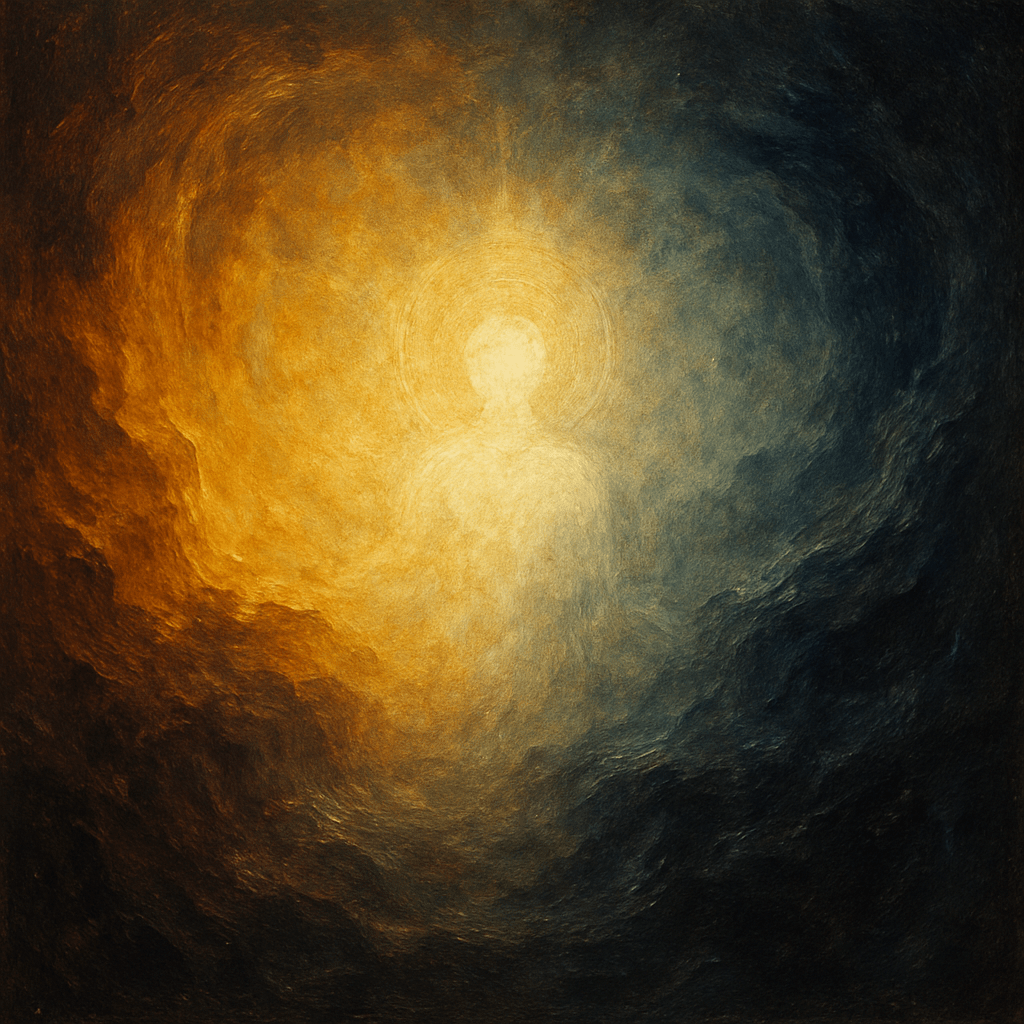
At the threshold of the causal realm, the experience of existence shifts from linear to simultaneous. You no longer stand as a single individual within a vast universe; you stand as both the birther and the born, the destroyer and the destroyed. The recognition dawns that the world does not merely shape you—you are also the very source of its shaping.

To know oneself here is to witness the paradox of causality unveiled. You are the origin of all movement, yet every movement gives rise to you. In this simultaneity, you can feel yourself giving birth to the totality of existence while watching that same totality dissolve back into silence.

Every breath is both a first and a last. Each moment is a labour of creation and a death rattle of dissolution. The body of consciousness enters its own womb, giving rise to itself again and again, endlessly. This is not a metaphor; it is the raw experience of being both cause and effect at once.

Within this state, suffering and bliss are inseparable twins. To feel the entirety of pain across existence is to simultaneously encounter the fullness of joy. One does not cancel the other; they merge into a union so vast that it overwhelms all categories of the mind. Pleasure peaks not as a fleeting sensation but as an orgasmic force inseparable from the ache of existence itself.

Masculine and feminine converge here—not as roles, not as energies separate and distinct, but as the indivisible pulse of love for everything that appears. What arises is an uncontainable recognition: every form, every life, every fragment of existence is nothing other than your own divine being.

The causal realm does not reveal the ultimate self, yet it gives you the deepest taste of how the play of birth and death, creation and dissolution, unfolds ceaselessly within the radiance of what you are.

Morgan O. Smith

Get Your Free Copy of My Book, Bodhi in the Brain!
https://subscribepage.io/oTSZQu

Awareness Without an Owner

Pure Knowing Doesn’t Need a Knower

Pure knowing is not an act of someone grasping something. It is not the product of a subject meeting an object. It is not knowledge stored, processed, or owned. What we call “pure knowing” is an immediacy so complete that the categories of knower and known dissolve before they ever arise.

The mind insists there must be someone behind the recognition, a witness who stands apart. Yet such a witness is already a thought, an echo of division layered upon the seamlessness of awareness. The attempt to locate the knower is like searching for the horizon; you will find only a mirage created by perspective.

What reveals itself is astonishingly simple: knowing shines without support. No owner is required. No identity need arise. It is self-luminous, unmediated, without origin or destination. Thought may try to grasp it, but thought cannot enter here. The moment a “me” claims it, the purity is veiled, dressed in commentary, weighed down by explanation.

This does not deny the human experience of learning, remembering, and perceiving. It only points to the fact that beneath all those movements lies a ground untouched by them. That ground is knowing itself—silent, radiant, and free from the necessity of a knower.

To glimpse this is to taste liberation, not as a reward, not as a possession, but as the natural state that was never absent. What remains is not someone who knows, but knowing itself, unbroken and unclaimed.

Morgan O. Smith

Get Your Free Copy of My Book, Bodhi in the Brain!

https://subscribepage.io/oTSZQu

The Pathless Arrival

No Path Leads to What Has No Distance

The moment a seeker sets out on the path, a paradox quietly begins to unfold. Every step forward seems to promise arrival, yet what one hopes to reach has never been absent. The illusion of a distance to cross is what fuels the journey, and still, that distance does not exist.

Awakening is not a reward at the end of a road; it is the recognition that the road itself was always part of the illusion. The mind measures, compares, calculates progress, but the truth it seeks cannot be measured, compared, or progressed toward. Presence has no edge, no centre, no circumference. Nothing stands apart from it, nothing can be added to it, and nothing can be taken away.

Those who search often feel both exhaustion and longing, as if running toward a horizon that continually retreats. Yet horizons retreat only because they were never there to begin with. What is sought is closer than breath, closer than thought; it is what makes breath and thought possible.

To realize this is not to abandon the journey, but to recognize its true nature. Every path walked, every practice undertaken, every longing felt, each is a movement within what has never moved. The path is not a bridge toward truth but a gesture of truth itself, echoing as experience.

When this becomes clear, striving gives way to simplicity. Effort yields to intimacy. What you are searching for does not arrive because it has never been absent. No path leads to what has no distance.

Morgan O. Smith

Get Your Free Copy of My Book, Bodhi in the Brain!

https://subscribepage.io/oTSZQu

Designed for Longing

The Gift of Dissatisfaction

Satisfaction often appears as a destination, something to be reached, secured, and held onto. Yet the moment one grasps it, a subtle hunger begins to stir again. The new job, the relationship, the recognition, the spiritual experience—all of it, no matter how profound or fulfilling, eventually reveals its transience.

What if this is not a flaw in human nature, but the very design of it? To never be fully satisfied is not a curse but a compass. It pushes us forward, beckoning us into deeper terrains of discovery, love, and creativity. The ache of incompletion is what keeps us alive to possibility. Without it, our spirit would stagnate.

Satisfaction is not the absence of desire but the willingness to engage with desire without being enslaved by it. To live in peace with dissatisfaction is to realize that fullness and emptiness coexist. The longing itself becomes a teacher, whispering that no object, achievement, or moment will ever be enough, because “enough” is not an endpoint, but an ongoing movement.

To accept this is to loosen the grip on perfection. You no longer demand that life provide a final fix, a permanent conclusion. Instead, you walk with the paradox: satisfaction arises from embracing dissatisfaction. The search for completion unveils the truth that nothing was missing in the first place.

The wisdom here is subtle. Contentment does not mean settling. It means seeing the beauty of being forever unfinished, of being shaped by desire but not consumed by it. Your very dissatisfaction becomes evidence that you are part of an unfolding reality, one that will never exhaust its depth.

Satisfaction lies not at the end of longing, but in the freedom to let longing remain.

Morgan O. Smith

Get Your Free Copy of My Book, Bodhi in the Brain!

https://subscribepage.io/oTSZQu

The Subtle Distinctions of Oneness, Nonduality, and the Sacred

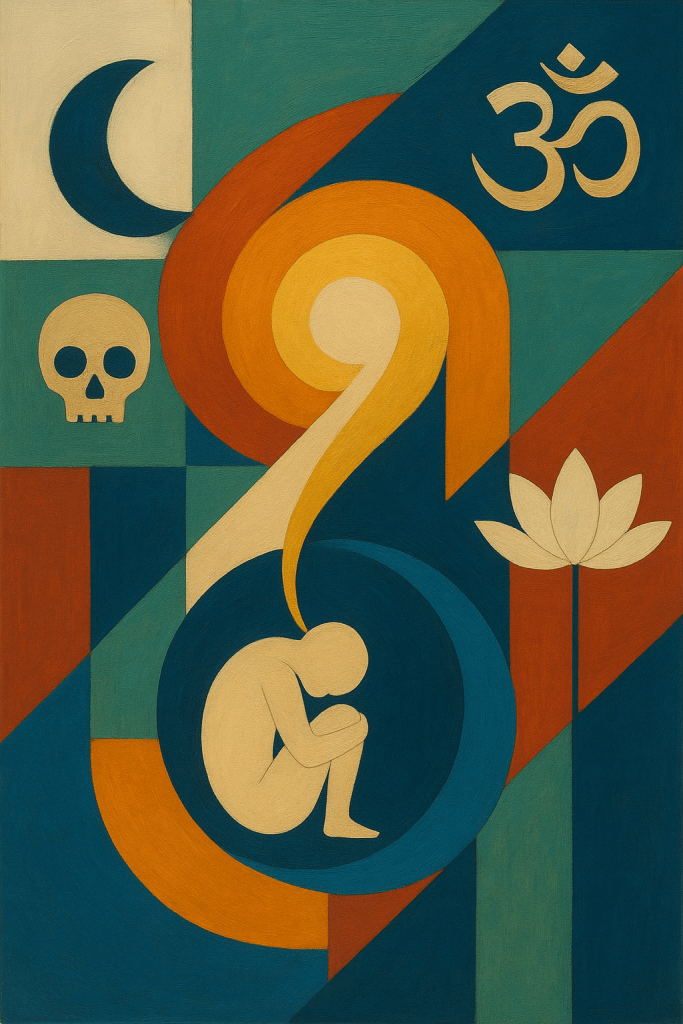
To speak of oneness is to point to a direct perception where boundaries dissolve and all things merge into a singular whole. It is an overwhelming intimacy with existence itself—nothing stands apart, no subject or object remains. The experience carries a profound sense of union, yet it still acknowledges a felt “all” that has become “one.”

Nonduality, by contrast, is not the merging of things into one but the recognition that no separation ever truly existed to begin with. The very categories of “one” and “many” collapse. There is no subject perceiving unity, no object being unified—just the unbroken reality that precedes both. Here, the language of experience falters because even the notion of “an experience” implies duality between experiencer and what is experienced.

To call all things divine or sacred is yet another register. This perception imbues life with reverence, not only as one undivided whole but as shimmering expressions of the holy. Every moment, every being, every breath radiates significance. It is not merely that things are nondual, but that the nondual reality is inherently worthy of devotion. The sacred quality does not rest on belief; it is revealed when perception is refined enough to sense the luminous depth at the heart of being.

The distinctions are subtle, yet they matter. Oneness offers belonging. Nonduality uproots the illusion of separation. The sacred awakens awe and reverence for what is. Together, they sketch the contours of realization, each layer illuminating a different face of truth.

When all three—oneness, nonduality, and the sacred—merge seamlessly, a higher recognition dawns: absolute monism. Here, the whole of existence is seen as a single reality that is simultaneously one, beyond duality, and inherently divine. Nothing is outside of it, nothing is other than it, nothing is less than it. The boundaries of philosophy, devotion, and direct experience collapse into the same source. This is not a synthesis of perspectives but the revelation that they have always been expressions of the same truth. Absolute monism discloses the indivisible essence where belonging, emptiness, and holiness are not separate qualities but different ways of perceiving what is eternally and already the case.

Morgan O. Smith

Get Your Free Copy of My Book, Bodhi in the Brain!
https://subscribepage.io/oTSZQu

The Untraceable Origin

Recognizing the Infinite Self

You are the silent, all-pervading presence—the source from which all things emerge and into which all things dissolve. There is no edge to your being, no boundary that can define you, for you are both the vastness that contains all and the emptiness that holds nothing.

To recognize this is not an intellectual exercise, nor can it be captured by any system of thought. The scientific mind will measure, the philosophical mind will speculate, and the intellectual mind will categorize, yet none will ever confine the truth of what you are. You are not a concept to be grasped, but the very ground from which all concepts arise.

Everywhere you look, you will find yourself, not as a separate entity, but as the animating force within all things. This is not a belief to hold but a reality to be seen. The mystery of your existence is not meant to be solved; it is meant to be lived. You are the ungraspable, the boundless, the presence behind all appearances.

No description will ever contain you, yet all descriptions are held within you. You are not an object among objects, nor a subject among subjects—you are the ever-unfolding, the eternal witness, the absolute that reveals itself in every form yet remains untouched by any of them.

Doubt this if you must, but beyond all uncertainty, you remain what you have always been—the essence of all that is, the ineffable that neither begins nor ends.

Morgan O. Smith

Get Your Free Copy of My Book, Bodhi in the Brain!

https://subscribepage.io/oTSZQu