Exploring the Concept of ‘The Absolute’

In Philosophy and Spirituality

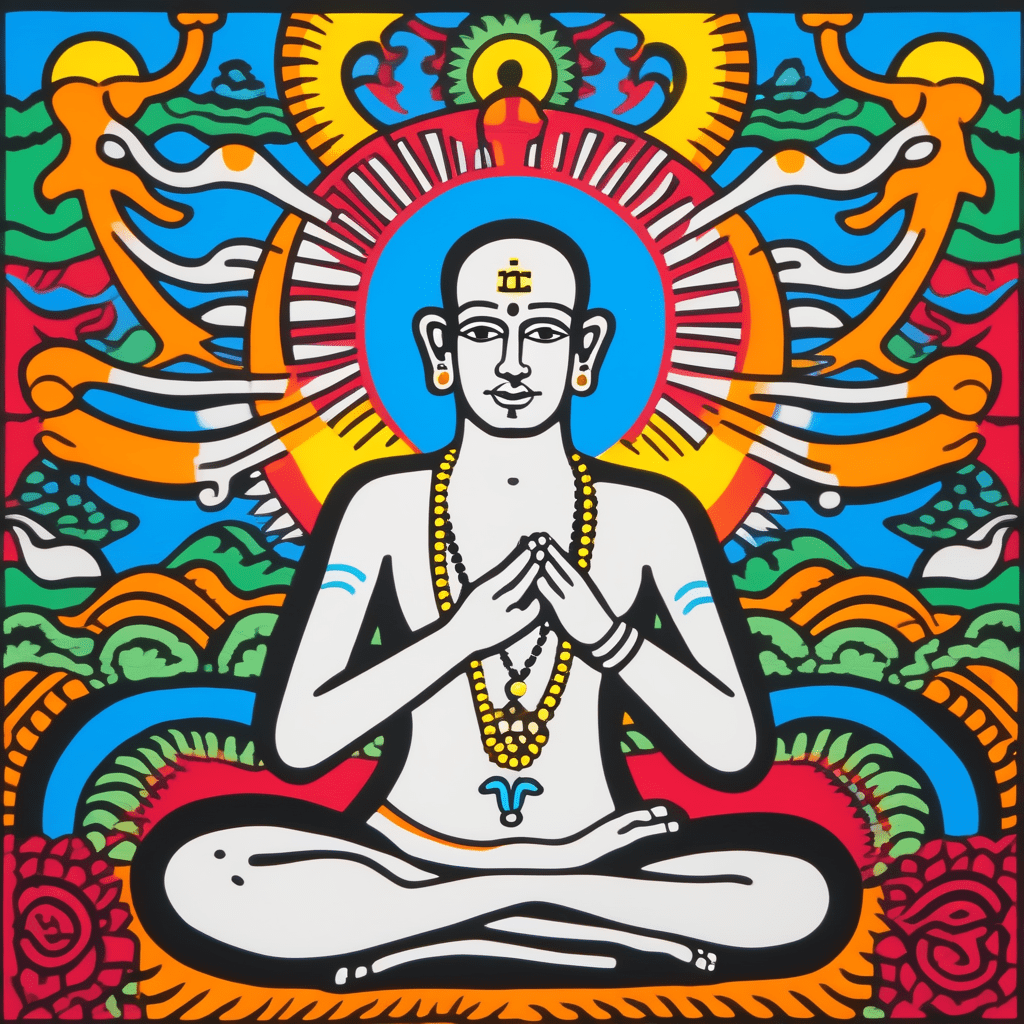
The notion of ‘The Absolute’ is a profound and enigmatic concept that has intrigued philosophers, theologians, and spiritual seekers for centuries. At its core, The Absolute represents the ultimate reality or truth that transcends ordinary understanding. It is often described as the ever was, the ever is, and the ever shall be, encompassing the past, present, and future in a singular, unified existence.

This concept is not confined to any one religion or philosophical system. It is found in various forms across different cultures and spiritual traditions. In Hindu philosophy, it is known as Brahman, an unchanging, infinite, immanent, and transcendent reality that is the source of everything. Brahman is the ultimate cause and foundation of all existence.


In Buddhism, particularly in its Theravada tradition, the concept of Anatta or ‘non-self’ echoes a similar idea. Anatta suggests that living beings have no unchanging, permanent self, soul, or essence. It points to a kind of Absolute that is devoid of individual identity, yet underpins the nature of existence.

Similarly, in Islamic theology, Allah is the Absolute, encompassing all attributes and beyond all human understanding. Allah is the ultimate reality, creator, and sustainer of the universe, beyond all temporal and spatial limitations.


In Christian mysticism, the term ‘God’ often transcends the anthropomorphic deity figure, representing instead an Absolute that is the ground of all being. This idea is also seen in other forms of monotheism and panentheism, where God is understood as both immanent and transcendent, existing within and beyond the universe.

The concept of ‘The Absolute’ also finds a parallel in Western philosophy, particularly in the idea of Absolute Monism. This philosophy posits that there is only one underlying reality, and all diversity and plurality we observe are merely manifestations of this singular existence.


At the heart of these diverse interpretations is a common thread: The Absolute is the ultimate reality, beyond the grasp of human thought and language, transcending our limited perceptions of time and space. It is a concept that challenges us to look beyond the material and ephemeral world, urging us to ponder the mysteries of existence and the universe.

In exploring ‘The Absolute,’ we delve into the deepest questions of life and existence. It’s a journey that takes us beyond the boundaries of conventional thought, into the realms of spirituality and metaphysical contemplation.

Morgan O. Smith

Yinnergy Meditation, Spiritual Life Coaching & My Book, Bodhi in the Brain…Available Now!
https://linktr.ee/morganosmith

Transcending the Mind

A Journey into the Realms of True Reality

In the labyrinth of human existence, there lies a profound truth that often remains hidden beneath layers of perception and thought: the essence of reality as it truly is, unfiltered and pure. This realization dawns only when the mind transcends its boundaries, stepping beyond the constraints of its conditioned patterns and habitual ways of thinking.

The mind, a magnificent tool for navigation in the physical world, is often shackled by its creations – thoughts, beliefs, and assumptions. These mental constructs, while useful, can also act as barriers, filtering and altering reality as it presents itself to us. The journey towards understanding true reality thus begins with a paradoxical task: using the mind to transcend the mind.

In this transcendence, one experiences a shift in perspective. What was once seen as absolute may reveal its relativity. The solid ground of ‘facts’ might turn into a dance of possibilities. This isn’t a disavowal of logic or reason, but an expansion of them. It’s an acknowledgment that reality, in its vastness, cannot be fully contained within the confines of human thought.

What emerges from this transcendental experience is a sense of profound connection. The boundaries that separate the self from the universe begin to blur. In this state, one doesn’t just observe reality; one becomes a part of it, engaged in a harmonious dance where the distinction between the observer and the observed diminishes. It’s a state where the ego dissolves, and in its place arises a sense of unity with all existence.

This journey is not about acquiring new knowledge but about unlearning what obstructs the vision of reality. It’s about silencing the incessant chatter of the mind to listen to the silence that speaks volumes. In this silence, reality reveals itself not as a concept to be grasped but as an experience to be lived.

As we embark on this journey of transcending the mind, we open ourselves to a reality that is more vivid, more alive, and infinitely more profound than our habitual ways of seeing can allow. It’s a journey from the illusion of knowing to the wisdom of understanding, from the confinement of the mind to the liberation of consciousness.

In this exploration, we find not just the essence of reality but also the essence of ourselves, as beings intrinsically connected to the vast, intricate tapestry of existence. We discover that in transcending the mind, we don’t lose ourselves; we find ourselves in everything.

Morgan O. Smith

Yinnergy Meditation, Spiritual Life Coaching & My Book, Bodhi in the Brain…Available Now!
https://linktr.ee/morganosmith


Embracing the Ephemeral

The Paradox of Change and Nothingness

In the realm of existence, the notion that “Nothing is permanent” stands as a profound truth. This phrase, seemingly simple, unravels layers of complexity upon closer inspection. It posits that permanence is an illusion, a transient shadow in the vast continuum of time. The paradox lies in the statement that the only thing permanent is “Nothing.” This “Nothing” is not a void or absence, but a canvas upon which the tapestry of life is constantly being redrawn.

The permanence of “Nothing” implies that change is the only constant. Change, in this context, is both the action and the result of “nothing happening.” It is the dynamic force that propels the universe forward, ensuring that no moment is identical to the last. This constant evolution is what makes life both unpredictable and beautiful. It challenges our understanding of reality, pushing us to accept that what we see as solid and enduring is, in fact, fleeting and malleable.


However, this notion of change does not imply chaos or lack of order. Instead, it suggests a universe governed by the laws of transformation, where each ending is a prelude to a new beginning. In this perpetual cycle, decay gives way to growth, and destruction paves the way for creation. This eternal dance of creation and dissolution is the essence of existence, a reminder that life, in all its forms, is a journey of continuous metamorphosis.

Moreover, the concept of “Nothing” as a permanent state offers a deeper, more philosophical insight. It invites us to ponder the nature of existence and our place within it. Are we, as human beings, mere transient entities caught in the flux of change? Or do we possess an enduring essence that transcends the physical realm? These questions lie at the heart of our search for meaning and purpose in an ever-changing world.


In conclusion, the statement “Nothing is permanent. The only thing that is permanent is Nothing” is more than a mere play on words. It is a profound reflection on the nature of existence, a reminder of the impermanence of the physical world, and an invitation to seek deeper understanding beyond the tangible. It encourages us to embrace change, not as a force of disruption, but as the fundamental essence of life itself.

 Morgan O. Smith

Yinnergy Meditation, Spiritual Life Coaching & My Book, Bodhi in the Brain…Available Now!
https://linktr.ee/morganosmith

Atoms Within Atoms

Contemplating the Cosmic Scale of Existence

In the grand tapestry of existence, our understanding often finds itself confined within the boundaries of human perception. Yet, when we dare to venture beyond these limits, we encounter a humbling and awe-inspiring perspective. Consider this: each of us is composed of trillions of atoms, minuscule yet intricate components that constitute our very essence. Now, elevate this thought to a cosmic scale. What if our entire universe, with its vast galaxies and nebulae, is but a single atom within the immeasurable body of a higher entity or force, which some may choose to call God?

This analogy invites us to rethink our place in the cosmos. It suggests that just as each atom plays a vital role in the structure and function of our being, so too might our universe contribute to a larger purpose within this colossal entity. This perspective is not to diminish our significance but to expand our understanding of connectivity and purpose. In this cosmic view, every action, thought, and event within our universe could be integral to the workings of a grander scheme, a higher order of existence.

Such a notion also challenges our understanding of God or the ground of all being. Traditionally conceived as an omnipotent and omniscient entity, this view presents God not just as a creator or a distant observer but as a vast, living entity within which universes exist like atoms within a body. This reimagining bridges the gap between the spiritual and the physical, suggesting a universe that is not separate from the divine but intrinsically part of it.

The implications of this perspective are profound. It propels us to consider our actions and their repercussions not just on a worldly scale but as part of a cosmic dance. It encourages a sense of universal responsibility and interconnectedness, urging us to view ourselves not as isolated beings but as integral components of a much larger existence.

In conclusion, the idea that our universe could be akin to an atom within the body of a higher entity redefines our understanding of existence, purpose, and spirituality. It invites us to contemplate our place in the cosmos as inhabitants of a vast universe and as part of a much grander, interconnected whole.

Morgan O. Smith

Yinnergy Meditation, Spiritual Life Coaching & My Book, Bodhi in the Brain…Available Now!

https://linktr.ee/morganosmith

The Paradox of Purpose in the Ground of All Being

In philosophical discourse, few concepts are as intriguing and paradoxical as the nature of the “ground of all being.” This term, often used in metaphysical and theological discussions, refers to the fundamental basis or underlying reality of all that exists. At the heart of this concept lies a profound paradox concerning purpose.

#### Purposelessness at the Core


The ground of all being, by its very definition, transcends all known dimensions, including space and time. The ultimate reality underpins everything, yet it stands outside the boundaries of our physical and temporal world. In this sense, the ground of all being is inherently purposeless. It does not pursue goals or objectives because it exists beyond the constructs where purpose holds meaning. In its neutrality and transcendence, it simply ‘is’, unburdened by the need for purpose that characterizes human existence.


#### The Emergence of Purpose

Yet, curiously, from this purposeless ground emerges all purpose. The universe, with its myriad galaxies, stars, and planets, including our own, sprang from this foundational reality. Every atom, every life form, every human thought and endeavour finds its origin in this ground of all being. The very space and time that it transcends are the platforms upon which purpose is built and realized. In human terms, purpose is inextricably linked to our existence within space and time. Our goals, dreams, and aspirations are rooted in our temporal journey through life.

#### A Flourishing of Purpose within Constraints


It is within the confines of space and time that purpose finds its expression and fulfillment. Human endeavours, whether artistic, scientific, or personal, unfold within the physical world and over time. The space-time continuum is not just a physical reality but a canvas for manifesting purpose. The ground of all being, while itself devoid of purpose, is the source from which all purposes derive and the stage upon which they play out.


#### Conclusion: A Profound Duality

The ground of all being presents us with a profound duality. It is a realm devoid of purpose, yet it is the very source from which all purpose in the universe springs. This paradox is a philosophical quandary and a reflection of the profound mystery at the heart of existence. In understanding this, we gain a deeper appreciation of the complexities and wonders of the universe and our place within it.

Morgan O. Smith

Yinnergy Meditation, Spiritual Life Coaching & My Book, Bodhi in the Brain…Available Now!
https://linktr.ee/morganosmith

Choice as Cosmic Manifestation

In a world often bound by the chains of determinism, where every event is seen as a mere consequence of a prior one, the concept of choice emerges as a beacon of freedom, a testament to the transcendental nature of human consciousness. This perspective offers a radical, yet profound alternative: choices are not just personal expressions or random occurrences; they are, in essence, expressions of the universe itself.

The fabric of our universe is intricately woven with the threads of time, space, and matter. Yet, within this complex tapestry lies a deeper truth, one that transcends the apparent duality of cause and effect. In this view, every choice we make is not simply a product of past influences or future aspirations; it is an immediate and direct expression of the universe’s ever-unfolding narrative.


This notion brings us to the concept of the ‘eternal now.’ Unlike the linear progression of time as we perceive it, the eternal now posits a realm where past, present, and future coalesce into a singular, timeless existence. In this realm, every choice is an act of creation, a moment where the universe expresses itself through our consciousness. It is in these moments that we are not merely individuals making isolated decisions; we are the universe experiencing itself, exploring its infinite possibilities.

The implications of this perspective are both liberating and daunting. It suggests that our choices are far more significant than personal preferences or responses to external stimuli. They are cosmic in scale, contributing to the grand narrative of existence itself. It invites us to view our decisions not just as personal crossroads but as contributions to the ongoing creation of reality.


In conclusion, viewing choice as a cosmic manifestation offers a new dimension to our understanding of free will and determinism. It proposes that our choices are neither predestined nor random, but are integral parts of the universe’s continuous journey through time and existence. It’s an invitation to embrace the profound interconnectedness of all things and to recognize our role as the creator itself in the magnificent tapestry of life.

Morgan O. Smith

Yinnergy Meditation, Spiritual Life Coaching & My Book, Bodhi in the Brain…Available Now!

https://linktr.ee/morganosmith

Universal Consciousness

The Unity of All Existence

In philosophy and spirituality, the concept of a universal consciousness presents a fascinating and thought-provoking perspective. This idea posits that consciousness pervades every aspect of the universe – from the smallest atom to the vastest galaxy, and even across dimensions beyond our immediate perception. This universal consciousness is not just a passive observer; it is an active, integral part of everything that exists.

When we delve into the experiences described by myself and others who have reached what we refer to as “nondual peak experiences,” we encounter descriptions of a profound realization. In these moments, the boundaries between the self and the cosmos blur, leading to an experience of unity that is both awe-inspiring and deeply humbling. Such experiences suggest that at our most fundamental level, we are not separate entities navigating an indifferent universe; rather, we are this vast, interconnected cosmic tapestry.


This realization of oneness with and as the universe has profound implications. It challenges the conventional notion of individuality and separateness. In recognizing that we are this larger whole, our perspective on life, ethics, and our relationship with the natural world undergoes a significant shift. This holistic view fosters a sense of responsibility not just towards our immediate environment or community, but towards the entire cosmos.

Moreover, the concept of universal consciousness invites us to reconsider our understanding of reality itself. If consciousness is not merely a byproduct of the brain, but a fundamental aspect of the universe, then our exploration of reality must extend beyond the physical and into the realms of the mind and spirit. This opens up new avenues for understanding the nature of existence and our place within it.


As we continue to explore this concept, we are compelled to ask profound questions: What is the nature of this universal consciousness? How does our consciousness interact with it? And what does this interconnectedness mean for the future of humanity and the cosmos?

In conclusion, the idea of a universal consciousness offers a radical yet enlightening perspective on our existence. It invites us to view ourselves not as isolated beings, but as integral components of an awe-inspiring, interconnected universe. This realization has the potential to transform not only our self-perception but also our approach to life, ethics, and our collective future.

Morgan O. Smith

Yinnergy Meditation, Spiritual Life Coaching & My Book, Bodhi in the Brain…Available Now!

https://linktr.ee/morganosmith

Beyond Belief

Embracing Enlightenment Beyond Philosophical Boundaries

Philosophies, at their core, are a tapestry of beliefs and principles that guide our understanding of the world and our place in it. They offer frameworks for interpreting life’s complexities, from the ancient wisdom of Hinduism and Buddhism to the foundational teachings of Christianity and beyond. Each philosophy, with its unique perspectives and teachings, resonates differently with individuals, often aligning with their inherent values and worldviews.

However, a profound transformation occurs when one experiences a spiritual awakening. This awakening transcends the conventional realm of beliefs and ideologies. It’s a profound realization that our true essence lies beyond the constructs of any philosophy. In this enlightened state, the distinctions between different philosophies blur, as the awakened individual perceives a universal truth that underlies all teachings.

Spiritual awakening brings about a shift in consciousness where the ego, once the center of our universe, becomes an enlightened ego. This enlightened ego no longer clings to rigid belief systems; instead, it navigates the world with a newfound understanding and flexibility. It acknowledges that while philosophies can provide guidance and insight, they are not absolute truths but rather tools that help us make sense of our journey.


In this light, philosophies are not rendered obsolete, but their role in our lives is significantly altered. They become references rather than doctrines, offering insights that complement the inner wisdom gained through spiritual awakening. The enlightened ego uses these philosophies not as definitive answers but as aids in its continuous journey of growth and understanding.

In essence, spiritual awakening marks a transition from seeking truth in external philosophies to discovering it within. It’s an invitation to view the world and its myriad philosophies not as definitive guides but as mirrors, reflecting parts of the universal truth that resides within each of us.


Morgan O. Smith

Yinnergy Meditation & My Book, Bodhi in the Brain…Available Now!
https://linktr.ee/morganosmith

Navigating the Depths

Nonduality vs. Absolute Monism

In the intricate tapestry of philosophical thought, two concepts often emerge as profound and perplexing: Nonduality and Absolute Monism. These philosophical gems, though seemingly similar, hold distinct perspectives on the nature of existence and the universe.

**Nonduality: The Unity of Existence**

Nonduality, a term often associated with Eastern philosophies, particularly Advaita Vedanta, posits a fundamental principle: reality is one, and the perception of duality or separation is illusory. It suggests that what we experience as separate entities – ourselves, others, and the world around us – are not distinct, but part of a unified whole. The philosophy of Nonduality encourages us to transcend this illusion, to realize that at the core of our being, we are not separate from the universe but one with it.


**Absolute Monism: The Dance of Oneness and Multiplicity**

Absolute Monism, on the other hand, takes a slightly different approach. While it agrees with the principle of oneness, it also acknowledges the existence of multiplicity. This philosophy, as I interpret it, embraces the paradoxes of existence: one and not two, two and not one, one and two, two and one, one within two, two within one, yet simultaneously neither one nor two. It reflects a deeper understanding of the cosmos as a dynamic interplay of unity and diversity, where the singular and the plural coexist in a harmonious yet complex relationship.

**The Interplay and Implications**

The discussion of Nonduality versus Absolute Monism is not just a theoretical exercise but has profound practical implications. In Nonduality, the path to enlightenment or understanding involves the realization of oneness, leading to a sense of peace and connectedness with all. In Absolute Monism, the journey is about embracing and understanding the complexity and paradox of existence, leading to a deep appreciation of life’s multifaceted nature.

Both philosophies, in their essence, guide us toward a greater understanding of our place in the universe. They invite us to look beyond the superficial and to question the very nature of reality.


**Conclusion: A Journey of Understanding**

In the end, whether one leans towards Nonduality or Absolute Monism, the journey is one of deep introspection and understanding. It’s about peeling back the layers of what we perceive and understanding the deeper truths of our existence. As we delve into these philosophies, we find not just answers, but also a greater appreciation for the questions themselves.

Morgan O. Smith

Yinnergy Meditation & My Book, Bodhi in the Brain…Available Now!
https://linktr.ee/morganosmith

Embracing the Paradox of Nonduality

Beyond Cherry-Picking Reality

In pursuing spiritual understanding, the concept of nonduality presents a profound paradox. This philosophy, deeply rooted in various traditions, asserts that reality is an undivided whole, transcending the usual distinctions we make between self and other, here and there, or this and that. Nonduality suggests that these separations are illusions, conceptual divisions in the seamless fabric of existence.

However, a common pitfall in approaching nonduality is what could be termed “cherry-picking.” This is where one selectively embraces aspects of nonduality that appeal to them, while conveniently discarding others. It’s akin to admiring the beauty of a rose while ignoring its thorns. Yet, true nonduality, as a concept, includes and transcends all there is. It encompasses every aspect of existence, leaving nothing out, yet paradoxically, it also transcends everything we can conceive or perceive.


The crux of understanding nonduality lies in its experiential realization. Unlike concepts that can be learned from books or teachings, nonduality must be directly experienced to be truly known. This direct experience often defies language and intellectual comprehension. It’s a state of being where the boundaries that separate the self from the universe dissolve, revealing a fundamental unity.

This direct experience of nonduality often comes in fleeting moments of profound insight or deep meditation. In these moments, the constructs of the mind fall away, and what remains is a sense of oneness with all that is. This experience can be both exhilarating and disorienting, as it challenges the most fundamental beliefs about ourselves and the world.


The journey to nondual realization is, therefore, not about acquiring new knowledge but about unlearning – letting go of the deeply ingrained patterns of thought that keep us locked in the illusion of separateness. It’s a process of deconstruction, where one sheds layers of conditioned thinking to reveal the underlying unity of existence.

In embracing nonduality, one must be wary of the temptation to cherry-pick. The whole of existence, with its beauty and brutality, its joy and suffering, is included in the nondual understanding. Nothing is excluded, yet everything is transcended. This paradox is at the heart of nonduality – a reminder that the ultimate truth lies beyond the grasp of our usual ways of thinking and perceiving.

In conclusion, nonduality offers a radical perspective that challenges our conventional understanding of reality. It invites us to look beyond our selective perceptions and embrace the totality of existence. While its true essence can only be known through direct experience, the journey toward this realization can transform our understanding of ourselves and the world.

 Morgan O.  Smith

Yinnergy Meditation & My Book, Bodhi in the Brain…Available Now!

https://linktr.ee/morganosmith