The Unity of Being

When Heads, Shoulders, Knees, and Toes Merge into Oneness

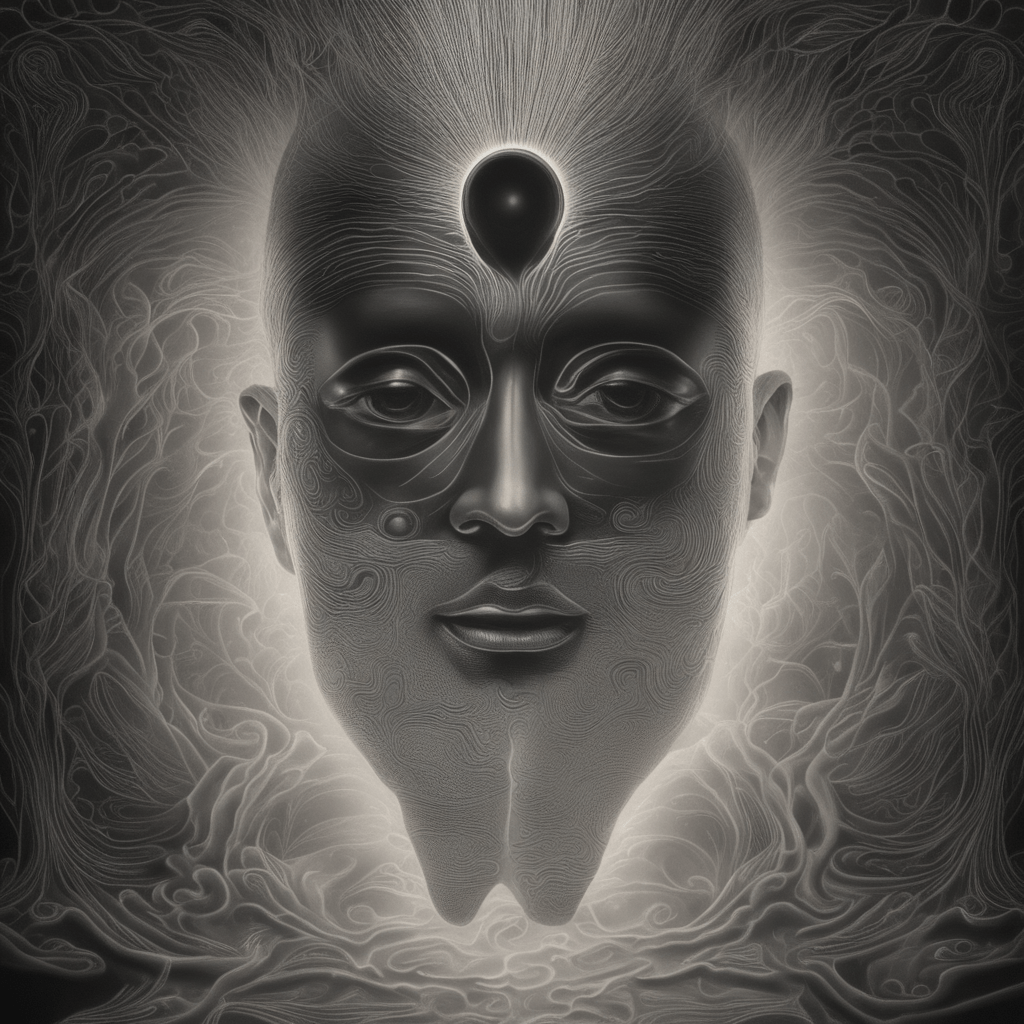
The ancient wisdom embedded in children’s songs and games can sometimes surface in the most unexpected of philosophical realms. Take, for instance, the playful melody “Heads, Shoulders, Knees, and Toes.” When investigated through the lens of Nondual philosophy, it becomes a metaphor for a journey toward universal oneness and interconnectedness.

In Nondualism, the self and the universe are not two separate entities, but rather manifestations of a single, unifying reality. The concept of separateness – the idea that heads, shoulders, knees, and toes are distinct parts – is seen as a mere illusion, a construct of our perceptive capabilities. When we immerse ourselves in the quintessential essence that underlies all beings and things, we begin to perceive that beneath the superficial distinctiveness and multiplicity, there is a fundamental oneness.

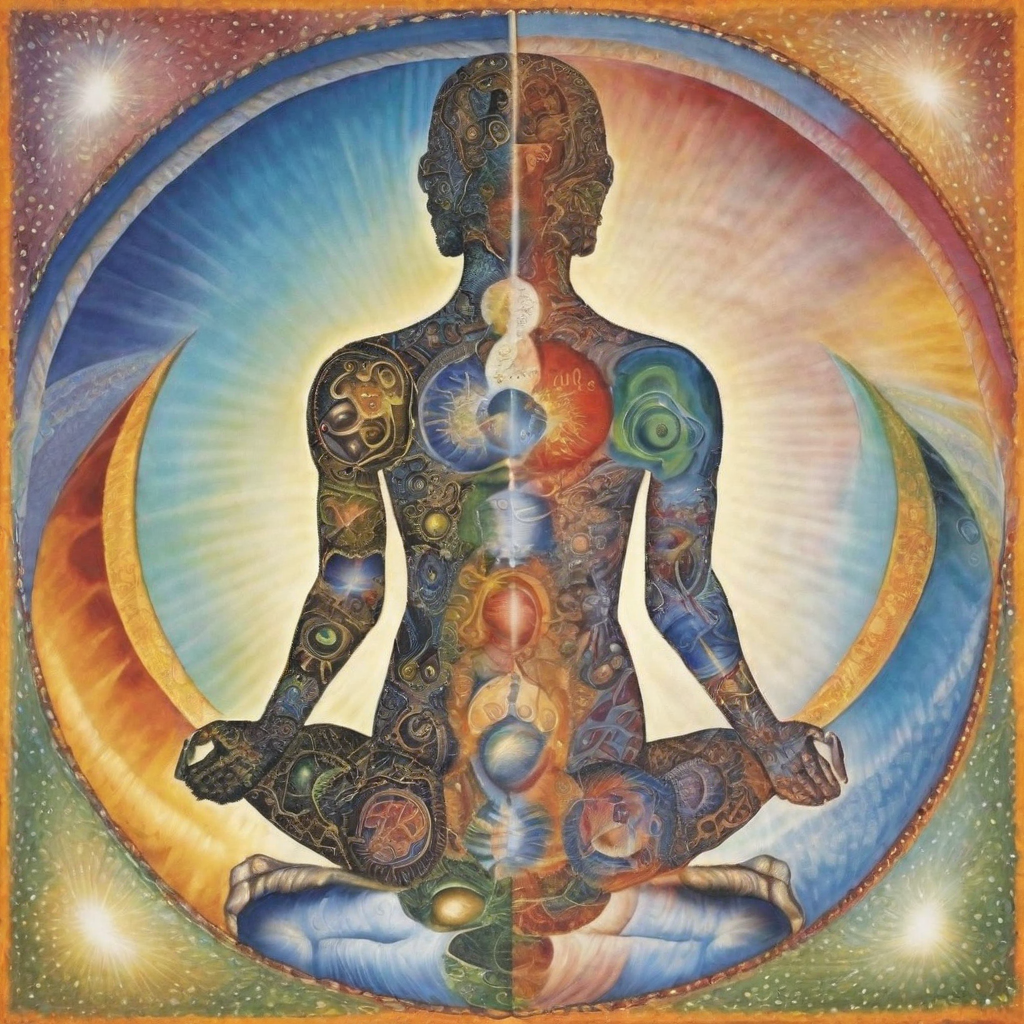
Just as the child, in the innocence of play, connects each body part in a joyful, seamless movement without pondering the philosophical depth intertwined, perhaps we too, in our adult complexity, can rediscover that inherent interconnectedness. Our heads, representing our thoughts and intellect; our shoulders, symbolizing our burdens and responsibilities; our knees, embodying our flexibility and humility; and our toes, reflecting our foundation and stability, though seemingly separate, all derive from and exist within the same unified source.

In this unity, the dissimilarities and boundaries that appear to separate us from others, from the world, and the divine, dissolve into a boundless ocean of oneness. Our heads, shoulders, knees, and toes, then, become not isolated components, but rather expressions of the singular reality, dancing together in a harmonious rhythm of existence.

The reconciliation of our physical and non-physical aspects, the visible and the invisible, and the manifold and the one, invites us to explore the possibility that we are not merely beings traversing through the world, but the world itself. As we navigate through the multifaceted reality of life, can we embrace the Nondual perspective, perceiving not separateness, but unity in the myriad forms and experiences?

So, we may joyously sing, not just with nostalgia but with profound insight into our existence: “Heads, shoulders, knees, and toes.” In the simplicity of these words, let’s find a reminder that beneath the diversity and complexity of our being, we are all interconnected, interwoven parts of the same undivided reality.

The depth of such unity nudges us to perceive ourselves and the world around us with eyes that see beyond the physical and the apparent, inviting us into a holistic existence where every head, shoulder, knee, and toe sings in unison with our oneness.

Morgan O.  Smith

Yinnergy Meditation & My Book, Bodhi in the Brain…Available Now!

https://linktr.ee/morganosmith
The Pursuit of Absolute Nothingness

A Journey Towards Enlightened Emptiness

Introduction: In the dynamic, incessant stream of thoughts, preferences, and subjective biases that characterize the human experience, the concept of attaining a state of Absolute Nothingness captivates imaginations. Is it possible to achieve a mental and emotional vacuum where thoughts, biases, judgments, and self cease to exist?

Understanding Absolute Nothingness:

  • Absolute Nothingness isn’t simply the absence of thought, but a profound emptiness that transcends understanding and defies our typical notions of existence and selfhood.
    • Exploring philosophical and theological contexts (Buddhism’s Sunyata or Zen’s Mu) can unveil varied interpretations and methods to approach nothingness.
  • The Paradox of Pursuing Nothingness:
  • Engaging in a quest towards absolute emptiness ironically imposes a desire and a goal, an antithesis to the state of desirelessness intrinsic to nothingness.
    • Considering the Daoist perspective, acting without intention (Wu Wei) might provide insights on pursuing without pursuing, and attaining without seeking.
  • Dismantling the Self:
  • Dissolving the self involves peeling away layers of personal identity, biases, and preconceptions, effectively blurring the lines between self and non-self.
    • This dismantlement raises questions about existence, consciousness, and whether one can truly function without the scaffold of selfhood in a society constructed upon individual identity.
  • Navigating Through Socio-Cultural Paradigms:
  • The endeavour to transcend preferences, judgments, and selfhood might be perceived as antithetical to societal norms that emphasize individuality, accomplishment, and progress.
    • Achieving absolute nothingness within the structural and cultural boundaries of our world presents a paradox between isolation and immersion in societal dynamics.
  • Ethical and Moral Dimensions:
  • The state of having no judgments, preferences, or perspectives raises questions regarding moral and ethical obligations. Does transcending biases and perspectives dissolve moral compasses?
    • Exploring the ethical implications of an unbiased existence may unravel whether absolute neutrality coexists with moral responsibility.
  • Psychological and Neuroscientific Perspectives:
  • The psychological viability of achieving a state devoid of thought and self-perception opens an intriguing discourse. Can one’s mental health be preserved, or even enhanced, in a state of nothingness?
    • Neuroscientific inquiries might delve into the processes and consequences of perpetually inhibiting cognitive and emotional functionalities to sustain a blank slate of consciousness.
  • Relinquishing Time and Anticipation:
  • With no anticipation, worries, or references to the past or future, time dissolves into an irrelevant concept, creating a perpetual ‘now’ with neither history nor destiny.
    • Contemplating a timeless existence fosters a reflection on how human experiences, relationships, and endeavours are intimately entwined with temporal perception.

Conclusion: Absolute Nothingness, both as a philosophical concept and a spiritual aspiration, navigates through paradoxes, ethical conundrums, and existential inquiries, offering a mesmerizing void that invites and perplexes. The possibility and implications of achieving a state devoid of self-thought, and time present not only a spiritual journey but also a philosophical and scientific exploration into the profound depths of consciousness and existence.

Morgan O.  Smith

Yinnergy Meditation & My Book, Bodhi in the Brain…Available Now!

https://linktr.ee/morganosmith

The Paradox of Enlightenment

The Trap Within Belief

The quest for enlightenment is as old as human consciousness itself. Philosophers, mystics, and seekers from all walks of life have grappled with the concept, attempting to pin it down, describe it, and ultimately attain it. However, the journey toward enlightenment presents an inherent paradox: the more we try to define and understand it using fixed terms, the further we may be pushing ourselves away from its true essence.

Imagine a bird in flight. If we try to describe its movement using a series of static images, we will inevitably fail to capture the fluidity and grace of its motion. Similarly, when we attempt to describe enlightenment using fixed terms and concepts, we risk reducing it to a mere idea, devoid of its living, breathing essence.

Many spiritual traditions caution against becoming overly attached to words and concepts. This is because language, while a powerful tool for communication, is inherently limiting. Words can only describe what we already know, and they are often inadequate when it comes to capturing the depth and breadth of profound spiritual experiences.

In our desire to understand enlightenment, we may fall into the trap of believing too strongly in the terms we use. Once we form a fixed idea of what enlightenment is or should be, we inadvertently place a barrier between ourselves and the experience. Instead of being open to the infinite possibilities of spiritual growth, we become confined within the walls of our own beliefs.

It’s essential to remember that the true nature of enlightenment cannot be grasped by the intellect alone. It is something that must be experienced directly, beyond the limitations of language and thought. While words can point us in the right direction, they can never fully encapsulate the experience itself.

So, the next time you find yourself pondering the nature of enlightenment, consider letting go of your preconceived notions and beliefs. Embrace the unknown, and allow yourself to dive into the deep waters of direct experience. For it is only when we move beyond the confines of language that we can truly begin to touch the infinite.

Morgan O.  Smith

Yinnergy Meditation & My Book, Bodhi in the Brain…Available Now!

https://linktr.ee/morganosmith

Everything in Existence Manifests Everything in Existence into Existence

If you’ve ever gazed into the night sky, pondering the vast expanse of the universe, you’ve likely considered the interconnectedness of all things. The stars, planets, galaxies – and even ourselves – seem to be part of a grand cosmic dance. Yet, have you ever thought that everything in existence, in some way or another, brings everything else into being?

**The Interconnected Web**


At the very heart of our universe lies a web of relationships, cause and effect, and the interplay of energy and matter. Every atom, every molecule, and every organism is not just a product of the universe but also a part of its ongoing creation.

**From Quantum to Cosmic**


In the realm of quantum physics, particles interact in ways that seem to defy logic. These interactions are based not on isolation but on relationships, affecting each other’s states instantaneously. As these particles come together to form atoms, and atoms form molecules, and so on, we can trace back every bit of matter and energy to these intricate connections.

**Manifestation Through Observation**

The very act of observing a particle can change its state. Does this not suggest that our consciousness, our mere act of observation, plays a role in the universe’s continual creation? If so, then we too are manifesting existence.

**The Ripple Effect**

A single action, no matter how small, can send ripples across the fabric of reality. A butterfly flapping its wings in Brazil can set off a tornado in Texas, and so goes the popular rendition of the butterfly effect. This suggests that everything – from the tiniest insect to the most massive star – plays a role in the evolution of existence.

**Conclusion**


It’s a profound and humbling thought: everything in existence plays a part in manifesting everything else into existence. This perspective not only emphasizes our interconnectedness but also hints at the responsibility we hold as conscious beings in this vast cosmos. By recognizing the value and influence of even the smallest actions, we can navigate our journey through existence with greater purpose and intention.

Morgan O.  Smith

Yinnergy Meditation & My Book, Bodhi in the Brain…Available Now!

https://linktr.ee/morganosmith

The Dance of Success and Failure

A Collective Endeavor

Every fleeting moment, every whispered word, and every silent gesture contributes to the grand tapestry of life. A tapestry that is continuously woven with threads of success and failure. This tapestry does not exist in isolation; it is shaped by everyone and everything, and in turn, shapes us all.

Imagine, if you will, a stone being thrown into a still pond. The stone may sink to the bottom, never to be seen again, but the ripples it creates travel outward, touching every inch of the pond’s surface. Similarly, the actions of a single individual, no matter how minor, create ripples in the vast ocean of existence. These ripples intertwine and intersect with the ripples from other stones, forming a complex pattern.

In our quest to understand our triumphs and defeats, we often neglect the multitude of external factors that influence these outcomes. Every success story is not just the culmination of one’s hard work and determination. It is a harmonious combination of countless influences, be they from family, friends, acquaintances, or even strangers. A supportive word here, critical feedback there; every interaction adds a stitch to our journey.

Conversely, our failures, too, are not borne in isolation. The adversity we face is seldom the result of our actions alone. It is a collective outcome shaped by myriad factors, some within our control and others beyond it.

Recognizing this interconnected nature of success and failure fosters a sense of humility. It reminds us that we are but a small part of a vast universe, and yet, we have the potential to impact it profoundly. It encourages us to be compassionate, understanding that everyone around us is facing their battles, contributing in their unique way to the universal dance of success and failure.

To appreciate the beauty of this dance, we must broaden our perspective. Let us celebrate not just our achievements, but also the contributions of all those who have touched our lives. Let us remember that in the face of failure, we are not alone; we are part of a collective experience that enriches our understanding of the world.

In the end, the dance of success and failure is a reminder of our shared humanity. It teaches us to embrace both triumphs and defeats with grace, knowing that they are but fleeting moments in the grand tapestry of existence.

 Morgan O.  Smith

Yinnergy Meditation & My Book, Bodhi in the Brain…Available Now!

https://linktr.ee/morganosmith

Everything is Spirit in Disguise

The Power of Perspective

In the vastness of our universe, we often find ourselves lost in the mundane, the mechanical, and the linear progression of everyday life. But what if, beneath this superficial layer of existence, everything is, in essence, spirit in disguise?

The spiritual world is not a separate realm, isolated from our day-to-day life, but is instead intertwined with every moment, every thought, and every object we encounter. When you hold a pebble in your hand, do you see just a stone? Or do you see millions of years of Earth’s history, the force of nature, and the energy that pulses within? Such perspectives shift our perception from seeing a mere rock to recognizing a spiritual entity that tells a grand story of our universe.

Every encounter, every experience, and every object has the potential to be a spiritual lesson. The person you pass by on the street, the food you consume, the song that touches your soul – all are manifestations of spirit, merely wearing different disguises. Our challenge is to peel back these layers, to see beyond the mask, and to recognize the spirit in everything.

This perspective does not demean the value of the material world but instead enriches it. By choosing to view the world through a spiritual lens, we cultivate gratitude, reverence, and a deeper connection with everything and everyone around us. The coffee you drink in the morning is not just a beverage, but a testament to the intricate balance of nature, human effort, and the magic of existence.

In essence, the choice is yours. You can continue to view the world as a series of random events, or you can embrace the idea that everything is spirit in disguise. By adopting the latter, you not only deepen your understanding of the world but also uncover the spiritual lessons that lie hidden in plain sight.

In the end, the spiritual world is not some distant realm. It’s right here, in every breath, in every heartbeat, and in every gaze. All it requires is a shift in perspective.

Morgan O.  Smith

Yinnergy Meditation & My Book, Bodhi in the Brain…Available Now!

https://linktr.ee/morganosmith

Being Lost in the Mind vs. Transcending the Mind

In the labyrinth of our thoughts, there lies a delicate balance between being entrapped and transcending the confines of the mind. The two might seem dichotomous, but they are simply two extremes of the spectrum of human consciousness.

**Being Lost in the Mind**


To be lost in the mind is to be ensnared by our thoughts, emotions, and perceptions. It’s like being caught in a storm where the waves of our anxieties, fears, and desires toss us to and fro. This state of being is often a result of overthinking, ruminating on the past, or excessively fearing the future. In essence, it’s when we become prisoners to our cognitive processes.

The pitfalls of such a state are evident. It can lead to anxiety, depression, and a sense of being overwhelmed. Yet, this state also harbours potential. Within the chaos of the mind, there is often a profound depth of creativity and introspection. It’s from the storm of thoughts that some of the world’s greatest art, literature, and inventions have emerged.

**Transcending the Mind**

On the other end lies the transcendence of the mind. This is a state of heightened awareness, where one is neither dominated by nor resistant to thoughts and emotions. It’s akin to finding a serene spot amid the storm where everything is calm and clear. In this state, one isn’t devoid of thoughts but is not chained by them either.

Transcending the mind is often associated with meditative and spiritual practices. It’s in this state that one finds peace, clarity, and a profound connection with the universe. Here, the trivialities of daily life fade, and one is left with a profound sense of being and purpose.

**The Balance**

The journey between these two states is not linear. We oscillate between feeling lost and moments of transcendence. Both states hold their unique value. While being lost offers depth and creativity, transcendence offers peace and clarity. The art of living lies in navigating between these two, understanding that neither is permanent, but both are essential facets of the human experience.

In conclusion, our mind is a vast expanse, capable of entrapping us and setting us free. It’s up to us to find our balance, to dance between the raindrops, and to find our moments of sunshine.

Morgan O.  Smith

Yinnergy Meditation & My Book, Bodhi in the Brain…Available Now!

https://linktr.ee/morganosmith

You Are the Universe

The Singularity of Existence

When we look into a mirror, we see a reflection of our physical form. This body, which seems so familiar, is the embodiment of a vast cosmic journey that spans billions of years. The carbon in our cells, the iron in our blood, every particle has been forged in the crucible of stars. We are, quite literally, stardust.

However, the story does not end with mere physicality. Our consciousness, the unique essence that allows us to perceive, reason, and feel, is an integral part of this cosmic tapestry. It’s not a stretch to say that we are the universe experiencing itself.

But why does it seem like we are separate entities? When we look around, we see myriad forms of life, each one seemingly unique. This individuality is a beautiful illusion crafted by the universe. We are like waves in an ocean – while each wave appears distinct, they are all made of the same water, and ultimately, they are the ocean itself.

This realization brings with it profound implications. Every choice we make, and every action we undertake, is not just a result of individual will but the will of the universe. This is not to say that personal agency is an illusion, but rather, it operates in harmony with the cosmic dance of existence.

Consider this: If we truly understand that the person across from us is another version of ourselves, how would that change the way we interact with them? Hatred, jealousy, and malice would be replaced by understanding, compassion, and love.

When we truly understand that the entire universe is within us, and we are the universe, it shifts our perspective. We move from a place of separateness to one of unity. From competition to collaboration. From individualism to universalism.

So the next time you look into a mirror, see more than just your reflection. Recognize the entire cosmos staring back at you. Embrace the wonder of knowing that you are not just a speck in the universe; you ARE the universe.

Morgan O.  Smith

Yinnergy Meditation & My Book, Bodhi in the Brain…Available Now!

https://linktr.ee/morganosmith


The Fleeting Nature of States

A Blessing in Disguise

We often yearn for permanence, believing that if only certain moments or feelings could last forever, we’d attain a sense of contentment and completion. But the very essence of life is its impermanence. Every heartbeat, every fleeting thought, and even profound spiritual awakening are mere ripples in the vast ocean of existence.

Imagine for a moment that states were permanent. The joy of holding your newborn child, the grief of losing a loved one, the euphoria of a first kiss—each of these moments would not be fleeting episodes but everlasting realities. And while that might seem like a blessing, it’s essential to recognize the consequences.

Take, for instance, the state of a nondual spiritual awakening, a profound realization of oneness with everything that is. To remain forever in that state might sound divine, but it would rob us of the diversity of human experience. If we were permanently anchored in such an awakening, we’d be prisoners to its intensity, perhaps even losing touch with our humanity. A never-ending seizure, as we drown within the depths of our divinity, unable to connect, feel, or relate to the myriad of other experiences that make life so rich and varied.

This is why the impermanence of states is a blessing. It allows us to evolve, to learn, and to experience a wide range of emotions and realizations. With every passing moment, we’re given a new canvas, an opportunity to paint a different picture of our lives. The ebb and flow, the highs and lows, they’re all integral parts of this wondrous journey.

In essence, our states, be they of joy, sorrow, or profound realization, are like the changing seasons. Each has its time, its beauty, and its challenges. By embracing this impermanence, we can better appreciate each moment, knowing that it’s unique and will never come again in quite the same way.

In conclusion, while the allure of permanence might seem enticing, it’s the very transience of our states that offers us depth, growth, and a true appreciation for the beauty of life.

Morgan O.  Smith

Yinnergy Meditation & My Book, Bodhi in the Brain…Available Now!

https://linktr.ee/morganosmith

The Dark Shadow of Consciousness

Pondering Existence

In the vast realm of philosophical inquiry, there is perhaps no question more enduring than that of existence. It is the heart and soul of human curiosity, the root from which all other questions spring forth. But what if the very existence we so ardently seek to understand is nothing more than a shadow cast by Consciousness? A mere reflection, imperfect and dark, of something greater and beyond our grasp?

**Consciousness as the Light**

Consider the sun. It casts both light and shadow and in doing so, defines our reality. In much the same way, Consciousness—our innate awareness, the very essence of our being—could be imagined as the radiant source, illuminating the world we know. But with every light, there inevitably comes a shadow.

**The World as Consciousness’ Shadow**

If our world is the byproduct or reflection of Consciousness, then perhaps it is the imperfect representation—the elements of Consciousness that didn’t fit, the pieces it rejected. Our struggles, our sufferings, and our insatiable quest for understanding might all stem from this inherent imperfection.

Think of the Jungian concept of the “Shadow Self.” Carl Jung, the Swiss psychiatrist, suggested that we all have a part of our personality that we do not consciously acknowledge—a darker, less understood side. This shadow self contains our deepest fears, repressed ideas, desires, and general chaos. Could it be that our entire reality is Consciousness’ own “Shadow Self”?

**Finding Perfection in Imperfection**

It’s easy to view the idea of our world being a “shadow” as negative, but there’s beauty to be found in imperfection. It’s in the cracks, the flaws, where we find character, uniqueness, and growth. Perhaps, by existing within Consciousness’ shadow, we’re given a unique opportunity to explore, question, and evolve.

**Conclusion**

We may never truly know the nature of existence, whether it’s a shadow or something else entirely. But by pondering such questions, by seeking to understand the greater forces at play, we embark on a journey of self-discovery, of understanding the universe, and our place within it.

Morgan O. Smith

Yinnergy Meditation & My Book, Bodhi in the Brain…Available Now!

https://linktr.ee/morganosmith