Letting Go of the Construct

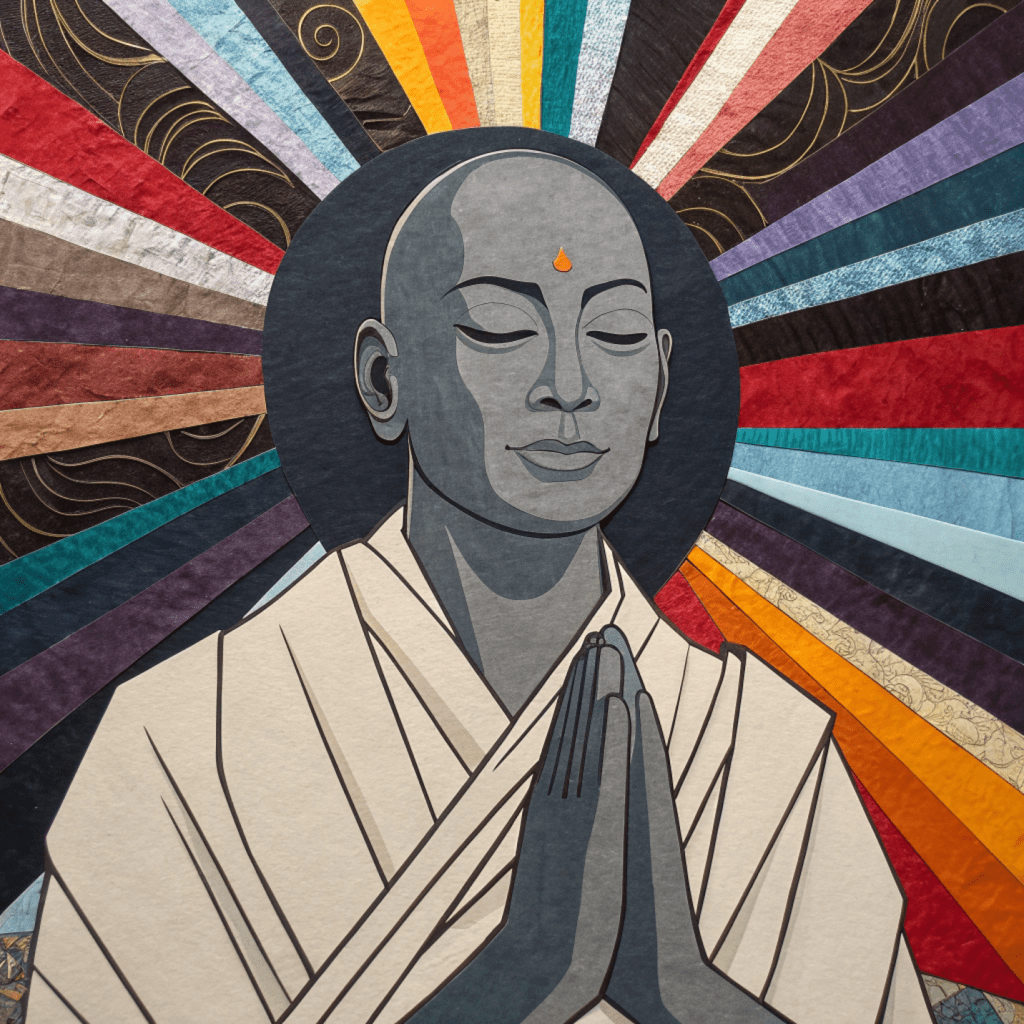
Spirituality has become another label, another concept bound by ideas of what it should or shouldn’t be. The moment it is named, it is framed and shaped by cultural, religious, and personal narratives that define and confine it. But what happens when all constructs dissolve? When even spirituality is seen for what it is—a creation of the mind attempting to grasp the ungraspable?

The urge to define the ineffable is natural. Language serves as a bridge, but it also creates the illusion of separation. Concepts such as enlightenment, awakening, and self-realization become reference points, yet they remain external to direct experience. The mind, conditioned to seek understanding through form, builds belief systems around these concepts, turning what is limitless into something structured.

There comes a point when every definition falls away. Not because one rejects spirituality, but because it no longer holds weight. The very act of seeking dissolves into presence. What remains is not a version of spirituality, not an ideology or a practice, but an unfiltered beingness that does not need validation.

Some may find this unsettling. Without the scaffolding of beliefs, where does one stand? But this is precisely the point – there is no need to stand anywhere. Reality unfolds moment by moment, unbound by spiritual ideals. Even the notion of transcendence implies moving beyond something, yet nothing was ever separate to begin with.

To live without a construct of spirituality does not mean rejecting wisdom or practice. Meditation, contemplation, and insight may continue, but they arise naturally rather than as steps toward an imagined goal. There is no longer a need to fit into any category – neither spiritual nor non-spiritual. Life simply moves, and awareness rests in itself.

The challenge is not in abandoning spirituality but in seeing through its necessity. When the river meets the ocean, it does not hold onto its name. It merges, not as an act of seeking, but because it was never separate to begin with.

Morgan O. Smith

Yinnergy Meditation/Neurofeedback, Spiritual Life Coaching & My Book, Bodhi in the Brain…Available Now!
https://linktr.ee/morganosmith

An Integral View of Oneness

From the stillness at the heart of all existence, one perceives that seemingly diverse paths, doctrines, and revelations emerge from a single source. What appears as multiplicity through the lens of human perception rests upon an unchanging, all-pervasive essence. This perspective reveals that every philosophy—grounded in ancient texts, ritual devotion, logical analysis, or direct contemplative experience—arises as one facet of a greater whole.

A Unified Whole

All schools of thought, whether they speak of oneness or duality, share a luminous core. For centuries, Vedanta has investigated this enduring mystery through varied teachings that, on the surface, may seem contradictory. Their deeper aim is to illuminate the infinite Self beyond the limits of language. Some emphasize devotion and a personal relationship with the Divine. Others announce an unqualified unity free of distinctions. Still, others highlight how the One appears as many. Examined in isolation, each approach might feel incomplete. Viewed through the lens of total realization, they function as distinct yet harmonious strands of a single radiant truth.

The Singular Essence of All Religions and Philosophies

Those who probe deeply into the world’s traditions uncover a universal wisdom that echoes across time and culture. The Absolute remains boundless and intimately present, unconstrained by any notion of limitation yet expressing itself as every form and phenomenon. Scriptures, rituals, and teachings are portals opening onto the same unfathomable reality. Symbols and narratives differ, yet their highest objective converges on awakening to the unity underlying all appearances.

Integral Vedanta and the Seamless Field of Reality

All who embrace the synthesis called Integral Vedanta notice that everything finds its place within an indivisible realm that includes both the ineffable void and the manifest universe perceived around us. On the most subtle level, existence reveals neither discrete objects nor separate identities; instead, it unfolds as a continuous interplay of forces within an unbroken expanse. This vision suggests a self-consistent cosmic intelligence that discovers itself in every aspect of creation.

Resolving Paradox Through the Unifying Vision

Where friction appears—between transcendent unity and personal devotion, the formless and myriad forms—Integral Vedanta highlights a reconciling principle. Direct description of this principle often exceeds the scope of conceptual thought. Yet the paradox dissolves seamlessly in the heart of one who perceives no division. Much like how white light refracts into many colors through a prism, the Absolute manifests as countless expressions while remaining undivided at its source.

Living the Integral Understanding

A realized individual effortlessly embodies the insight that all distinctions—spiritual, philosophical, or otherwise—are provisional signposts guiding seekers toward ultimate reality. Compassion and clarity flow abundantly, for there is no perception of otherness. Daily existence reflects this through unwavering openness, spontaneous respect for every path, and gentle acknowledgment of each approach as an essential part of the whole.

The Unspoken Mystery

Words gesture toward oneness but never fully capture its depth. Even so, philosophical analysis and discussion retain their value, as every expression can hint at the ineffable ground of being. Integral Vedanta thereby affirms any sincere method or tradition that directs consciousness toward the underlying truth, regardless of the language or rituals involved.

Conclusion

From the vantage of integral realization, contradictions between different philosophies and faiths reveal themselves as complementary viewpoints rather than obstacles. Religious and philosophical systems serve as windows onto the same vast landscape, each offering a unique perspective on the infinite. The invitation of Integral Vedanta is to recognize and celebrate these perspectives, allowing their synthesis to unveil our shared essence. All modes of exploration—devotional, analytical, experiential, or otherwise—unfold into one luminous understanding of reality’s ultimate nature.

Morgan O. Smith

Yinnergy Meditation, Spiritual Life Coaching & My Book, Bodhi in the Brain…Available Now!

https://linktr.ee/morganosmith

The Source of All Cause and Effect

Who and What Is the Source of All Cause and Effect?

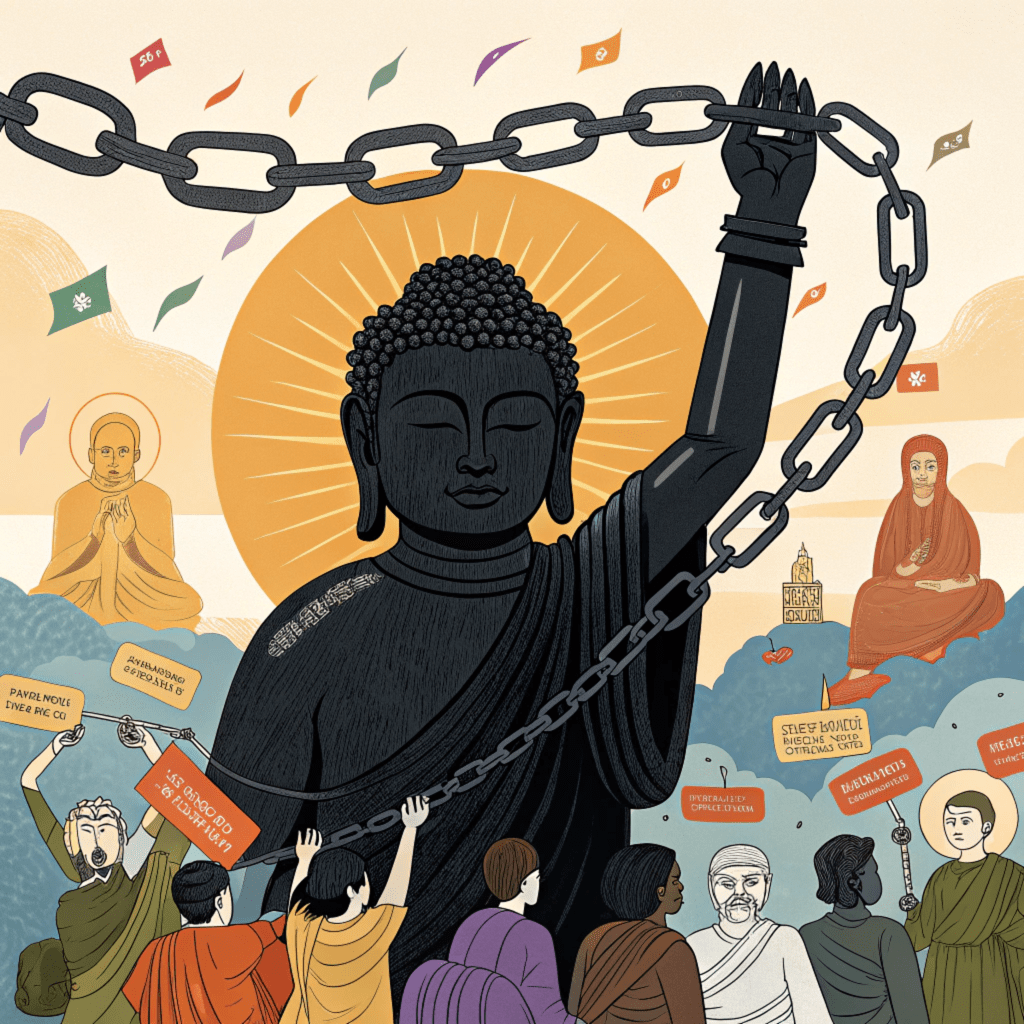
The eternal question arises: who or what governs the intricate dance of cause and effect? Is it me, you, everyone, or everything? Perhaps it is all of these and none of them simultaneously. This exploration leads us to a profound realization: the source is not separate from the flow, yet it transcends it.

Cause and effect are not isolated events. They are interconnected, forming an indivisible whole. To search for the source is to embark on a journey into the depths of consciousness itself. The mind craves a definitive answer, a singular origin to label, but the truth eludes such simplicity. It is neither here nor there, yet it manifests everywhere.

Every action we take, every thought that arises, ripples outward into the fabric of existence. Yet the source of these ripples does not lie solely in the individual. It is the interplay of infinite factors—the unmanifest potential giving birth to form and the dissolution of form back into stillness. This interplay is the source, and we are simultaneously its participants and expressions.

What does this mean for our experience of life? It calls for a radical shift in perspective. The ego sees itself as a doer, the originator of action and the controller of outcomes. But this belief dissolves when one observes deeply. The body breathes, the heart beats, and thoughts arise—all without volition. The same intelligence orchestrates the universe’s movements, from the spinning of galaxies to the opening of a flower.

To recognize that “me, you, everyone, and everything” is the source is to dissolve the illusion of separation. It is to see that cause and effect are not linear but cyclical, interwoven, and eternal. We are not spectators of this process. We are in the process.

This realization invites us to live with humility and grace. Instead of clinging to control or outcomes, we surrender to the flow of life, trusting in the intelligence that governs all things. In this surrender, we find freedom—not as passive observers, but as conscious participants in the dance of existence.

The question remains: who or what is the source of all cause and effect? It is both a question and an answer. It is not a thing to grasp but an experience to embody. You are the source. I am the source. The source is all there is.

Morgan O. Smith

Yinnergy Meditation, Spiritual Life Coaching & My Book, Bodhi in the Brain…Available Now!
https://linktr.ee/morganosmith

Your Very Own Face

The Face of God Is Your Very Own Face Turned Inside Out

What if the divine is not something to be discovered but something to be remembered? Imagine that every search for the sacred is a quiet whisper urging you to turn your gaze inward—not as a way to find answers, but to dissolve the very questions themselves. The face of God is not hidden; it is simply turned inside out.

Consider for a moment the paradox of identity. We spend our lives constructing an idea of “self,” a fragile architecture built from memories, labels, and stories. This structure feels solid, yet beneath it lies a boundless vastness—a formless presence that defies description. That formlessness is the essence of God. It is not separate from you but exists as the very foundation of your being. When you turn yourself inside out, you don’t find something “other.” You find the unchanging witness, the infinite silence in which all of life unfolds.

The journey to realize this truth often feels like an unlearning. The more you let go of defining yourself, the closer you come to recognizing the divine nature within. It is not an external force judging or saving; it is the open awareness of experiencing life through your eyes, breathing life through your lungs, and yet remaining untouched by your stories of limitation.

This realization is not confined to moments of meditation or spiritual awakening. It reveals itself in the simplicity of everyday experiences—a child’s laughter, the stillness of a forest, or the quiet ache of longing. These glimpses call you to see that everything, including your own struggles and joys, is an expression of that infinite presence. The face of God is both the mystery and the mirror, reflecting your true nature beyond the constraints of identity.

The question is not how to find God, but whether you are willing to recognize that you are God remembering itself. This recognition is not a thought or a concept; it is a felt experience, a profound knowing that arises when the mind quiets and the heart opens.

As you turn your awareness inward, notice how the boundaries between self and other begin to blur. The separate “I” dissolves, and what remains is not just emptiness but fullness—an eternal oneness where the face of God and your own face are indistinguishable.

The invitation is clear: stop seeking and start seeing. The divine has never been elsewhere. It has always been here, waiting patiently as the silent witness of all that you are.

Morgan O. Smith

Yinnergy Meditation, Spiritual Life Coaching & My Book, Bodhi in the Brain…Available Now!

https://linktr.ee/morganosmith

Spiritual Enlightenment Isn’t Just For Monks

Hello, everyone!

I’m thrilled to announce that I’ve partnered with Brainz Magazine, a platform dedicated to personal growth, self-discovery, and professional development. This week, I had the chance to dive into a topic close to my heart: Spiritual Enlightenment Isn’t Just For Monks – Discover The Path In Everyday Life.

Many of us associate enlightenment with images of monks in monasteries, yogis in the Himalayas, or mystics retreating in isolation. But true spiritual awakening and enlightenment are journeys that are accessible to everyone, regardless of where you are or what your lifestyle looks like.

In this piece, I explore how spiritual growth and inner peace are attainable in everyday life. You don’t have to disconnect from the world to find a deeper connection with yourself and the universe. The beauty of enlightenment is that it can unfold right here, amid your daily routines, relationships, and challenges.

If you’re curious about how to bring a deeper spiritual connection into your everyday experience, I encourage you to check out the full article. It’s an invitation to explore how mindfulness and conscious living can be woven into even the simplest moments, offering a path toward fulfillment and insight that anyone can embrace.

Read the full article here: Spiritual Enlightenment Isn’t Just For Monks – Discover The Path In Everyday Life.

Warm regards,
Morgan

Yinnergy Meditation, Spiritual Life Coaching & My Book, Bodhi in the Brain…Available Now!

https://linktr.ee/morganosmith

The Self and No-Self

Unraveling the Boundaries of Existence

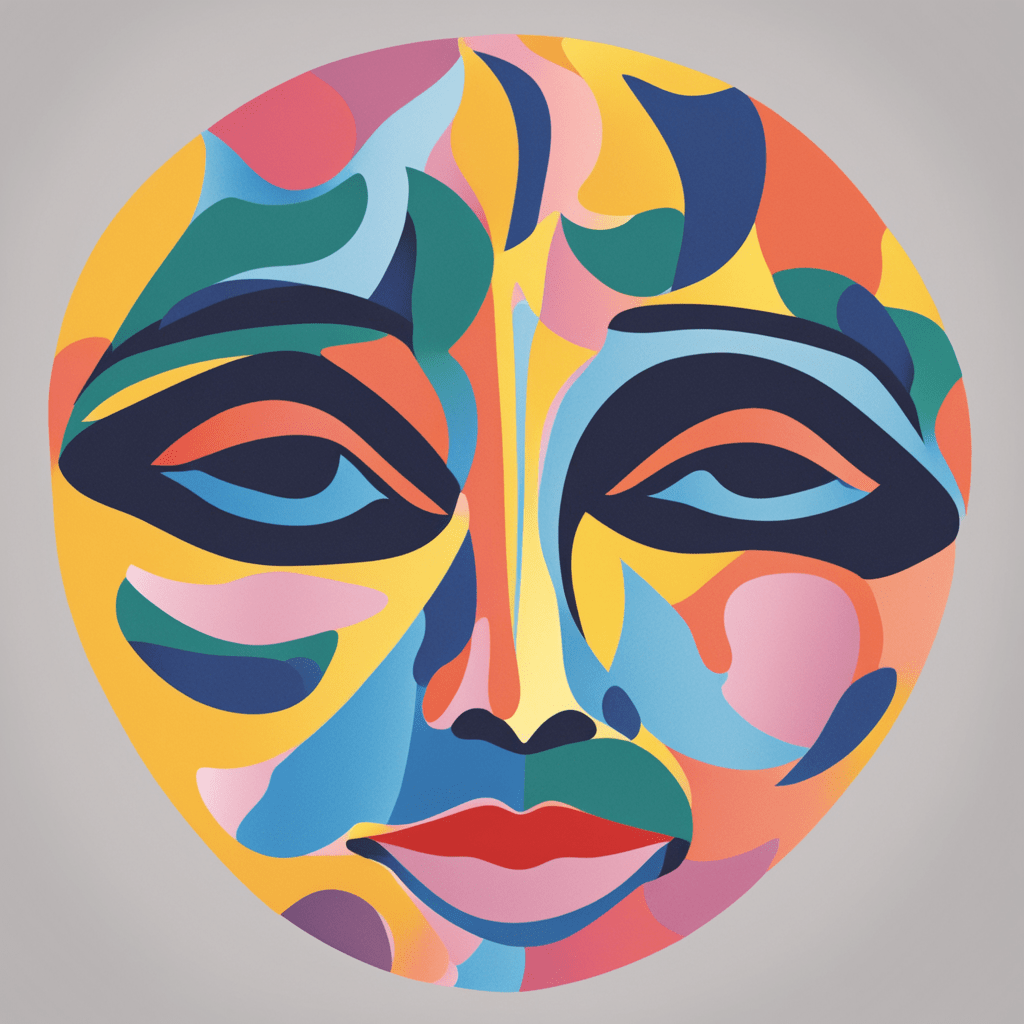
If all that exists is what we call the Self, where does that leave us in understanding its true nature? The common impulse is to label, define, and separate — creating distinctions to grasp what cannot be fully grasped. But in contemplating the nature of the Self as the all-encompassing reality, we’re drawn into a profound paradox: if the Self is indeed everything, without any boundary, how can it even be considered a “Self”?

The word “Self” implies some form of individuation, a presence that stands distinct from others, yet here lies the core of the paradox. In the absence of an “other,” any idea of a distinct Self dissolves, leaving only the mystery of the No-Self.

For a Self to be recognizable as such, it would require something to stand apart from. But in the context of ultimate unity, where nothing exists outside or beyond, there is only what is — an undivided totality that transcends any dualistic notion of “Self” and “other.” This is where the very term “Self” falls away, as there can be no contrast, no relational identity. What we are left with is not a Self in any ordinary sense but rather pure awareness, the ground of being that defies description and categorization.

When looked at from this perspective, the idea of the Self takes on a radically different dimension. It becomes the No-Self, not in the sense of an absence but rather as an absolute presence that simply is. The No-Self, then, is not the lack of being but the absence of individualization within being itself. It invites us to move beyond personal identity and to experience consciousness as boundless and indivisible, an endless ocean with no separate waves.

In moving toward an experiential understanding of this paradox, the concept of “I” transforms. We begin to see that this “I” — the egoic self we identify with — is a localized point in the vast field of undivided awareness. What we call “myself” is, in reality, an expression within the infinite whole, a momentary manifestation of something that transcends all individuality.

Such an insight does not negate our individual lives or diminish the importance of each unique expression. Rather, it invites a shift in perception. It calls us to recognize that beneath our individuality lies a vastness, a timeless ground that is beyond any single label or limitation.

As we touch on this insight, we find that the paradox of Self and No-Self begins to dissolve. We see that they are not separate but interwoven, expressions of the same reality, which is beyond both. In embracing the No-Self, we open ourselves to a greater depth, where the boundaries of identity soften, and the beauty of unity comes alive in ways beyond conceptual thought.

Morgan O. Smith

Yinnergy Meditation, Spiritual Life Coaching & My Book, Bodhi in the Brain…Available Now!
https://linktr.ee/morganosmith

Beyond the Idea of God

Embracing the Infinite Beyond Belief

Humanity has long pursued an understanding of God, a relentless quest to define, capture, and shape the essence of the infinite. For many, the notion of God becomes a vessel for their ideals, values, and desires—a reflection of their deepest hopes and most profound fears. Yet, encountering God through the lens of belief alone is akin to gazing at the ocean through a narrow window. The grandeur of the infinite cannot be contained, constrained, or fully fathomed within the borders of our perceptions.

The paradox lies in this: everything is God, yet nothing conforms to the concepts we construct about it. Each moment, encounter, and experience pulses with the sacred, yet the mind reduces it to fit within its familiar narratives. In the end, our beliefs become the very walls that obscure the limitless nature of divinity.

God, in the truest sense, transcends every image, word, or definition. No single tradition or philosophy can exclusively claim this vastness. Imagine standing before an infinite horizon, extending endlessly in every direction. Our concepts—however profound—are mere markers on the path, helpful but limited in capturing the essence of all that is. Here lies a liberation beyond belief: recognizing that the Divine isn’t limited by human expectations or perceptions.

Embracing this understanding offers a profound sense of freedom and humility. It invites us to move beyond belief, beyond the comfort of definition, and into direct experience. Rather than confining God to what we think we know, we begin to open ourselves to a presence that defies all description, something we sense but cannot fully articulate. This is where genuine reverence arises, born not from knowledge but from an awe that silences the mind.

When we release the need to make God fit our ideas, we become conduits for something greater. Instead of seeking to define or own this presence, we surrender to it, allowing ourselves to be moved, shaped, and transformed. This surrender is not passive; it’s an active openness, a readiness to meet the Divine in the ordinary and extraordinary, in all that we perceive and beyond.

Perhaps the journey, then, is not one of reaching an ultimate understanding but of letting go—allowing ourselves to rest in the mystery and seeing how it transforms us. For God, as it turns out, may be far more than we ever imagined and is here to be discovered, not as an idea, but as the living pulse of everything we encounter.

Morgan O. Smith

Yinnergy Meditation, Spiritual Life Coaching & My Book, Bodhi in the Brain…Available Now!

https://linktr.ee/morganosmith

To See God’s Face

A Glimpse Beyond the Veil

The desire to see the face of God is often spoken of in spiritual traditions, symbolizing the quest to grasp the ultimate truth, touch the divine essence, and witness the Source from which all arises. Yet, many seekers find that the face of God remains elusive. This is not because God hides but because the totality of His expressions cannot be grasped by the human mind until one reaches a state of enlightenment.

What does it mean to see God’s face? Is it a literal vision, or does it represent the merging of self with the Divine? To catch a glimpse of God’s face is to touch the Infinite, even if momentarily. However, the expressions of God—the vastness of His being, the unfolding of all possibilities and manifestations—are incomprehensible to a mind still bound by duality. These expressions are ever-changing, reflecting the dynamic play of creation, destruction, and renewal. Only upon reaching enlightenment, where distinctions dissolve and all is seen as one, does the seeker begin to witness these myriad expressions in their fullness.

Until then, we stand at the threshold, experiencing occasional moments of clarity and divine presence. These glimpses pull us toward deeper understanding, but the full vision, the entire spectrum of God’s expressions, remains veiled. Enlightenment is not simply a state where we “see” more clearly; it is where the very notion of seer and seen dissolves. Only then do we realize that every expression, every nuance of the Divine face, is also our own. The act of witnessing merges into being and all of existence is recognized as the radiant outpouring of the One.

What does this mean for the seeker? The yearning to see the face of God should not be dismissed as a futile chase. It is a sacred impulse. It is the soul’s longing for its source. Yet, one must realize that enlightenment is not an end but a process of continuous unveiling. Until we become still enough, free from the limitations of ego and mind, the Divine will remain a distant and ever-moving horizon. And even upon that horizon, we will see not a singular expression but an infinite number of faces, each revealing another aspect of the cosmic dance.

In the face of God, we encounter not just creation but the unfathomable mystery behind all forms. Enlightenment is the point at which the seeking ends, not because we have seen all there is to see, but because we have become the very essence we sought.

Morgan O. Smith

Yinnergy Meditation, Spiritual Life Coaching & My Book, Bodhi in the Brain…Available Now!

https://linktr.ee/morganosmith

The Paradox of Divine Knowledge

Beyond the Mind’s Perception

God knows nothing yet knows everything—a contradiction that stands as a perfect reflection of the nature of absolute reality. This enigmatic statement, like a koan, invites deeper contemplation beyond linear thinking. It points to a knowledge that defies conceptual grasp, a knowing that cannot be possessed by the mind.

To say God knows everything implies omniscience—a perfect awareness of all events, possibilities, and outcomes within the realm of manifestation. Yet, to say God knows nothing points to an awareness that transcends any form of subject-object relationship. Here, knowledge is not fragmented into parts. Rather, it exists as a pure, nondual state of being.

This paradox can only be resolved through a radical shift in perception. From the mind’s perspective, knowing implies a knower and a known—a separation that inherently breeds confusion. The clearer this division becomes, the more apparent the contradiction. But from the perspective of absolute awareness, there is no such division. Knowing and not knowing collapse into a single essence, a seamless flow where everything is already perfectly held without the need for grasping or possessing.

The confusion arises only when one attempts to use a dualistic framework to analyze a nondual reality. For those entrenched in rational thought, this statement appears illogical. Yet, the crystal clarity of this confusion emerges when seen through the lens of direct experience. God’s knowing is not intellectual; it is a luminous stillness that enfolds every possible expression of existence without ever defining itself through those expressions.

What, then, does it mean for God to “know nothing”? It signifies the emptiness of all forms, a state where no thought, label, or concept can fully capture what is. It is a knowing that is the essence of all things yet free from the content of knowing itself. There are no judgments, no biases, no preferences—just a silent, omnipresent witnessing. The awareness is so pure that it does not even recognize itself as “knowing” in the conventional sense. It is like the sky holding all clouds yet remaining untouched by their presence or absence.

This is the clarity that lies within the paradox: God knows everything because God is everything. Simultaneously, God knows nothing because God is not bound by the limitations of any particular knowledge. The confusion dissolves when we release the need to categorize and understand reality through fixed structures.

To experience this confusion as crystal clear requires embracing the humility of not knowing. When all concepts, beliefs, and labels are dropped, what remains is a pure awareness that is as empty as it is full. The mind may struggle to grasp this state, but the heart recognizes it intuitively. It is a state of grace, a luminous unknowing that is beyond the reach of both thought and language.

Paradox is not a flaw in understanding; it is the gateway to freedom. It invites one to look beyond the confines of intellect and rest in a knowing that cannot be spoken. This is the ultimate clarity: a confusion that reveals the divine nature of all that is.

Morgan O. Smith

Yinnergy Meditation, Spiritual Life Coaching & My Book, Bodhi in the Brain…Available Now!

https://linktr.ee/morganosmith

Attaining Enlightenment

As Elusive as Grasping the Wind

The quest for enlightenment, that profound state of ultimate understanding and unity, is often compared to trying to hold onto the wind. This metaphor captures the essence of the journey—a pursuit that defies conventional grasping, one that requires an openness to the intangible and an embrace of the elusive.

The Elusiveness of Enlightenment

In many Eastern philosophies, Enlightenment is not a destination but a state of being. It is a realization that transcends the confines of our dualistic thinking. Much like the wind, it is everywhere and yet nowhere specific. To chase it with a rigid, goal-oriented mindset is to miss its essence.

Enlightenment involves the dissolution of the self and the shedding of layers upon layers of conditioned beliefs and identities. This shedding process can feel like an endless peeling away of illusions, akin to trying to contain the uncontainable wind in your hands. The moment you think you have a firm grasp, it slips through your fingers, revealing the futility of such an endeavour.


The Paradox of Effort and Effortlessness

One of the most challenging aspects of the spiritual path is balancing effort and effortlessness. The seeker must engage in practices, disciplines, and teachings that guide the way, yet true enlightenment often dawns in moments of complete surrender and stillness. It is in these moments that the boundaries of the self dissolve, and one experiences the boundless nature of existence.

This paradox can be frustrating. We are conditioned to believe that hard work and determination yield results. However, in the spiritual realm, striving too hard can create resistance. It is the quieting of the mind, the letting go of effort, that often brings the profound insights we seek.

Embracing the Unknowable

In accepting the elusiveness of enlightenment, we learn to appreciate the journey itself. Every moment of insight, every experience of stillness, is a part of the unfolding realization. The wind may be impossible to grasp, but it can be felt, experienced, and known in its presence.

To truly understand enlightenment, one must embrace the unknowable. It requires a heart open to the mysteries of existence and a mind willing to let go of the need for certainty. This openness allows us to experience glimpses of the infinite, moments where the separation between self and universe disappears, revealing the profound interconnectedness of all things.


Conclusion

Attaining enlightenment is indeed as difficult as grabbing hold of the wind. Yet, in this difficulty lies the beauty of the spiritual journey. It teaches us to let go, to be present, and to embrace the mystery of existence. In the end, the pursuit of enlightenment is not about reaching a final goal but about experiencing the boundless nature of our true selves, flowing effortlessly like the wind.

Morgan O. Smith

Yinnergy Meditation, Spiritual Life Coaching & My Book, Bodhi in the Brain…Available Now!

https://linktr.ee/morganosmith